Do Cats Age Faster Than Dogs?
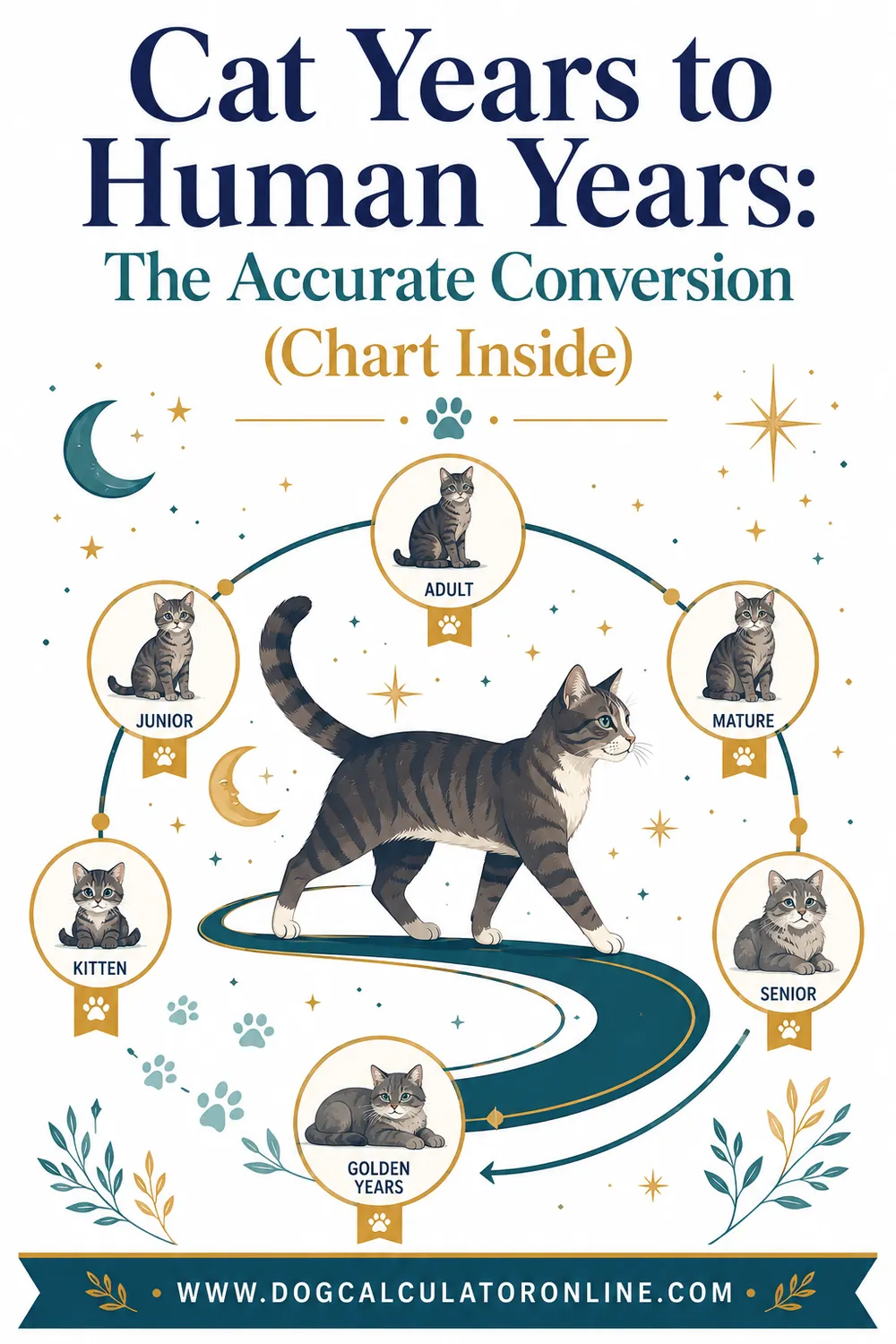
The question has a genuinely interesting answer, and it is not the one most charts imply. For roughly the first two years, cats and dogs age at almost exactly the same rate — both reach full social maturity by about 24 human-equivalent years. After that the two species separate, because in dogs the aging rate depends heavily on body size and in cats it barely varies at all. A cat ages at roughly four human years per calendar year for the rest of its life. A jack russell does much the same; a great dane runs at closer to seven. So a cat ages more slowly than most dogs and at a similar pace to a small one. Check any age against the free dog age calculator.

🐾 Which comparison do you need?
Tap one:
Tap an option above. Body size drives dog aging; it barely touches cats.
The Short Answer, With the Nuance
Both animals age far faster than we do, but not at the same speed as each other after adolescence.
In the first two years, they are almost indistinguishable. Both reach roughly 24 human-equivalent years by their second birthday.
After two, cats settle at about four human years per calendar year. That figure is remarkably stable across breeds and body sizes.
Dogs fan out by size. Roughly four human years per calendar year for a small dog, five for a medium, six for a large and seven for a giant breed.
So the honest answer is "it depends which dog". Against a chihuahua, a cat ages at much the same rate. Against a bernese mountain dog, the cat ages considerably more slowly.
Both species age fastest at the start. The first year is the steepest part of the curve for either animal, which is why a one-year-old is an adolescent rather than a child.
The First Two Years: Both Species Sprint
The early convergence is the part most people find surprising.
Year one is worth about 15 human years in both species. Puberty, full body size in most cats and small dogs, and near-complete brain development all happen inside twelve months.
Year two adds roughly another nine. By 24 months a cat and a dog are both at approximately 24 human years — young adults, physically finished and behaviorally settling.
Large-breed dogs are the exception even here. A great dane is not physically mature at twelve months; growth plates close later and the skeleton is still finishing at 18–24 months.
Kittens and puppies both hit social maturity later than physical maturity. Behavior continues to change until two or three in both species, which is why adolescent behavior outlasts the growth spurt.
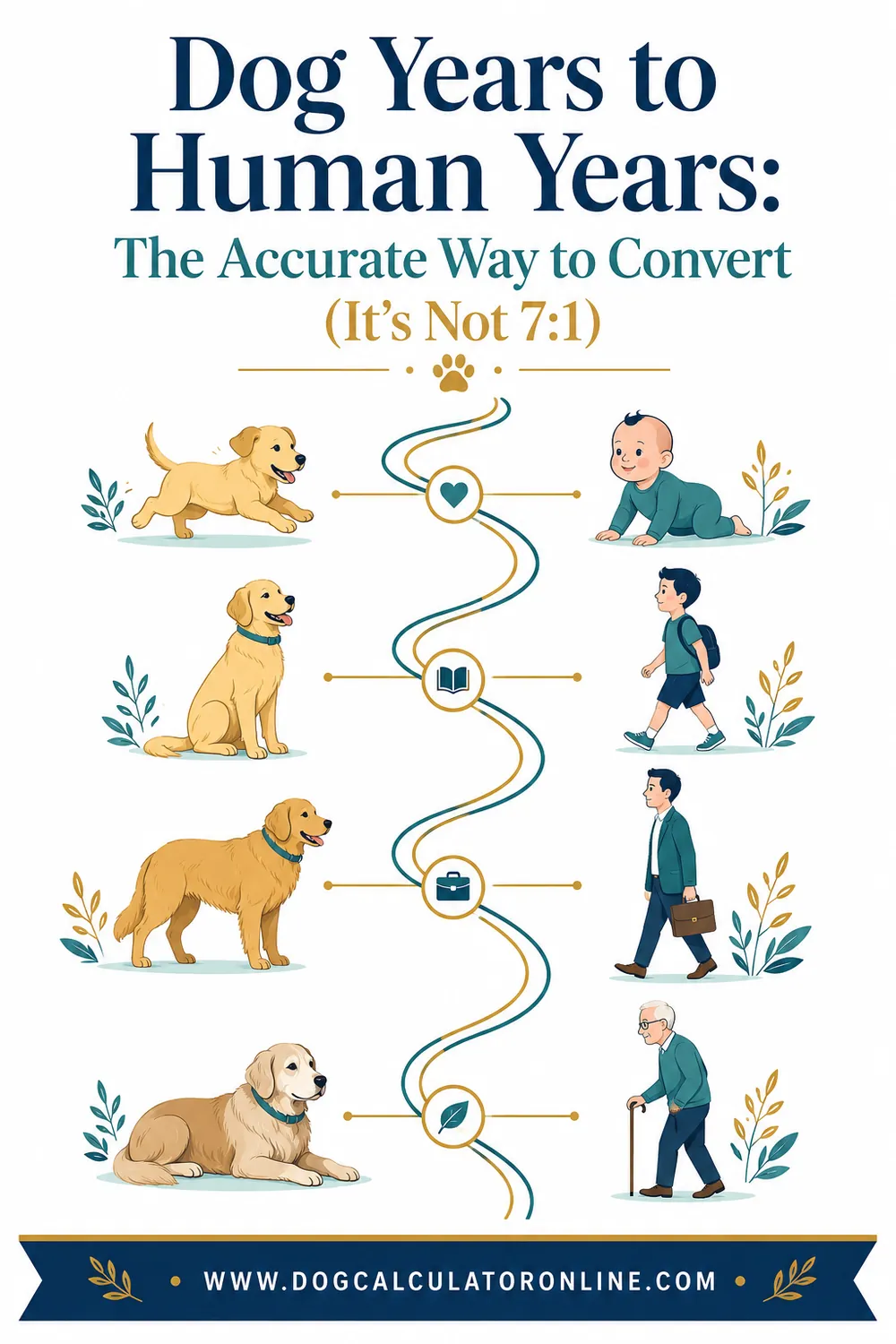
This is why the "multiply by seven" shortcut fails immediately. It would make a one-year-old a seven-year-old child, which describes neither species; see dog years to human years for the accurate method.
After Year Two: Size Decides for Dogs
This is the divergence, and it is the whole answer to the question.
| Age | Cat | Small dog (under 25 lb / 11 kg) | Large dog (60–100 lb / 27–45 kg) | Giant dog (100 lb+ / 45 kg+) |
|---|---|---|---|---|
| 1 year | 15 | 15 | 14 | 12 |
| 2 years | 24 | 24 | 22 | 22 |
| 5 years | 36 | 36 | 40 | 45 |
| 8 years | 48 | 48 | 55 | 64 |
| 10 years | 56 | 56 | 66 | 79 |
| 14 years | 72 | 72 | 88 | Rarely reached |
The cat column and the small-dog column are nearly identical. That is not a coincidence: they have similar body masses, similar metabolic rates and similar lifespans.
The gap opens fast in large breeds. By ten, a large dog is more than a decade of human-equivalent aging ahead of a cat of the same calendar age.
These are conversion conventions, not measurements. Aging is not linear and no single formula fits every animal, which is why the same age can be quoted slightly differently by different sources.
The full side-by-side is worth seeing in one place. Cat years vs dog years sets out both conversions together, and cat years to human years covers the feline method in detail.
Why Size Changes Dog Aging and Not Cat Aging
The mechanism is interesting and genuinely explains the pattern.
Domestic dogs vary in adult weight by a factor of about fifty. A chihuahua is 4 lb (1.8 kg) and a mastiff can be 200 lb (91 kg). No other mammal species spans that range.
Domestic cats vary by a factor of about three. From a 6 lb (2.7 kg) singapura to a 20 lb (9 kg) maine coon. With so little variation, size effects have little room to show.
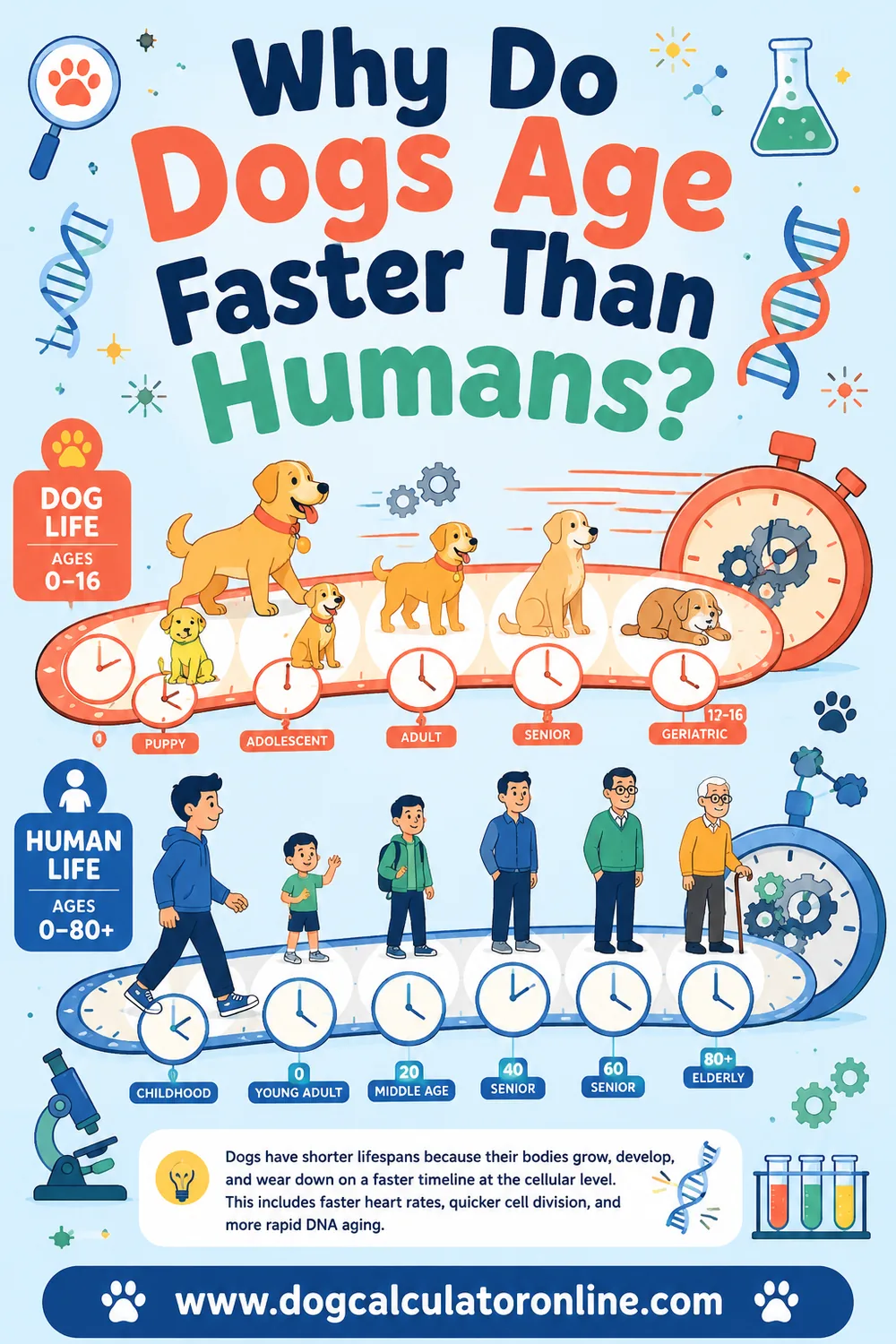
Large dogs grow much faster, and fast growth carries a cost. Higher circulating growth-hormone and IGF-1 levels through puppyhood are associated with earlier onset of age-related disease and higher cancer rates.
Cancer arrives earlier in large dogs, and it is the biggest single killer. This is the main reason giant breeds rarely see ten.
Cats show no comparable size gradient. A maine coon does live slightly less long on average than a mixed-breed cat, but the effect is small compared with the dog picture. Why do dogs age faster than humans covers the biology in more depth.
Lifespan: Cats Outlive Most Dogs
Aging rate and lifespan are related but not the same question.
Indoor cats commonly live 13–17 years, and reaching 20 is unremarkable.
Outdoor access changes that dramatically. Cats with free outdoor access have substantially shorter average lifespans, largely through road traffic accidents, fights and infectious disease rather than faster biological aging.
Small dogs match cats closely at 14–16 years. Terriers, toy breeds and small crossbreeds are the dogs that live longest.
Large and giant dogs fall well short. Labradors and german shepherds average 10–13; great danes, mastiffs and irish wolfhounds average 7–10. The full pattern is in dog life expectancy by size.
On a species-wide average, cats outlive dogs by two to four years. That average is dragged down by large breeds; comparing a cat with a small dog shows almost no difference.
What "Aging Faster" Looks Like in Practice
The clearest evidence is when each species is treated as old by its own vet.
Cats are classed as senior at about eleven and super-senior from fifteen. Twice-yearly checks are usually recommended from eleven.
Small dogs are classed as senior at ten to twelve. Very similar timing to cats.
Large dogs are senior at six to eight, and giant breeds sometimes from five. A five-year-old great dane may already need senior bloodwork.
The conditions differ as much as the timing. Chronic kidney disease, hyperthyroidism and dental disease dominate older cats; arthritis, cancer and heart disease dominate older dogs, with large breeds affected earliest.
Gray muzzles are unreliable evidence. Both species can gray from three, and graying tracks stress and pigment genetics rather than biological age; when is a dog considered senior sets out the better indicators.
Things That Change Lifespan but Not Aging Rate
Several factors shift how long an animal lives without altering the conversion at all, and they are worth separating out.
Body condition is the biggest modifiable factor in dogs. A long-running study following labradors on restricted versus free feeding found the leaner group lived substantially longer and developed arthritis later. Keeping a dog lean is the closest thing to a free intervention that exists.
Obesity does the same damage in cats. It raises the risk of diabetes, worsens arthritis and makes grooming difficult, and overweight cats are notably harder to assess for early weight loss.
Neutering extends average life in both species, mostly by removing roaming, fighting, road accidents and reproductive cancers rather than by slowing any biological clock.
Outdoor access shortens feline lifespan sharply without aging the cat faster. The difference is accident and infection risk, which is why indoor cats commonly outlive outdoor ones by several years.
Dental care buys quality of life more than years. Periodontal disease is painful, extremely common from middle age in both species, and easy to miss because animals rarely stop eating because of it.
Breed and genetics set the ceiling; care decides where in the range you land. A giant-breed dog cannot be turned into a sixteen-year-old animal, but the gap between a well-managed and a poorly managed dog of the same breed is commonly two to three years.
What This Means for How You Care for Them
The practical value of the comparison is in the timing of care, not the trivia.
Start senior screening on your animal's own clock. For a giant-breed dog that is around five; for a cat or a terrier it is closer to eleven.
Watch weight in the direction that matters for each species. Unexplained weight loss in an older cat is a significant sign and warrants a vet visit; weight gain in a middle-aged dog is the more common problem and shortens life.
Six months is a long time in an old animal. In a senior large dog, a six-month gap between checks is roughly three human years, which is why twice-yearly visits are advised.
Dental disease is the shared blind spot. It is extremely common in both species from middle age, is painful, and is often missed because animals rarely stop eating because of it.
Call the vet promptly for any sudden change in an older animal. Increased thirst, weight loss, reduced appetite, new lethargy, difficulty rising or altered toileting are all worth an appointment within days rather than watching for a month.
FAQ
Do cats really age faster than dogs?
Not in general. For the first two years the rates are almost identical, and afterwards a cat ages at roughly four human years per calendar year — the same as a small dog and slower than a large one. Against a giant breed, cats age considerably more slowly.
Why does one cat year equal about four human years?
It is a convention derived from comparing life stages rather than a measured biological rate. After a cat reaches physical and social maturity at around two, the remaining lifespan divided across expected human-equivalent stages works out at approximately four human years per calendar year.
Which lives longer, a cat or a dog?
Cats, on average, by roughly two to four years — but that average is pulled down by large dog breeds. Indoor cats commonly reach 13–17 years, small dogs 14–16, and giant breeds only 7–10. A terrier and a house cat have very similar life expectancies.
At what age is a cat old compared with a dog?
Cats are generally classed as senior at about eleven and super-senior at fifteen. Small dogs are senior at ten to twelve, large dogs at six to eight, and giant breeds sometimes from five. Senior status is about screening frequency rather than a change in the animal.
Does neutering change how fast either ages?
It does not change the aging rate directly, but neutered cats and dogs live longer on average, largely by avoiding roaming, fighting, road accidents and certain reproductive cancers. The effect on lifespan is substantial in cats with outdoor access.
Is the seven-year rule useful for either species?
No, for both. It badly understates the first two years — when both species pack in around 24 human-equivalent years — and it ignores the size effect that dominates dog aging after that. Use a species-appropriate and, for dogs, size-appropriate conversion instead.
The Answer Depends on Which Dog You Mean
Cats and dogs run neck and neck for two years, both reaching the equivalent of a 24-year-old human. From there a cat holds a steady pace of about four human years annually, and dogs split by size: a small dog matches the cat almost exactly, a large one runs at six, a giant breed at seven. That single fact — that body size drives aging in dogs and barely registers in cats — explains the lifespan gap, the different senior thresholds and why a seven-year-old dane needs senior care while a seven-year-old cat is middle-aged. Convert any age accurately with the free dog age calculator.