When Is a Dog Considered Senior? (By Size)
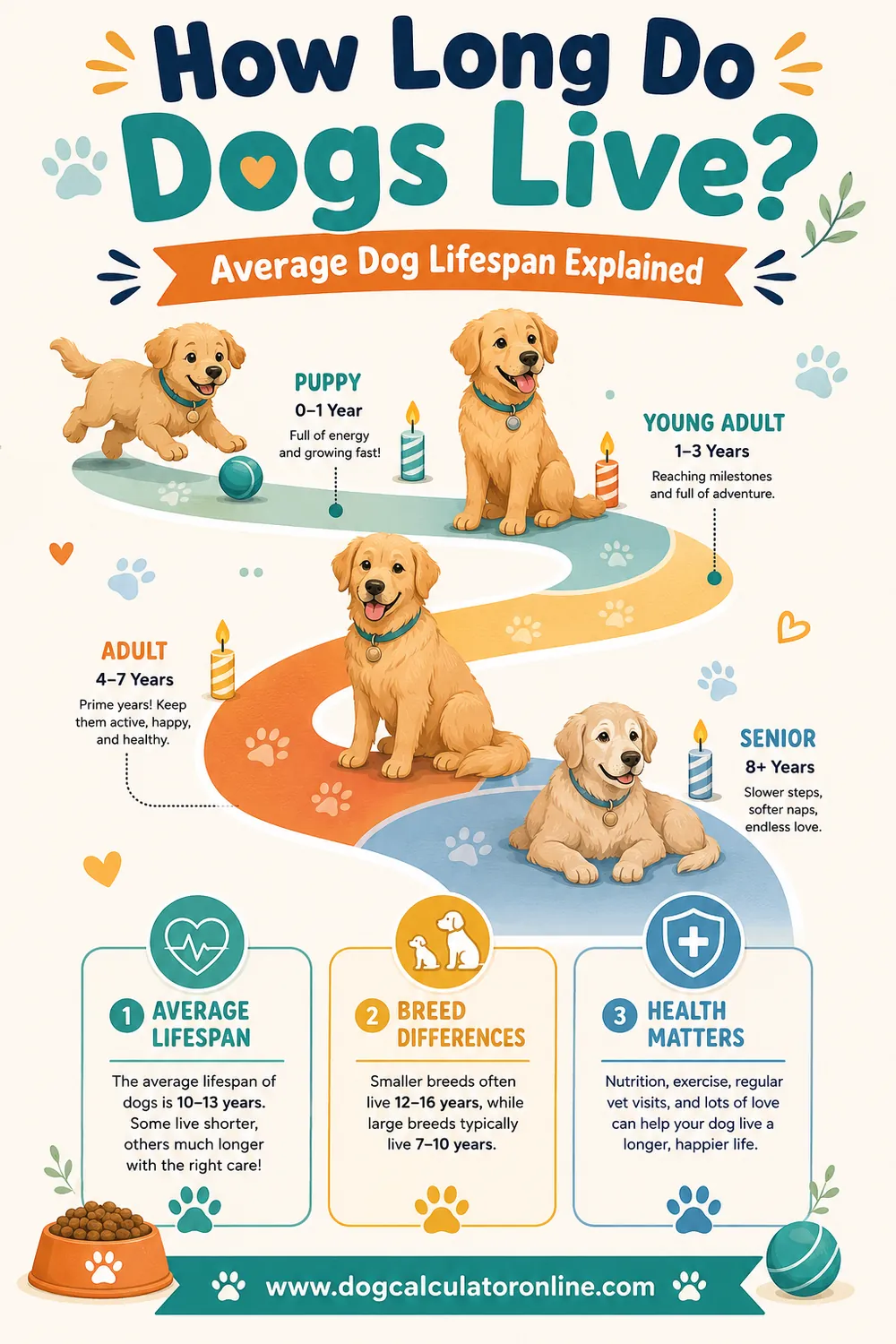
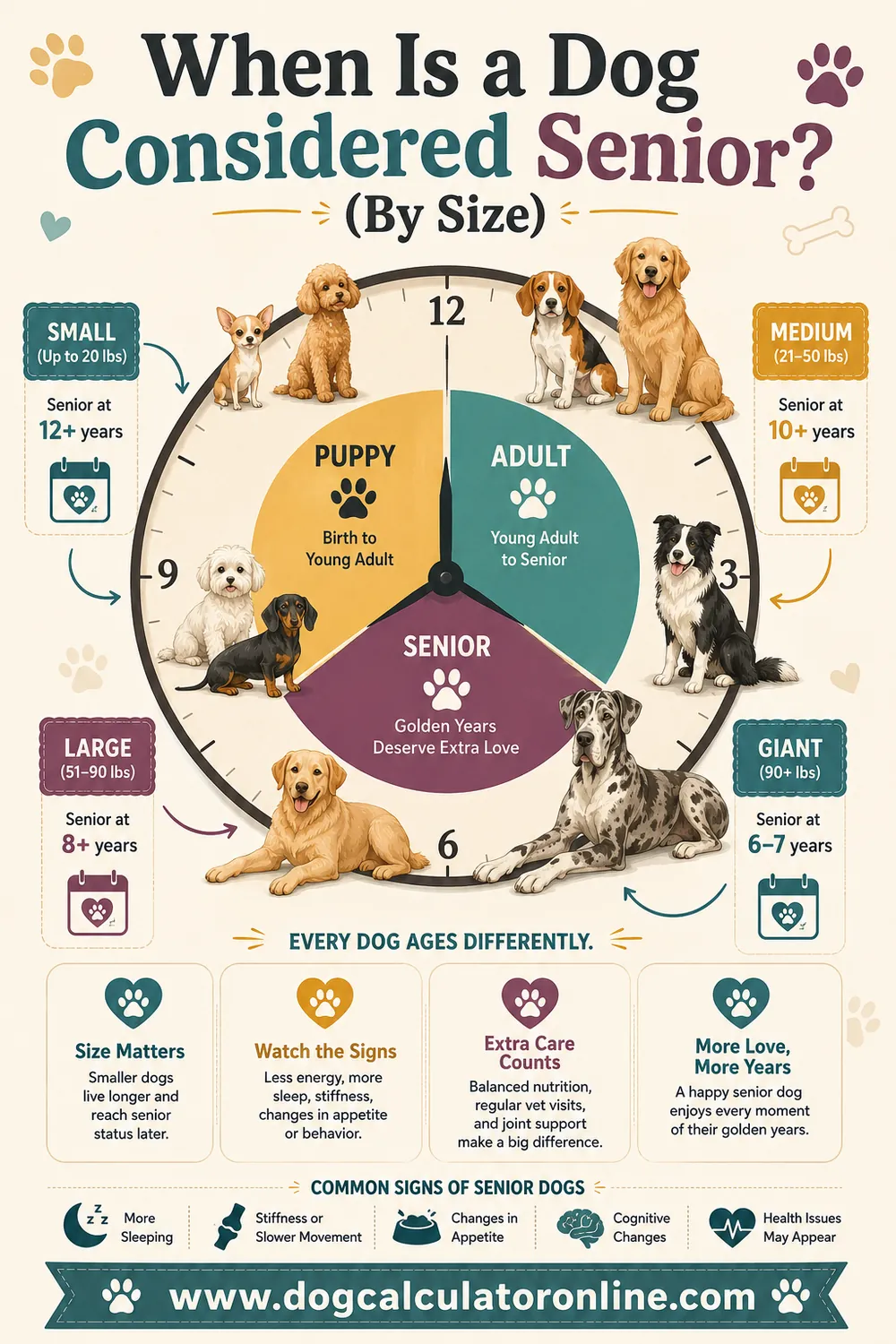
Most dogs are considered seniors around age 7 — but size moves that line a lot. Small and medium dogs typically reach senior status at about 7, large breeds at 6 to 7, and giant breeds as early as 5 or 6. A useful vet rule of thumb: a dog is "senior" once they enter roughly the last quarter of their expected lifespan.
Not sure where your dog falls? Our free dog age calculator converts your dog's age and weight into human years, which makes the senior question much easier to see at a glance.
🐾 Senior age lookup
Tap your dog’s size to see when senior status typically begins:
Tap a size class above.
Senior Age by Size: The Table
"Senior" isn't a birthday — it's a life stage that arrives on a different schedule for every size class:
| Size class | Adult weight | Senior begins around | Typical lifespan |
|---|---|---|---|
| Small | Under 20 lb | Age 7+ (often later in practice) | 12–16 years |
| Medium | 21–50 lb | Age 7 | 10–14 years |
| Large | 51–90 lb | Age 6–7 | 9–12 years |
| Giant | Over 90 lb | Age 5–6 | 7–10 years |
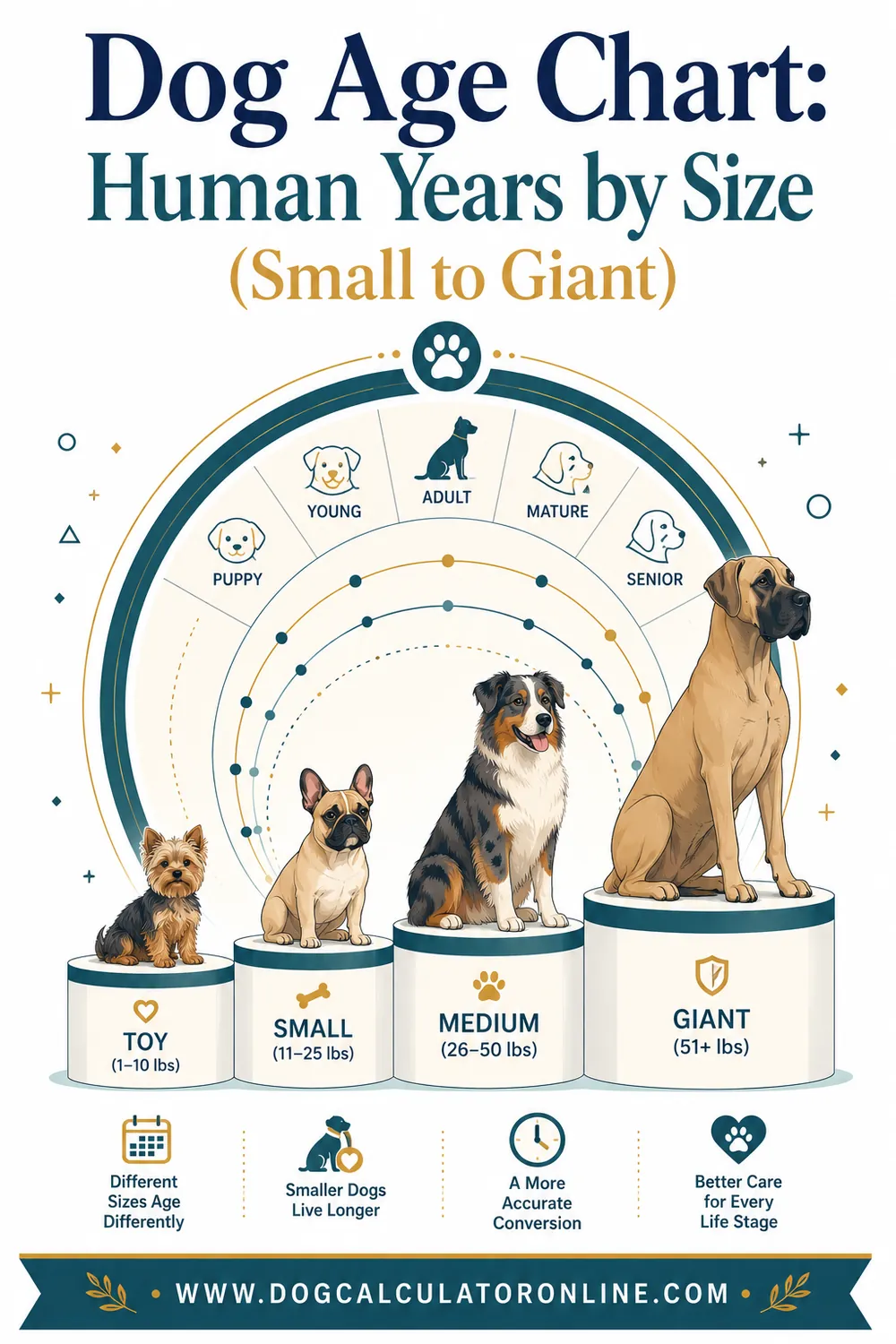
Why the spread? Because big dogs age faster. Under the size-adjusted guideline vets use, a dog's first year equals about 15 human years, the second adds 9 more, and each year after that adds 4 (small), 5 (medium), 6 (large), or 7 (giant). By age 6, a giant breed is already around 52 in human years, while a small dog is about 40.
The "Last Quarter" Rule Vets Use
Veterinary guidelines increasingly define senior status not by a fixed age but by position in the lifespan: a dog is senior once they're in roughly the final 25% of their breed or size class's expected life.
Run that rule against typical lifespans and you get the same table from a different direction:
- A small dog expected to live 15 years → senior around 11 (though screening often starts at 7)
- A medium dog expected to live 12 years → senior around 9
- A large dog expected to live 11 years → senior around 8
- A giant dog expected to live 8 years → senior around 6
You'll notice these "last quarter" numbers run a bit later than the traditional age-7 convention. Both framings are useful: the age-7 benchmark tells you when to start senior-style screening, and the last-quarter rule describes when your dog is truly living as a senior. Vets deliberately start screening early — bloodwork at 7 that's perfectly normal still becomes the baseline that makes an abnormal result at 9 obvious.
Senior vs Geriatric: They're Not the Same
It helps to split old age into two stages:
- Senior — the dog equivalent of your 50s and 60s. Still active, still themselves, but aging is measurable: metabolism slows, joints stiffen, senses dull slightly. This is the prevention and screening stage.
- Geriatric — the equivalent of late 70s and beyond. Age-related conditions are usually present and being actively managed. This is the comfort and management stage.
A 7-year-old Beagle is senior; a 14-year-old Beagle is geriatric. The care goals are different, which is why lumping every older dog into one "senior" bucket muddles decisions. To place your own dog, convert their age with the free dog age calculator — a human-equivalent of 55 versus 80 tells you instantly which stage you're planning for.
What Actually Changes at Senior Age
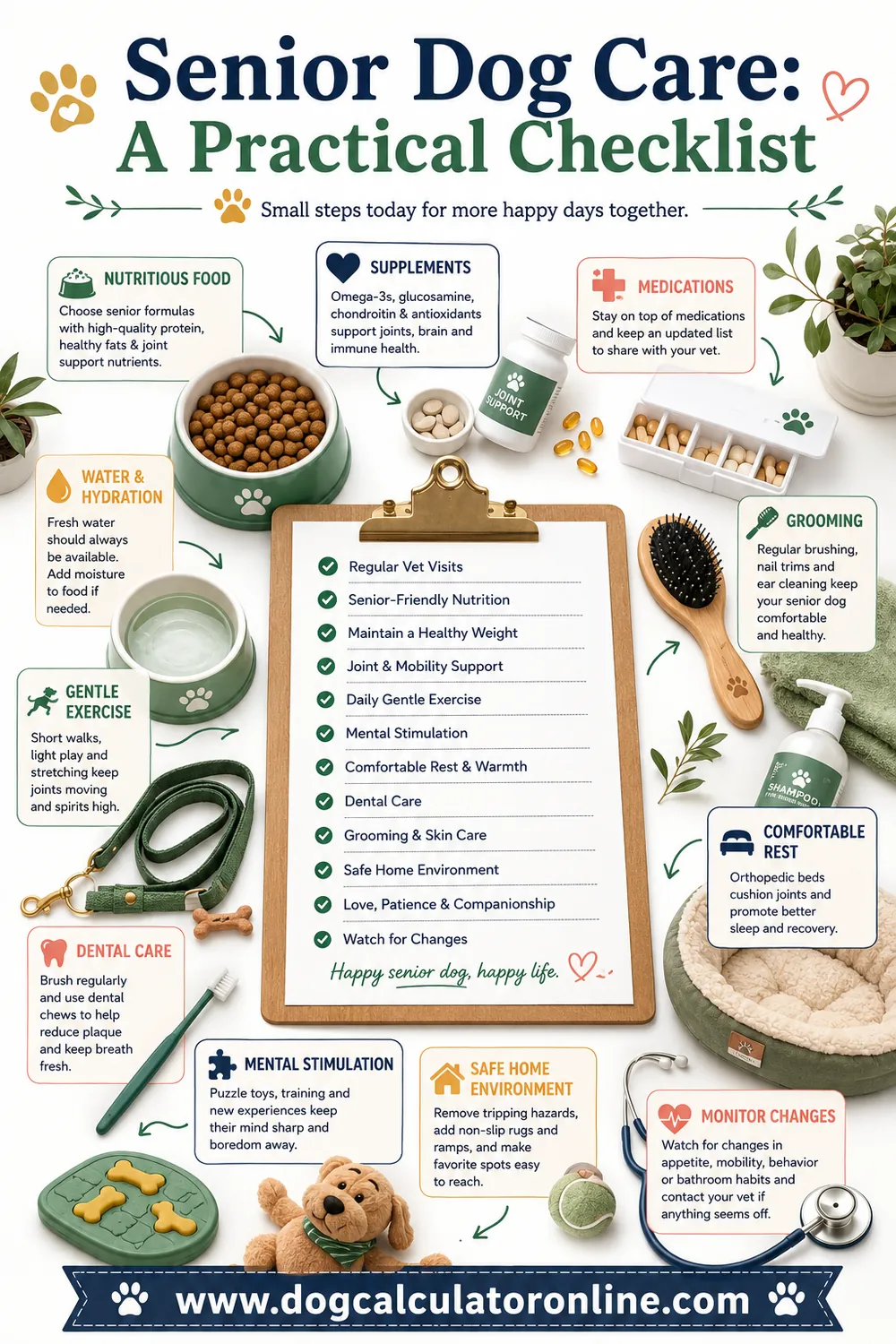
Turning "senior" doesn't mean your dog is old and frail. It means the odds of certain changes start rising, and smart owners adjust a few things:
1. Vet visits go from yearly to twice-yearly
Six months is a long time in a fast-aging body — for a large senior dog it's roughly three human-equivalent years. Twice-yearly exams (often with bloodwork and urinalysis) catch kidney, liver, thyroid, and heart changes while they're still quiet and most manageable.
2. Weight gets watched more closely
Metabolism slows while appetite doesn't. Extra weight on aging joints accelerates arthritis, and unexplained weight loss is one of the most important early illness signals in seniors. Either direction of drift deserves attention.
3. Nutrition may shift
Many dogs benefit from a senior-formulated diet — typically adjusted calories and nutrients for aging bodies — but "senior food" isn't automatic or one-size-fits-all. Ask your vet whether and when a switch makes sense for your dog.
4. Exercise changes shape, not existence
Senior dogs still need daily activity — it maintains the muscle that supports stiffening joints. What changes is the format: more consistent moderate walks, fewer high-impact leaps and sprints, and warm-up-friendly routines in cold weather.
5. The home gets small upgrades
Traction runners on slick floors, a ramp or steps for the car and couch, a thicker orthopedic bed, and food bowls at a comfortable height. Tiny changes, big comfort dividends.
6. You start watching for the subtle stuff
Slower to rise, hesitant on stairs, drinking more water, new night restlessness, cloudy eyes, bad breath, lumps. None of these automatically mean something serious — but in a senior dog, each is worth a mention to your vet rather than a shrug.
Why the Senior Label Isn't Bad News
There's a reflex to hear "senior" as a countdown, and it's worth pushing back on that. For most dogs, senior status marks the beginning of a long, comfortable chapter, not the end of a good one. A small dog who becomes a senior at 7 may have another eight or nine years ahead; even a large dog entering seniorhood at 6 or 7 often has years of happy life left.
What the label really does is unlock better care. Vets treat senior dogs proactively — screening for problems before symptoms appear — and that head start is precisely why senior dogs today live longer and more comfortably than they used to. Owners who embrace the senior label early get the benefit; owners who resist it ("she's not old, she's fine") sometimes miss the quiet, early-stage window when age-related conditions are most treatable.
So the healthiest way to hear "your dog is a senior now" is as a cue to add care, not to brace for loss. Twice-yearly checkups, a closer eye on weight, and a few home comforts are the whole assignment — and they tend to make these years genuinely good ones.
Signs Your Dog Is Entering Their Senior Years
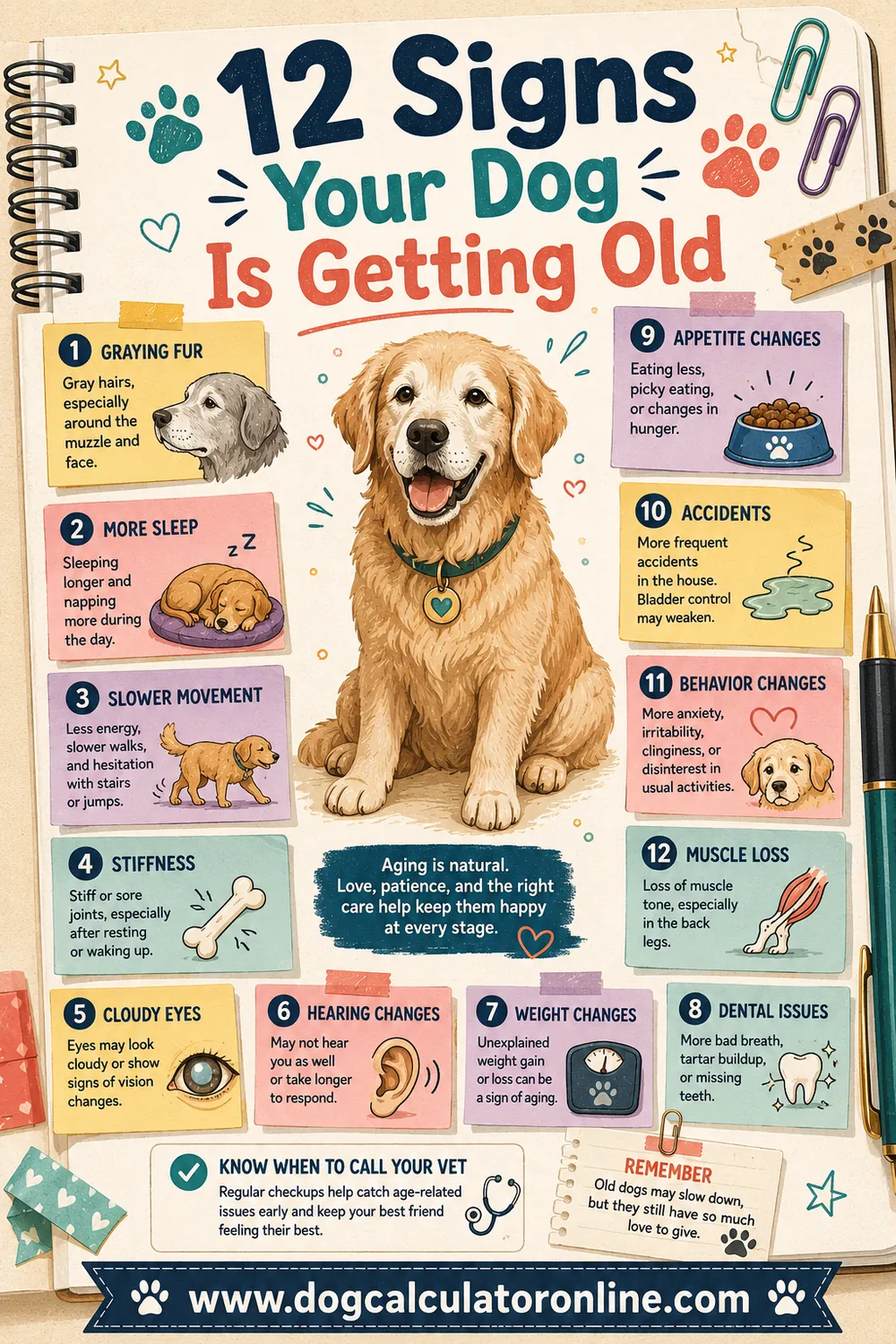
The calendar says one thing; the dog in front of you says another. Common early signals that senior life has genuinely begun:
- Gray hairs on the muzzle and around the eyes
- Sleeping more deeply and longer, slower mornings
- A step behind on walks that used to be easy
- Stiffness after rest that "walks off"
- Slight cloudiness in the eyes (often normal lens aging — but let your vet confirm)
- More selective hearing that turns out to be actual hearing decline
- Calmer temperament, less patience for chaos
If several of these are stacking up, treat it as your invitation to book that first senior wellness visit — not as a cause for sadness. Dogs commonly live a third or more of their lives as seniors, and those can be wonderful years.
Senior Age for Popular Breeds
Size classes are abstract; breeds make it concrete. Here's roughly when senior status begins for some common dogs:
| Breed | Size class | Senior begins around |
|---|---|---|
| Chihuahua | Small | 8 |
| Dachshund | Small | 7–8 |
| Beagle | Medium | 7 |
| Border Collie | Medium | 7 |
| Labrador Retriever | Large | 6–7 |
| Golden Retriever | Large | 6–7 |
| German Shepherd | Large | 6 |
| Great Dane | Giant | 5–6 |
| Bernese Mountain Dog | Giant | 5 |
These are approximations — individual dogs vary, and a fit, lean 7-year-old Lab may act years younger than the table suggests. For mixed breeds, go by adult weight and use the size-class table above.
What Happens at a Senior Wellness Visit
If "twice-yearly checkups" sounds vague, here's what that first senior visit typically looks like: a nose-to-tail physical exam, a weight and body-condition check, and usually baseline bloodwork and a urine test. Your vet may also check blood pressure, examine the eyes and teeth more carefully, and ask about changes in thirst, appetite, sleep, and mobility.
None of it is dramatic, and most of the time everything comes back normal — which is exactly the point. Those normal results become the baseline that makes a future change stand out early, when it's easiest to act on. Come armed with your own observations too; you see your dog every day, and "she's slower on stairs since spring" is genuinely useful data.
Related Guides
If this helped, these go deeper on the same question:
- 12 Signs Your Dog Is Getting Old
- Senior Dog Care: A Practical Checklist
- How Long Do Dogs Live? Average Dog Lifespan Explained
- Dog Age Chart: Human Years by Size (Small to Giant)
And if you just want your own dog’s number, the free dog age calculator does it in one tap.
FAQ
At what age is a dog considered a senior?
Around age 7 for small and medium dogs, 6–7 for large breeds, and 5–6 for giant breeds. Vets also use a lifespan-based rule: senior status begins in roughly the last quarter of expected lifespan.
Is a 7-year-old dog old?
It depends on size. A 7-year-old giant breed is around 59 in human years — solidly senior. A 7-year-old small dog is about 44 — early middle age. Size changes the answer completely.
When should senior vet checkups start?
Most vets recommend twice-yearly wellness visits from about age 7 for small and medium dogs, 6 for large breeds, and 5 for giants, typically with baseline bloodwork to compare against later.
Do senior dogs need special food?
Often, but not automatically. Senior diets adjust calories and nutrients for aging bodies, and the right timing varies by dog. Ask your vet before switching.
What is a geriatric dog?
A dog in the late stage of old age — roughly the human-equivalent late 70s and beyond — usually with age-related conditions being actively managed. Senior is the earlier stage focused on prevention and screening.
How do I find my dog's age in human years?
Use the size-adjusted method: 15 human years for year one, +9 for year two, then +4 to +7 per year depending on size. Or let our free dog age calculator do it instantly from age and weight.
Does my dog need senior food the moment they turn senior?
No. Senior status is a cue to review the diet with your vet, not to switch overnight. Many dogs benefit from adjusted calories and nutrients as they age, but the right food and timing depend on your individual dog's weight and health.
Can a dog be a senior but still act young?
Yes, and it's common — especially in small breeds. A dog can feel youthful and still benefit from senior screening, because early kidney, heart, or dental issues don't show on the outside. Let the calendar, not your dog's energy level, decide when screening starts.
The Bottom Line
"Senior" arrives around 7 for small and medium dogs, 6–7 for large breeds, and 5–6 for giants — roughly the last quarter of expected lifespan. It's not a decline; it's a schedule change: twice-yearly checkups, closer weight watching, and a few comforts around the house.
Want to know exactly where your dog stands today? Enter their age and weight into the free dog age calculator and see their human-year equivalent — it makes the senior conversation with your vet much more concrete.