Senior Dog Care: A Practical Checklist
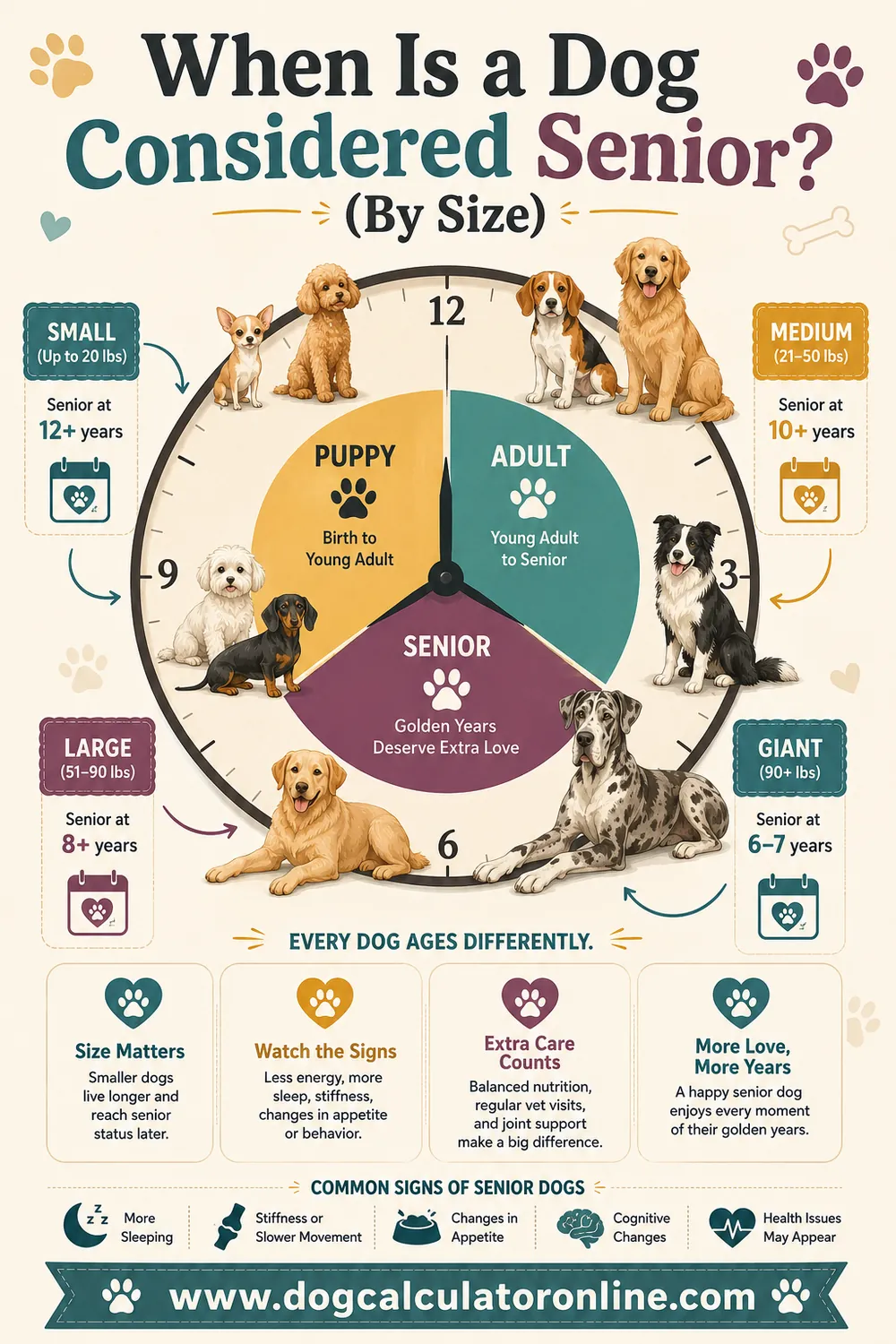
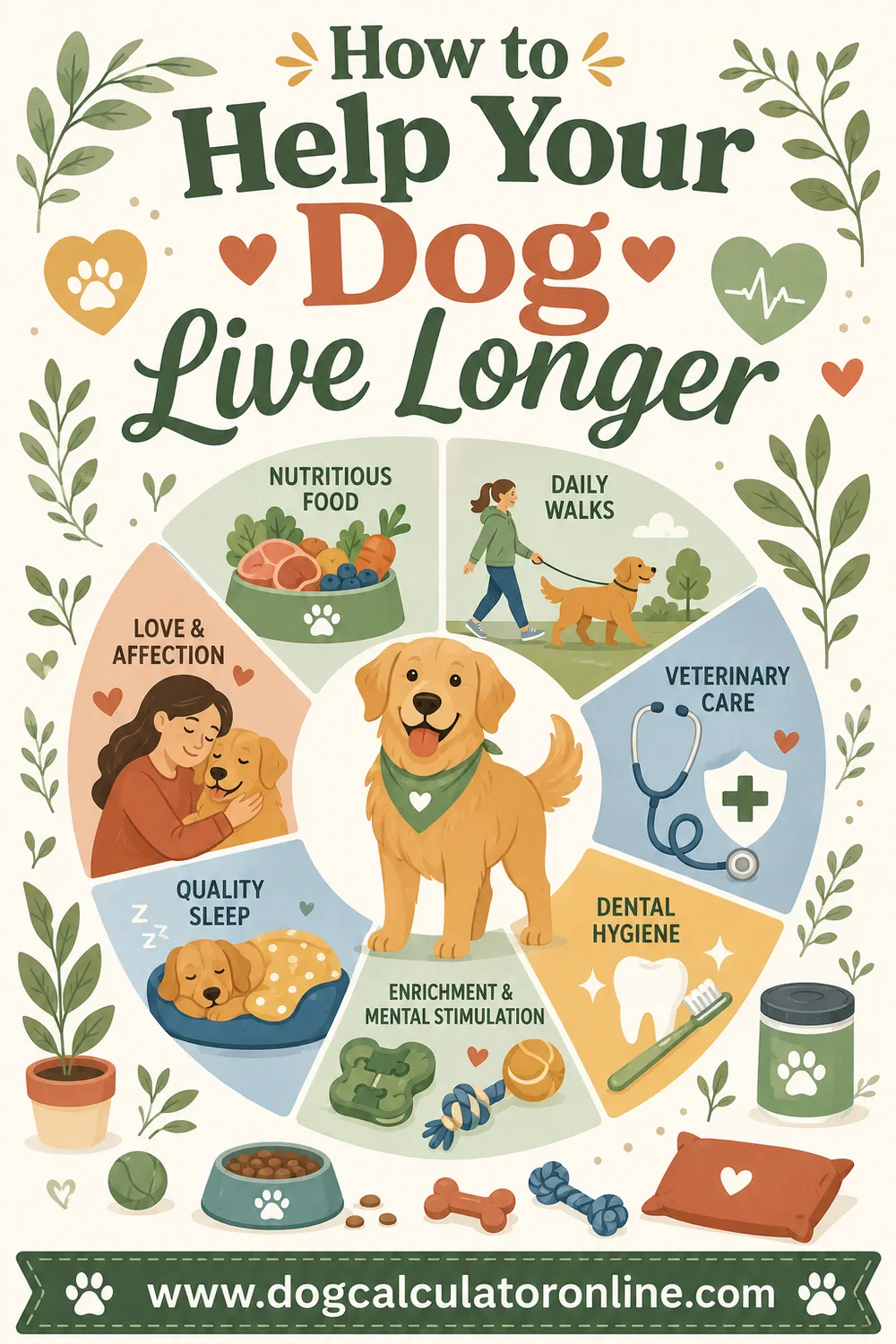
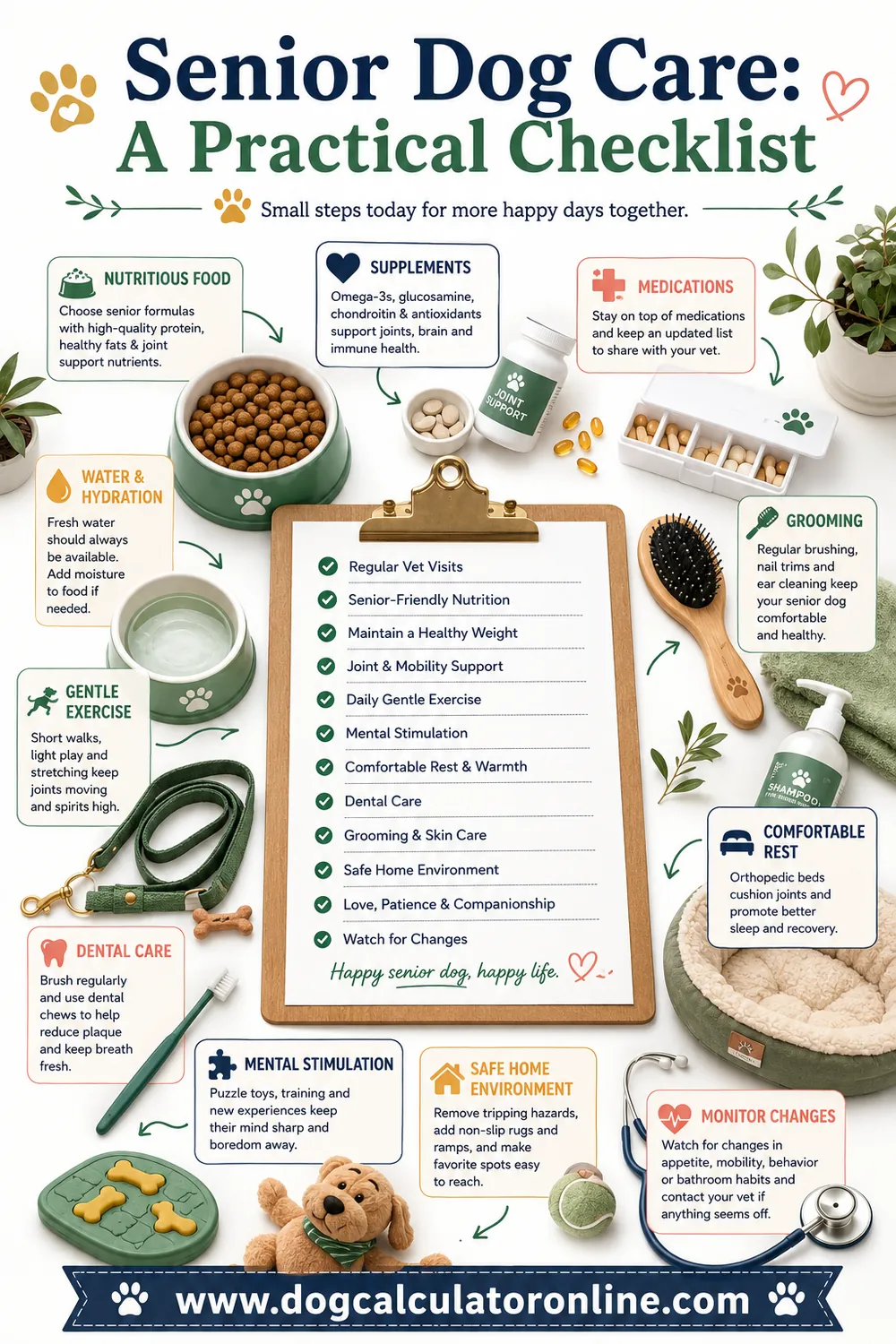
Good senior dog care comes down to seven things: twice-yearly vet visits, a lean body weight, joint-friendly daily exercise, dental care, the right diet, a few home adjustments, and steady mental enrichment. None of it is complicated — the trick is starting when your dog becomes a senior (around age 7 for small and medium dogs, 6–7 for large breeds, 5–6 for giants), not when problems appear.
Not sure if your dog has crossed that line? Our free dog age calculator turns age and weight into a human-year equivalent, which makes the senior question obvious at a glance.
🐾 When does senior care start for your dog?
Tap your dog’s size class:
Tap a size class above.
1. Move to Twice-Yearly Vet Visits
The single highest-value change. Aging dogs pack a lot of biological change into six months — for a large breed, half a calendar year is roughly three human-equivalent years. Annual visits leave problems a long runway to grow; twice-yearly visits cut it in half.
A typical senior wellness visit includes:
- Full physical exam (heart, joints, eyes, mouth, lumps)
- Bloodwork and urinalysis — kidney, liver, thyroid, blood sugar
- Weight and body-condition scoring
- A conversation about anything you've noticed at home
The first senior panel matters even when it comes back perfectly normal: it's the baseline that makes a subtle shift two years later jump off the page. Many age-related conditions — kidney disease, thyroid problems, early heart disease — are far more manageable when caught in bloodwork before symptoms show.
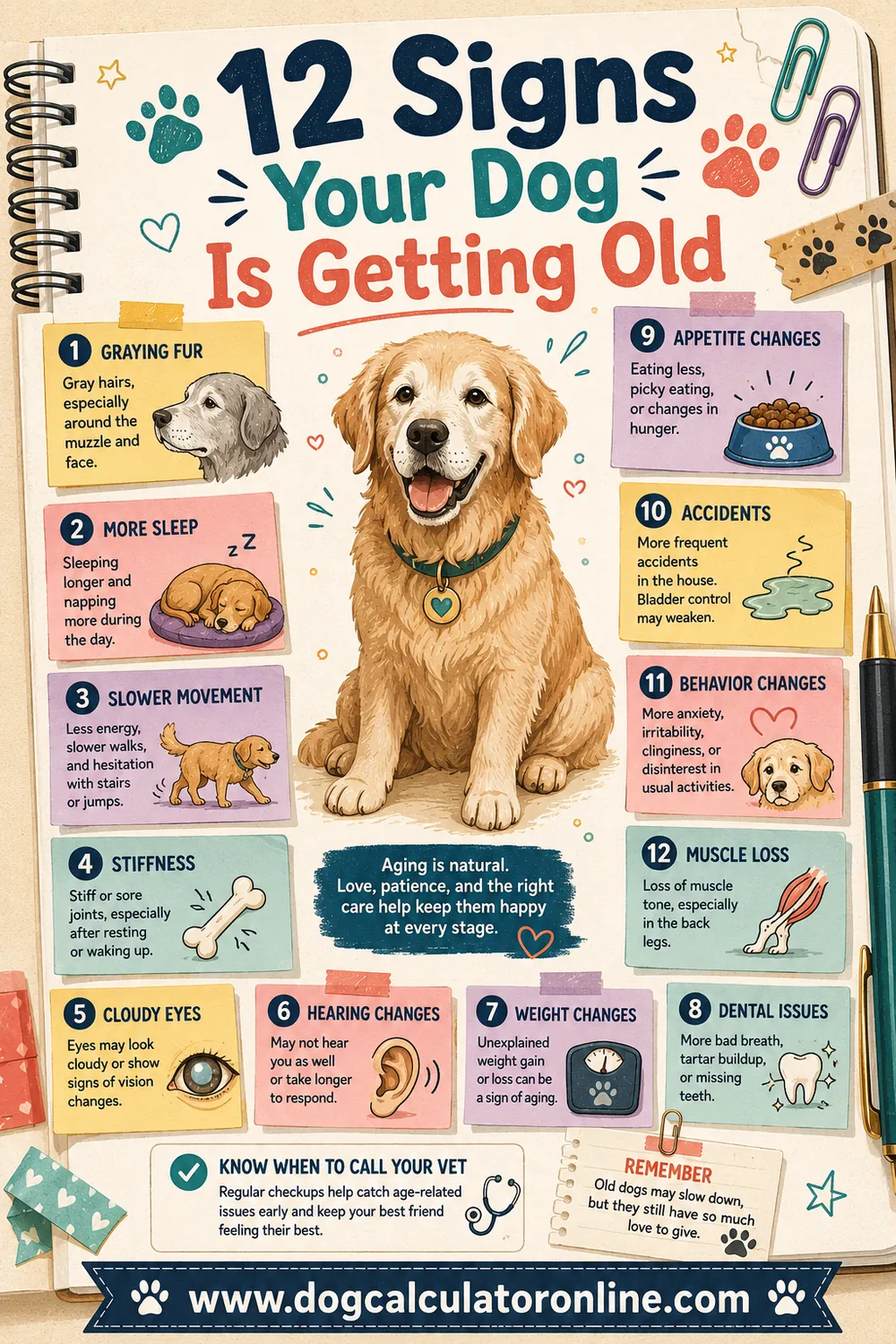
Between visits: don't sit on symptoms. Increased thirst, weight loss, new lumps, night restlessness, or a change in appetite are each worth a call rather than a wait for the next scheduled visit.
2. Keep Them Lean — It's the Closest Thing to a Longevity Drug
If you do only one thing on this list, do this one. A famous lifetime study of Labrador littermates found lean-fed dogs lived meaningfully longer than their heavier siblings — and developed age-related disease later. For a senior, extra weight means more joint pain, more strain on the heart, and higher anesthesia risk if procedures are ever needed.
The at-home check: you should feel ribs easily under a thin layer, see a waist from above, and see a belly tuck from the side. If not:
- Measure meals with an actual measuring cup or kitchen scale — eyeballed portions drift upward.
- Count treats honestly. Keep them under about 10% of daily calories; swap some for green beans or carrot bits if your dog approves.
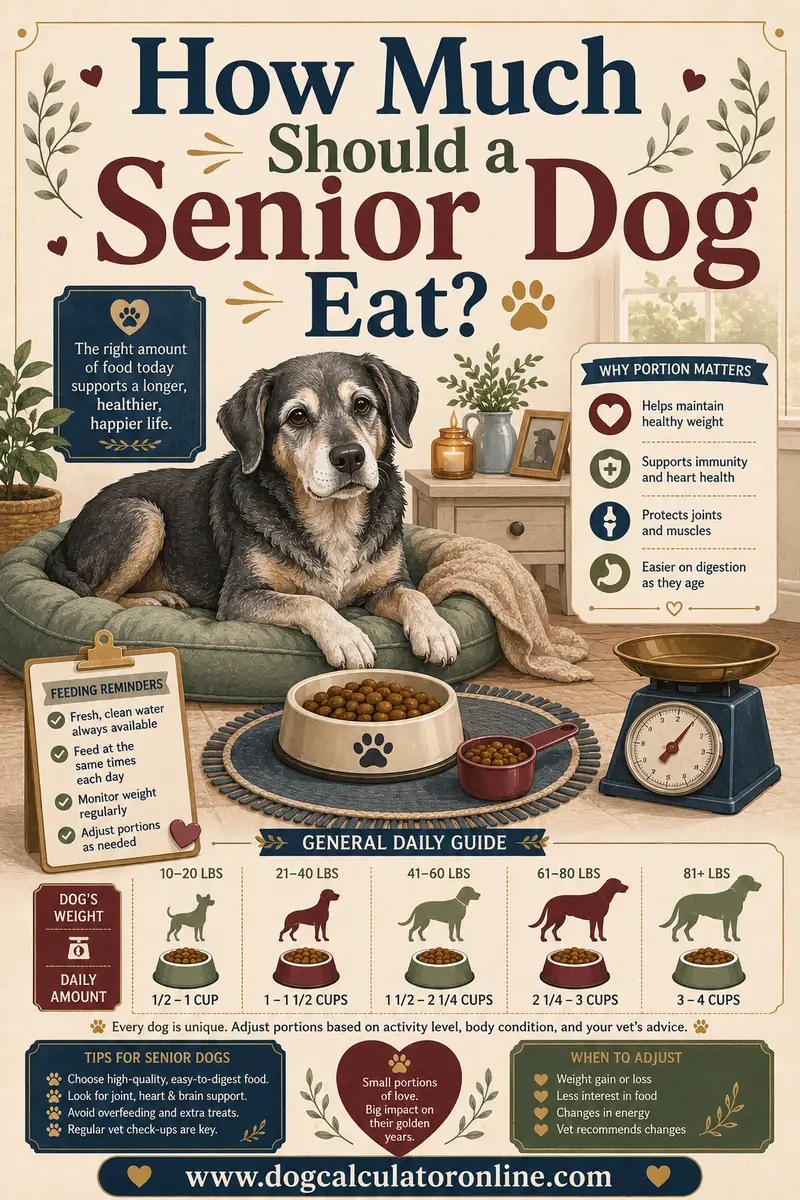
- Recheck portions as activity drops. A senior walking half as far needs fewer calories than their younger self, and food labels only give starting estimates — check your label and ask your vet what's right for your dog.
Unexplained weight loss is the flip side: never diet-plan your way past it. In a senior, weight loss without effort is a symptom until proven otherwise.
3. Exercise: Shorter, Gentler, Every Single Day
Old dogs don't need retirement; they need consistency. Daily moderate movement preserves the muscle mass that supports stiff joints, keeps weight in check, and maintains heart and brain health. What changes is the format:
- Two or three shorter walks beat one long trek.
- Steady beats explosive. Fewer ball-launcher sprints and twisting leaps; more brisk sniffy walks.
- Warm up in cold weather — arthritis hates cold starts. A few minutes of gentle movement before real exercise helps.
- Swimming is superb where available: muscle work with near-zero joint impact.
- Watch the recovery. Fine during the walk but sore that evening means today was too much. Scale back a notch, not to zero.
The enemy is the weekend-warrior pattern: nothing all week, then a two-hour adventure. Aging joints punish spikes and reward rhythm.
4. Take the Mouth Seriously
Dental disease is one of the most common problems in senior dogs, it's painful, and chronic oral infection strains the heart, kidneys, and liver. It's also the problem owners most often normalize ("old dog breath").
The practical version:
- Brush if you can — even a few times a week helps. Dog toothpaste only (human toothpaste is not safe for dogs).
- Use vet-recommended dental chews as a supplement, not a substitute.
- Get professional cleanings when your vet advises. Age alone isn't a reason to skip anesthesia — vets assess that risk individually, and untreated dental pain has costs of its own.
- Watch for signals: dropping food, chewing on one side, pawing the mouth, sudden pickiness about hard kibble.
A senior who suddenly "goes off their food" has a painful mouth surprisingly often. It's one of the most fixable quality-of-life wins in senior care.
5. Feed for the Dog They Are Now
Senior dogs commonly need fewer calories but just as much (sometimes more) high-quality protein to hold onto muscle. That's the logic behind senior formulas — but "senior" on a label isn't regulated to mean one specific thing, so the better approach is:
- Ask your vet at the next checkup whether a senior diet fits your dog, and which nutritional profile they'd aim for.
- Prioritize what's measurable: body condition and muscle tone, not marketing.
- Consider joint support only with vet guidance. Evidence on supplements varies; your vet can tell you what's worth it for your dog's specific joints.
- Hydration counts. Aging kidneys do better with steady water intake; some seniors benefit from adding water or wet food to meals — ask your vet, especially if thirst has changed.
Every kcal figure on a bag is an estimate for an average dog — seniors are the least average dogs there are. Portion guidance from your vet beats the label, and our free dog food calculator can give you a sensible starting estimate to discuss.
6. Make the House Old-Dog Friendly
Cheap, fast, and immediately appreciated:
- Traction: runners or yoga mats on slippery floors — hardwood wipeouts are a top senior hazard.
- Ramps or pet steps for the car, couch, or bed. Every jump skipped is joint mileage saved.
- An orthopedic bed in a warm, draft-free spot (and away from stairs if night wandering is a thing).
- Raised bowls for big dogs or stiff necks — ask your vet what suits your dog.
- Night lights along common routes for dimming eyes.
- Keep the furniture map stable if vision is fading; dogs navigate by memory more than we realize.
7. Keep the Brain in the Game
Cognitive decline is real in older dogs, and enrichment is genuine protection. Working brains age better:
- Sniff walks — let the nose set the pace and route. Smelling is a workout for the canine brain.
- Food puzzles and snuffle mats turn meals into gentle problem-solving.
- Keep training — short, upbeat sessions. Old dogs learn new tricks fine, and they love the paycheck.
- Preserve routine — predictable schedules lower anxiety in aging dogs — but rotate in small novelties: a new route, a new toy, a new sniffing spot.
If you notice confusion, getting stuck in corners, house-training lapses, or night pacing, raise it with your vet rather than filing it under "just old" — cognitive dysfunction has management options, and lookalike causes (pain, sensory loss) are often treatable.
The Underrated Extra: Grooming as a Health Check
Grooming quietly becomes more important with age — and not for looks:
- Nails need trimming more often, not less. A senior who walks shorter distances on softer routes wears nails down slower, and overgrown nails change how the foot lands, which aggravates already-stiff joints. Clicking on the floor means they're overdue.
- Coats change. Many older dogs groom themselves less and develop thinner or coarser fur, so mats form in spots that never matted before — behind the ears, under the legs. Mats pull on skin and hide problems.
- Every brushing session is a lump patrol. Your hands will find a new bump, a sore spot, or a flinch long before your eyes do. Most lumps on older dogs are harmless, but "new" or "changing" ones are exactly what your vet wants to know about — jot down where and when you found it.
- Keep sessions short and comfortable. Arthritic dogs struggle to stand for long grooms; a padded mat and breaks make it pleasant instead of an ordeal.
Ten minutes of brushing a couple of times a week doubles as the cheapest health screening you'll ever do.
The Checklist, In One Place
| Area | The habit | How often |
|---|---|---|
| Vet care | Wellness exam + senior bloodwork | Every 6 months |
| Weight | Weigh and body-condition check | Monthly |
| Exercise | Moderate walks, joint-friendly | Daily |
| Dental | Brushing + vet cleanings as advised | Brush ~daily; assess at checkups |
| Diet | Vet-guided portions and formula | Review at each checkup |
| Home | Traction, ramps, ortho bed, night lights | Once, then maintain |
| Mind | Sniff walks, puzzles, training | Daily-ish |
| Monitoring | Log appetite, thirst, sleep, lumps | Ongoing |
Related Guides
If this helped, these go deeper on the same question:
- When Is a Dog Considered Senior? (By Size)
- 12 Signs Your Dog Is Getting Old
- How to Help Your Dog Live Longer
- How Much Should a Senior Dog Eat?
And if you just want your own dog’s number, the free dog age calculator does it in one tap.
FAQ
At what age should I start senior dog care?
Around 7 for small and medium dogs, 6 for large breeds, and 5 for giants — roughly when your dog enters the last quarter of expected lifespan. Starting early beats starting at the first problem.
How often should a senior dog see the vet?
Twice a year, typically with bloodwork and urinalysis. Six months in an aging dog is the equivalent of about 2–3 human years.
What should I feed my senior dog?
Generally fewer calories but ample quality protein — though the right answer is individual. Ask your vet whether a senior formula fits, and treat label feeding guides as starting estimates.
How much exercise does a senior dog need?
Daily moderate exercise — often two or three shorter walks rather than one long one. Consistency protects joints; sudden intense weekends injure them.
Do senior dogs really need dental cleanings?
Often yes. Dental disease is among the most common senior conditions and affects more than the mouth. Your vet weighs anesthesia risk individually — age alone isn't a disqualifier.
How old is my dog in human years?
About 15 for year one, +9 for year two, then +4 to +7 per year by size. Get the exact figure for your dog with the free dog age calculator.
The Bottom Line
Senior dog care isn't a crisis response — it's a gentle schedule change: vet visits twice a year, weight watched monthly, daily easy exercise, real dental care, a vet-guided diet, a few home comforts, and a brain kept busy. Dogs often live a third of their lives as seniors; this checklist is how those years stay good ones.
First step: find out where your dog actually is on the aging curve. The free dog age calculator gives you their human-year equivalent in one tap — a 55-year-old dog and a 75-year-old dog need different plans.