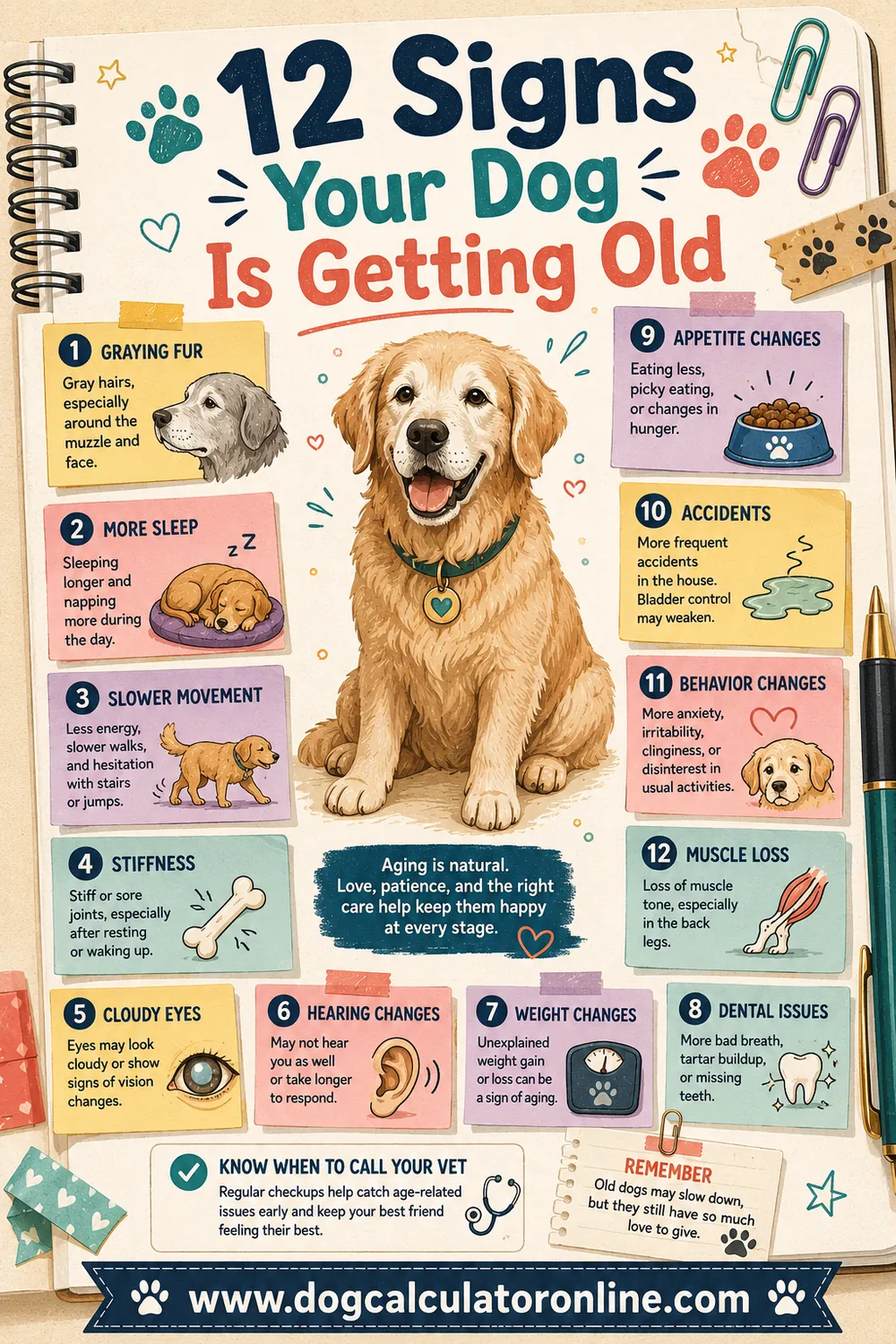
12 Signs Your Dog Is Getting Old
The most common signs a dog is getting old are a graying muzzle, stiffness after rest, longer and deeper sleep, cloudy eyes, fading hearing, and a slower pace on walks. Most are normal aging — but a few lookalike symptoms signal treatable conditions, which is why "just getting old" should be a vet's conclusion, not an owner's guess.
Age itself is half the picture. To see whether your dog is even in the senior zone for their size, our free dog age calculator converts age and weight into human years in seconds.
🐾 Is my dog senior-aged? Quick check
Tap your dog’s age to see the human-year equivalent (medium-sized dog, 21–50 lb):
Tap an age above. Large breeds reach these stages sooner, small breeds later.
First: When Does "Old" Actually Start?
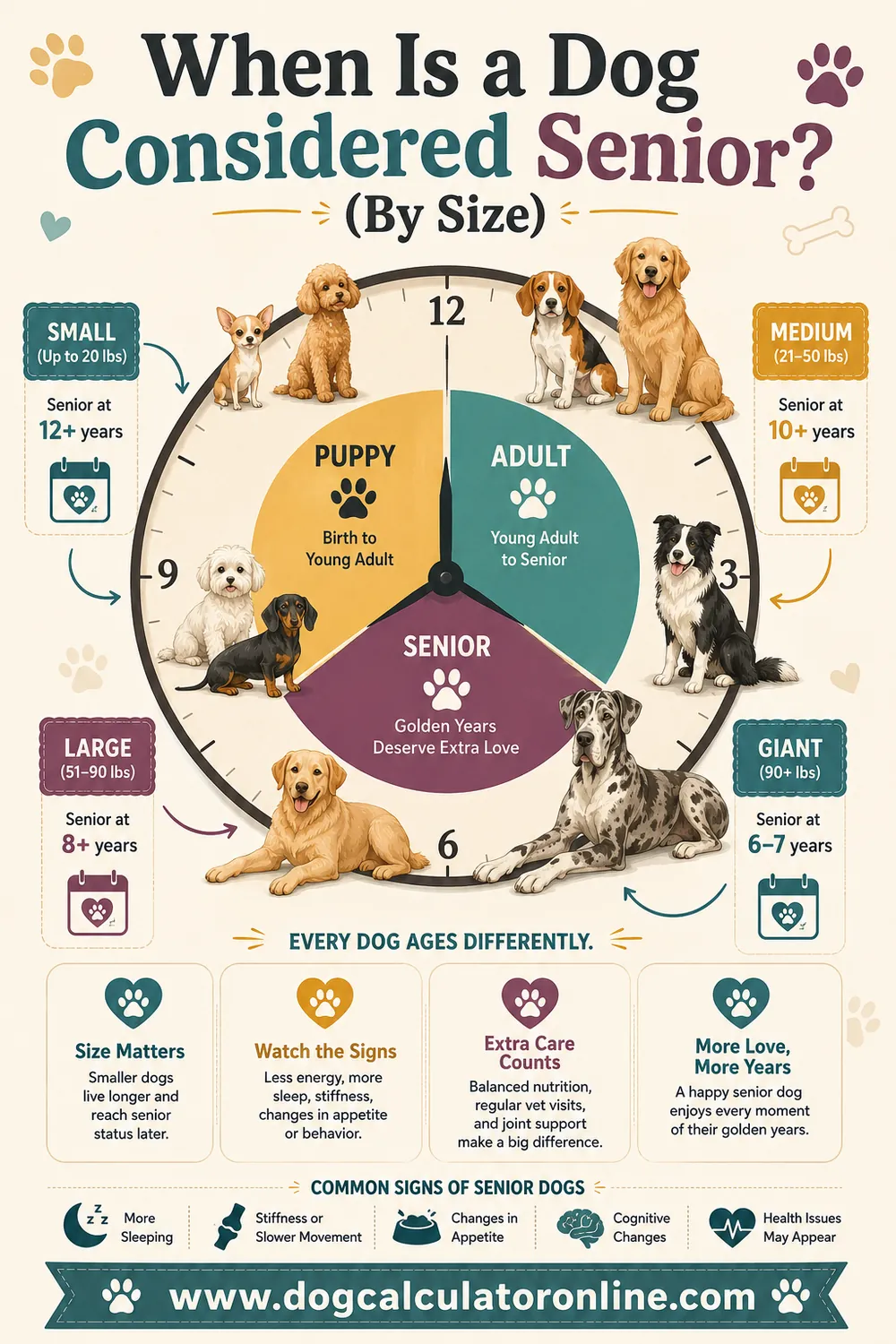
Dogs become seniors at different ages by size — around 7 for small and medium dogs, 6–7 for large breeds, and as early as 5–6 for giants. So before reading anything into symptoms, place your dog on the curve. A "slowing down" 5-year-old Great Dane is right on schedule; a slowing 5-year-old Beagle deserves a closer look, because that dog is only about 39 in human years.
With that context set, here are the twelve signs — grouped from "usually normal" to "get it checked."
The 12 Signs
1. A graying muzzle
The classic. Gray typically starts around the muzzle and eyes and spreads with the years. It's harmless, purely cosmetic, and — like humans — some dogs gray early regardless of health. (Some dogs even gray from stress or genetics in early adulthood, so gray alone proves nothing.)
2. Slower walks and less stamina
The five-mile hiker becomes a two-mile stroller. Gradual pace decline is normal aging; what matters is gradual. A sudden drop in stamina over days or weeks — especially with coughing or heavy breathing — is a vet visit, not an aging milestone.
3. Stiffness after rest
Slow to rise in the morning, a little mechanical for the first minutes, then "walks it off." That pattern usually points to early arthritis, which is extremely common in older dogs — and genuinely manageable. Don't just accept it: vets have real options for arthritic pain, and lean body weight slows the progression.
4. Sleeping more, and more deeply
Senior dogs sleep noticeably more than young adults and startle awake less easily (fading hearing contributes). More total sleep is normal. A dog who's restless at night while sleeping all day, though, may be dealing with pain or cognitive changes — mention it to your vet.
5. Cloudy eyes
A bluish-gray haze in older dogs is usually lenticular sclerosis — normal age-related lens hardening that barely affects vision. But it looks similar to cataracts, which do impair vision and sometimes need treatment. You can't reliably tell the difference at home; your vet can in minutes.
6. Fading hearing
The dog who ignores your call but appears instantly for the treat drawer may not be stubborn — high-frequency hearing often goes first. Try hand signals (dogs learn them at any age) and stomp lightly on the floor to announce yourself so you don't startle a sleeping senior.
7. Weight change in either direction
Slowing metabolism plus unchanged portions makes many seniors gain. But unexplained weight loss is one of the most important early-illness flags in an older dog — kidney disease, dental pain, and other conditions often announce themselves this way. Weigh your senior monthly; a cheap habit that catches expensive problems early.
8. Bad breath and dental trouble
Not normal aging — accumulated dental disease. It's nearly universal in older dogs without dental care, it hurts, and chronic oral infection strains the heart and kidneys. If the breath could peel paint, the mouth needs a vet, not a mint.
9. Lumps and bumps
Older dogs grow lumps. Many are benign fatty lipomas; some aren't. The rule vets give: every new lump gets checked, because you cannot tell by feel alone, and early is when the treatable ones are most treatable.
10. Drinking and urinating more
Easy to miss, hugely important. Increased thirst and urination in an older dog is a classic signal of kidney disease, diabetes, or hormonal conditions — several of which respond well to early management. If you're refilling the water bowl more than you used to, that's bloodwork-worthy.
11. Confusion or personality shifts
Getting "stuck" in corners, pacing at night, forgetting house training, new anxiety, staring at walls. These can indicate canine cognitive dysfunction — the dog equivalent of age-related mental decline. It's underdiagnosed because owners assume it's untreatable aging; in fact vets have management strategies, and other treatable conditions (pain, sensory loss) often masquerade as "senility."
12. A calmer, clingier temperament
Many old dogs mellow, tolerate less chaos, and stick closer to their people. Mostly sweet, mostly normal. Sudden clinginess combined with restlessness or hiding, though, can signal pain — dogs are masters at hiding discomfort, and behavior change is often the only visible symptom.
Normal Aging vs. See-the-Vet: The Cheat Sheet
| Usually normal aging | Worth a vet visit |
|---|---|
| Gradual graying | Sudden weight loss |
| Gradually slower walks | Sudden stamina crash, coughing |
| Mild stiffness that eases with movement | Limping, crying, refusing stairs |
| More total sleep | Nighttime restlessness and pacing |
| Bluish haze in eyes (vet-confirmed sclerosis) | Bumping into things, white/opaque lenses |
| Selective hearing decline | Head tilt, balance loss |
| Mellowing temperament | New aggression, hiding, confusion |
| — | Increased thirst and urination |
| — | Any new lump |
| — | Rotten breath, dropping food |
The pattern: gradual and mild usually equals aging; sudden, painful, or metabolic usually equals something diagnosable. And plenty of "old age" symptoms — stiffness, weight loss, accidents, grumpiness — turn out to be treatable conditions wearing an old-age costume.
The Signs That Should Never Wait
Most aging signs can wait for a scheduled checkup. A short list should not — these warrant a same-day or urgent vet call regardless of your dog's age:
- Difficulty breathing, heavy panting at rest, or a persistent cough
- A swollen, tight belly with unproductive retching — a possible sign of bloat, an emergency especially in large, deep-chested dogs
- Collapse, fainting, or sudden weakness
- Not eating for more than a day, or repeated vomiting
- Straining to urinate or producing no urine
- Sudden loss of balance, circling, or a head tilt
None of these are "just getting old." Aging happens gradually; emergencies happen suddenly. When an older dog changes over hours rather than months, treat it as urgent — early intervention is where outcomes are best, and stoic older dogs often hide how unwell they feel until a problem is advanced.
What to Do When the Signs Add Up
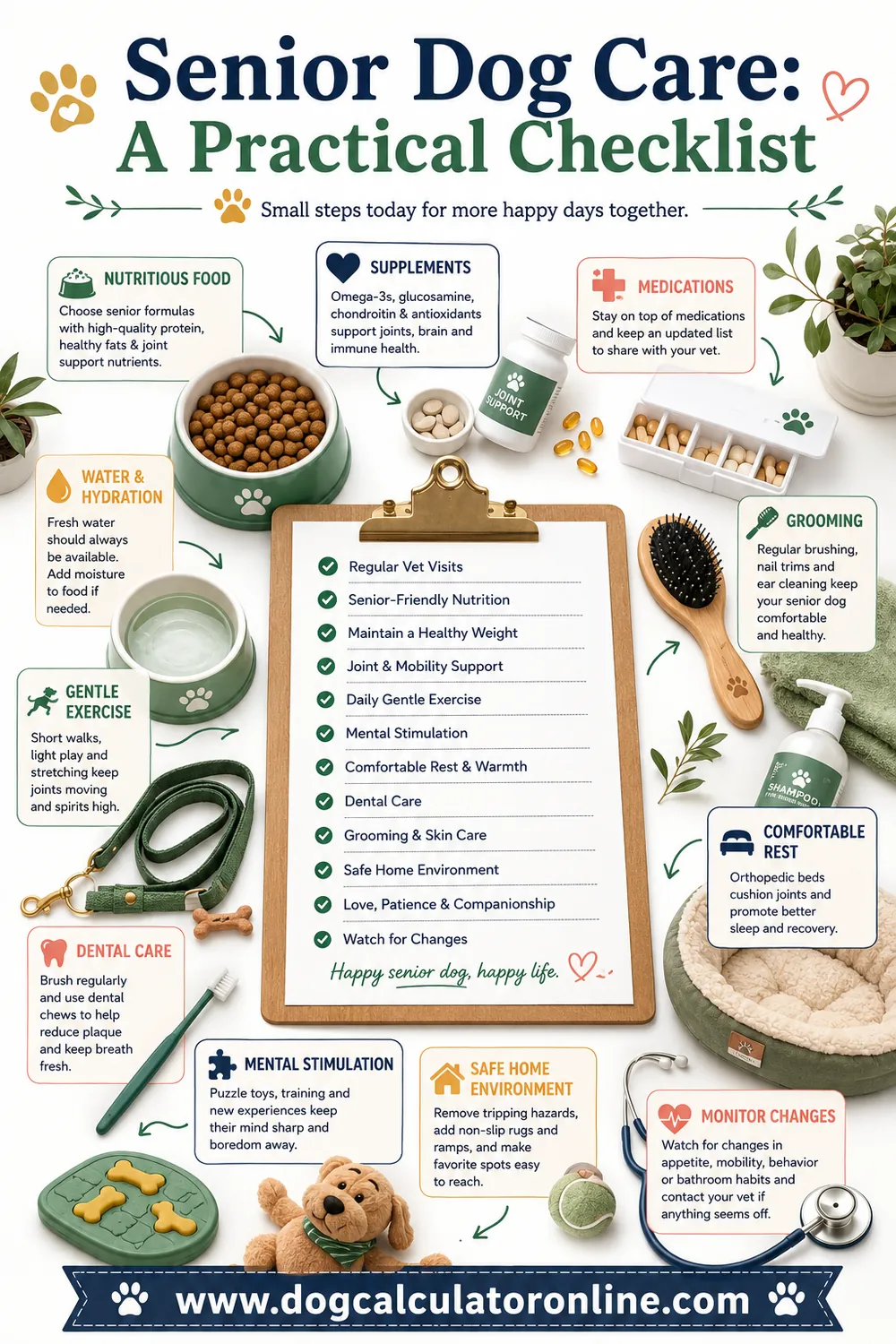
- Book a senior wellness exam. Twice-yearly visits with bloodwork and urinalysis are the standard senior playbook. The first panel becomes the baseline that makes later changes obvious.
- Start a simple log. Weight monthly; notes on appetite, thirst, stiffness, and sleep. Trends you can show a vet beat vague impressions every time.
- Adjust the environment. Traction on slippery floors, a ramp for the car, an orthopedic bed, night lights for dimming eyes. Small, cheap, immediately kind.
- Keep them moving and thinking. Consistent gentle exercise preserves the muscle that supports old joints; sniff walks and food puzzles keep the brain engaged.
- Recalibrate your expectations, not your affection. Senior dogs commonly live years past the first gray hairs — often a third of their life. These are harvest years, not borrowed time.
Related Guides
If this helped, these go deeper on the same question:
- When Is a Dog Considered Senior? (By Size)
- Senior Dog Care: A Practical Checklist
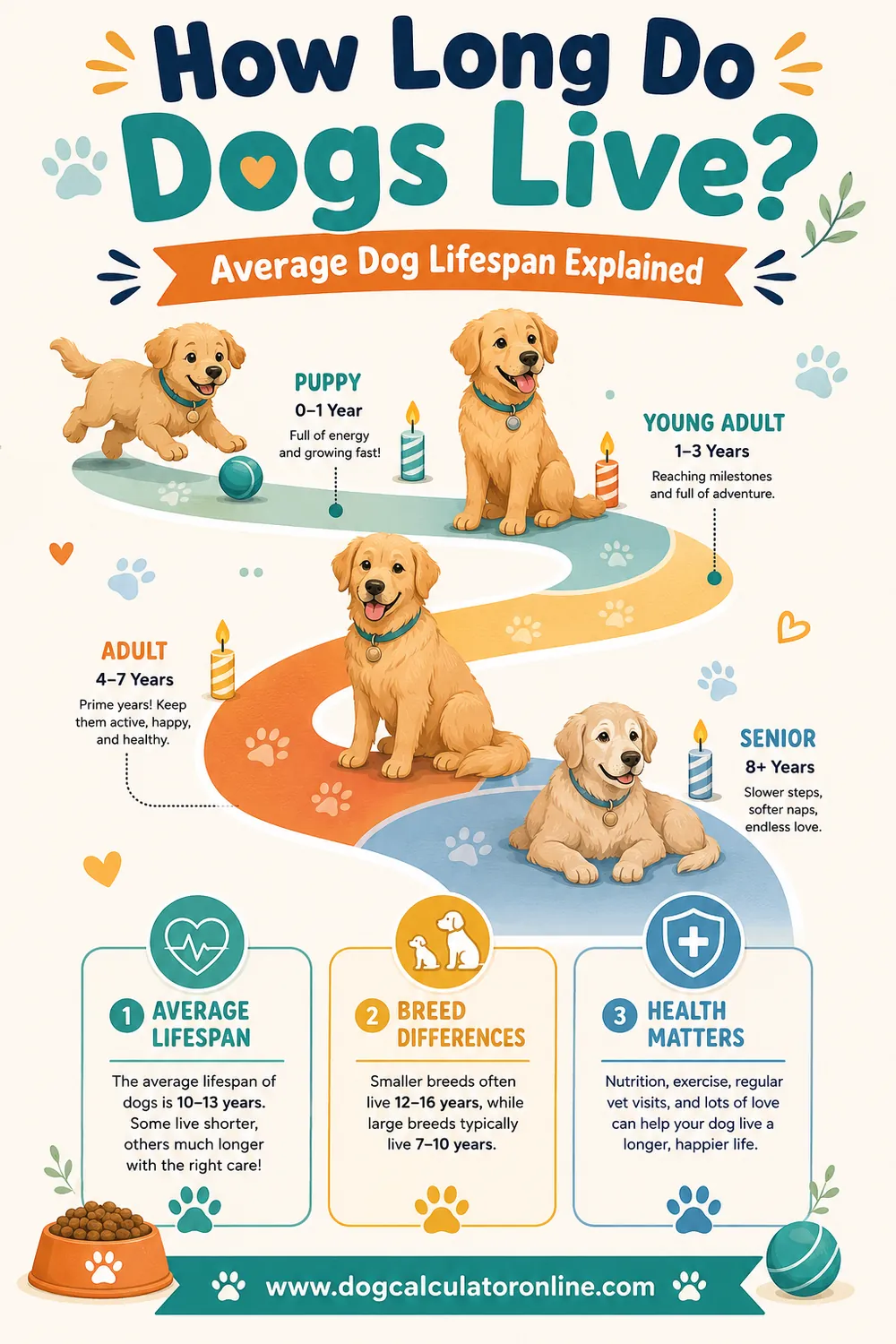
- How Long Do Dogs Live? Average Dog Lifespan Explained
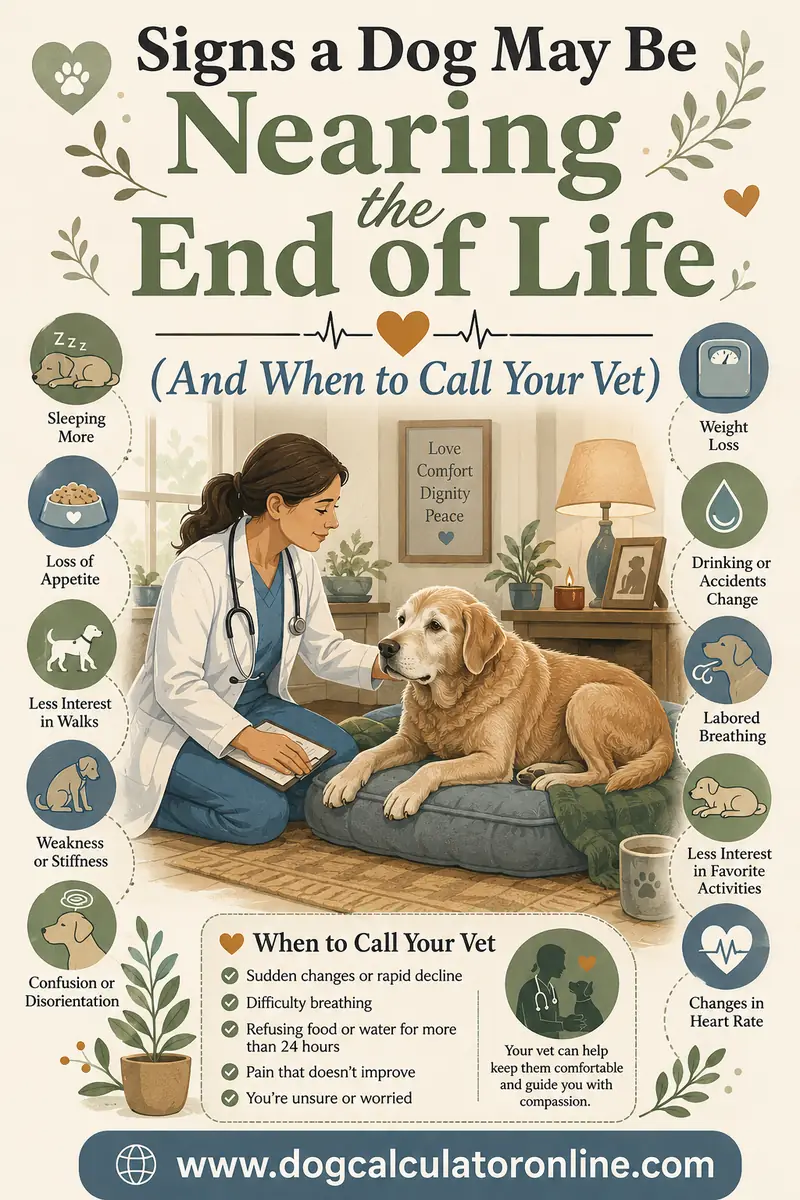
- Signs a Dog May Be Nearing the End of Life (And When to Call Your Vet)
And if you just want your own dog’s number, the free dog age calculator does it in one tap.
FAQ
What are the first signs of old age in dogs?
Usually a graying muzzle, slightly slower walks, more sleep, and mild stiffness after rest. They typically appear around age 7 for small and medium dogs, 6–7 for large breeds, and 5–6 for giants.
At what age do dogs start slowing down?
Roughly in step with senior status: giants by 5–6, large breeds by 6–7, small and medium dogs around 7–9. Gradual slowing is normal; sudden slowing at any age is a vet visit.
Are cloudy eyes in old dogs normal?
Often yes — lenticular sclerosis, a normal lens change with little vision impact. But it mimics cataracts, which do impair vision. Have a vet make the call.
Is my old dog in pain or just aging?
Dogs hide pain well. Stiffness, reluctance on stairs, licking one spot, night restlessness, and personality changes are common pain signals. When in doubt, ask your vet — arthritis pain in particular is very manageable.
When should I switch to senior dog food?
There's no automatic age — it depends on your dog's weight, health, and current diet. Ask your vet at your dog's next checkup.
How old is my dog in human years?
The first year counts as about 15 human years, the second adds 9, then each year adds 4–7 depending on size. Our free dog age calculator gives the exact number from age and weight.
Is it normal for an old dog to drink more water?
Not necessarily — it's one of the more important signals to check. Increased thirst and urination in an older dog can point to kidney disease, diabetes, or hormonal conditions, several of which respond well to early management. Mention it to your vet rather than writing it off as aging.
My old dog seems confused at night. What does that mean?
Night pacing, getting stuck in corners, or new confusion can indicate canine cognitive dysfunction — age-related mental decline that has management options. Lookalike causes like pain or sensory loss are often treatable too, so it's worth a vet conversation, not a shrug.
The Bottom Line
Gray muzzles, slower mornings, longer naps — most signs of a dog getting old are gentle and normal. The job is telling those apart from the impostors: weight loss, thirst changes, lumps, bad breath, and sudden behavior shifts, which are often treatable conditions. Gradual gets grace; sudden gets a vet.
Not sure if your dog is even senior-aged yet? Check in seconds with the free dog age calculator — enter age and weight and see exactly where they are in human years.