Dog Life Expectancy by Size: Small vs Large Breeds
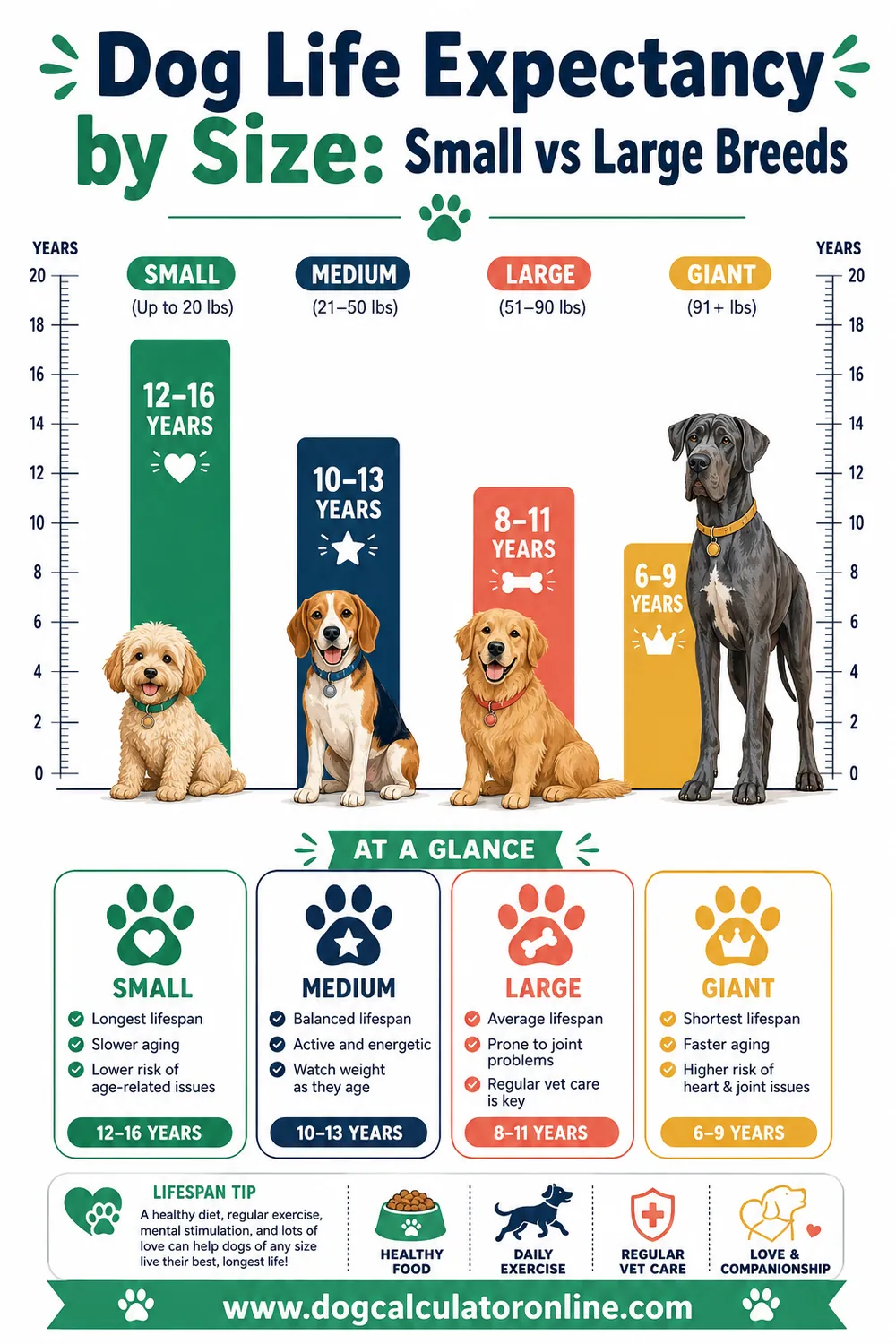
Dog life expectancy drops as size goes up. Small dogs (under 20 lb) typically live 12 to 16 years, medium dogs 10 to 14, large dogs 9 to 12, and giant breeds just 7 to 10. That gap — nearly a decade between a Chihuahua and a Great Dane — makes size the most important single factor in how long a dog lives.
Want to know how "old" your dog is right now given their size? Our free dog age calculator applies the size-adjusted aging rates vets use and gives you the human-year answer in seconds.
🐾 Life expectancy lookup
Tap a size class to see the typical range and when that size hits senior years:
Tap a size class above.
The Size–Lifespan Table
Here's the full picture, including how fast each size class ages after year two under the American Veterinary Medical Association's size-adjusted guideline:
| Size class | Adult weight | Typical lifespan | Human years added per year (after age 2) | Senior around |
|---|---|---|---|---|
| Small | Under 20 lb | 12–16 years | +4 | Age 7+ |
| Medium | 21–50 lb | 10–14 years | +5 | Age 7 |
| Large | 51–90 lb | 9–12 years | +6 | Age 6–7 |
| Giant | Over 90 lb | 7–10 years | +7 | Age 5–6 |
Two columns tell the same story from different angles. Giant dogs don't just die younger — they age faster the whole way. Each calendar year costs a giant breed about 7 human-equivalent years, versus 4 for a small dog. Over a decade, that difference compounds into an entirely different life.
Small Dogs: The 15-Year Club
Small breeds are the marathoners of the dog world. Chihuahuas, Toy and Miniature Poodles, Dachshunds, Shih Tzus, Maltese, and Jack Russell Terriers all routinely live into their mid-teens, and healthy individuals pushing 17 or 18 aren't rare.
What their long lives look like in practice:
- Slow burn after adulthood. After age 2, a small dog adds only about 4 human years per calendar year — the gentlest aging rate of any size class.
- Late seniorhood. Many small dogs don't act or test "senior" until 8, 9, or even 10, though vets often begin senior screening around 7 to catch changes early.
- Different health priorities. Long lives mean small dogs are more likely to face the diseases of true old age: dental disease, heart valve disease, kidney decline, and cognitive changes. Dental care in particular pays enormous dividends in small breeds.
Medium Dogs: The Balanced Middle
Medium breeds — Beagles, Border Collies, Cocker Spaniels, Bulldogs, and most mid-sized mixes — typically live 10 to 14 years. This is the range most people picture when they think "a dog's life."
Medium dogs age at about +5 human years per calendar year after age 2, which puts a 10-year-old medium dog at roughly 64 in human years. Breed genetics matter a lot in this class: some medium breeds are famously sturdy, while others carry breed-specific risks that pull their averages down. If you have a mix, their size is usually a better lifespan predictor than guessing at ancestry.
Large Dogs: Strong but Faster-Aging
Large breeds — Labrador and Golden Retrievers, German Shepherds, Boxers, Rottweilers — typically live 9 to 12 years. They age at about +6 human years per calendar year after age 2, so a 9-year-old Golden is already around 66 in human years.
Large dogs hit senior status around 6 or 7, and that's the right time to shift gears: twice-yearly vet visits, closer attention to weight, and joint-friendly habits. Because several large breeds carry elevated cancer risks, early detection matters even more here than in smaller dogs.
Giant Dogs: Big Hearts, Short Clocks
Giant breeds — Great Danes, Mastiffs, Saint Bernards, Irish Wolfhounds, Newfoundlands — average just 7 to 10 years. They're considered seniors by 5 or 6, and each calendar year adds about 7 human-equivalent years after age 2.
If you share your life with a giant breed, the compressed timeline changes how you plan:
- Start senior screening early. By age 5, wellness bloodwork and mobility checks are reasonable topics for your vet.
- Guard the joints from puppyhood. Controlled growth, lean body condition, and appropriate exercise during the long giant-breed adolescence protect the skeleton they'll live on.
- Know bloat. Deep-chested giants face higher risk of gastric dilatation-volvulus, an emergency. Ask your vet what signs to watch for and whether preventive options make sense for your dog.
None of this is meant to be grim. It means the "middle-aged dog" checklist arrives at 4 instead of 7 — and owners who adjust early give their giants the best shot at the top of that 7–10 range.
Why Size Flips the Lifespan Rule
Across species, bigger animals generally live longer — whales and elephants outlast rodents by decades. Within dogs, the rule inverts. The leading explanations:
- Growth speed. A Great Dane goes from about a pound at birth to well over 100 lb — a hundredfold-plus increase, mostly within two years. That torrent of cell division appears to accelerate aging and raise cancer risk.
- IGF-1 levels. Large dogs carry higher levels of insulin-like growth factor 1. Across many species, higher IGF-1 tracks with faster aging and shorter lives.
- Earlier disease onset. Studies consistently find that big dogs develop age-related conditions — arthritis, heart disease, many cancers — at younger calendar ages than small dogs.
Interestingly, dogs of all sizes end their lives at a similar biological old age. Run the size-adjusted math to the end of each typical lifespan and small, medium, large, and giant dogs all land in the human-equivalent late 60s to mid 70s. Big dogs simply reach that point in fewer calendar years — a finding echoed by the 2019 UC San Diego epigenetic study, which showed dog aging is front-loaded rather than linear.
Where Mixed Breeds Fall
Most dogs aren't purebred, so which lifespan do you use for a mix? The answer is refreshingly simple: go by adult weight, not ancestry. A 15-pound mixed-breed ages on the small-dog curve; a 70-pound mix ages on the large-dog curve. Size is the dominant lifespan predictor whether or not you know what's in the family tree.
There's a modest bonus for mixes: large veterinary studies suggest mixed-breed dogs live roughly a year longer than size-matched purebreds on average, likely thanks to greater genetic diversity lowering the odds of concentrated inherited diseases. It's a small effect next to size, but a welcome one — and it means a lean, well-cared-for mystery mutt is set up nicely for its size class.
If you don't know your rescue's exact weight class yet, a vet visit or even a home scale settles it quickly, and from there the lifespan range and care timeline fall into place.
What This Means for Your Dog's Care Timeline
Size should set your care calendar, not just your food budget:
| Milestone | Small | Medium | Large | Giant |
|---|---|---|---|---|
| Fully grown | 9–12 months | ~12 months | 12–18 months | 18–24 months |
| "Middle age" begins | ~5–6 years | ~4–5 years | ~4 years | ~3 years |
| Senior checkups (2×/year) | ~7+ | ~7 | ~6 | ~5 |
The easiest way to internalize this: stop thinking in calendar years and start thinking in human-equivalent years. A 6-year-old Mastiff is around 52 in human years — squarely middle-aged. A 6-year-old Yorkie is about 40. Same birthday, different lives. Our free dog age calculator makes the conversion instantly for any age and weight.
Related Guides
If this helped, these go deeper on the same question:
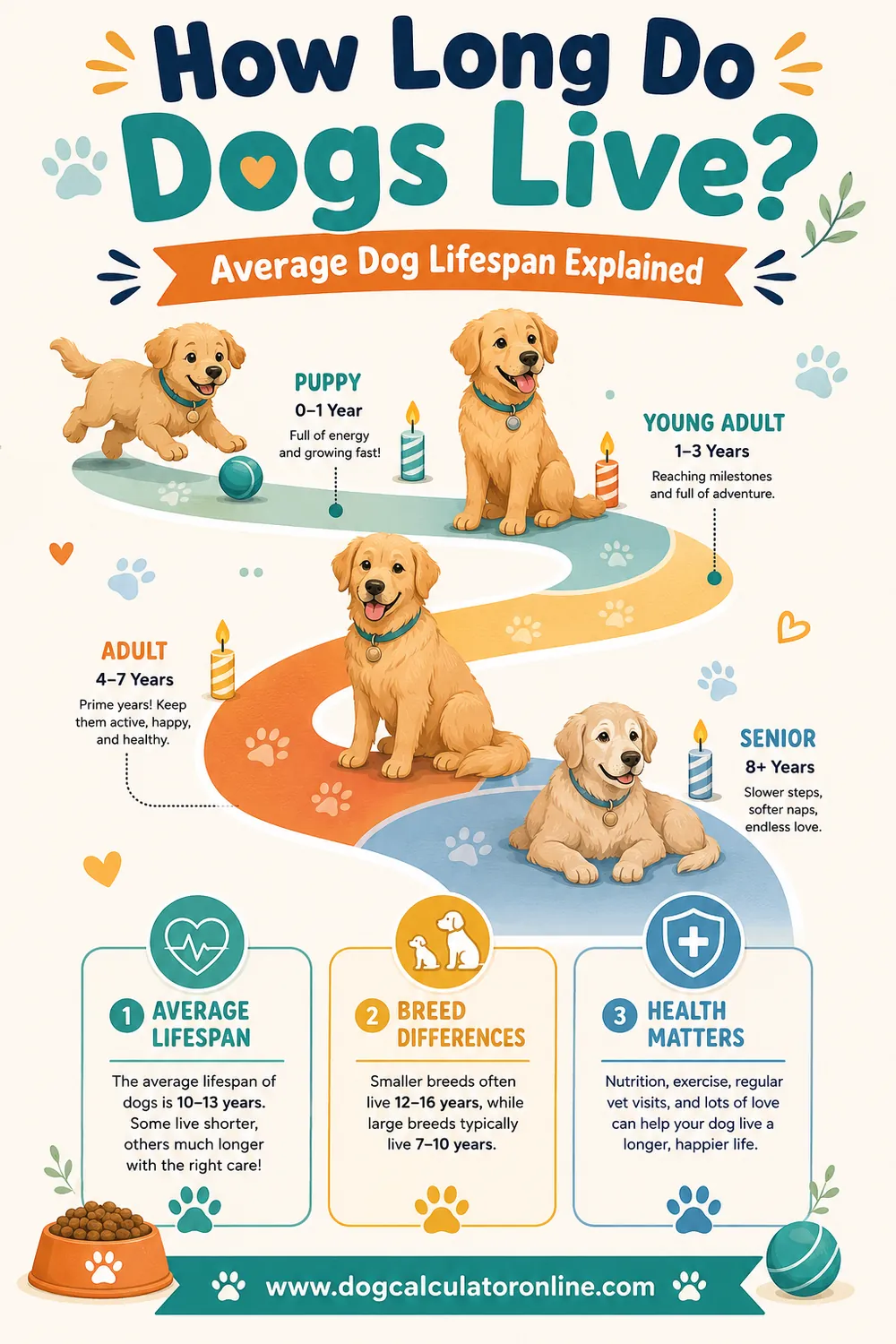
- How Long Do Dogs Live? Average Dog Lifespan Explained
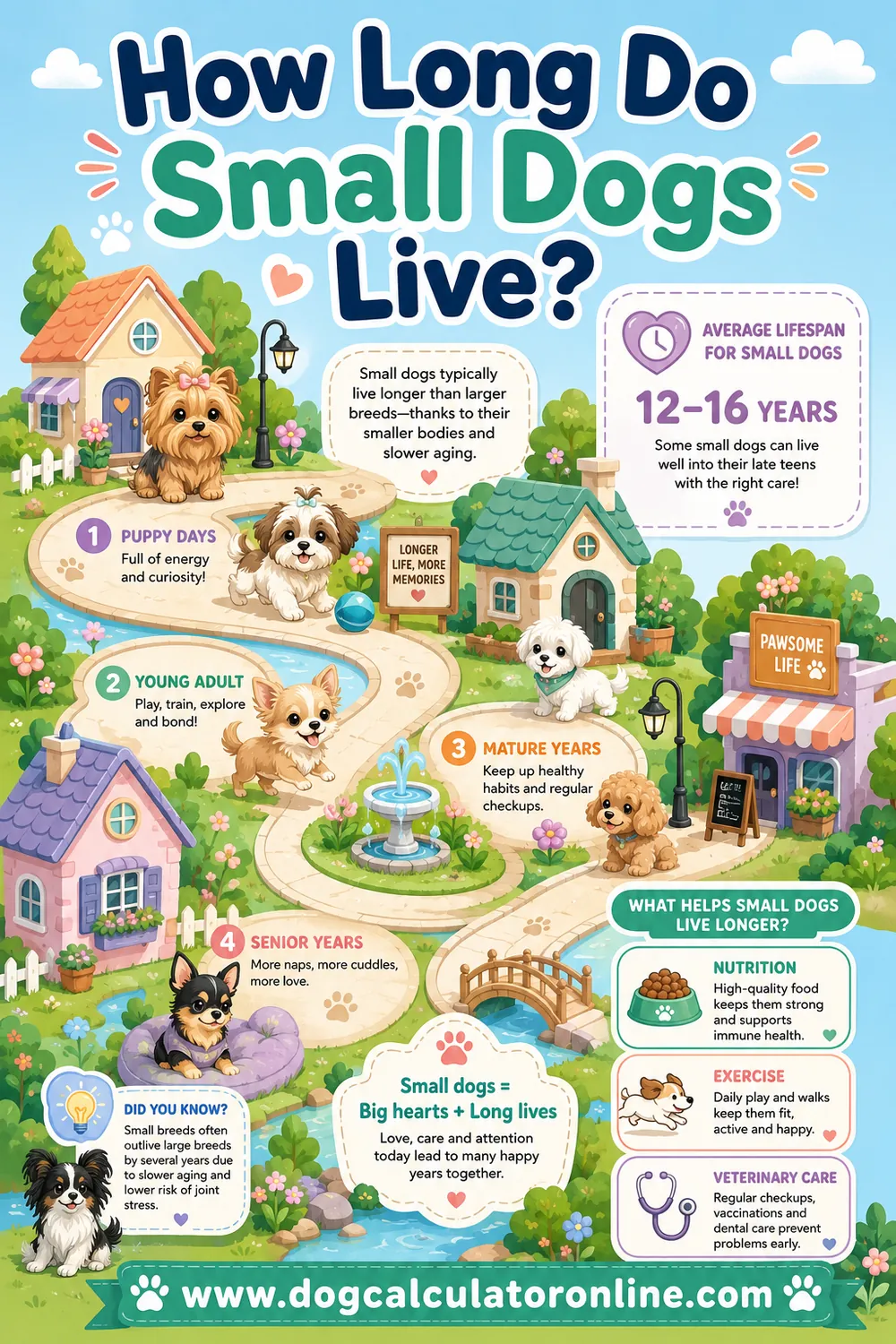
- How Long Do Small Dogs Live?
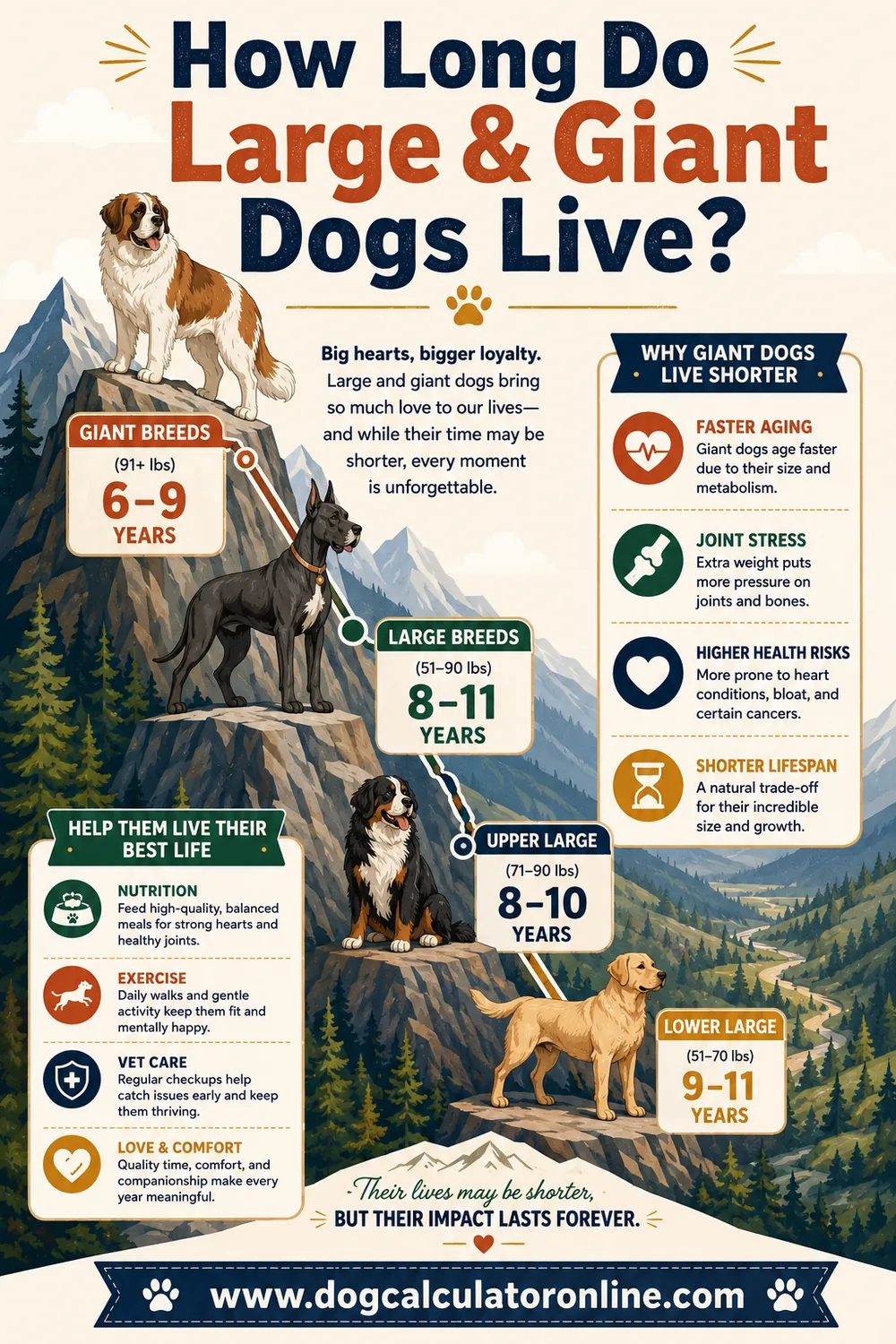
- How Long Do Large & Giant Dogs Live?
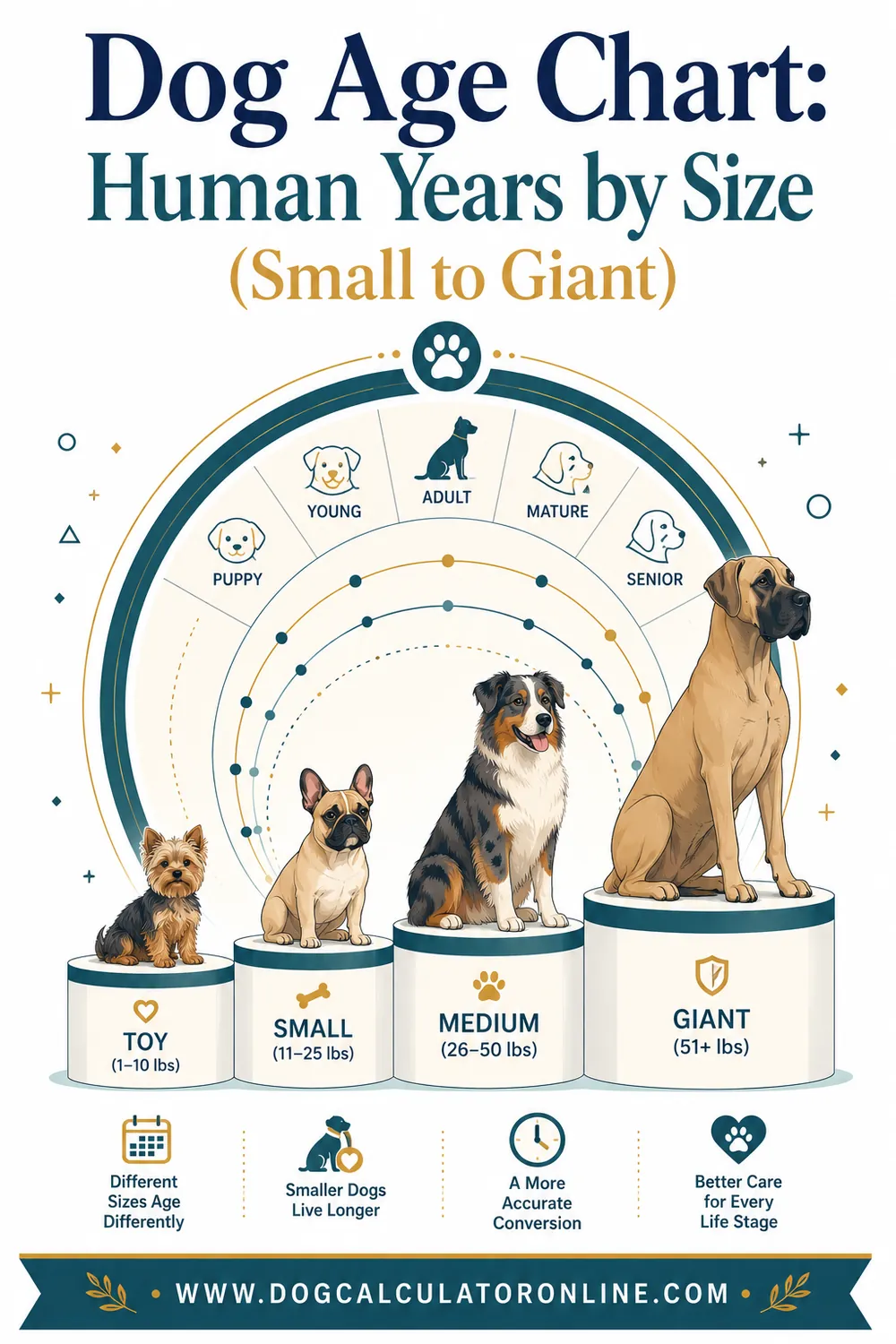
- Dog Age Chart: Human Years by Size (Small to Giant)
And if you just want your own dog’s number, the free dog age calculator does it in one tap.
FAQ
How long do dogs live by size?
Small dogs (under 20 lb) typically live 12–16 years, medium dogs (21–50 lb) 10–14 years, large dogs (51–90 lb) 9–12 years, and giant breeds (over 90 lb) 7–10 years.
Why do small dogs live longer than big dogs?
Large dogs grow explosively fast, which appears to accelerate aging and cancer risk, and they carry higher levels of the growth factor IGF-1, which is linked to shorter lifespan. They also develop age-related diseases at younger ages.
Do small and large dogs age at the same rate?
No. After age 2, small dogs add about 4 human-equivalent years per calendar year while giant breeds add about 7. That's why vets use size-adjusted conversions rather than a flat multiplier.
When does a large dog become a senior?
Around age 6–7 for large breeds and as early as 5–6 for giants, compared with about 7 or later for small and medium dogs.
Does weight within a size class matter?
Yes, at the margins. An overweight dog of any size faces shorter life expectancy — keeping a dog lean is the best-documented way owners extend healthy years.
How old is my dog in human years for their size?
Use the size-adjusted method: 15 human years for year one, +9 for year two, then +4/+5/+6/+7 per year for small/medium/large/giant dogs. Or skip the math — our free dog age calculator does it for you.
Do all giant breeds have short lifespans?
Most do — Great Danes, Mastiffs, and Irish Wolfhounds average 7–10 years — but there are exceptions. Great Pyrenees, for instance, often reach 10–12. Breed genetics can bend the size rule, though they rarely erase it entirely.
Does keeping a big dog lean really extend its life?
Yes. A landmark lifetime study of Labradors found lean-fed dogs lived meaningfully longer than overweight littermates. For large and giant breeds, lean weight also protects joints under a heavy frame — it's the best-documented longevity lever owners control.
The Bottom Line
Size is destiny when it comes to dog lifespan: small breeds average 12–16 years, giants just 7–10, and the aging rate between them differs by nearly double. Match your care timeline to your dog's size class — earlier senior checks for bigger dogs, diligent dental care for the long-lived little ones — and you'll meet each stage prepared.
To see exactly where your dog is on their size-adjusted aging curve, try the free dog age calculator — enter age and weight, get the answer instantly.