How Long Do Small Dogs Live?
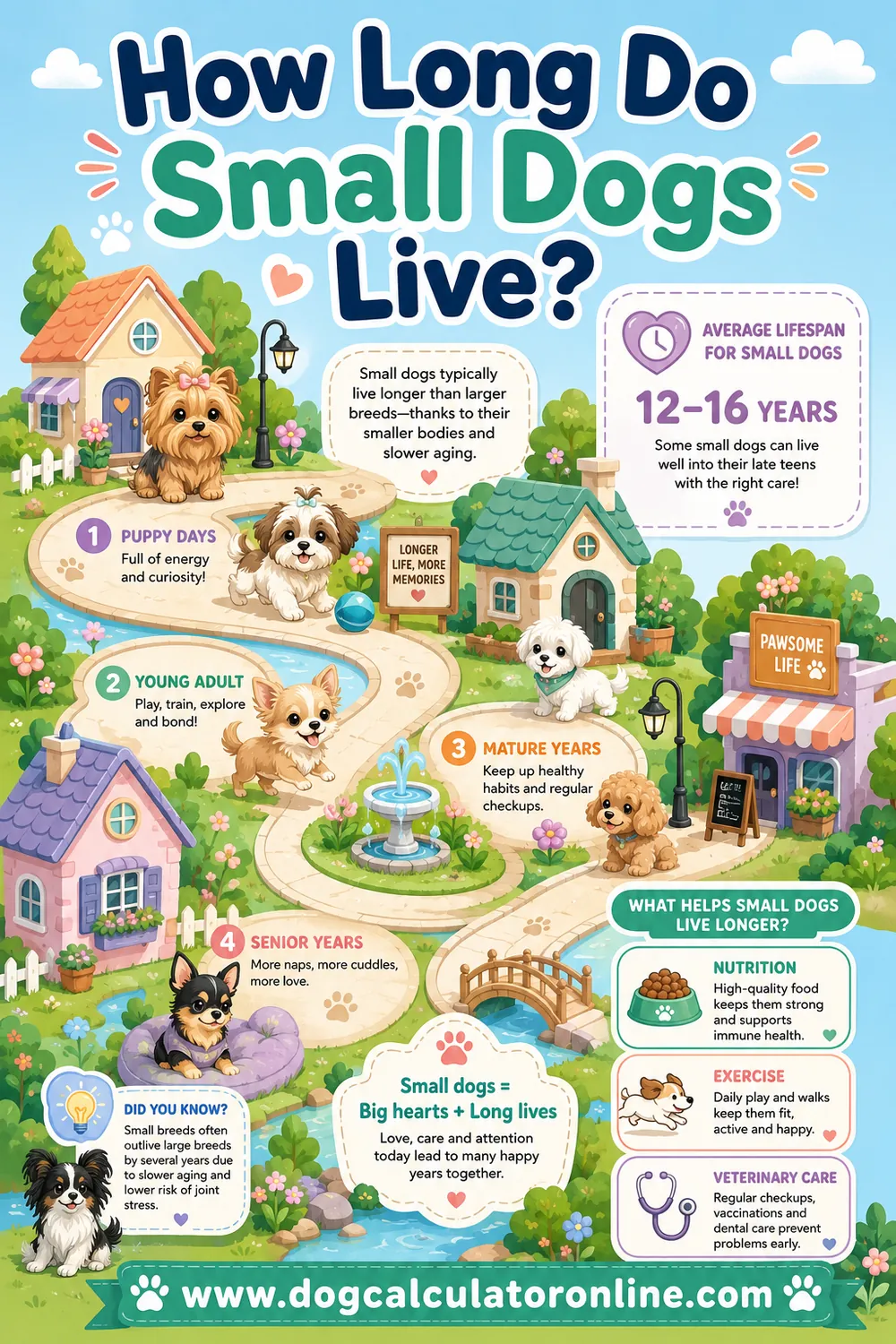
Small dogs typically live 12 to 16 years — the longest of any size class — and healthy individuals reaching 17 or 18 aren't unusual. If your dog weighs under 20 pounds as an adult, you can reasonably plan for a mid-teens lifespan, with genetics, weight, and dental care deciding whether they land at the top or bottom of the range.
Wondering how old your small dog is in human years right now? Our free dog age calculator uses the gentle +4-per-year aging rate that applies to small breeds and gives you the answer in seconds.
🐾 Small dog age check
Tap your small dog’s age to see the human-year equivalent (under 20 lb):
Tap an age above.
The Small-Dog Advantage
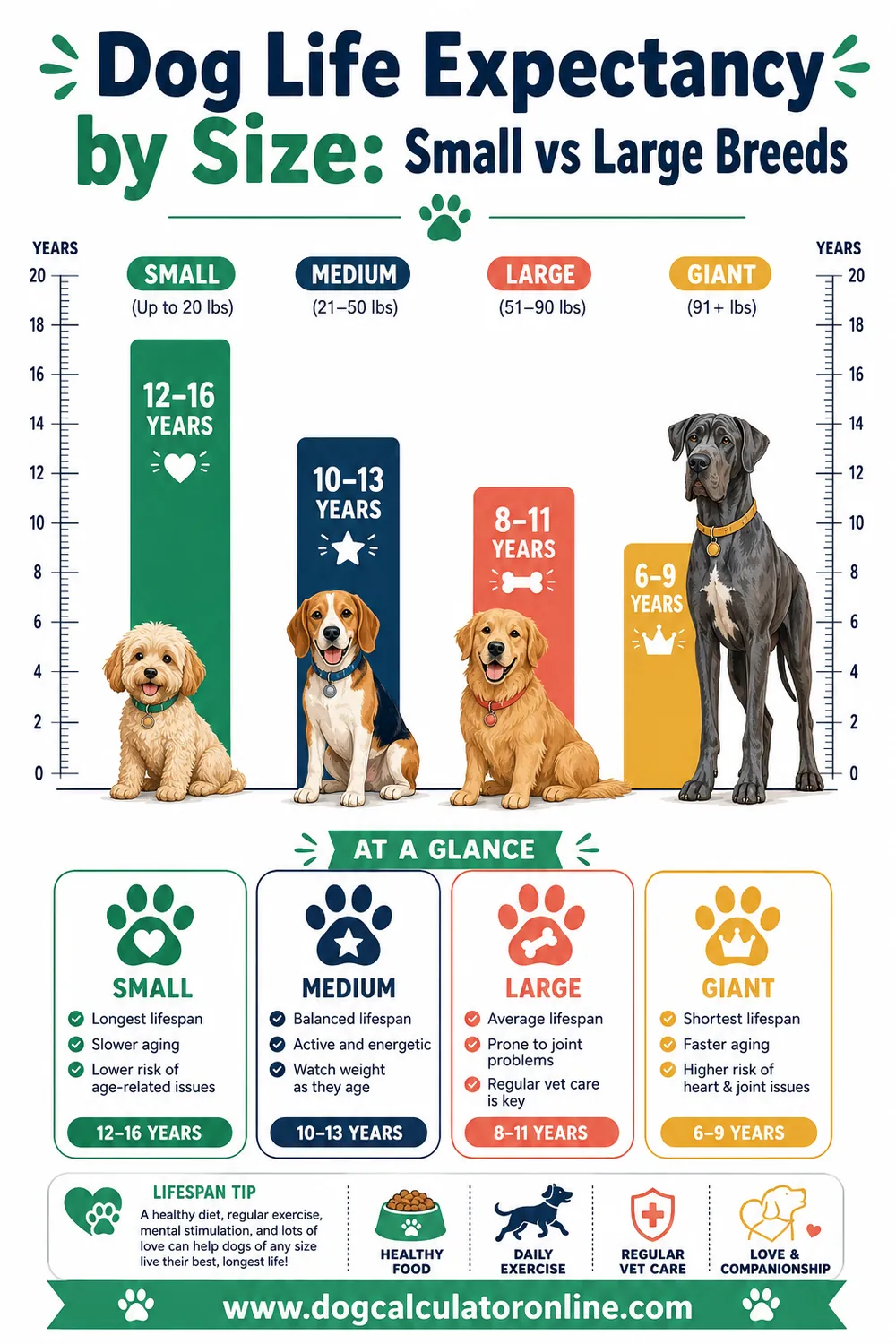
Across large veterinary datasets, one pattern holds everywhere: the smaller the dog, the longer the expected life. Here's how small breeds compare:
| Size class | Adult weight | Typical lifespan |
|---|---|---|
| Small | Under 20 lb | 12–16 years |
| Medium | 21–50 lb | 10–14 years |
| Large | 51–90 lb | 9–12 years |
| Giant | Over 90 lb | 7–10 years |
Small dogs also age more slowly after adulthood. Under the size-adjusted guideline vets use, a small dog adds only about 4 human-equivalent years per calendar year after age 2, compared with 7 for a giant breed. A 12-year-old small dog is roughly 64 in human years — the same "biological age" a Great Dane reaches by 8.
Which Small Breeds Live the Longest?
Individual dogs vary, but these small breeds are consistently among the longest-lived:
- Chihuahua — commonly 14–17 years; the breed most associated with extreme old age
- Toy and Miniature Poodle — commonly 14–17 years, helped by generally sound structure
- Dachshund — commonly 12–16 years; back health is the main watch item
- Jack Russell / Parson Russell Terrier — commonly 13–16 years; hardy working genetics
- Shih Tzu — commonly 12–16 years
- Maltese — commonly 12–15 years
- Yorkshire Terrier — commonly 12–15 years
- Miniature Schnauzer — commonly 12–15 years
- Small mixed breeds — often excellent; several large studies have found mixed-breed dogs living about a year longer on average than purebreds of similar size
A pattern worth noticing: long-lived small breeds tend to be either ancient toy breeds or scrappy working terriers. Both groups were bred for function and endurance rather than extreme physical features.
Why Small Dogs Outlive Big Ones
It's one of biology's odd reversals. Across species, bigger animals live longer — but within dogs, the small ones win. The leading explanations:
- Slower growth. A Chihuahua puppy grows to perhaps 20 times its birth weight; a Great Dane grows more than 100-fold. Less explosive growth appears to mean less accelerated aging and lower cancer risk.
- Lower IGF-1. Small dogs carry lower levels of insulin-like growth factor 1. In dogs, mice, and even humans, lower IGF-1 activity tends to track with longer life.
- Later disease onset. Small dogs develop arthritis, heart disease, and most cancers at older calendar ages than large dogs do.
The 2019 UC San Diego epigenetic study added molecular detail: dog DNA ages fast early in life and then the curve flattens. Small dogs simply spend longer on the flat part.
The Health Problems Long Life Brings
Living to 16 means small dogs face the diseases of true old age more often than big dogs ever get the chance to. If you have a small breed, these deserve your attention:
Dental disease
The number-one issue. Small mouths crowd the same 42 teeth into much less space, and dental disease is nearly universal in older small dogs without care. Untreated, it doesn't stay in the mouth — chronic dental infection is linked to heart, kidney, and liver strain. Daily brushing (or the best routine you can sustain) plus vet-recommended cleanings is the highest-value habit a small-dog owner can build.
Heart valve disease
Degenerative mitral valve disease is common in older small breeds — it's the classic reason your vet listens carefully to an aging small dog's heart. Caught early, it can often be monitored and managed for years. This is a "detect it at checkups" condition, which is why senior exams matter even when your dog seems fine.
Knee and joint issues
Luxating patellas (kneecaps that slip) are a small-dog specialty, and arthritis eventually visits nearly every dog who lives long enough. Keeping your small dog lean is the best protection — every extra pound on a 10-pound frame is a 10% overload.
Cognitive changes
With long life comes the possibility of canine cognitive dysfunction — the dog version of age-related mental decline. Sleep-cycle changes, confusion, or new anxiety in a very old dog are worth raising with your vet rather than writing off as "just old age."
How to Help Your Small Dog Reach the Top of the Range
- Guard their teeth. The single most size-specific advice there is. Start brushing young if you can; it's never too late to start.
- Keep them lean. You should feel ribs easily under a thin fat layer and see a waist from above. Ask your vet to score body condition at each visit.
- Mind the treats. In a 10-pound dog, a few generous treats can be a meaningful slice of daily calories. Small dogs get overfed by kindness constantly.
- Don't skip senior screening. Small dogs often act young at 8 or 9, so owners delay senior workups. Baseline bloodwork around age 7 catches quiet problems early.
- Protect them physically. Falls from furniture, rough play with big dogs, and escape-artist adventures cause an outsized share of small-dog injuries.
- Keep them moving and thinking. Daily walks, sniffing time, and training games maintain muscle and mind well into the teens.
Do Small Dogs Really Act Younger Longer?
One of the quiet joys of small-breed ownership is that they often stay playful and puppyish well into their teens. There's real biology behind it: because small dogs age only about 4 human-equivalent years per calendar year after adulthood, an 8-year-old small dog is only around 48 in human years — genuinely middle-aged, not old. Many small breeds don't show meaningful slowing until 10, 11, or beyond.
That youthfulness comes with a trap, though. Because a 9-year-old Chihuahua still zooms around like a young dog, owners often delay senior screening — assuming a spry dog must be healthy. But quiet conditions like early kidney or heart disease don't show on the outside, and they're most manageable when caught early. The lesson: let your calendar, not your dog's energy level, tell you when to start senior bloodwork. Around age 7 is the standard starting point even for a small dog who acts half that.
It also cuts the other way emotionally. A small dog who lives to 16 gives you more years — but those extra years mean you're more likely to walk through the genuine frailty of very old age together. Preparing for a long, gradual senior chapter is part of the small-dog deal.
What a Small Dog's Timeline Looks Like
| Age | Human-year equivalent (small dog) | Life stage |
|---|---|---|
| 1 | ~15 | Adolescent → young adult |
| 3 | ~28 | Young adult |
| 6 | ~40 | Mature adult |
| 9 | ~52 | Approaching senior |
| 12 | ~64 | Senior |
| 15 | ~76 | Geriatric |
| 17 | ~84 | Exceptional old age |
Note how gradual that curve is — that's the +4 rate at work. If you want your dog's exact number, the free dog age calculator computes it from age and weight, and also shows the 2019 DNA-study estimate alongside.
Related Guides
If this helped, these go deeper on the same question:
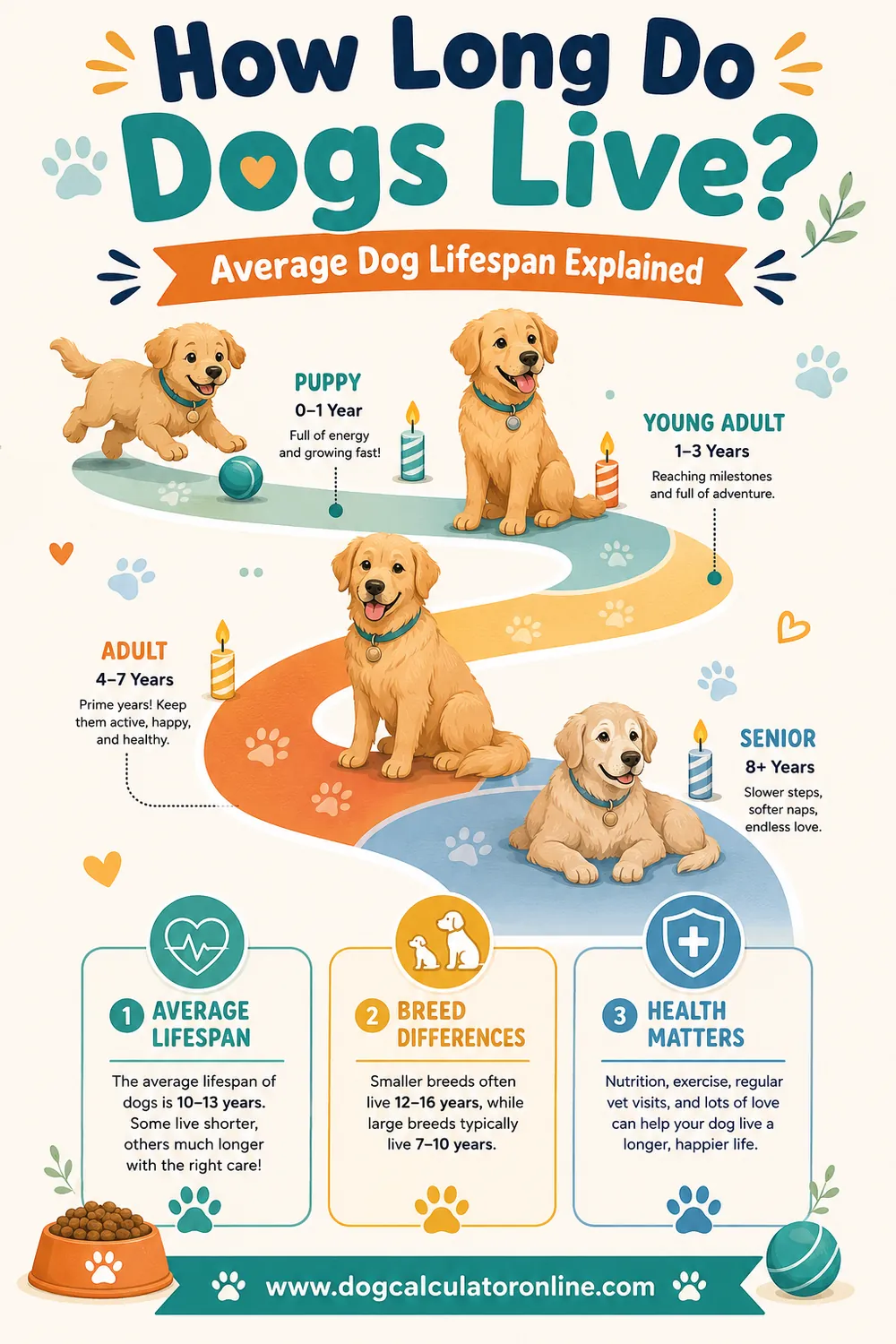
- How Long Do Dogs Live? Average Dog Lifespan Explained
- Dog Life Expectancy by Size: Small vs Large Breeds
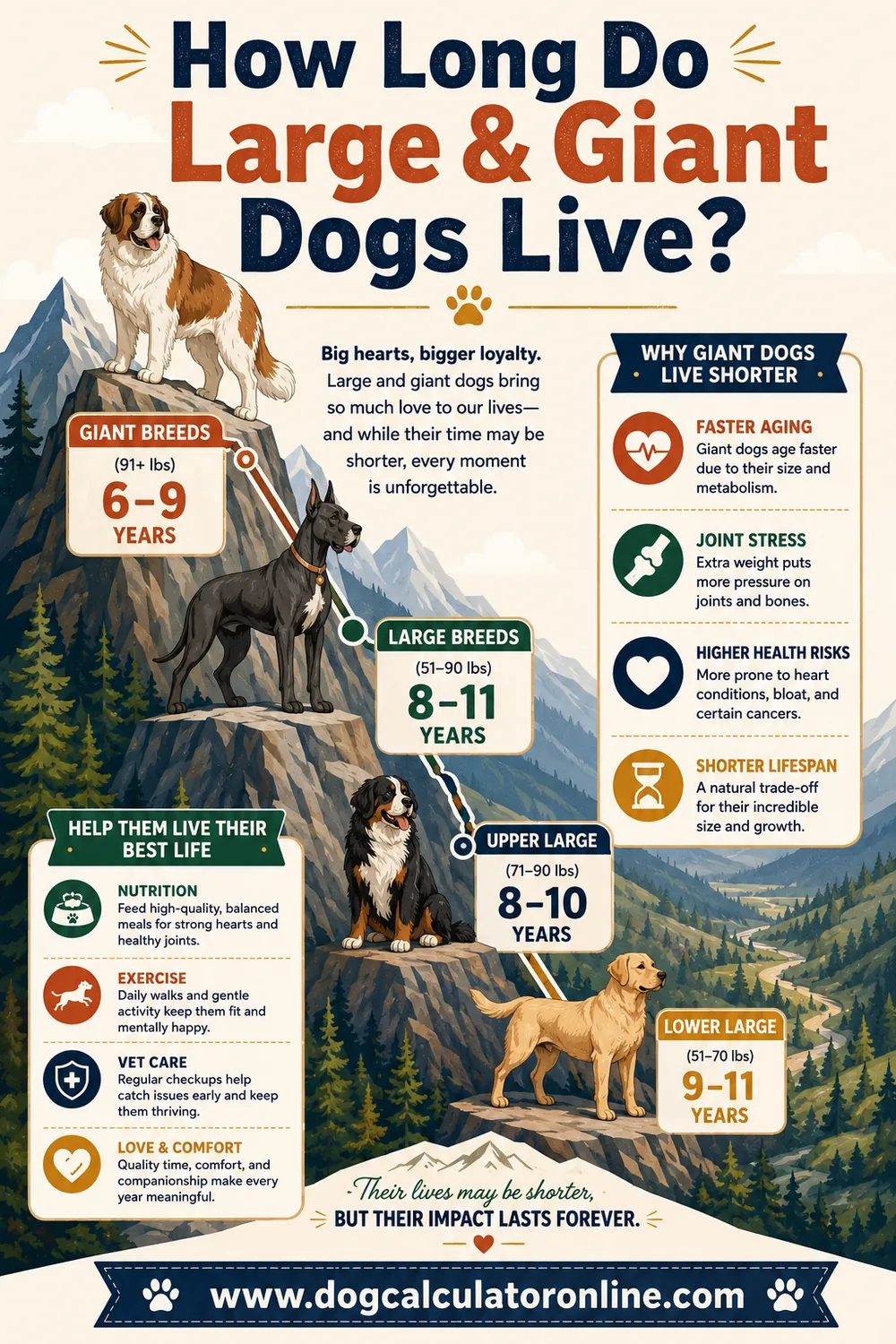
- How Long Do Large & Giant Dogs Live?
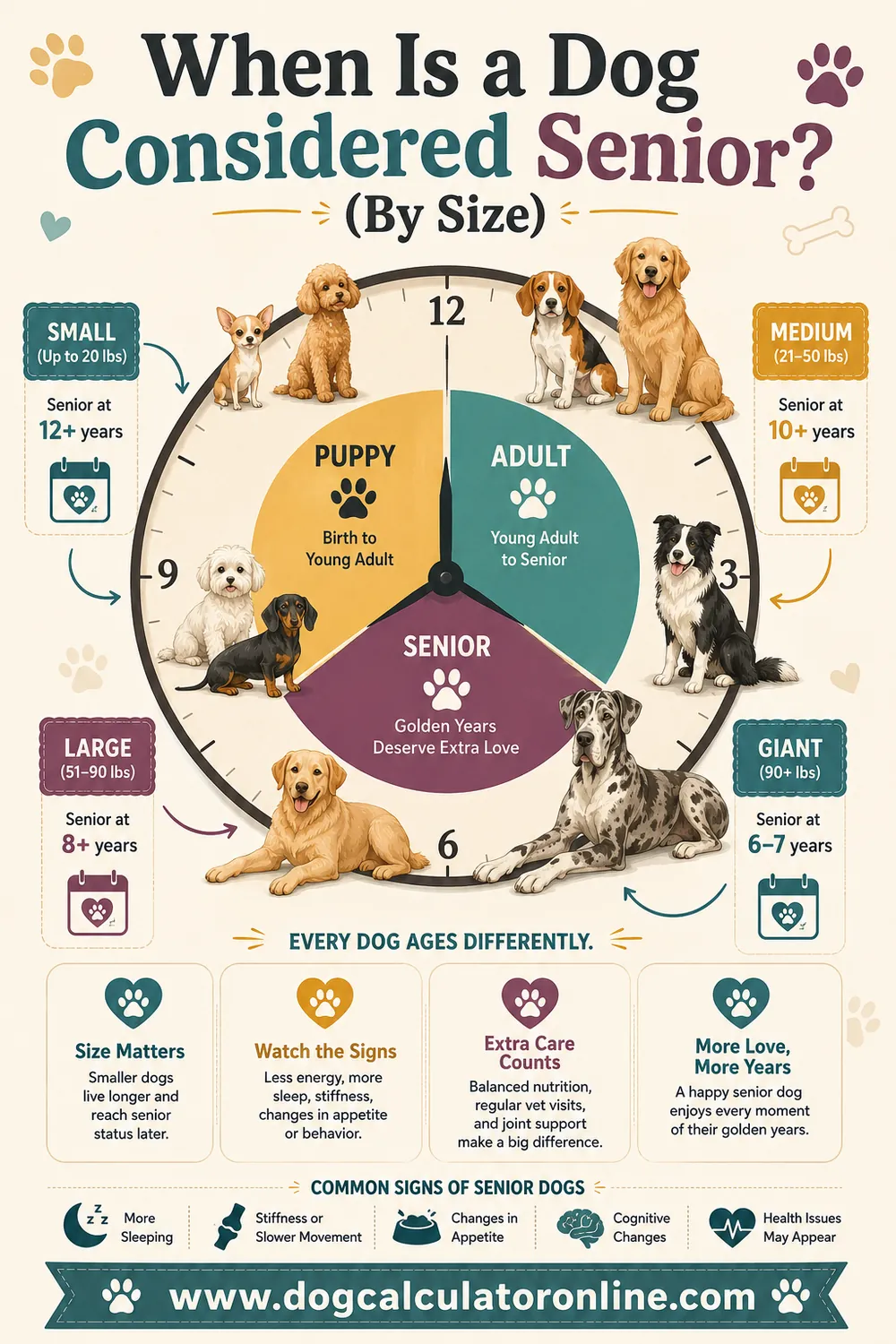
- When Is a Dog Considered Senior? (By Size)
And if you just want your own dog’s number, the free dog age calculator does it in one tap.
FAQ
How long do small dogs live on average?
About 12 to 16 years for dogs under 20 pounds, with many reaching 17 or beyond. That's the longest expectancy of any dog size class.
What's the longest-living small breed?
Chihuahuas and Toy Poodles are most often cited, commonly reaching 14–17 years. Hardy small terriers like Jack Russells are close behind.
When is a small dog considered a senior?
Around age 7 by common veterinary convention, though many small dogs stay youthful well past that. Vets often frame senior status as the last quarter of expected lifespan, which for a small dog can mean 9 or later.
Do small mixed-breed dogs live longer than purebreds?
On average, modestly — large veterinary datasets have found mixed breeds outliving size-matched purebreds by roughly a year. Individual genetics and care matter far more.
What do small dogs usually die of?
Heart disease (especially mitral valve disease), kidney decline, and cancer are leading causes in old small dogs — the diseases of genuine old age, reflecting how long they live.
How old is a 14-year-old small dog in human years?
About 72, using the size-adjusted method (15 + 9 + 12 more years at +4 each). Check any age instantly with our free dog age calculator.
Why is dental care such a big deal for small dogs?
Small mouths crowd 42 adult teeth into much less space, so dental disease is nearly universal in older small dogs without care. Untreated, it's painful and can strain the heart, kidneys, and liver. Regular brushing plus vet cleanings is the single most valuable small-dog health habit.
Do small dogs get arthritis too?
Yes — almost every dog who lives long enough develops some arthritis, and long-lived small breeds get plenty of time to. Luxating kneecaps are also common in small dogs. Keeping them lean is the best protection, since every extra pound is a big percentage of a small frame.
The Bottom Line
Small dogs live 12–16 years on average, age just 4 human-equivalent years per calendar year after adulthood, and regularly push past their mid-teens with good care. Their long lives shift the priorities: dental care, lean body weight, and consistent senior screening matter more for a small dog than for any other size.
Want to know exactly how old your little dog is in human years today? The free dog age calculator gives you the size-adjusted answer — plus the DNA-study estimate — in one tap.