Dog Age Chart: Human Years by Size (Small to Giant)
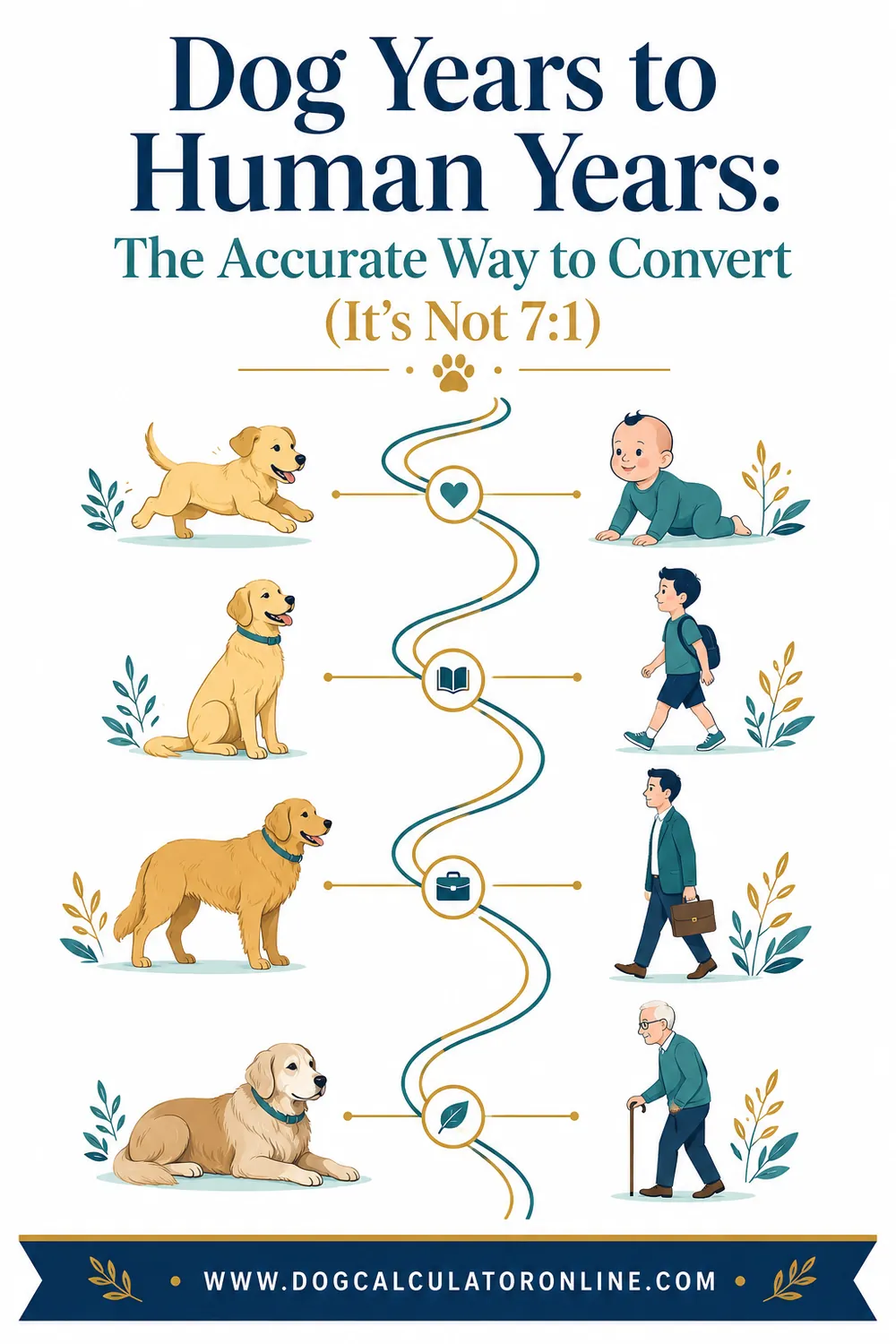
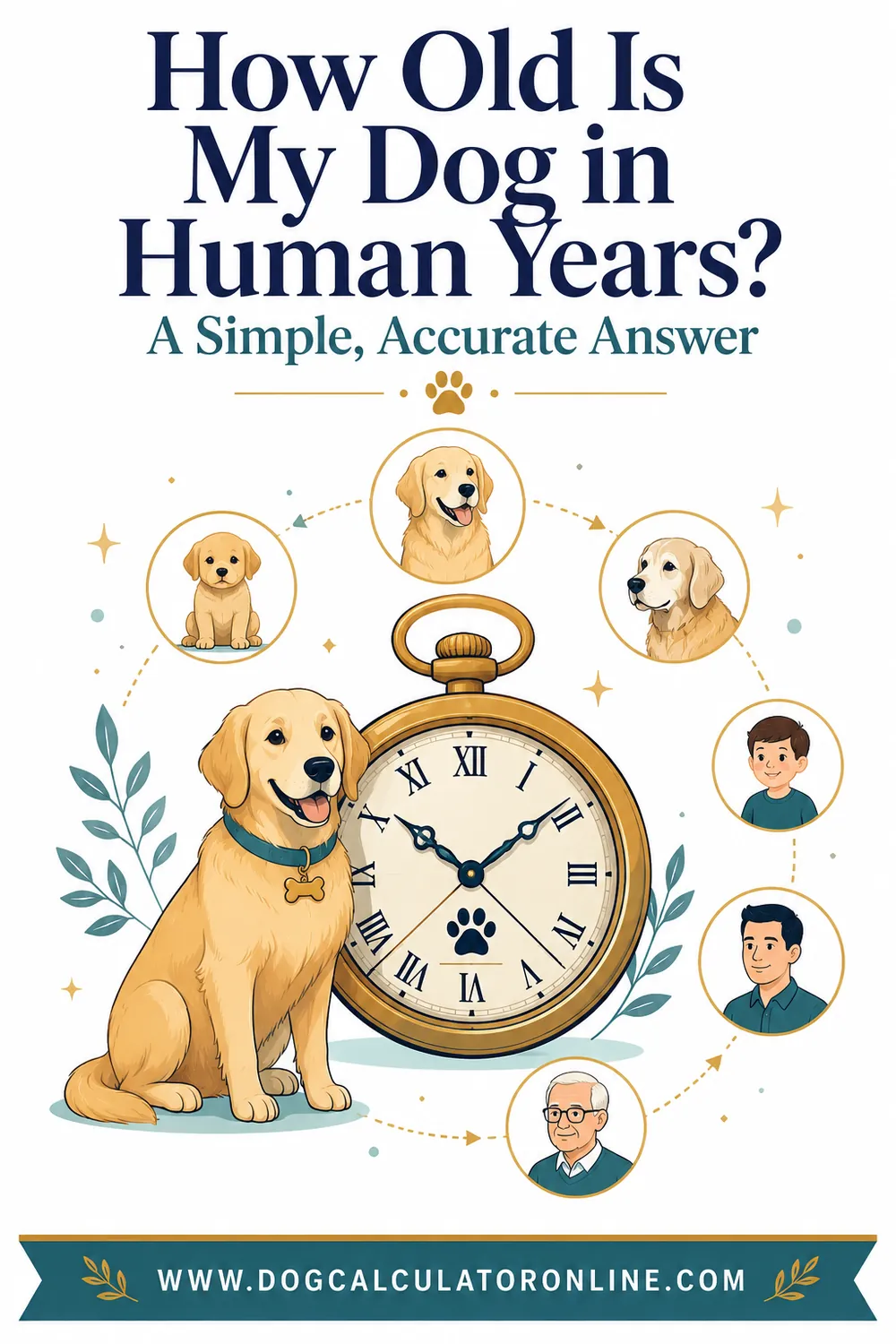
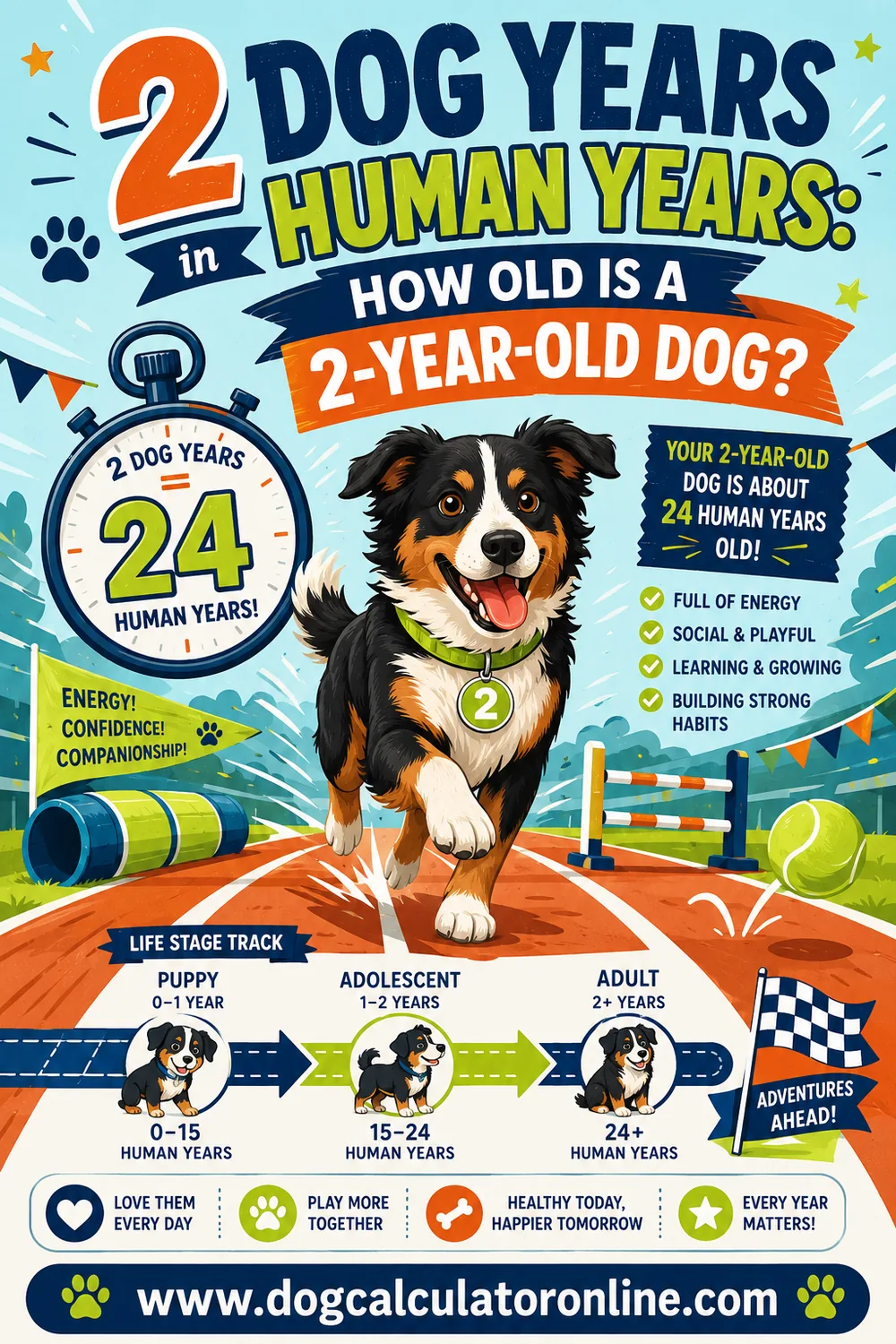
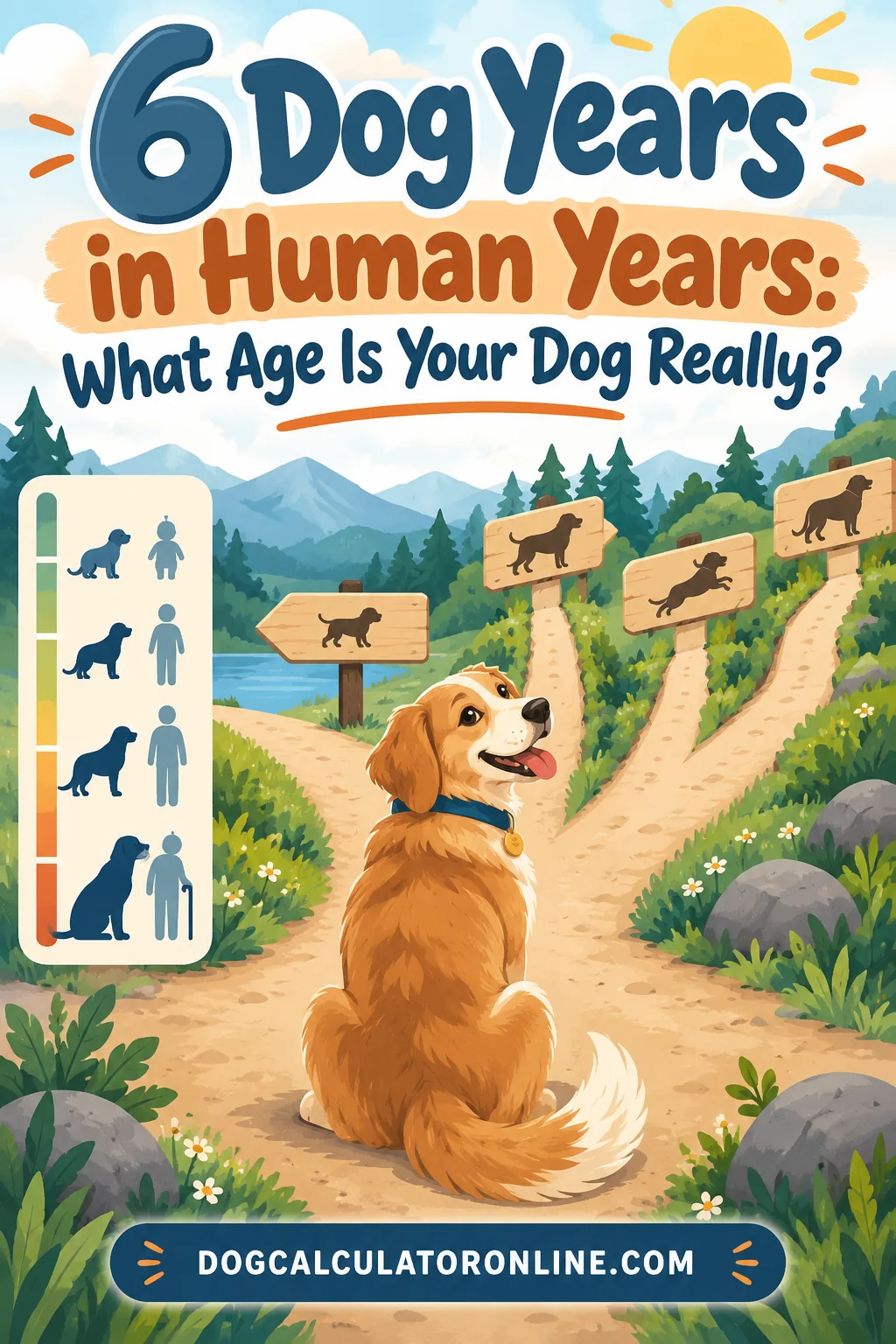
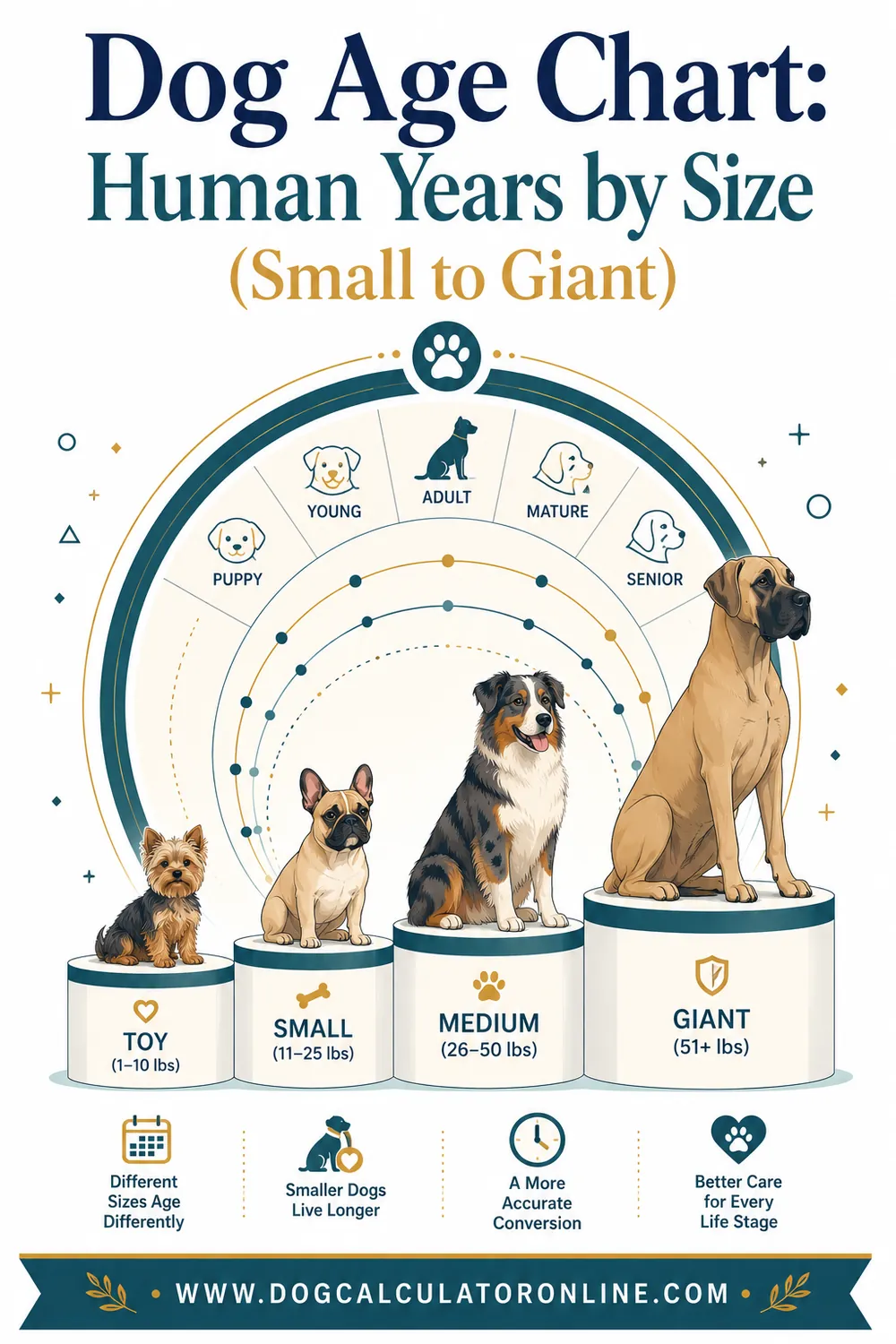
This dog age chart converts your dog's real age into human years using the vet-backed, size-adjusted method — not the outdated 7-year rule. In short: year one is about 15 human years, year two reaches about 24, and each year after that adds 4 (small breeds) to 7 (giant breeds). A 6-year-old medium dog is about 44; a 6-year-old giant breed is about 52.
Use the chart below to find your dog, or skip straight to the exact number with our free dog age calculator. Every figure here follows the American Veterinary Medical Association's size-adjusted guideline.
🐾 Dog age chart — tap an age
See the human-year equivalent for a medium breed (21–50 lb):
Tap an age above to see the human-year equivalent.
The Master Dog Age Chart (by Size)
Find your dog's calendar age down the left, then read across to their size class. All numbers are human-year equivalents.
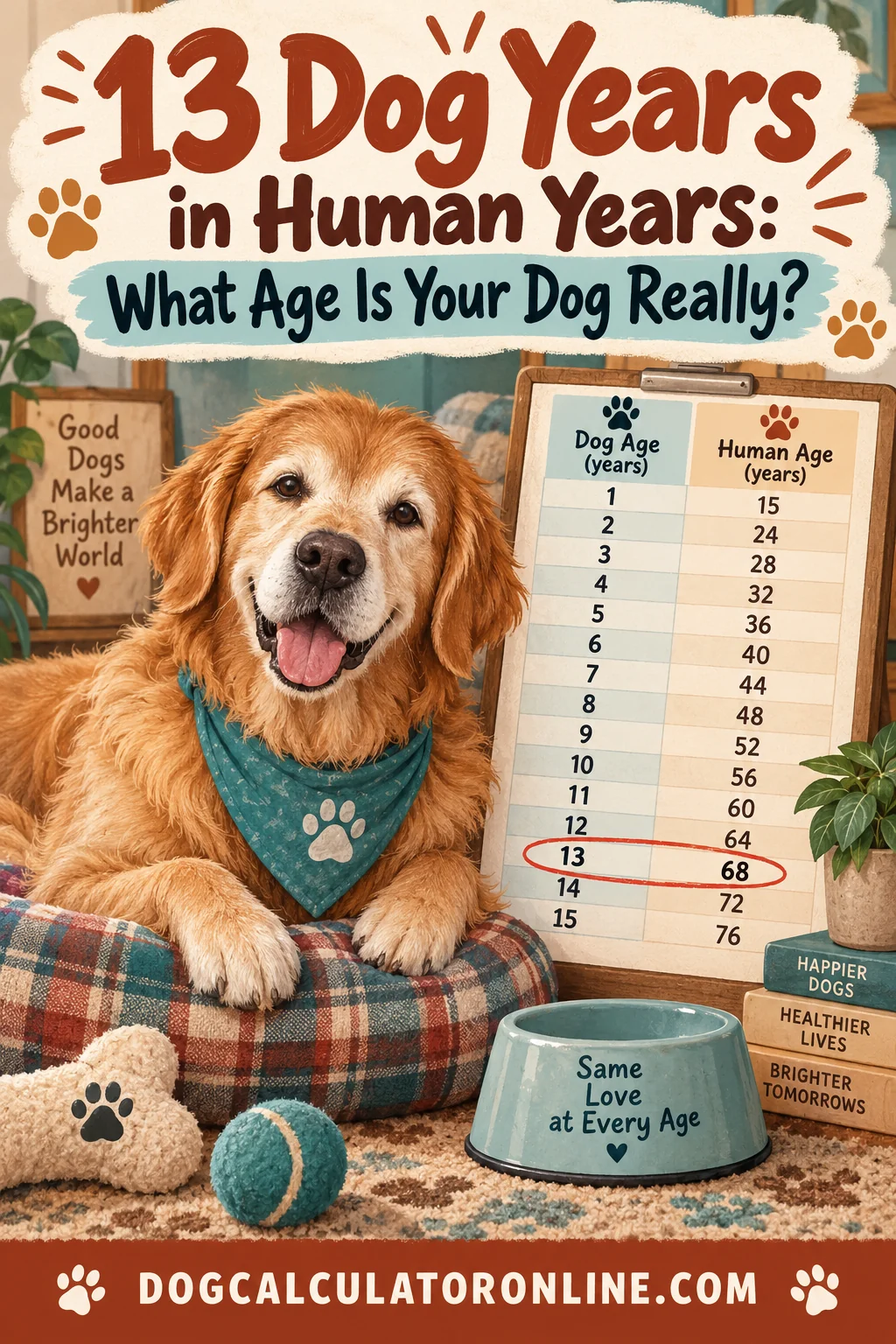
| Dog age | Small (<20 lb) | Medium (21–50 lb) | Large (51–90 lb) | Giant (>90 lb) |
|---|---|---|---|---|
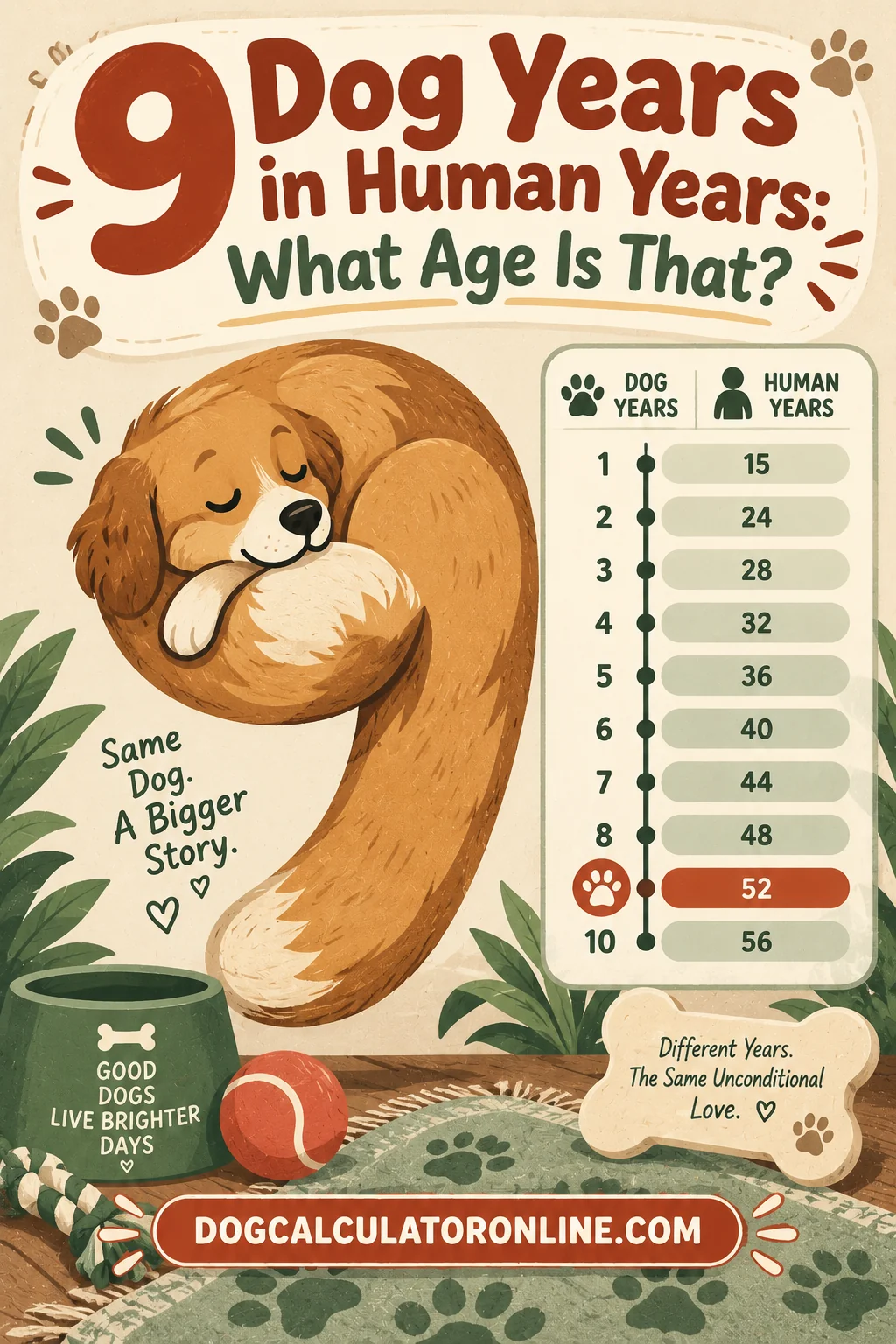
| 1 | 15 | 15 | 15 | 15 |
| 2 | 24 | 24 | 24 | 24 |
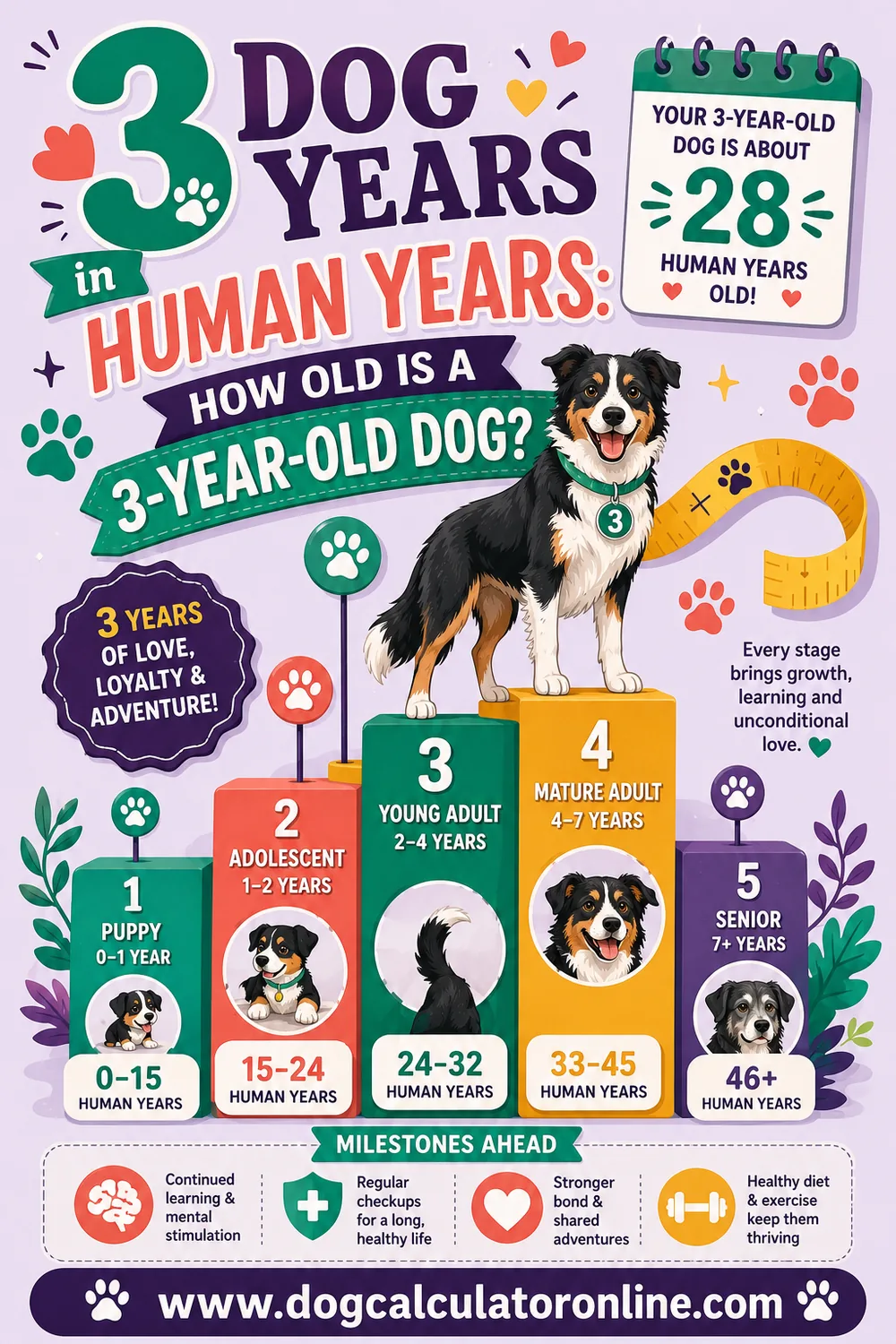
| 3 | 28 | 29 | 30 | 31 |
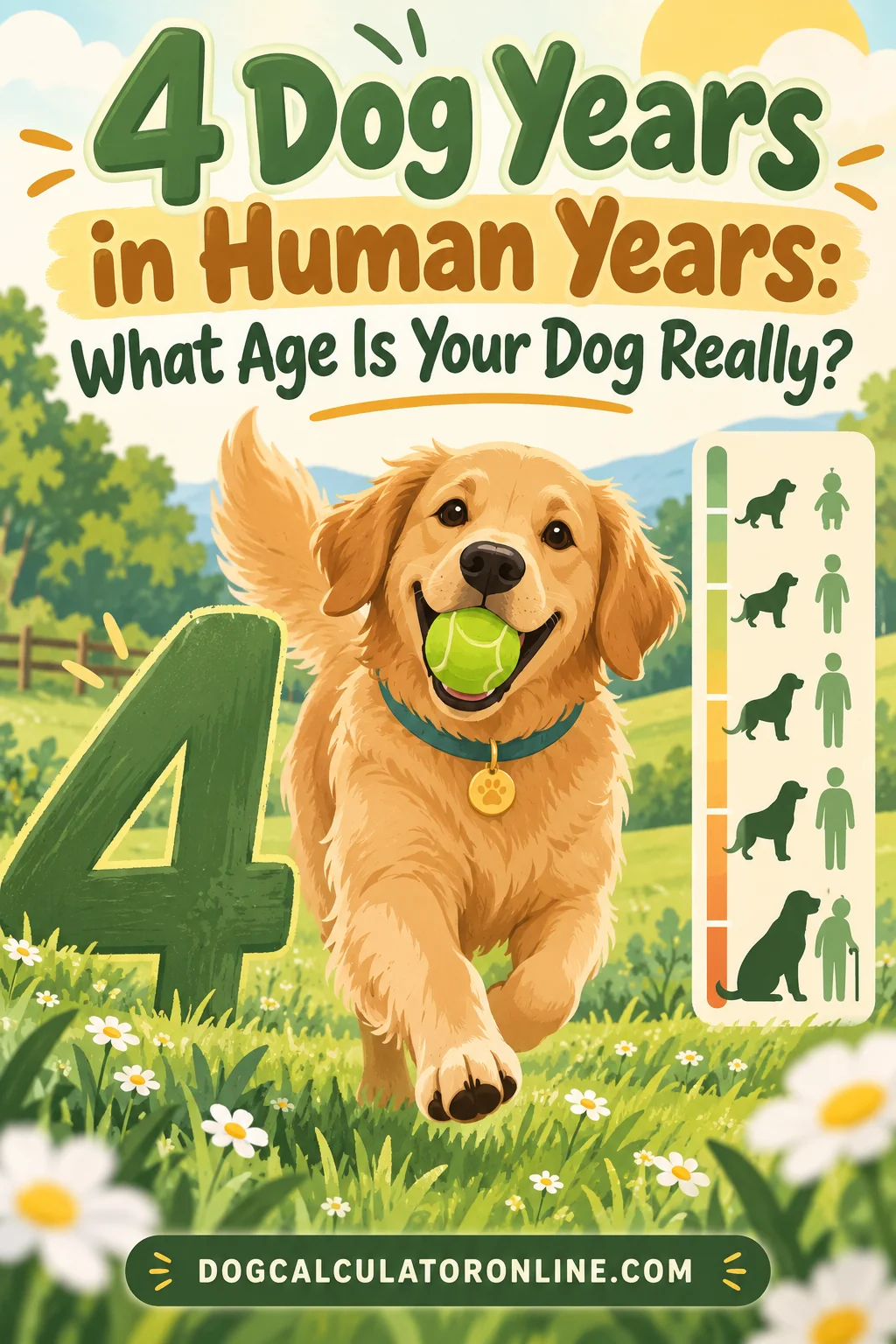
| 4 | 32 | 34 | 36 | 38 |
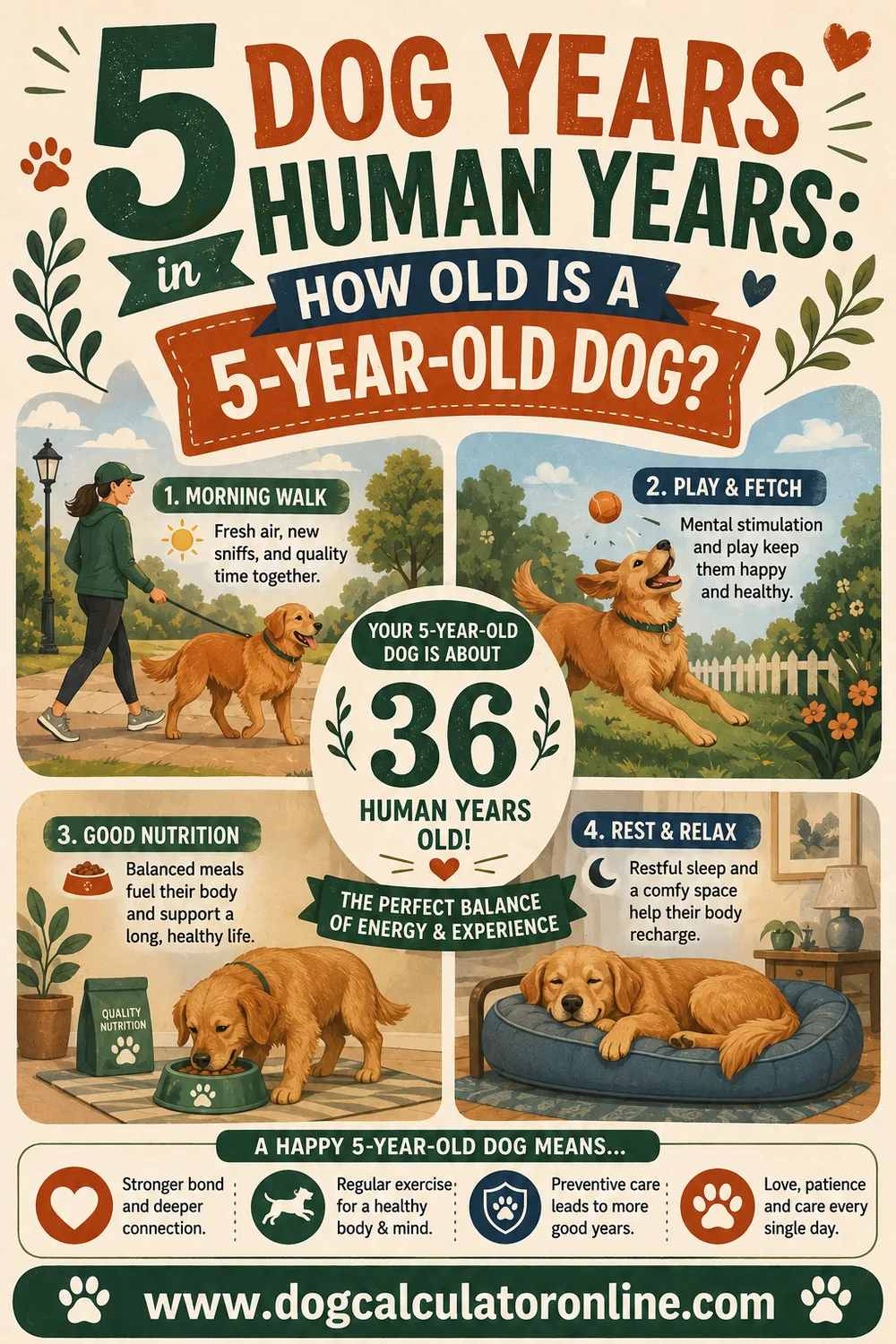
| 5 | 36 | 39 | 42 | 45 |
| 6 | 40 | 44 | 48 | 52 |
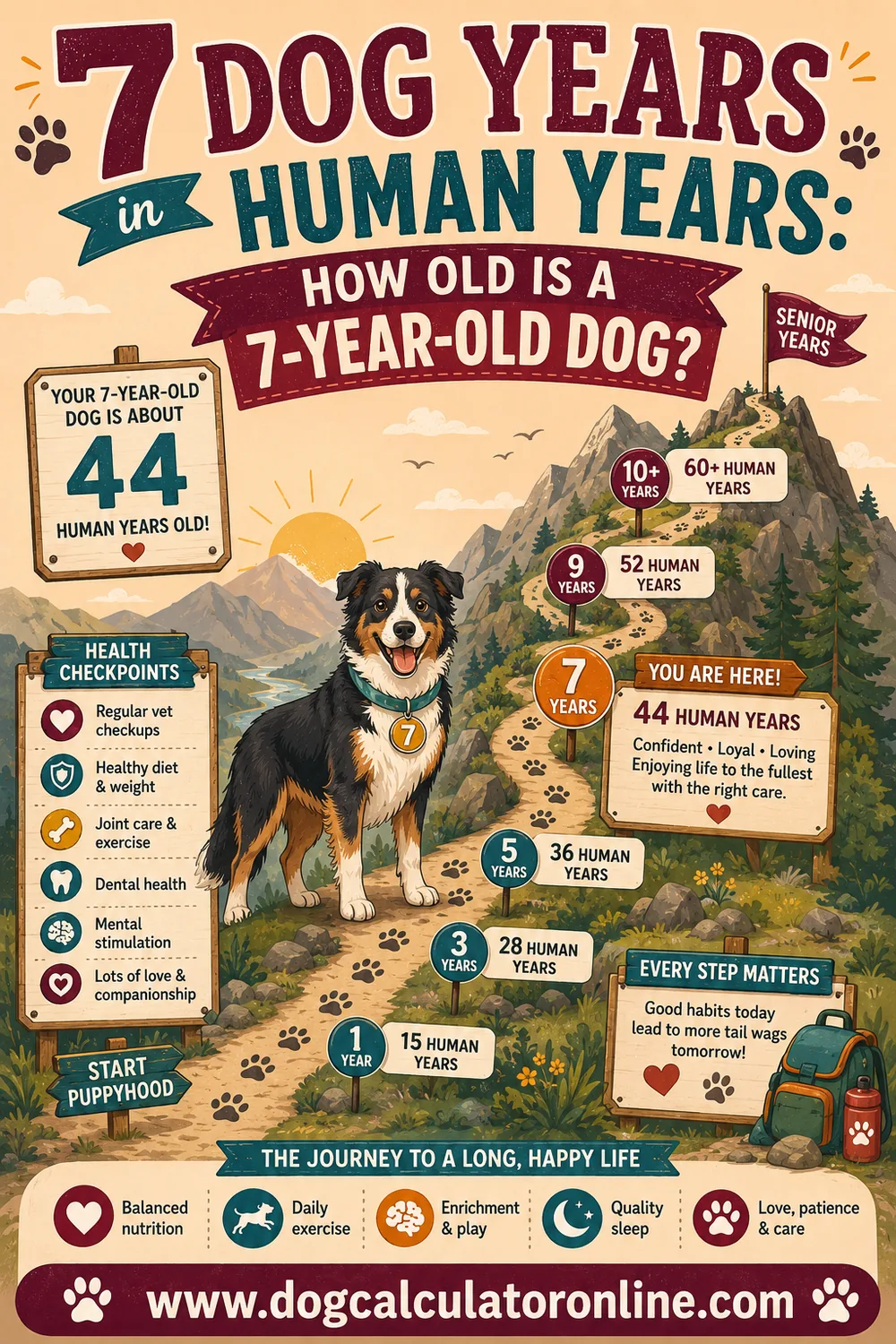
| 7 | 44 | 49 | 54 | 59 |
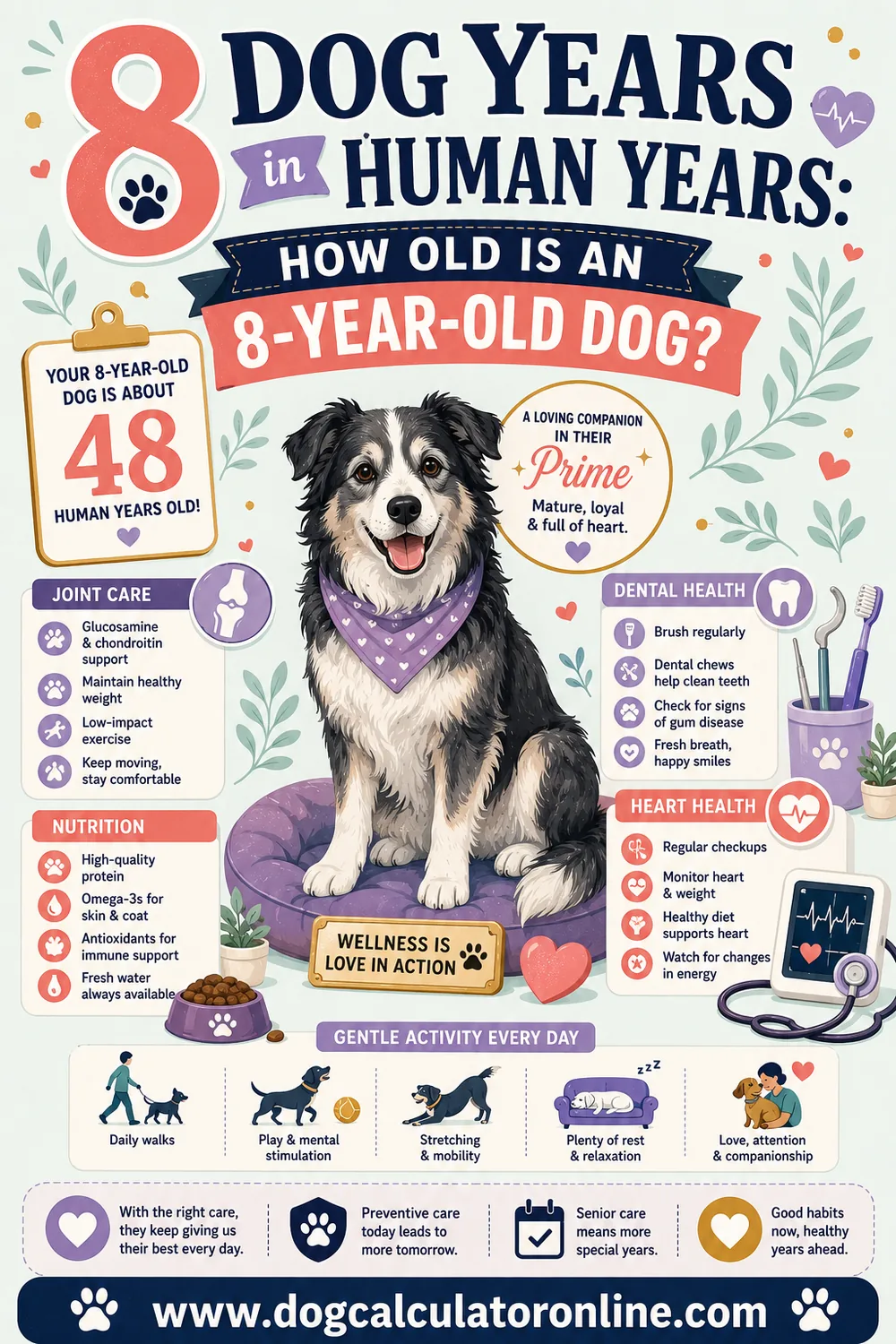
| 8 | 48 | 54 | 60 | 66 |
| 9 | 52 | 59 | 66 | 73 |
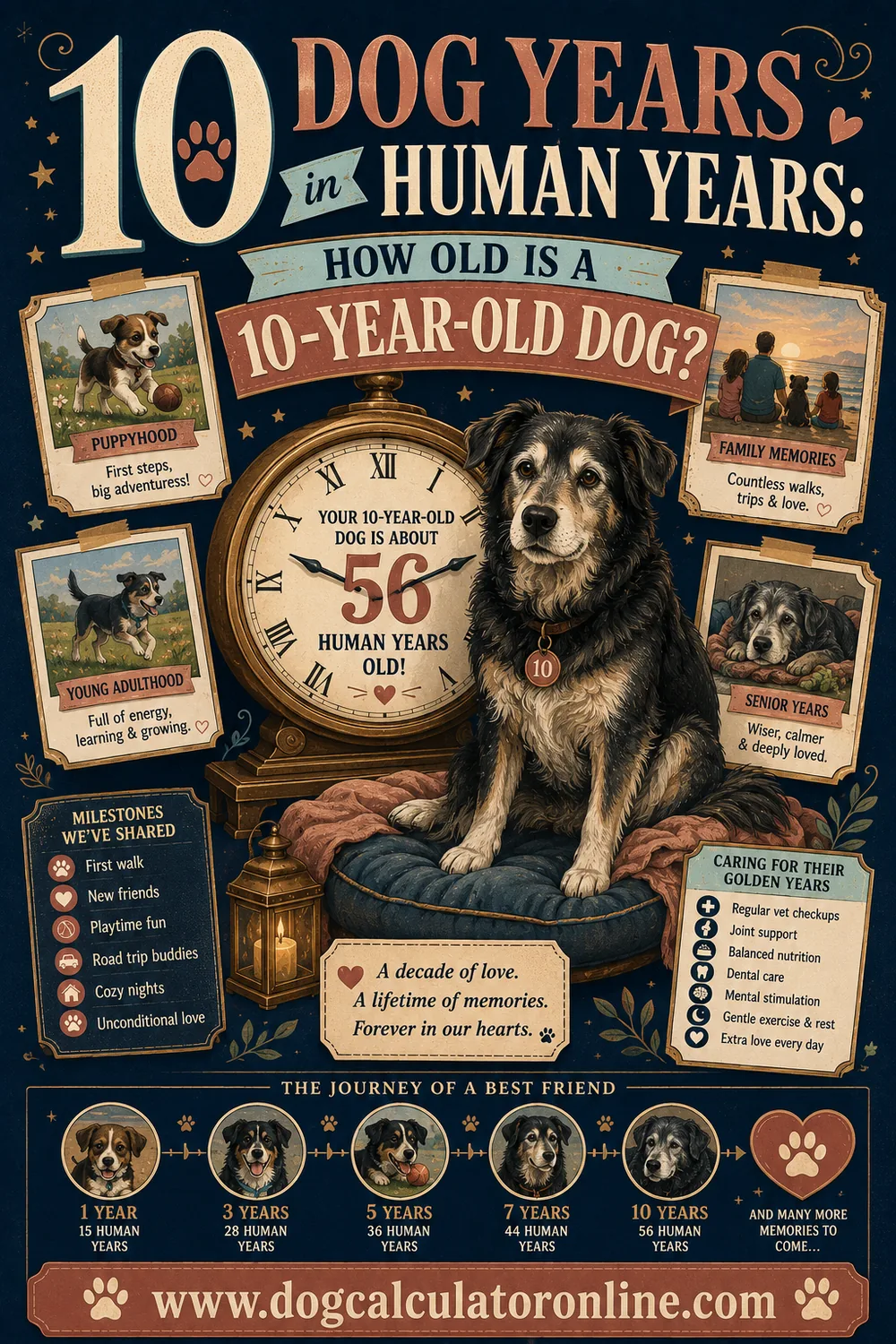
| 10 | 56 | 64 | 72 | 80 |
| 11 | 60 | 69 | 78 | 87 |
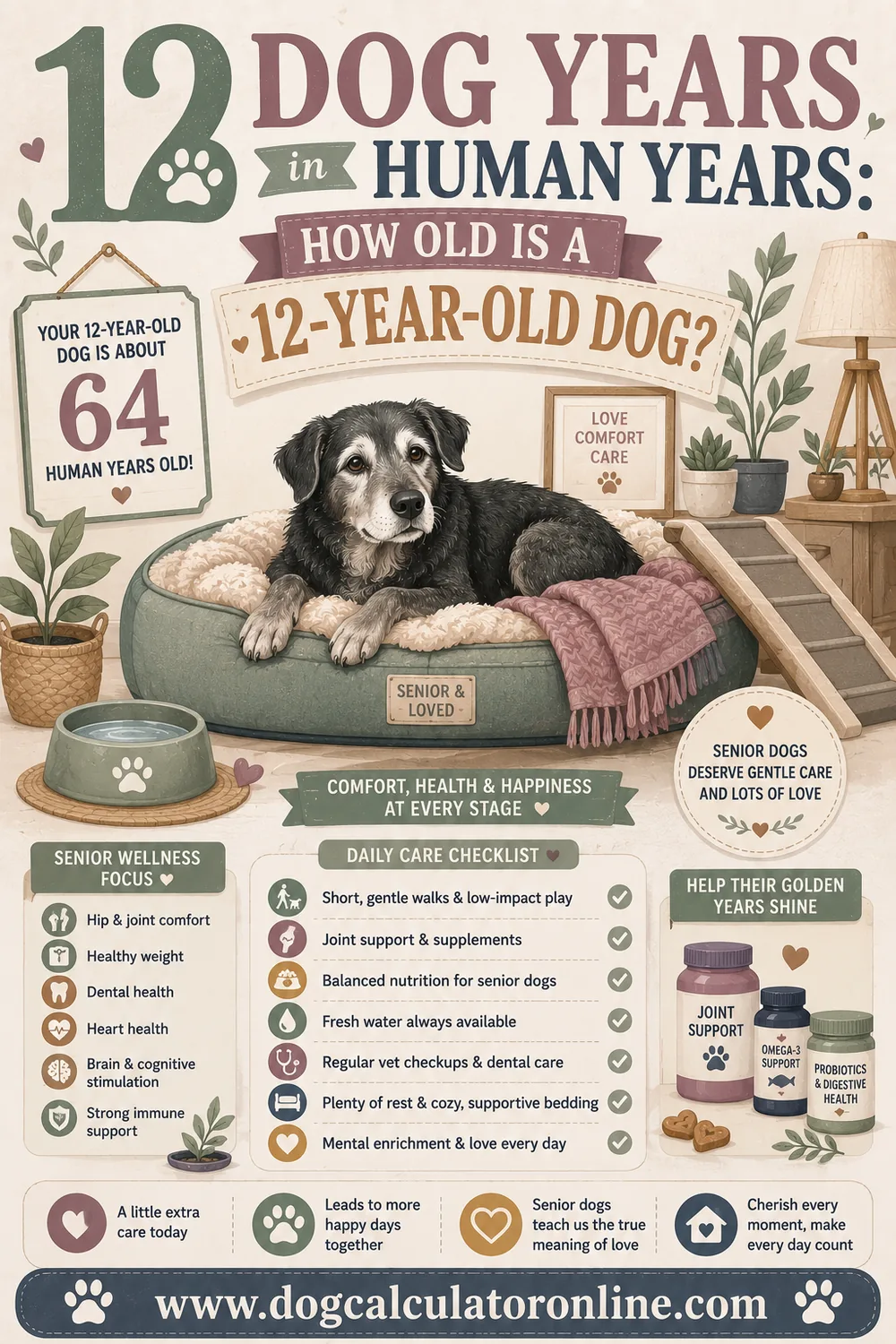
| 12 | 64 | 74 | 84 | 94 |
| 13 | 68 | 79 | 90 | — |
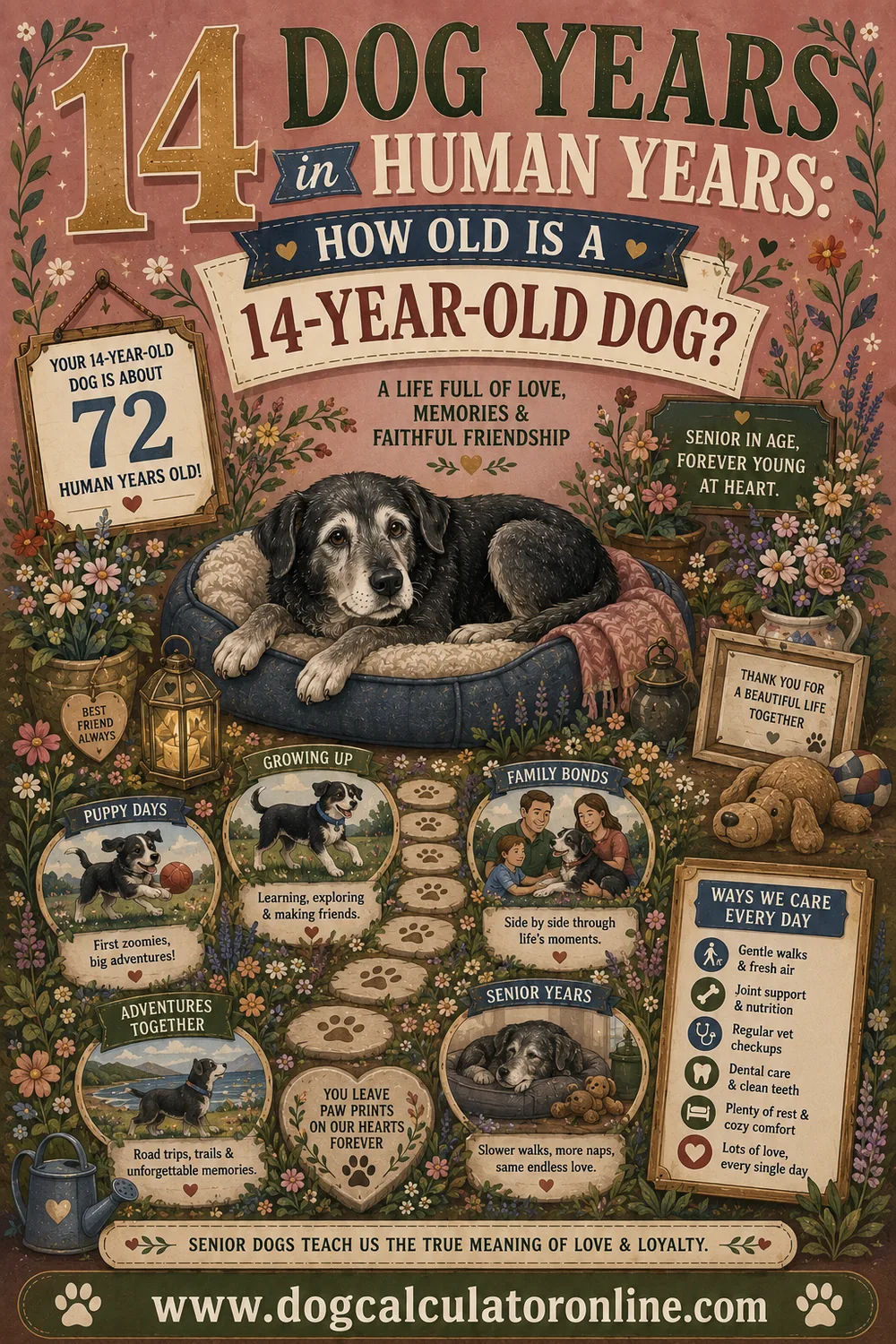
| 14 | 72 | 84 | 96 | — |
| 15 | 76 | 89 | — | — |
| 16 | 80 | 94 | — | — |
Blank cells mean most dogs of that size don't reach that age — giant breeds rarely pass 10–12, while small dogs commonly reach 15–16. Our dog age calculator will give you a precise figure between the whole numbers.
How the Chart Is Built
Every number above comes from three simple rules:
- Year one = 15 human years. This is fixed across all sizes. Puppies grow up fast.
- Year two = +9 human years (total 24). Also fixed across sizes.
- Each year after age two adds:
- +4 for small breeds (under 20 lb)
- +5 for medium breeds (21–50 lb)
- +6 for large breeds (51–90 lb)
- +7 for giant breeds (over 90 lb)
Example: a 7-year-old large dog is 15 + 9 + (5 × 6) = 54. A 7-year-old small dog is 15 + 9 + (5 × 4) = 44. Ten calendar years of difference in human terms, from just the size class.
Puppy Age Chart (First Year, Month by Month)
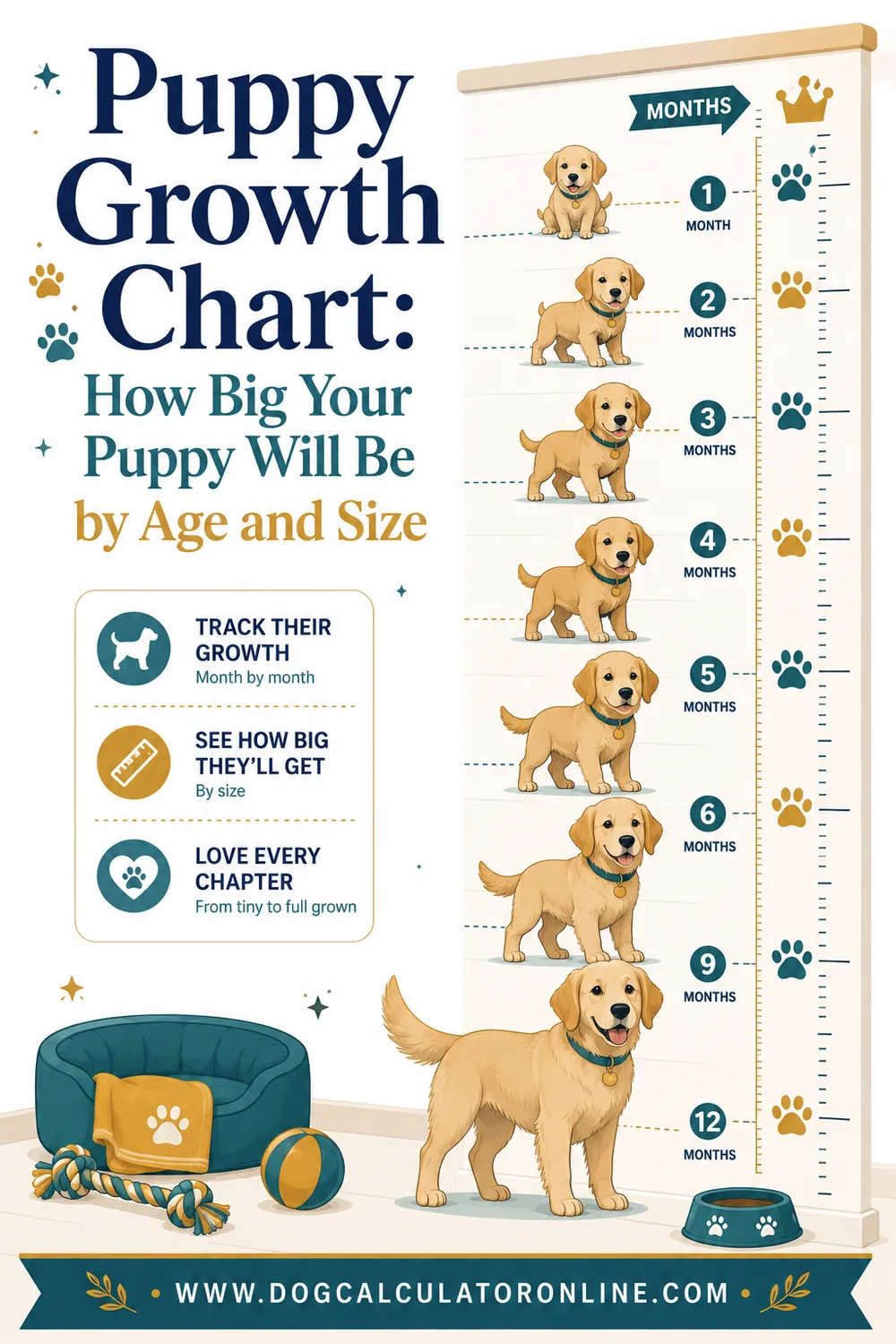
The first twelve months matter most, and they're worth their own chart because puppies change so quickly. These are approximate human-age equivalents for a medium breed:
| Puppy age | Human age (approx.) |
|---|---|
| 2 months | 2–3 years (toddler) |
| 3 months | 4–5 years |
| 6 months | 8–10 years (child) |
| 9 months | 12–14 years (pre-teen) |
| 12 months | 15 years (teenager) |
This is why a 6-month-old puppy already acts like a mischievous kid, and a 1-year-old dog behaves like a teenager — full-size-ish, energetic, and still figuring out the rules. For how much they'll grow along the way, see our puppy growth chart.
The Milestones Behind the First-Year Numbers
The chart says a 1-year-old dog is 15 in human years, which sounds surprising until you watch a puppy grow. In that single first year, a dog goes through what takes a human 15 years:
- By 8 weeks: weaned, walking, playing, and learning — like a toddler.
- By 4 months: losing baby teeth and testing boundaries — like a young child.
- By 6 months: many dogs reach sexual maturity — impossible for a human 6-year-old, which is exactly why the 7× rule falls apart.
- By 12 months: full or near-full size, energetic and impulsive — a teenager in dog form.
That breakneck first-year development is why year one counts for 15 human years and year two for 9 more. After that, aging slows to the 4–7 per year the chart shows. Seeing the milestones makes the numbers feel right instead of arbitrary.
Dog Life Stages at a Glance
| Life stage | Small/medium | Large/giant | What to focus on |
|---|---|---|---|
| Puppy | 0–12 months | 0–18 months | Vaccines, socialization, puppy food |
| Young adult | 1–3 years | 1.5–3 years | Training, exercise, adult food |
| Mature adult | 3–7 years | 3–5 years | Weight and dental care |
| Senior | 7+ years | 5–6+ years | Twice-yearly checkups, joint support |
The chart is fun, but the life stage is the actionable part. When your medium dog hits 8 (about 54 in human years), it's a sensible time to ask your vet about senior wellness screening.
Why This Beats the 7-Year Rule
The classic "multiply by 7" chart gives one column for every dog, which is exactly its flaw. It would tell you a 10-year-old Chihuahua and a 10-year-old Great Dane are both "70." In reality the Chihuahua may be a spry 56 while the Dane is an elderly 80. Size is the single biggest factor in how fast a dog ages after adulthood, and any honest dog age chart has to account for it.
For the full story on why 7:1 is a myth — and how the 2019 DNA study adds another view — see our dog years to human years guide.
Reading the Chart for a Mixed-Breed Dog
Don't know your dog's exact adult size class? Go by current or expected adult weight:
- Under 20 lb → use the Small column.
- 21–50 lb → Medium.
- 51–90 lb → Large.
- Over 90 lb → Giant.
If your dog sits near a boundary (say, 50–55 lb), read both neighboring columns and split the difference. The calculator interpolates automatically, so it's the easiest way to handle in-between weights.
Popular Breeds on the Chart
Seeing real breeds makes the chart click. Here's where a few common dogs land at age 8:
| Breed | Typical weight | Size class | Human age at 8 |
|---|---|---|---|
| Chihuahua | 5 lb | Small | 48 |
| Pomeranian | 6 lb | Small | 48 |
| Beagle | 25 lb | Medium | 54 |
| Border Collie | 40 lb | Medium | 54 |
| Labrador Retriever | 70 lb | Large | 60 |
| German Shepherd | 75 lb | Large | 60 |
| Great Dane | 130 lb | Giant | 66 |
| Mastiff | 160 lb | Giant | 66 |
At the same age of 8, a Chihuahua is a lively 48 while a Mastiff is an elderly 66. That 18-year human gap, from size alone, is the whole reason a one-size chart doesn't work.
Using the Chart to Time Care Decisions
The best reason to know your dog's chart age is that it tells you when to change how you care for them:
- Around the human late 40s to 50s (age 7 for small/medium, 5–6 for large/giant): ask your vet about senior wellness screening and consider twice-yearly checkups.
- Human 60s and up: watch for changes in appetite, thirst, weight, and mobility; consider joint support and a senior diet if your vet agrees.
- Any age: keep your dog lean and on top of dental care — the two habits most linked to a longer, healthier life.
The chart isn't just trivia. Read alongside your vet's advice, it's a calendar for your dog's health.
How Far Through Life Is Your Dog?
Another way to read the chart: instead of asking "how old is my dog in human years," ask "how far along are they?" Pairing the chart age with a typical lifespan for each size class puts the number in context:
| Size class | Typical lifespan | Roughly "halfway" at |
|---|---|---|
| Small (<20 lb) | 14–16 years | 7–8 years |
| Medium (21–50 lb) | 12–14 years | 6–7 years |
| Large (51–90 lb) | 10–12 years | 5–6 years |
| Giant (>90 lb) | 8–10 years | 4–5 years |
These are typical ranges, not guarantees — plenty of individual dogs beat them, and genetics, weight, and preventive care all move the needle. But the halfway column is a useful wake-up call: a 5-year-old Great Dane isn't "middle-aged eventually" — they're there now, and their care should reflect it.
Two Dogs, Same Age, Very Different Stories
Picture two 10-year-olds walking into the same vet clinic. The first is a 10-pound Dachshund: the chart puts her at about 56 in human years — solidly senior, but with several good years likely ahead. The second is a Great Dane: the chart puts him near 80, deep into old age for his breed, where every checkup counts.
Same birthday, same calendar age, an entire life stage apart. That's the single most important thing the chart teaches: never judge a dog's age by the number of candles alone. Judge it by the column they're in.
FAQ
What is the most accurate dog age chart?
One that adjusts for size. The vet-backed method — 15 for year one, +9 for year two, then +4 to +7 per year by size class — is far more accurate than the flat 7-year chart.
How old is a 7-year-old dog in human years?
It depends on size: about 44 for a small dog, 49 for medium, 54 for large, and 59 for a giant breed.
How do I read the dog age chart for my dog?
Find your dog's age in the left column, then read across to the column matching their adult weight (small, medium, large, or giant).
Why does my big dog age faster on the chart?
Large and giant breeds grow enormously in year one and tend to have shorter lifespans, so they add more human years per calendar year (+6 or +7) after adulthood.
What if my dog is between two size classes?
Use the two nearest columns and estimate between them, or let the dog age calculator interpolate by entering the exact weight.
When is my dog a senior according to the chart?
Small and medium dogs around age 7 (roughly mid-40s to 50s in human years); large and giant breeds around 5–6.
Does the chart work for puppies under a year old?
Yes, but use the month-by-month puppy chart above instead — the first year moves too fast for whole-year rows. A 6-month-old pup is already roughly a 10-year-old child in human terms.
The Bottom Line
A good dog age chart isn't one column — it's four, because a dog's size changes how fast it ages. Use year one = 15, year two = 24, then +4 to +7 per year depending on whether your dog is small, medium, large, or giant.
Rather not scan a table? Enter your dog's age and weight into our free dog age calculator for the exact human-year age plus the 2019 DNA-study number. And if you've got a growing pup, the puppy growth chart shows what size to expect next.