Dog Years to Human Years: The Accurate Way to Convert (It's Not 7:1)
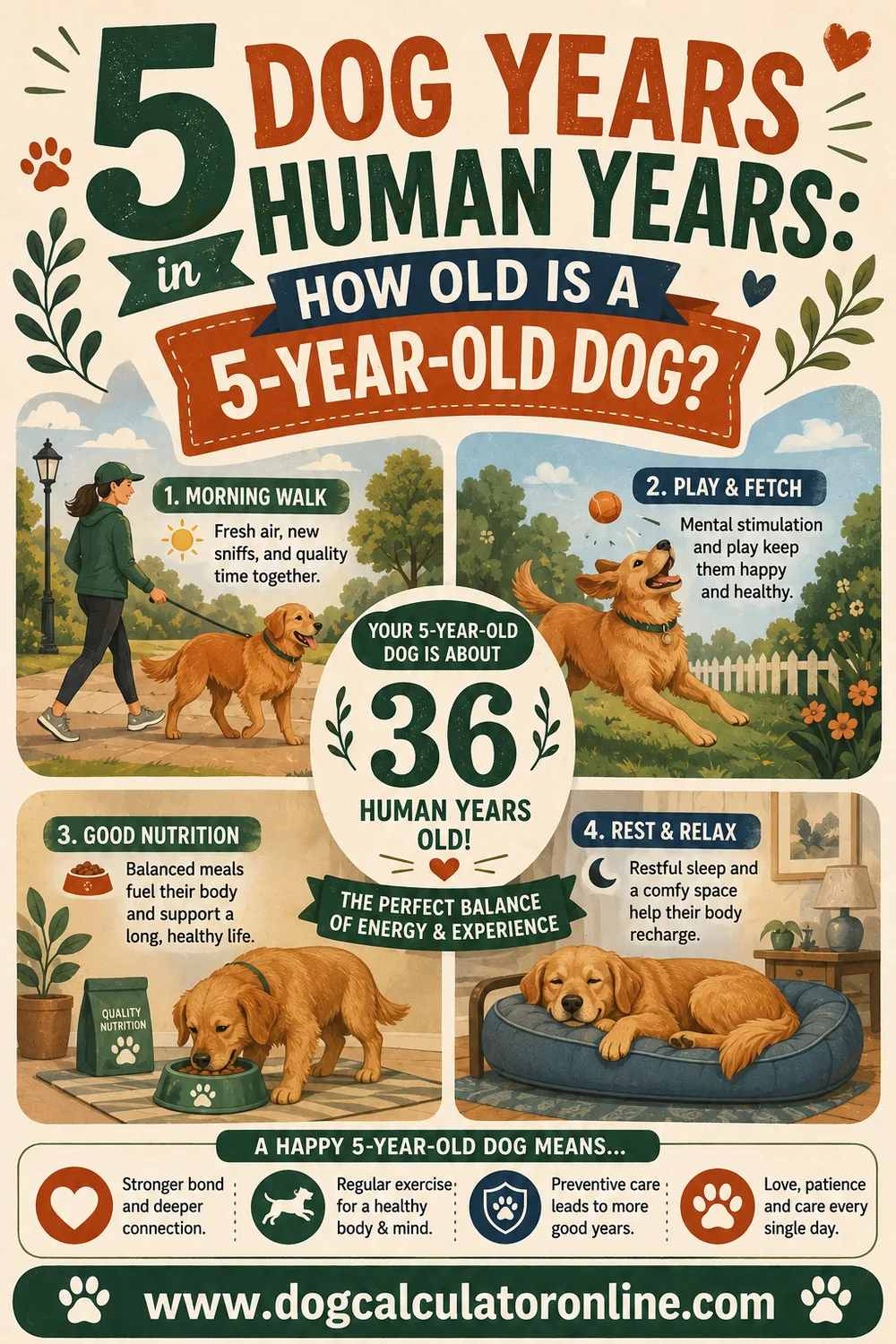
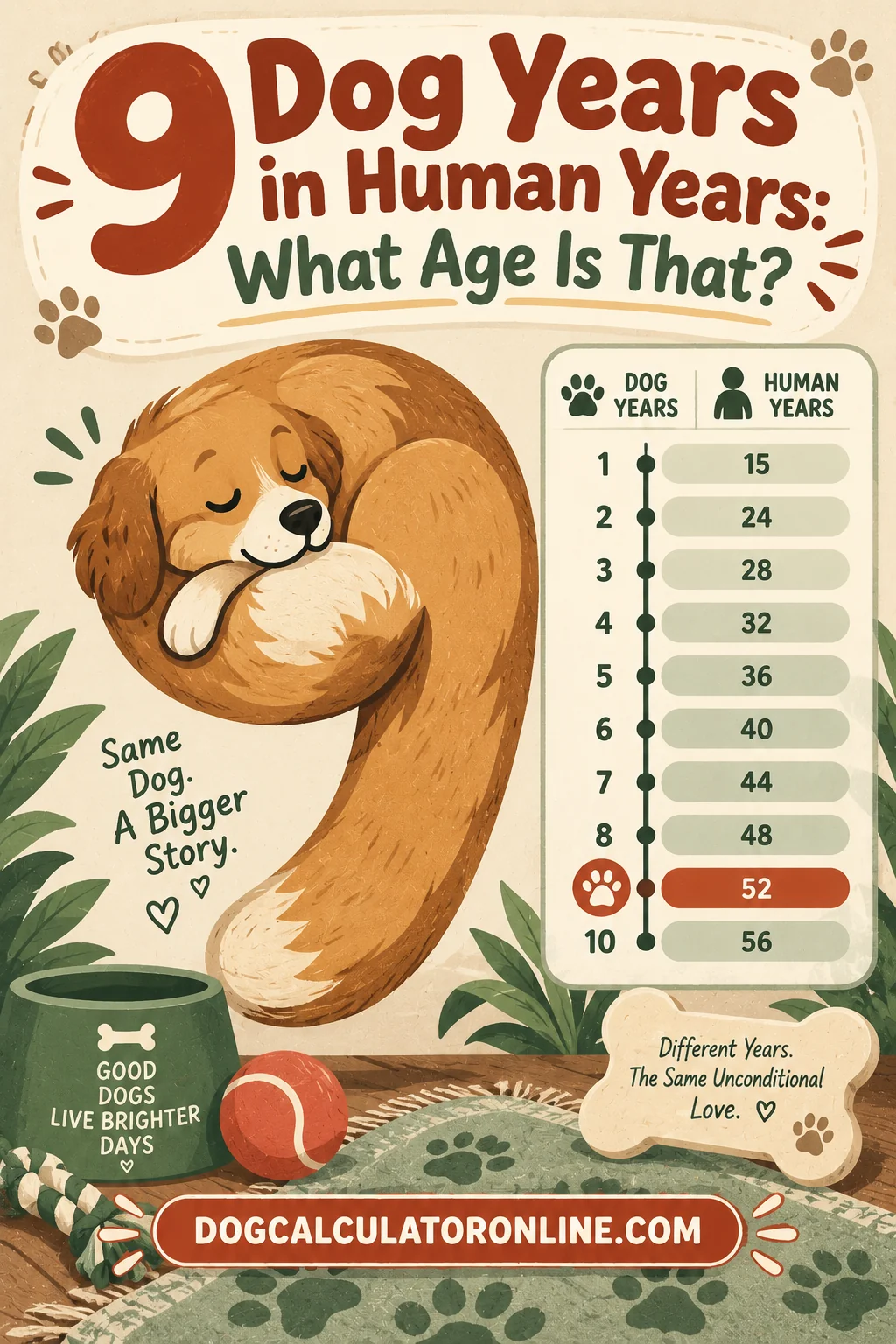
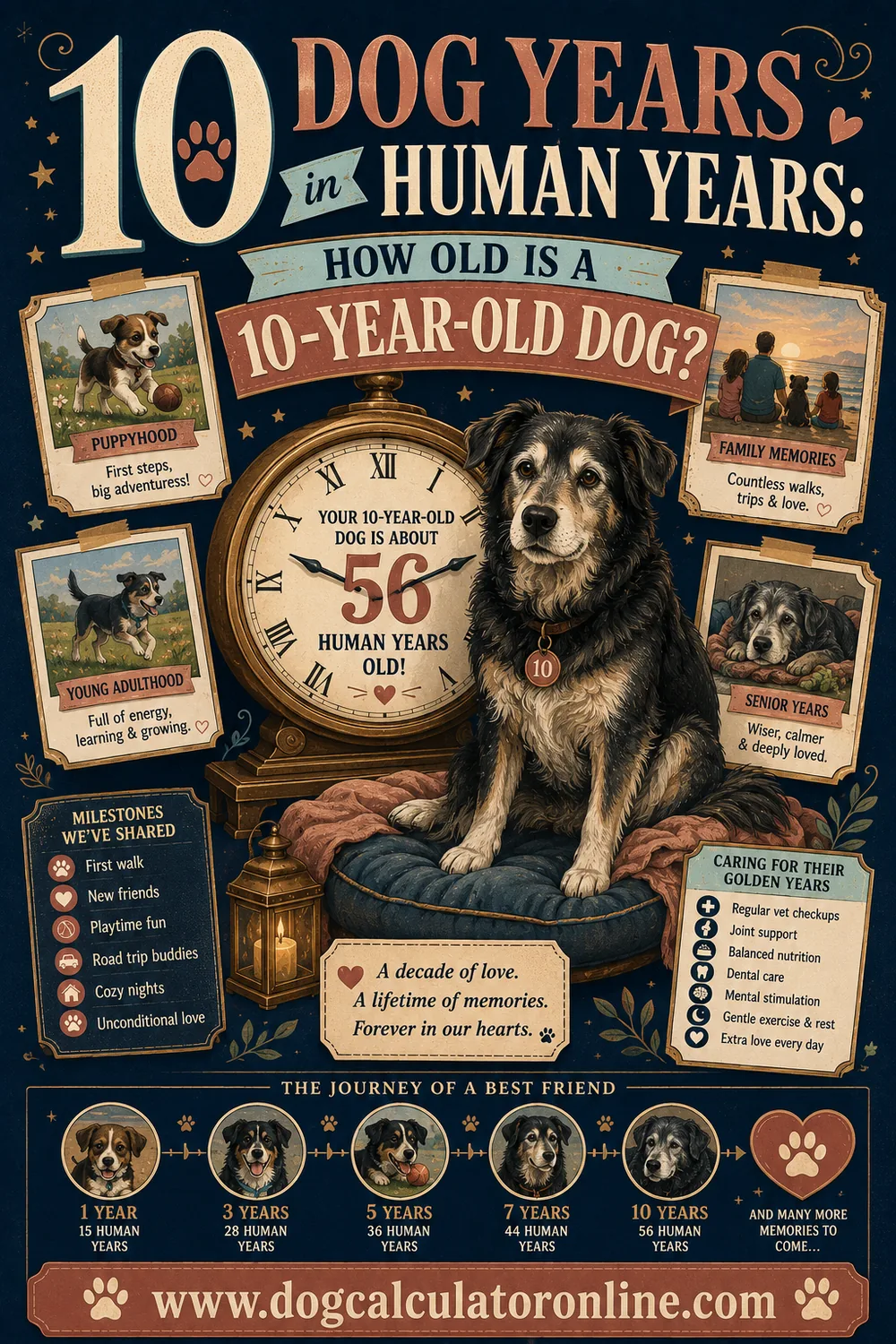
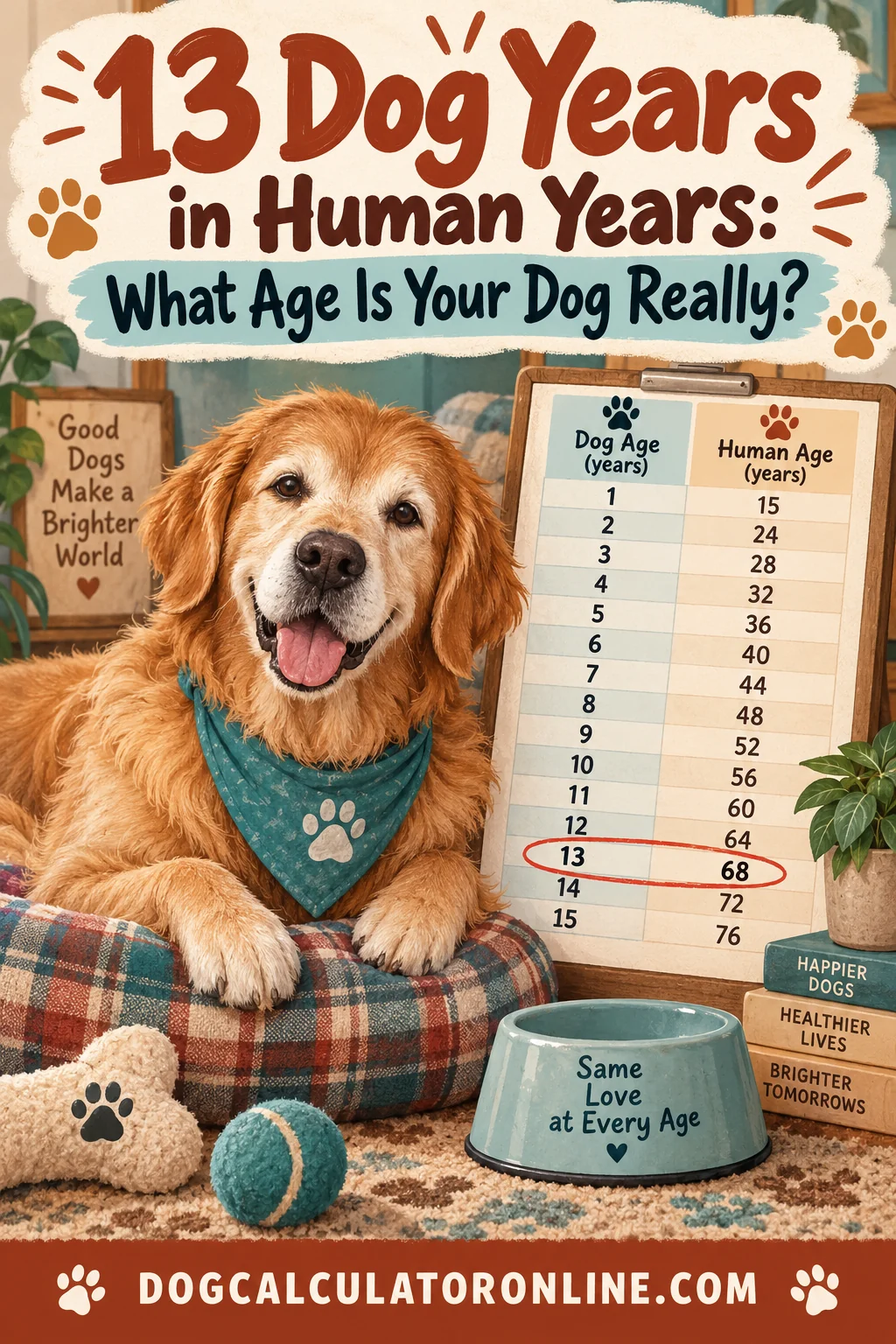
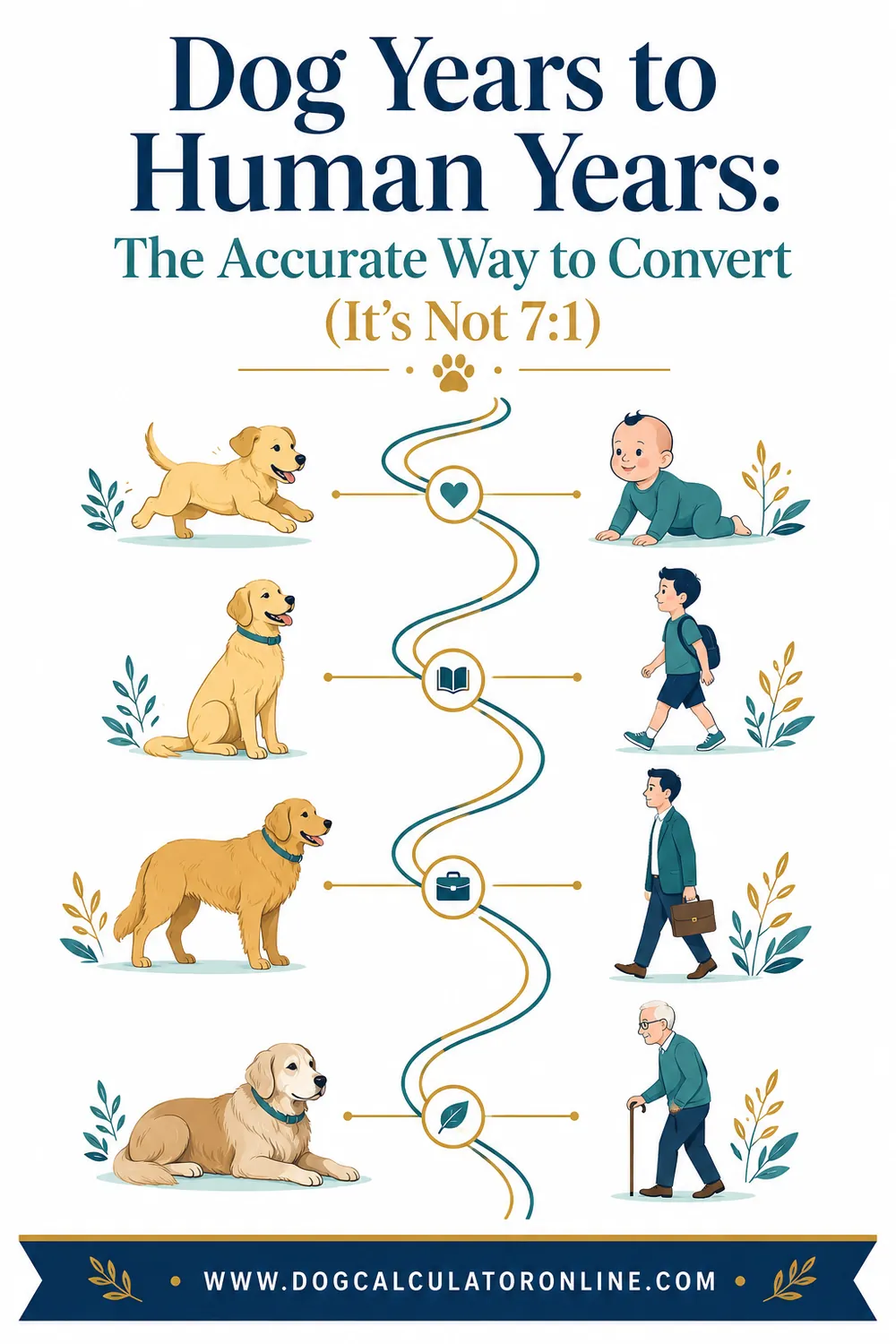
One dog year does not equal seven human years. The method vets actually use says a dog's first year equals about 15 human years, the second adds about 9 more, and every year after that adds 4 to 7 human years depending on your dog's size. So a 5-year-old medium-sized dog is roughly 39 in human years — not 35.
If you just want the answer for your own dog, our free dog age calculator does the size-adjusted math (plus the DNA-study formula) in about two seconds. If you want to understand why the old 7-year rule is wrong and what the real numbers look like, keep reading.
🐾 Quick converter: dog years → human years
Tap your dog's age to see the equivalent for a medium-sized dog (21–50 lb):
Tap an age above to see the human-year equivalent.
Where the 7-Year Myth Came From
The "multiply by seven" rule has been around for decades, and nobody is entirely sure who started it. The most common explanation is simple math from the mid-1900s: people lived to about 70, dogs lived to about 10, so someone divided one by the other and called it a rule.
It's easy to remember, which is why it stuck. But it fails basic scrutiny:
- A 1-year-old dog can have puppies. A 7-year-old human cannot. Dogs hit adolescence and sexual maturity within their first year — closer to a human teenager than a second-grader.
- Dogs of different sizes age at wildly different rates. A 10-year-old Chihuahua is often still zooming around the yard. A 10-year-old Great Dane is elderly. One multiplier can't describe both.
- Aging isn't linear. Dogs mature extremely fast early on, then their aging slows relative to ours. The 7:1 rule pretends every year is the same, and it isn't.
Veterinary organizations, including the American Veterinary Medical Association (AVMA), have moved on from the 7-year rule. Here's what they use instead.
The Formula Vets Actually Use (Size-Adjusted)
The widely accepted guideline works like this:
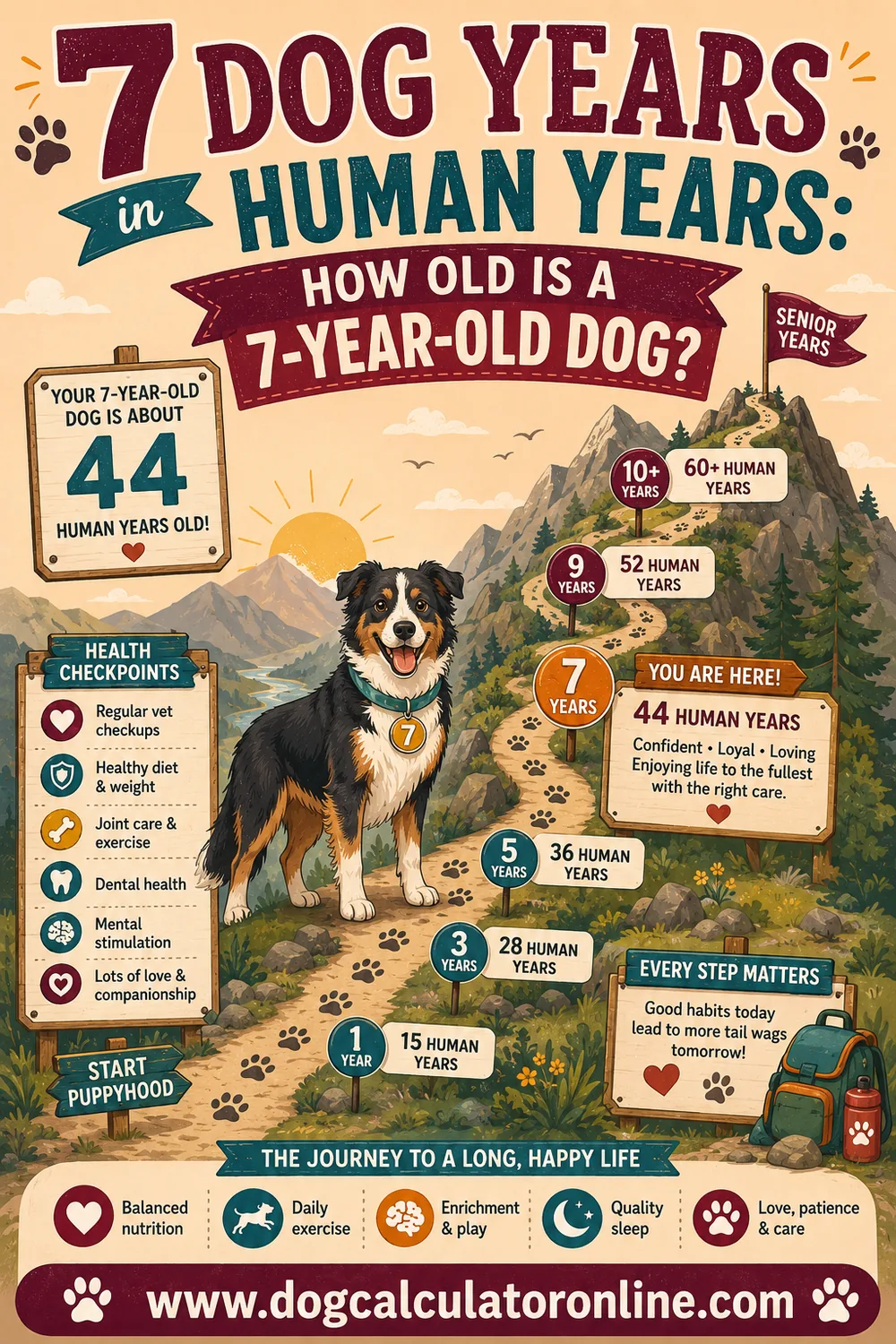
- Year one ≈ 15 human years. Puppies go from newborn to young adult in twelve months.
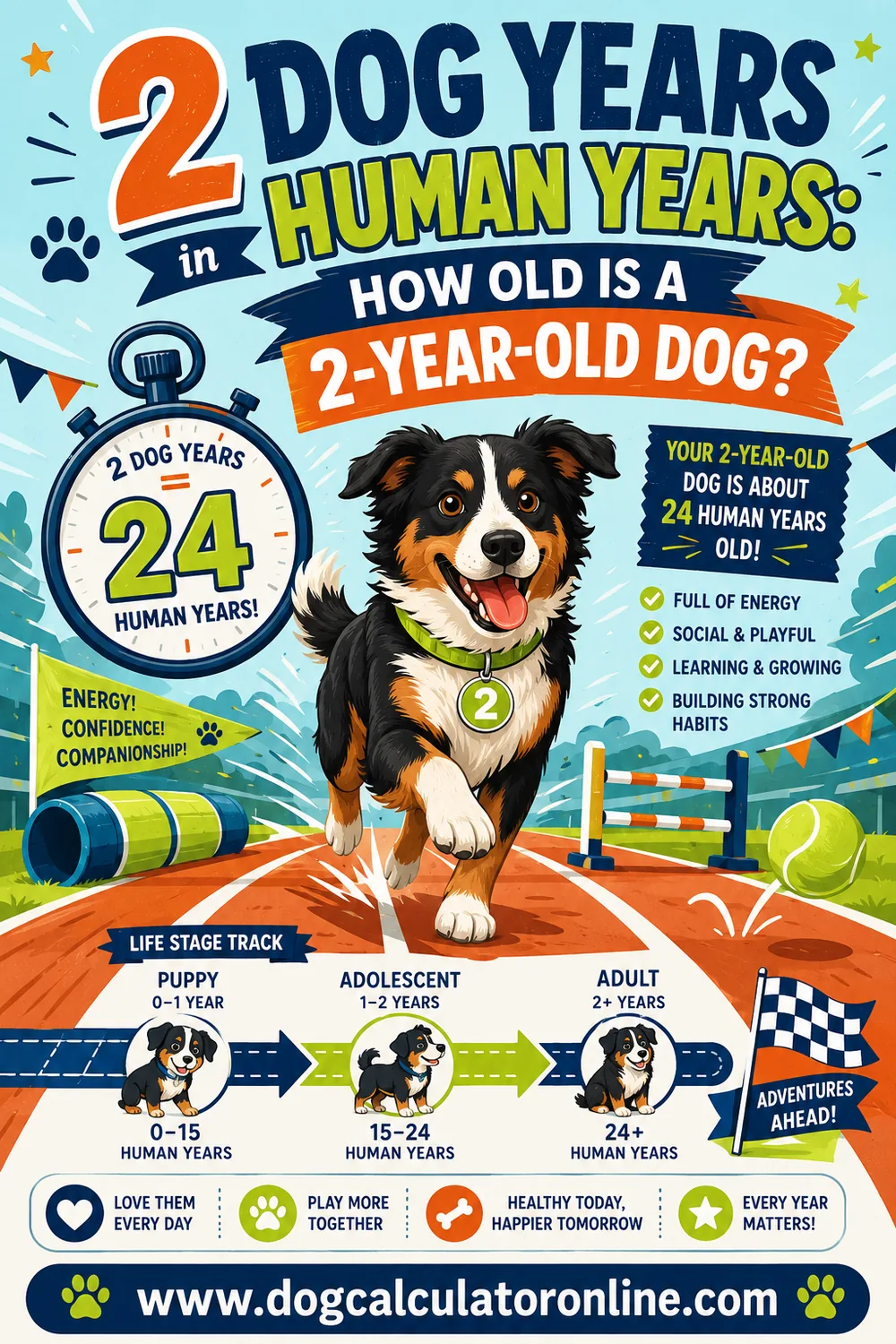
- Year two ≈ 9 more human years. So a 2-year-old dog is about 24 in human years, regardless of size.
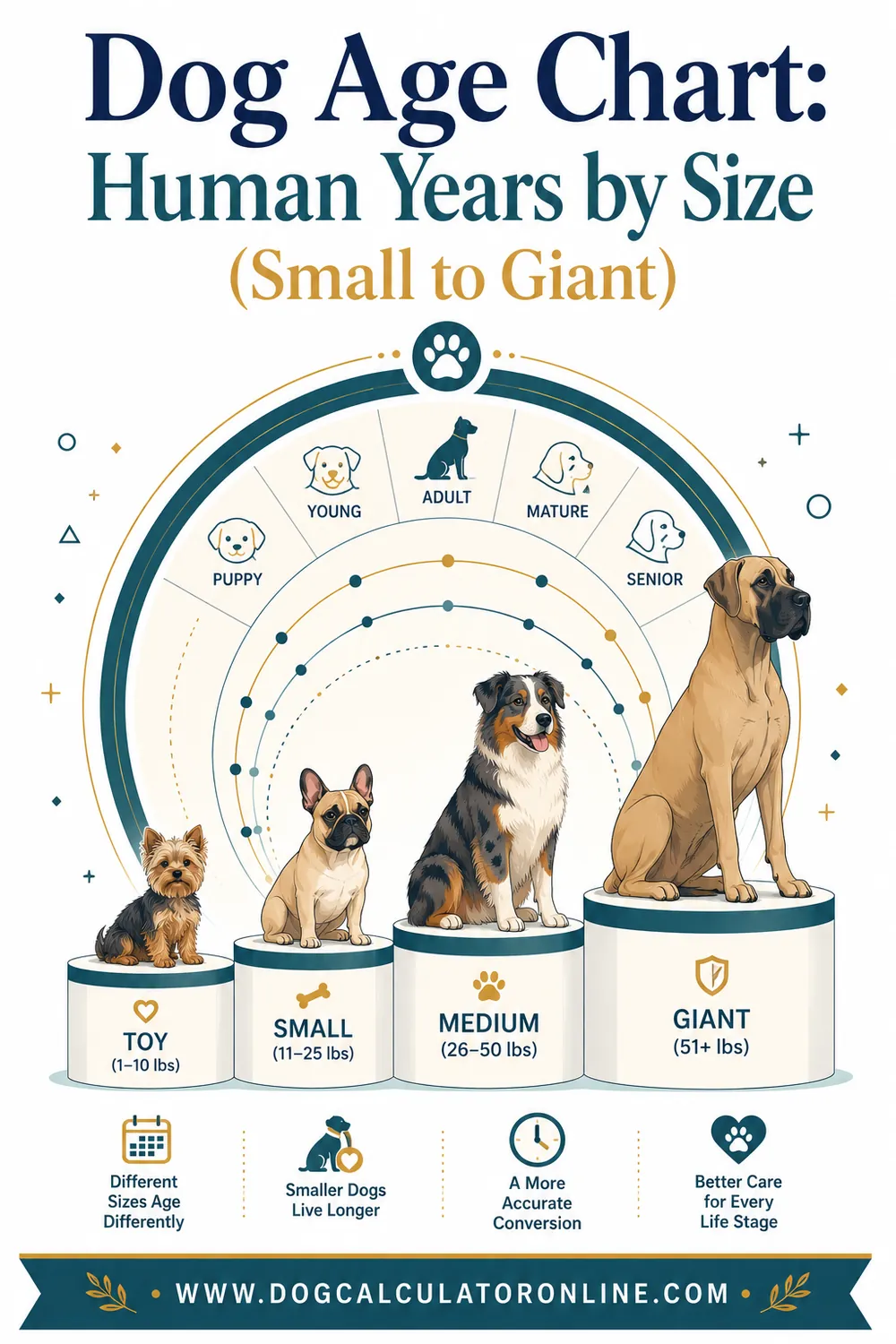
- Every year after that adds 4–7 human years, depending on weight class:
| Size class | Adult weight | Human years added per dog year (after age 2) |
|---|---|---|
| Small | Under 20 lb | +4 |
| Medium | 21–50 lb | +5 |
| Large | 51–90 lb | +6 |
| Giant | Over 90 lb | +7 |
That's the whole system. Let's run it for a 6-year-old Labrador (large breed): 15 + 9 = 24 for the first two years, then four more years at +6 each = 24 more. Total: about 48 human years.
Worked examples
- 4-year-old Yorkie (small): 15 + 9 + (2 × 4) = 32 human years
- 7-year-old Beagle (medium): 15 + 9 + (5 × 5) = 49 human years
- 9-year-old Golden Retriever (large): 15 + 9 + (7 × 6) = 66 human years
- 8-year-old Great Dane (giant): 15 + 9 + (6 × 7) = 66 human years
Notice the Great Dane hits 66 a full year of life sooner than the Golden. Size matters — a lot. Our dog age calculator applies the right multiplier automatically based on your dog's weight, so you don't have to remember the table.
The 2019 DNA Study: A Science Upgrade
In 2019, researchers at the University of California San Diego took a completely different approach. Instead of comparing lifespans, they studied DNA methylation — chemical marks on DNA that change predictably with age in both humans and dogs (often called the "epigenetic clock").
By comparing the methylation patterns of about a hundred Labrador Retrievers to those of humans, they derived a formula:
Human age = 16 × ln(dog age) + 31
("ln" is the natural logarithm — the calculator handles it for you.)
Here's what that formula produces:
| Dog's age | UCSD formula (human years) | AVMA guideline, medium dog |
|---|---|---|
| 1 | 31 | 15 |
| 2 | 42 | 24 |
| 3 | 49 | 29 |
| 5 | 57 | 39 |
| 7 | 62 | 49 |
| 10 | 68 | 64 |
| 14 | 73 | 84 |
Why the two methods disagree
The DNA formula says young dogs are "older" than we thought at a molecular level — a 1-year-old Lab has DNA that looks like a 31-year-old human's. Then aging slows dramatically: the curve flattens, so the gap between a 10-year-old and a 14-year-old dog is only about 5 "human years" of methylation change.
Two important caveats:
- It was built on Labradors. The researchers themselves noted other breeds may follow different curves, so it may not transfer perfectly to your Pomeranian or Mastiff.
- It measures molecular aging, not behavior or life stage. No one would describe a 1-year-old dog as middle-aged. The AVMA guideline maps better onto how dogs actually live: when they mature, when they slow down, when they become seniors.
That's why the best answer uses both: the size-adjusted guideline for practical life-stage questions, and the epigenetic formula as a fascinating second opinion. Our free calculator shows you both numbers side by side.
Why Small Dogs Age Slower Than Big Dogs
In most of the animal kingdom, bigger species live longer — elephants outlast mice by decades. Within dogs, it's flipped: bigger dogs live shorter lives. A Chihuahua can reach 15–17 years; many giant breeds are considered seniors by 6 and rarely pass 10.
Scientists don't have one tidy answer, but the leading ideas are:
- Faster growth, faster wear. Large breeds pack an enormous amount of growth into their first year — a Great Dane goes from a 1-pound newborn to a 100-pound-plus adult. That rapid cell division may accelerate aging and raise cancer risk.
- Growth-hormone levels. Bigger dogs tend to carry higher levels of a growth factor called IGF-1, which is linked to shorter lifespan across many species.
The practical takeaway: your dog's size class changes the answer, so any honest dog-years conversion has to ask how much your dog weighs. A flat multiplier can't.
How to Help Your Dog Age Well
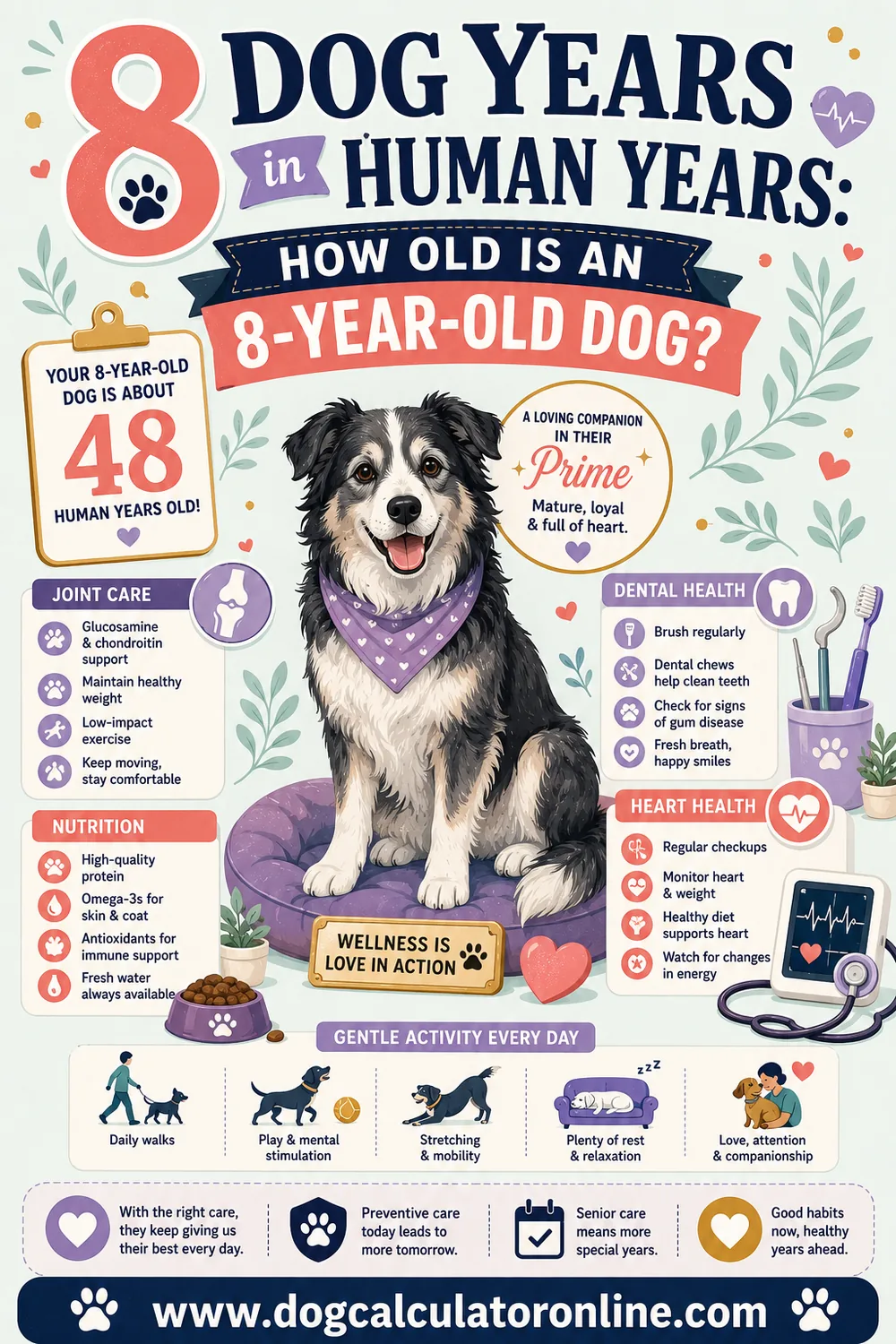
Knowing your dog's human age is more useful when it nudges you toward good habits. A few evidence-backed levers make a real difference in healthy aging:
- Keep them lean. Studies of Labradors found that dogs kept at a healthy weight lived meaningfully longer than their overweight littermates. Extra pounds stress joints and organs. If you can't easily feel your dog's ribs or see a waist, talk to your vet about portions.
- Prioritize dental care. Dental disease is one of the most common problems in adult dogs and can affect the heart and kidneys. Brushing and vet dental checks pay off over years.
- Match exercise to life stage. A young adult needs vigorous daily activity; a senior needs gentler, consistent movement to keep joints and muscles working.
- Don't skip checkups. For dogs in the human-equivalent 50s and up (roughly age 7 for small/medium, age 5–6 for large/giant), twice-yearly vet visits catch problems early, when they're most treatable.
None of this changes the math — but it can change how many good years your dog gets. The human-years number is a reminder that a "middle-aged" dog benefits from middle-aged care.
What the Number Can't Tell You
A human-age figure is a helpful shorthand, but it has limits worth naming:
- It's an average, not a verdict. Two 8-year-old Labradors can be in very different health. Genetics, weight, and past care all shift the real picture.
- It doesn't diagnose anything. A dog that "should" be middle-aged can have age-related issues early, or stay spry well past their senior label.
- Breed quirks exist. Even within a size class, some breeds are longer-lived than others.
Use the number to set expectations and time your care decisions — then let your vet read the actual dog in front of you.
Life Stages Matter More Than a Single Number
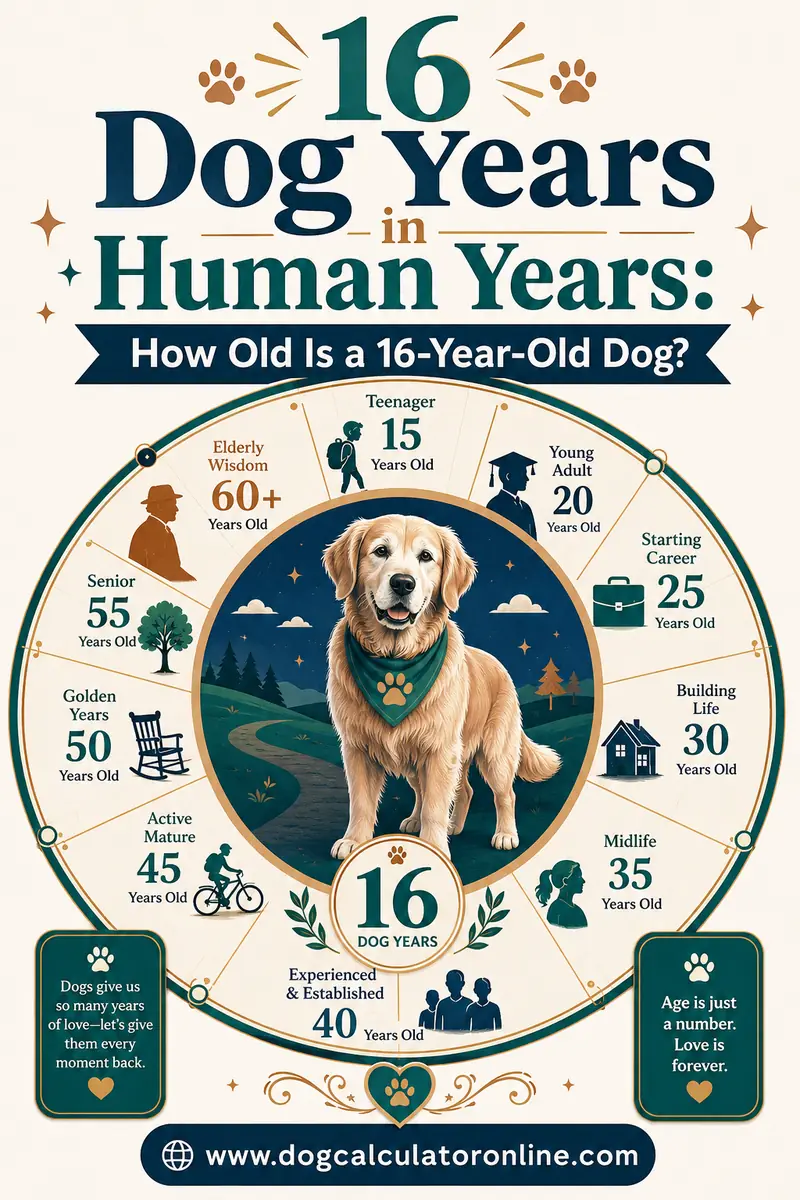
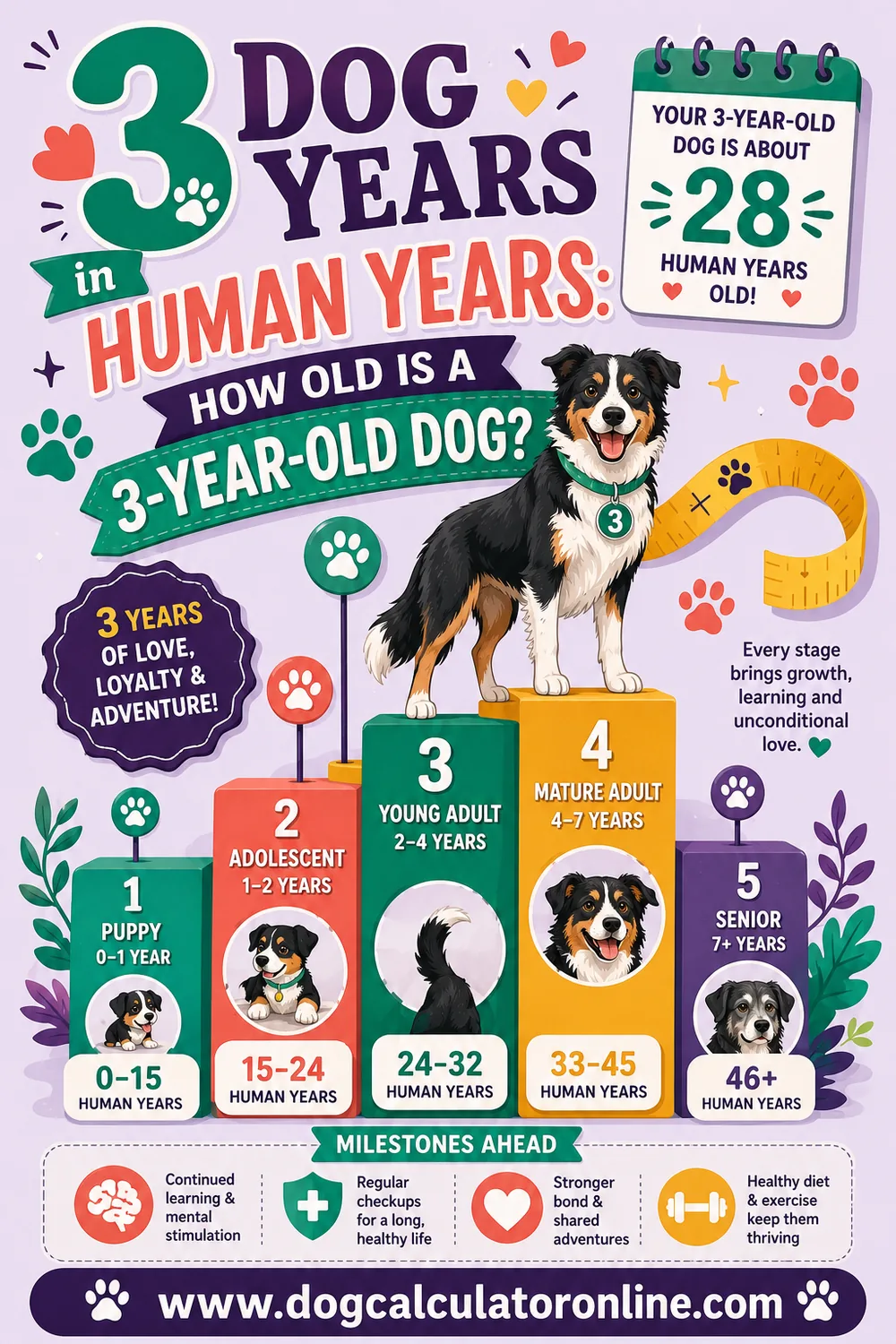
A human-years figure is a fun headline, but what most owners really want to know is what life stage is my dog in? Here's a rough map:
| Life stage | Small/medium dog | Large/giant dog |
|---|---|---|
| Puppy | 0–1 year | 0–1.5 years |
| Young adult | 1–3 years | 1.5–3 years |
| Mature adult | 3–7 years | 3–5 years |
| Senior | 7+ years | 5–6+ years |
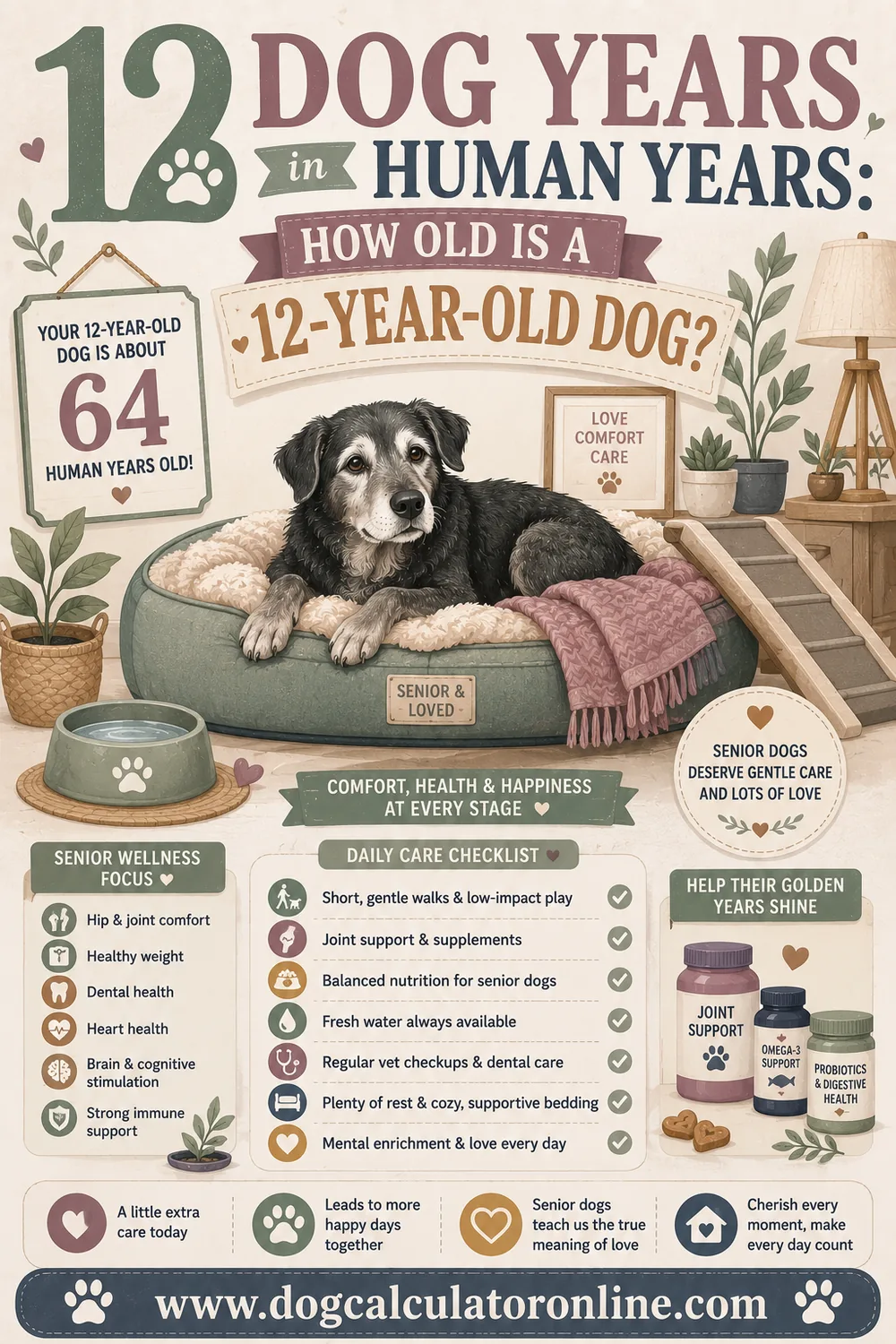
Knowing the stage helps you make real decisions — when to switch to senior food, when to add joint support, when to ask your vet for twice-yearly checkups instead of annual ones. Always talk to your own vet about your dog's health, but the life-stage lens is far more useful than "my dog is 49."
Related Guides
If this helped, these go deeper on the same question:
- Dog Age Chart: Human Years by Size (Small to Giant)
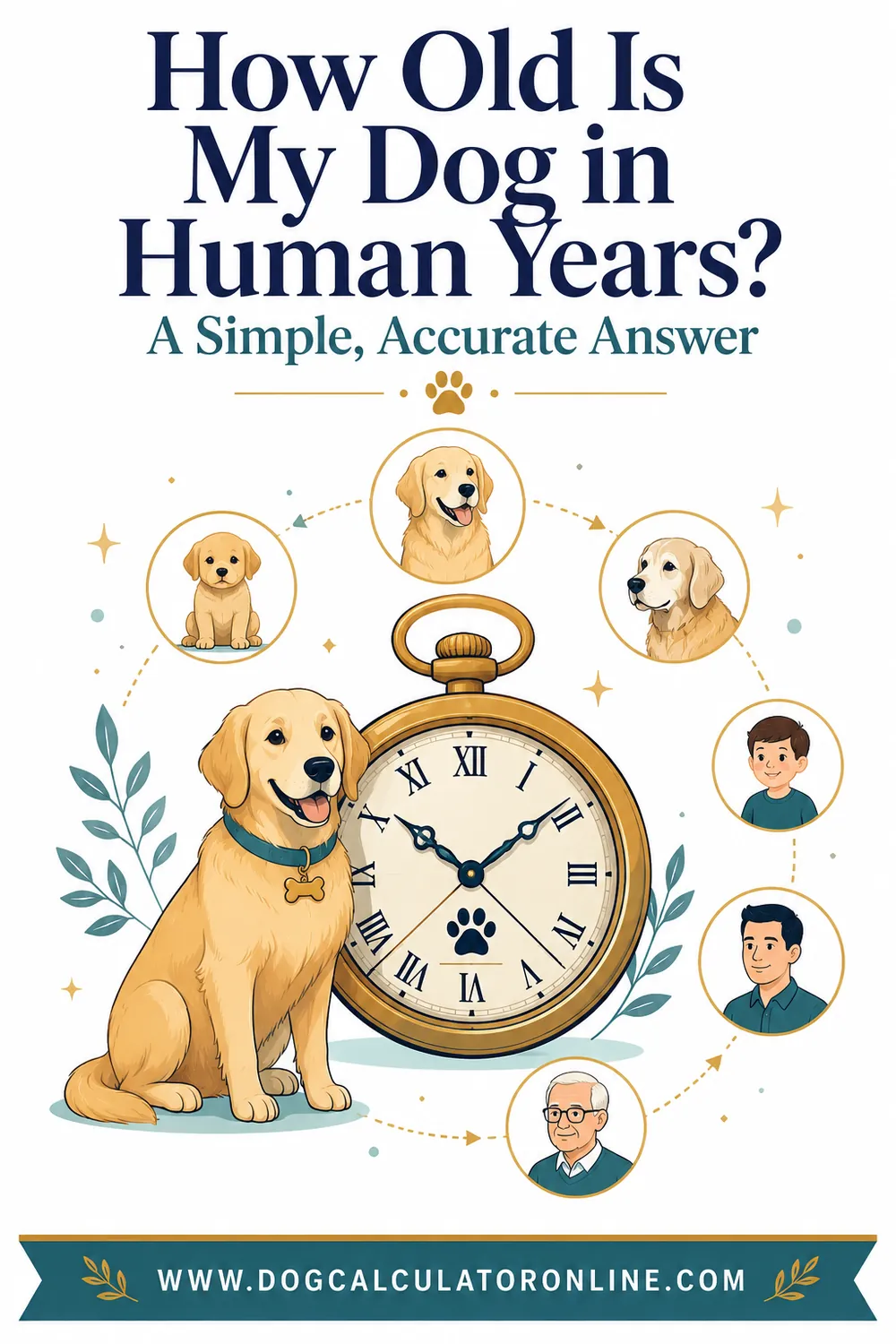
- How Old Is My Dog in Human Years? A Simple, Accurate Answer
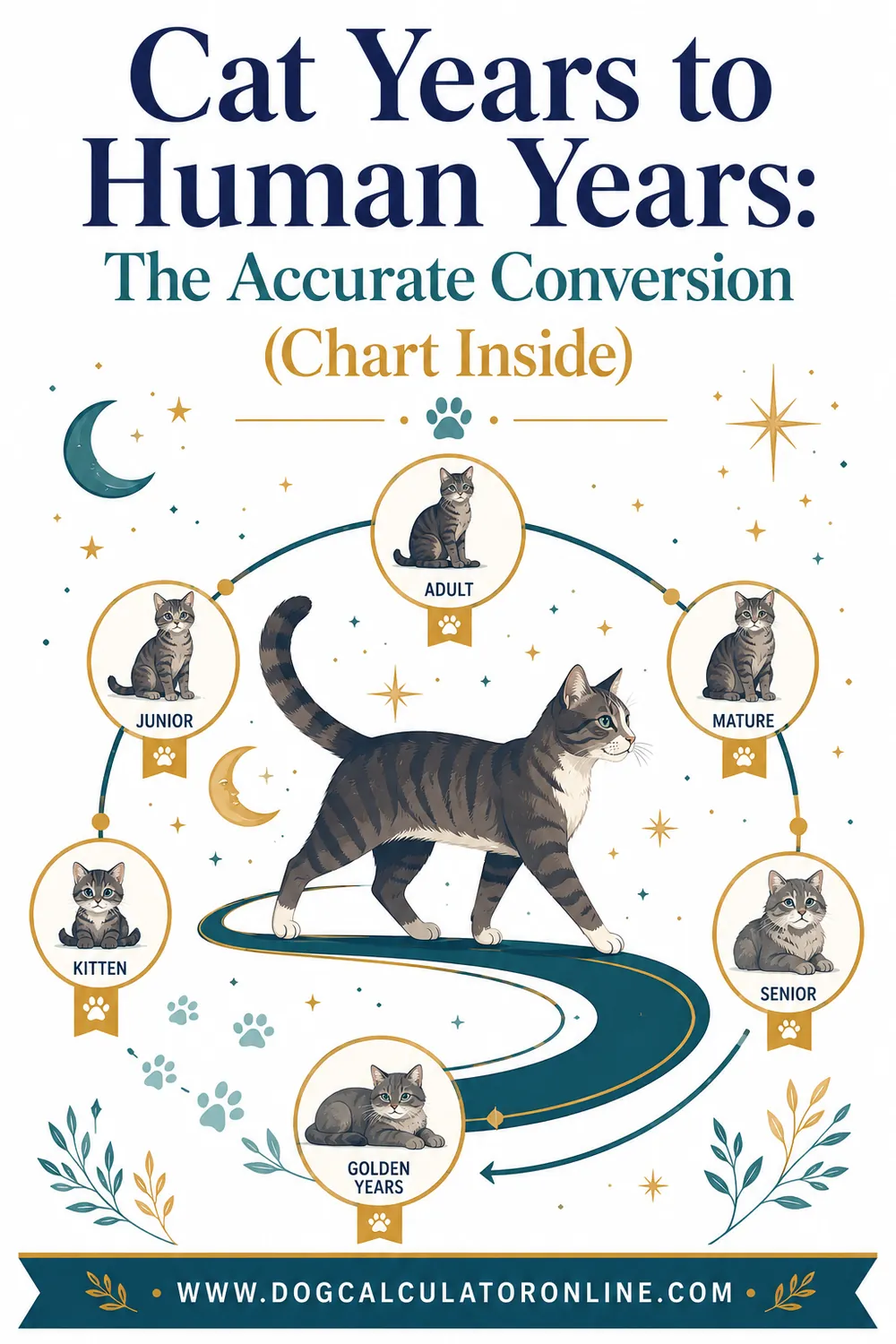
- Cat Years to Human Years: The Accurate Conversion (Chart Inside)
And if you just want your own dog’s number, the free dog age calculator does it in one tap.
FAQ
Is one dog year really seven human years?
No. That's a myth. Dogs age very fast in year one (about 15 human years), fast in year two (about 9 more), then 4–7 human years per year after that depending on size. A single multiplier can't capture that curve.
How do I calculate my dog's age in human years?
Use the size-adjusted method: 15 for the first year, +9 for the second, then +4 (small), +5 (medium), +6 (large), or +7 (giant) for each additional year. Or just enter your dog's age and weight into our free dog age calculator.
Which is more accurate — the AVMA method or the DNA formula?
They answer different questions. The AVMA size-adjusted guideline best reflects real-life stages and is the better everyday answer. The 2019 UCSD epigenetic formula reflects molecular aging and is a fascinating scientific second opinion, but it was derived from Labradors.
Do big dogs and small dogs age at the same rate?
No. Small dogs live longer and age more slowly after adulthood. Giant breeds age fastest, which is why they add about 7 human years per calendar year while small dogs add about 4.
At what age is a dog a senior?
Small and medium dogs are usually considered seniors around age 7. Large and giant breeds reach senior status earlier — often by 5 or 6.
What's the oldest a dog can live?
Most dogs live 10–13 years, with small breeds often reaching 15–17. The verified record is over 20 years, but that's exceptional.
The Bottom Line
Forget "times seven." A dog's first year is worth about 15 human years, the second about 9 more, and each year after that adds 4 to 7 depending on size. The 2019 DNA study adds a fascinating molecular view, but for everyday life-stage decisions the size-adjusted guideline wins.
Want the exact number without doing the math? Our free dog age calculator gives you both the vet-backed size-adjusted age and the DNA-study age in one tap — just enter your dog's age and weight.