Human Foods Dogs Can Safely Eat
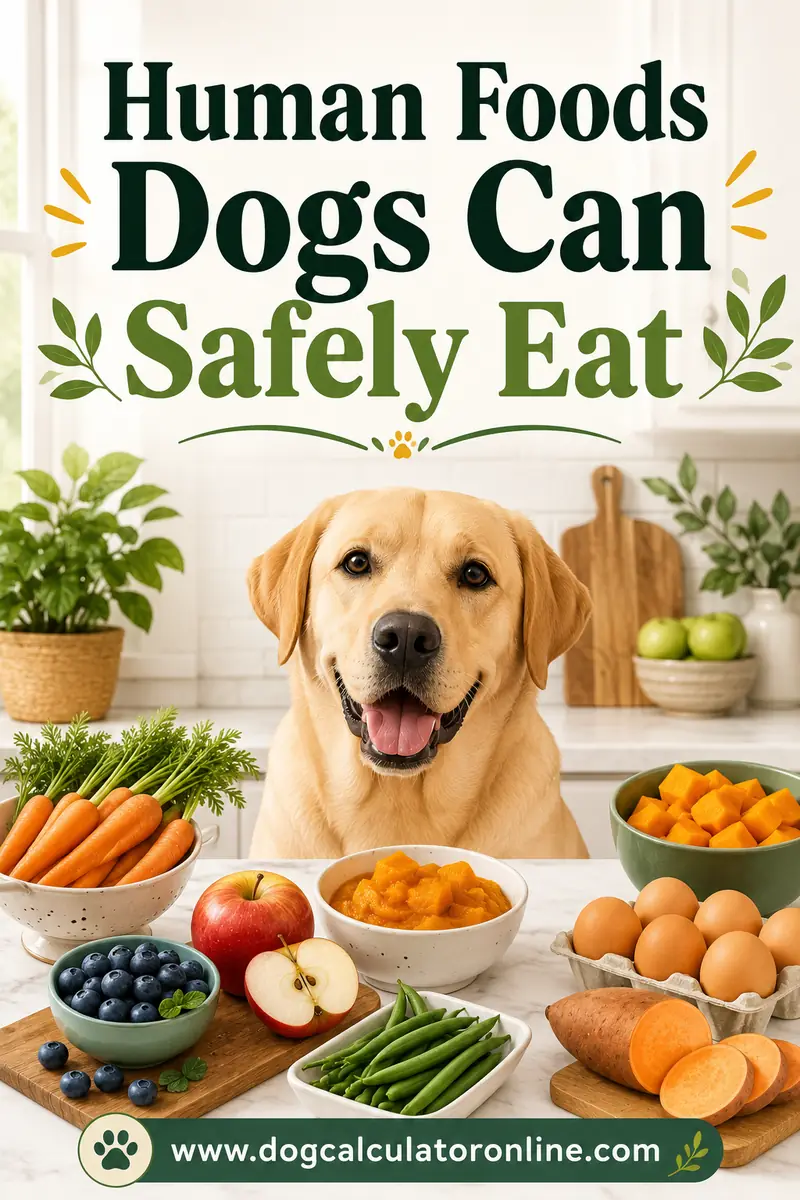
Plenty of everyday human foods are perfectly safe for dogs: plain cooked chicken, plain cooked eggs, carrots, bananas, apples (no core or seeds), blueberries, watermelon flesh, plain rice, pumpkin, green beans, cucumber, and xylitol-free peanut butter all make the list. The two rules that keep sharing safe are plain — no butter, salt, garlic, onion, or sauce — and small: everything outside your dog's regular food should stay within about 10% of daily calories.
That 10% ceiling is where most well-meaning owners go wrong, because "a little chicken" for a 12-pound dog is a very different thing than for a 70-pound dog. If you don't know your dog's daily calorie budget, the free dog food calculator works it out from weight, age, and activity in a few seconds — then the treat allowance is simple math. This guide covers the full safe list by category, portion guidance by dog size, prep rules that matter more than people expect, and the foods that sit in the gray zone.
🥕 Safe-food spot check
Tap a food to see the verdict and serving rule:
Tap a food above. Rule of thumb: plain, small, and under 10% of daily calories.
The Two Rules That Make Any "Safe" Food Actually Safe
Before the list, the framework — because a safe food served wrong stops being safe.
Rule 1: Plain means plain. The chicken breast is fine; the garlic-butter chicken is not. Onion, garlic, chives, and leeks are toxic to dogs in any form (fresh, cooked, powdered), heavy salt is a problem, and rich fatty preparations can trigger digestive upset or, in some dogs, pancreatitis. When in doubt, serve the ingredient the way you'd serve it to a toddler with no teeth and no salt shaker: cooked simply, nothing added.
Rule 2: The 10% treat ceiling. Veterinary nutritionists' standard guidance is that treats and extras — including healthy ones — should stay within roughly 10% of a dog's daily calories, with the remaining 90% coming from complete-and-balanced dog food. Human food doesn't carry the vitamin and mineral profile dogs need, so the more of the diet it displaces, the more unbalanced the diet gets. Ten percent of a small dog's budget is tiny: a 10-pound dog needing around 350 kcal a day has a treat allowance of about 35 kcal — half an egg is the budget. Run your own dog's number through the dog food calculator so the portions below have something to anchor to.
Proteins Dogs Can Eat
- Plain cooked chicken or turkey. Skinless, boneless, unseasoned. The classic bland-diet protein and a high-value training treat. Never cooked bones — they splinter.
- Plain cooked eggs. Scrambled dry or hard-boiled, no butter or salt. Digestible protein plus useful nutrients; the details (raw-egg risks, portioning) are in our can dogs eat eggs guide.
- Plain cooked lean beef or pork. Trimmed of fat, fully cooked, unseasoned. Small amounts — rich cuts and drippings are pancreatitis territory.
- Cooked salmon and other cooked fish. Deboned and plain. Never raw salmon, which can carry a parasite dangerous to dogs; canned salmon or tuna in water (not oil or brine) is fine occasionally in small amounts.
- Plain yogurt and small amounts of cheese. Many dogs handle small servings, but dogs are frequently lactose-sensitive as adults — start tiny and watch for soft stool. Skip anything with sweeteners, and never yogurt with xylitol.
Vegetables Dogs Can Eat
- Carrots — raw or cooked, low-calorie, and most dogs love the crunch. Cut them up for small dogs; details in our can dogs eat carrots guide.
- Green beans — plain, fresh, frozen, or canned with no salt. A favorite low-calorie filler for dieting dogs (with vet guidance).
- Cucumber — mostly water, nearly calorie-free, great hot-day treat.
- Pumpkin — plain cooked or 100% canned purée, not pie filling (which is spiced and sweetened). Well known for helping mildly upset stomachs; a spoonful goes a long way.
- Sweet potato — cooked and plain. Nutritious but calorie-dense compared to green veg, so keep servings modest.
- Broccoli — small amounts are fine; large amounts can cause gas and stomach irritation.
- Peas — plain green peas are fine as an occasional extra.
- Zucchini and bell peppers — safe, plain, chopped.
Skip: onions, garlic, leeks, chives (toxic), raw potatoes, and corn cobs (the kernels are fine; the cob is a classic blockage emergency).
Fruits Dogs Can Eat
- Apples — flesh only. Remove the core and seeds; seeds contain trace cyanide compounds and the core is a choking/blockage risk.
- Bananas — safe but sugary; a few slices, not a whole banana. Full portioning in can dogs eat bananas.
- Blueberries — one of the best fruit treats going: small, low-calorie, and antioxidant-rich. Fine fresh or frozen.
- Strawberries — safe, hulled and cut for small dogs. Moderation; they're sugary.
- Watermelon — flesh only, seeds and rind removed. Hydrating summer favorite.
- Cantaloupe and honeydew — flesh only, small amounts.
- Pears — flesh only, no core or seeds.
- Peaches and mango — flesh only. The pits are the danger: choking, blockage, and trace toxins. Never let a dog have a stone-fruit pit.
- Pineapple — fresh flesh in small amounts; skip canned in syrup.
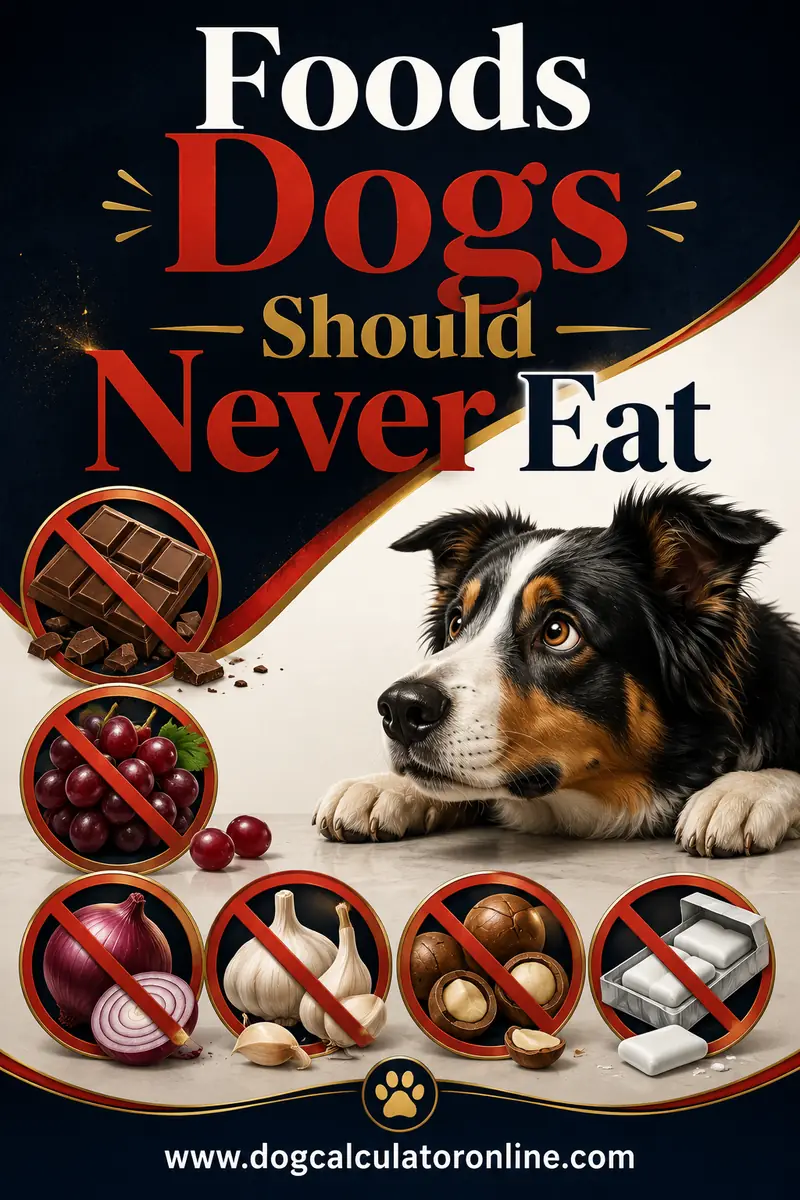
Never: grapes and raisins. They can cause kidney failure in dogs, there's no established safe amount, and sensitivity varies unpredictably between dogs. They headline our foods dogs should never eat list for good reason.
Grains and Pantry Staples
- Plain cooked rice — white rice is the bland-diet standby for upset stomachs; brown rice is fine for healthy dogs.
- Plain cooked pasta and oatmeal — safe in small amounts, plain. These are cheap calories with little nutritional payoff, so keep them occasional.
- Plain bread — small amounts of plain baked bread are fine for most dogs, but it's empty calories. Raw yeast dough, on the other hand, is a genuine emergency — it expands and produces alcohol in the stomach.
- Plain popcorn — air-popped, no butter or salt, in small amounts. Watch for unpopped kernels.
- Peanut butter — the great training-treat multiplier, with one non-negotiable check: the label must not contain xylitol (sometimes listed as "birch sugar"), which is severely toxic to dogs. Plain peanuts (unsalted, shelled) are also fine in small numbers, but peanut butter and peanuts are calorie-dense — a tablespoon of peanut butter can run 90–100 kcal, which blows a small dog's entire treat budget.
Portion Guide by Dog Size
These are conservative, everyday-treat portions for healthy adult dogs, assuming the rest of the day's treats are minimal. Your dog's exact calorie budget from the dog food calculator is the better anchor — and your vet is the final word for dogs with health conditions.
| Food | Small dog (~10 lb) | Medium dog (~30 lb) | Large dog (~70 lb) |
|---|---|---|---|
| Cooked chicken | 1–2 small bites | A few small pieces | ~1/4 cup shredded |
| Cooked egg | ~1/4–1/2 egg | ~1/2–1 egg | 1 egg |
| Carrot | A few small pieces | ~1/2 carrot, cut | 1 carrot, cut |
| Banana | 1–2 thin slices | 3–4 slices | ~1/4–1/2 banana |
| Blueberries | 2–3 berries | A small handful | A handful |
| Peanut butter | Thin smear (~1/2 tsp) | ~1 tsp | ~1 tbsp |
| Plain rice | 1 spoonful | 2–3 spoonfuls | ~1/4 cup |
Frequency matters as much as size: these work as occasional extras, not daily add-ons stacked on top of each other. If human food is becoming a meaningful slice of the diet, that's a conversation for your vet, not a bigger scoop of everything.
Putting the List to Work: Training and Enrichment
The safe list isn't just about sharing dinner scraps politely — it's a toolbox. For training, tiny bits of plain cooked chicken are the classic high-value reward that outranks any biscuit, while carrot coins and green-bean pieces handle high-repetition sessions at almost zero calorie cost. A useful two-pocket system: cheap veg rewards for easy reps, chicken for recalls and hard asks.
For enrichment, the soft entries shine: mashed banana, plain yogurt, canned pumpkin, or xylitol-free peanut butter smeared thin on a lick mat or packed into a rubber toy — frozen, any of these stretches into a long, calming project. Frozen watermelon chunks and blueberries double as hot-day scatter treats in the yard.
For pill duty, a fold of plain chicken or a dab of peanut butter (label checked) beats wrestling — though confirm with your vet that your dog's specific medication can be given with food.
The budget rule follows the calories into every use: a lick mat's peanut butter is still 90 kcal, whether you called it dinner or "enrichment." Count it, and shave the kibble accordingly.
The Gray-Zone Foods
Some foods aren't on the emergency list but aren't clean "yes" answers either:
- Cheese and dairy — fine for many dogs in small amounts, but lactose sensitivity is common. Tiny portions, and stop at the first soft stool.
- Avocado — the flesh contains persin, which dogs tolerate far better than birds or livestock, but it's very fatty and the pit is a serious blockage hazard. Most vets file it under "not worth it."
- Tomatoes — ripe red flesh is generally fine in small amounts; the green parts of the plant (stems, leaves, unripe fruit) contain solanine and should be off-limits. Garden dogs and tomato beds don't mix.
- Ham, bacon, and deli meat — not toxic, but so salty and fatty that they earn a "skip it" from most vets. Rich fatty meals are a classic pancreatitis trigger.
- Honey — small amounts fine for healthy adult dogs; skip for puppies and diabetic dogs.
- Almonds and cashews — not toxic like macadamias, but fatty, often salted, and a choking hazard. Easy pass.
Sharing by Life Stage: Puppies, Adults, Seniors
Puppies can have small tastes of safe foods once they're established on solid food, but the bar is higher: growth diets are precisely balanced, calorie budgets are tiny, and treats dilute both. Keep human-food treats to crumbs and slivers — a pea-sized bit of scrambled egg or a couple of blueberries — and lean on pieces of the regular puppy ration as training currency. Anything beyond incidental tastes is a question for your vet, especially with large-breed puppies where growth nutrition genuinely matters for joint development.
Healthy adults are the audience the portion table above serves. The one adult-specific caution: dogs doing heavy training weeks are usually earning lots of commercial treat calories already, so the human-food allowance shrinks on exactly the weeks owners feel most generous.
Seniors often benefit most from the safe list — soft scrambled egg, mashed pumpkin, and warmed plain chicken are classic appetite-tempters for older dogs going picky. Seniors are also the group most likely to have a condition or prescription diet that changes the rules: kidney disease shifts protein and phosphorus math, pancreatitis history rules out fatty extras, diabetes rules out the sugary fruits. If your senior has any diagnosis on file, the safe list needs your vet's edit before it applies.
Dogs on prescription or elimination diets are the hard no. A single flavorful extra can undo an eight-week food trial or unbalance a therapeutic diet — for these dogs, "plain and small" isn't enough; it's vet-approved or nothing.
How to Introduce a New Food Safely
- Check it against the danger list first. Thirty seconds on our foods dogs should never eat page beats an emergency clinic visit.
- Start with one small piece. One new food at a time, so you know what caused any reaction.
- Wait 24–48 hours. Watch for vomiting, diarrhea, itching, or lethargy before offering it again.
- Fit it into the budget. Count the calories against the 10% treat ceiling — our treat allowance guide breaks down how fast small extras add up.
- Adjust the bowl if extras become regular. A dog getting daily food extras on top of full rations is quietly gaining weight. Recheck the daily total on the dog food calculator and trim the kibble to make room.
Dogs with pancreatitis history, diabetes, kidney disease, food allergies, or on prescription diets are a different conversation entirely — for those dogs, ask your vet before sharing anything off your plate.
FAQ
What human foods can dogs eat every day?
Low-calorie vegetables like carrot pieces, green beans, and cucumber are the best candidates for daily treats because they barely dent the calorie budget. Even so, keep all extras within about 10% of daily calories — complete dog food should stay the backbone of the diet.
What is the healthiest human food for dogs?
There's no single winner, but plain cooked lean protein (chicken, egg), plain vegetables (carrots, green beans, pumpkin), and blueberries offer the best nutrition-to-calorie ratio. "Healthiest" always depends on staying inside the treat allowance for your dog's size.
Can dogs eat scrambled eggs?
Yes — cooked plain, with no butter, oil, salt, or milk. A large egg runs about 70 kcal, so scale the portion to your dog: a fraction of an egg for small dogs, up to a whole egg for large dogs, occasionally rather than daily.
What human foods are toxic to dogs?
The major ones: chocolate, grapes and raisins, xylitol (in sugar-free gum, candy, and some peanut butters), onions, garlic, chives, leeks, macadamia nuts, alcohol, caffeine, and raw yeast dough. If your dog eats any of these, contact your vet or an animal poison control hotline right away.
Can I feed my dog human food instead of dog food?
Not as a DIY project. Home-prepared diets are very hard to balance correctly, and long-term nutritional gaps cause real harm. If you want to home-cook, do it under the guidance of your vet or a board-certified veterinary nutritionist with a properly formulated recipe.
Can dogs eat rice and chicken every day?
Plain chicken and rice is a short-term bland diet for upset stomachs, not a complete diet — it lacks the vitamins, minerals, and fatty-acid balance dogs need long term. Use it for a few days when your vet suggests it, then return to complete-and-balanced dog food.
How much human food is too much?
More than about 10% of daily calories from treats and extras — that's the standard veterinary guideline. For a small dog that can be as little as 30–40 kcal a day, which one tablespoon of peanut butter exceeds on its own.
Share the Good Stuff, Skip the Guesswork
The safe list is genuinely long — eggs, chicken, carrots, bananas, blueberries, rice, pumpkin, and plenty more — as long as everything stays plain and small. The part most owners skip is the budget: 10% of daily calories is the ceiling, and you can't respect a ceiling you've never measured. Run your dog's weight, age, and activity through the free dog food calculator to get the daily calorie number, and every "can they have a bite?" decision becomes easy math instead of a guess.