Can Dogs Eat Bananas?
Yes — dogs can eat bananas, and most dogs enjoy them, but they should be a small, occasional treat rather than a daily habit. Bananas are non-toxic and offer potassium, vitamin B6, vitamin C, and fiber, but they're also one of the more sugar-dense fruits you can hand over: a medium banana runs around 100 calories, most of it sugar. A few slices is the right serving for most dogs; a whole banana is only in scale for the biggest breeds. Skip the peel — it isn't toxic, but it's tough to digest and can block a gut if swallowed in chunks.
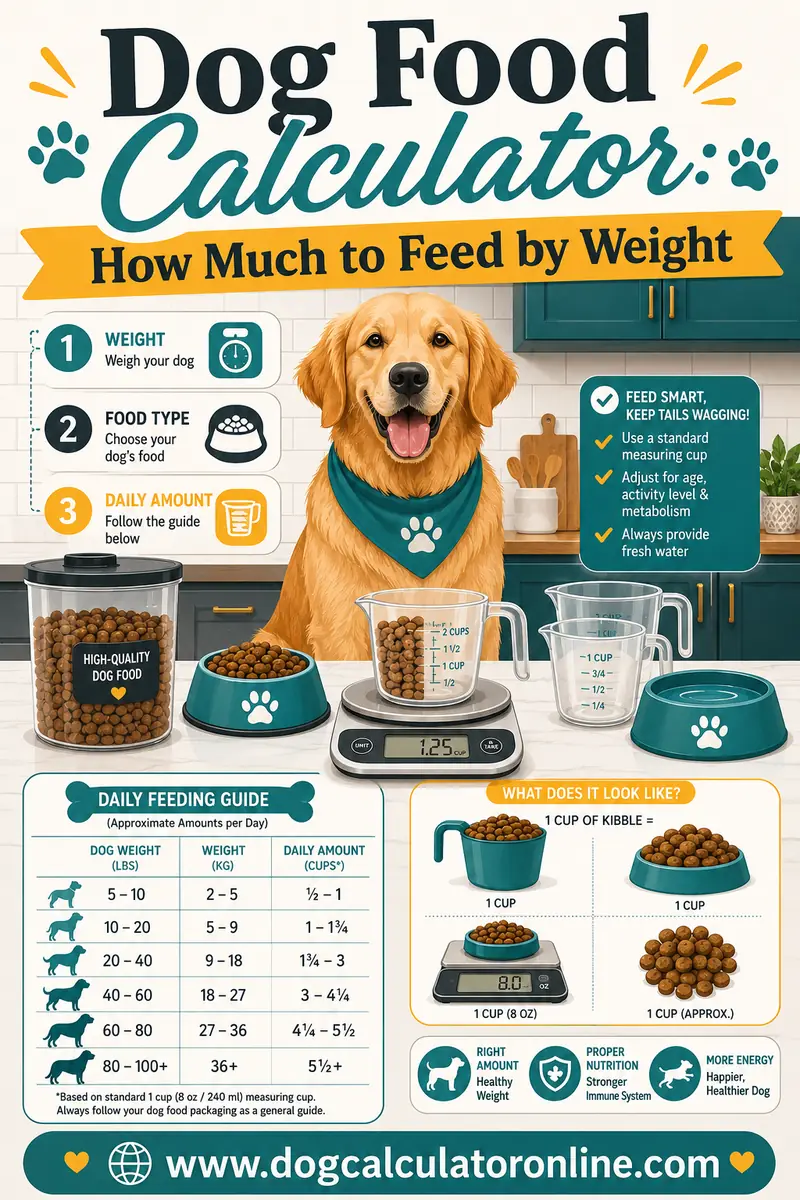
Like every treat question, this one comes down to your dog's calorie budget. The free dog food calculator figures that daily number from weight, age, and activity, and treats — banana included — should fit inside roughly 10% of it. Below: portions by size, serving ideas that actually work, the peel question, and which dogs should skip bananas entirely.

🍌 Banana portion check
Tap your dog’s size for a sensible banana serving:
Tap a size above. Estimates for healthy adult dogs — flesh only, no peel.
The Case for Bananas (and the Catch)
On paper, bananas look like a health food for dogs: potassium for muscle and nerve function, vitamin B6, vitamin C, fiber for digestion, and a soft texture even senior dogs with worn teeth can handle. They're also cheap, portable, and require zero prep beyond peeling — which explains why they're one of the most-shared fruits between owners and dogs.
The catch is concentration. Compared to the other star fruit treats — blueberries, watermelon flesh, apple pieces — bananas pack noticeably more sugar and calories per bite. That doesn't make them unsafe; it makes them easy to overdo. A "harmless" half-banana habit adds up to hundreds of extra calories a week for a medium dog, which is exactly the kind of quiet surplus that shows up on the scale months later. If banana becomes a regular treat, count it against the daily budget from the dog food calculator and trim elsewhere.
There's also a fiber flip side: a little banana can firm things up, while too much can cause constipation or, in some dogs, loose stool. One more reason "a few slices" is the sweet spot.
How Much Banana Can a Dog Have?
Conservative portions for healthy adult dogs, as an occasional treat (not daily):
| Dog size | Example weight | Sensible serving | Approx. calories |
|---|---|---|---|
| Toy / small | 5–15 lb | 1–2 thin slices | ~5–10 kcal |
| Medium | 16–40 lb | 3–4 slices | ~15–20 kcal |
| Large | 41–75 lb | Up to 1/4 banana | ~25 kcal |
| Giant | 76+ lb | Up to 1/2 banana | ~50 kcal |
Two sanity checks make these numbers work in real life. First, bananas share the treat budget with everything else — training treats, chews, the crust someone dropped — so on a heavy-training day, the banana waits. Second, "occasional" means a few times a week, not a standing daily ritual. Our treat allowance guide walks through how quickly small extras stack up.
Serving Ideas That Actually Work
- Plain slices — the obvious one. Slice thin for small dogs.
- Frozen slices — a favorite summer trick; freezing turns banana into a slow, cooling treat. Slice before freezing so portions stay controlled.
- Mashed as a topper — a teaspoon smeared over kibble tempts picky eaters; a spoon of mash also hides well in a lick mat.
- Stuffed and frozen — mashed banana (alone or mixed with a little xylitol-free peanut butter) packed into a rubber toy makes a long-lasting enrichment treat. Count the peanut butter's calories too; they're substantial.
- Blended — banana plus plain yogurt, frozen in an ice-cube tray, makes single-serve "pupsicles." Skip this for lactose-sensitive dogs.
What to avoid: banana bread and muffins (sugar, butter, sometimes raisins or chocolate — both on the never-eat list), banana chips (often fried and sweetened; even plain dried banana concentrates the sugar), and any banana-flavored candy or dessert. If a label lists xylitol, it's an emergency-level no.
Whatever the format, introduce banana the same way as any new food: one small slice, then a 24–48 hour wait watching for soft stool, vomiting, or itching before it earns a regular spot in the rotation. Most dogs handle banana without incident, but the one-food-at-a-time rule is what tells you the culprit if something ever disagrees — and it keeps a fun treat from becoming a mystery vet visit.
The Sugar Math: Why "Just Fruit" Still Needs a Budget
It's easy to wave fruit through as automatically healthy, so it's worth seeing the actual numbers. A medium banana carries roughly 100 kcal and around 14 grams of sugar. Compare that with the daily picture for real dogs: a 10 lb dog needs somewhere around 350–400 kcal a day, a 25 lb dog roughly 700. Hand the small dog half a banana and you've spent about 12–15% of the entire day's calories — beyond the whole treat allowance — on one soft, sweet snack that took eight seconds to disappear.
The 10% treat ceiling exists precisely for this: treats and extras, fruit included, stay within about a tenth of daily calories so the balanced dog food still does its job. Inside that framework, banana portions size themselves. A 25 lb dog with a ~70 kcal treat budget can afford three or four slices (roughly 15–20 kcal) and still have room for training treats. A 90 lb dog can absorb half a banana without blinking. The fruit isn't the problem — unmeasured fruit is.
There's also a habit-forming angle worth naming. Bananas are sweet, and dogs learn fast. A dog that gets banana every time you peel one will campaign hard at every future banana, and "he just loves them so much" is how a few slices becomes a whole banana becomes a daily whole banana. Keeping fruit treats occasional and unpredictable — sometimes yes, usually no — keeps both the calories and the begging under control.
If you're unsure what your own dog's daily number even is, that's the dog food calculator's whole job: weight, age, and activity in, daily calories out, and suddenly every treat decision has a denominator.
Can Dogs Eat Banana Peels?
No — not because they're poisonous, but because they're a blockage risk. Peels are dense, fibrous, and hard for a dog's gut to break down. A dog that gulps a whole peel (or steals one from the trash) can end up with vomiting, constipation, or in the worst case an intestinal obstruction — which is surgical territory. Small dogs are at the most risk simply because their intestines are narrower.
If your dog ate a peel: don't panic, but do watch closely for 24–48 hours. Repeated vomiting, refusal to eat, a painful belly, straining without producing stool, or lethargy are all reasons to call your vet promptly. A big dog that shredded and swallowed part of a peel will often pass it uneventfully; a small dog that swallowed a large piece whole deserves a precautionary call.
Which Dogs Should Skip Bananas?
- Diabetic dogs. Banana's sugar load makes it a poor treat choice for dogs managing blood glucose — ask your vet for alternatives (green beans and cucumber are the usual swaps).
- Overweight dogs on a diet plan. Every treat calorie counts double when you're trying to create a deficit. Lower-calorie crunch like carrots delivers more chewing per calorie.
- Dogs with chronic GI issues or on prescription diets. Anything outside the prescribed food is a vet question first.
- Dogs with known sensitivities. Any new food can trigger an upset stomach or, rarely, an allergic reaction — introduce a slice at a time and watch for 24–48 hours.
For everyone else, bananas sit comfortably in the "safe in moderation" column of our human foods dogs can eat list.
Bananas vs Other Fruit Treats
If you're choosing a go-to fruit treat, here's how banana stacks up:
| Fruit | Calories per typical serving | Sugar level | Best for |
|---|---|---|---|
| Banana slices | Low–moderate (if portioned) | High | Flavor, lick mats, frozen treats |
| Blueberries | Very low | Moderate | Daily-ish tiny treats, training |
| Watermelon flesh | Very low | Moderate | Hot-day hydration |
| Apple pieces | Low | Moderate | Crunch lovers (core removed) |
| Strawberries | Low | Moderate | Occasional variety |
The honest takeaway: bananas are the flavor pick, blueberries and watermelon are the frequency picks. A rotation keeps everyone happy and the sugar in check.
FAQ
Are bananas safe for dogs?
Yes — banana flesh is non-toxic and safe for healthy dogs in small amounts. Keep portions to a few slices (more for giant breeds), serve it plain, and never feed the peel, which can cause digestive blockage.
How much banana can I give my dog?
A few thin slices for small dogs, three to four slices for medium dogs, and up to a quarter or half banana for large and giant breeds — occasionally, not daily. All treats together should stay within about 10% of daily calories; a dog food calculator gives you that number in seconds.
Can puppies eat bananas?
Once they're established on solid food, a small slice of banana is fine as an occasional treat. Puppies have tiny calorie budgets and precisely balanced growth diets, so keep fruit treats to crumbs and slices — puppy food should do the heavy lifting.
Are banana peels toxic to dogs?
Peels aren't toxic, but they're hard to digest and can cause vomiting, constipation, or intestinal blockage — especially in small dogs that swallow big pieces. If your dog ate a peel, watch for vomiting, appetite loss, belly pain, or straining, and call your vet if any appear.
Can diabetic dogs eat bananas?
Best avoided. Bananas are among the more sugar-dense fruits, which makes them a poor fit for dogs managing blood sugar. Ask your vet for treat alternatives — crunchy green beans or cucumber are common low-sugar swaps.
Can dogs eat dried banana or banana chips?
Skip them. Commercial banana chips are usually fried and often sweetened, and even plain dehydrated banana concentrates the sugar into a much smaller, easier-to-overfeed package. Fresh or frozen slices give you the same flavor with far better portion control.
Do bananas help dogs with diarrhea or constipation?
Banana's fiber can mildly firm up stool for some dogs, but it isn't a treatment. Ongoing diarrhea or constipation — especially with vomiting, lethargy, or appetite loss — is a call-your-vet situation, not a fruit-bowl one.
A Few Slices, Not the Whole Bunch
So yes: bananas make the safe list, with an asterisk on quantity. Serve the flesh plain or frozen, bin the peel, keep portions to slices, and let bananas rotate with lower-sugar options like blueberries and carrot pieces. The 10% treat ceiling makes every one of these calls easy — and the free dog food calculator gives you the exact daily number it's 10% of, matched to your dog's weight, age, and activity level.