Foods Dogs Should Never Eat
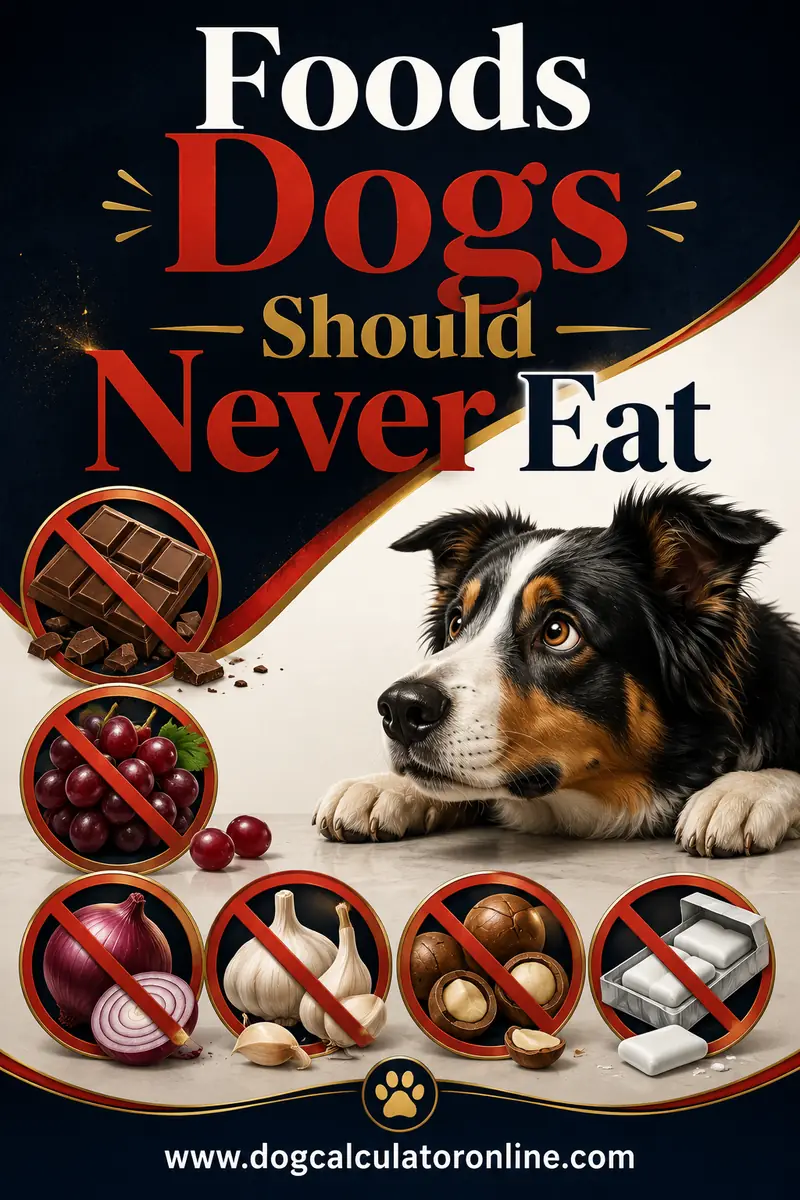
The foods dogs should never eat, in any amount, are chocolate, grapes and raisins, xylitol (the sweetener in sugar-free gum, candy, and some peanut butters), onions, garlic, chives and leeks, macadamia nuts, alcohol, caffeine, and raw yeast dough. A second tier — cooked bones, corn cobs, fruit pits, moldy food, and very fatty scraps — isn't "toxic" in the chemical sense but sends just as many dogs to the emergency clinic. If your dog has already eaten something on this list, skip the article and call your vet or an animal poison control hotline now; with toxins, early beats sorry every time.
For everything not on this list, portion is the real safety question — a safe food overfed is still a problem. The free dog food calculator gives you your dog's daily calorie budget so treats and extras stay inside the healthy 10% ceiling. Below: each dangerous food, why it's dangerous, what symptoms look like, and the kitchen habits that prevent most accidents in the first place.
⚠️ Danger check
Tap a food to see why it makes the never list:
Tap a food above. If your dog ate any of these, contact your vet or poison control now.
First: What to Do if Your Dog Just Ate Something Dangerous
- Get the packaging or estimate the amount. "Half a bar of 85% dark chocolate" is actionable information; "some chocolate" isn't.
- Call your vet, an emergency clinic, or an animal poison control hotline immediately. In the US, the ASPCA Animal Poison Control Center and the Pet Poison Helpline run 24/7 (both charge a consultation fee).
- Do not induce vomiting unless a professional tells you to. With some substances it helps; with others it makes things worse. This is a judgment call for the professional on the phone, not the internet.
- Don't wait for symptoms. Several of these toxins — grapes, xylitol — do their worst damage before obvious signs appear. Early treatment is dramatically more effective.
The True Toxins
Chocolate, coffee, and anything caffeinated
Chocolate contains theobromine (plus caffeine), which dogs clear from their system far more slowly than we do. The rule of thumb: the darker and more bitter the chocolate, the more dangerous — baking chocolate and cocoa powder are the worst offenders, milk chocolate the mildest, and dose scales with the dog's size. Symptoms range from vomiting, diarrhea, restlessness, and a racing heart up to tremors and seizures in serious cases. Coffee grounds, tea bags, espresso beans, and caffeine pills belong in the same bin. Any chocolate ingestion is worth a vet call with the type and amount in hand; small dog plus dark chocolate is an emergency, full stop.
Grapes and raisins
The scariest entry on the list, because it's so unpredictable. Grapes and raisins can cause acute kidney failure in dogs, some dogs react to small amounts while others seem unaffected, and there's no established safe dose. That includes currants, grape juice, and raisin-containing baked goods (trail mix, cinnamon-raisin bread, oatmeal-raisin cookies). Because you can't know in advance whether your dog is a sensitive one, every grape or raisin ingestion should be treated as a call-the-vet event.
Xylitol (also labeled "birch sugar")
Xylitol is a sugar substitute that's harmless to humans and dangerously toxic to dogs. It triggers a rapid insulin release that can crash blood sugar within an hour or less, and larger amounts are associated with liver damage. It hides in sugar-free gum, mints, candy, some peanut butters, some baked goods, chewable vitamins, and even some toothpastes. This is why every peanut-butter mention on our safe foods list comes with "check the label." A dog that got into a purse with sugar-free gum is an immediate emergency call — xylitol moves fast.
Onions, garlic, chives, and leeks
The whole allium family damages dogs' red blood cells, leading to hemolytic anemia — and cooking doesn't neutralize it. Raw, cooked, dehydrated, and powdered forms all count; onion and garlic powder are especially concentrated and hide in gravies, soups, baby food, seasoned meats, and takeout. The damage can build over several days (weakness, pale gums, dark urine, lethargy) and repeated small exposures add up. One garlicky crumb won't hurt a Labrador, but a meaningful amount — or a habit — warrants a vet conversation.
Macadamia nuts
Uniquely among common nuts, macadamias are genuinely toxic to dogs: weakness (classically in the hind legs), vomiting, tremors, and fever, typically within 12 hours. Cases are rarely fatal, but every one deserves a vet call. Other nuts aren't toxic in the same way but are fatty, salty, and chokeable — there's no upside to nuts as dog treats.
Alcohol and raw yeast dough
Dogs are far more sensitive to alcohol than people, and it doesn't take much — including sneaky sources like rum-soaked desserts. Raw yeast dough is a double hit: it expands in the warm stomach, causing painful and dangerous bloating, while the fermenting yeast produces alcohol on top. A dog that stole rising bread dough off the counter needs a vet, not a wait-and-see.
The Hazard List: Not Poison, Still Dangerous
- Cooked bones. They splinter into shards that can pierce or block the digestive tract. Chicken bones from the trash are a classic emergency. (Raw bones carry their own debate — that's an ask-your-vet topic.)
- Corn cobs. Kernels are fine; the cob is famously the perfect size and texture to lodge in a dog's intestine. Cob blockages very often end in surgery.
- Fruit pits. Peach, plum, cherry, and apricot pits are choking and blockage hazards, and the kernels contain trace cyanide compounds. Avocado pits add a slippery, gulpable shape to the same problem.
- Apple seeds and cores. The flesh is a great treat; the core is a hazard and the seeds carry trace cyanide compounds. Just core the apple first.
- Moldy food. Garbage and compost molds can produce tremorgenic mycotoxins — trash-raid tremors are a real emergency presentation. Secure the bin.
- Very fatty scraps. Bacon grease, ham fat, fryer drippings, and rich holiday leftovers are classic triggers for gastrointestinal upset and, in some dogs, pancreatitis — a painful, sometimes serious inflammation. Holiday weeks are peak season at vet clinics for a reason.
- Salty snacks and salt dough. Chips-level salt is a bad habit; large salt doses (salt-dough ornaments, homemade play dough) can cause genuine salt toxicity.
- Raw salmon. Can carry a parasite that causes salmon poisoning disease in dogs — cooked salmon only.
- Nutmeg and some spices. Larger amounts of nutmeg can cause disorientation and tremors. Keep the eggnog and spiced baking away from the counter-surfer.
Quick Reference Table
| Food | Danger | Severity | Action if eaten |
|---|---|---|---|
| Chocolate / caffeine | Theobromine & caffeine toxicity | Depends on type, amount, dog size | Call vet with details |
| Grapes / raisins | Kidney failure, unpredictable | Potentially severe at any dose | Call vet immediately |
| Xylitol | Blood-sugar crash, liver harm | Severe, fast-moving | Emergency call now |
| Onion / garlic family | Red blood cell damage | Builds with dose & repetition | Call vet if meaningful amount |
| Macadamia nuts | Weakness, tremors, fever | Usually non-fatal, still serious | Call vet |
| Alcohol / raw dough | Intoxication + stomach expansion | Serious | Call vet |
| Cooked bones / corn cobs | Splinters, blockage | Serious, often surgical | Call vet if swallowed |
| Fatty scraps | GI upset, pancreatitis risk | Mild to serious | Watch closely; vet if vomiting or pain |
| Moldy food | Tremorgenic mycotoxins | Serious | Call vet |
The Seasonal Risk Calendar
Toxin exposures cluster around the human calendar, and knowing the pattern is half the prevention:
- Valentine's Day and Easter: chocolate season's twin peaks — boxed chocolates at dog-nose height, then foil-wrapped eggs hidden around the house and garden, which is effectively a scent game designed for dogs. Count the eggs you hide; count the ones found.
- Summer barbecues: corn cobs, bones, fatty grill drippings, grapes on fruit platters, and guests who "gave him a little something." One briefed host beats ten watchful ones.
- Halloween: candy bowls and trick-or-treat hauls — chocolate plus xylitol gum in one bucket. Kids' stashes go on shelves, not floors.
- Thanksgiving through New Year: the heavyweight stretch. Turkey bones and drippings, rich leftovers (pancreatitis's favorite week), raisin-studded baking, macadamia cookies, rising bread dough, chocolate gifts under the tree, and boozy desserts. If a food emergency is going to happen, statistically this is its season — vet emergency lines know it well.
None of this means holidays and dogs don't mix — it means the trash gets a lid, the counters get cleared, and the dog gets a stuffed enrichment toy of something from the safe list while the humans eat the dangerous stuff.
Prevention: The Habits That Actually Work
Most food emergencies aren't feeding decisions — they're access accidents. The fixes are boring and effective:
- Secure the trash with a locking lid or cabinet, especially after cooking with bones, cobs, or rich scraps.
- Purse and backpack rule: bags with gum or mints go on hooks, not floors. Xylitol emergencies overwhelmingly start with an open bag.
- Counter discipline during holidays. Chocolate at Easter and Christmas, grapes on snack boards, rich drippings at Thanksgiving — the calendar predicts the caseload.
- Brief the household and guests. The dog isn't fed from the table, by anyone, ever. One consistent rule beats ten negotiated ones — and it also keeps the calorie budget honest, which is a quieter kind of protection. (If table scraps have already crept in, our overfeeding signs guide shows what the damage looks like.)
- Give treats a budget, not a vibe. Dogs fed structured treats within the 10% calorie ceiling get fewer random handouts of random foods. Our treat allowance guide and the dog food calculator make the budget concrete.
FAQ
What is the most toxic food for dogs?
Xylitol and dark chocolate are the fastest-moving common emergencies, while grapes and raisins are arguably the scariest because toxicity is unpredictable and can strike the kidneys at small doses. All of them justify an immediate call to your vet or a poison control hotline.
My dog ate one grape — should I worry?
Take it seriously. Some dogs have developed kidney injury after small amounts, and there's no way to know in advance if yours is sensitive. Call your vet or an animal poison control hotline and follow their guidance rather than waiting for symptoms.
How much chocolate is dangerous for a dog?
It depends on the chocolate type, the amount, and your dog's weight — baking chocolate and cocoa are many times more potent than milk chocolate, and small dogs are at far greater risk. Don't run the math yourself: call your vet with the details and let them assess it.
Can dogs eat garlic in small amounts?
Vets advise against it. Garlic is more concentrated than onion, damage to red blood cells can accumulate with repeated exposure, and any claimed benefits aren't worth the risk. Skip garlic-seasoned foods entirely.
What should I do if my dog ate something toxic but seems fine?
Call anyway. Grapes, xylitol, and alliums can all cause serious internal damage before outward symptoms show, and treatment works best early. "Seems fine" in the first hours means very little with these toxins.
Is peanut butter safe for dogs?
Plain peanut butter is safe — the danger is xylitol, which appears in some brands and is severely toxic to dogs. Read the ingredient list every time you buy (it may also be listed as "birch sugar"), and if xylitol appears anywhere, that jar never meets the dog.
Are table scraps ever okay?
Plain, dog-safe foods in small amounts — lean meat, plain veg — can be fine as occasional treats within about 10% of daily calories. The problem scraps are the seasoned, fatty, oniony reality of most human plates. See our safe human foods list for what actually passes.
Know the List, Then Feed With Confidence
The never-eat list is mercifully short: chocolate, grapes and raisins, xylitol, the onion family, macadamias, alcohol, raw dough — plus the hazard tier of bones, cobs, pits, mold, and fatty scraps. Lock down access, brief the household, and the odds of an emergency drop fast. For everything on the safe side of the line, the remaining question is portion — and that's a solved problem: the free dog food calculator turns your dog's weight, age, and activity into an exact daily budget, so every treat fits inside a plan instead of adding up in the dark.