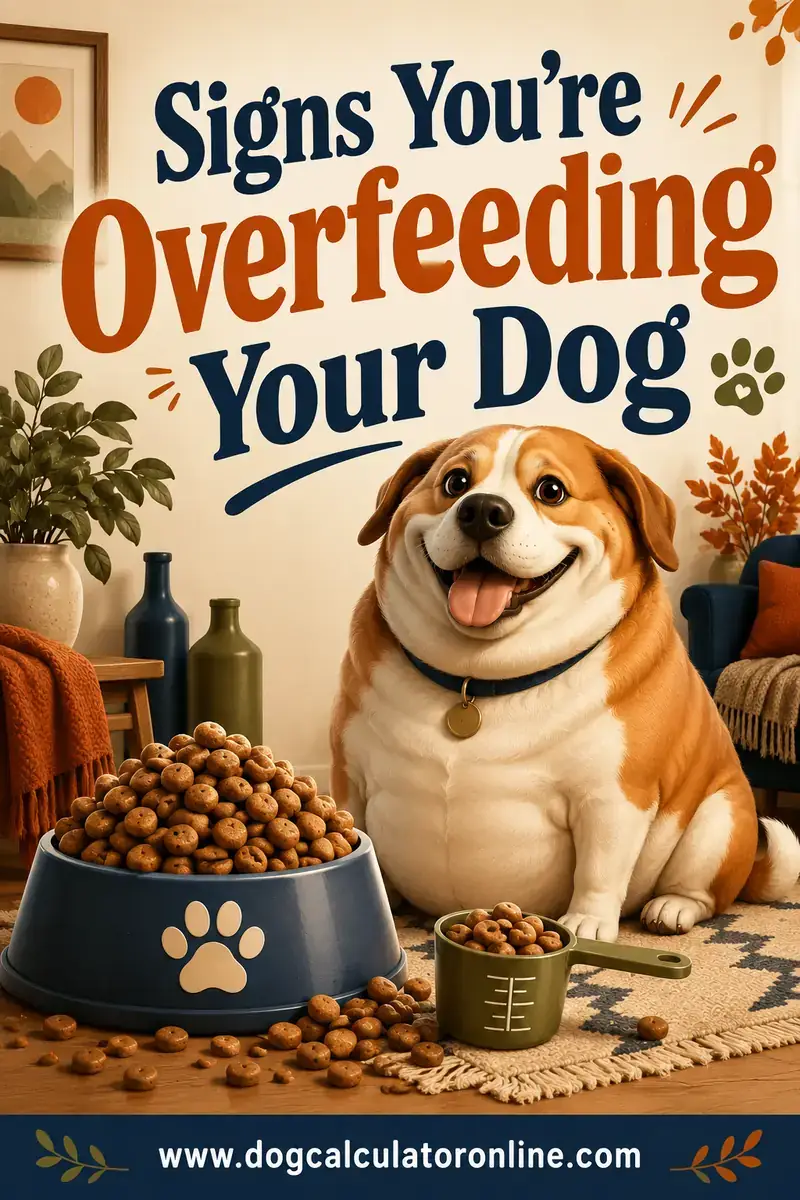
Signs You're Overfeeding Your Dog
The clearest signs of overfeeding are physical: ribs you can no longer feel easily, a waistline that's disappeared from above, a belly that hangs level instead of tucking up, steady weight gain, and frequent soft stools — often joined by lower energy, heavy panting after mild effort, and a dog who leaves food in the bowl because the portions outrun genuine appetite. None of these arrive overnight; overfeeding announces itself in months of small changes that are easy to miss from inside the household.
The encouraging part: overfeeding is the most fixable feeding problem there is, because the fix is arithmetic. The free dog food calculator tells you what your dog should be eating for its weight, age, and activity — most owners who run the numbers discover the gap immediately. Below: the nine signs in detail, the two-minute home checks that confirm them, why overfeeding happens to careful owners, the step-by-step fix, and the cases where weight gain isn't about food at all.
🔍 Overfeeding spot-check
Tap a check to see what it tells you:
Tap a check above. Two or more failed checks = recalculate the portion.
The 9 Signs, In Detail
1. You can't feel the ribs easily. The single most reliable home indicator. With your dog standing, run both flat hands along the ribcage with light pressure. Ideal feels like the back of your hand — ribs plainly there under a thin cover. If you have to press to find them, your dog is carrying extra; if you can't find them at all, the extra is substantial.
2. The waistline is gone. Viewed from above, a healthy dog narrows visibly behind the ribs. Straight, parallel sides mean surplus; sides that bulge outward mean the surplus is winning. Long or fluffy coats hide this one — use your hands where your eyes can't work.
3. No belly tuck. From the side, the underline should rise from the chest toward the hind legs. A level underline is a warning; a sagging one is a verdict. (Some breeds — think deep-chested sighthounds — exaggerate the tuck; know your breed's baseline.)
4. The scale keeps creeping. A pound here, a pound there. In a 20-lb dog, gaining two pounds is a 10% gain — proportionally like a 150-lb person gaining 15. Monthly weigh-ins (vet lobby scale, or hold-and-subtract on a bathroom scale for small dogs) turn invisible creep into a visible line.
5. Soft, frequent, voluminous stools. More food than the gut can efficiently process tends to exit as bulky, soft stool. If output is consistently loose on a stable diet — and the vet has ruled out other causes — volume in is a prime suspect.
6. Food left in the bowl. A dog who routinely walks away from meals may simply be over-portioned. Genuine appetite has limits even when enthusiasm doesn't; leaving kibble is often the dog solving a problem the human created. (Sudden appetite loss is different — that's a health signal, not a portion critique.)
7. Low energy and quick fatigue. Extra weight is luggage carried on every walk. Overfed dogs often move less, quit fetch earlier, pant harder after modest effort, and choose shade over play — which reduces calorie burn and compounds the gain.
8. Heavy panting and heat intolerance. Fat is insulation. Overweight dogs run hotter, pant sooner, and struggle more in warm weather — visible well before joints start complaining.
9. Grooming gaps and skin trouble. A dog who can't comfortably reach around to groom its hindquarters may develop a scruffy rear coat or skin irritation in folds. It's a late sign, and worth a vet look for its own sake.
One dog rarely shows all nine. Two or three together — especially the rib, waist, and scale checks — are enough to act on. Here's the whole checklist in one glanceable place:
| Sign | What you'd notice | What to do |
|---|---|---|
| Ribs hard to feel | Need to press to find ribs; can't find them at all | Recalculate the portion; start the fix plan below |
| Waistline gone | Straight or bulging sides viewed from above | Confirm with the rib check, then adjust portions |
| No belly tuck | Underline level or sagging from the side | Same — condition check plus portion audit |
| Scale creep | Small steady gains at monthly weigh-ins | Cut the daily total ~10% and re-check in 3–4 weeks |
| Soft, bulky stools | Consistently loose output on a stable diet | Check portions first; ask your vet if it persists |
| Food left in bowl | Routinely walks away from meals | Reduce portions — appetite is telling you something |
| Low energy | Quits play early, chooses shade, moves less | Fix portions, then rebuild gentle exercise |
| Heavy panting | Pants hard after mild effort, struggles in warmth | Weight-loss plan; mention it at your next vet visit |
| Grooming gaps | Scruffy rear coat, irritated skin folds | Vet look for the skin, portion plan for the cause |
Confirming It: The Two-Minute Body Condition Check
Vets grade dogs on a body condition score (BCS), typically a 9-point scale where 4–5 is ideal, 6–7 is overweight, and 8–9 is obese. You can approximate it at home in two minutes with the three checks from the widget above: ribs (feel), waist (look down), tuck (look from the side).
The reason BCS beats the scale alone: "correct weight" varies hugely between individuals, even within a breed — but ideal body condition looks and feels the same on every dog. A rangy 70-lb shepherd and a stocky 70-lb shepherd can both be right, or both be wrong, at the same weight. Condition is the ground truth; the scale tracks the trend. Use both: condition check monthly, weight logged monthly, written down where memory can't blur it.
If you want a second opinion before changing anything, ask at any vet visit — techs will happily score your dog, and it's the same is my dog overweight assessment they run at every checkup.
How Careful Owners End Up Overfeeding
Overfeeding is rarely negligence. It's usually one of six honest mistakes:
- Trusting the scoop. "One scoop" using a mug, a yogurt tub, or a heaping cup routinely runs 20–50% over an actual level measuring cup. This single habit explains a remarkable share of chubby dogs.
- Feeding the bag's top range. Bag charts print ranges generous enough for active dogs; an ordinary house dog fed from the top of the range gains steadily while the owner follows instructions.
- Not updating after life changes. Spay/neuter lowers calorie needs; so does aging out of zoomies, an injury layoff, or a house move that shortens walks. Portions set in a dog's athletic youth quietly become too big.
- The treat shadow-budget. Meals measured to the gram, plus 150 uncounted kcal of biscuits, chews, and cheese. Treats belong inside the daily total — the whole system is in how many treats can a dog have a day.
- The double-dinner bug. Two family members, each certain they're the one who feeds the dog. A whiteboard magnet fixes what good intentions can't.
- Equating food with love. The dog asks; the human melts. But dogs audit attention, not calories — a walk pays the same emotional invoice at zero kcal.
Why It Matters: The Cost of the Extra Pounds
This is worth saying plainly, because the stakes are commonly underestimated. Excess weight in dogs is strongly associated with arthritis and joint deterioration (weight is the load the joints carry), diabetes, heart and respiratory strain, heat intolerance, higher surgical and anesthetic risk, and — the headline finding — shorter lives: in a landmark 14-year study of Labrador littermates, dogs kept lean throughout life lived nearly two years longer than their more generously fed siblings, and developed chronic disease later.
Flip it around and it's the most hopeful fact in dog care: portion control is the cheapest longevity intervention available, requiring no products, no prescriptions, and about ten seconds of measuring per meal.
The Fix: A Step-by-Step Plan
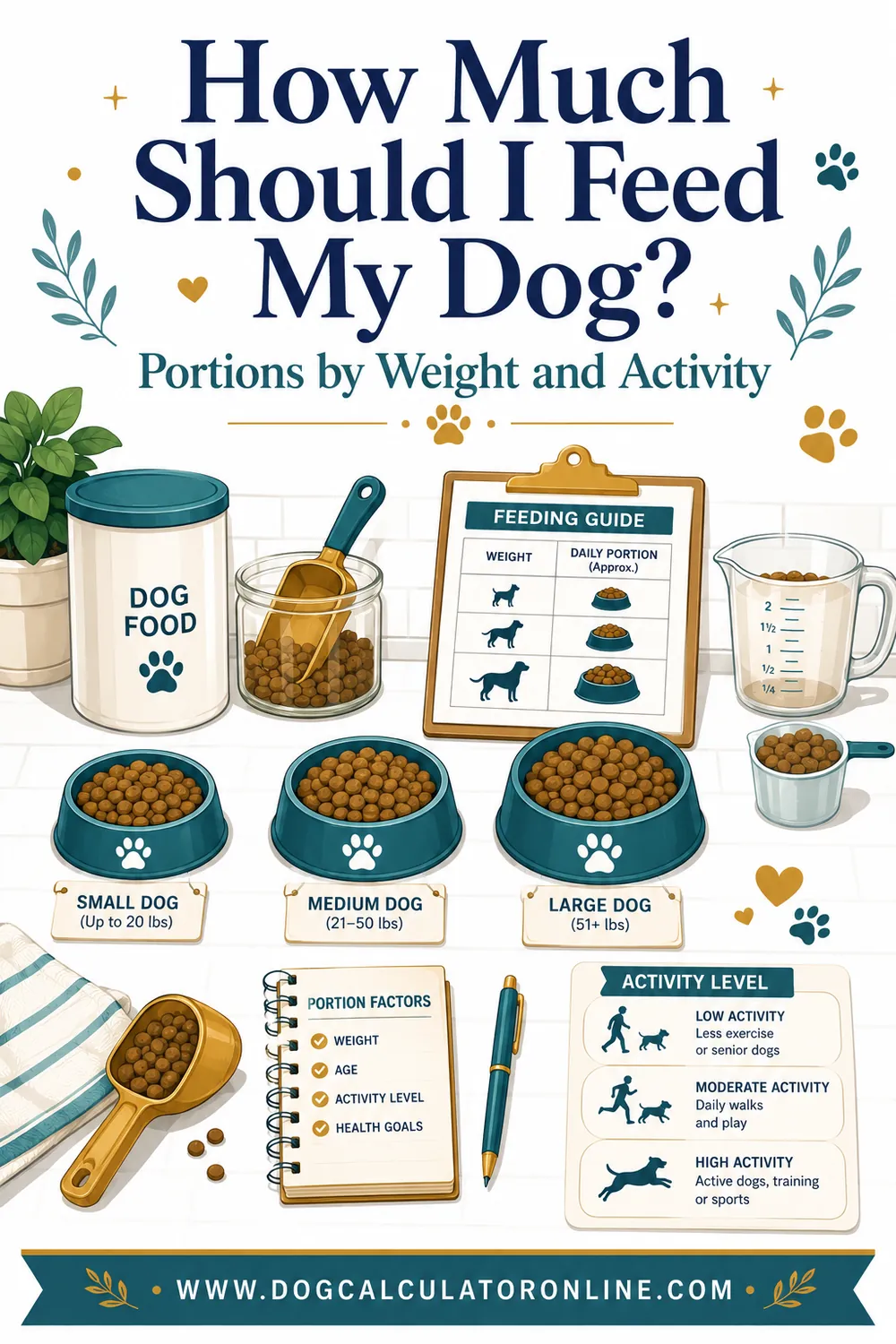
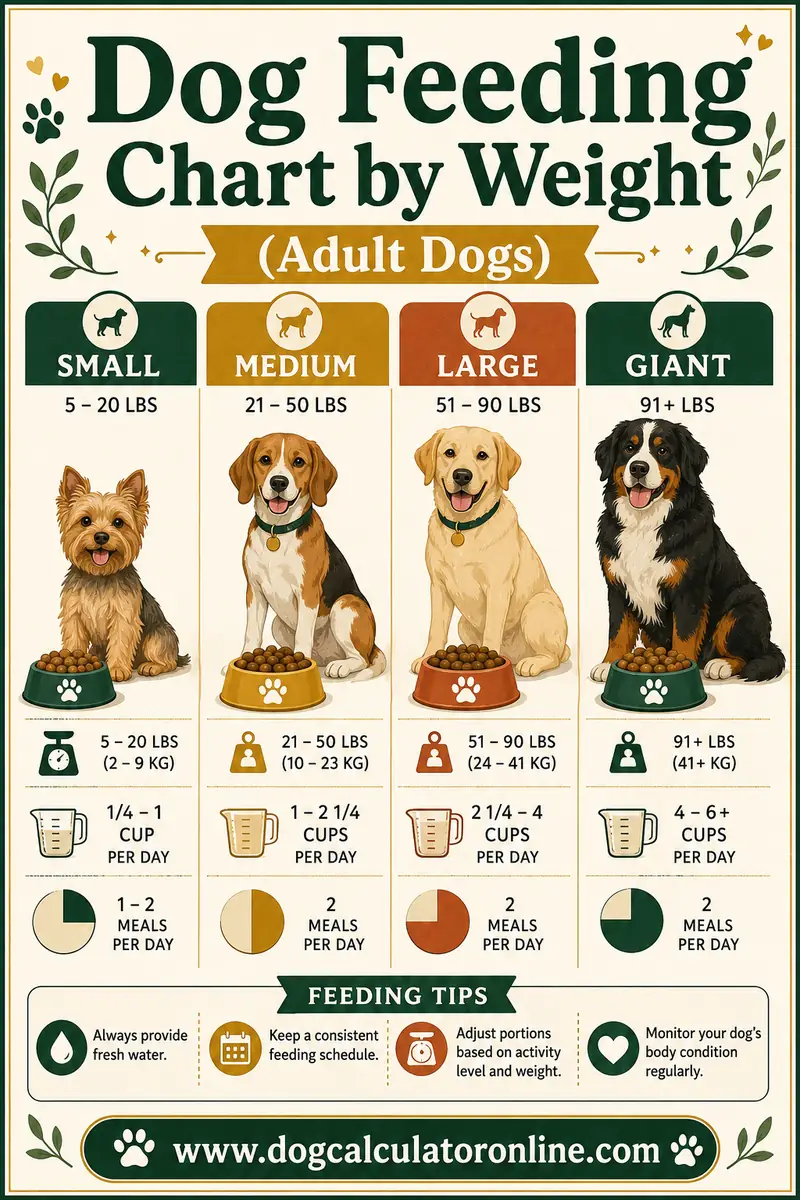
Step 1 — Get the real number. Run your dog's weight, age, and activity through the dog food calculator, or work the tables in how much should I feed my dog. For a dog that's already overweight, calculate for the ideal weight, not the current one — and if the gap is large (more than ~10–15% over ideal), set the target with your vet so the loss stays safe and gradual.
Step 2 — Audit the actual intake for three days. Everything: meals (in level measuring cups or grams), every treat, every chew, every table scrap, from every human. Most families are genuinely surprised by the total. The gap between Step 1 and Step 2 is your diagnosis.
Step 3 — Fix the measurement. Real measuring cup, leveled — or better, a kitchen gram scale. Pre-portion the day's food each morning if multiple people feed.
Step 4 — Shrink gradually. Cut the daily total by about 10% and hold for 3–4 weeks. Re-check ribs, waist, and scale. Still no progress? Another 10%. Crash cuts backfire — hungry dogs scavenge, counter-surf, and wear their owners down.
Step 5 — Re-budget the treats. Ten percent of the new total, pre-counted into a jar each morning, spent in pea-sized denominations. Swap the heavy currency for vegetables where the dog allows.
Step 6 — Add movement the joints can afford. For a heavy dog, that means more walking time at an easy pace, sniffy exploration, or swimming where available — not sudden fetch marathons on loaded joints. Exercise supports the plan; the bowl does the heavy lifting.
Step 7 — Track monthly and expect slow wins. Healthy loss is gradual — think 1–2% of body weight per month. A 60-lb dog aiming for 52 lb is on a several-month project, and that's correct. Log weight monthly; celebrate trend, not days.
"Can't We Just Walk It Off?"
A tempting plan — keep the portions, add exercise — and it almost never works alone. The arithmetic is stacked against it: a brisk half-hour walk burns a mid-sized dog somewhere in the neighborhood of 50–100 kcal, which one medium biscuit or a slightly generous scoop erases in seconds. Out-walking an over-portioned bowl would take hours a day that neither of you has, and for an already-heavy dog, sudden ambitious exercise loads sore joints before it lightens them.
That doesn't make exercise optional — it preserves muscle during weight loss, burns real (if modest) calories, improves mood and behavior on a reduced ration, and it's where the dog's quality of life visibly returns. The working split most vets suggest: the bowl does about 80% of the weight-loss work; movement does 20% and makes the rest sustainable. Fix the portions first, add gentle duration (longer sniffy walks, not harder sprints), and let the two compound. A dog getting both usually shows a visible waistline change within six to eight weeks — and an obviously happier dog well before that.
When Weight Gain Isn't Overfeeding
Sometimes the bowl is innocent. Book a vet visit rather than cutting portions when:
- Weight climbs with no change in food or activity — especially fairly quickly. Hypothyroidism is common in dogs and classically presents as weight gain with lethargy, thinning coat, or skin changes; it's diagnosed with a blood test and managed well once found.
- The "weight" is shaped oddly — a pot-bellied look with thin legs and muscle loss can suggest Cushing's disease; a suddenly distended abdomen can be fluid, which is urgent, not dietary.
- Appetite has changed dramatically in either direction alongside the gain.
- Your dog is on new medication — some drugs (steroids among them) increase appetite and weight; never adjust the medication yourself, just tell your vet what you're seeing.
- Honest portion cuts aren't working. A dog eating a genuinely correct, verified ration who still gains is a medical question, and vets take it seriously.
The rule of thumb: overfeeding responds to arithmetic within a month or two. Weight that ignores arithmetic goes to the clinic.
A Note on Puppies: Fat Is Not "Thriving"
Roly-poly puppies photograph adorably and grow expensively. Extra weight during growth loads developing joints exactly when they're most vulnerable — a particular hazard for large and giant breeds, where excess calories (not just calcium) are linked to developmental joint disease. A healthy puppy is lean: ribs easy to feel, a waist visible even under puppy fluff, energy in absurd quantities.
Puppy overfeeding has its own signature signs — outgrowing the chart's weight curve for its age, soft stools on correct food, and a bag of "puppy formula generosity" from every visitor. The fix is the same arithmetic with a growth twist: portion to the feeding chart for age and expected size, re-checked every two weeks, with treats inside the budget. Your vet tracks the growth curve at every puppy visit — ask where your pup sits on it.
FAQ
What are the signs of overfeeding a dog?
Ribs you can't feel easily, no visible waist from above, no belly tuck from the side, creeping weight, frequent soft stools, leftover food, lower energy, heavy panting after mild effort, and grooming gaps. Two or three together are enough to act on.
Can overfeeding cause soft stools?
Yes — food volume beyond what the gut efficiently processes commonly exits as bulky, soft stool. If stools are consistently loose on a stable diet, check portions first and ask your vet if it persists after correction.
How do I know if I'm feeding my dog too much?
Compare actual intake (three-day audit of meals, treats, and extras) against a calculated target for your dog's ideal weight, age, and activity. The dog food calculator gives you the target; the gap is your answer — confirmed by the rib and waist checks.
How fast should an overweight dog lose weight?
Slowly — roughly 1–2% of body weight per month is the safe zone. Faster crash-dieting risks muscle loss and misery. Dogs more than 10–15% over ideal weight should lose on a vet-guided plan.
Is my dog overweight or just big-boned?
Body condition answers what the scale can't: ribs easy to feel, waist visible from above, tuck visible from the side = right size, whatever the number. Big-boned dogs pass those checks; overweight dogs don't.
Why is my dog gaining weight on the same food?
Aging, spay/neuter, and shrinking activity all lower calorie needs — same portions, new surplus. But gain with no plausible calorie explanation, especially with lethargy or coat changes, is a vet visit; hypothyroidism and other conditions present exactly this way.
The Bottom Line
Overfeeding hides in plain sight — a heaping scoop, an uncounted chew, a bag chart read optimistically — and reveals itself in ribs, waistlines, and slow scale creep long before it becomes a diagnosis. Check the ribs monthly, weigh monthly, count everything for three days, and put the gap in front of you. Then let arithmetic do what worry can't: the free dog food calculator gives you the right daily number in seconds, and the feeding chart by weight shows where your dog should land. And if you've overcorrected and now wonder about the other direction — signs you're underfeeding your dog covers that side.