Is My Dog Overweight? How to Tell
You can answer this in about sixty seconds with three checks: feel for the ribs (they should be easy to find under a thin layer, like the back of your hand), look down from above for a waist that narrows behind the ribcage, and look from the side for a belly that tucks upward toward the hind legs. Fail two or three of those checks and your dog is very likely carrying extra weight — which puts him in large company, since surveys consistently find that around half of US dogs are overweight. To turn "probably a bit heavy" into an actual target number, the free dog ideal weight calculator gives you a starting figure to discuss with your vet.
How Do You Do the Rib Check?
The rib check is the single most reliable hands-on test, and it takes ten seconds. With your dog standing, place both palms flat on his ribcage — thumbs on the spine, fingers spread down the sides — and slide them gently backward with light pressure. No pressing, no kneading. Just the weight of your hands.
Here's how to read what you feel:
- Ideal: each rib is easy to find under a thin, smooth covering. The classic comparison: run your fingers over the back of your other hand — bones easily felt under a slight padding. That's a healthy rib layer.
- Overweight: you have to press to find ribs, or you can only locate them with deliberate poking. If the comparison feels more like the palm of your hand — bones buried under padding — there's meaningful fat over the ribcage.
- Obese: you genuinely can't feel individual ribs at all. At this point there's usually visible fat at the tail base and neck too.
- Underweight: ribs are sharply prominent, visible from a distance, with no fat layer at all — more like running your fingers over your knuckles.
The reason vets trust this test: fur can't fool your hands. A double-coated dog can hide twenty extra pounds from your eyes, but the fat layer over the ribs is right there under your fingers. Do the check monthly — same light pressure each time — and you'll catch changes long before they're visible.
One honest note: the rib check tells you whether there's extra fat, not how much. For the full picture you'll combine it with the two visual checks below, and for a target number you'll want the guide to how much your dog should weigh and a conversation with your vet.
What Is the Waist Check?
Stand directly over your standing dog and look straight down at his silhouette. You're looking for one specific feature: does the body narrow behind the ribcage, before the hips?
A healthy dog viewed from above has a visible indentation there — not a wasp waist, just a clear taper. The ribcage is the widest part, the waist pulls in, and the hips flare slightly. Think subtle hourglass.
What the warning signs look like:
- Straight sides: the body runs like a table edge from ribs to hips with no taper. This usually corresponds to a BCS of 6–7 — overweight territory.
- Outward bulge: the waist area is wider than the ribcage, giving an oval or barrel silhouette. That's significant excess fat, typically BCS 8–9.
Two fairness notes so you don't misread your dog. First, coat matters here — a Pomeranian's fluff manufactures a fake barrel shape, so for heavy-coated dogs, do the check with your hands (trace the silhouette through the coat) or right after a bath when the coat is flat. Second, breed shape matters — sighthounds like Whippets have naturally dramatic waists, while stocky breeds like Bulldogs have naturally subtle ones. You're comparing your dog to a healthy version of his build, not to a generic outline.
That's exactly why the checks work as a set: coat can fake the waist view, but it can't fake the rib check, and neither can fake the profile view. Any two agreeing is a solid verdict.
What Should the Profile View Show?
The third check is the side-on look, ideally with your dog standing square. Two features tell the story:
The abdominal tuck. Follow your dog's underline from the deepest point of the chest backward. In a healthy dog it slopes upward toward the hind legs — the belly sits higher than the chest. The slope varies by build (dramatic in athletic breeds, gentler in stocky ones), but the direction should always be up.
- Level line: belly running parallel to the ground at chest depth suggests extra fat filling in the tuck.
- Sagging line: a belly hanging below the chest line is a strong overweight signal — though a pendulous belly with other changes (pot-bellied look, thinning coat, drinking more) can occasionally have medical causes, which is worth mentioning to your vet rather than assuming it's just weight.
The tail base and neck. While you're side-on, look at where the tail meets the body and the area over the shoulders. Fat pads at the tail base and a thickened, roll-forming neck are classic accumulation spots that show up as weight climbs past mildly excessive.
Put the three checks together and you've essentially performed the visual-and-touch parts of a veterinary body condition score — the standardized 9-point system vets use, where 4–5 is ideal and 6+ is overweight. If you want to place your dog on that scale properly, dog body condition score explained walks through every number with what you'd see and feel at each.
| Check | Healthy result | Overweight signal |
|---|---|---|
| Rib check (hands) | Ribs easy to feel under thin layer | Pressing or digging needed to find ribs |
| Waist check (from above) | Clear taper behind ribcage | Straight sides or outward bulge |
| Profile view (from side) | Belly slopes up toward hind legs | Level or sagging belly line |
| Tail base / neck | Smooth, no pads or rolls | Fat pads at tail base, neck rolls |
Why Is It So Hard to Tell With Your Own Dog?
If your dog turned out heavier than you thought, you're not careless — you're up against three genuine perception traps.
Daily exposure hides gradual change. Weight creep happens at ounces per month. Seeing your dog every single day means you never get the before-and-after jump that makes change visible — the relative who visits twice a year spots it instantly, while you can't. This is the same reason a monthly photo from above and a monthly weigh-in beat "keeping an eye on it": they create the time-lapse your daily exposure erases.
Heavy has become the visual norm. With around half of US dogs carrying extra weight, the average dog at the park is overweight — which quietly recalibrates everyone's sense of normal. A genuinely lean, healthy dog now strikes many people as skinny, and owners of ideal-weight dogs regularly get asked if they're feeding enough. If your reference point is "he looks like the other dogs," your reference point is likely overweight.
Coat and build blur the picture. Double coats manufacture bulk, and stocky breeds carry weight in ways that read as "just how the breed looks." Plenty of overweight Labs pass as "solid" and overweight Frenchies as "that's the breed" — right up until the rib check says otherwise. (One caution in the other direction: adolescent dogs are naturally lanky while they finish maturing, so before judging a young dog by adult standards, check the timelines in when puppies stop growing.)
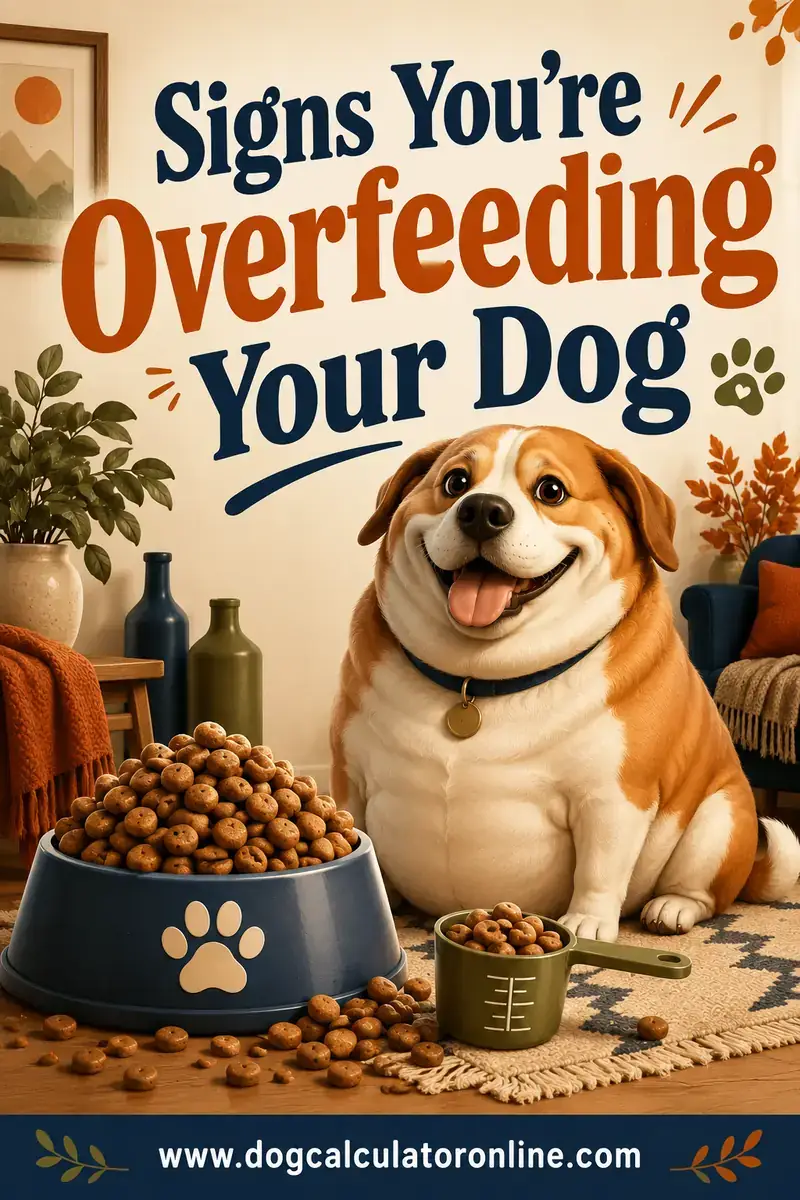
The fix for all three traps is the same: measure instead of eyeball. Hands on ribs monthly, a weigh-in logged monthly, and an honest look at feeding habits — our guide to the signs you are overfeeding your dog covers the everyday patterns that produce the creep in the first place, and most owners recognize themselves in at least one.
Why Does Extra Weight Matter So Much for Dogs?
It's worth being direct here, because "a little chunky" gets waved off as cosmetic. It isn't. Extra weight changes a dog's daily comfort and, over time, the length of his life.
Joints pay first. Every extra pound rides on the same four legs, all day, every day. Excess weight both accelerates the development of arthritis and amplifies the pain of existing arthritis — and it's a compounding loop: sore joints reduce activity, reduced activity burns fewer calories, and the weight climbs further. In overweight dogs with arthritis, weight loss alone often produces visible improvement in mobility, which is why it's typically the first thing vets address.
The rest of the body pays too. Carrying excess fat is associated with a raft of problems vets see daily: reduced heat tolerance (a real safety issue in warm climates), worsened breathing — especially in flat-faced breeds that already work hard for air — higher anesthesia risk if surgery is ever needed, and increased risk of several metabolic and orthopedic conditions. Fat tissue isn't inert padding; it's metabolically active, and lots of it keeps the body under low-grade strain.
And lifespan pays. A well-known long-term study in Labrador retrievers — pairs of littermates fed differently across their whole lives — found that the lean-fed dogs lived meaningfully longer, by roughly two extra years on average, and developed chronic disease later than their heavier siblings. Two years, on a dog's lifespan, is enormous. Body condition is one of the few longevity levers an owner directly controls.
None of this is meant to alarm you — a dog one rib-check away from ideal is very fixable. It's meant to reframe the stakes: keeping a dog lean isn't denying him joy. It's buying him active, comfortable years.
What Should You Do If Your Dog Fails the Checks?
Start with your vet, not the food bag. Book a routine visit and say the sentence out loud: "I think he's overweight — can we confirm and set a target?" This does three things a DIY diet can't. It rules out the occasional medical cause of weight gain — some conditions cause gain or a pot-bellied appearance without extra eating, and those need a vet's attention, not fewer calories. It gets you a professional body condition score and a specific target weight. And it gets a safe rate of loss for your dog's size — crash-dieting dogs is genuinely harmful, and gradual is the only version that works.
Then work the plan at home. The mechanics of dog weight loss are refreshingly undramatic, and the full playbook lives in how to help a dog lose weight:
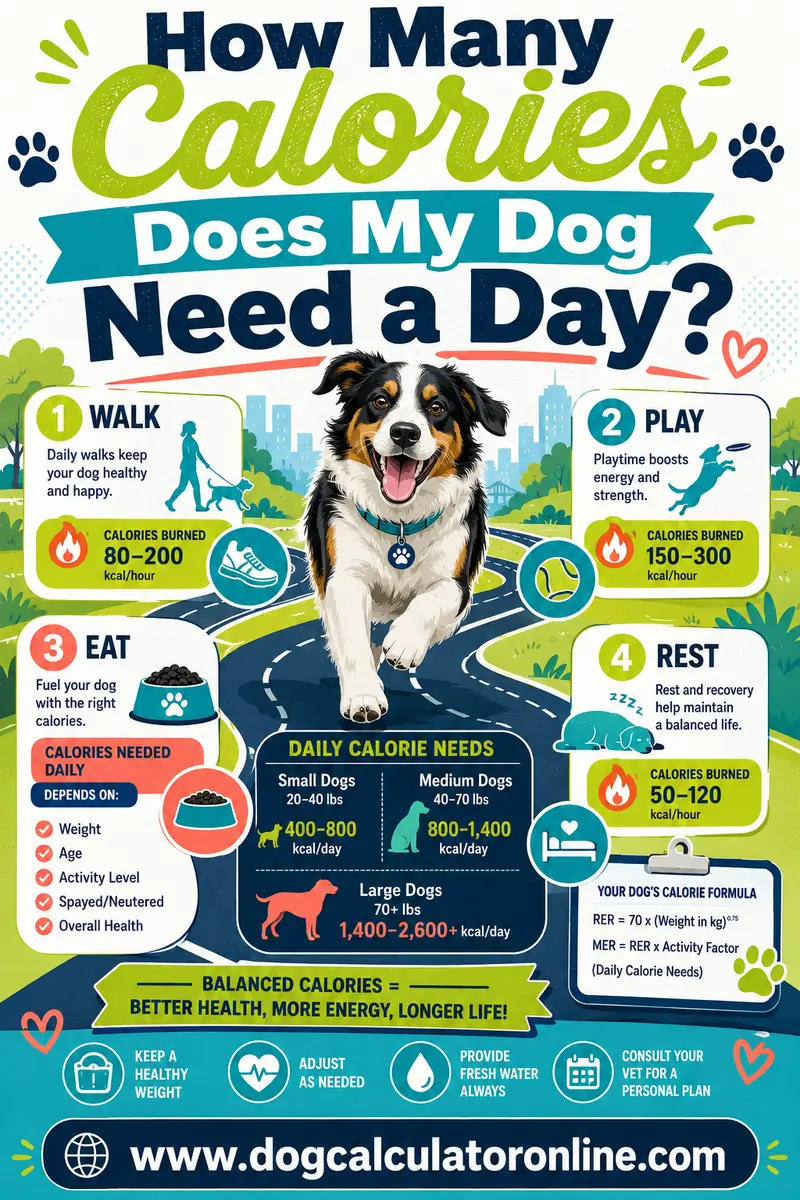
- Know the real calorie target. Most owners have never actually calculated what their dog needs — run it through the dog calorie guide and compare it to what's actually being served. The gap is usually the whole story.
- Measure every meal. An actual measuring cup or a kitchen scale, not a scoop and a guess. "Eyeballed" portions drift upward almost universally.
- Count the treats. Treats, chews, table scraps, and the toddler's dropped dinner are the invisible calories in most households. They count — often for a shocking share of the day's intake.
- Add movement gently. Longer sniffy walks and low-impact play, scaled up gradually — an overweight dog's joints need the weight to come off before high-impact exercise is kind.
- Re-weigh monthly and adjust. Weight loss is a feedback loop, not a one-time settings change.
And recheck with the same three tests. The rib check, waist check, and profile view are how you'll watch the progress happen — the waist reappears surprisingly early, and it's genuinely motivating.
Frequently Asked Questions
How do I know if my dog is overweight?
Do three checks: feel the ribs (should be easy to find under a thin layer, without pressing), look down from above for a waist that narrows behind the ribcage, and look from the side for a belly that slopes up toward the hind legs. Failing two or more checks strongly suggests extra weight. Confirm with a body condition score at your next vet visit.
What percentage of dogs are overweight?
Veterinary surveys in the US have consistently found extra weight in roughly half of dogs — making it one of the most common health issues vets see. The exact figure varies by survey and year, but the consistent finding is that overweight is now so widespread that many owners no longer recognize it, because heavy dogs look normal by comparison.
Can I tell if my dog is overweight just by weighing him?
Not reliably on its own. A single weight means little without knowing your dog's individual frame — healthy weights vary widely even within one breed, and mixes have no chart at all. The scale is excellent for tracking change over time, but the verdict comes from body condition: ribs, waist, and profile. Use both together.
Is my dog overweight or just fluffy?
Hands beat eyes on a coated dog. A thick coat can fake bulk from every angle, but it can't hide the fat layer from the rib check — palms flat on the ribcage, light pressure, ribs should be easy to find. For the visual checks, trace the silhouette through the coat with your hands or assess right after a bath when the coat lies flat.
Why is my dog gaining weight if he doesn't eat much?
First, audit everything: measured meals plus treats, chews, table scraps, and anything other family members contribute — the true total is usually higher than anyone realizes. Calorie needs also drop with age and after spay/neuter, so yesterday's portion can be today's surplus. If intake genuinely hasn't changed and weight is still climbing, see your vet, since some medical conditions cause gain without overeating.
How fast should an overweight dog lose weight?
Slowly and steadily — gradual loss over months is the safe pattern, and your vet will set the right rate for your dog's size and starting point. Rapid weight loss is hard on dogs and usually means the cut was too aggressive. Expect visible progress at the waist within a couple of months and re-weigh monthly to confirm the direction.
The kindest thing about this whole topic: the diagnosis is free, takes a minute, and you can do it before dinner tonight. If the checks say your dog is carrying extra, get a target number from the free dog ideal weight calculator, confirm it with your vet, and start the unglamorous, completely doable work of getting your dog back to the body he's happiest in.