How to Help a Dog Lose Weight (Ask Your Vet)
Helping a dog lose weight comes down to five unglamorous steps: a vet check to rule out medical causes and set a target, measured meals instead of eyeballed ones, a strict treat budget, gradually increased exercise, and regular weigh-ins to prove the plan is working. Done slowly and consistently, this works for the vast majority of overweight dogs — no special tricks required. Start by getting a realistic goal: the free dog ideal weight calculator estimates your dog's healthy weight from their current weight and body condition, and gives you a concrete number to bring to your vet.
Why Should the Vet Visit Come First?
Because "eats too much, moves too little" is the most common explanation for a heavy dog — but it isn't the only one, and the exceptions matter. Hypothyroidism, Cushing's disease, certain medications, and fluid retention from heart or organ problems can all add weight or mimic weight gain. Putting a dog with an untreated medical condition on a diet doesn't just fail; it can delay a diagnosis your dog needs. A pre-diet exam, sometimes with basic bloodwork, rules these out.
The visit buys you three more things. First, a professional body condition score — the hands-on 9-point assessment covered in our body condition score guide — which tells you honestly how much excess your dog is carrying. Second, a target weight and a sensible pace to reach it, personalized to your dog's age, breed, and joints. Third, a baseline weigh-in on a proper scale, so progress gets measured against a real starting point rather than a guess.
If cost is a concern, say so when you book. A weight-focused visit is usually a routine exam, and many clinics offer free weigh-ins on their lobby scale between appointments — which becomes your progress-tracking tool for the whole plan.
How Much Weight Does Your Dog Actually Need to Lose?
Vague goals fail. "He should slim down a bit" survives contact with pleading eyes at the dinner table about as well as a New Year's resolution. A number — "our target is 52 pounds, and we're at 60" — is what turns good intentions into a plan.
You can get a working estimate at home in two steps. Score your dog's body condition using rib, waist, and tummy checks, then apply the common veterinary rule of thumb that each point above 5 on the 9-point scale represents roughly 10–15% excess body weight. The free dog ideal weight calculator does this arithmetic for you, and our guide to using a weight-loss calculator explains exactly what the output means and where its limits are.
Then let your vet confirm or adjust the number. Home scoring runs a point or so of error either way, and for dogs with a lot to lose, vets often set staged targets — an initial goal, reassess, then a final goal — rather than one distant number that takes a year to reach. A staged plan protects motivation, yours and the household's.
Why Does Measuring Food Matter So Much?
Because free-pouring is where most dog diets die. A "cup" of kibble scooped with a mug, heaped over the rim, or topped up with a courtesy shake can exceed a level measuring cup by a wide margin — and that surplus repeats twice a day, every day. Over months, the little heap becomes the extra pounds. Portion drift is the quiet engine behind most creeping weight gain, and it's the first thing to fix.
The fix costs almost nothing:
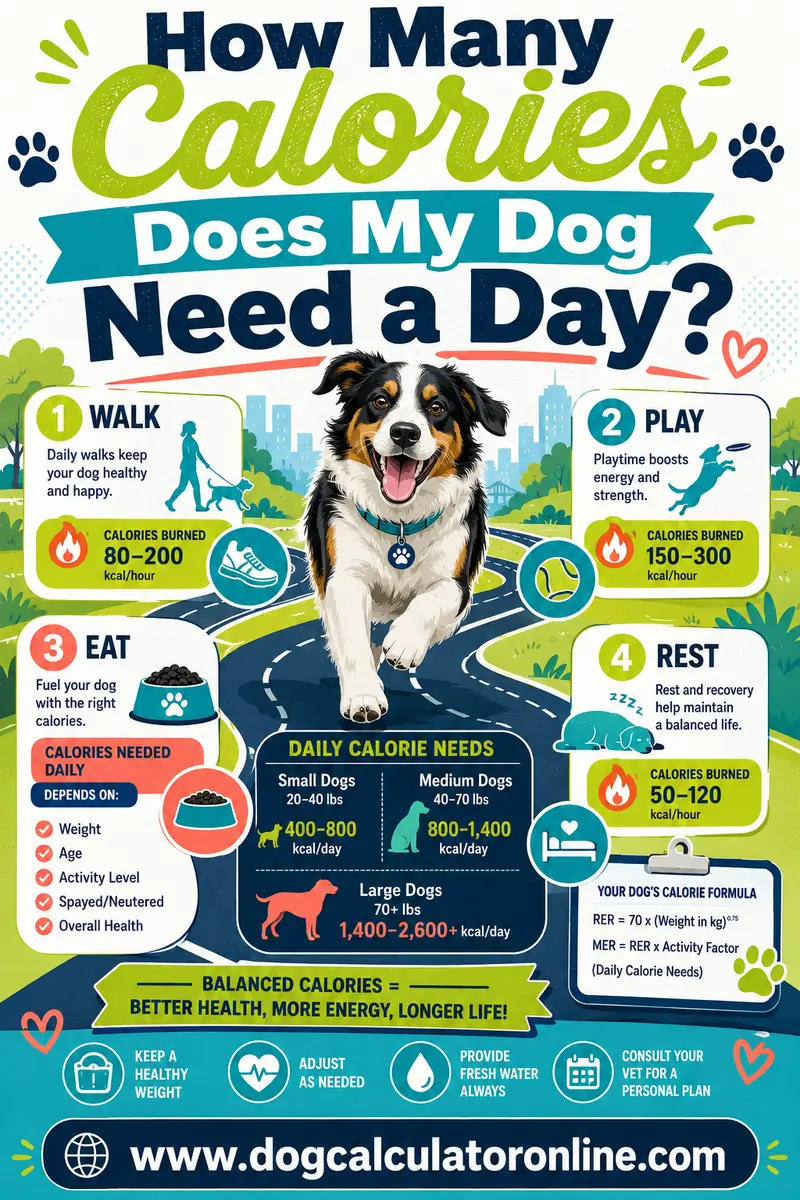
- Ask your vet what daily amount to feed for weight loss. This is genuinely a vet question, not a bag-label question — the feeding guide on the bag describes maintenance for average adult dogs, not a reduction plan for yours. Our calorie needs guide explains the factors behind the number: size, age, activity, and spay/neuter status all shift it.
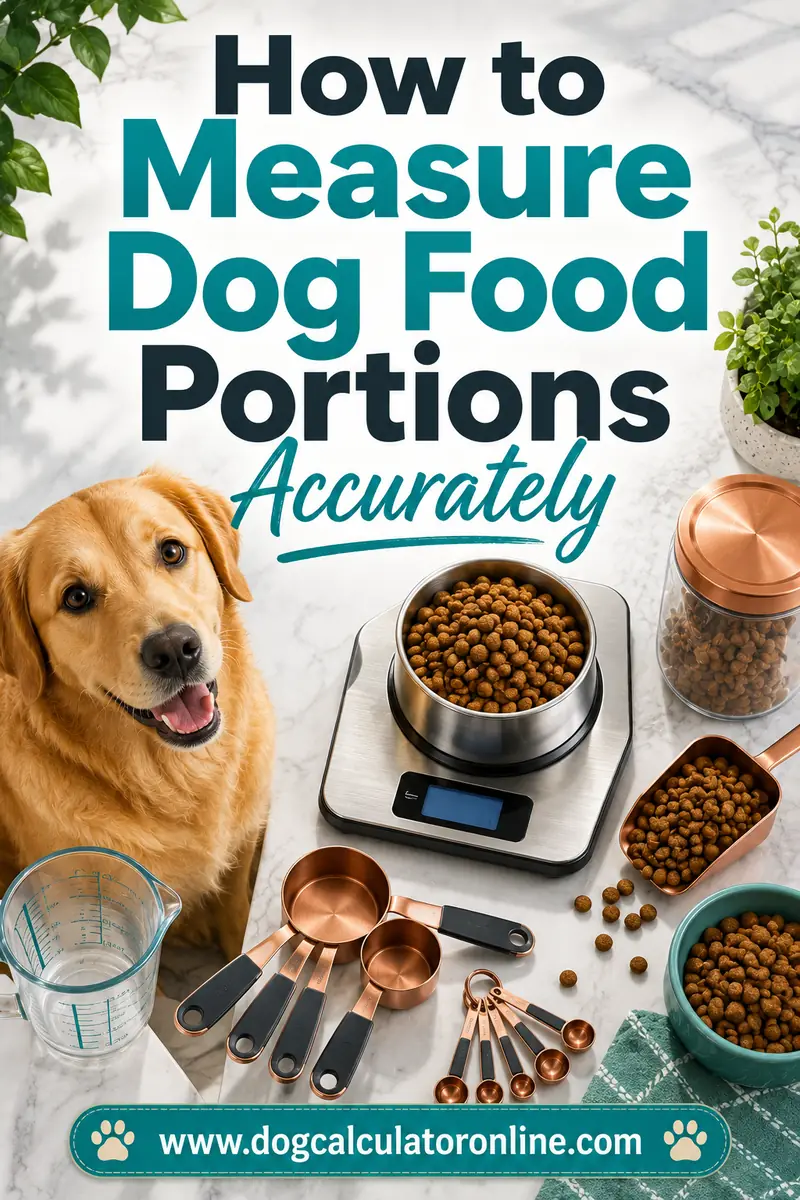
- Measure that amount the same way every time. A level standard measuring cup is the minimum; a cheap kitchen scale measuring grams is meaningfully better, because kibble weight per cup varies and level cups still drift. Our portion-measuring guide compares the methods.
- Feed on a schedule, not free-choice. Leaving food down all day makes intake unknowable. Two measured meals at set times — see our feeding schedule guide — makes every calorie visible and gives you an early warning sign (skipped meals) that something's wrong.
One warning worth stating plainly: never crash-diet a dog, and never make drastic cuts on your own. Severe restriction is unsafe, and dogs with big reductions need vet supervision — sometimes a prescription weight-management food that keeps nutrients complete at lower calories. The safe version of this step is always "feed the amount your vet recommends, measured accurately," not "feed dramatically less."
How Do You Handle Treats Without Ruining the Diet?
Treats are where well-designed diets quietly fail. The meals get measured to the gram while the treats flow untracked — a dental chew here, a bit of cheese there, the toddler's dropped toast, the daycare's goodbye biscuit. Vets commonly suggest keeping treats under about 10% of a dog's daily calories, and for a small or medium dog on a reduction plan, that 10% is a startlingly small pile.
The answer isn't zero treats — it's a visible budget:
- Count every mouth in the house. Weight plans fail by committee. One family member "who just gives him a little something" can erase the whole deficit. Put the plan on the fridge and get everyone to agree.
- Use a daily treat jar. Each morning, put the day's entire treat allowance in a jar — and when the jar is empty, treats are done. This converts an invisible stream into a visible, finite supply, and it lets everyone treat the dog without anyone overdoing it.
- Downsize the unit. Dogs respond to the event of a treat far more than its size. Break treats into pea-sized pieces; you'll hand out the same number of rewards for a fraction of the intake.
- Swap dense treats for lighter ones. Many dogs are delighted by plain green beans, carrot pieces, or a few pieces of their own measured kibble held back from breakfast. Ask your vet which extras suit your dog before adding anything new.
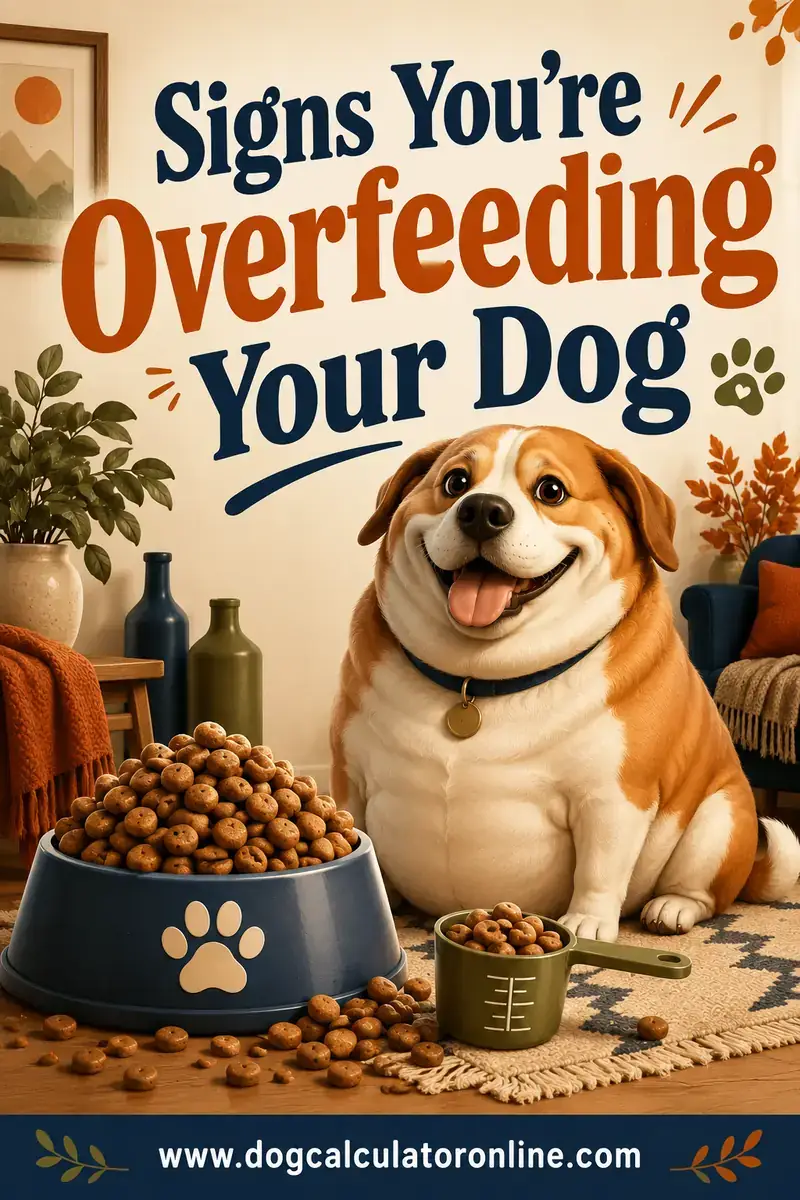
- Audit the invisible calories. Table scraps, food-stuffed toys, pill pockets, chews — they all count. Our guide to the signs you're overfeeding your dog covers the sneaky sources most owners miss.
| Treat habit | Diet-friendly swap |
|---|---|
| Whole biscuit for every trick | Pea-sized fragment — same praise, same event |
| Cheese or deli meat rewards | A few pieces of the dog's own kibble, reserved from meals |
| Constant chews "to keep him busy" | A food-puzzle toy loaded with part of a measured meal |
| Table scraps during dinner | A stuffed toy in another room at family mealtimes |
| Guilt treats when leaving home | A sniffy walk or play session before you go |
The last two rows point at something real: much of what we express with food, dogs would happily receive as attention, play, or a walk. Swapping affection-by-calories for affection-by-activity is the single most sustainable change most households make.
How Should You Add Exercise Safely?
Gradually — that word is doing all the work. An overweight dog carrying extra load on every joint, overheating faster, and possibly out of condition should not be launched into a running program because the household got motivated. Ramping up too fast risks soreness, injuries, and heat trouble, and a limping dog burns no calories at all.
Start with what your dog does now and extend it gently:
- Walks first. Add five or ten minutes to the current walk, hold that for a week or so, then add more if your dog is handling it well. Two or three moderate walks a day beat one exhausting outing.
- Let them sniff. A slower "sniffy" walk keeps a dog engaged and moving longer than a forced march, and engagement is what gets you both out the door tomorrow.
- Add play in short bursts. Fetch, tug, and hide-and-seek in the yard or hallway are fine additions once regular walks feel easy — keep sessions short and stop before exhaustion.
- Consider swimming if available. For heavy dogs and dogs with joint concerns, water work is famously easy on the joints — ask your vet whether it makes sense for yours.
- Watch the weather. Overweight dogs overheat faster, and flat-faced breeds dramatically so. Walk in cooler hours, carry water, and treat heavy panting, lagging, or lameness as a signal to stop that day and mention it at the next vet visit.
Keep expectations honest: exercise supports weight loss, builds muscle, protects joints, and improves mood — but food intake drives the numbers. The walk earns its place mostly by making the dog (and the household) feel like a team, while the measuring cup does the heavy lifting.
How Fast Should a Dog Lose Weight?
Slowly. As a general guideline, vets often talk in terms of a dog losing around 1–2% of body weight per week — for a 60-pound dog, that's roughly half a pound to a pound a week, which means a meaningful weight-loss journey is measured in months, not weeks. Your vet will set the actual pace for your dog; the number here is only to calibrate your expectations, because most owners expect results five times faster than that.
Fast loss isn't a bonus — it's a warning sign. Rapid weight loss in dogs can involve losing muscle rather than fat, can signal illness, and crash restriction is dangerous outright. If your dog is dropping weight quickly, or losing weight you didn't plan, call your vet rather than celebrating.
The slow pace is also why plans fail in month two: nothing dramatic happens, the household relaxes, the treats creep back. Beat that with structure — scheduled weigh-ins, a visible chart on the fridge, and staged targets your vet helps you set. A dog that loses steadily for six months ends up transformed; a dog on a heroic two-week diet ends up exactly where it started, minus the household's confidence.
How Do Weigh-Ins Keep the Plan on Track?
Because eyes lie and scales don't. You see your dog every day, which makes you the worst-placed person on earth to notice gradual change in either direction. A weigh-in every two to four weeks, on the same scale, written down, is the plan's feedback loop — it tells you whether the current portions are working, before months of drift.
Make it easy and consistent:
- Small dogs: weigh yourself, then weigh yourself holding the dog, and subtract. A home bathroom scale is fine for tracking change.
- Medium and large dogs: use the walk-on scale at your vet's clinic — most practices are happy for you to drop in and use it free between visits, and many will log the number in your dog's chart.
- Same conditions each time: same scale, roughly the same time of day. Consistency matters more than precision, because you're tracking the trend, not the decimal.
- Write it down with the date — a note on your phone or a fridge chart. Re-check your dog's body condition score monthly alongside the weight, since the goal is a dog that scores 4–5, not just a number.
Then use the data. Weight trending down at a sensible pace: change nothing. Flat for a month: audit treats and measuring honestly first — that's the culprit far more often than metabolism — then ask your vet about adjusting the plan. Below target or dropping fast: vet call. The weigh-in only helps if the number changes what you do next.
What If the Weight Still Won't Budge?
First, audit before concluding. Most stalls trace to leaks: the heaped scoop that returned, the second family member treating on the side, the daycare biscuits nobody counted, the food-stuffed toy that doesn't feel like feeding. Write down literally everything your dog eats for one week — every crumb, every mouth in the house contributing. The list is usually illuminating.
If the honest audit comes back clean and the scale still hasn't moved over several weeks, go back to your vet rather than cutting food further on your own. There's a real decision point here that belongs to a professional: whether to adjust the plan, switch to a prescription weight-management food, or re-test for medical causes like hypothyroidism that can blunt weight loss despite a good-faith diet. Metabolism also varies between individual dogs, and plans sometimes need tuning through no fault of yours.
And zoom out. Progress in a dog weight plan isn't only pounds: a dog that climbs stairs more easily, pants less, plays longer, and scores better on the rib check is succeeding even in a week the scale sulks. Track those wins too — they're what the whole project is for.
Frequently Asked Questions
How long does it take for a dog to lose weight?
Months, not weeks — with vets often describing a healthy pace as around 1–2% of body weight per week, a dog with 10–15 pounds to lose is typically looking at several months of steady work. Your vet will set the pace for your dog. Slow is a feature: it protects muscle and makes the result stick.
Can I put my dog on a diet without seeing a vet?
A vet check first is strongly recommended. Medical conditions like hypothyroidism can cause weight gain, and dieting an undiagnosed dog delays the real fix. The vet also sets a safe target and amount — cutting food drastically on your own is unsafe. Tighter treat discipline while you wait for the appointment is fine.
What's the safest way to cut my dog's calories?
Let your vet set the daily amount, then deliver it accurately: level measuring cup or kitchen scale, scheduled meals instead of free-feeding, and treats capped at roughly 10% of the day within that plan. Avoid dramatic cuts to the meal itself — accuracy and treat control usually create most of the needed deficit.
Do green beans really help dogs lose weight?
Plain green beans are a popular low-calorie treat swap, and many dogs genuinely enjoy them — as a replacement for dense biscuits, they can help the treat budget. They're not magic, and adding them on top of an unchanged diet does nothing. Ask your vet before adding any new food, especially for dogs with health conditions.
How much exercise does an overweight dog need daily?
There's no universal number — it depends on the dog's starting fitness, joints, breed, and the weather. The principle is gradual: extend current walks by a few minutes at a time, favor consistency over intensity, and let your vet guide the ramp-up. Watch for heavy panting, lagging, or limping as signals to ease off.
Why is my dog gaining weight on the same food as always?
Common reasons include aging and slowing metabolism, less activity than before, spay/neuter-related changes in energy needs, untracked treats, and portion drift from eyeballed scoops. Medical causes like hypothyroidism are also possible, which is why unexplained gain on unchanged food deserves a vet visit rather than just a smaller scoop.
Your dog can't decide to lose weight — that part is yours, and the plan is genuinely simple: vet first, measure everything, budget the treats, walk a little more, weigh in monthly. Start with the number that anchors it all: run the free dog ideal weight calculator now, and bring the estimate to your vet.