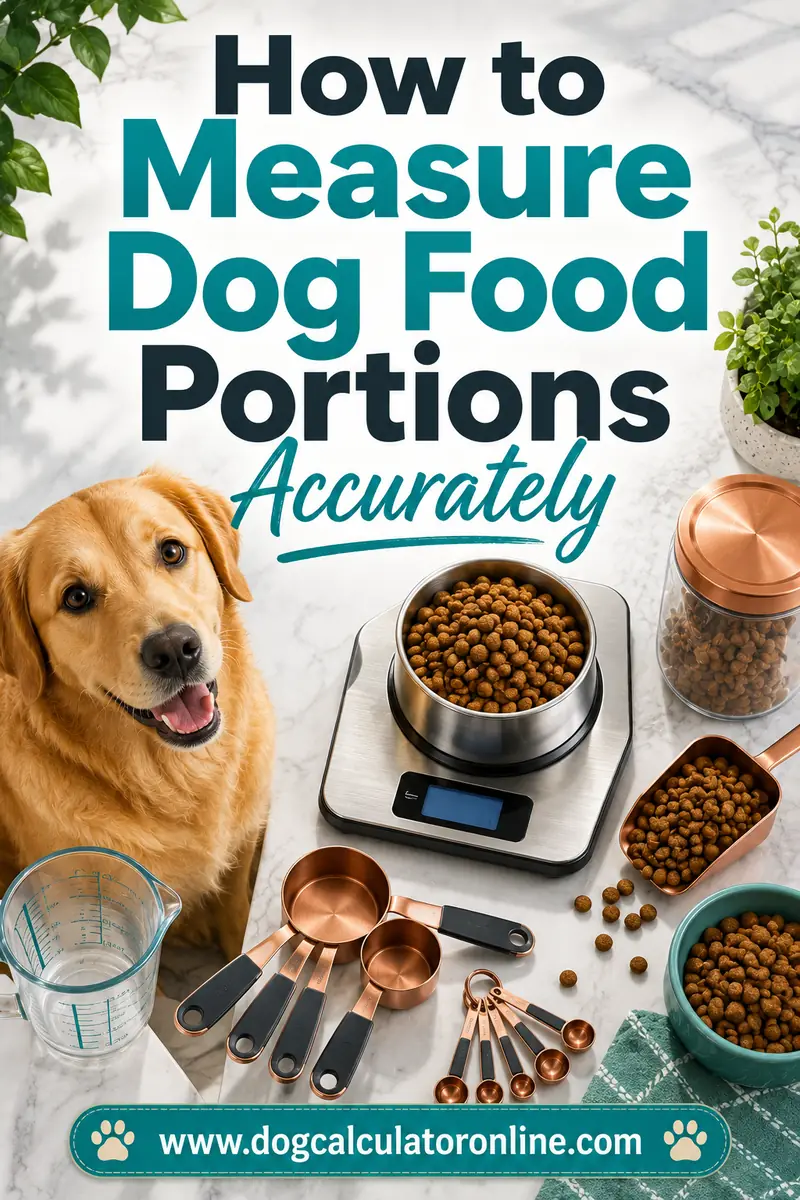
How to Measure Dog Food Portions Accurately
The most accurate way to measure dog food is by weight, in grams, on a kitchen scale — not by cup. Research on owners measuring kibble has repeatedly found that scoop-and-cup portions miss the target by wide margins in both directions, and the smaller the portion, the worse the percentage error. A digital scale costs little, takes ten extra seconds, and removes the single biggest source of silent overfeeding in otherwise well-run households.
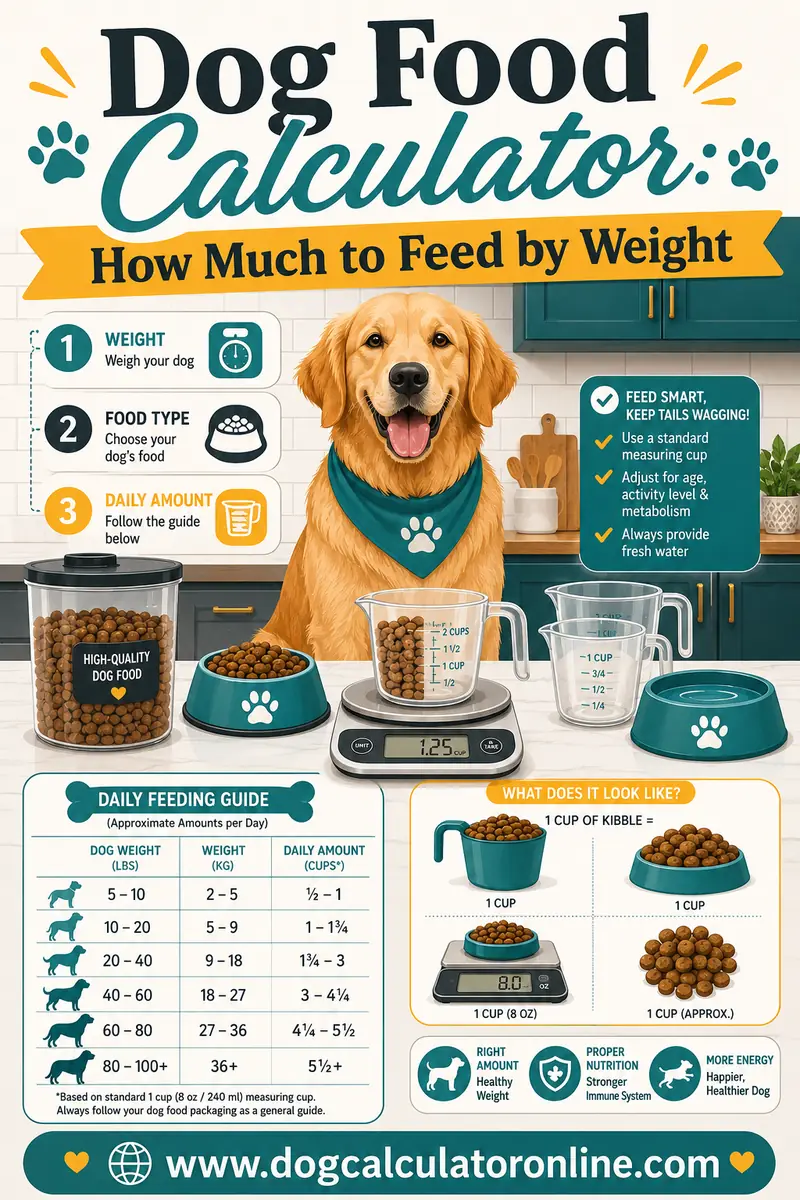
Accuracy only matters once you know what the target is, of course. The free dog food calculator sets that target from your dog's weight, age, and activity; this guide covers the measuring side — scale technique, how to calibrate a scoop when you must use one, reading the label numbers that convert calories to grams, and the measuring mistakes that quietly stack weight onto dogs.
🥄 Measuring method check
Tap a method to see how accurate it really is:
Tap a method above. Scale > level cup > scoop > eyeball — every step down adds error.
Why Cups Fail (It's Not You)
Measuring cups fail for kibble the same way they fail for flour, only worse. Kibble pieces are irregular, so how they settle changes the weight in a "cup" from pour to pour. Heaping versus level changes it again. The scoop that lives in the food bin is usually not a measuring cup at all but a mug, a jug, or a giant plastic scoop where the target line is a guess. And human nature rounds up — a scoop that's "about a cup and a bit" becomes the new normal within weeks.
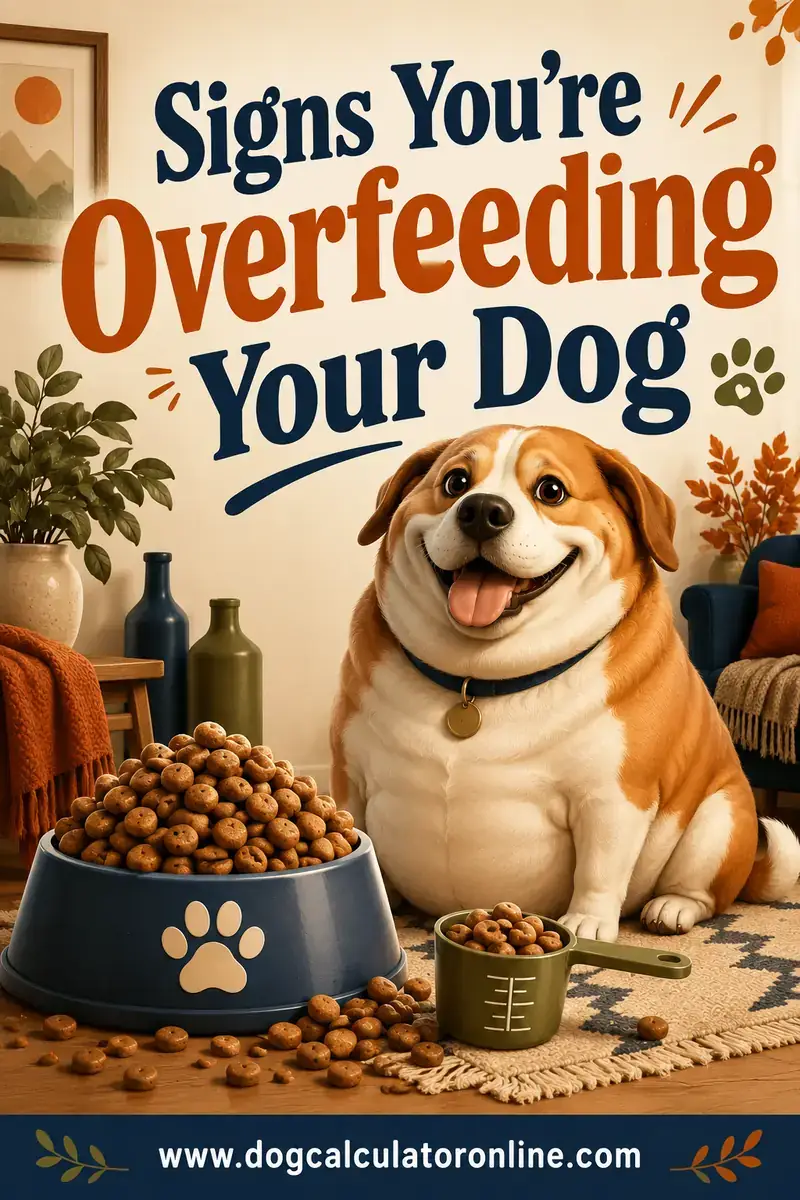
Veterinary studies that asked owners to measure kibble portions have found errors ranging from substantially under to dramatically over the intended amount — with small portions measured in small cups producing the largest percentage errors. That last part is why measuring accuracy matters most for small dogs: a daily error of 20 g barely registers for a Rottweiler but is a meaningful chunk of a Chihuahua's entire ration, every single day. Over months, that's the difference between a trim dog and a vet conversation about weight — and our overfeeding signs guide shows how that story usually gets discovered late.
Here's how the four common methods compare — every step down the list adds error:
| Method | Accuracy | Why | Verdict |
|---|---|---|---|
| Kitchen gram scale | Best — repeatable to the gram | Weight ignores kibble shape, settling, and heaping | Use this; grams beat cups |
| Level measuring cup | Acceptable if calibrated | A real cup, scraped flat, checked against a scale once per food | Fine as a backup — recalibrate at every food change |
| Scoop from the bin | Poor | Mugs and guess-marked scoops routinely run well over a true cup | Calibrate it against a scale or retire it |
| Eyeballing | Worst | Portions drift upward within weeks — nobody eyeballs down | Don't — it's a top cause of gradual weight gain |
The Gram-Scale Method (Do This)
- Find your daily target in kcal. From the dog food calculator, your vet, or the bag's table as a starting point.
- Convert kcal to grams. The label's calorie statement lists kcal per kg. Divide: (daily kcal ÷ label kcal/kg) × 1,000 = grams per day. Example: 700 kcal target on a 3,800 kcal/kg food → 700 ÷ 3,800 × 1,000 ≈ 184 g per day.
- Split by meals. Two meals → ~92 g each.
- Weigh it: bowl on scale, press tare (zero), pour to 92. Ten seconds.
- Recheck monthly — against your dog's body condition, and again any time you change foods, because a new food's kcal/kg silently changes the right gram number even when the bowl looks the same.
Small-dog households and multi-dog households get the most from this: exact portions per dog, no drift, no debate about whose scoop is whose.
If You're Sticking With a Cup: Calibrate It
A cup can be acceptable — if it's an actual measuring cup, always leveled, and calibrated once against reality:
- Weigh your dog's correct daily portion in grams (steps above), one time.
- Fill your cup level with the same food and weigh that.
- Do the division — now you know your cup holds, say, 105 g of this food, and your dog needs 1.75 of those cups a day.
- Write it on the bin ("1¾ level cups = 184 g"), so every human feeds the same amount.
- Recalibrate on every food change — different kibbles pack completely differently — and re-level every pour: level means scraped flat, not domed.
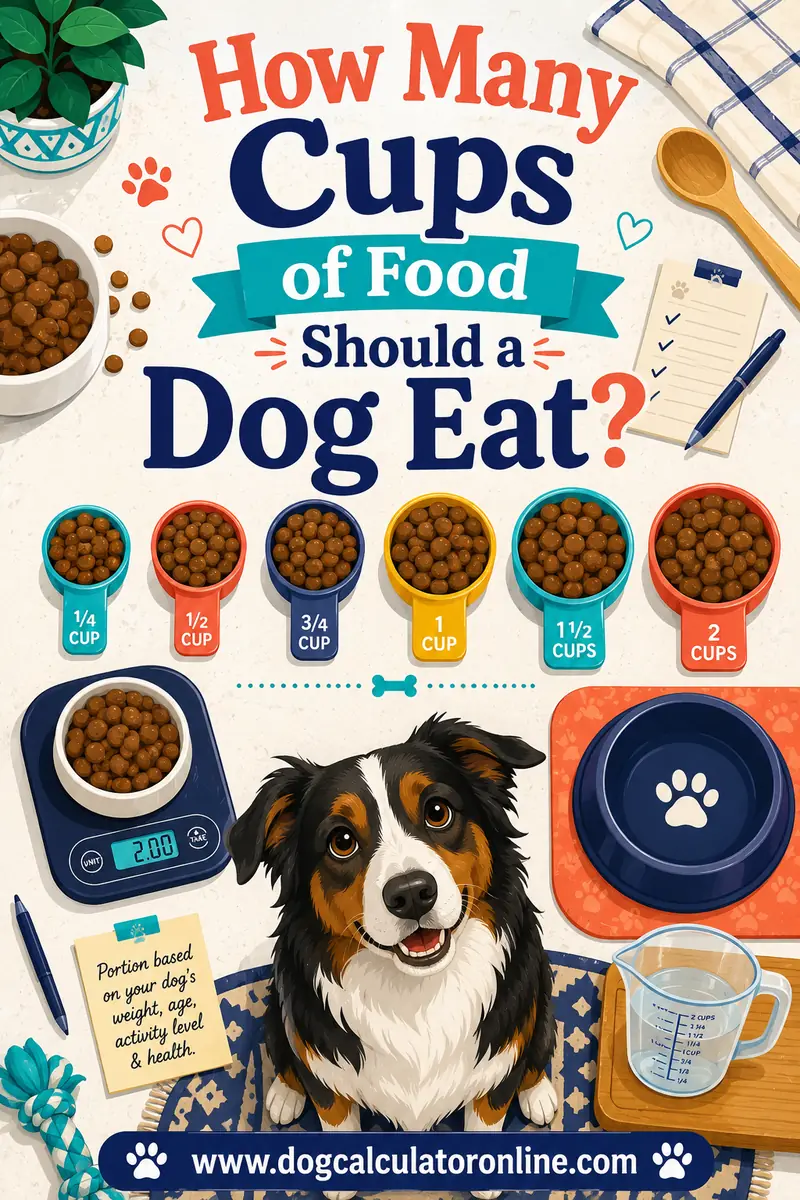
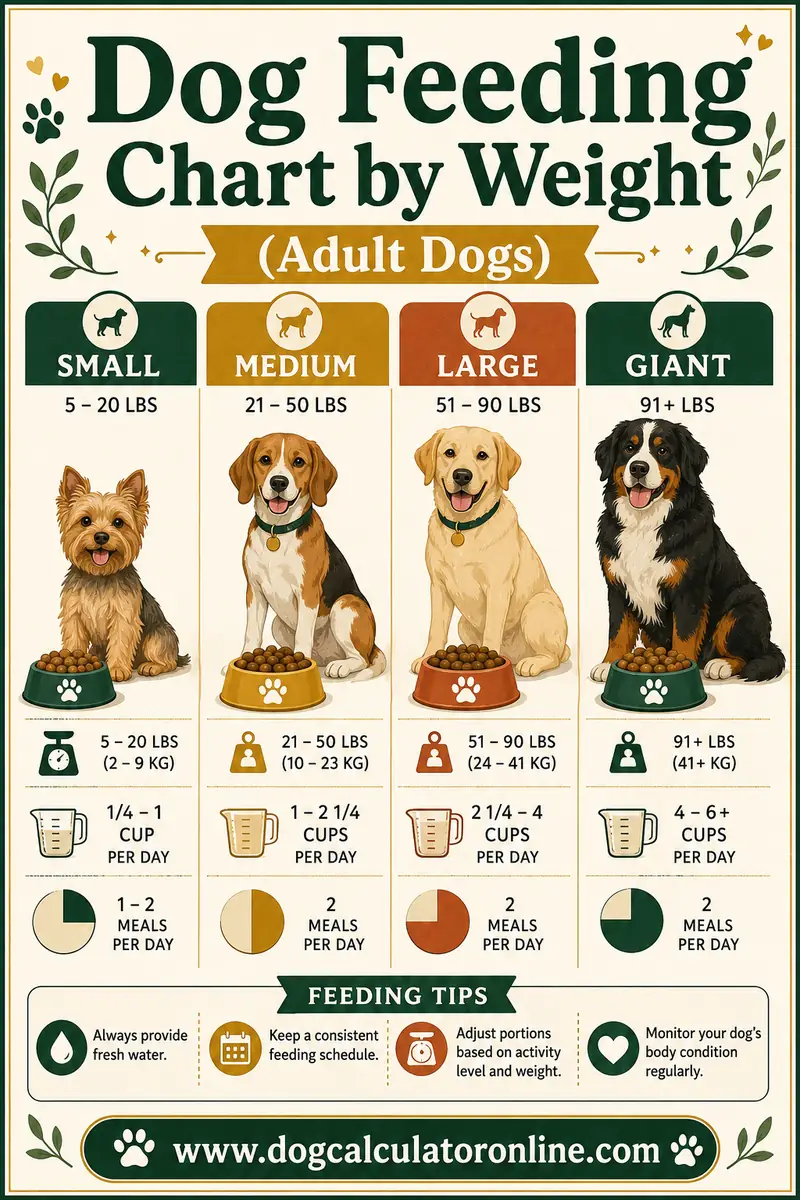
Our cups-per-day guide covers typical cup amounts by dog size if you want sanity-check numbers alongside your calibration.
Wet Food, Toppers, and Treats Count Too
Wet food is easier — the can is the unit, and labels list kcal per can. Fractions of cans keep best covered in the fridge and still deserve the scale if precision matters (a "half can" by eye runs generous).
Mixed feeding (kibble plus wet topper) is where portions most often go wrong: the topper gets added but the kibble never gets reduced. Work in kcal — if the daily target is 700 and the wet topper contributes 150, the kibble share drops to 550, i.e., its gram amount shrinks accordingly.
Treats carry the same rule. The standard veterinary guideline keeps treats within ~10% of daily calories, and that 10% comes out of the total, not on top of it. Count chews and dental sticks — some are meal-sized.
Fresh/raw and home-prepared diets should be portioned by gram weight per the product's feeding guide or your vet's plan — eyeballing patties and mince is even less reliable than eyeballing kibble.
A Worked Household Example
Here's the whole system running end to end for a real-shaped household: a 22 lb (10 kg) cocker mix named Biscuit, neutered, moderately active, fed twice a day by two humans, with one dental chew most days.
- Target: the dog food calculator puts Biscuit around 630 kcal a day.
- Treat line first: the daily dental chew runs ~60 kcal — almost exactly the 10% allowance on its own. Training treats this week? Then some days the chew sits out. Meals get the remaining ~570 kcal.
- Label math: Biscuit's food lists 3,650 kcal/kg. 570 ÷ 3,650 × 1,000 ≈ 156 g per day, so 78 g per meal.
- Write it down: a sticky note on the bin — "78 g per meal, 2 meals. Chew = the day's treats." Both humans now feed identically, and the "did you already feed him?" problem stops mattering, because a second 78 g meal can't happen if the routine is morning-human and evening-human by agreement.
- Audit loop: Biscuit gets weighed at the start of each month. Two months trim, waist visible, ribs under a light cover — the number stands. If he drifts up a pound, meals drop to ~70 g and the recheck moves a month closer.
Total setup time: about ten minutes once, then ten seconds a meal. Compare that with the alternative — years of "about a scoop and a bit" — and the scale is the cheapest piece of health equipment in the house.
Building a Measuring Routine That Survives Real Life
- One measurer or one written number. Most double-feeding happens between family members. A note on the bin — grams per meal, cups if calibrated — ends it.
- Pre-portion when busy. Weigh out a week of meals into containers or bags on Sunday; the rest of the week is grab-and-pour with zero error.
- Don't top up a "sad" bowl. The measured amount is the amount. Dogs learn theatrical starvation within days of it working once.
- Re-run the numbers at life changes. Neutering, a diet change, less exercise in winter, senior slowdown — the target moves, so the grams should too. The feeding chart by weight is a quick reference when circumstances shift.
- Let the dog audit the math. Ribs easily felt with light cover, visible waist, monthly weight stable = your measuring works. Drifting up or down with no change in the routine = re-measure the routine, then ask your vet if the drift continues.
FAQ
What's the most accurate way to measure dog food?
Weighing it in grams on a digital kitchen scale. Cup measures vary with kibble shape, settling, and heaping; a scale is repeatable to the gram. Use the label's kcal-per-kg figure to convert your dog's calorie target into grams per day.
How many grams are in a cup of dog food?
It varies widely by food — commonly somewhere around 90–120 g per level cup for dry kibble, but shape and density change it enough that you should weigh your food once to find out. That's exactly why calibrating your scoop matters.
Are dog food measuring cups accurate?
Only if used carefully: a genuine measuring cup, filled and leveled flat, calibrated against a scale for your specific food. Studies of owners scooping kibble found portions missing the target by wide margins — mostly from heaping, guess-marked scoops, and rounding up.
Do I measure dog food before or after adding water?
Measure dry. Feeding guides and calorie statements refer to the food as it comes out of the bag; water added to soften it changes volume, not calories. Weigh the dry amount first, then soak.
How do I measure wet dog food portions?
By the can or fraction of it — labels list kcal per can. If your dog eats mixed meals, subtract the wet food's calories from the daily target and shrink the kibble grams to match; the classic mistake is adding a topper without reducing the base.
What kind of scale should I buy for dog food?
Any basic digital kitchen scale with a tare (zero) button and gram mode works — the same inexpensive model used for baking. For toy breeds eating very small portions, pick one accurate to the gram; for big dogs, nearly anything on the shelf is precise enough.
How often should I re-measure my dog's portions?
Recheck the math at every food change (calorie density differs bag to bag), after neutering, at weight changes, and seasonally if activity shifts. Between those, a monthly weigh-in and rib check confirms the current portion still fits.
Weigh the Food, Then Trust the Process
Portion control is two numbers: the right daily target, and an honest way of hitting it. The scale handles the second in ten seconds a meal — no drift, no heaping, no debates. For the first, run your dog's weight, age, and activity through the free dog food calculator: it returns the daily calories and portion estimate, you convert to grams off your own label, and from then on the bowl is simply correct, every single time.