How Many Treats Can a Dog Have a Day?
The veterinary rule of thumb is simple: treats should make up no more than 10% of your dog's daily calories, with the other 90% coming from complete, balanced food. In practice that's a small budget — roughly 30–35 kcal a day for a 10-lb dog, 60–70 kcal for a 25-lb dog, and 90–115 kcal for a 50-lb dog — which many dogs blow through with a single generous biscuit. The number of treats that fits depends entirely on the size of the treat: a dozen pea-sized training rewards can cost less than one bakery bone.
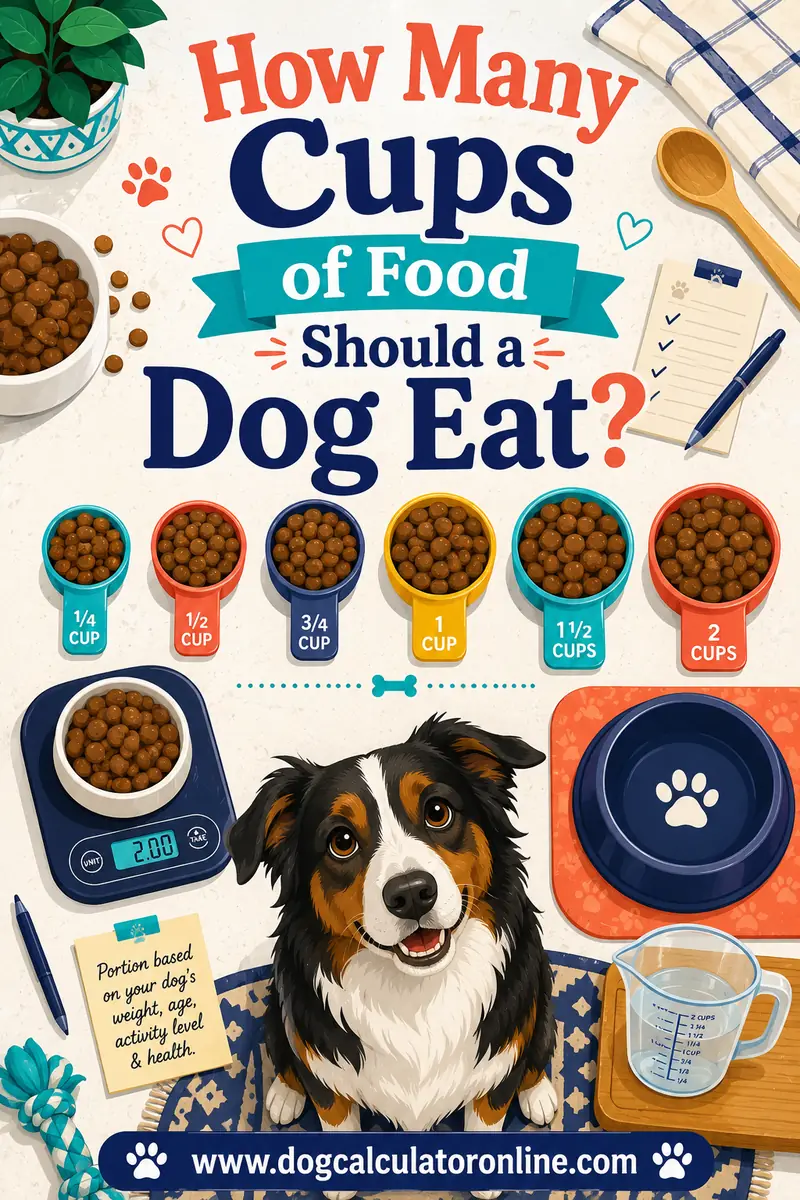
The 10% ceiling only means something once you know the 100% — your dog's total daily calories — and the free dog food calculator gives you that from weight, age, and activity in seconds. Below: treat budgets by dog size, why the rule exists, how to spend a tiny budget on a big training habit, and the treat traps that quietly out-eat dinner.

🦴 Daily treat budget check
Tap your dog’s weight for a typical 10% treat budget:
Tap a weight above. Budgets assume a typical neutered adult at moderate activity.
The Treat Budget by Dog Size
Ten percent of a typical neutered adult dog's daily calories, translated into real-world treat money:
| Dog's weight | Daily calories (approx.) | Treat budget (10%) | What that buys |
|---|---|---|---|
| 5 lb | ~200 kcal | ~20 kcal | 5–8 pea-sized training treats |
| 10 lb | ~300–350 kcal | ~30–35 kcal | 1 small biscuit or 10–15 training treats |
| 25 lb | ~600–700 kcal | ~60–70 kcal | 2 small biscuits or a small chew |
| 50 lb | ~950–1,150 kcal | ~90–115 kcal | 1 medium biscuit + training treats |
| 75 lb | ~1,250–1,550 kcal | ~125–155 kcal | 1 large biscuit or a medium chew |
| 100 lb | ~1,550–1,950 kcal | ~155–195 kcal | Roomier, but one bully stick can still bust it |
Treat calories are printed on most packages (per treat or per piece) — thirty seconds with the bag turns "a few treats" into an actual number. And the budgets above shrink further for seniors, couch-lifestyle dogs, and anyone on a diet: 10% of a smaller total is a smaller allowance.
Why the 10% Rule Exists
Two separate problems hide in over-treating, and the rule guards against both:
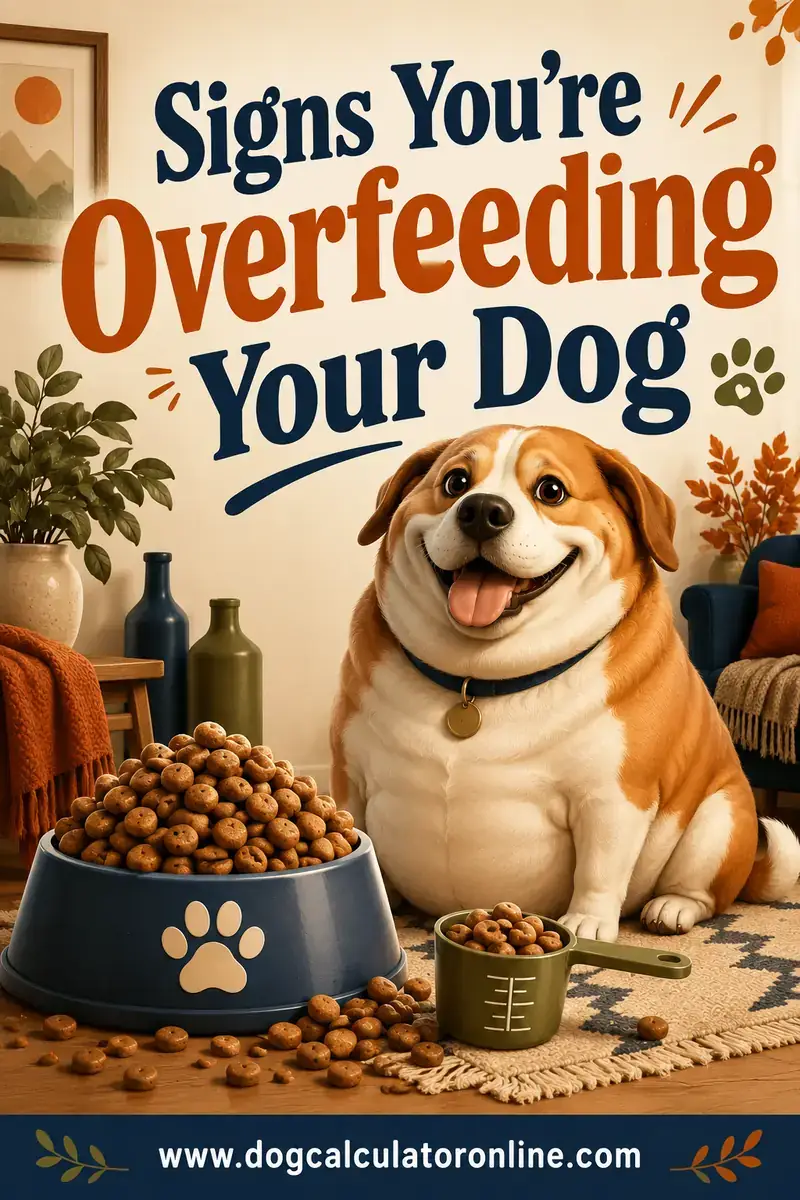
Calories. Treats are calorie-dense and invisible — they don't come in a measuring cup, so they don't feel like feeding. But arithmetic doesn't care about vibes: a 40-kcal biscuit to a 10-lb dog is proportionally like a 250-kcal candy bar to an adult human, every day. Treat creep is one of the most common drivers of canine weight gain precisely because each individual treat looks trivial. (If the creep has already happened, signs you're overfeeding your dog walks through the evidence.)
Balance. Your dog's main food is formulated to deliver complete nutrition when it makes up the diet. Treats aren't — they're the nutritional equivalent of snacks. Keep them at 10% and they can't unbalance anything; let them reach 25–30% of intake and the "complete and balanced" math on the bag quietly stops being true.
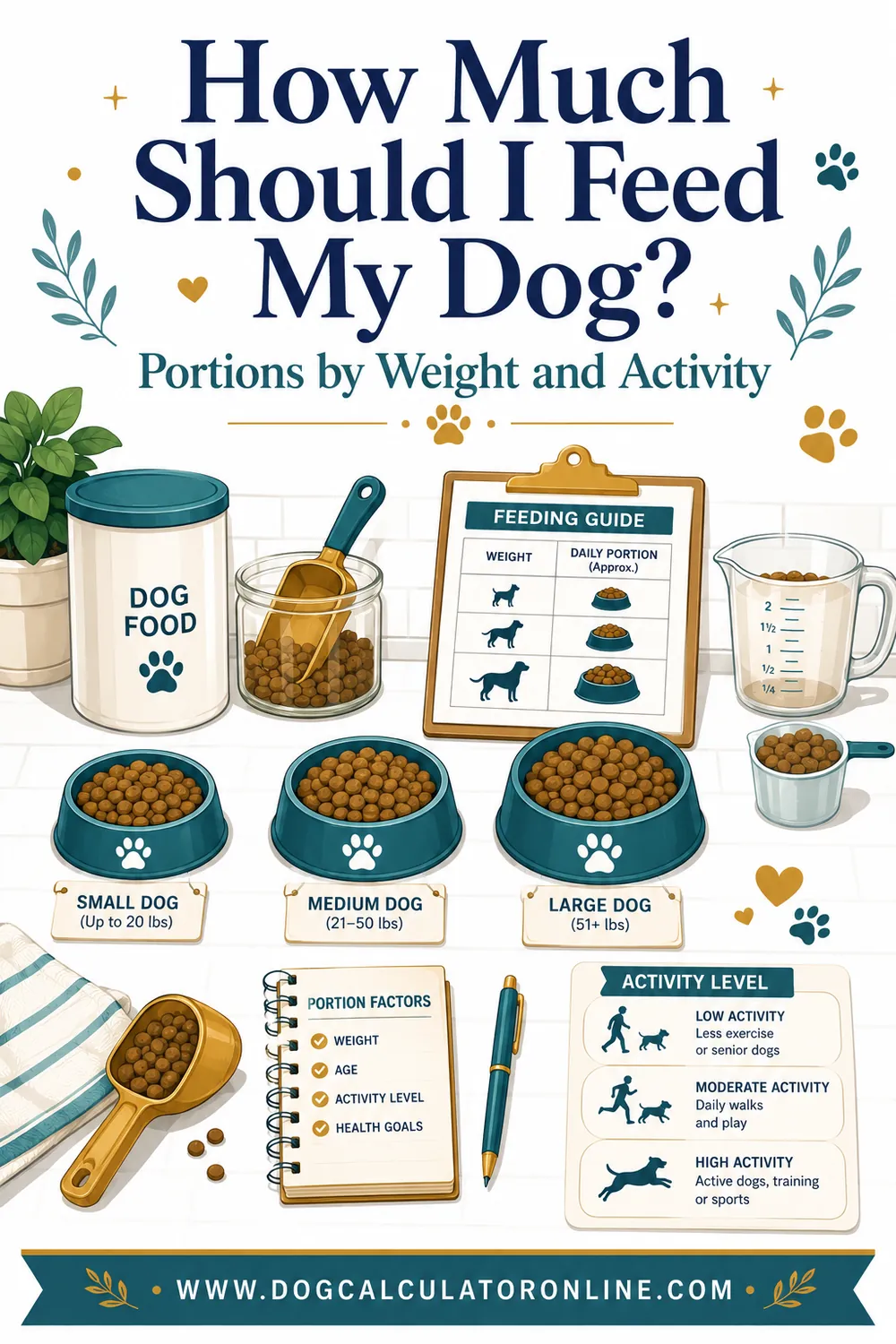
The fix for both is the same habit: treats come out of the daily calorie total, not on top of it. A 50-lb dog getting 100 kcal of treats eats 100 kcal less kibble that day — scoop a little short at dinner and the books balance. The daily total itself comes from your dog's weight and activity; the feeding guide and the dog food calculator both get you there.
Spending a Small Budget Like a Trainer
The happy secret of dog training: dogs count events, not grams. Fifteen tiny rewards register as fifteen wins; one big biscuit registers as one. That single fact lets a modest calorie budget fund an enormous amount of good behavior:
- Go pea-sized. Training treats can be genuinely tiny — the size of your pinky nail. Break bigger treats into quarters; soft ones tear easily. Cost per event: 2–4 kcal.
- Pay from the dinner account. Regular kibble, delivered piece by piece from a pocket, is a perfectly good training currency for most dogs — and it's already in the budget. Save the high-value stuff for hard asks (recall past a squirrel).
- Make the budget do double duty. A portion of dinner in a puzzle feeder or snuffle mat is enrichment and dinner — occupying a bored dog costs zero extra calories.
- Use the free rewards. Praise, play, a thrown ball, sniff time on a walk — dogs accept many currencies. Food is the easiest, not the only one.
- Pre-load a treat jar each morning. Count the day's allowance into a jar; everyone in the house pays from the jar and only the jar. When it's empty, the treat economy is closed for the day. This one habit fixes the multi-hander household problem in a week.
The Treat Traps That Bust Budgets
Where the calories actually sneak in:
- Chews are meals in disguise. Bully sticks, dental chews, pig ears, and stuffed Kongs commonly run 100–300+ kcal each — a single one can exceed a mid-sized dog's entire daily budget. They count, every time. (Long-lasting chews can be part of a sane plan — just budgeted, and sized to the dog.)
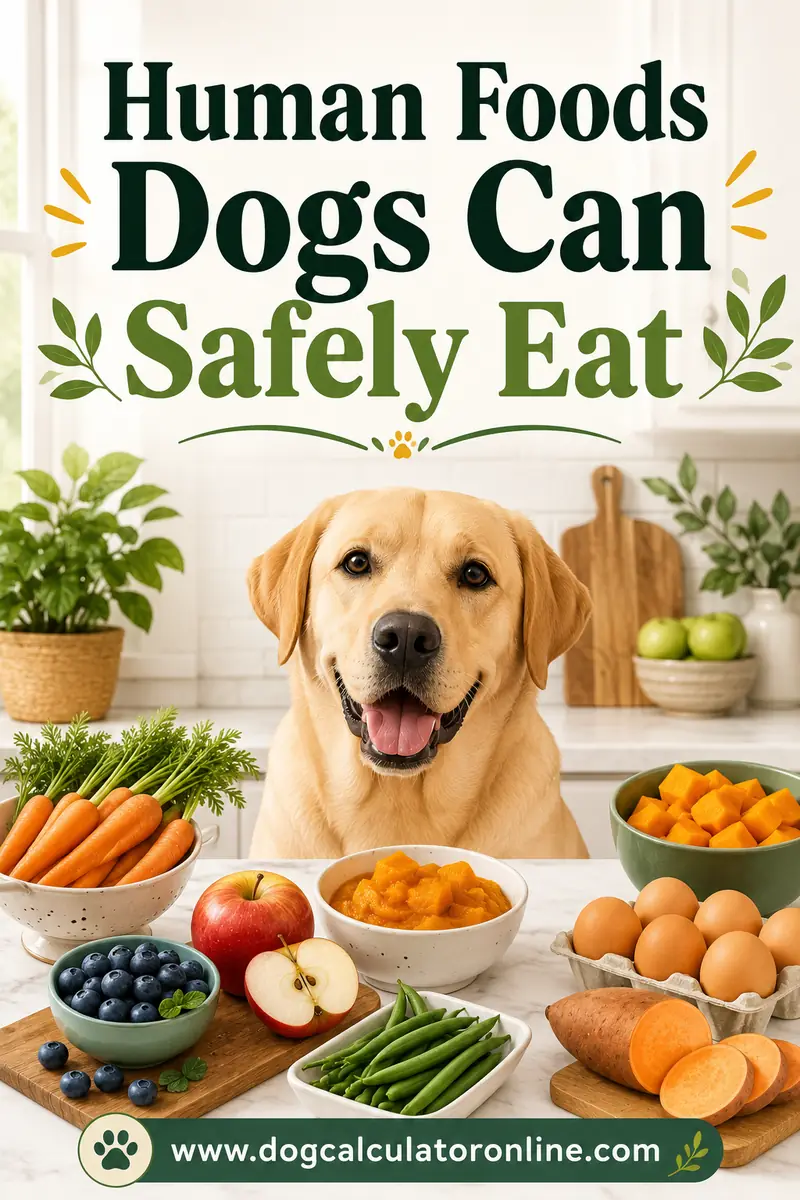
- Table food is the black market. A cube of cheese is 30–70 kcal; a bite of burger, more. "He barely got anything" adds up faster than any biscuit habit. If people food is part of your dog's life, pick the safe, low-calorie options — human foods dogs can safely eat has the vetted list — and count them.
- The multi-human household. Four people each giving "just one or two" is 4–8 treats nobody logged. The jar system above is the cure.
- Peanut butter math. A tablespoon runs ~90–100 kcal. A Kong smeared generously can hold two or three tablespoons. (And check labels: anything sweetened with xylitol is toxic to dogs, full stop.)
- "Low-fat" and "natural" labels. Marketing words, not calorie counts. Read the kcal-per-treat line; it's the only number that matters here.
Healthy Low-Cost Treats (and What to Skip)
Stretching the budget with lighter currency — all per vet-consensus safe lists, in small pieces:
- Vegetables: baby carrots (~4 kcal each), cucumber slices, plain green beans, bell pepper strips. Most dogs happily crunch them; a dieting dog's best friend.
- Fruits in moderation: apple slices (no seeds or core), blueberries (~1 kcal each), banana coins, seedless watermelon chunks. Fruit has sugar — small amounts.
- Plain cooked lean meat: tiny shreds of skinless chicken or turkey as high-value training pay — potent and cheap in calories if the pieces stay small.
- Their own kibble, delivered with enthusiasm. Presentation covers a multitude of budget constraints.
Always skip, regardless of budget: chocolate, grapes and raisins, onions and garlic, macadamia nuts, alcohol, anything xylitol-sweetened, cooked bones, and fatty scraps or trimmings (a pancreatitis risk) — per ASPCA and veterinary consensus. When a new food is in doubt, ask your vet before it becomes a habit.
One more honest note: treats are not love, and dogs don't audit generosity — they audit attention. A dog denied the fourth biscuit but given a walk, a game, or a good scratch comes out ahead on every measure that matters to the dog.
When the Treat Budget Isn't Yours to Set
A few situations take treat math out of general-rule territory and into ask-your-vet territory:
- Prescription and elimination diets. If your dog is on a therapeutic food — for allergies, urinary issues, kidney support, or an elimination trial — off-plan treats can undo the whole point. Many therapeutic lines have matching treats, or your vet can approve specific options; a single "harmless" biscuit genuinely can invalidate weeks of an allergy trial.
- Diabetic dogs. Treat timing and composition interact with insulin schedules. The budget, the type, and the clock all come from your vet.
- Pancreatitis history. Fatty treats are a known trigger; dogs with a history usually need explicitly low-fat rewards, per their vet.
- Puppies of giant breeds. Calcium-heavy extras and supplements on top of a balanced growth diet can harm developing skeletons — keep treats simple and small, and clear anything new with the vet.
- Chronic GI dogs. Sensitive stomachs do best with boring, repeatable treats — often just their own food — rather than a rotating snack menu.
None of this means "no treats." It means the 10% rule is the general case, and a diagnosed condition promotes your vet to budget director. Bring the treat question to the next appointment — it takes two minutes and prevents the most expensive kind of snack.
FAQ
How many treats can I give my dog a day?
Keep treats under 10% of daily calories: roughly 30–35 kcal for a 10-lb dog, 60–70 for a 25-lb dog, 90–115 for a 50-lb dog. The count depends on treat size — tiny training treats let you give many; big biscuits spend the budget in one go.
Do treats really matter if my dog's food is measured?
Yes — an unmeasured 100 kcal of daily treats on top of measured meals is a ~10% surplus, worth roughly a pound of gain every month or two in a mid-sized dog. Count treats inside the daily total, not beside it.
Do dental chews and bully sticks count as treats?
Absolutely — they're often the biggest line item, at 100–300+ kcal each. Check the package calories and subtract from meals, or save them for occasional use.
What are the healthiest treats for dogs?
Small pieces of vegetables (carrots, green beans, cucumber), modest fruit (apple slices without seeds, blueberries), plain cooked lean meat, or the dog's own kibble presented as a reward — all within the 10% budget.
How many treats can a puppy have?
Same 10% rule against a puppy's daily calories, but favor tiny, soft, puppy-appropriate treats — training season means high frequency, so pea-sized pays. Skip hard chews that fight developing teeth, and ask your vet at the next visit if you're unsure.
Can I give treats to an overweight dog?
Yes, inside a smaller budget: 10% of the reduced diet, spent on low-calorie options like green beans and carrot bits. Cutting treats entirely usually fails the humans; shrinking and swapping them succeeds.
The Bottom Line
Treats are a budget, not a mood: 10% of daily calories, counted honestly, subtracted from dinner, and spent in the smallest denominations that make your dog happy — which, for training purposes, is happily also the smallest size. Find your dog's daily total with the free dog food calculator, take a tenth, and let the treat jar enforce what memory won't. Your dog gets just as many wins; the waistline keeps score correctly.