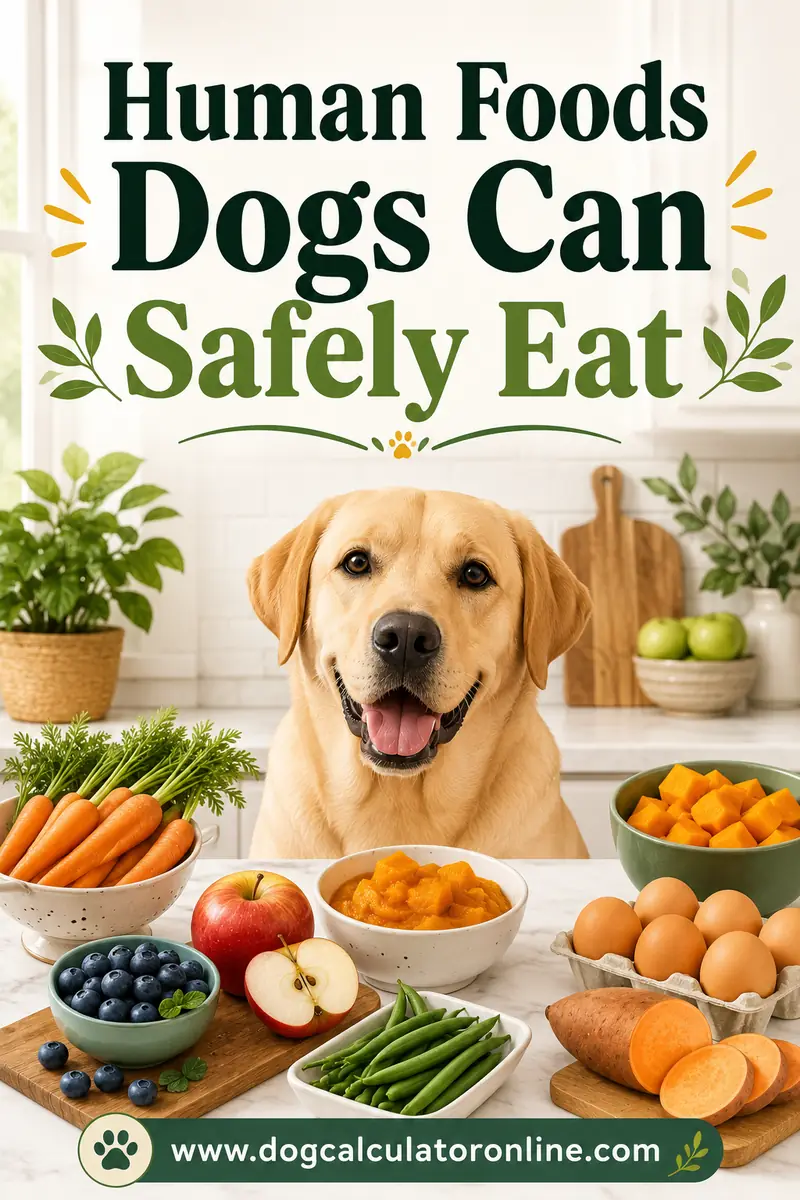
Can Dogs Eat Carrots?
Yes — carrots are safe for dogs raw or cooked, and they're one of the best treat choices going: crunchy, cheap, and only about 4 calories per baby carrot. Most dogs love the snap, and the low calorie count makes carrots one of the few treats that's hard to overdo. The one real risk isn't toxicity — it's choking: whole baby carrots and big chunks are exactly gulp-sized for small dogs and enthusiastic eaters, so cut carrots to match your dog.
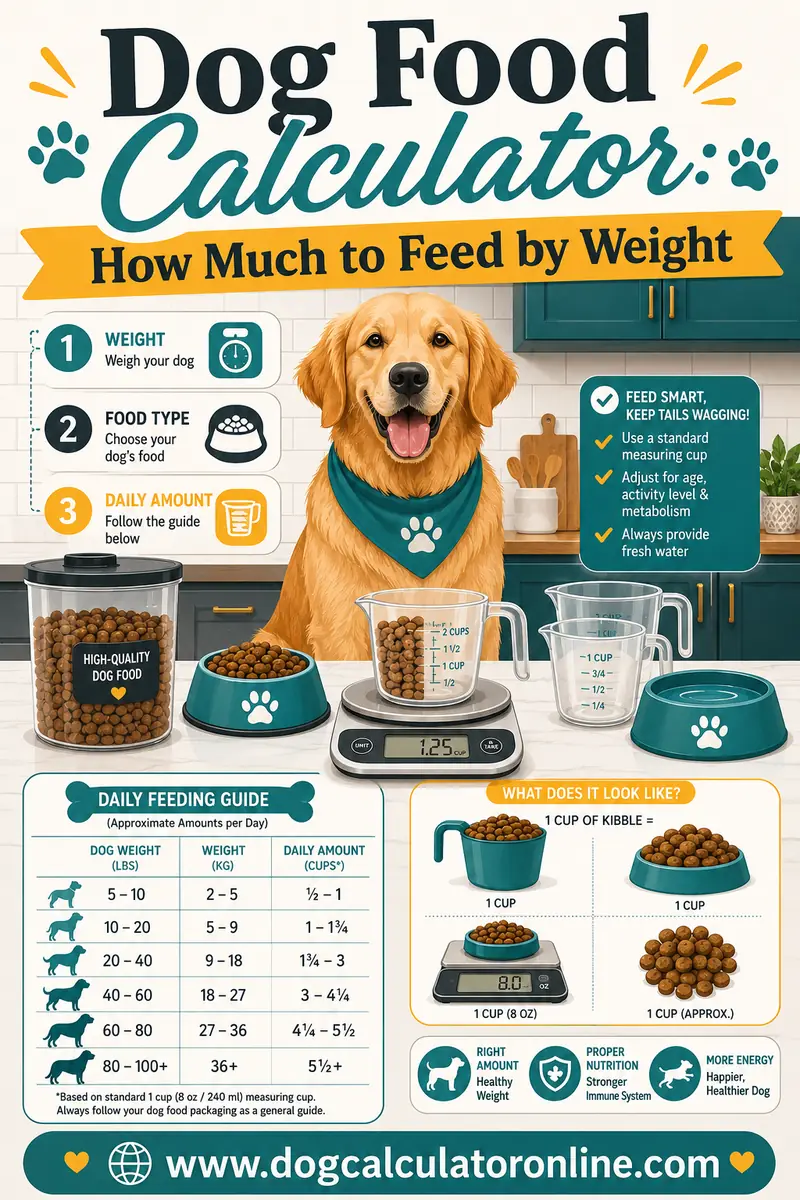
Even a near-free treat still lives inside the daily calorie budget, and knowing that budget makes every treat decision easier. The free dog food calculator works it out from your dog's weight, age, and activity in seconds. Below: raw vs cooked, the frozen-carrot teething trick, safe prep by size, and how carrots compare with other vegetable treats.

🥕 Carrot prep check
Tap a serving style to see the safe way to do it:
Tap a style above. Rule of thumb: plain, and cut to your dog’s size.
Why Vets Like Carrots as a Treat
Carrots hit a rare combination: dogs genuinely want them, and the nutrition column is all upside. They're low-calorie (roughly 25 kcal for a whole medium carrot, ~4 kcal per baby carrot), high in fiber, and rich in beta-carotene, which dogs convert to vitamin A for eye, skin, and immune health. The firm crunch also gives dogs real chewing satisfaction — a big deal for dogs on diets, where most treats have to shrink but the urge to chew doesn't.
That's why carrots are the standard "diet dog" treat swap: when a chunky Labrador's biscuits get cut, carrot coins fill the gap at a tenth of the calories. If your dog's weight is the reason you're reading this, pair the carrot swap with a proper portion check — the dog food calculator tells you what the daily meals should be, and our treat allowance guide covers how much room is left for extras.
One honest note: a lot of carrot passes through visibly. Dogs don't break down raw plant cell walls very efficiently, so orange flecks in the yard are normal and harmless. Lightly cooking or grating improves digestibility if you want more of the nutrition absorbed.
Raw vs Cooked vs Frozen
Raw is the classic serving: maximum crunch, no prep beyond washing and cutting. Peeling is optional — just wash well.
Cooked (steamed or boiled, plain) is softer, slightly easier to digest, and the better pick for senior dogs with dental wear or any dog that inhales food without chewing. No butter, no salt, no glaze — a honey-glazed holiday carrot is a dessert, not a dog treat.
Frozen is the puppy-parent secret weapon: a whole large frozen carrot makes a cold, satisfying chew for a teething puppy, numbing sore gums while occupying a land shark for a good stretch. Two safety rules: pick a carrot large enough that it can't be swallowed whole, and supervise — once it's gnawed down to a gulpable stub, trade it away.
Grated raw carrot sprinkled over meals adds texture and interest for tiny dogs and picky eaters with zero choking risk.
The Choking Point (Read This Bit)
Carrots' only meaningful hazard is mechanical. Baby carrots are almost perfectly windpipe-shaped for a small dog, and food-motivated gulpers of any size will swallow chunks whole. The fixes are simple:
- Small dogs (under ~20 lb): thin coins, half-coins, or grated. No whole baby carrots.
- Medium dogs: coins or short sticks.
- Large dogs: sticks, halves, or a whole carrot to gnaw — supervised if they're gulpers.
- All dogs: supervise chews, and take away stub ends that have shrunk to swallowing size.
If a dog does gag a piece down wrong — retching, pawing at the mouth, distress — that's an emergency-vet situation, same as any choking event.
A related but calmer scenario: a dog that swallows a large chunk successfully will usually digest it or pass it without drama, since carrot softens in the gut far better than bone or plastic. Watch for a day regardless — vomiting, appetite loss, or a painful belly after a big swallowed piece deserves a vet call. Prevention stays cheaper than monitoring: three seconds with a knife removes the whole question.
How Much Carrot Can a Dog Have?
Carrots are forgiving, but fiber in bulk causes gas and loose stool, so "unlimited" is still wrong:
| Dog size | Example weight | Sensible daily max |
|---|---|---|
| Toy / small | 5–15 lb | A few coins (~1/4 carrot) |
| Medium | 16–40 lb | ~1/2 medium carrot |
| Large | 41–75 lb | 1 medium carrot |
| Giant | 76+ lb | 1–2 medium carrots |
These fit easily inside the 10% treat ceiling for nearly every dog — that's the luxury of a 25-kcal vegetable. Compare that with a banana at ~100 kcal (see our can dogs eat bananas guide) and it's clear why carrots are the daily-driver treat and banana is the weekend one.
One flag: carrots do contain natural sugar — it's why dogs like them — so for diabetic dogs, ask your vet whether carrots fit the plan or whether green beans and cucumber are the better default.
Making Carrots Work: Training, Enrichment, and Meal Toppers
Because carrots are so cheap in calories, they open up uses that pricier treats can't sustain.
As training currency. Tiny carrot coins work well for repetition-heavy training — sits, recalls, loose-leash work — where a session can burn through dozens of rewards. Most commercial training treats run 3–10 kcal each; carrot pieces come in under that, so a long session doesn't blow the day's budget. The honest caveat: carrots are medium-value currency. Plenty of dogs will work happily for them at home but hold out for chicken at the park, so keep a higher-value option in the other pocket for hard asks.
As enrichment. Frozen carrots for teething puppies are the headline act, but adult dogs get mileage too: a whole raw carrot is a decent low-stakes chew for gentle chewers, and grated or finely chopped carrot mixes well into stuffed toys and lick mats alongside a smear of xylitol-free peanut butter or plain yogurt. Freezing the whole assembly stretches five minutes of interest into thirty.
As a meal topper. A spoonful of grated or steamed carrot over regular food adds texture and novelty for picky eaters at almost no calorie cost. If toppers become routine, the usual rule applies: extras count toward the daily total, so trim the kibble a touch to compensate — the dog food calculator makes the daily total concrete so the adjustment is math, not vibes.
For dogs on weight-loss plans. This is where carrots genuinely shine. A dieting dog's biggest complaint isn't hunger math — it's the ritual loss of treats and chews. Swapping biscuits for carrot coins keeps the ritual and the crunch while cutting the calories to near zero. Run any weight-loss plan with your vet, but expect carrots to feature in it.
Carrots vs Other Vegetable Treats
| Vegetable | Calories | Crunch factor | Notes |
|---|---|---|---|
| Carrot | Very low | High | The all-rounder; cut to size |
| Green beans | Very low | Medium | Top diet-dog filler, plain only |
| Cucumber | Near zero | Medium | Hydrating, ultra-low-calorie |
| Broccoli | Low | Medium | Small amounts only — gas and irritation in bulk |
| Sweet potato (cooked) | Moderate | Low | Nutritious but calorie-dense — smaller servings |
All of these live on the safe side of the line covered in our full human foods dogs can eat guide — and none of them ever come seasoned.
FAQ
Are raw carrots safe for dogs?
Yes — raw carrots are safe and most dogs love the crunch. The only real risk is choking, so cut them to your dog's size: coins or gratings for small dogs, sticks for larger ones, and supervise gulpers.
Can puppies have carrots?
Yes, once they're on solid food. Small pieces work as training treats, and a large frozen carrot (supervised, too big to swallow) is a classic teething soother. Keep quantities small — puppy food needs to stay the overwhelming majority of a growing dog's diet.
Can dogs eat carrots every day?
Yes — carrots are low-calorie enough that a size-appropriate daily portion fits nearly any treat budget. Overdo the fiber, though, and you'll see gas or loose stool, so stick to roughly a few coins for small dogs up to a carrot or two for giants.
Are cooked carrots better than raw for dogs?
Nutritionally they're close, and light cooking actually makes the beta-carotene a bit more available while softening the crunch. Raw wins for chewing satisfaction and teething; cooked wins for seniors and speed-eaters. Both must be plain — no butter, salt, or glaze.
Do carrots clean dogs' teeth?
Chewing firm raw carrot gives a mild scraping action many owners like, but it's no substitute for actual dental care. Think of it as a bonus, not a toothbrush — real plaque control comes from brushing and vet dental checks.
Can dogs drink carrot juice or eat carrot cake?
Skip both. Juice strips out the fiber and concentrates the sugar, and carrot cake is sugar, fat, and often raisins or nutmeg — two ingredients with genuine toxicity concerns for dogs. The whole vegetable, plain, is the only carrot format worth feeding.
Can carrots upset a dog's stomach?
In large amounts, yes — too much fiber causes gas, loose stool, or constipation in some dogs, and any new food can disagree the first time. Introduce a few pieces, wait a day, and scale up slowly. Seeing orange bits in the stool is normal and harmless.
The Easiest "Yes" in the Produce Drawer
Carrots earn their reputation: safe raw or cooked, nearly free in calories, genuinely enjoyed, and useful for everything from teething puppies to dieting seniors. Cut them to size, keep them plain, and they can be an everyday treat with a clear conscience. To know exactly how much room your dog's day has for treats — carrots and everything else — run their weight, age, and activity through the free dog food calculator and get the real number instead of a guess.