Can Dogs Eat Eggs?
Yes — dogs can eat eggs, as long as they're fully cooked and served plain: hard-boiled or scrambled with no butter, oil, salt, or seasoning. Eggs are a digestible, protein-rich treat most dogs love. The two caveats vets consistently raise are raw eggs (salmonella risk plus a biotin-blocking protein in raw whites) and portion size — at roughly 70 calories per large egg, a whole egg is a substantial treat for anything smaller than a large dog.
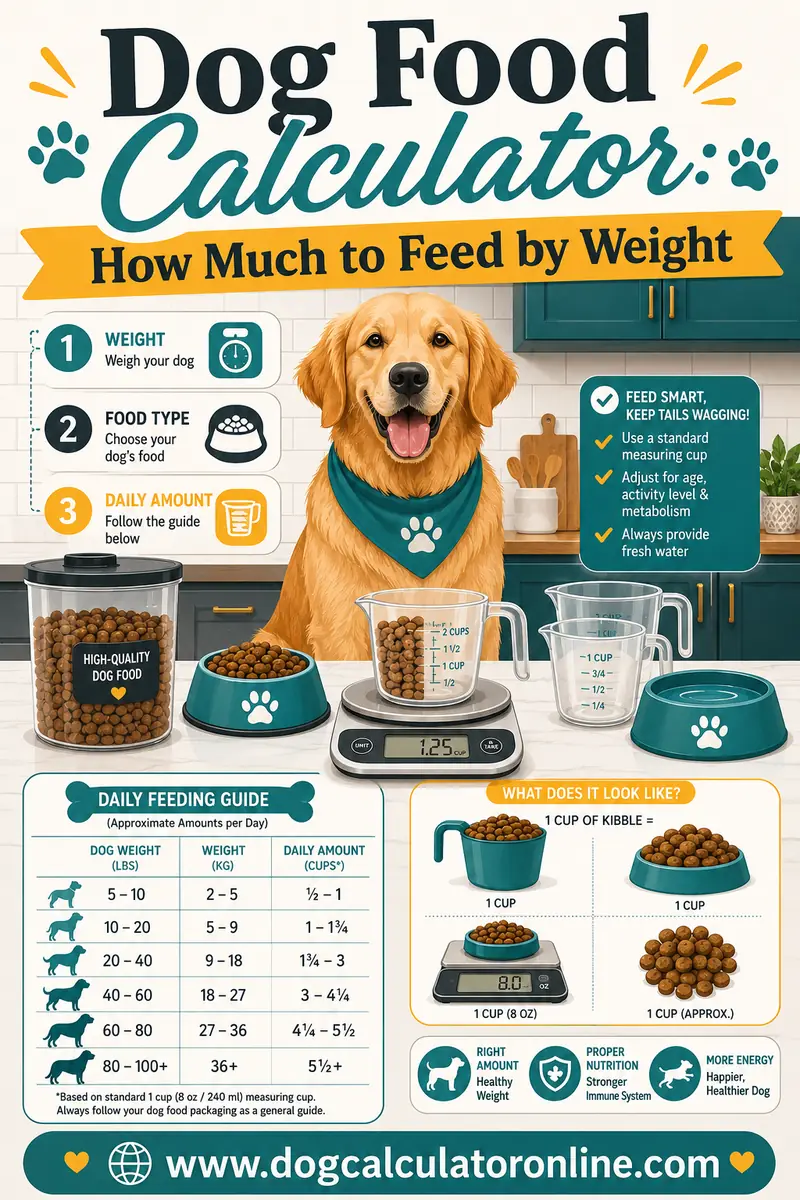
That portion piece is where the free dog food calculator earns its keep: it gives you your dog's daily calorie budget in seconds, and eggs — like all treats — should fit inside about 10% of it. Here's how much egg fits your dog's size, how to prepare them, and the honest answer on raw eggs and shells.

🥚 Egg portion check
Tap your dog’s size for a sensible egg serving:
Tap a size above. All figures are estimates for healthy adults — cooked and plain, always.
Why Eggs Are a Genuinely Good Treat
Eggs are one of the better human foods to share. They deliver complete, highly digestible protein along with useful nutrients — riboflavin, vitamin B12, vitamin A, selenium, and fatty acids among them. That's why plain egg shows up in many vet-recommended bland-diet variations and why commercial dog foods often include egg as an ingredient.
"Good treat" still means treat. A complete-and-balanced dog food should supply the core diet, and everything else — eggs included — belongs inside the standard 10%-of-calories treat ceiling. Our treat allowance guide covers the math in detail; the short version is that a large egg's ~70 kcal is a rounding error for a Great Dane and nearly a whole day's treat budget for a Chihuahua.
How to Serve Eggs to a Dog
- Hard-boiled — the easiest option. Cool it, peel it, chop or slice it. No seasoning.
- Scrambled or fried, dry — cook in a nonstick pan with no butter, oil, milk, cheese, salt, or pepper. The moment it's cooked the way you'd enjoy it, it's probably wrong for the dog.
- Poached — plain, fully cooked through.
- Mixed into meals — chopped egg over kibble is a popular topper for picky eaters. If it becomes a regular addition, trim the kibble slightly so total calories hold steady; the dog food calculator makes the adjustment easy.
Skip anything from the breakfast table as-served: buttered eggs, omelets with onion or chives (both on the never-eat list), salted eggs, or eggs cooked in bacon grease. The add-ons, not the egg, are what cause trouble.
Introducing eggs for the first time follows the same playbook as any new food: a small bite, then a 24–48 hour wait while you watch for vomiting, diarrhea, or itching. Most dogs handle egg without a blink, but the one-at-a-time rule is what tells you which food caused a reaction if one ever shows up.
How Much Egg by Dog Size
Rough, conservative guidance for healthy adult dogs, assuming few other treats that day:
| Dog size | Example weight | Sensible serving | Frequency |
|---|---|---|---|
| Toy / small | 5–15 lb | ~1/4 egg | Occasional |
| Medium | 16–40 lb | ~1/2 egg | A few times a week |
| Large | 41–75 lb | Up to 1 egg | A few times a week |
| Giant | 76+ lb | 1 egg | Up to daily if budget allows |
These are estimates, not prescriptions — the honest anchor is your own dog's calorie budget from the dog food calculator, minus what other treats already claim. And for dogs with pancreatitis history, food allergies, or on a prescription diet, ask your vet before adding eggs at all: egg allergy in dogs is uncommon but real, and yolks are relatively fat-rich.
What's Actually in an Egg (And Why Portion Rules Exist)
A large egg carries roughly 70 kcal, about 6 grams of complete protein, and around 5 grams of fat — nearly all of the fat and most of the calories living in the yolk. That split matters for two practical decisions.
First, the white-vs-yolk question. The white is nearly pure protein; the yolk brings the fat, the cholesterol, and also most of the good stuff — the B vitamins, vitamin A, selenium, and fatty acids. For a healthy dog there's no reason to separate them; feed the whole cooked egg in a size-appropriate portion. For a dog on a fat-restricted plan (pancreatitis history is the classic case), even "just the yolk once in a while" is a vet question first, because the yolk is exactly the fatty part.
Second, why frequency guidance is stricter for small dogs. The egg doesn't shrink to match the dog. Seventy kcal is under 5% of a big dog's daily intake but can be 20% of a Chihuahua's — double the entire treat ceiling in one food item. That's the whole reason the portion table above scales by fractions of an egg rather than by "one egg for everyone."
One more note on quality and handling: eggs for dogs don't need to be fancy — regular supermarket eggs are fine — but they do need the same kitchen hygiene you'd use for your own food. Cook them through, cool them before serving, and refrigerate leftovers. A hard-boiled egg keeps in the fridge for several days, which makes batch-boiling a convenient way to run a week of training treats.
Can Dogs Eat Raw Eggs?
Most vets advise against it, for two reasons:
- Bacterial risk. Raw eggs can carry salmonella, which can sicken dogs and — just as important — can spread to the humans handling the bowl, the floor, and the dog's face. Households with kids, elderly members, or immunocompromised people should be extra cautious.
- Biotin interference. Raw egg whites contain avidin, a protein that binds biotin (a B vitamin). An occasional raw egg won't cause a deficiency, but a raw-egg habit over time can contribute to skin and coat problems. Cooking deactivates avidin entirely.
Raw-feeding advocates argue the risks are overstated, and that's a conversation to have with your own vet if you feed a raw diet. For the average pet owner, though, cooking the egg removes both concerns and costs nothing nutritionally worth arguing about. Easy call.
Can Dogs Eat Eggshells?
Shells are mostly calcium carbonate and aren't toxic, but "not toxic" isn't the same as "good idea." Shell shards can be sharp and irritating, whole shells can carry bacteria from the carton, and — the bigger point — calcium supplementation shouldn't be DIY. Too much calcium causes real problems, especially in large-breed puppies. If you think your dog needs more calcium, that's a question for your vet, not the compost bowl. Balanced commercial dog food already covers calcium needs.
Eggs for Puppies and Senior Dogs
Puppies can have small amounts of plain cooked egg once they're on solid food, but their calorie budgets are smaller and their diets need to stay overwhelmingly puppy food — growth nutrition is precisely balanced, and treats dilute it fast. A few crumbs of scrambled egg as a training reward is the right scale.
Senior dogs often do well with egg as a palatable, digestible protein topper — it's a common trick for aging picky eaters. Seniors are also more likely to have conditions (kidney disease, pancreatitis, prescription diets) where extra protein or fat is the wrong move, so run it past your vet first if your older dog has any diagnosis on file.
FAQ
Can dogs eat scrambled eggs?
Yes, if scrambled plain — no butter, oil, milk, salt, or seasoning. Cook them dry in a nonstick pan and let them cool. Portion by size: a fraction of an egg for small dogs, up to a whole egg for large ones.
Can dogs eat eggs every day?
Large and giant dogs can often fit an egg a day inside a 10% treat budget; for small and medium dogs, daily whole eggs usually crowd out too many calories. Frequency matters less than the budget — count the ~70 kcal per egg against your dog's daily total and let the math decide.
Are raw eggs good for dogs?
Vets generally say no. Raw eggs carry salmonella risk and raw whites contain avidin, which blocks biotin absorption over time. Cooking eliminates both issues while keeping the protein — there's no meaningful nutritional case for serving them raw.
Can dogs eat eggshells for calcium?
Don't. Shells aren't toxic but can be sharp, may carry bacteria, and amount to unsupervised calcium supplementation — which can genuinely harm growing large-breed puppies and isn't needed on a balanced diet. If you're worried about calcium, ask your vet.
Can eggs upset a dog's stomach?
They can, especially the first time or in big portions — any new food can. Introduce a small amount, wait a day or two, and watch for vomiting, diarrhea, or itching. True egg allergy in dogs exists but is uncommon.
Can dogs eat egg every day with kibble?
Large dogs often can within the 10% treat budget; for small and medium dogs, a daily whole egg usually crowds the calorie ceiling. If a daily egg topper becomes routine, reduce the kibble portion slightly so the total holds steady — otherwise the "healthy extra" quietly becomes a weight problem.
Do eggs help a dog's coat?
Eggs contribute protein and fatty acids that support skin and coat, and many owners notice a shinier coat with regular small amounts. They're a nice supplement to good nutrition, not a fix for an underlying skin problem — persistent coat issues are a vet visit.
The Bottom Line on Eggs
Cooked and plain, eggs are one of the easiest "yes" answers in the human-food column — right up there with the rest of our safe foods list. Keep them unseasoned, skip raw, forget the shells, and size the portion to the dog rather than the pan. If you want the portion question settled properly, the free dog food calculator turns your dog's weight, age, and activity into a daily calorie number — and once you know the budget, an egg is just an easy line item inside it.