How Often Should I Feed My Dog?
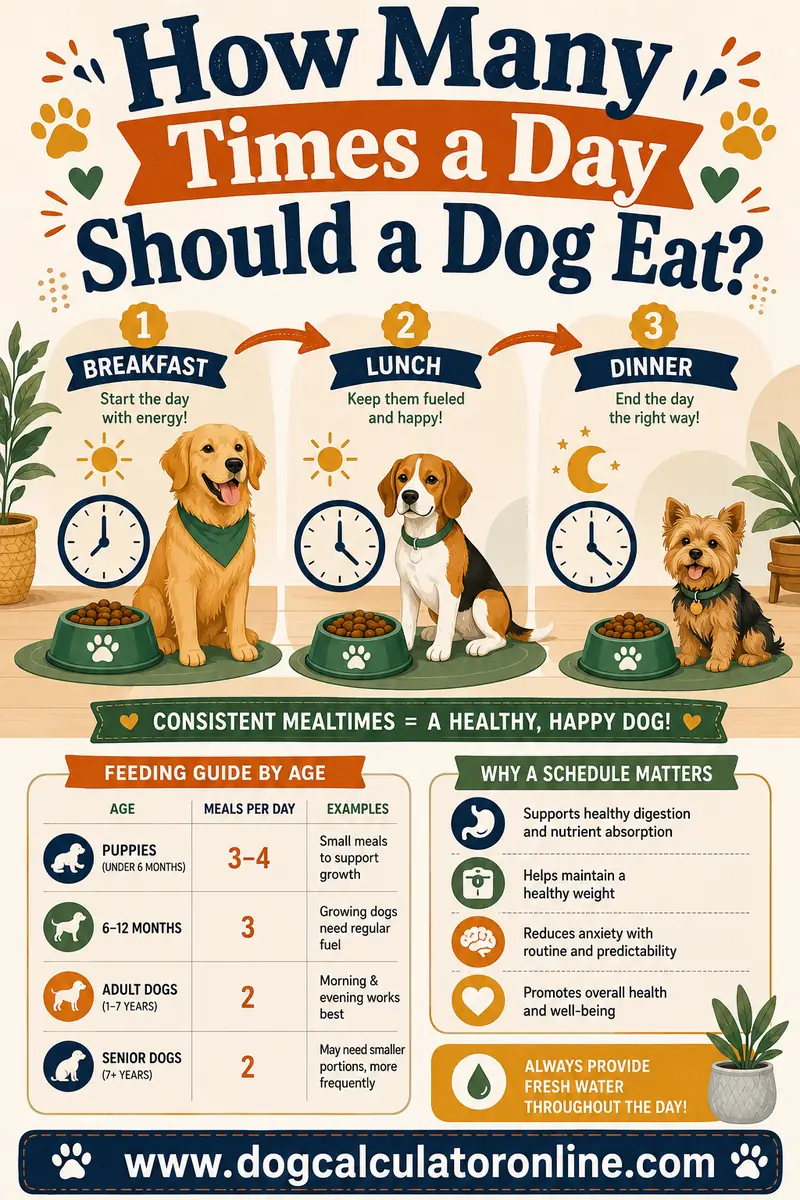
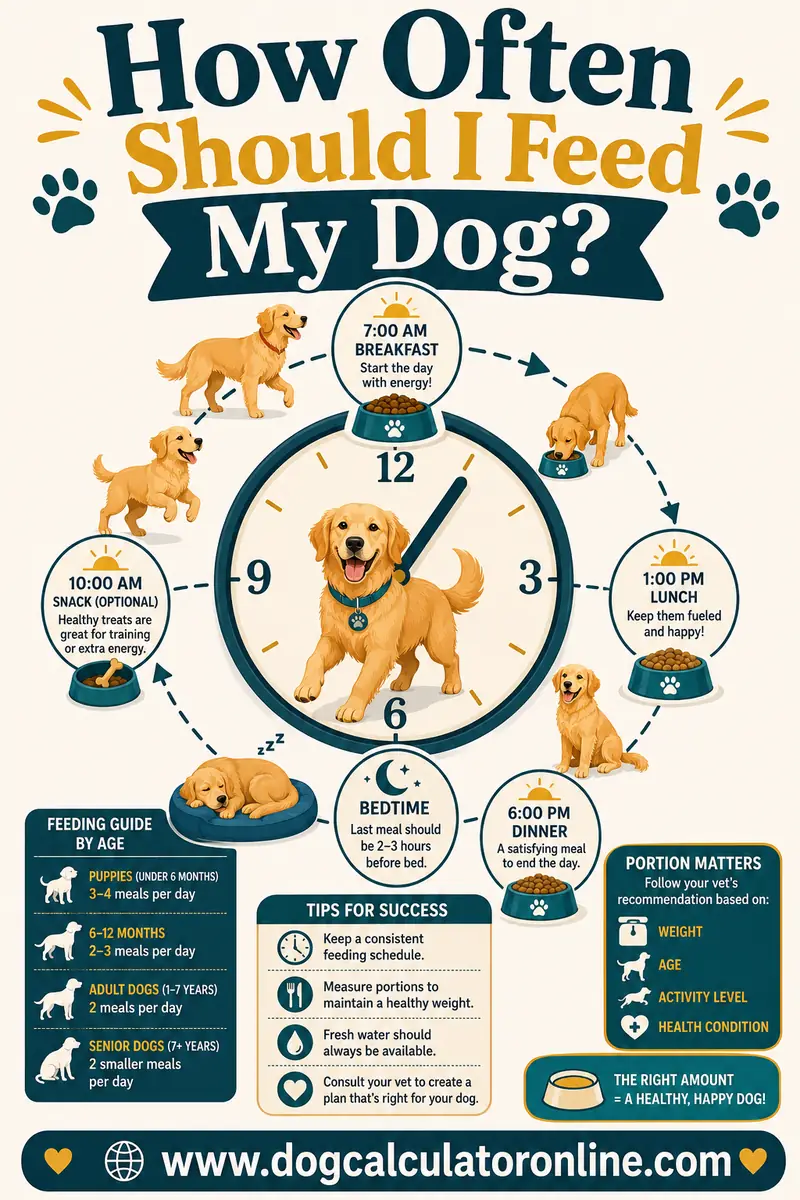
Most adult dogs do best on two meals a day, roughly 8 to 12 hours apart — typically breakfast and dinner. Puppies need more frequent meals (three to four a day depending on age), and some seniors, toy breeds, and dogs with medical conditions do better with smaller, more frequent portions. What matters most is consistency: same times, same total daily amount.
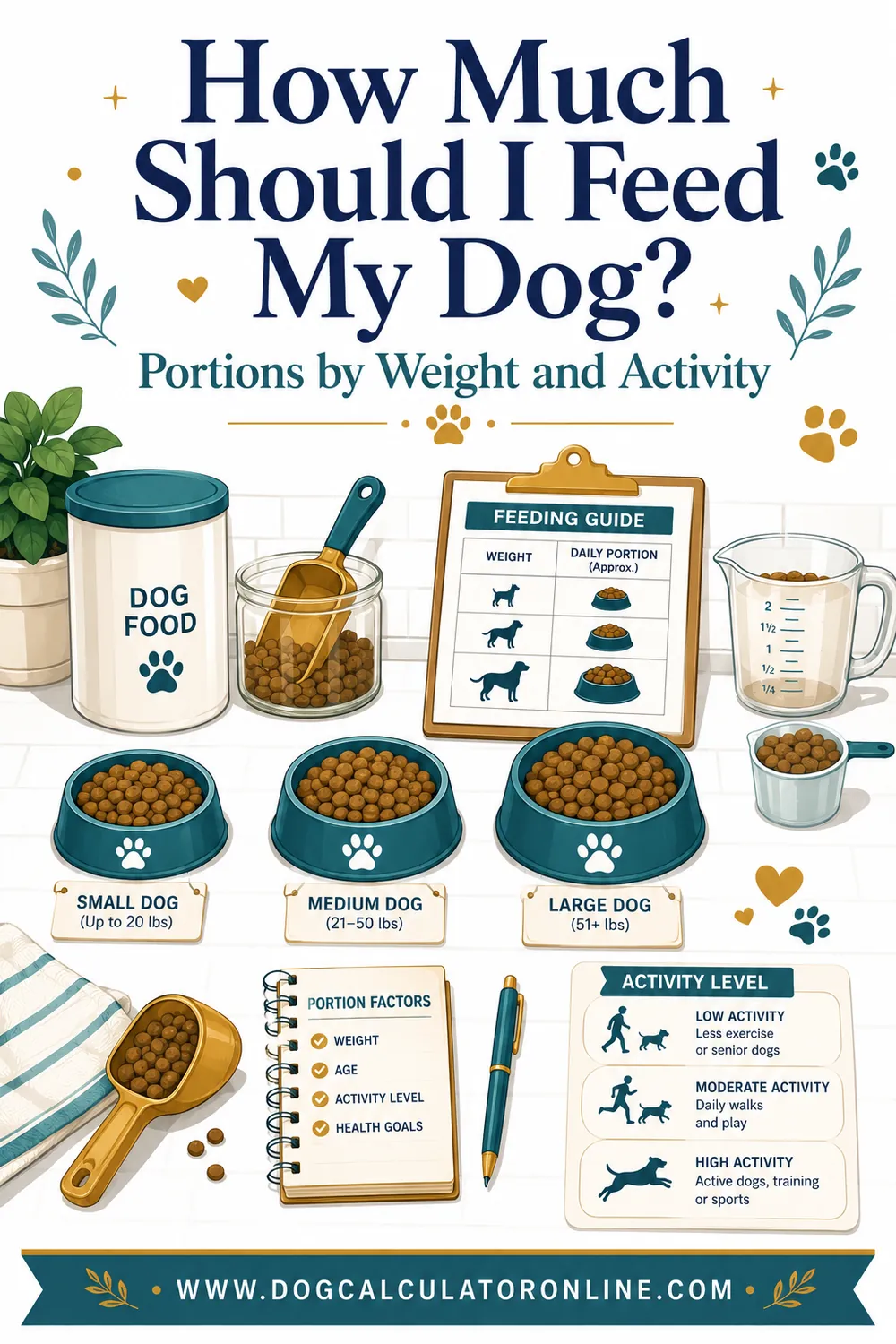
Frequency is only half the equation — the other half is how much goes in the bowl at each meal. The free dog food calculator works out your dog's daily portion so you can split it across whatever schedule you land on. Here's how to pick the right frequency and build a schedule that actually sticks.
⏰ Feeding frequency check
Tap your dog’s life stage to see the typical feeding frequency:
Tap a life stage above to see the typical schedule.
The Standard Answer: Twice a Day for Adults
Two meals a day is the default most vets recommend for healthy adult dogs, and the reasoning is practical:
- Steady energy and digestion. Splitting the daily ration keeps the stomach from going empty for 20+ hours, which in some dogs causes early-morning bile vomiting (that yellow foam on the carpet).
- Easier appetite monitoring. A dog that skips breakfast gets noticed by dinnertime. With one meal a day — or a topped-up free-feed bowl — you can lose a full day or two before realizing something's wrong. Appetite change is one of the earliest illness signals owners can catch.
- Portion control. Two measured meals make overfeeding visible. A bottomless bowl doesn't.
- It fits human life. Before work, after work. Schedules that fight your routine don't survive the first busy week.
The gap between meals matters less than people think, but aim for something in the 8–12 hour range — say 7 am and 6 pm. A 6-hour gap followed by an 18-hour gap defeats the purpose of splitting meals.
Feeding Frequency by Life Stage
| Life stage | Meals per day | Why |
|---|---|---|
| Puppy, 6–12 weeks | 3–4 | Tiny stomachs, huge energy needs, blood-sugar stability |
| Puppy, 3–6 months | 3 | Growth still rapid; stomach capacity improving |
| Puppy, 6–12 months | 2 | Transitioning to adult rhythm |
| Adult, 1–7 years | 2 | The standard; some healthy dogs do fine on 1 |
| Senior, 7+ years | 2 (sometimes 3 smaller) | Easier digestion; ask your vet if appetite or weight changes |
| Pregnant / nursing | 3+ or free-fed | Needs can double to quadruple — vet-guided territory |
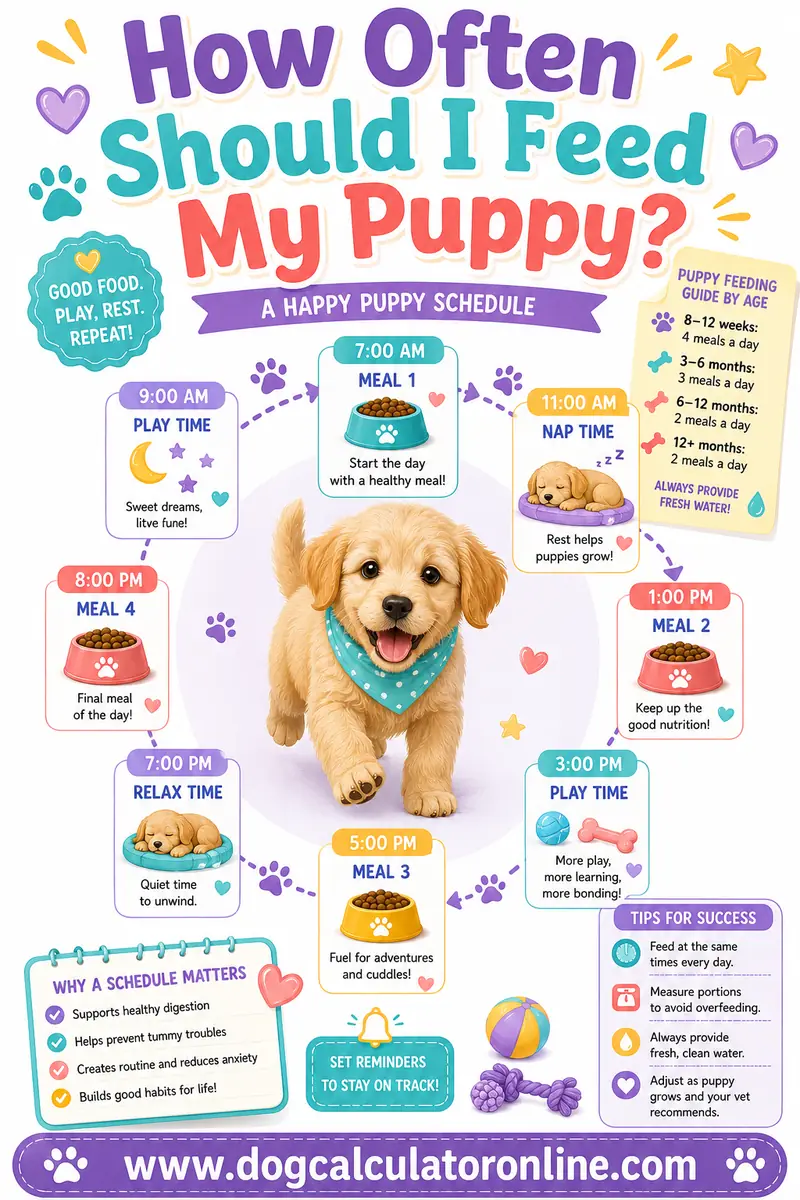
Puppies deserve special mention: toy and small breeds under about 12 weeks are prone to low blood sugar (hypoglycemia) if meals are spaced too far apart, which is why frequent small meals aren't optional for them. Our guide on how often to feed a puppy covers the puppy timeline in detail.
Is Once a Day Ever Okay?
Some healthy adult dogs genuinely do fine on one meal a day, and some owners prefer it. A few honest points on both sides:
Arguments for twice a day: better appetite monitoring, less overnight stomach emptiness, less intense mealtime excitement, and easier medication timing if your dog ever needs pills with food.
Arguments some make for once a day: simplicity, and some research interest in meal-frequency effects on health — though the evidence is observational and far from settled, so it shouldn't drive your decision.
Where once a day is a poor fit: puppies (never), toy breeds, dogs prone to bile vomiting on an empty stomach, diabetic dogs (meal timing ties to insulin — strictly a vet conversation), and very food-motivated dogs who inhale a single large meal.
For deep-chested breeds — Great Danes, German Shepherds, Standard Poodles, Weimaraners and similar — many vets recommend splitting food into two or more smaller meals rather than one large one, as one of several sensible precautions around bloat (GDV). If you have a deep-chested breed, make bloat prevention a specific conversation with your vet.
If you're weighing this decision directly, we compare it head-to-head in should I feed my dog once or twice a day.
What About Free Feeding?
Free feeding — leaving a full bowl out all day — works for a small minority of dogs and quietly sabotages the rest.
It tends to fail because most dogs eat past their needs when food is always available, you can't spot appetite loss early, food sits out getting stale (a real problem with wet food, which shouldn't sit out more than a couple of hours), and multi-dog homes can't track who ate what. It also makes house-training harder for young dogs, since eating times drive potty times.
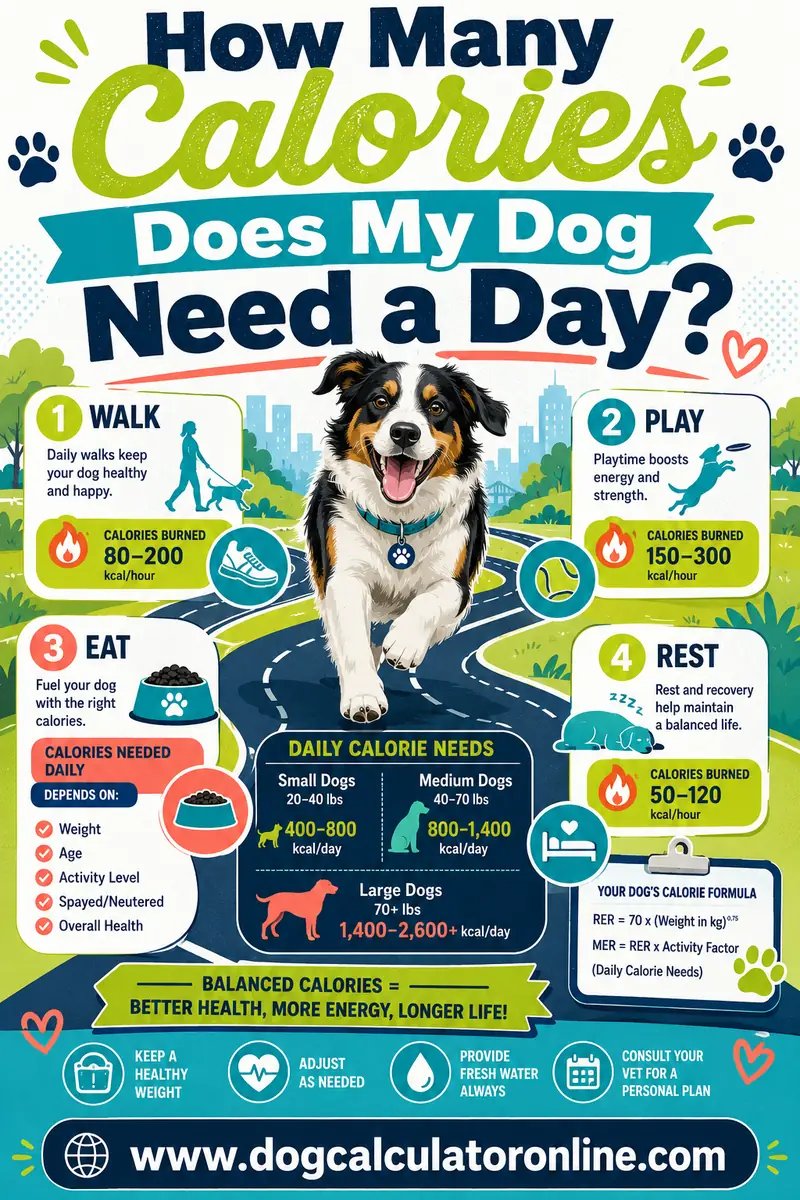
The dogs that do okay with it are typically naturally lean self-regulators in single-dog homes. If that's not your dog — and statistically it probably isn't — scheduled meals are the safer default. The bigger question is always the total: whatever the schedule, the daily amount should come from your dog's actual calorie needs, which the dog food calculator estimates from weight, age, and activity.
Building a Schedule That Sticks
A feeding schedule succeeds or fails on whether it survives your real week. A few field-tested rules:
- Anchor meals to your routine, not the clock. "After my morning coffee" and "when I get home" beat "7:00 sharp" — dogs adapt to rhythm, and rhythms survive weekends.
- Keep the gap sane. Roughly 8–12 hours between the two meals. If your evenings run late, shift breakfast later rather than stretching the overnight fast to 16+ hours.
- Feed after exercise, not right before. Give your dog time to rest after eating before hard play — another common-sense precaution vets mention for bloat-prone breeds.
- Measure once, split evenly. Work out the daily total first, divide by the number of meals. Two meals of "roughly a scoop" is how portions inflate.
- Count treats against the total. Training treats, dental chews, and table tidbits all come out of the same daily calorie budget — the guideline is to keep them under 10% of daily calories.
- Change slowly. Moving from three meals to two, or shifting meal times by hours? Transition over several days. Dogs are creatures of profound routine.
Special Cases Worth a Vet Conversation
Feeding frequency stops being a lifestyle choice and becomes a medical question when any of these apply:
- Diabetes — meals are timed around insulin injections; never improvise here.
- History of bloat, or a first-degree relative with bloat — meal size and frequency are part of the risk conversation.
- Chronic GI issues — some dogs with sensitive stomachs or reflux do better on three or four small meals.
- Recovering from illness or surgery — appetite and portioning often need temporary adjustment.
- Underweight or overweight dogs — frequency can be a useful tool (more small meals for hard keepers; scheduled meals replacing free-feeding for dieters), but the plan should come from your vet.
None of this is medication or treatment advice — it's a flag for which situations deserve professional input rather than a blog answer.
Three Real-World Schedules That Actually Work
The best schedule is the one your household runs on autopilot. Three proven templates:
The 9-to-5 house: Breakfast at 6:45 after the first potty trip, dinner at 6:00 when someone's home from work. Gap: about 11 hours. The evening walk lands an hour after dinner, which keeps the exercise-after-eating buffer automatic. This is the classic for good reason.
The shift-work house: When "morning" moves around, anchor meals to events instead of hours — first meal after the dog's first outing whenever the household wakes, second meal after the day's main walk. Dogs track sequences better than clocks; a consistent order of events reads as consistency to them even when the times drift.
The work-from-home house: The temptation is grazing — a bit at 8, a bit at 11, a top-up at 3. Resist it. Keep two proper meals and route the midday attention into a walk or a stuffed food puzzle drawn from the same daily ration. A dog that eats measured meals but "snacks" all afternoon is a free-fed dog with extra steps.
Whatever template fits, write the actual amounts on the food container. The schedule lives in your head; the portion shouldn't have to.
When Life Wobbles: Late Meals, Missed Meals, and Trips
No schedule survives contact with reality perfectly. The sensible responses:
- Running late by an hour or two? Just feed on arrival. Dogs handle occasional drift fine — it's chronic randomness that causes problems. Skip the guilt and the apology treats.
- Missed a meal entirely? Feed the normal portion at the next meal — don't double up. One skipped meal is a non-event for a healthy adult; a doubled meal can mean stomach upset, and for deep-chested breeds a single oversized meal is exactly what you're trying to avoid.
- Your dog skipped the meal? One ignored breakfast from an otherwise normal dog can be shrugged off. Two consecutive refusals, or a skipped meal plus lethargy or vomiting, is a call-the-vet situation — appetite is your early-warning system, so treat its signals as data.
- Traveling across time zones? Shift meals gradually toward the new schedule over a couple of days rather than jumping — the digestive system appreciates the ramp.
- Someone else is feeding? Pre-portion each meal into labeled bags or containers. "One scoop" means something different to every house-sitter who has ever loved a begging dog.
FAQ
How often should I feed my adult dog?
Twice a day, roughly 8–12 hours apart, is the standard recommendation for healthy adults. Split the daily portion evenly between the two meals.
Is it okay to feed a dog once a day?
Some healthy adults do fine on one meal daily, but twice is the safer default — better for appetite monitoring and for dogs prone to empty-stomach nausea. Puppies, toy breeds, and diabetic dogs should never be on once-a-day feeding.
What times should I feed my dog?
Any consistent times that fit your routine and keep meals roughly 8–12 hours apart — 7 am and 6 pm is a common pattern. Consistency matters more than the specific hour.
How often should puppies eat?
Roughly four meals a day at 6–12 weeks, three meals from 3–6 months, then two meals from around 6 months onward. See our puppy feeding frequency guide for the full timeline.
Should I leave food out all day for my dog?
For most dogs, no. Free feeding makes overeating easy and hides early appetite loss, one of the most useful illness signals you have. Scheduled, measured meals are the better default.
How long after eating should a dog wait to exercise?
A common rule of thumb is to avoid vigorous exercise for about an hour after a meal, especially for large, deep-chested breeds. Gentle sniffy walks are fine.
The Bottom Line
Feed adult dogs twice a day at consistent times, feed puppies three to four times depending on age, and treat once-a-day or free feeding as exceptions that need a good reason. Then make sure the total is right — frequency spreads the food out, but the daily amount is what determines your dog's weight.
Get that total in seconds with the free dog food calculator, and if you're setting portions by weight, the companion guide on how much to feed your dog has the full charts.