How Many Times a Day Should a Dog Eat?
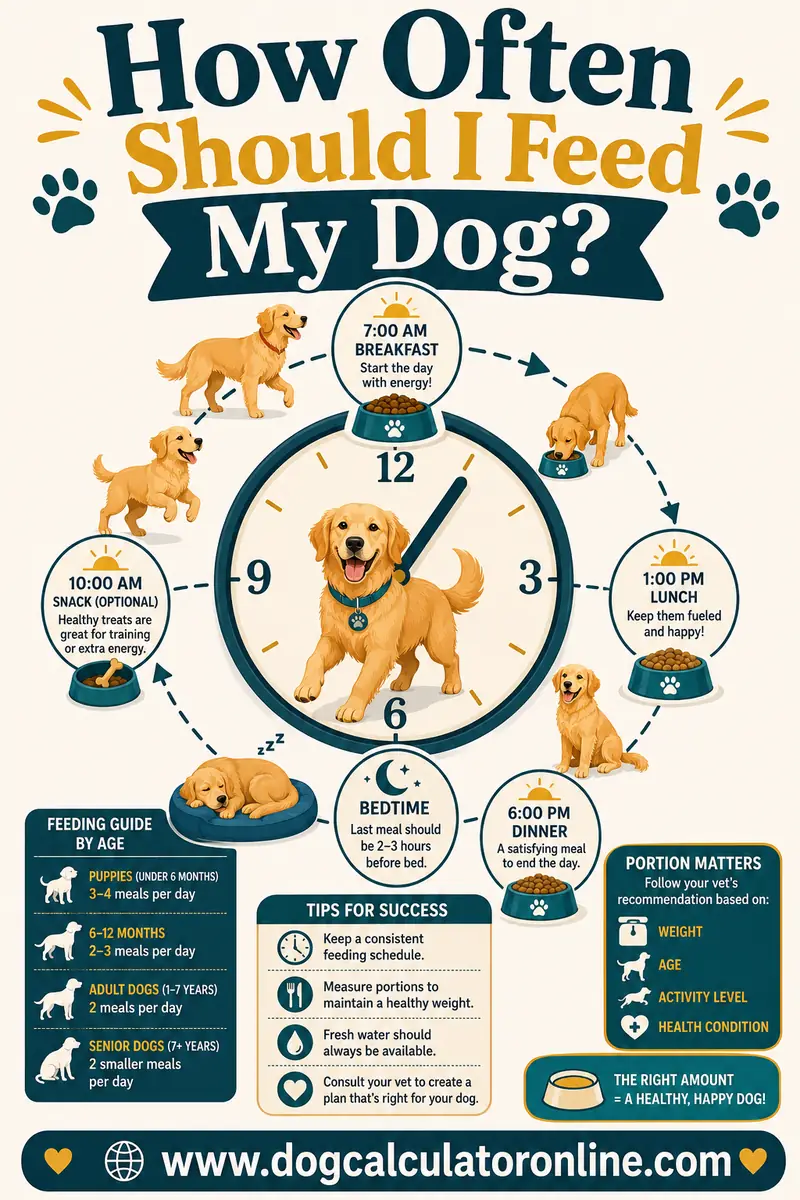
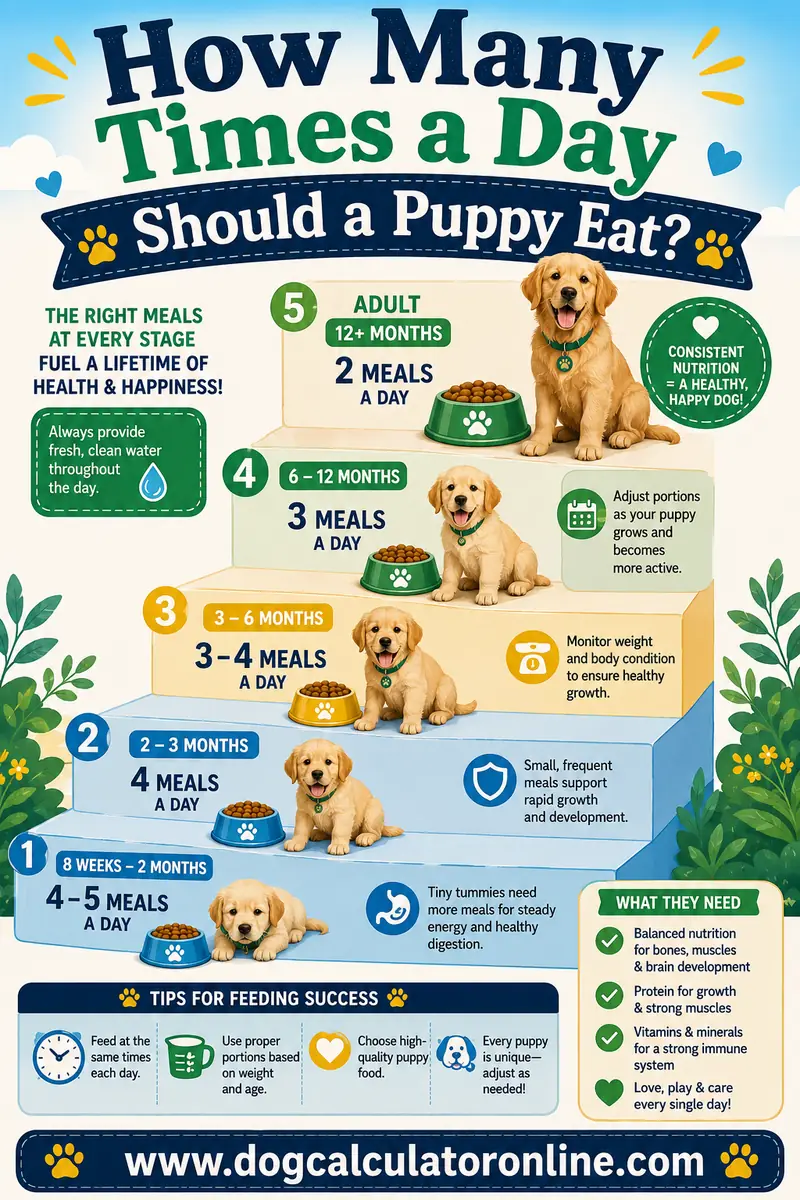
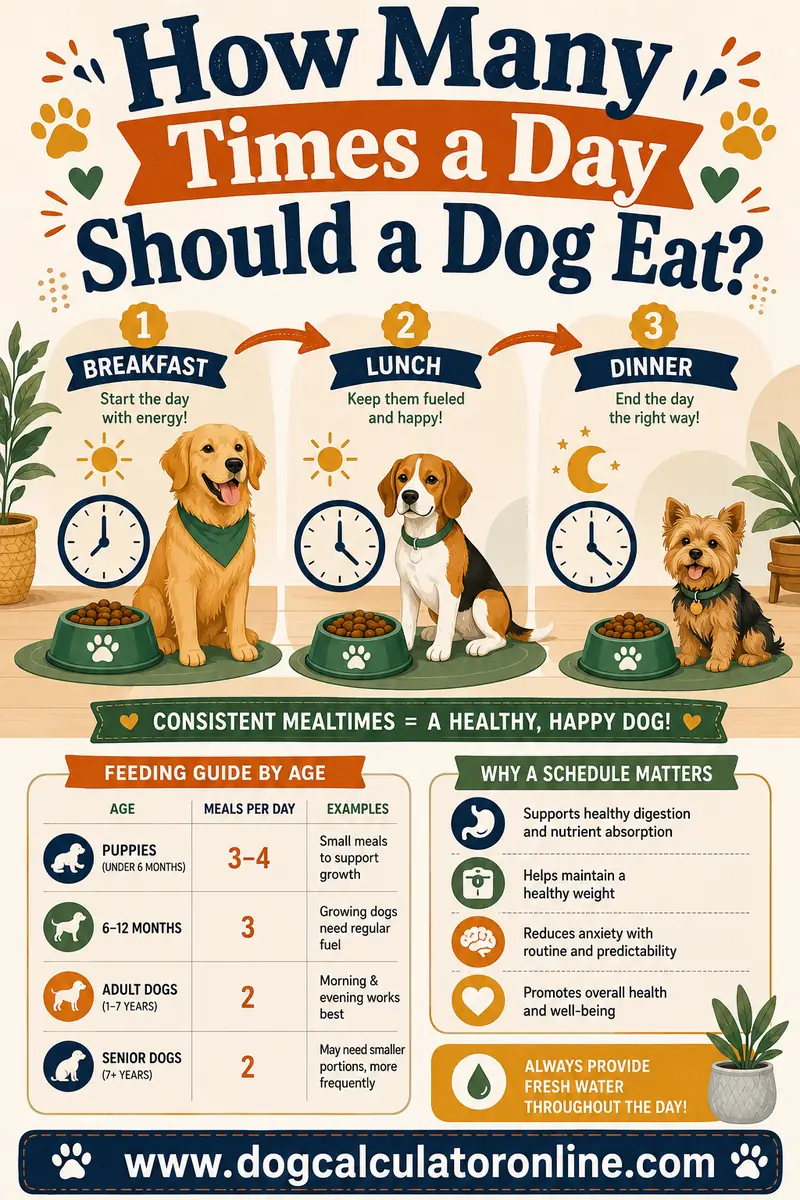
An adult dog should eat twice a day — that's the standard veterinary recommendation for healthy dogs over 12 months old. Puppies need more: four meals a day at 6–12 weeks, three from 3–6 months, then two from about 6 months on. A handful of exceptions (toy breeds, diabetic dogs, dogs prone to stomach upset) do better on three or more smaller meals.
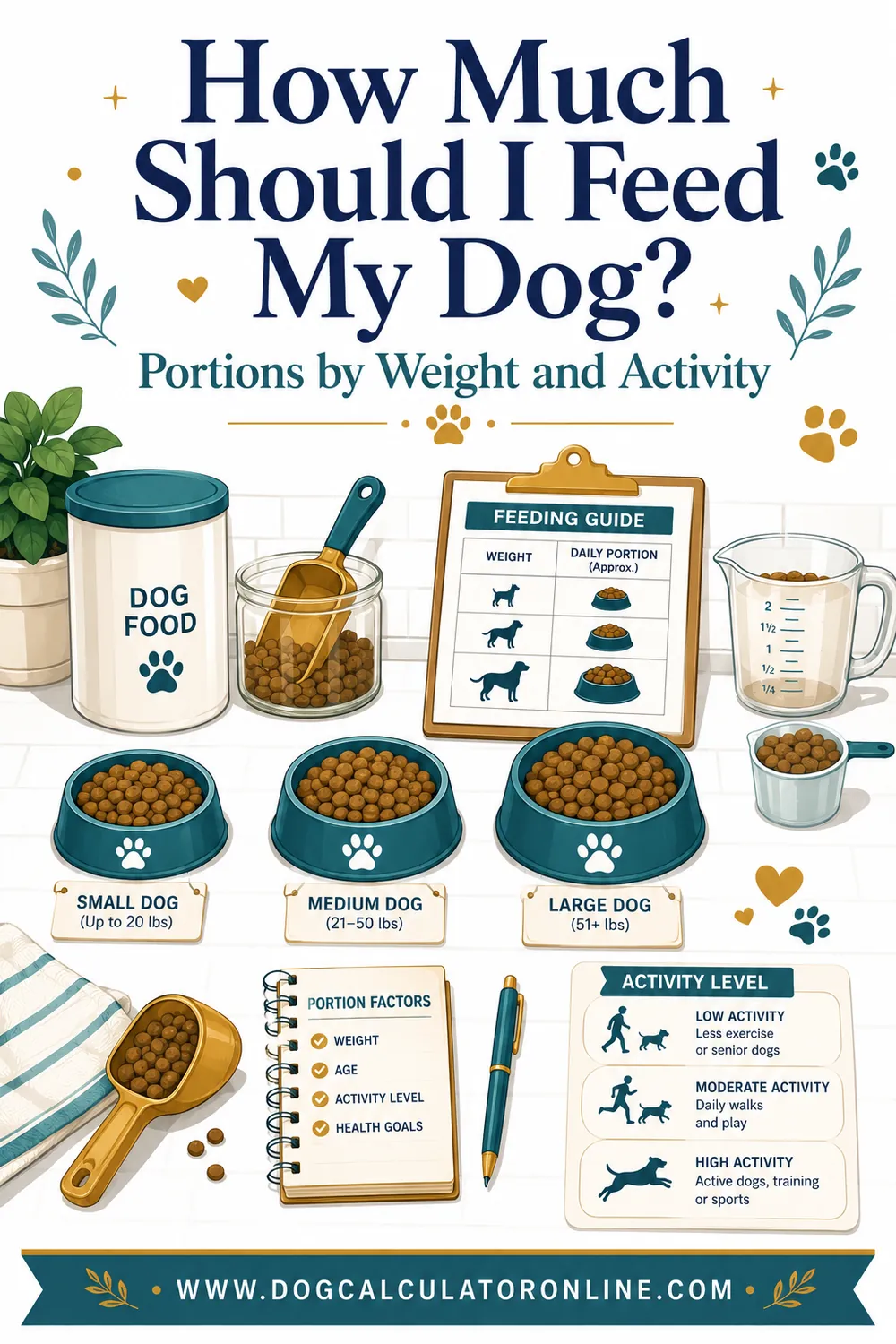
The number of meals is the easy part — the harder question is how much food those meals should add up to. The free dog food calculator gives you the daily total for your dog's weight and age, ready to split across meals. Below: the full breakdown by age and size, plus every meaningful exception.
🍽️ Meals-per-day lookup
Tap the option that matches your dog:
Tap an option above for the answer.
The Quick-Reference Table
| Dog | Meals per day | Typical spacing |
|---|---|---|
| Puppy, 6–12 weeks | 4 (3 for large breeds) | Every 3–4 waking hours |
| Puppy, 3–6 months | 3 | Morning, midday, early evening |
| Puppy, 6–12 months | 2 | Morning and evening |
| Adult (1–7 years) | 2 | 8–12 hours apart |
| Toy breed adult | 2–3 | Evenly spaced |
| Senior (7+ years) | 2, sometimes 3 smaller | 8–12 hours apart |
| Pregnant (late) / nursing | 3+ or free access | Vet-guided |
If you remember one thing: two meals for adults, more for puppies, and the daily total matters more than the count. Four small meals of the right total keep a dog just as lean as two meals of the same total — but two meals of an unmeasured total will out-eat any schedule.
Why Two Meals Beats One for Most Adults
One big daily meal technically delivers the same calories, so why do vets keep recommending two? Four concrete reasons:
- Empty-stomach nausea is real. Dogs that go 20+ hours between meals sometimes vomit yellow bile foam, usually in the early morning. Splitting meals is the standard first fix.
- You catch illness sooner. Appetite is a leading indicator. A dog that turns down breakfast gives you a 12-hour head start over a dog you only feed at dinner.
- Mealtime intensity drops. A dog fed once a day tends to be frantic about food. Two meals take the edge off gulping, resource guarding around the bowl, and counter-surfing desperation.
- Medication compatibility. Plenty of common medications are given "with food, twice daily." A twice-a-day feeder never has to restructure their dog's routine around a prescription.
There's also the bloat consideration for large, deep-chested breeds — Great Danes, Weimaraners, Standard Poodles, German Shepherds, and similar. Gastric dilatation-volvulus (GDV) is a life-threatening emergency, and while its causes aren't fully understood, many vets recommend several smaller meals rather than one large one as a sensible precaution in at-risk breeds. If that's your dog, have the bloat conversation with your vet directly.
Why Puppies Need More Meals
Puppies aren't small adults — they're growth machines with tiny fuel tanks.
- Per pound, a young puppy needs roughly twice an adult's calories, but its stomach is proportionally small. Physically fitting the day's food requires more sittings.
- Blood sugar stability. Toy and small-breed puppies under about 12 weeks can develop hypoglycemia (low blood sugar) if they go too long without eating — weakness, wobbliness, and in serious cases collapse. Frequent meals are the prevention. If you ever see these signs, that's an immediate vet call.
- Digestion. Small frequent meals are simply easier on an immature GI tract, which means firmer stools and easier house-training.
The step-down usually runs: four meals until about 12 weeks, three until about 6 months, then two. Full details and clock-time examples are in how many times a day a puppy should eat.
The Exceptions: Dogs That Need Three or More Meals
A twice-a-day default covers most dogs, but these cases commonly do better on three or more smaller meals:
- Toy breeds (Chihuahuas, Yorkies, toy Poodles) — small bodies burn through fuel quickly, and some stay prone to blood-sugar dips even as adults.
- Dogs with sensitive stomachs or reflux — smaller volumes per sitting can mean less regurgitation and bile vomiting.
- Seniors with shrinking appetites — three small meals can get more total food into an older dog who fills up fast. Appetite loss in a senior always deserves a vet check first, though.
- Very active or working dogs — a dog burning several thousand calories may not comfortably eat it all in two sittings.
- Diabetic dogs — meal count and timing are set by the vet around insulin. This one is never a DIY decision.
Notice what's not on the list: ordinary healthy adults. Adding meals doesn't add health benefits for a typical dog — it just adds opportunities to overfeed if you're not measuring.
The Math: Same Total, Different Splits
Whatever the count, the daily amount comes first. Say the dog food calculator puts your 50-lb adult at about 750 kcal a day, and your kibble runs 375 kcal per cup — that's 2 cups a day. Here's how the splits look:
| Schedule | Per meal |
|---|---|
| 1 meal a day | 2 cups |
| 2 meals a day | 1 cup each |
| 3 meals a day | ⅔ cup each |
The dog gets identical nutrition in all three rows. What changes is digestion comfort, appetite monitoring, and how frantic dinnertime feels. This is also why "how many times" and "how much" are separate questions — a dog fed four generous scoops a day is getting overfed four times, not fed well.
One practical warning: when people add a meal, they tend to add food. Lunch sneaks in as a bonus rather than a subdivision. If you move from two meals to three, re-divide the same total — don't stack a third portion on top.
Timing Tips That Make Any Count Work
- Space meals sensibly. Two meals: 8–12 hours apart. Three meals: roughly every 5–6 waking hours. Avoid one giant overnight gap plus two crammed-together meals.
- Keep times consistent. Dogs run on internal clocks. Consistent meals mean predictable potty times, calmer behavior, and instant visibility when appetite changes.
- Don't feed right before hard exercise. Give a rest window after meals — particularly for large and deep-chested breeds.
- Pick up uneaten food after 15–20 minutes. This keeps scheduled feeding meaningful and appetite signals readable. (Grazing all day is free feeding with extra steps.)
- Count everything. Treats and chews come out of the daily calorie budget — keep them under about 10% of the total.
What Each Meal Count Looks Like on the Clock
Abstract advice like "evenly spaced" gets easier when you see it laid out. Sample clock layouts for each common count:
Two meals (standard adult):
- 7:00 am — breakfast
- 6:00 pm — dinner
- Overnight gap: 13 hours, daytime gap: 11. Comfortable for most adults. If your dog produces morning bile vomit on this layout, shifting dinner to 8:00 pm (or adding a small bedtime portion carved out of dinner) usually solves it — worth confirming with your vet if it persists.
Three meals (toy breeds, sensitive stomachs, big eaters):
- 7:00 am — breakfast
- 1:00 pm — lunch
- 7:00 pm — dinner
- No gap longer than the overnight 12 hours. The midday meal is the one working households struggle with; an automatic feeder or a lunch-break neighbor solves it, and for some dogs a food-dispensing puzzle toy loaded at breakfast covers the slot honestly.
Four meals (young puppies):
- 7:00 am, 11:00 am, 3:00 pm, 7:00 pm
- Note the last meal isn't at bedtime — a 7:00 pm final meal gives a puppy time for the after-dinner potty trip before lights out, which saves everyone's 2:00 am.
None of these times are magic; the structure is the point. Shift everything two hours later and the schedules work identically — what matters is that the gaps stay roughly even and the sequence stays the same from day to day.
Changing Your Dog's Meal Count Without Drama
Whether you're stepping a puppy down from three meals to two or adding a third meal for a senior, abrupt changes invite stomach upset and theatrical protest. The gentle way:
- Keep the daily total fixed. Write it down before you start. The transition only changes the how-many, never the how-much.
- Shrink before you remove. Dropping the midday meal? Reduce it by a quarter every few days, moving those calories into breakfast and dinner, until lunch is a token — then drop it. Most dogs never notice the final step.
- Grow before you rely. Adding a meal works the same in reverse: start with a token third meal carved from the other two and build it up over a week.
- Expect the ghost of meals past. For a week or so, your dog will report to the old feeding spot at the old time with great conviction. A sip of water, a quick sit for a single low-calorie treat, or simply ignoring the performance all work. Consistency wins in under two weeks.
- Watch the output. Loose stools during a transition mean you're moving too fast — hold at the current split for a few extra days.
The one transition that shouldn't be DIY: any change for a diabetic dog, a dog on timed medication, or a dog whose appetite recently changed on its own. Those get a vet's sign-off first.
Matching Meal Count to Your Dog's Eating Style
Dogs bring personalities to the bowl, and meal count is one of the tools for managing them:
- The vacuum. Inhales any portion in seconds, then looks betrayed. Gulping is more than comedy — it means swallowed air and, in deep-chested breeds, a behavior most vets advise slowing down. Splitting the same total across three meals shrinks each gulp-able portion, and a slow-feeder bowl or scatter feeding stretches each sitting from seconds to minutes.
- The grazer. Takes three kibbles, wanders off, returns at 4:00 pm. Grazers tempt owners into free feeding, but the better move is the 15–20 minute pickup rule with two scheduled meals: most grazers become efficient eaters within a week once the bowl stops being an all-day buffet. If a true grazer holds out and loses weight, that's a vet conversation.
- The negotiator. Eats reliably only when toppers appear. Meal count won't fix this — consistency will. Same food, same times, bowl up after 20 minutes. Healthy dogs don't starve themselves beside a full bowl; a dog who genuinely won't eat plain food for more than a day needs a health check before a topper strategy.
- The situational eater. Fine on weekdays, won't touch breakfast when the house is chaotic. These dogs benefit from a consistent quiet feeding spot more than from any particular count — feed away from foot traffic, other pets, and noise.
The meal count is a framework; the eating style tells you how to furnish it.
Does Meal Timing Affect Behavior and Sleep?
More than most people expect. Meals are the loudest event in a dog's day, and their placement echoes through everything else:
- Potty predictability. Most dogs need to go within roughly 15–30 minutes of eating, especially young ones. Consistent meals produce consistent output times — the entire secret of house-training schedules, and still useful for adult dogs in apartments.
- Evening meals and overnight comfort. A dinner too early can mean a 4:00 am empty-stomach wake-up in sensitive dogs; a dinner too late can mean a midnight potty request. Most households land well with dinner 3–5 hours before bedtime.
- Training leverage. A dog trained before a meal works noticeably harder for food rewards. Scheduling a five-minute training session right before breakfast is a free motivation upgrade.
- The witching-hour connection. Some evening zoomies and restlessness are genuinely hunger-adjacent, particularly on once-a-day schedules. Owners who switch to two meals often report calmer evenings — anecdotal, but so consistently reported that it's worth a two-week experiment.
- Predictability itself is calming. Dogs with reliable meal schedules show less food anxiety, less scavenging, and less begging — the food question is settled, so it stops occupying the dog's mind.
None of this changes the headline answer of two meals for adults. It just means which two hours you pick is worth a little thought.
FAQ
How many times a day should an adult dog eat?
Twice a day, roughly 8–12 hours apart, is the standard recommendation for healthy adult dogs. Split their daily portion evenly between the two meals.
How many times a day should a puppy eat?
Four meals a day from 6–12 weeks, three meals from 3–6 months, and two meals from about 6 months onward. Toy-breed puppies often stay on more frequent meals longer.
Is it cruel to feed a dog once a day?
No — some healthy adults do fine on it. But twice daily is the better default for appetite monitoring and stomach comfort, and once-a-day is wrong for puppies, toy breeds, and diabetic dogs. We weigh it fully in once vs twice a day.
Should big dogs eat more often than small dogs?
They eat more food, not necessarily more often — two meals suits most large adults. The nuance: deep-chested large breeds may benefit from smaller, more frequent meals as a bloat precaution, while toy breeds sometimes need a third meal for blood-sugar stability.
Do more frequent meals help a dog lose weight?
Not by themselves — total daily calories drive weight. Some dieting dogs feel more satisfied with the same total split into three meals, which can reduce begging, but the total is what does the work.
What if my dog only eats once a day by choice?
Some dogs self-ration and simply prefer one sitting; if weight, energy, and stools are normal, it's usually fine. Mention it at your next vet visit, and recheck promptly if a twice-a-day eater becomes a once-a-day eater — appetite change is worth taking seriously.
Is it bad to feed a dog late at night?
Not inherently — dogs adapt to whatever consistent schedule you set. The practical issues are logistical: a late dinner means a late final potty trip, and very late meals right before sleep can sit uncomfortably in some dogs. If your evenings run late, keep dinner at least a couple of hours before bed and keep it consistent; the clock time itself matters far less than the routine.
The Bottom Line
Two meals a day for adult dogs, three to four for puppies by age, and three or more smaller meals for the special cases — toy breeds, sensitive stomachs, seniors who fill up fast, and any dog whose vet says so. Then nail the part that actually controls your dog's weight: the daily total.
Get that number in seconds with the free dog food calculator, and use the how much to feed guide to turn it into cups per meal.