How Much Does It Cost to Feed a Dog?
As a rough guide, feeding a dog typically runs somewhere between about $20 and $75 a month on standard dry food — roughly $250 to $900 a year — with small dogs at the low end and large dogs at the high end. Premium kibble can push a big dog past $100 a month, and fresh-food subscription plans routinely cost several times what kibble does. Prices vary a lot by region, brand, and where you shop, so treat every figure here as an estimate for planning, not a quote.
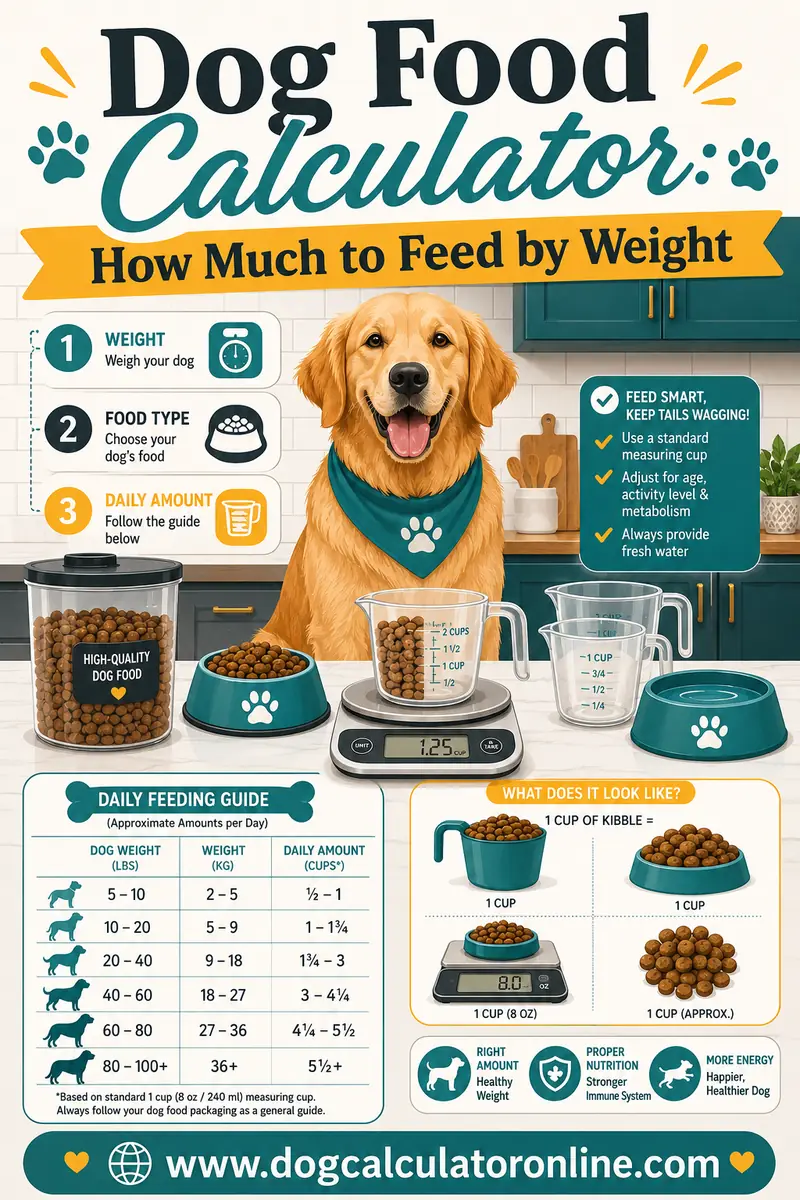
The math underneath is simple: cost = your dog's daily portion × price per unit of food. That first variable is exactly what the free dog food calculator pins down from weight, age, and activity — and the dog cost calculator rolls food into the full picture of what a dog costs per year. Below: monthly ranges by size and food type, what actually drives the bill, and the trims that save real money without shortchanging the bowl.

💰 Monthly food-bill check
Tap your dog’s size for a rough monthly kibble estimate:
Tap a size above. Rough estimates — brand, region, and food type swing these widely.
Monthly Cost by Dog Size and Food Type
Estimated monthly ranges, assuming typical portions for a neutered adult at normal activity. Your dog's actual portion — and therefore cost — depends on their calorie needs, which is why two 50 lb dogs can have different food bills.
| Dog size | Budget kibble | Mid-range kibble | Premium kibble | Fresh/subscription |
|---|---|---|---|---|
| Small (~10 lb) | ~$10–15 | ~$15–30 | ~$30–45 | ~$50–100 |
| Medium (~25 lb) | ~$15–25 | ~$20–40 | ~$40–60 | ~$75–150 |
| Large (~50 lb) | ~$20–35 | ~$30–60 | ~$60–90 | ~$125–250 |
| Giant (~90 lb) | ~$30–50 | ~$45–75 | ~$85–130 | ~$200–400 |
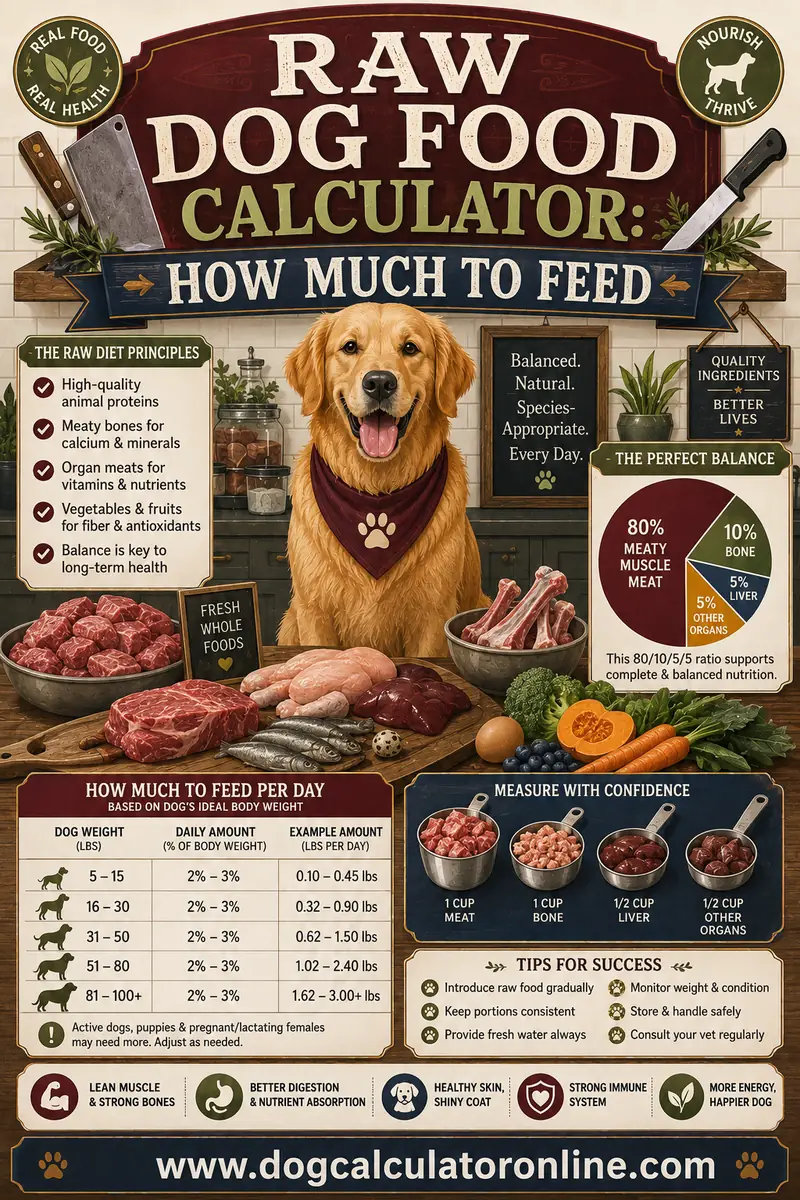
A few honest notes on the table. Wet-food-only feeding usually costs more than kibble for the same calories — cans are mostly water — which is why it's more common as a topper than a full diet for bigger dogs. Raw and home-prepared diets range enormously depending on sourcing, and they carry planning requirements beyond budget (balance matters; loop in your vet). And treats, chews, and dental sticks commonly add another $5–20 a month that rarely makes it into anyone's mental food budget.
What Actually Drives the Bill
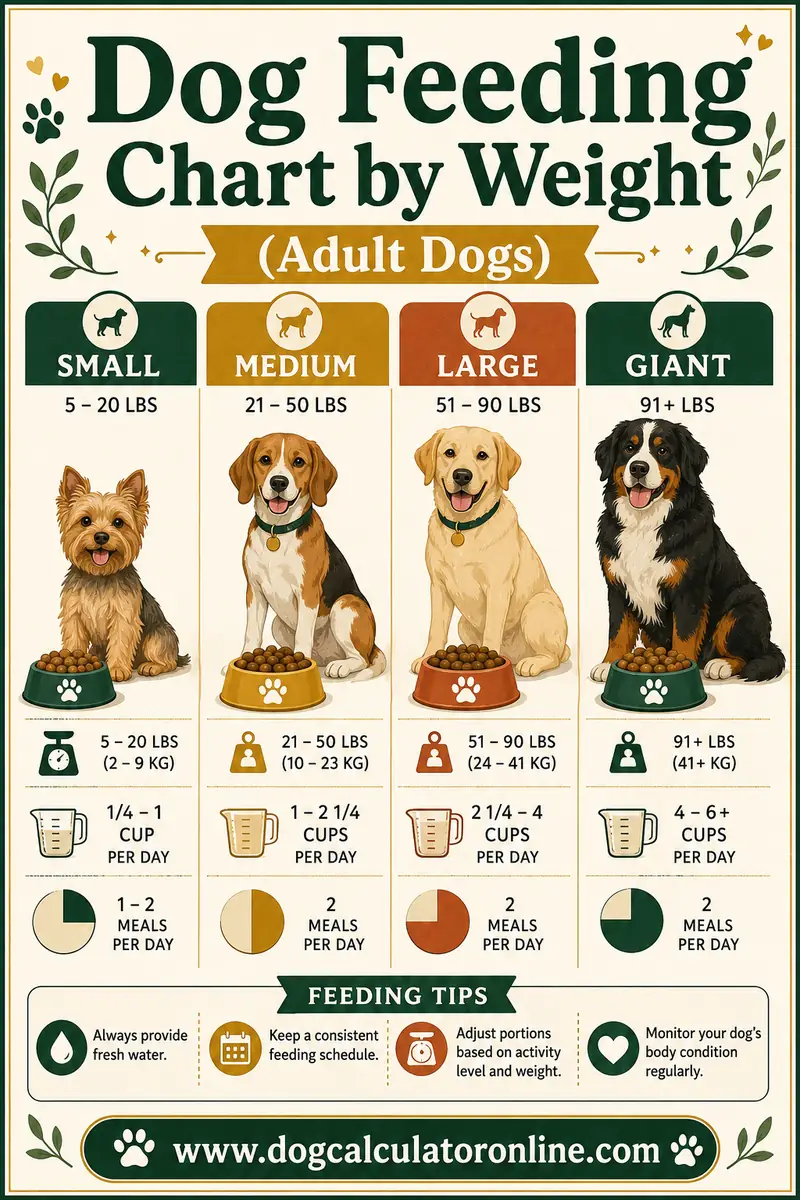
Your dog's calorie needs — not just weight. A 50 lb couch companion and a 50 lb running partner can differ by hundreds of calories a day, which compounds into real money over a year. Portion size is the multiplier on everything, so start by knowing it precisely: the dog food calculator gives the daily amount, and our feeding chart by weight shows typical portions across sizes.
Calorie density, i.e., price per calorie beats price per bag. A denser food feeds more days per bag. A $65 bag you feed 3 cups of daily can genuinely cost less per month than a $50 bag you feed 4.5 cups of. The honest comparison is cost per 1,000 kcal — bag price ÷ total kcal in the bag (label kcal/kg × bag weight) — a two-minute calculation that regularly reorders which food is "expensive."
Life stage. Puppies eat more per pound and grow through portion sizes quickly; large-breed puppies need specific growth formulas. Seniors sometimes need fewer calories, sometimes pricier specialized diets.
Prescription diets. If a vet prescribes a therapeutic food, expect a real premium over regular kibble. It's still usually far cheaper than the condition unmanaged — but budget for it as a medical cost, not a groceries one.
Waste and overfeeding. Overfed dogs cost more twice: extra food now, weight-related vet bills later. Accurate measuring — a gram scale, not a rounded-up scoop — quietly trims most food bills a little and some a lot.
The Annual View
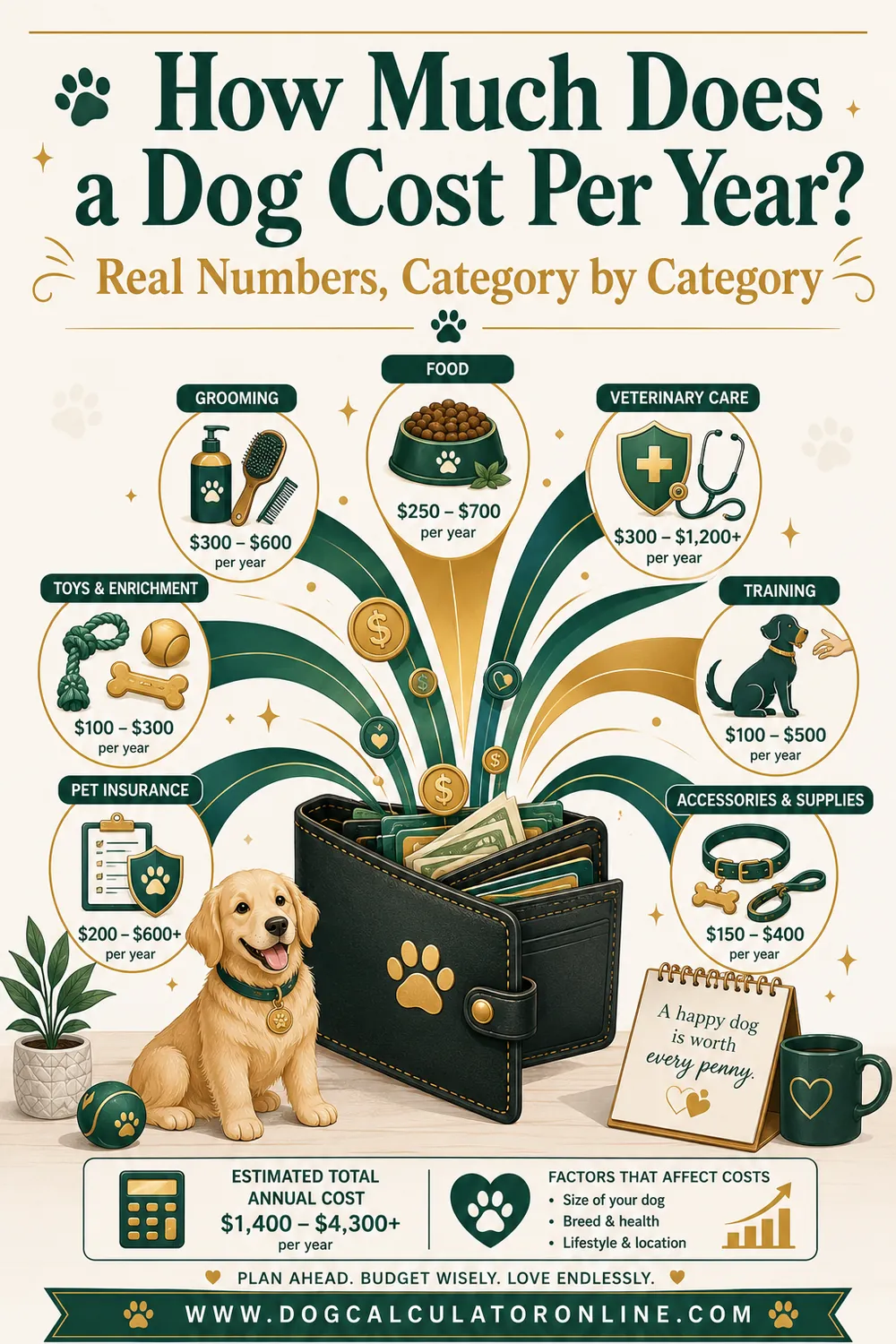
Multiply the monthly figures by twelve and food lands around $250–900 a year for most kibble-fed dogs — commonly the single largest routine line item in a dog budget after veterinary care. Where it sits in the total: our cost per year guide breaks down the full annual picture (food, vet, preventives, insurance, gear, grooming), and the monthly cost guide shows the recurring-bills view. For a personalized total, the dog cost calculator assembles the whole estimate around your dog's size and your choices.
Worth flagging for planners: food costs aren't static across a dog's life. A giant-breed puppy's food bill climbs steeply through the first 18 months; most adults plateau; seniors may shift to specialized (sometimes pricier) diets. Budgeting the adult plateau plus a cushion beats budgeting the puppy's first bag.
Over a typical 10–13 year lifespan, even the modest end of these ranges compounds into real money: a $40-a-month kibble habit is roughly $5,000–6,000 lifetime, and a large dog on premium food can double that on the bowl alone. That's not an argument for cheap food — it's an argument for running the numbers before choosing the dog and the diet, which is precisely what a cost calculator is for.
A Worked Example: Pricing One Real Dog's Bowl
Here's the whole calculation for a 55 lb Lab mix, neutered, moderately active:
- Daily portion. The dog food calculator puts her around 1,150 kcal a day. Her food runs 3,700 kcal/kg, so she eats about 310 g daily — roughly 0.68 lb.
- Days per bag. A 24 lb bag ÷ 0.68 lb/day ≈ 35 days.
- Monthly cost. If the bag costs $55, that's about $1.57/day — call it $47–48 a month, or ~$575 a year.
- The comparison that matters. A competing $45 bag looks cheaper — but it's 20 lb at a lower 3,400 kcal/kg, so she'd eat ~340 g/day and empty it in ~26 days: $1.73/day, ~$52 a month. The "cheaper" bag costs about $60 more per year.
- Add the quiet lines. A daily dental chew (~$0.50) and training treats add roughly $15–20 a month — often 30% on top of the food itself, and the first place to look when trimming.
Swap in your own dog's portion and your local prices and this five-line math prices any food on the shelf. The portion number is the anchor for everything — get it from the calculator, not from the scoop you've been using.
Trimming the Bill Without Cutting Corners
- Buy larger bags — if your dog finishes them fresh. Price per pound drops meaningfully with bag size. The limit: kibble is best used within about 4–6 weeks of opening, so match bag size to dog size and store it sealed in the original bag inside an airtight bin.
- Compare per-calorie, not per-bag. As above — this one reshuffles the shelf.
- Use autoship and loyalty discounts deliberately. Retail subscriptions commonly shave a steady percentage off a food you were buying anyway. Just re-check portion needs before locking a delivery cadence.
- Feed the right amount. The cheapest upgrade in dog feeding is not overfeeding. Weigh portions; recheck after neutering, weight change, or activity shifts.
- Rationalize treats. Swap part of the treat budget for low-cost, low-calorie options (plain carrot pieces, green beans) or use pieces of the regular kibble ration for training.
- Don't downgrade abruptly or below "complete and balanced." Any food change should be gradual (about a week of mixing), and savings that end in digestive trouble or nutritional corners aren't savings. If budget pressure is real, ask your vet for solid affordable options — that's a normal question they field weekly.
FAQ
How much does it cost to feed a dog per month?
Roughly $20–75 a month on standard dry food for most dogs — small dogs less, giant breeds and premium brands more. Fresh-food subscriptions typically run several times higher. Exact cost is your dog's daily portion times your food's price, so pin the portion down first.
How much does it cost to feed a dog per year?
Roughly $250–900 a year for typical kibble feeding, with large dogs on premium foods exceeding $1,000 and fresh-food plans well beyond that. It's usually one of the biggest recurring lines in a dog budget after vet care.
Is it cheaper to feed a dog wet or dry food?
Dry, almost always — wet food is largely water, so you pay more per calorie. Many owners split the difference with a kibble base and a small wet topper; just count the topper's calories against the daily total.
Are expensive dog foods worth it?
Price and quality correlate loosely at best. Judge foods on the nutritional adequacy statement (complete and balanced for your dog's life stage), calorie density, and how your dog actually does on it — and compare cost per calorie, not per bag. Your vet can name solid options at most budgets.
How can I lower my dog's food costs?
Buy appropriately large bags, use autoship discounts, compare per-calorie prices, keep treats within a 10% calorie budget with cheap alternatives like carrots, and most of all portion accurately — overfeeding is money out of the bag and onto the waistline.
Does feeding a puppy cost more than an adult dog?
Per pound of dog, yes — puppies burn far more calories for their size and eat calorie-dense growth formulas, and a large-breed puppy's portions climb steadily for a year or more. Budget the puppy year generously; costs usually settle once the dog reaches adult size and portions plateau.
How much food does a dog eat per month?
A rough kibble estimate: a 10 lb dog eats around 8–10 lb a month, a 50 lb dog around 25–30 lb, a 90 lb dog 40+ lb — varying with the food's calorie density and the dog's needs. That's why bag size and per-calorie price matter so much for bigger dogs.
Price the Bowl, Then the Whole Dog
The food bill comes down to two numbers you can actually control: how much your dog truly needs each day, and what you pay per calorie to meet it. Nail the first with the free dog food calculator — weight, age, activity in; daily portion out — and the second with a per-calorie comparison next time you buy. Then, if you want food in context with vet care, insurance, grooming, and the rest, the dog cost calculator builds the full yearly estimate for your actual dog in about a minute.