How Much Does a Dog Cost Per Year? Real Numbers, Category by Category
Most US dog owners spend somewhere between $1,500 and $4,000 per year on their dog, with food, routine vet care, and insurance (or the emergency fund replacing it) as the three biggest line items. Where you land in that range depends mostly on your dog's size, coat type, your city's vet prices, and how you handle the big-ticket "what ifs." Below is the honest category-by-category breakdown — typical ranges, not scare numbers — and our free dog cost calculator turns them into an estimate for your specific dog.
The Annual Cost of a Dog at a Glance
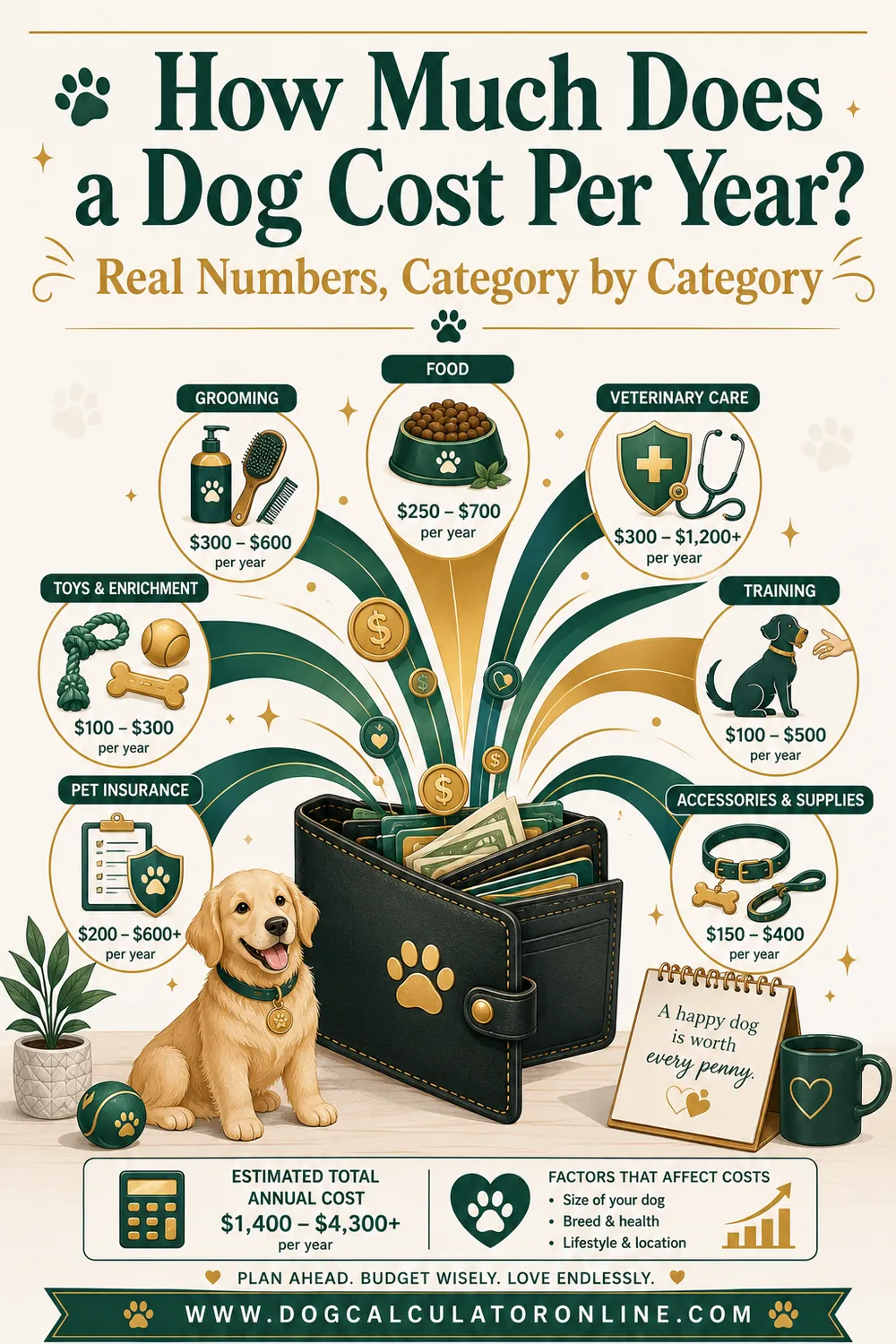
Here's the full picture for a typical year of established dog ownership (year two onward — the first year is more, and we'll get to that):
| Category | Typical annual range | Notes |
|---|---|---|
| Food | $250–$900 | Size and food quality are the drivers |
| Routine vet care | $300–$800 | Exam, vaccines, flea/tick/heartworm prevention |
| Pet insurance | $480–$840 | Or self-funded emergency savings instead |
| Grooming | $0–$1,200 | Nearly free for short coats, real money for salon breeds |
| Toys, treats, supplies | $100–$400 | Chewers skew high |
| Licensing | $10–$25 | Varies by city/county |
| Typical total | $1,500–$4,000 | Before boarding, training, or surprises |
Optional-but-common extras that push budgets higher: boarding or pet sitting ($30–$85 per night in most areas), dog walking ($20–$35 per walk), and training classes ($100–$300 per course). A dog owner who travels a few weeks a year and works long days can easily add $1,000+ in care services alone.
Food: $250–$900 Per Year
Food scales with body weight more than any other cost. A 12-pound terrier might eat about a cup of kibble a day; a 90-pound shepherd can eat four to five. In practice:
- Small dogs (under 25 lb): roughly $250–$450 per year on mid-range kibble
- Medium dogs (25–60 lb): roughly $350–$650
- Large dogs (60+ lb): roughly $500–$900, and premium or fresh-food plans can push well past that — some fresh-delivery services cost more per year for a big dog than every other category combined
The cheapest way to save on food isn't buying cheaper food — it's not overfeeding. Portion creep is common, quietly expensive, and bad for your dog. Our guide to how much you should feed your dog covers portions by weight and activity, and the free calculator does the math for your dog's exact size.
Routine Vet Care: $300–$800 Per Year
A normal, healthy-dog year of vet care includes an annual wellness exam ($50–$150 depending on your area), core vaccine boosters ($75–$200), and year-round parasite prevention — flea, tick, and heartworm — which typically runs $150–$350 for the year depending on your dog's weight and region.
Add occasional extras that most owners hit every few years: a dental cleaning ($300–$800, more if extractions are needed), bloodwork as your dog ages ($100–$250), and the odd ear infection or upset stomach visit ($100–$300 with medication).
Big-city and coastal vet prices can run 30–50% above small-town prices for identical services. If a quote surprises you, asking a second clinic is completely normal and often worthwhile.
The Emergency Question: Insurance vs. Savings
Here's the part of the budget that separates calm owners from panicked ones. Sooner or later, most dogs have at least one expensive medical event — a swallowed sock, a torn knee ligament, a bad infection. Common emergency-level bills in the US:
- Emergency room visit and workup: $500–$1,500
- Foreign object surgery: $2,000–$5,000
- Cruciate ligament (knee) surgery: $3,000–$6,000 per knee
- Cancer treatment: $4,000–$10,000+
You have two honest ways to prepare:
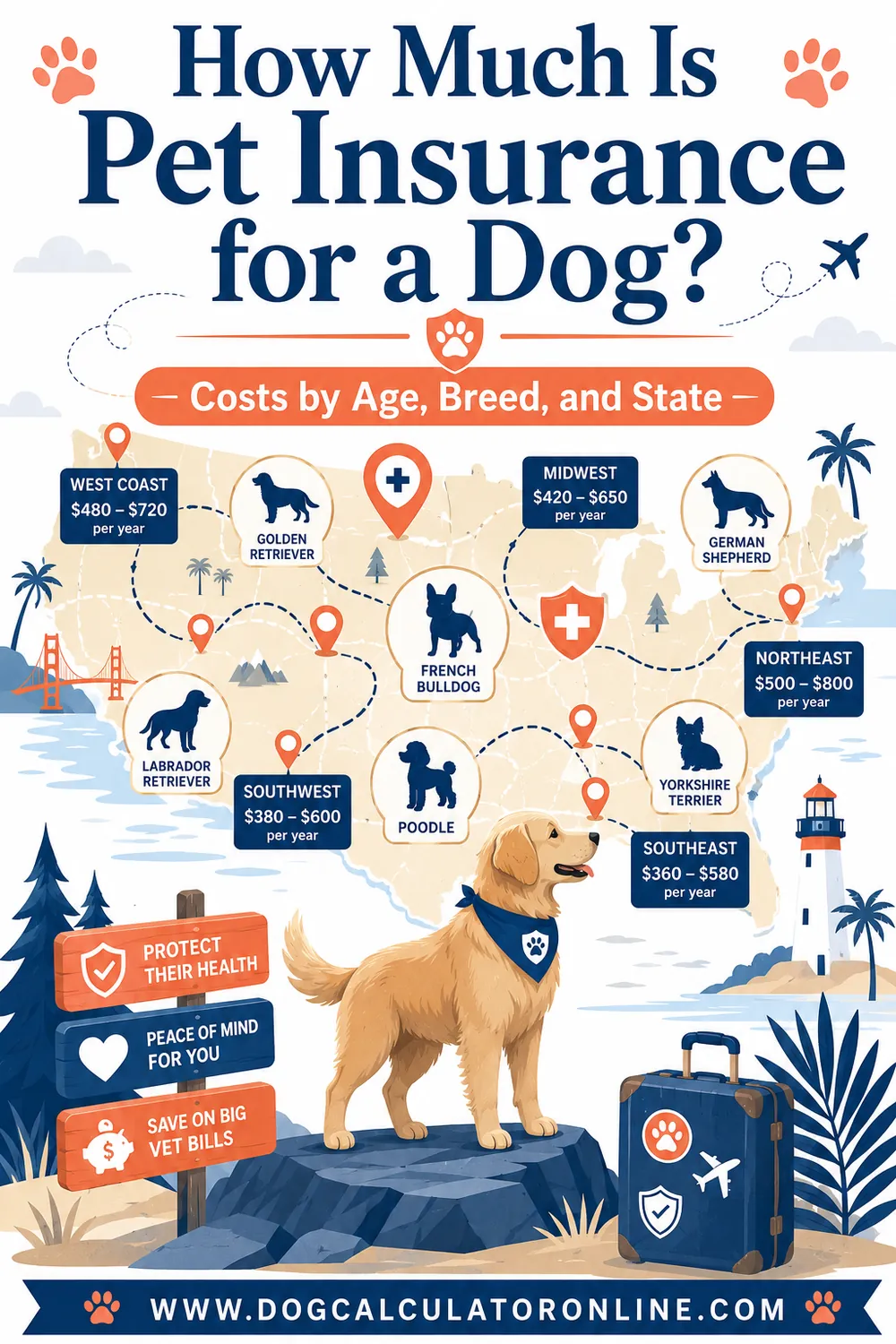
- Pet insurance — accident and illness coverage for dogs commonly runs $40–$70 per month ($480–$840 per year) depending on breed, age, and state. It converts a possible five-figure disaster into a predictable monthly cost.
- Self-insuring — putting that same $50-ish per month into a dedicated savings account. It works well if you fund it consistently and your dog stays lucky in the early years before the fund grows.
Neither answer is universally right — it depends on your breed's risk profile, your cash cushion, and your tolerance for financial surprises. We break down the whole decision in is pet insurance worth it and the premium details in how much is pet insurance for a dog.
Grooming: $0 to $1,200 Per Year
The spread here is enormous, and it's almost entirely about coat type:
- Short-coated breeds (Labs, Beagles, Boxers): brushing at home, occasional baths, nail trims — under $100 a year if you DIY, maybe $200–$400 if you outsource baths and nails.
- Double-coated shedders (Huskies, German Shepherds, Corgis): a good deshedding brush and more frequent bathing; a few professional deshed appointments a year at $60–$120 each help during coat-blow season.
- Continuously growing coats (Poodles, Doodles, Shih Tzus, Yorkies): professional grooming every 4–8 weeks at $60–$120+ per visit is genuinely necessary, not cosmetic. That's $500–$1,200 per year, and it belongs in your budget before you choose the breed.
Nail trims ($10–$25) and teeth brushing at home are cheap habits that prevent expensive problems.
The First Year Costs More
If you're budgeting for a new puppy or rescue, year one carries setup costs that never repeat:
| One-time cost | Typical range |
|---|---|
| Adoption fee or purchase price | $50–$500 (shelter) / $800–$3,000+ (breeder) |
| Spay/neuter | $150–$600 |
| Puppy vaccine series | $150–$400 |
| Crate, bed, leash, bowls, gear | $150–$400 |
| Training class | $100–$300 |
| Microchip | $25–$60 |
Realistic first-year totals land between $2,500 and $5,000 for most households — more with a purebred purchase price on top. Our new puppy checklist covers what's actually worth buying (and what's not).
What a Dog Costs Over a Lifetime
Multiply a mid-range year by a 10–13 year lifespan, add the first-year premium and a couple of medical events, and the honest lifetime figure for a US dog is roughly $20,000 to $55,000. Big dogs cost more per year but often live shorter lives; small dogs cost less annually but commonly live 14–16 years, so lifetime totals converge more than you'd expect.
That number isn't meant to discourage anyone — it's meant to be known in advance, because the owners who struggle are almost always the ones surprised by it.
Worth flagging inside that lifetime number: costs aren't spread evenly. The first year spikes with setup costs, the middle years are the cheapest stretch, and the senior years climb again — more frequent vet visits, bloodwork, medications for arthritis or other chronic conditions, and sometimes a switch to prescription food. Owners who bank a little extra during the easy middle years feel the senior years far less.
Three Real-World Budgets
Ranges are useful; examples are clearer. Here's how the same categories play out for three very different dogs:
The budget-friendly profile — 20 lb short-coated mixed breed, healthy adult, low-cost area:
Food on mid-range kibble ($300), routine vet and prevention ($350), home grooming ($50), supplies ($120), license ($15), self-funded emergency savings ($600). Total: about $1,450 a year. This is close to the practical floor for responsible ownership — you can trim it slightly, but mostly by shifting risk onto luck.
The middle profile — 60 lb Lab mix, insured, suburban:
Food ($550), routine vet and prevention ($500), insurance at $55/month ($660), occasional professional grooming ($200), supplies and treats ($250), license ($15), one boarding weekend ($150). Total: about $2,300 a year. This is the most common real-world shape: nothing extravagant, everything covered.
The premium profile — 70 lb Goldendoodle, big city, busy owners:
Fresh-food delivery ($1,800), routine vet at metro prices ($700), insurance ($900), salon grooming every 6 weeks ($900), walker twice a week ($2,000), supplies ($300), boarding for two trips ($500). Total: about $7,100 a year. Nothing on that list is irresponsible — it's just what size-plus-coat-plus-city-plus-schedule adds up to when every category lands on the high end.
Same species, five-fold difference. That's why a personalized estimate beats any national average — and why the dog cost calculator asks about coat, size, and services instead of just spitting out one number.
How to Lower the Annual Cost (Without Shortchanging Your Dog)
- Prevent instead of treat: parasite prevention, dental care, and keeping your dog lean genuinely avoid four-figure bills later. Obesity-related problems are among the most common — and most preventable — vet expenses.
- Buy food smart: larger bags cost less per pound, and autoship discounts of 5–10% are easy money. Just measure portions honestly.
- Learn basic grooming: nails, baths, and brushing at home can save several hundred dollars a year even for salon breeds (stretching appointments from 4 to 6–8 weeks).
- Trade pet care with friends: a dog-sitting swap beats $50-a-night boarding for weekend trips.
- Pick the fund, either fund: insurance or a dedicated savings account. The expensive option is neither.
FAQ
How much does a dog cost per month?
Typical US owners spend about $125–$335 per month across food, vet care, insurance, grooming, and supplies. Small, short-coated, healthy dogs sit at the low end; large dogs and salon-coat breeds at the high end.
What is the biggest yearly expense for dog owners?
For most owners it's the food-plus-routine-vet combination. But in any year with a medical emergency, that single event usually dwarfs everything else — which is why the insurance-or-savings decision matters more than any coupon.
Are big dogs more expensive than small dogs?
Per year, yes — more food, higher medication doses (priced by weight), bigger gear, and often higher surgery costs. Small dogs partially catch up over a lifetime by living longer.
How much should I save for dog emergencies?
A common target is $1,000–$2,000 as a starter emergency fund, building toward $3,000–$5,000 — enough to cover most single surgical events. If that savings pace isn't realistic, insurance is the more protective choice.
Is owning a dog worth the cost?
That's personal — but the happiest outcomes come from matching the dog to the budget honestly: coat type, size, and breed health history are all cost decisions, not just lifestyle ones.
How can I estimate costs for my specific dog?
Use the free dog cost calculator — enter your dog's size, coat type, and care choices, and it builds a personalized annual estimate from the same category ranges in this guide.
Know Your Number
A dog's love may be priceless, but the kibble isn't — and knowing your real annual number is what keeps surprises from becoming crises. Run your own situation through the free dog calculators, pick your emergency strategy, and enjoy your dog with the money question already answered.