New Puppy Checklist: Everything You Need Before Your Puppy Comes Home
A complete new puppy checklist covers five things: feeding gear, a safe sleep setup, potty and training supplies, health basics, and a puppy-proofed home. Get those handled before pickup day and the first week becomes exciting instead of chaotic. This guide walks through every item — plus the first vet visit, week-one routine, and realistic costs — and our free dog calculators can help you plan food portions and budget before your puppy even arrives.
The Complete New Puppy Shopping List
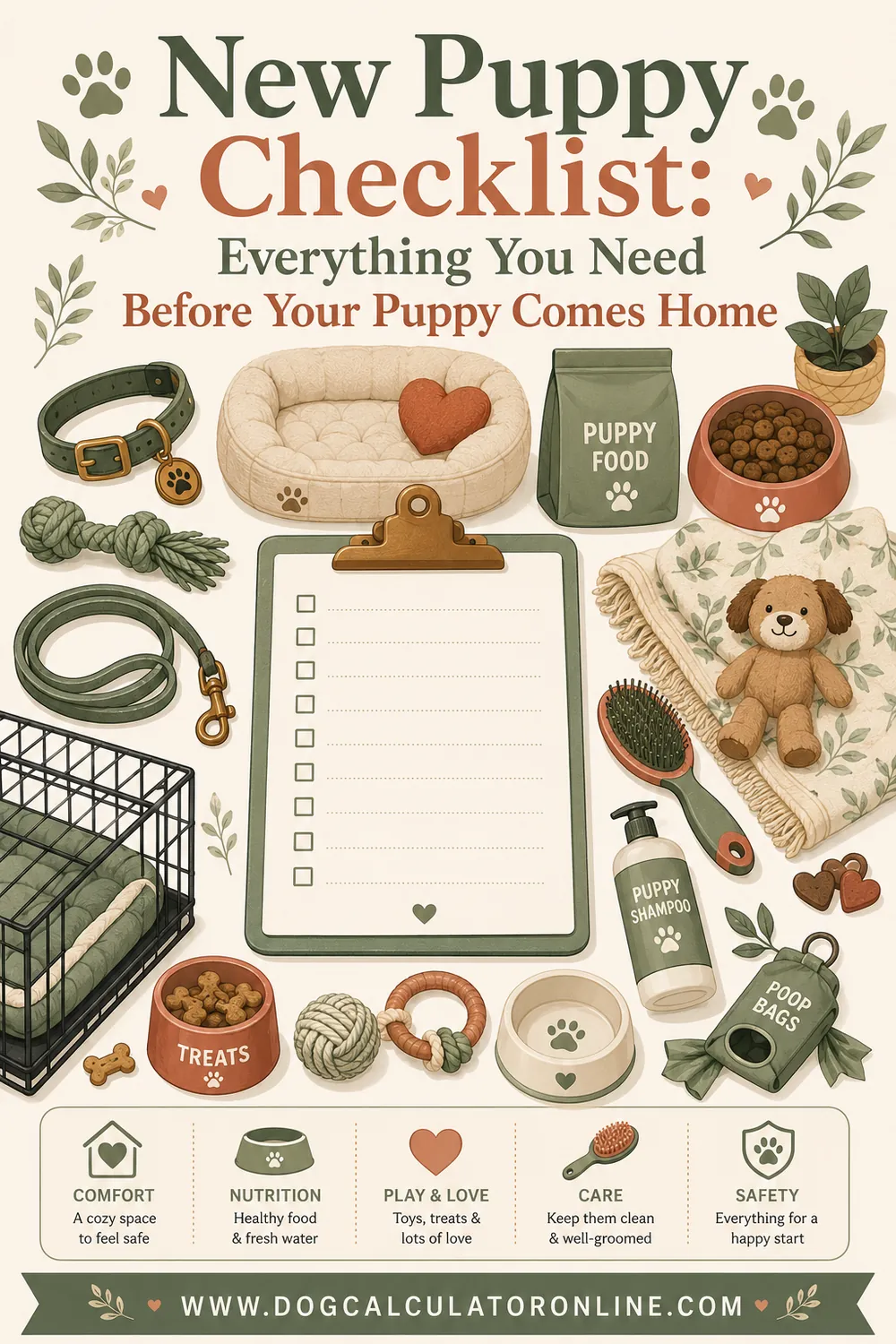
Here's everything worth having on hand before your puppy walks through the door. You don't need the fanciest version of anything — you need the right size of everything.
Feeding Supplies
- Puppy food — start with the exact brand and formula your breeder or shelter was feeding, even if you plan to switch later. A sudden food change plus a new home is a recipe for an upset stomach. Transition gradually over 7–10 days if you're changing.
- Two bowls — stainless steel or ceramic beat plastic (easier to sanitize, harder to chew).
- Food storage container — airtight keeps kibble fresh and pests out.
- Training treats — pea-sized and soft. You'll use hundreds of them in week one alone.
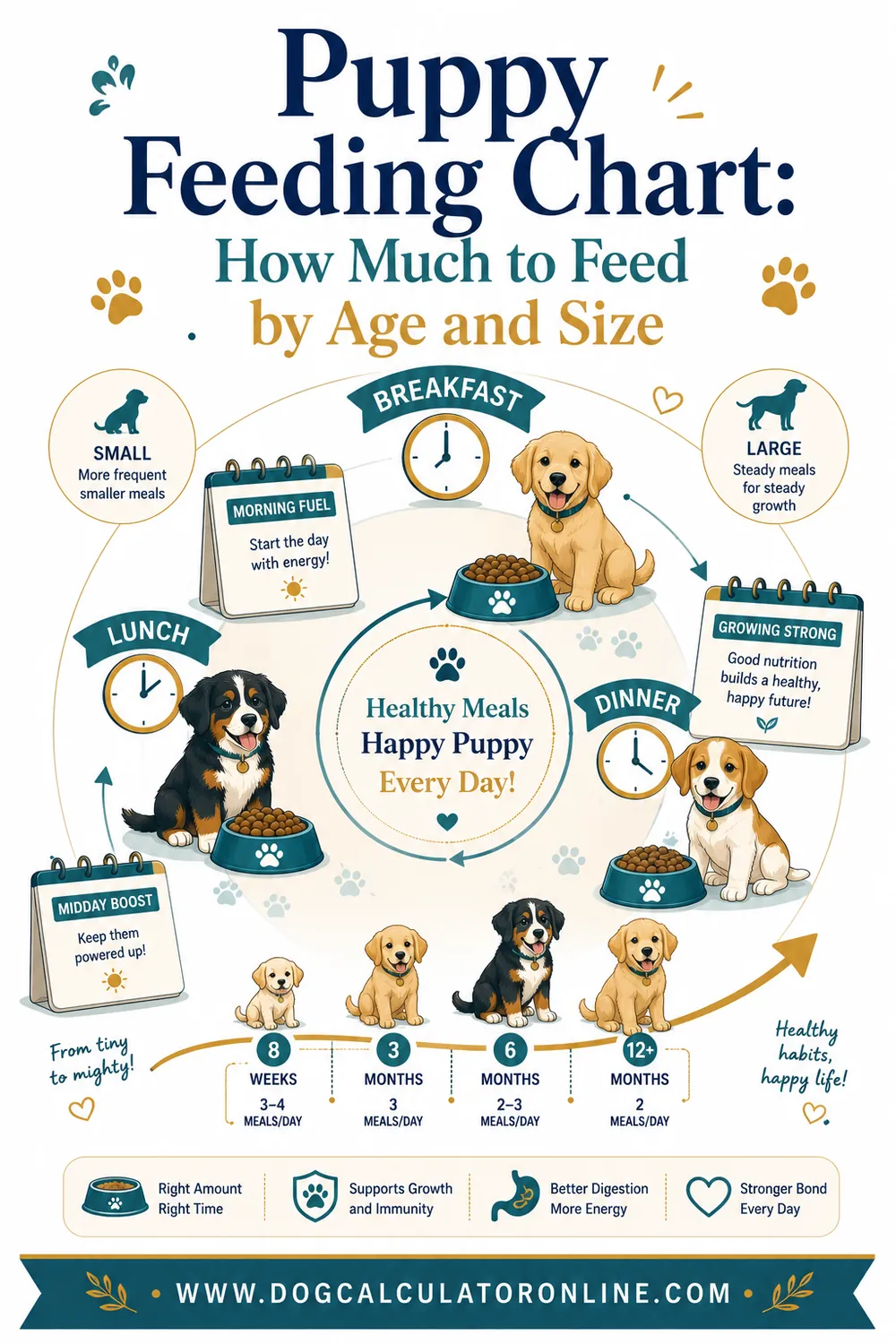
Not sure how much to feed? Portion needs change fast in the first year — our puppy feeding chart breaks it down by age and expected adult size.
Sleep and Confinement
- Crate — the single most useful item on this list. Buy the size your puppy will need as an adult and use a divider panel to shrink it while they're small. Our guide to what size crate for my dog has the full size table by breed.
- Crate divider — usually included with wire crates; essential for potty training.
- Washable bedding — accidents happen; plan for laundry.
- Playpen or baby gates — a puppy-safe zone for times you can't watch them.
- Snuggle toy — a soft toy (some have a heartbeat simulator) eases the first nights away from littermates.
Potty Training Supplies
- Enzyme cleaner — regular cleaners remove the stain; enzyme cleaners remove the smell that draws puppies back to the same spot. Non-negotiable.
- Poop bags and a holder for the leash.
- Old towels for muddy paws and rainy trips outside.
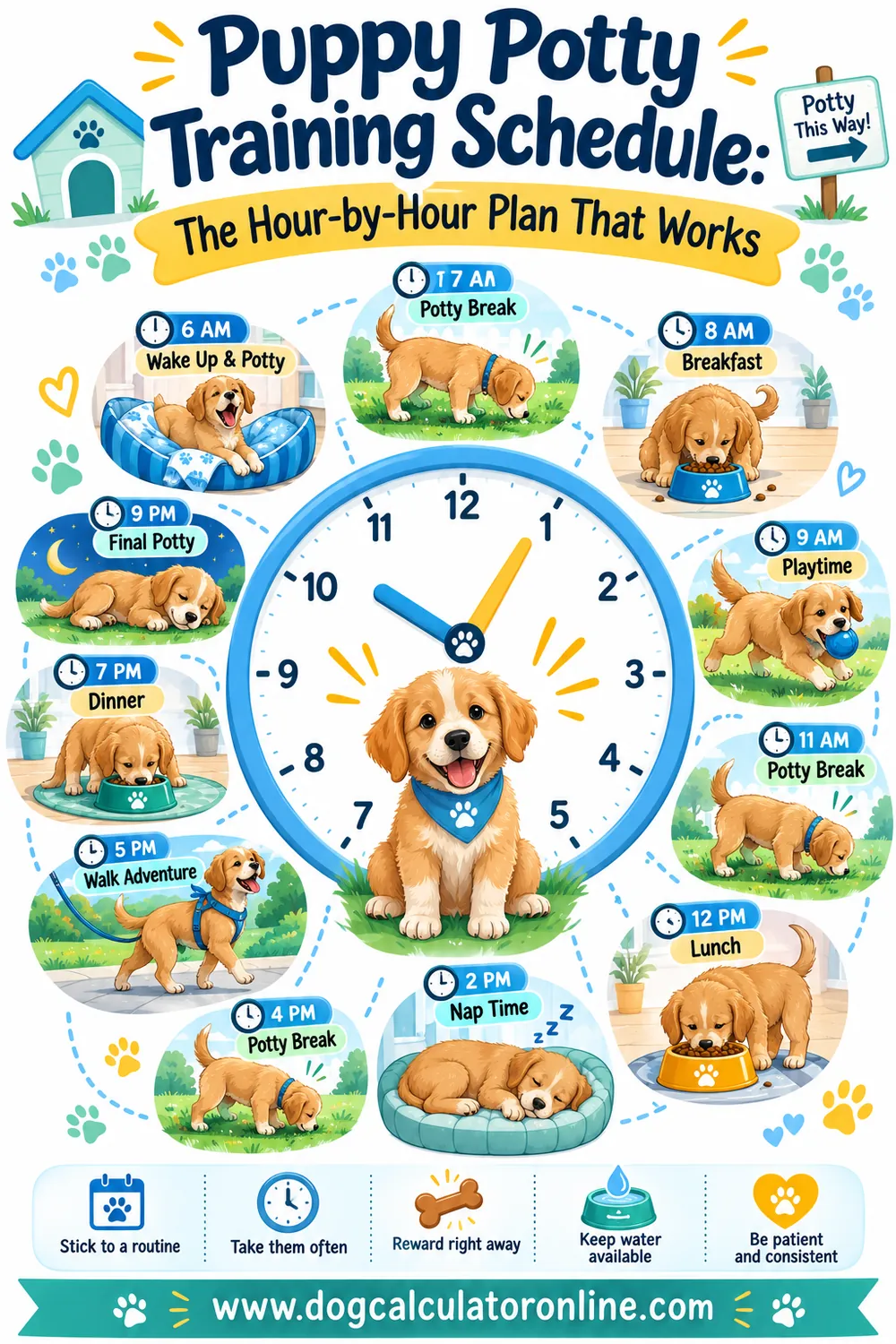
Skip the pee pads unless you live in a high-rise or have limited mobility — for most homes, pads teach puppies that going indoors is sometimes fine, which slows things down. Our puppy potty training schedule lays out the hour-by-hour routine that actually works.
Walking and ID
- Flat collar — adjustable; puppies grow shockingly fast.
- ID tag with your phone number — on the collar from day one.
- 6-foot leash — standard leash, not retractable (retractables teach pulling and are hard to control).
- Harness — optional at first, great for pullers later.
Toys and Chews
- 2–3 chew toys of different textures (rubber, rope, softer teething toys)
- 1–2 puzzle or treat-dispensing toys — mental work tires puppies out faster than physical play
- A fetch toy sized for a puppy mouth
Rotate toys every few days so they stay interesting. Anything smaller than your puppy's muzzle or breakable into chunks is a choking hazard — when in doubt, size up.
Grooming Basics
- Puppy shampoo (gentle, unscented)
- Soft brush appropriate for the coat type
- Nail clippers or a grinder — start touching paws early, even before you actually trim
- Dog toothbrush and dog toothpaste (never human toothpaste)
Puppy-Proofing Your Home
Get on your hands and knees and look at each room from puppy height. Seriously — you'll spot things you'd never notice standing up.
| Area | What to fix |
|---|---|
| Floors | Pick up shoes, cords, kids' toys, coins, hair ties |
| Electrical | Cord protectors or move cords out of reach |
| Kitchen | Trash can with locking lid; secure low cabinets |
| Bathroom | Toilet lid down; medications and cleaners up high |
| Living room | Houseplants checked against toxic-plant lists (lilies, pothos, sago palm are common offenders) |
| Yard | Fence gaps checked; fertilizers and mulch bags stored away |
Common household dangers for puppies include chocolate, grapes and raisins, xylitol (in sugar-free gum and some peanut butters), onions, human medications, and batteries. Save the ASPCA Animal Poison Control number (888-426-4435) in your phone now, not during an emergency.
The First Vet Visit
Book the appointment before pickup day — ideally for within the first week home. Bring:
- All records from the breeder, shelter, or rescue (vaccines, deworming, microchip number)
- A stool sample if your vet requests one
- Your questions written down — food, parasite prevention, spay/neuter timing, local disease risks
Puppies typically need a series of vaccinations at roughly 8, 12, and 16 weeks, plus rabies per your state's law. Until the series is finished, avoid dog parks and areas with unknown dogs — but do carry your puppy places, meet vaccinated adult dogs, and introduce new people. The socialization window (roughly 3–14 weeks) matters enormously, so the goal is safe exposure, not isolation.
Your First Week Routine
Puppies thrive on predictability. A simple loop, repeated all day, does more than any gadget:
- Wake → potty outside immediately
- Breakfast → potty again (5–20 minutes after eating)
- Play and short training (5 minutes is plenty)
- Nap in the crate (puppies sleep 18–20 hours a day)
- Repeat
A few week-one principles that pay off for years:
- Start the crate on night one. Next to your bed at first, if it helps everyone sleep.
- Say their name, then reward. Name recognition is lesson one.
- Handle paws, ears, and mouth daily — future you (and your groomer and vet) will be grateful.
- Let them nap. Overtired puppies bite more, whine more, and learn less.
- Start a socialization list. Aim for a few new experiences each week — different floor surfaces, umbrellas, car rides, people in hats, gentle handling by visitors — each paired with treats. Positive exposure now prevents fearfulness later, and week one is not too early to begin.
What a Puppy Really Costs
Budget honestly before pickup day. Typical first-year US costs look like this:
| Item | Typical range |
|---|---|
| Initial supplies (crate, gear, toys) | $150–$400 |
| Vaccination series + first vet visits | $150–$400 |
| Spay/neuter | $150–$600 |
| Food (first year) | $250–$700 |
| Training class | $100–$300 |
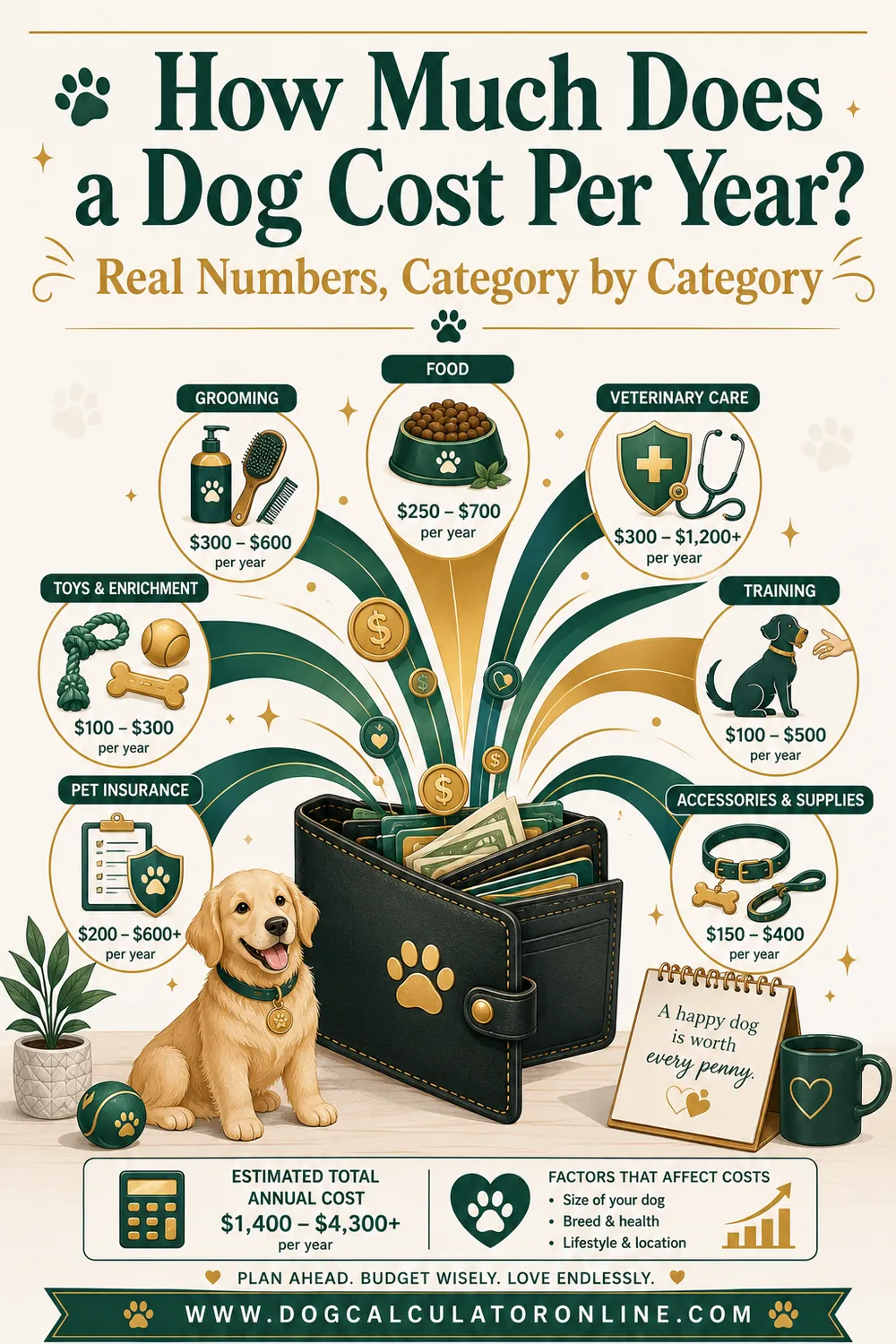
Most owners spend somewhere between $1,500 and $4,000 in year one, before any surprises. For the full breakdown — including what changes in year two — see our guide to how much a dog costs per year, and use the free dog cost calculator to estimate numbers for your specific situation.
The Paperwork Nobody Mentions
A few admin tasks belong on the checklist right next to the crate and bowls:
- Register the microchip. A chip only works if it's registered to you with a current phone number. Breeders and shelters often chip puppies, but the registration transfer is on you — it takes ten minutes online and is the difference between a found dog and a lost one.
- License your dog. Most cities and counties require it (usually $10–$25 a year) and many require proof of rabies vaccination first. A quick search for your county plus "dog license" gets you there.
- Decide on insurance early. If you're going to insure, the best moment is now — puppies are cheapest to cover and have no pre-existing conditions yet. If you're self-insuring instead, open the savings account this week. Our guide to whether pet insurance is worth it walks through the decision.
- Choose your vet before you need one. Read local reviews, confirm they're taking new patients, and save the nearest 24-hour emergency clinic's address in your phone.
What NOT to Buy Yet
Half of new-puppy overspending is gear that gets outgrown, destroyed, or never used. Hold off on:
- A fancy dog bed — many puppies shred or pee on the first one. Cheap and washable now, orthopedic memory foam after the chewing phase.
- A retractable leash — teaches pulling, hard to control, and the thin cord causes real injuries. A standard 6-foot leash does everything better.
- Grown-dog gear in advance — collars, harnesses, and coats sized for the adult dog you think you'll have. Wait until they've actually grown.
- A mountain of toys — three or four well-chosen toys, rotated, beat twenty ignored ones.
- Doggy shoes, strollers, and gadget feeders — maybe someday. Not week one.
FAQ
What do I need for a new puppy on the first day?
The true day-one essentials: the food they're already eating, two bowls, a crate with bedding, a collar with ID tag, a leash, enzyme cleaner, a couple of chew toys, and a vet appointment on the calendar. Everything else can arrive during week one.
What age should a puppy come home?
Eight weeks is the widely accepted minimum, and many states legally require it. Puppies removed earlier miss key social lessons from mom and littermates, which often shows up later as biting and anxiety issues.
Should the puppy sleep in my room the first night?
It usually helps. A crate beside your bed lets your puppy hear and smell you, which calms first-night crying, and lets you hear when they genuinely need a potty break. You can gradually move the crate later if you prefer.
How much should I feed my new puppy?
It depends on age, current weight, and expected adult size — the bag's label is a starting point, not gospel. Our puppy feeding chart covers portions by age, and the free calculator on our homepage gives you a personalized estimate.
When can my puppy meet other dogs?
Immediately — selectively. Healthy, vaccinated dogs you know personally are fine and genuinely good for socialization. Dog parks, pet store floors, and unknown dogs should wait until the vaccine series finishes around 16 weeks.
How long until a puppy is potty trained?
Most puppies are reliably trained between four and six months old, with occasional accidents up to a year. Consistency is everything — a schedule beats every gadget ever invented.
Ready for Pickup Day
Print this list, check off the essentials, book the vet, and puppy-proof one room at a time. The prep you do this week buys you a calm, fun first month. And when you're wondering about the numbers — how much food, how big they'll get, what the first year costs — the free dog calculators are built exactly for that.