Puppy Feeding Chart: How Much to Feed by Age and Size
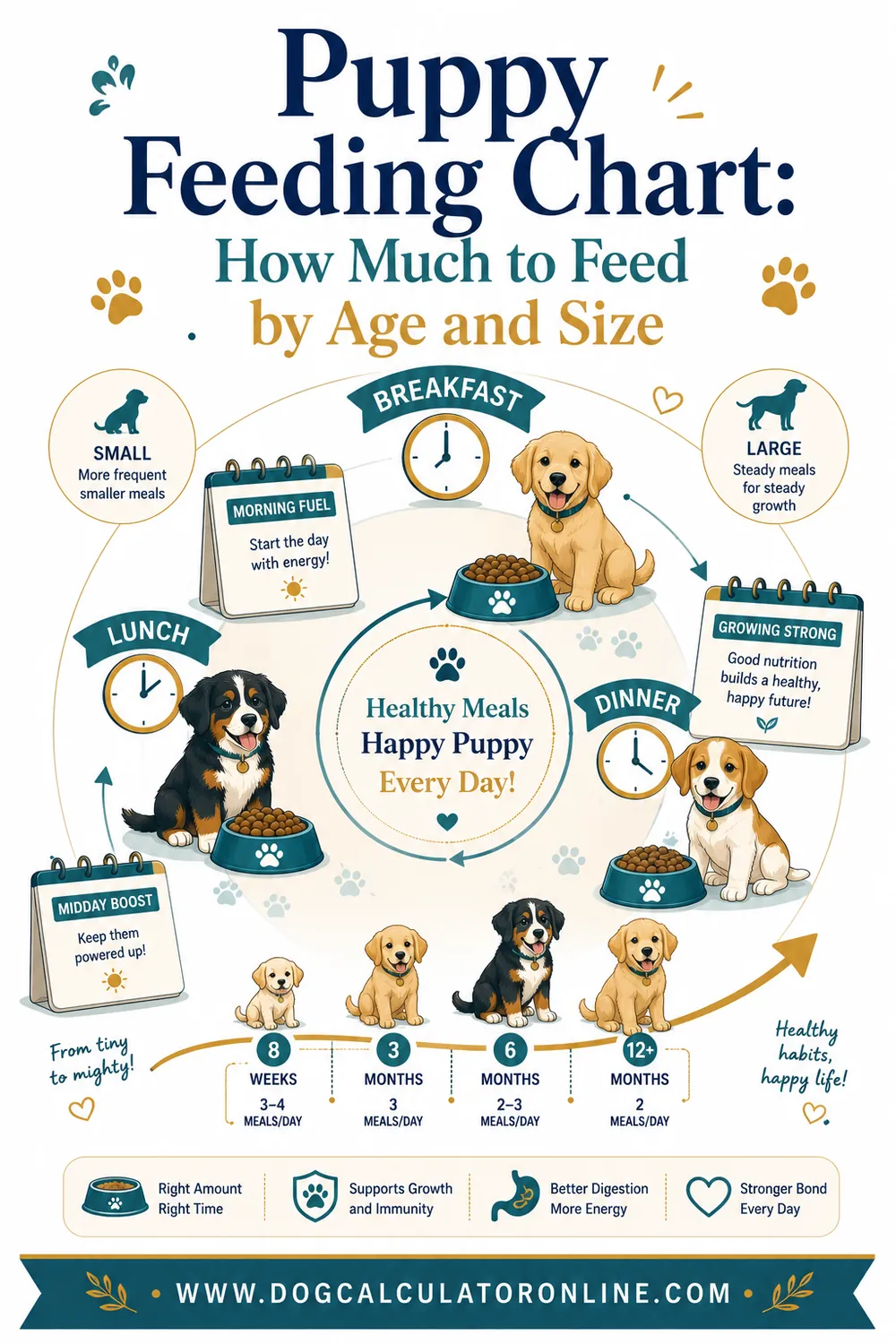
Puppies need about twice the calories per pound that adult dogs do, split across several small meals a day: four meals from 8–12 weeks, three meals from 3–6 months, and two meals from 6 months on. How much depends on your puppy's expected adult size — a future 15-lb dog and a future 70-lb dog have very different appetites. Use the chart below as a starting point, then adjust to your puppy's body condition and your food's label.
Our free puppy feeding calculator turns your puppy's age and expected adult weight into a daily amount. Here's the full chart and schedule.
🐶 Puppy feeding by age — how often?
Tap your puppy's age to see meals per day and portion tips:
Tap an age above to see the feeding schedule.
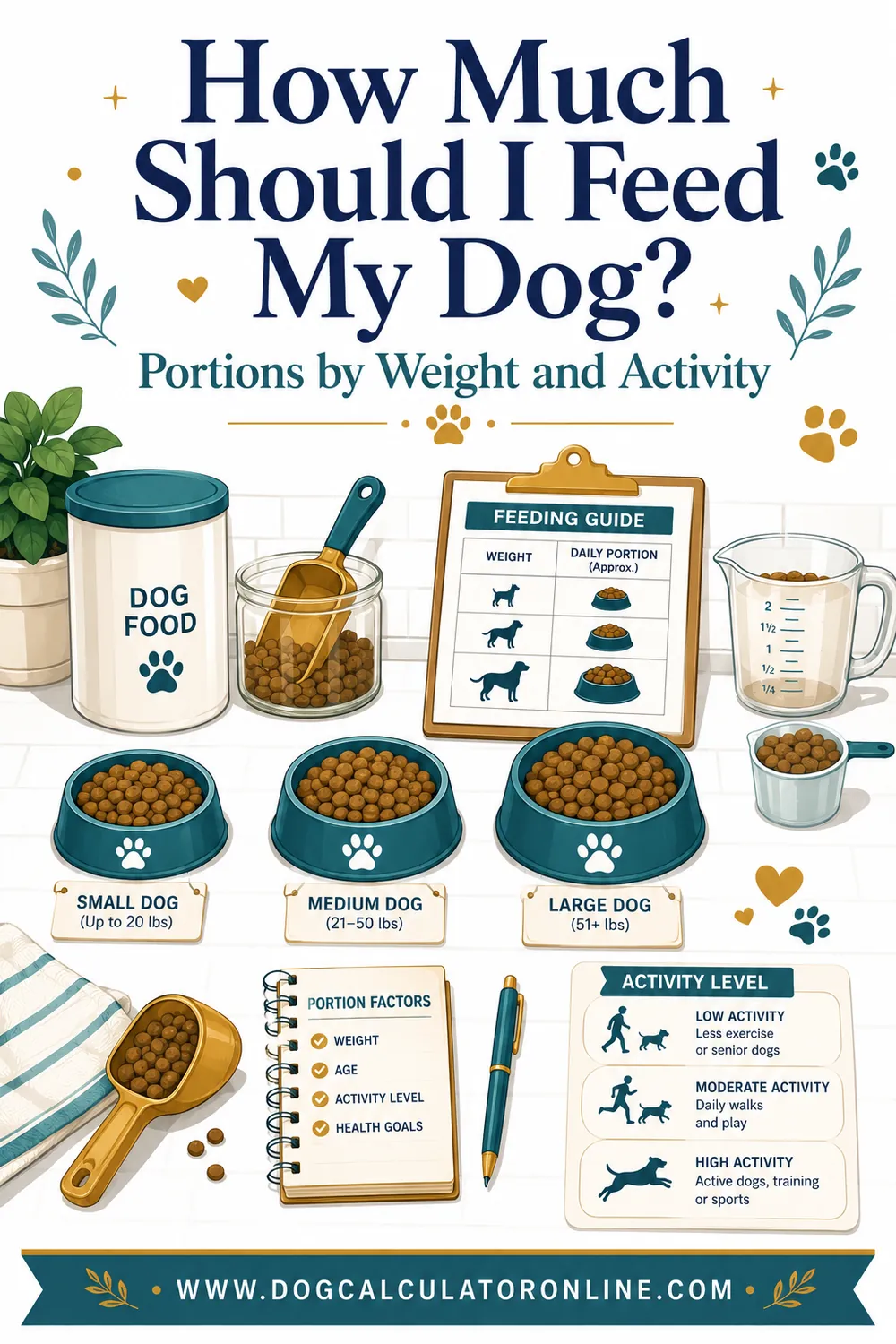
Puppy Feeding Chart by Expected Adult Size
These are approximate total daily amounts of dry puppy food, before splitting into meals. Feed by your puppy's expected adult weight, not current weight, and always cross-check your bag's chart (calorie density varies).
Small breed — expected adult 3–12 lb
| Age | Total dry food/day | Meals/day |
|---|---|---|
| 6–12 weeks | ⅓–1 cup | 4 |
| 3–4 months | ½–1¼ cups | 3 |
| 5–6 months | ½–1 cup | 3 |
| 6–12 months | ½–1 cup | 2 |
Medium breed — expected adult 20–50 lb
| Age | Total dry food/day | Meals/day |
|---|---|---|
| 6–12 weeks | 1–2 cups | 4 |
| 3–4 months | 1½–2¾ cups | 3 |
| 5–6 months | 2–3 cups | 3 |
| 6–12 months | 2–3 cups | 2 |
Large / giant breed — expected adult 60–100+ lb
| Age | Total dry food/day | Meals/day |
|---|---|---|
| 6–12 weeks | 2–3 cups | 4 |
| 3–4 months | 3–4½ cups | 3 |
| 5–6 months | 4–6 cups | 3 |
| 6–12 months | 4–7 cups | 2 |
Large and giant breeds should eat a large-breed puppy formula to control growth rate and protect developing joints. These ranges are guides — the puppy feeding calculator narrows them using your food's calories per cup.
Why Puppies Eat So Much
A growing puppy is building bone, muscle, and organs at an incredible pace. Pound for pound, puppies need roughly twice the calories of an adult dog. That's why the amounts above can look large next to an adult feeding chart — a 30-lb puppy may out-eat a 30-lb adult.
As your puppy approaches adult size, calorie needs per pound drop toward adult levels. That's the cue to reduce portions and shift meal frequency down.
Feeding Schedule by Age
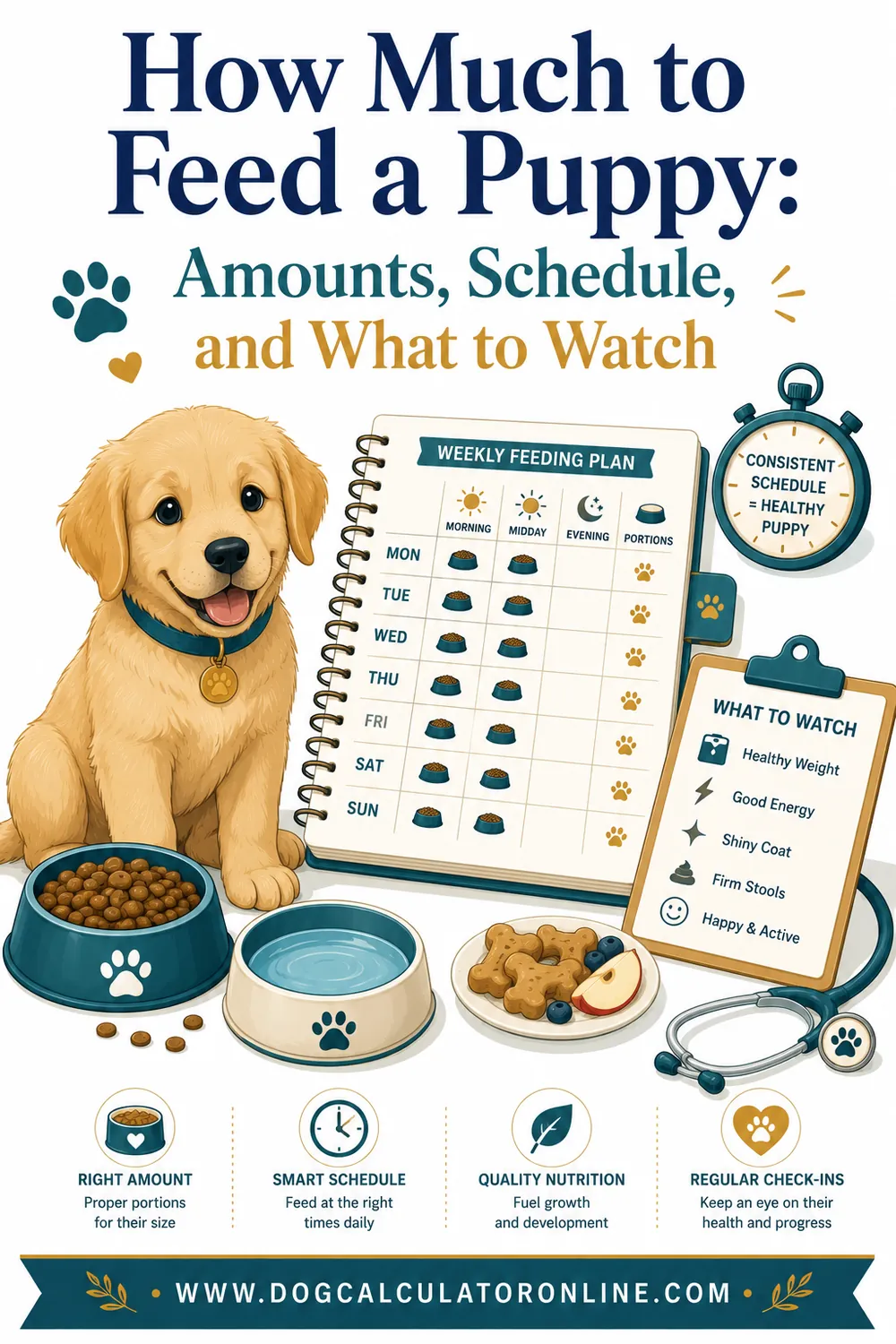
8–12 weeks: four meals a day. Tiny stomachs, huge energy needs. Spread food across breakfast, midday, afternoon, and evening. Small-breed puppies especially need frequent meals to avoid low blood sugar.
3–6 months: three meals a day. Puppies can handle bigger, less frequent meals. Keep it to morning, midday, and evening. This is peak growth for many breeds.
6–12 months: two meals a day. Most puppies transition to an adult schedule of breakfast and dinner. Small breeds may be ready to switch to adult food; large and giant breeds stay on puppy food longer.
A consistent schedule also makes potty training far easier — what goes in on a schedule comes out on a schedule. For meal-by-meal amounts, see our how much to feed a puppy guide.
When to Switch to Adult Food
The timing depends on size, because that's when growth finishes:
- Small breeds: around 9–12 months
- Medium breeds: around 12 months
- Large breeds: around 12–18 months
- Giant breeds: around 18–24 months
Switch gradually over 7–10 days, mixing increasing amounts of adult food into the puppy food to avoid stomach upset. Staying on calorie-dense puppy food too long can lead to unwanted weight gain once growth slows.
How to Tell If You're Feeding Right
Charts get you close; your puppy's body confirms it:
- Ribs: easy to feel with light pressure, not visibly poking out and not buried under fat.
- Waist: a gentle tuck when viewed from above.
- Energy and stools: playful, growing steadily, with firm, consistent poop.
For puppies, aim for lean growth. A roly-poly puppy isn't a health goal — especially in large breeds, where excess weight and fast growth stress the joints. If your puppy looks pudgy or too thin, adjust by about 10% and recheck, and ask your vet at your regular puppy visits.
Wet Food, Mixed Feeding, and Treats
- Wet food: if you feed wet or a wet/dry mix, use calories, not cups. A can lists its calorie content; balance it against the dry amount so total daily calories stay on target.
- Treats: keep under about 10% of daily calories, and use small, soft treats for training. Puppies get a lot of treats during training — count them.
- Fresh water: always available. Growing puppies need steady hydration.
Signs Your Puppy's Portion Needs Adjusting
The chart gets you close; your puppy tells you the rest. Adjust down about 10% if you notice:
- You can't easily feel the ribs, or there's no waist when viewed from above.
- Your puppy is gaining weight faster than a lean, athletic build (especially risky in large breeds).
- Frequent loose stools, which can signal overfeeding.
Adjust up about 10% if you notice:
- Ribs, spine, or hip bones are sharply visible or feel prominent.
- Your puppy seems low on energy or growth has stalled for weeks.
- They finish every meal instantly and still seem ravenous (though many puppies act hungry regardless).
Make one change at a time and give it a couple of weeks before adjusting again. If your puppy seems genuinely too thin or too heavy, bring it up at your next vet visit rather than guessing.
Common Puppy Feeding Mistakes
- Feeding adult food too early. Puppies need the higher protein, fat, and calcium balance of puppy food.
- Overfeeding "to grow bigger." Genetics set final size; extra food just adds fat and, in big breeds, risks joints.
- Free-feeding. Leaving a full bowl out prevents portion control and hides appetite changes that could signal illness.
- Skipping meal-frequency changes. A 3-month-old still needs three meals; one big meal is hard on a small stomach.
- Ignoring the bag's calories. Two puppy foods can differ a lot per cup. Always read yours.
Sample Daily Meal Plans
Here's what a day might look like at two ages, using a medium-breed puppy as the example. Divide the daily total evenly across the meals.
4-month-old medium-breed puppy (about 2½ cups/day, 3 meals):
- Morning: ~¾ cup
- Midday: ~¾ cup
- Evening: ~¾ cup
- Training treats through the day: kept under ~10% of calories
9-month-old medium-breed puppy (about 2½–3 cups/day, 2 meals):
- Breakfast: ~1¼–1½ cups
- Dinner: ~1¼–1½ cups
Scale these up or down for your puppy's expected adult size, and always confirm the total against your food's label. The exact split matters less than keeping the daily total right and the schedule consistent.
Transitioning Foods Without Tummy Trouble
You'll change your puppy's food at least once — from puppy to adult, and maybe between brands. Do it gradually over 7–10 days to avoid diarrhea:
- Days 1–3: about 25% new food, 75% old.
- Days 4–6: 50/50.
- Days 7–9: 75% new, 25% old.
- Day 10: 100% new.
If stools get loose, hold at the current ratio for a few extra days before advancing. Sudden switches are one of the most common causes of puppy stomach upset, and they're completely avoidable.
Fresh Food, Toppers, and Homemade Diets
Many owners add a spoon of wet food, a topper, or fresh ingredients. That's fine in moderation — just count those calories toward the daily total, and keep additions under about 10% so the balanced puppy food still does the nutritional heavy lifting. Growing puppies (especially large breeds) have precise nutritional needs, so if you want to feed a homemade or raw diet, work with your vet or a veterinary nutritionist to make sure it's complete and balanced for growth.
Cups Lie a Little: How to Measure Portions Accurately
Two things quietly sabotage feeding charts: sloppy scoops and calorie differences between foods.
First, the scoop. A heaping "cup" scooped with a mug or an old yogurt container can run well over an actual measuring cup, and those extra kibbles add up day after day. Use a real measuring cup and level it off — or better, weigh the portion in grams on a kitchen scale. Most bags list grams per cup, and a scale turns "roughly a cup" into the same portion every single time. It's the cheapest feeding upgrade there is.
Second, the food itself. One puppy formula might pack far more calories into a cup than another, so "2 cups a day" on one brand is not the same meal plan on another. Whenever you compare a chart (including ours) to your bag, check the kcal-per-cup number on the label and let that settle any disagreement. When in doubt, your food's own chart and your vet win.
What If Your Puppy Skips a Meal?
Puppies are usually enthusiastic eaters, so a snubbed bowl gets owners worried fast. A few common, harmless reasons:
- Teething (around 3–6 months). Sore gums can make crunching kibble unappealing for a few days. Softening kibble with warm water often helps.
- Distraction. A busy household at dinnertime can out-compete the bowl. Feed in a quiet spot.
- Warm weather or a big treat day. Appetite dips a little; the math still counts those training treats.
One skipped meal in an otherwise bouncy, playful puppy usually isn't an emergency — offer the food again at the next scheduled meal. But call your vet if meal refusal comes with lethargy, vomiting, or diarrhea, if it lasts more than a day, or if you have a toy-breed puppy, since very small pups can develop low blood sugar quickly. Scheduled meals are your early-warning system here: with free-feeding, you might not notice a fading appetite for days.
FAQ
How much should I feed my puppy by age?
It depends on expected adult size. A medium-breed pup needs roughly 1–2 cups a day at 8–12 weeks, rising to 2–3 cups by 5–6 months, split into 3–4 meals. Check the chart above and your food's label.
How many times a day should a puppy eat?
Four meals from 8–12 weeks, three from 3–6 months, and two from 6 months onward.
Should I feed by current weight or adult weight?
By expected adult weight. Puppy charts and calculators are built around the size your dog is growing into.
When should I switch from puppy food to adult food?
Small breeds around 9–12 months, medium around 12 months, large 12–18 months, giant 18–24 months. Transition gradually over a week.
Is my puppy eating too much or too little?
Feel for ribs and check for a slight waist. Ribs easy to feel with a gentle tuck means you're on track. Adjust about 10% at a time and confirm with your vet.
Can I free-feed my puppy?
It's not recommended. Scheduled meals give better portion control, support potty training, and let you spot appetite changes early.
The Bottom Line
Feed your puppy by its expected adult size and age: more meals when young (four, then three, then two), roughly double an adult's calories per pound, and always a size-appropriate puppy food. Use the chart as a starting point and let body condition — ribs easy to feel, a slight waist — be the final judge.
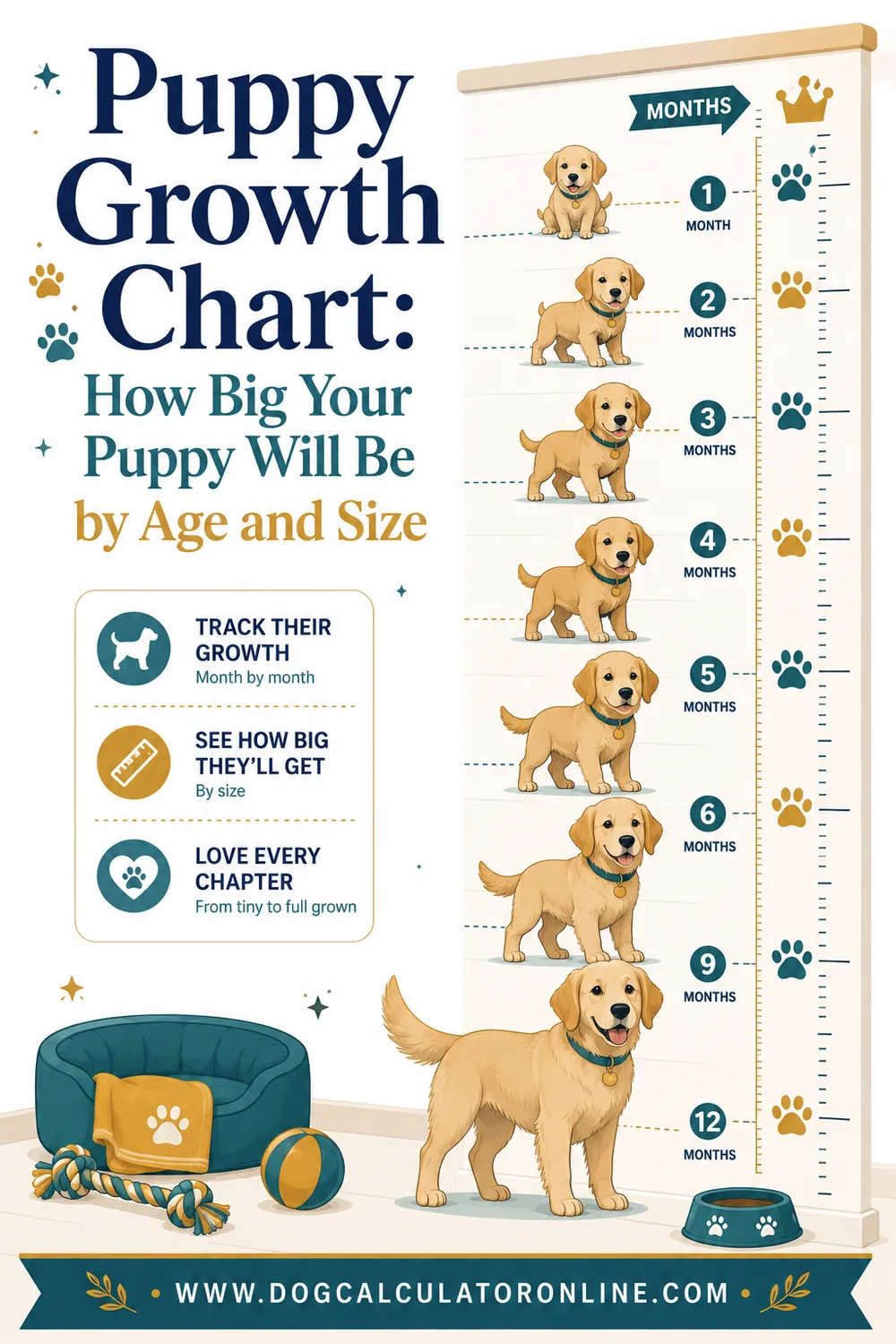
Want an exact daily amount? Our free puppy feeding calculator does it from your puppy's age and expected adult weight. Then check the puppy growth chart to see what size they're headed for, and the how much to feed a puppy guide for meal-by-meal detail.