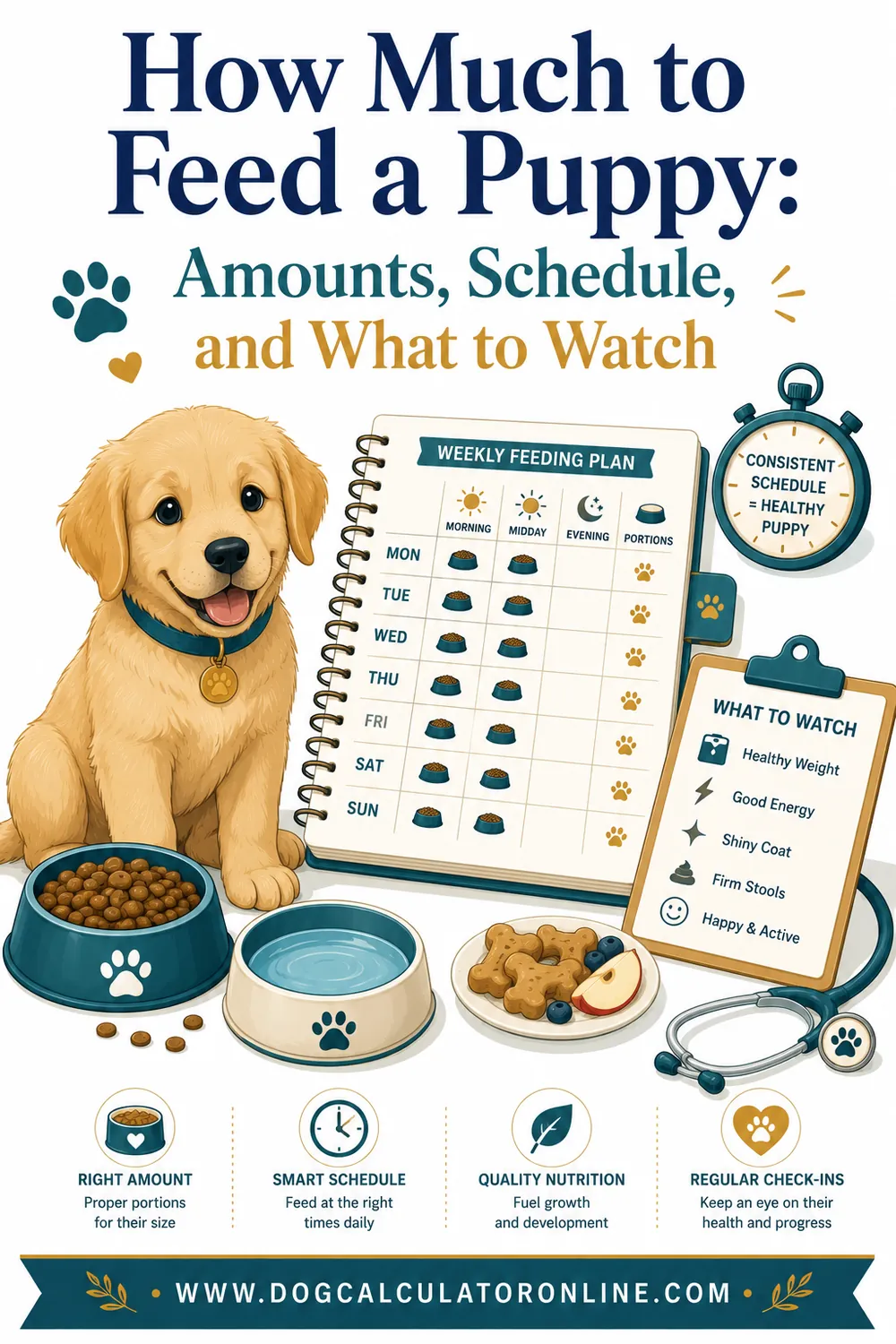
How Much to Feed a Puppy: Amounts, Schedule, and What to Watch
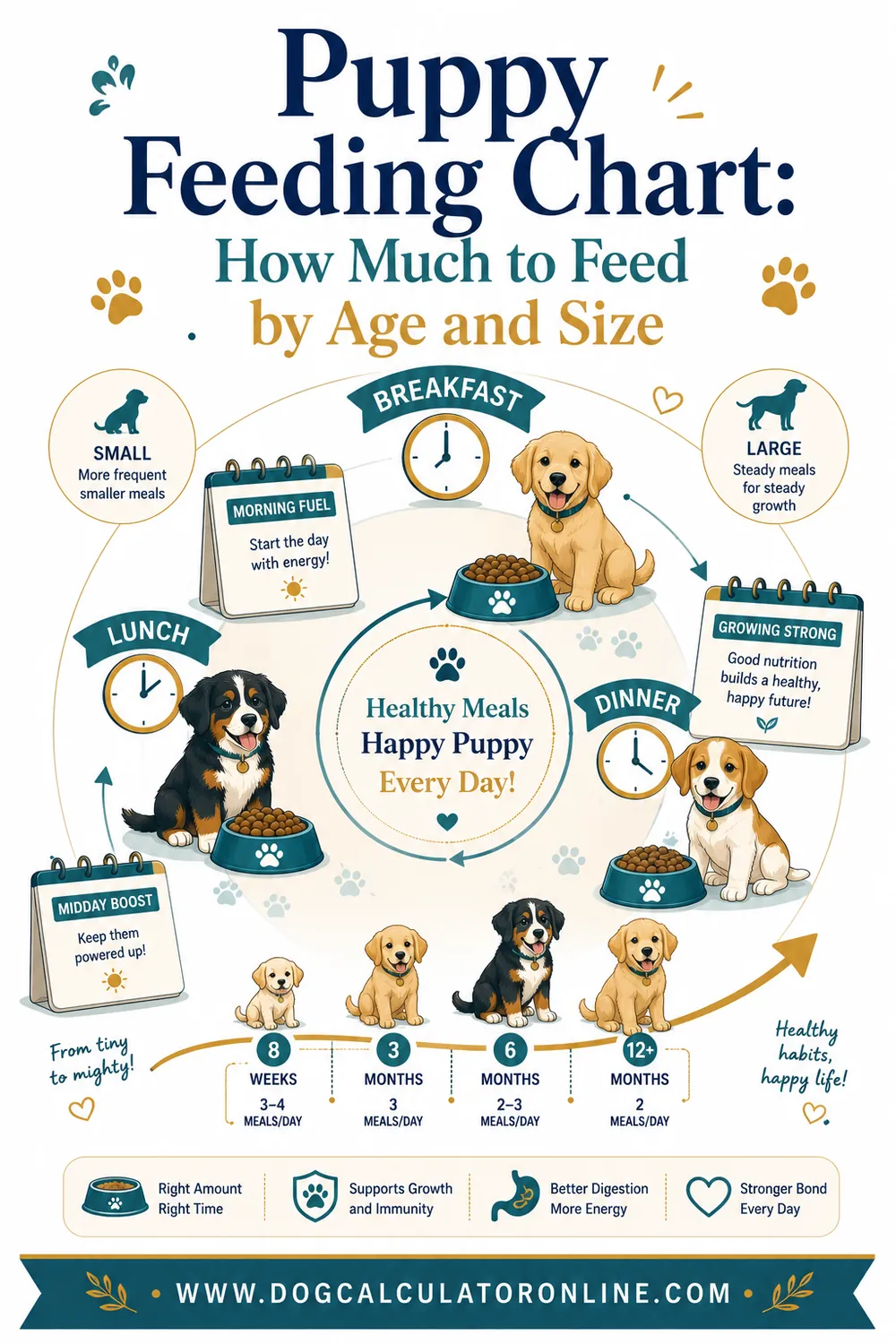
Feed a puppy by its expected adult size and age, using a quality puppy food, split into several small meals: four meals a day at 8–12 weeks, three at 3–6 months, and two after 6 months. A medium-breed puppy typically eats around 1–2 cups a day early on, rising to 2–3 cups by 5–6 months. Your food's label and your puppy's body condition are the final word — and your vet can fine-tune it.
For a personalized number, our free puppy feeding calculator uses your puppy's age and expected adult weight. Here's how to get it right at every stage.
🐾 How much to feed a puppy (per day, dry food)
Tap your puppy's expected adult weight for a rough daily amount at 3–4 months:
Tap a size above for a starting daily amount.
Start With the Bag — Then Adjust
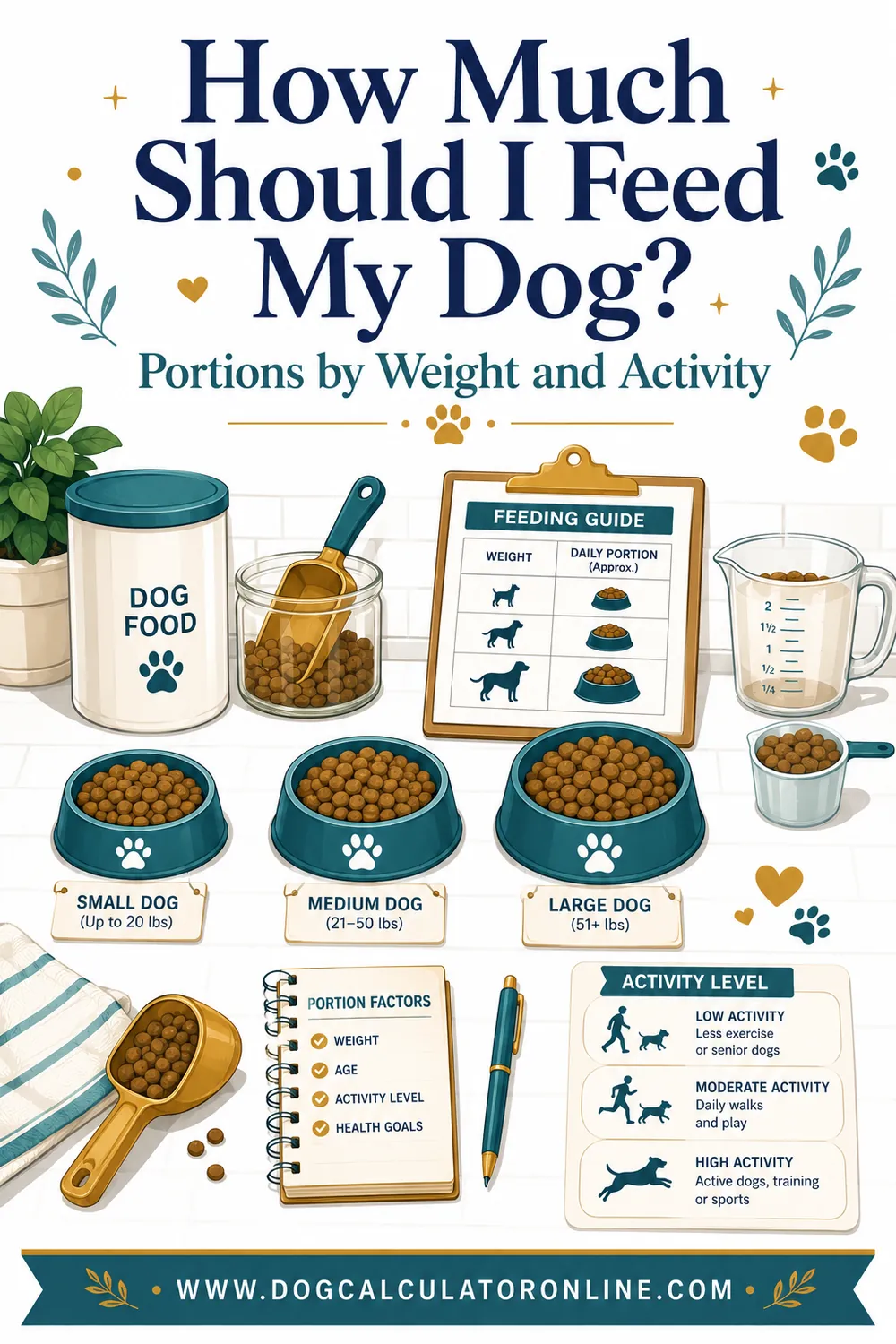
Every puppy food prints a feeding chart based on your puppy's weight and age. That's your baseline. But bag charts are generous by design and assume an "average" puppy, so treat the number as a starting point, not a rule.
Two adjustments make it accurate:
- Read the calories. Foods range widely — often 350 to 500+ calories per cup. A richer food means smaller portions. Our puppy feeding calculator lets you enter your food's calories for a precise cup amount.
- Watch the body. Feel for ribs and look for a slight waist. Adjust up or down about 10% and recheck in a couple of weeks.
How Much, by Age and Size
Here's a quick-reference guide to total daily dry food (before splitting into meals). Feed by expected adult size.
| Expected adult size | 2–3 months | 4–5 months | 6–8 months |
|---|---|---|---|
| Small (3–12 lb) | ⅓–1 cup | ½–1¼ cups | ½–1 cup |
| Medium (20–50 lb) | 1–2 cups | 2–3 cups | 2–3 cups |
| Large (50–80 lb) | 2–3½ cups | 3½–5 cups | 4–6 cups |
| Giant (80 lb+) | 3–4 cups | 4½–6 cups | 5–7 cups |
Amounts climb through the fast-growth months, then level off as your puppy nears adult size. For the fuller version with more age bands, see our puppy feeding chart.
Meal Schedule by Age
Puppies do best with small, frequent meals:
- 8–12 weeks: 4 meals a day. Little stomachs, big needs. Small-breed puppies especially need frequent feeding to keep blood sugar steady.
- 3–6 months: 3 meals a day. Bigger meals, less often. This is peak growth for many breeds.
- 6–12 months: 2 meals a day. The adult rhythm of breakfast and dinner. Small breeds may be ready for adult food; big breeds stay on puppy food longer.
Keeping meals on a schedule also anchors potty training — regular meals mean predictable bathroom trips.
Puppy Portions vs. Adult Portions
Puppies need roughly twice the calories per pound of an adult dog because they're building an entire body. That's why a 25-lb puppy can eat more than a 25-lb adult. As growth slows, calorie needs per pound fall toward adult levels — the signal to trim portions and, eventually, switch foods. Our adult feeding guide covers where they land afterward.
Choosing the Right Puppy Food
- Complete and balanced for growth. The label should say it meets AAFCO nutritional standards for "growth" or "all life stages."
- Size-matched. Large and giant breeds need a large-breed puppy formula with controlled calcium and calories to slow growth and protect joints. Feeding regular or adult food to a big-breed puppy can cause bone and joint problems.
- Consistency. Pick a good food and stick with it. Frequent switching upsets puppy stomachs. If you must change, transition over 7–10 days.
Wet Food and Treats
- Wet or mixed feeding: balance by calories. A can's calorie content lets you swap part of the dry amount without over- or under-feeding.
- Treats: keep under about 10% of daily calories. Training uses lots of treats, so use tiny pieces and count them against the day's total.
- Water: always available and fresh.
Reading Your Puppy's Body Condition
The most reliable gauge isn't the cup — it's the puppy:
- Ribs: easy to feel with gentle pressure, not sharply visible, not hidden under fat.
- Waist: a slight tuck behind the ribs, seen from above.
- Growth and stools: steady growth, good energy, firm and regular poop.
Aim for lean. A chubby puppy is not a health target, and in large breeds excess weight during growth is genuinely risky for the joints. Recheck condition every couple of weeks and adjust in small steps. Bring any concerns to your regular vet visits.
When to Switch to Adult Food
Growth-finish times set the timing:
- Small breeds: 9–12 months
- Medium breeds: ~12 months
- Large breeds: 12–18 months
- Giant breeds: 18–24 months
Transition gradually over a week or so. Staying on puppy food past growth leads to weight gain, since it's more calorie-dense than adult food.
What If My Puppy Won't Eat?
A puppy skipping the occasional meal during a busy, exciting day isn't unusual, but it's worth paying attention. Common, fixable reasons include:
- Too many treats or table scraps. A puppy filling up on snacks won't want its meal. Cut back on extras.
- Free-choice food left out. If food is always available, a puppy grazes and may seem uninterested at mealtime. Switch to scheduled meals.
- A recent food change made too fast. Sudden switches upset stomachs. Transition gradually over 7–10 days.
- Stress or a new environment. New puppies adjusting to a home may eat lightly for a day or two.
- Picky habits you've trained in. Adding tasty toppers every time a puppy refuses teaches them to hold out. Offer the meal, give 15–20 minutes, then pick it up.
That said, a very young puppy — especially a small breed — that refuses food for more than a day, or that's also lethargic, vomiting, or has diarrhea, needs a vet promptly. Little puppies can develop low blood sugar quickly. When in doubt, call your vet.
Common Mistakes to Avoid
- Feeding by current weight instead of adult weight. Puppy charts are built around final size.
- Free-feeding. Blocks portion control and hides appetite changes.
- Overfeeding to "grow a big dog." Genetics set the frame; extra food adds fat and risks joints.
- Not counting treats. They add up quickly during training.
- Ignoring meal-frequency changes. A 10-week-old needs four meals; one large meal is too much for a tiny stomach.
A Day in the Life: Sample Puppy Schedules
Puppies thrive on routine, and meals are the anchor. Here are two example days.
10-week-old puppy (4 meals):
- 7:00 am — Meal 1, then potty break
- 11:00 am — Meal 2, then potty and play
- 3:00 pm — Meal 3, then potty
- 7:00 pm — Meal 4 (last meal a few hours before bed helps overnight)
5-month-old puppy (3 meals):
- 7:00 am — Breakfast, then potty and a walk
- 12:30 pm — Lunch, then potty
- 6:00 pm — Dinner, then evening potty routine
Notice how each meal pairs with a potty trip — food in leads to output out, usually within 15–30 minutes for young puppies. Predictable meals make house-training dramatically easier.
Free-Feeding vs. Scheduled Meals
Leaving a full bowl out all day (free-feeding) seems convenient, but for puppies it's a mistake:
- You lose portion control, which makes it easy to overfeed.
- You can't spot appetite changes — a puppy going off its food is an early illness clue you'd miss.
- It undermines potty training, because you can't predict when your puppy needs to go.
Scheduled meals fix all three. Put food down, give your puppy 15–20 minutes, then pick up whatever's left. Most puppies quickly learn to eat when food appears.
Water and Hydration
Growing puppies need steady access to fresh water — keep the bowl full during the day. Many owners lift the water an hour or two before bedtime to help with overnight house-training, which is fine as long as your puppy is well hydrated during the day. If your puppy seems to drink excessively or barely at all, mention it to your vet.
Three Puppies, Three Feeding Plans (Worked Examples)
Seeing the process end-to-end makes it click. Here's how the same method plays out for three very different pups — all amounts are estimates to sanity-check against your own bag's chart.
Bella, a Yorkie expected to reach 7 lb. At 10 weeks she's on four meals a day, totaling roughly ½–¾ cup of small-breed puppy food. The portions look comically small, but that's correct for a toy breed — the bigger job is keeping meals frequent so her blood sugar stays steady. Her owner uses a kitchen scale, because at these amounts an extra "pinch" per meal is a meaningful overfeed.
Cooper, a Lab mix expected to reach 70 lb. At 4 months he's on three meals totaling about 3½–5 cups of large-breed puppy formula. His owner's main concern isn't hunger — Labs are always hungry — it's keeping him lean, because fast, heavy growth is exactly what stresses big-breed joints. Portions get checked against his ribs every two weeks, not against his pleading eyes.
Daisy, a 30-lb-adult-expected mixed breed. At 6 months she's down to two meals totaling around 2–3 cups. Her owner recently recalculated after noticing she was leaving a little food behind — a normal sign that her fast-growth phase is winding down and the daily total can ease back.
Same rules, three different plans. That's the whole trick: the method is universal, the numbers never are.
Expect the Amount to Change — Recalculate Monthly
One of the most common puppy-feeding mistakes is treating the first number you calculate as permanent. A puppy's needs are a moving target: the daily total climbs through the fast-growth months, plateaus, and then — surprisingly to many owners — often drops slightly as growth winds down, right before the switch to adult food.
A simple habit solves it: once a month, weigh your puppy, rerun the numbers (our puppy feeding calculator takes seconds), and compare against the bag's chart for the new weight. If the fresh number differs from what you're scooping, adjust gradually rather than all at once. Owners who skip this tend to keep feeding peak-growth portions to a nearly grown dog, which is how so many one-year-olds end up pudgy.
Feeding Puppies in a Multi-Dog Home
Add an older dog — or a second puppy — and mealtime gets complicated fast:
- Feed separately. Different bowls, ideally different spots or rooms. It prevents food stealing, guarding squabbles, and the mystery of who actually ate what.
- Keep the adult out of the puppy food. Calorie-dense puppy food will quietly fatten up an adult dog who "helps" with leftovers.
- Keep the puppy out of the adult food. The reverse problem: adult food doesn't have the nutrient balance a growing puppy needs, and a puppy filling up on it will snub its own meals.
- Supervise until routines stick. Pick up all bowls after 15–20 minutes so there's nothing to raid later.
If one dog wolfs food and the other grazes, separate rooms with closed doors is the simplest fix — cheaper than a microchip feeder and just as effective for most homes.
FAQ
How much should I feed my 8-week-old puppy?
Follow the bag's chart for your puppy's weight, split into four small meals a day. A medium-breed pup often eats around 1–2 cups total daily at this age. Adjust to body condition.
How many times a day should I feed a puppy?
Four meals at 8–12 weeks, three at 3–6 months, and two after 6 months.
Should I feed my puppy by current or adult weight?
By expected adult weight — that's what puppy feeding charts and the puppy feeding calculator are based on.
Can I overfeed a puppy?
Yes. Overfeeding causes excess weight and, in large breeds, fast growth that stresses joints. Feed for lean growth and check body condition regularly.
When do I switch from puppy to adult food?
Small breeds at 9–12 months, medium around 12 months, large 12–18 months, giant 18–24 months. Transition gradually over 7–10 days.
How much should a puppy weigh at each age?
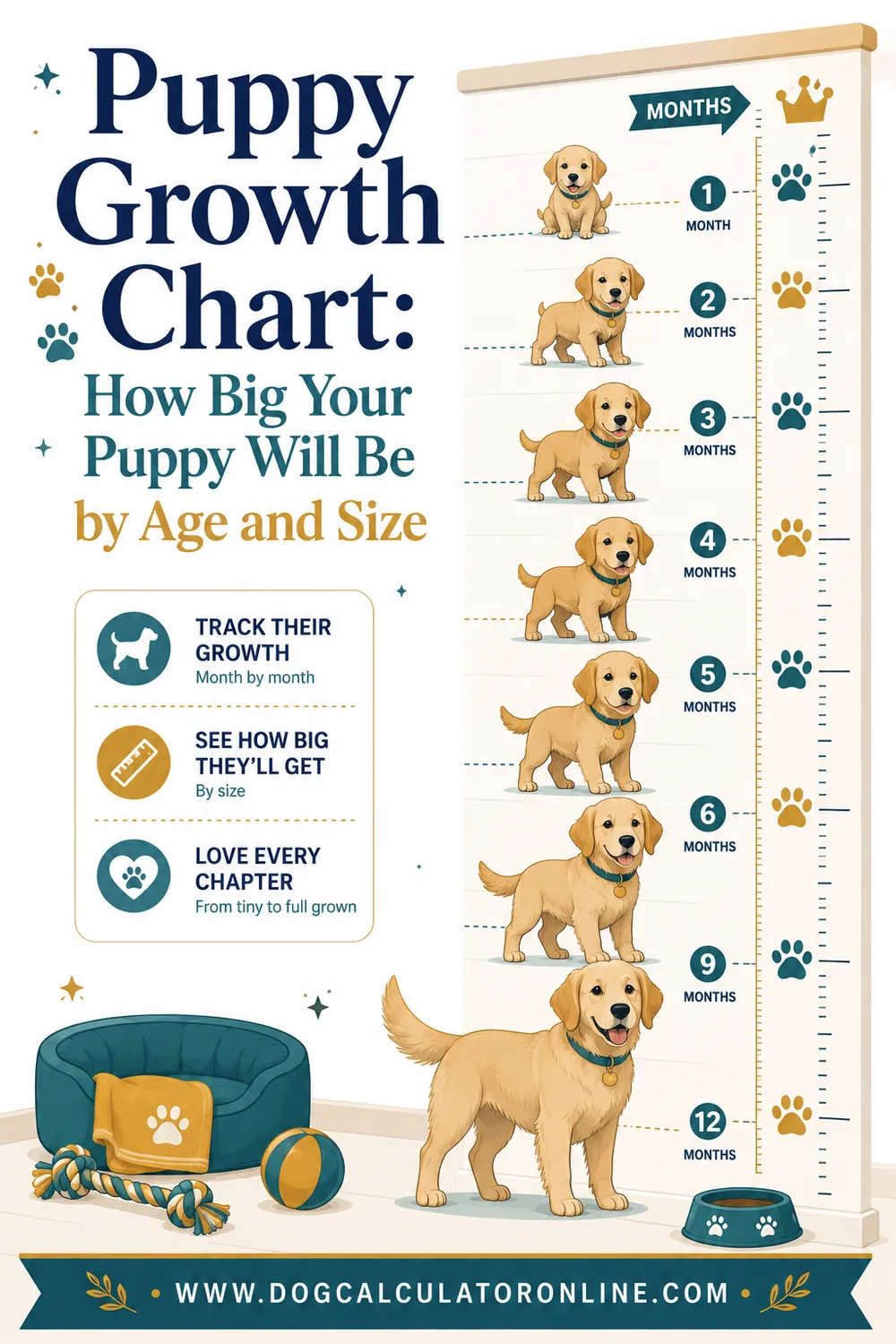
It varies by breed, but most puppies are about half their adult weight by 4 months. See our puppy growth chart for percentages by size.
Is it okay to soften kibble with water?
Yes — a splash of warm water is a common trick for very young puppies and teething pups with sore gums. Let it sit a few minutes to soften. Just don't leave moistened food out long, as it spoils faster than dry kibble.
My puppy always acts hungry — should I feed more?
Not necessarily. Most puppies (and plenty of adult dogs) will eat with gusto no matter the portion, so appetite is a terrible portion guide. Judge by body condition instead: ribs easy to feel, slight waist from above. If those check out, the begging is theater.
The Bottom Line
How much to feed a puppy comes down to expected adult size, age, and — above all — body condition. Start with the bag's chart, split food into age-appropriate meals (four, then three, then two), use a size-matched puppy food, and keep your pup lean. Adjust in small steps and confirm with your vet.
Want an exact daily amount? Our free puppy feeding calculator does it from your puppy's age and expected adult weight. Pair it with the puppy feeding chart for the full age-by-age table and the puppy growth chart to track their size.