Puppy Potty Training Schedule: The Hour-by-Hour Plan That Works
The core of every successful puppy potty training schedule is one rule: a puppy can hold it for roughly one hour per month of age — so an 8-week-old needs a potty break every one to two hours, plus immediately after waking, eating, and playing. Build your day around those trigger moments, reward outdoor success every single time, and most puppies are reliably trained by four to six months. Want the routine matched to your puppy's exact age? The free dog calculators on our homepage help you dial in feeding times, which drive potty times.
How Often Does a Puppy Need to Go Out?
Start with the month-plus-one guideline: a puppy can typically hold its bladder for about as many hours as its age in months, give or take one. It's a ceiling, not a target — going out more often than the maximum is always fine and speeds up training.
| Puppy age | Maximum hold time (daytime) | Trips outside per day |
|---|---|---|
| 8 weeks | 1–2 hours | 10–12+ |
| 12 weeks | 2–3 hours | 8–10 |
| 16 weeks | 3–4 hours | 6–8 |
| 6 months | 5–6 hours | 4–6 |
| 1 year+ | 6–8 hours | 3–5 |
On top of the clock, four moments trigger a potty need almost every time:
- Waking up — from overnight sleep and from every nap
- After eating or drinking — usually within 5 to 20 minutes
- After play — excitement wakes up the bladder
- Before bed — the last trip of the night
If you only remember one thing from this article: the clock plus the four triggers is the entire system. Everything else is detail.
Sample Schedule for an 8-Week-Old Puppy
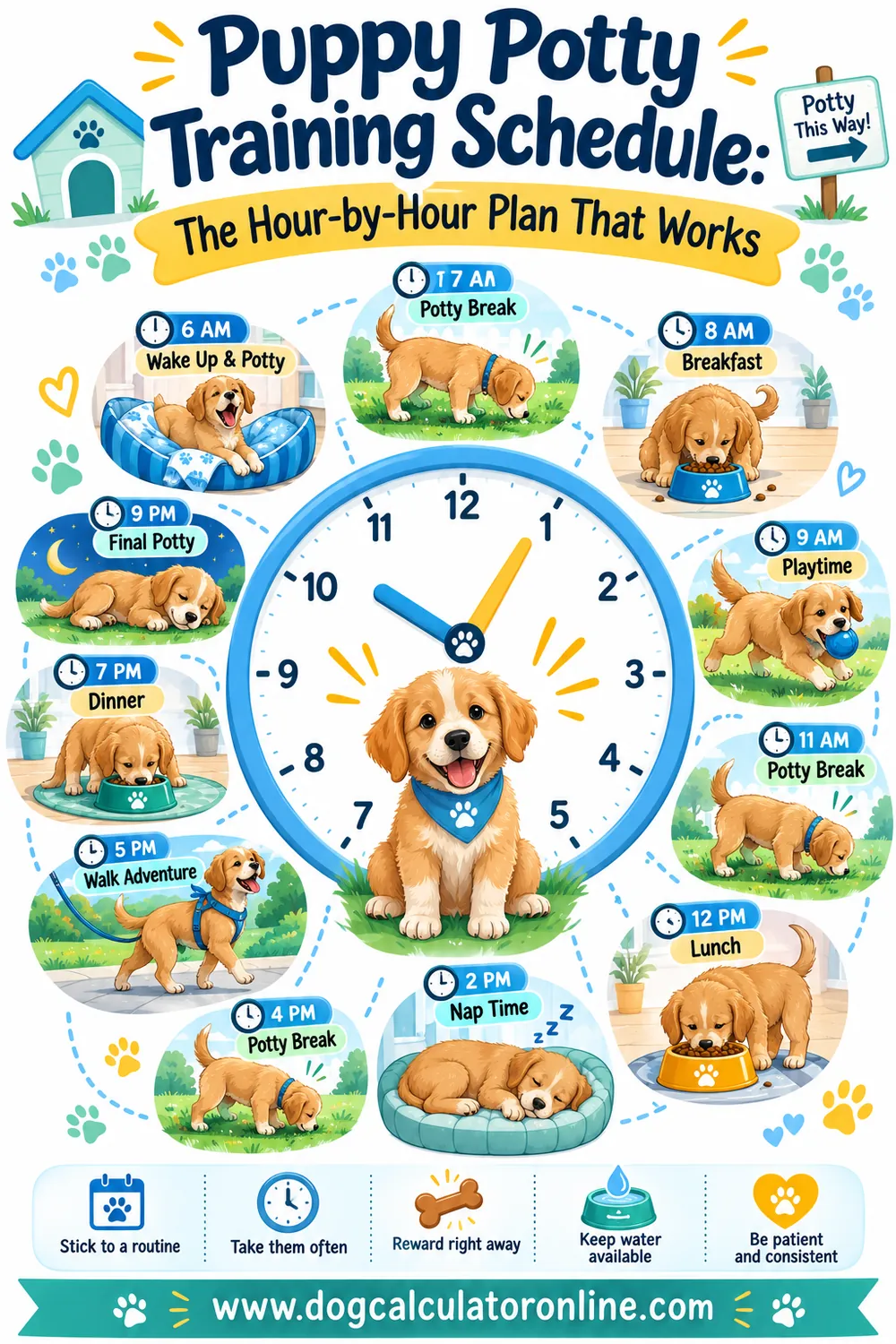
Here's a realistic weekday with a young puppy. Adjust the times to your life — it's the pattern that matters, not the exact hours.
- 6:30 am — Wake up, carry or hustle puppy straight outside. Praise + treat for success.
- 6:45 am — Breakfast, then back outside 10–15 minutes later.
- 7:15 am — Play and a 5-minute training session.
- 8:00 am — Nap in the crate.
- 9:30 am — Wake from nap → outside immediately.
- 9:45 am — Water, short play, sniffy time in the yard.
- 10:30 am — Crate nap.
- 12:00 pm — Outside → lunch → outside again 15 minutes later.
- 12:45 pm — Play, gentle handling practice, nap.
- 2:30 pm — Outside → play → nap.
- 4:30 pm — Outside → training game → nap.
- 6:00 pm — Outside → dinner → outside 15 minutes later.
- 7:00 pm — Family time, calm play.
- 8:30 pm — Last water of the evening.
- 9:30 pm — Final potty trip, then bed in the crate.
- Overnight — one trip out around 1:00–2:00 am for the first couple of weeks. Keep it boring: out, potty, praise quietly, back to bed. No play.
Notice how much napping there is. Puppies sleep 18–20 hours a day, and a rested puppy has far better bladder control and learns faster. If your puppy is biting everything and ricocheting off the furniture, the answer is usually a nap, not more exercise.
The Method: Five Rules That Do All the Work
1. Reward outside, every time
Keep treats by the door. The moment your puppy finishes going outside — not after you walk back in — praise and treat. The reward has to land within a second or two of the act for the connection to form. Add a cue word ("go potty") as they start, and within weeks you'll have a puppy that goes on request.
2. Supervise or confine — no third option
Accidents happen in the gap between "loose in the house" and "actually being watched." When you can't give your puppy your eyes, they go in the crate or playpen. A crate that's the right size — big enough to stand and turn around, small enough that a corner can't become a bathroom — does half the training for you. Our guide to what size crate for my dog covers exact dimensions.
3. Interrupt, don't punish
Catch them mid-accident? A cheerful clap or "oops! outside!" and hustle them out to finish. If they finish outside, reward like it never went wrong. Never scold, yell, or rub a puppy's nose in an accident — it doesn't teach "don't go inside," it teaches "don't go where the human can see," which creates a dog that hides behind the couch to pee.
4. Clean with an enzyme cleaner
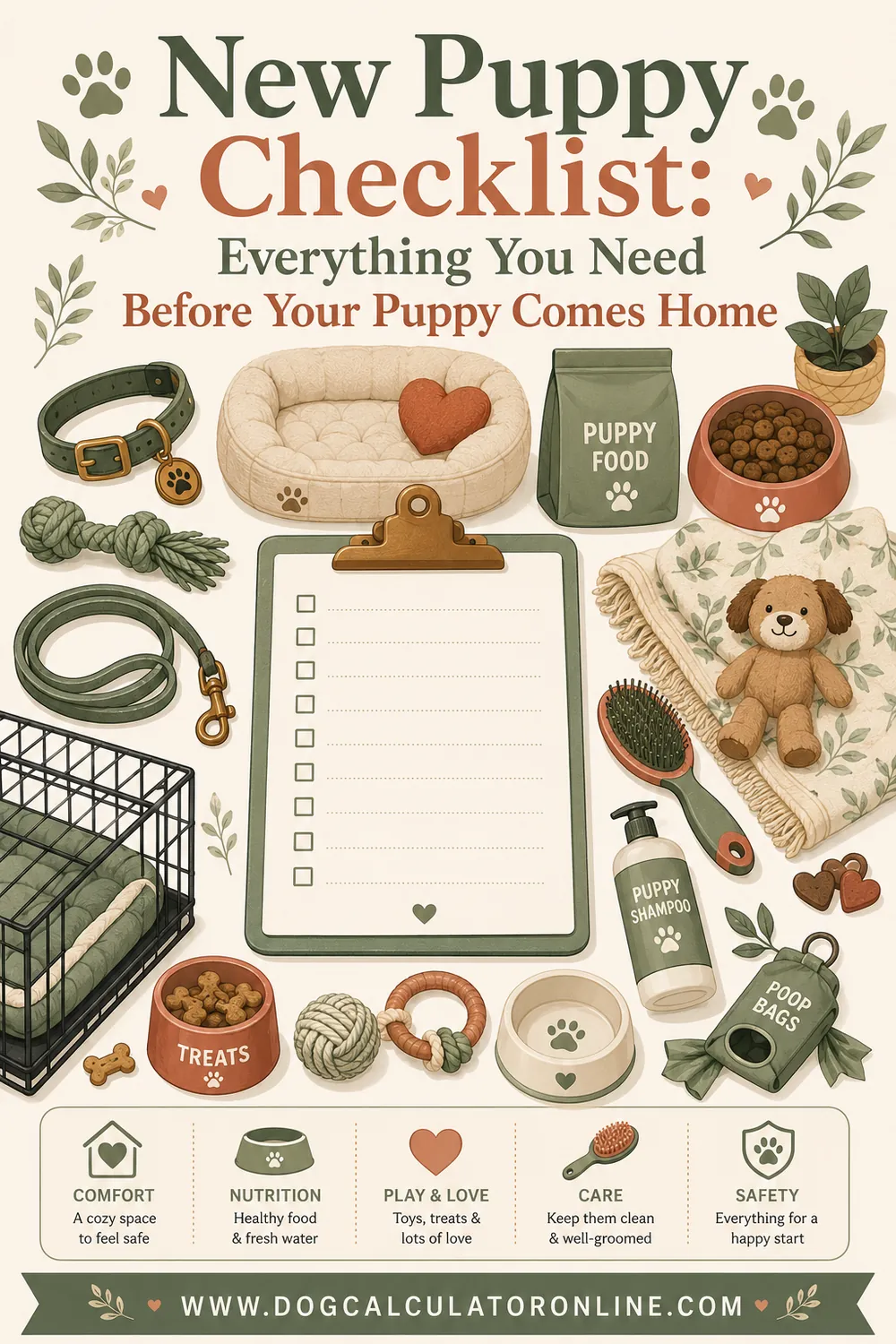
Puppies re-mark spots that smell like urine, and their noses beat any regular cleaner. An enzymatic cleaner actually breaks down the odor compounds. This is the least glamorous, most important product on the new puppy checklist.
5. Feed on a schedule
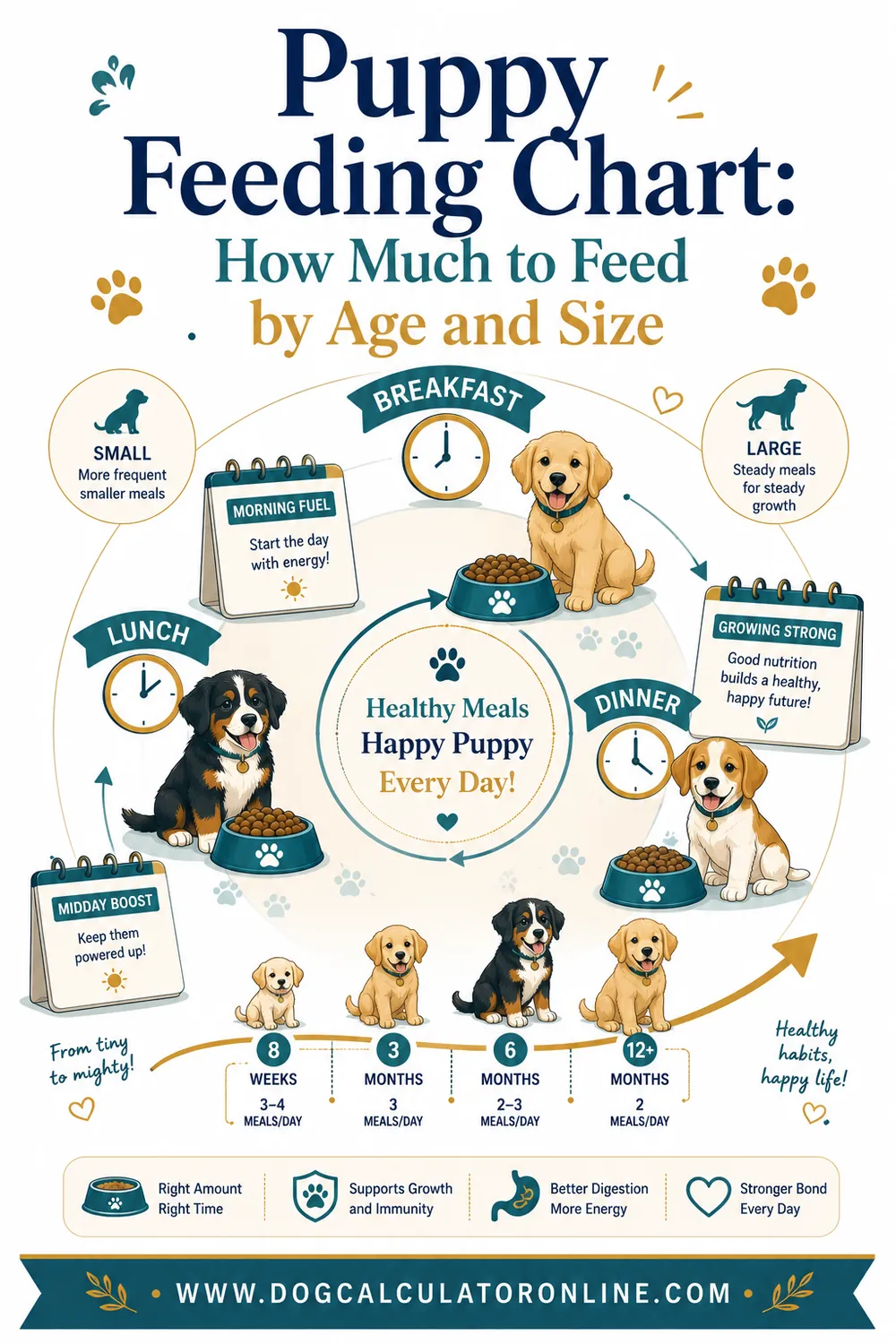
What goes in on a schedule comes out on a schedule. Free-feeding (leaving food down all day) makes potty timing nearly impossible to predict. Set meal times — our puppy feeding chart shows how many meals per day by age — and the potty schedule almost writes itself.
Nighttime Potty Training
Nights improve fast if you set them up right:
- Last water about an hour before bed; last potty trip right before lights out.
- Crate near your bed at first — you'll hear genuine "I need to go" whining (it sounds urgent and persistent, different from protest whining, which fades after a few minutes).
- Overnight trips are all business. Minimal light, no talking beyond quiet praise, straight back to the crate.
- Most puppies sleep through the night — roughly six to eight hours — somewhere between 12 and 16 weeks.
Troubleshooting Common Setbacks
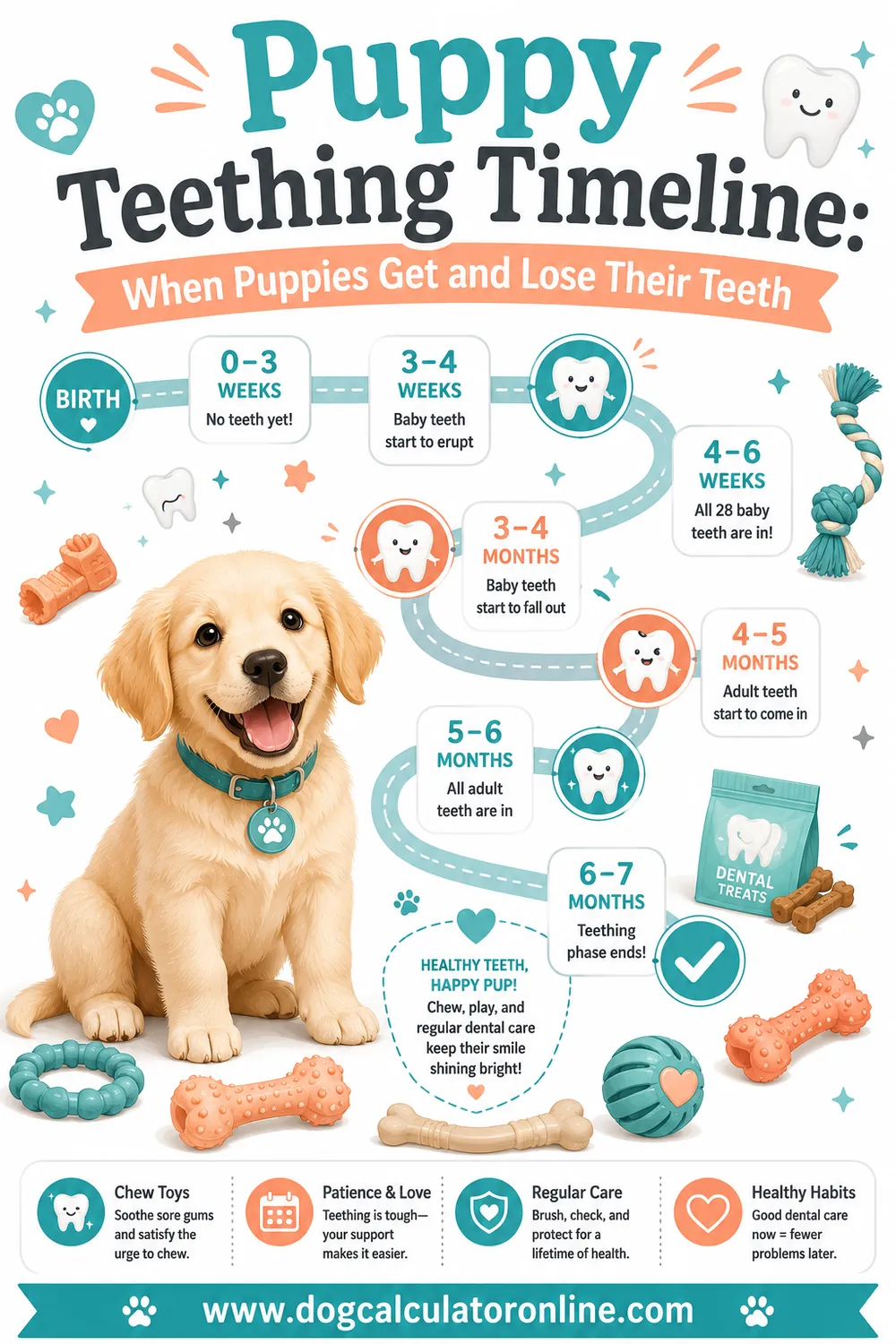
Regression around 4–6 months. Very common and usually temporary — adolescence, teething discomfort (see our puppy teething timeline), and growing confidence all collide. Tighten the schedule back up for a week or two.
Accidents only when you're gone. That's a supervision gap, not spite. Dogs don't do spite. Shrink the unsupervised space and lower the alone-time duration, then rebuild.
Suddenly peeing frequently in tiny amounts. Call your vet — urinary tract infections are common in puppies and no schedule can out-train one.
Going outside, then peeing inside 10 minutes later. Usually the outdoor trip was too exciting to finish the job. Stay out a few minutes longer, keep it calm, and reward only after they're truly done.
How Long Does Potty Training Take?
Honest answer: most puppies are reliably potty trained between four and six months old, with the occasional accident possible up to a year. Small breeds often take a little longer — tiny bladders, and tiny accidents that are easy for owners to miss (which means missed training moments). Consistency compresses the timeline more than any other factor: households where everyone follows the same schedule and rules train puppies dramatically faster than households where the rules change from person to person.
Apartment Potty Training: The Elevator Problem
High-rise living adds one hard constraint: the trip outside takes minutes, and an 8-week-old bladder doesn't always have minutes. Three adjustments make it work:
- Carry the puppy out for the first few weeks. A carried puppy almost never has an accident en route; a walking puppy in a hallway often does.
- Pick one relief spot near the building entrance and go there every single time. Familiar smells cue the behavior fast, which shortens every trip.
- If you must use an indoor option, make it one specific, permanent station — a real-grass patch or litter tray on a balcony or by the door, not pads scattered around. One consistent "legal" spot is trainable; general indoor permission is not. Plan to phase it out (or keep it deliberately, as many high-rise owners do — it's a valid permanent setup for small dogs).
Bell Training: Give Your Puppy a Doorbell
Once the schedule is working, teach your puppy to ask. Hang a bell on the door handle at nose height, and touch the puppy's paw or nose to it every time you head out for a potty trip — then immediately open the door. Most puppies connect "ring = door opens = relief" within one to two weeks and start ringing on their own.
Two rules keep it useful: always answer the bell (an ignored bell un-trains itself), and keep bell trips boring — straight to the potty spot and back. Some clever puppies discover the bell also summons playtime outside; if yours starts ringing every ten minutes, answer with the world's least exciting 90-second potty trip and the false alarms fade.
FAQ
How often should I take my 8-week-old puppy out?
Every one to two hours during the day, plus immediately after waking, eating, drinking, and playing — typically 10 or more trips a day at first. It's intense, but this stage only lasts a few weeks.
Should I use puppy pads?
Only if you truly need them (high-rise apartment, mobility limits, very long workdays). For everyone else, pads add a middle step — teaching indoor-is-sometimes-okay — that you'll have to untrain later. Going straight to outside is faster for most homes.
How long can a puppy hold it overnight?
Longer than during the day, because sleep slows the body down. An 8-week-old usually needs one overnight trip; by 12 to 16 weeks most puppies can sleep six to eight hours dry.
My puppy was trained and started having accidents again. Why?
Adolescent regression around four to six months is normal — tighten the routine for a couple of weeks. If accidents are frequent, small, or come with straining, see your vet to rule out a urinary tract infection.
When can I trust my puppy loose in the house?
Gradually, room by room, after about four weeks accident-free. Full freedom typically comes somewhere between six months and a year, depending on the puppy and how consistent the training has been.
Does breed size affect potty training?
Yes, somewhat. Toy breeds have small bladders and often take longer to become fully reliable, while large-breed puppies tend to physically mature control a bit faster. The method is identical either way.
Stick to the Schedule — It Works
Potty training isn't complicated; it's just relentless for about eight weeks. Clock plus triggers, reward outside, supervise or confine, clean with enzymes, feed on schedule. That's the whole game. To get the supporting numbers right — meal sizes, meal times, growth expectations — use the free dog calculators and set your puppy up for an accident-free house.