What Size Crate for My Dog? Crate Size Chart by Breed and Weight
The right dog crate size is simple to find: measure your dog from the tip of the nose to the base of the tail (not the tail tip) and add 2 to 4 inches — that's your minimum crate length. Your dog should be able to stand up without crouching, turn around, and lie down stretched out, but not have so much extra room that one end becomes a bathroom. Below you'll find the full size chart by breed and weight — and if you have a puppy, our free puppy weight predictor helps you buy the adult-size crate right the first time.
How to Measure Your Dog for a Crate
Grab a soft tape measure (or a piece of string and a ruler) and take two measurements while your dog is standing normally:
- Length: from the tip of the nose to the base of the tail — where the tail meets the body, not the tail tip. Add 2–4 inches. That's your minimum crate length.
- Height: from the floor to the top of the head — or to the ear tips for dogs with tall, erect ears (think German Shepherds and Corgis). Add 2–4 inches. That's your minimum crate height.
Why the base of the tail and not the tip? Because tails flex — including the tail tip would push many dogs into crates a full size too big. And why only 2–4 inches of margin? A crate is a den, not a playpen. Dogs actually settle better in a snug space, and for potty training a too-big crate is the number one mistake: it gives the puppy room to sleep at one end and pee at the other.
The fit test once the crate arrives: your dog should be able to stand without hunching, turn around comfortably, and lie flat on their side with legs extended. If all three work, the size is right.
Dog Crate Size Chart by Breed
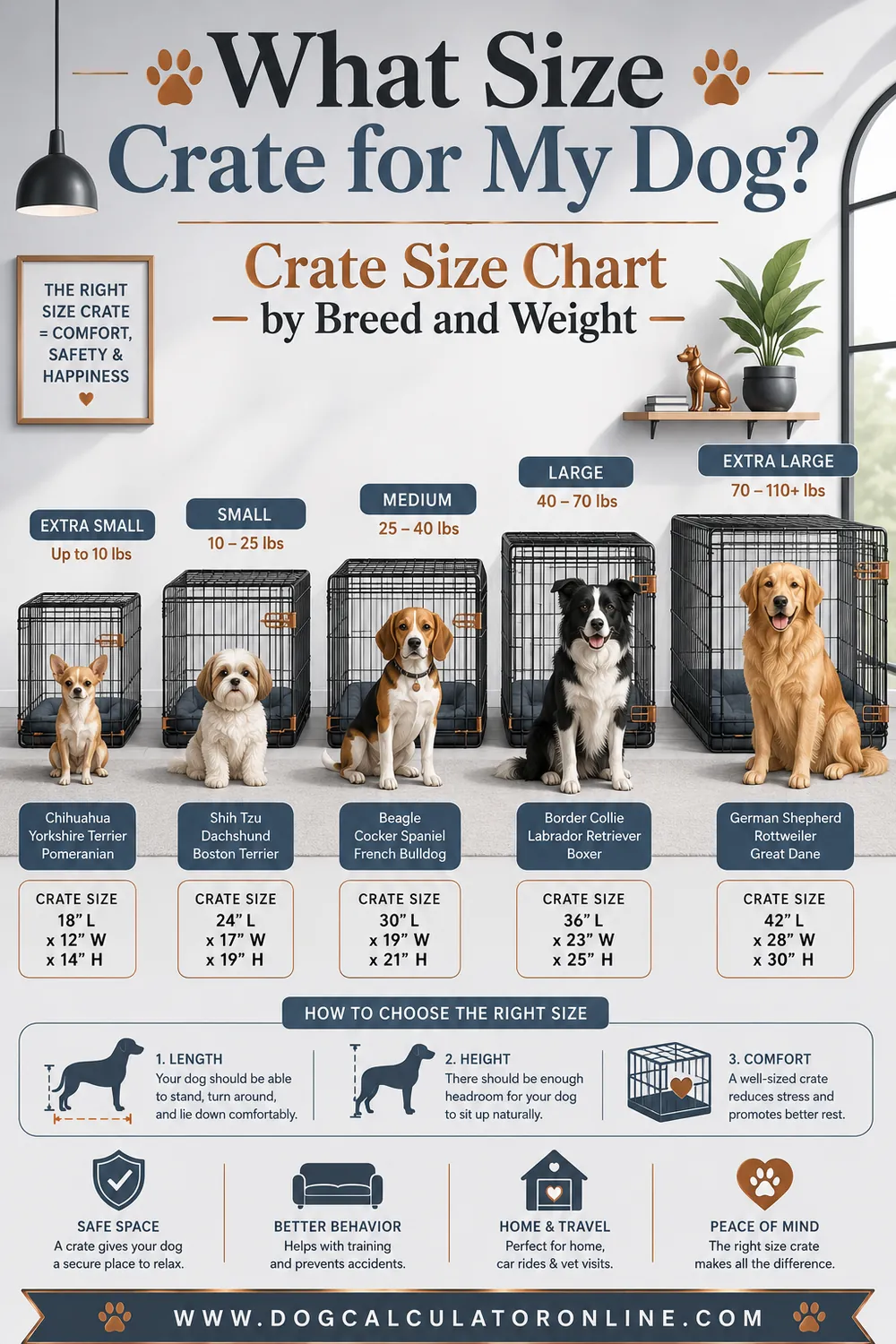
Crates are sold by length in inches. Here's how the standard sizes map to weight ranges and common breeds:
| Crate size | Dog weight | Example breeds |
|---|---|---|
| 18–22" (XS) | Under 12 lb | Chihuahua, Yorkshire Terrier, Toy Poodle, Pomeranian |
| 24" (S) | 13–25 lb | Pug, Shih Tzu, Miniature Dachshund, Maltese, Boston Terrier |
| 30" (M) | 26–40 lb | Beagle, French Bulldog, Cocker Spaniel, Miniature Schnauzer |
| 36" (L) | 41–70 lb | Bulldog, Border Collie, Australian Shepherd, Brittany |
| 42" (XL) | 71–90 lb | Labrador Retriever, Golden Retriever, German Shepherd, Boxer |
| 48" (XXL) | 91–110 lb | Rottweiler, Doberman, Alaskan Malamute, Bernese Mountain Dog |
| 54" (Giant) | 110+ lb | Great Dane, Mastiff, Saint Bernard, Irish Wolfhound |
Two important caveats:
- Weight is a guideline; length is the truth. A lean, long Greyhound and a stocky Bulldog can weigh the same but need very different crates. When your measurement and the chart disagree, trust the tape measure.
- Watch the height for tall-eared and long-legged breeds. A Standard Poodle may fit a 42" crate by weight but need a 48" for head clearance.
Buying a Crate for a Puppy? Buy the Adult Size
Puppies can multiply their weight several times over in the first year, and buying three progressively larger crates gets expensive fast. The smarter play:
- Estimate your puppy's adult size. Breed averages work for purebreds; for mixed breeds, a common rule of thumb is that a puppy's weight at 16 weeks roughly doubles by adulthood. Our free puppy weight predictor gives you a much better estimate from age and current weight, and our guide to how big your puppy will get explains all the methods.
- Buy the crate that fits the adult dog.
- Use a divider panel (included with most wire crates) to shrink the interior to puppy size, and move it back every few weeks as they grow.
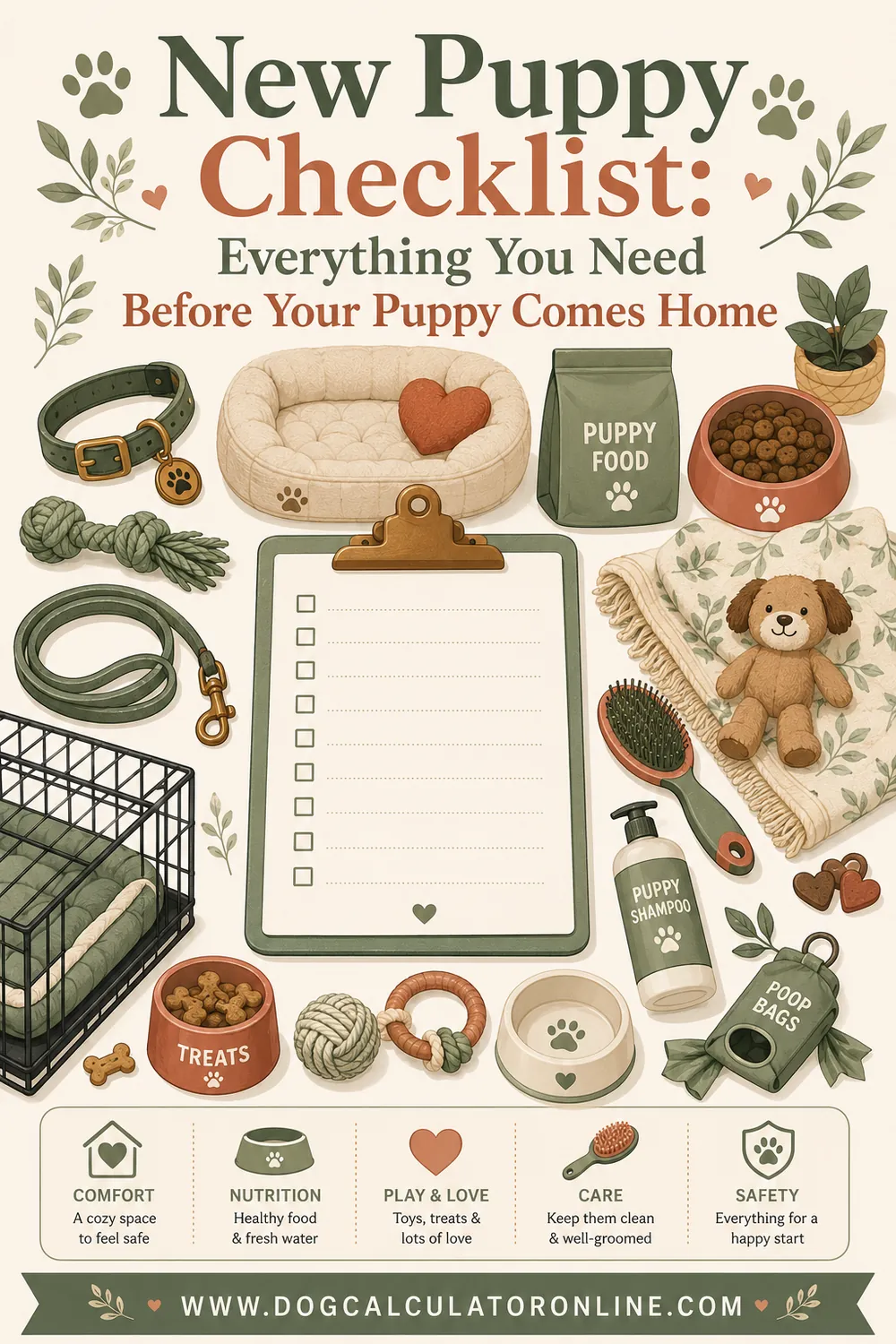
This gives you den-snugness for potty training now and the right crate forever — one purchase. It's a staple item on our new puppy checklist for exactly this reason.
Types of Crates: Which One Fits Your Life?
Size matters most, but material matters too:
- Wire crates — the default for good reason: great airflow, folds flat, comes with a divider, easy to clean. Best for home use and puppies. Add a cover blanket if your dog prefers a darker den.
- Plastic crates — enclosed and den-like; the only type approved for airline cargo travel. Slightly harder to clean, less airflow. Note that airline sizing rules are stricter than home sizing — airlines generally require the dog to stand fully upright with head clearance and add extra length margin, so check your carrier's specific requirements before flying.
- Soft-sided crates — light and portable, perfect for calm, crate-trained dogs at hotels or events. A determined chewer or scratcher will defeat one in minutes; not for puppies still learning.
- Furniture crates — wooden crate-and-end-table hybrids. Attractive, fine for settled adult dogs, expensive, and not chew-proof.
- Heavy-duty crates — reinforced steel for genuine escape artists. Most dogs never need one.
For a first crate, a wire crate with a divider is the right answer for probably nine out of ten households.
Crate Setup and Placement
Where the crate lives and what's inside it affect how quickly your dog accepts it:
- Location: a quiet corner of a room where the family actually spends time — dogs want to den near their people, not in exile. Avoid direct sunlight, drafts, and radiators.
- Bedding: washable mat or blanket. For heavy chewers, start with cheap towels until you know their style.
- Water: not needed for short stints; for longer stretches, a clip-on bowl or bottle avoids spills.
- Extras: a safe chew toy makes crate time pleasant. Skip anything they could shred and swallow unsupervised.
If you travel with your dog regularly, consider a second crate that lives in the car — a crash-tested travel crate or a plastic kennel secured in the cargo area is dramatically safer than a loose dog, and it means the familiar den comes along to hotels and relatives' houses. Same sizing rules apply: measure the dog, not the trunk.
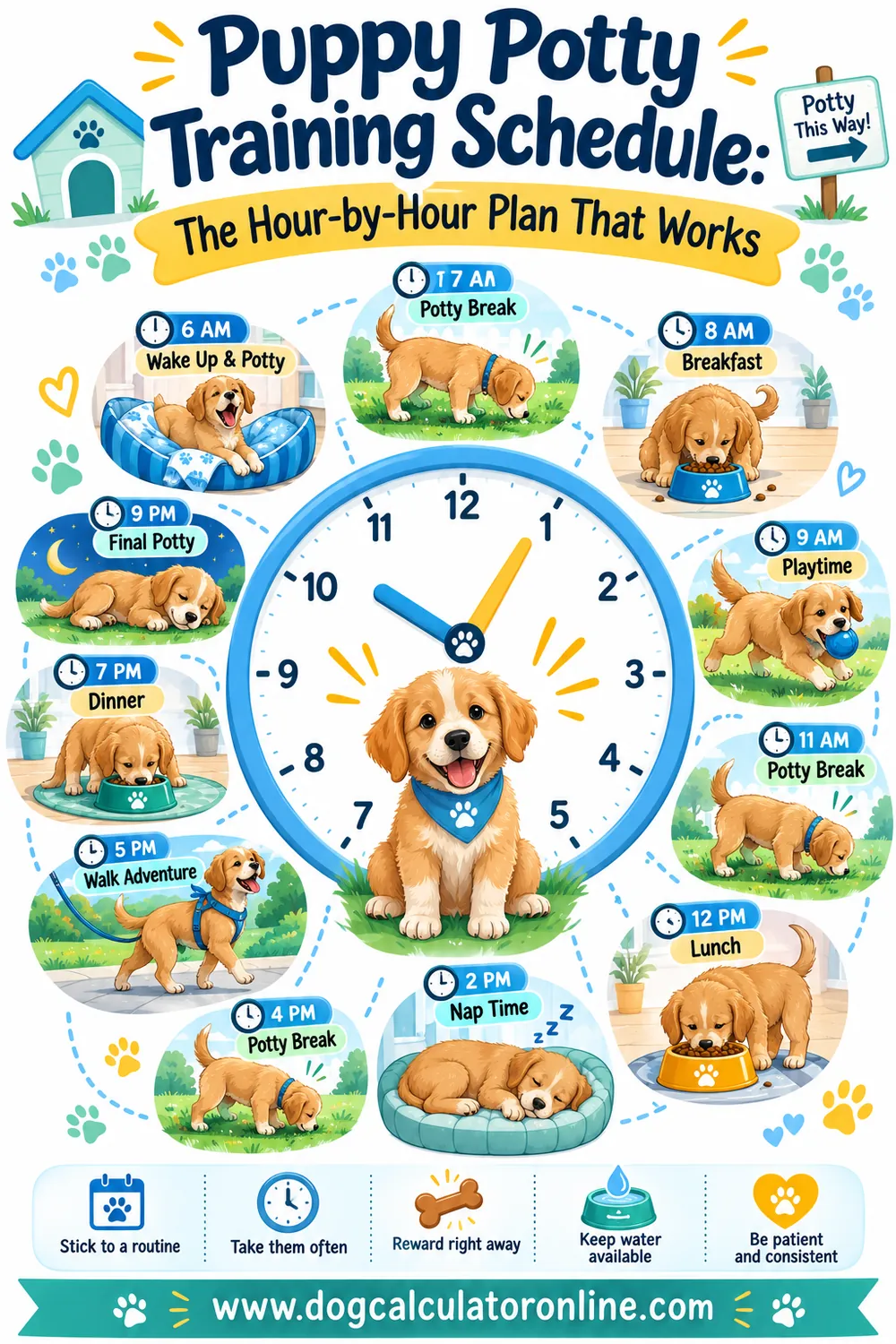
One more rule that has nothing to do with size: the crate is never punishment. It's the good place — where treats appear, meals happen, and naps are peaceful. A dog sent to the crate in anger learns to fear it, and you lose the single most useful tool in dog ownership. The crate also does heavy lifting in housetraining — see our puppy potty training schedule for how the two work together.
How Long Can a Dog Stay in a Crate?
Even a perfectly sized crate has time limits. Puppies can hold their bladders roughly one hour per month of age, so an 8-week-old maxes out around one to two hours during the day. Adult dogs should generally not be crated more than six to eight hours, and most do better with a midday break. If your schedule demands longer stretches, a playpen attached to the crate — or a dog walker — bridges the gap better than a bigger crate does.
Getting Your Dog to Love the Right-Sized Crate
A perfectly sized crate still needs a proper introduction. The fast, low-drama version:
- Door open, treats inside, zero pressure. Let your dog discover that good things live in the crate. Toss treats in and walk away.
- Feed meals in the crate with the door open for a few days, then closed just during the meal.
- Build duration in minutes, not hours. Close the door for two minutes while you sit nearby, then five, then ten while you leave the room.
- Pair it with a cue ("crate" or "bed") and reward every voluntary entry.
- Only open the door for calm. Letting a whining dog out teaches whining; wait for three seconds of quiet, then open.
Most puppies accept a crate within a week of this routine. Most crate problems trace back to skipping it — shoving a dog into a box and leaving for eight hours creates exactly the panic people then blame on the crate.
Common Crate Sizing Mistakes
- Buying by breed name alone. "Lab-sized" covers a 55-pound female and a 95-pound male. Measure your actual dog.
- Measuring to the tail tip. Adds 6–12 phantom inches and lands you a size too big — bad for potty training.
- Forgetting ear height. Erect-eared breeds need the ears-up measurement, or they'll crouch.
- Going huge to be "kind." Extra space isn't comfort to a dog; enclosure is. Oversized crates are the top cause of in-crate accidents.
- Ignoring the door opening. Some crates taper; check that the door itself gives comfortable clearance for broad-chested dogs.
FAQ
How do I know what size crate to get for my dog?
Measure nose to tail base and add 2–4 inches for length; floor to head (or ear tips) plus 2–4 inches for height. Then check the size chart above — but when weight charts and your measurement disagree, go with the measurement.
Is it better for a dog crate to be too big or too small?
Neither is good, but slightly big beats genuinely small — a dog must be able to stand, turn, and stretch out. For potty-training puppies, though, extra space actively works against you; use a divider to keep it snug.
What size crate does a Labrador need?
Most adult Labradors (typically 55–80 lb) fit a 42-inch crate. A particularly large male or a Lab mix with extra height may be more comfortable in a 48-inch.
Should I buy a bigger crate for my puppy to grow into?
Yes — buy the adult size with a divider panel, and expand the space as the puppy grows. You get proper snugness for training without buying multiple crates. A puppy weight predictor helps you pick the adult size accurately.
Can two dogs share one crate?
It's not recommended, even for bonded dogs. Crates are individual dens, and being confined together removes each dog's ability to get space — a common trigger for conflict. Two dogs, two crates, ideally side by side.
Do dogs actually like crates?
Properly introduced, yes — dogs are den animals, and most crate-trained dogs nap in theirs voluntarily with the door open. The key is gradual, positive introduction and never using the crate as punishment.
Measure Once, Buy Once
That's the whole method: tape measure, add 2–4 inches, check the chart, and for puppies buy the adult size with a divider. If you're not sure what "adult size" will be, let the free puppy weight predictor do the math — a two-minute check that saves you from buying the wrong crate twice.