Puppy Teething Timeline: When Puppies Get and Lose Their Teeth
Puppies teethe in two waves: 28 baby teeth erupt between 2 and 8 weeks, then fall out as 42 adult teeth replace them between roughly 12 weeks and 6 months — and that second wave is the chewing-tornado phase every owner remembers. By six to seven months, most puppies have their full adult set and the worst is over. Here's the complete timeline, what's normal (spoiler: finding tiny teeth in the carpet), and how to protect your furniture. And since teething runs alongside rapid growth, our free puppy weight predictor helps you track whether everything else is on schedule too.
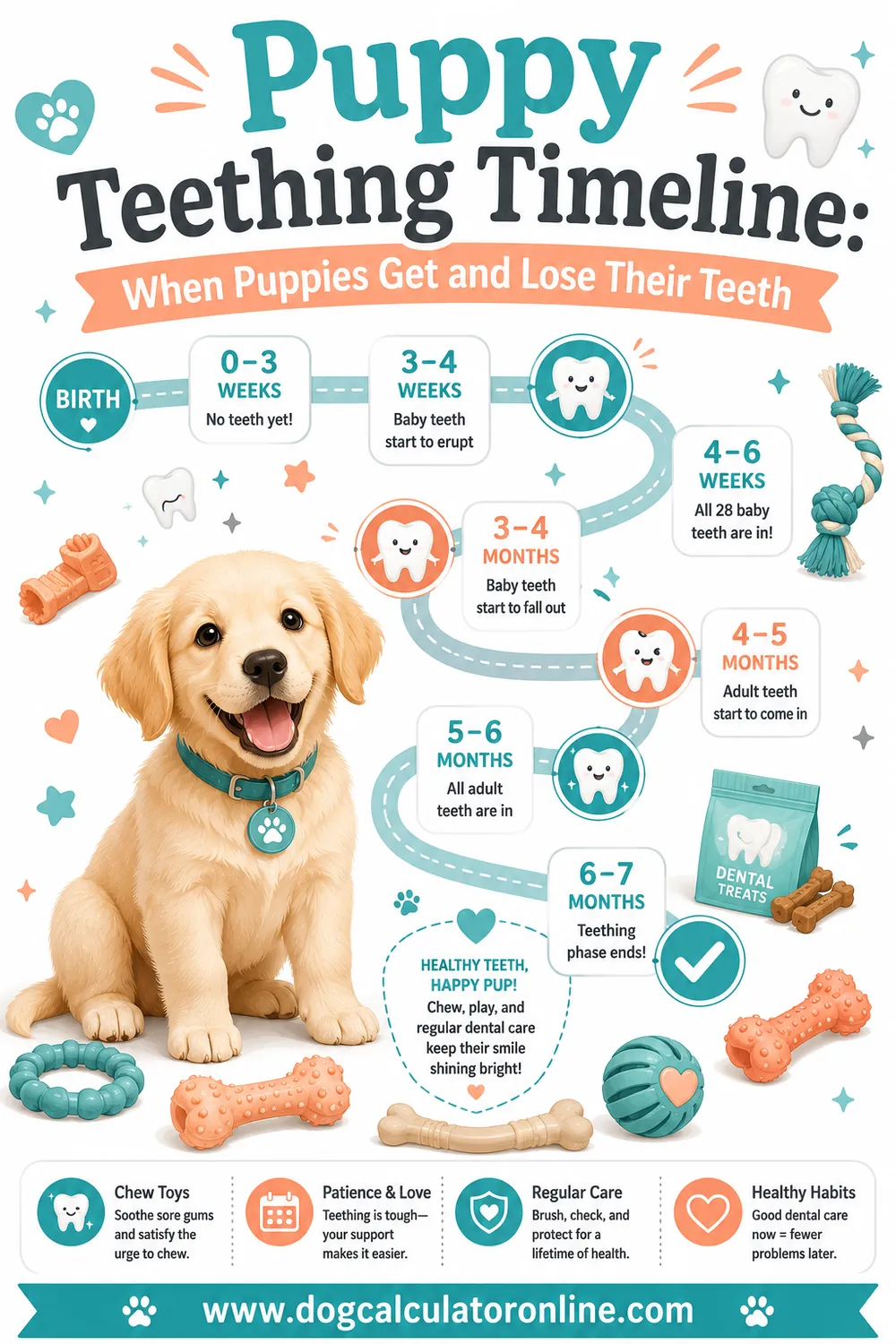
The Puppy Teething Timeline at a Glance
| Age | What's happening | Teeth count |
|---|---|---|
| Birth–2 weeks | No teeth; nursing only | 0 |
| 2–4 weeks | Baby incisors erupt, then canines | First of 28 |
| 5–6 weeks | Baby premolars arrive | ~28 coming in |
| 8 weeks | Full baby set complete | 28 baby teeth |
| 12–16 weeks | Baby teeth loosen and fall out; adult incisors erupt | Mixed |
| 4–5 months | Adult canines and premolars erupt | Mixed, sore gums |
| 5–6 months | Molars come in (adult-only — no baby versions) | Nearly complete |
| 6–7 months | Full adult set | 42 adult teeth |
Two fun facts hiding in that table: puppies have 28 baby teeth but adults have 42, because molars only come in the adult set. And the whole double-dentition process — growing one set of teeth, discarding it, and growing another — finishes in about half a year. Human kids take over a decade to do the same thing.
Stage 1: Baby Teeth (2–8 Weeks)
Puppies are born toothless, which suits everyone involved in nursing just fine. Around 2–3 weeks, the tiny incisors (front teeth) push through, followed by the canines (fangs) and premolars. By 6–8 weeks, the full set of 28 deciduous teeth is in place — right around the time puppies are weaning onto solid food, which is no coincidence.
Anyone who's played with an 8-week-old knows these teeth are needle sharp. That's by design: sharp teeth cause littermates to yelp and stop playing when bitten too hard, which is how puppies learn bite inhibition — the single most important social lesson of early puppyhood. It's a big part of why responsible breeders and shelters keep litters together until at least 8 weeks.
By the time your puppy comes home, this stage is done. What you get to enjoy is stage two.
Stage 2: The Swap (12 Weeks–6 Months)
Somewhere around 12–16 weeks, the baby teeth begin falling out as adult teeth push up from underneath, dissolving the baby roots as they come. The order is roughly the same as before: incisors first, then canines, then premolars, with the molars arriving last around 5–6 months.
What's normal during the swap:
- Finding tiny teeth on the floor, in the crate, or embedded in a toy — or finding nothing at all, because puppies swallow most of them (completely harmless).
- Small spots of blood on toys or a little pink in the drool.
- Sore, swollen-looking gums and a puppy that chews everything — chewing applies pressure that genuinely relieves the ache.
- Slightly off appetite for a day or two here and there, or a preference for softer food when gums are tender.
- More whining or crankiness than usual. Teething hurts a bit; a grumpy afternoon is normal.
By 6–7 months, all 42 adult teeth should be in: 12 incisors, 4 canines, 16 premolars, and 10 molars. If your dog's adult teeth seem very late, or a baby tooth refuses to leave, that's a vet conversation — more below.
Surviving the Chewing Phase
You can't stop teething chewing — pressure on the gums is genuine relief — but you can absolutely control what gets chewed.
Give the ache somewhere to go
- Rubber chew toys (classic food-stuffable rubber toys are ideal) with some give to them
- Frozen washcloth: wet a clean washcloth, twist it, freeze it. The cold numbs sore gums — the classic cheap fix
- Frozen carrots or frozen food-stuffed toys for longer relief sessions
- Soft rope toys for gentler gnawing days
- Rotate toys every few days so the approved options stay more interesting than the furniture
Skip anything harder than the teeth themselves — antlers, bones, hooves, and hard nylon can crack teeth (vets see this constantly). A decent test: if you can't dent it with a fingernail, it's too hard for a teething puppy. And supervise anything that can shred into swallowable chunks.
Protect the house
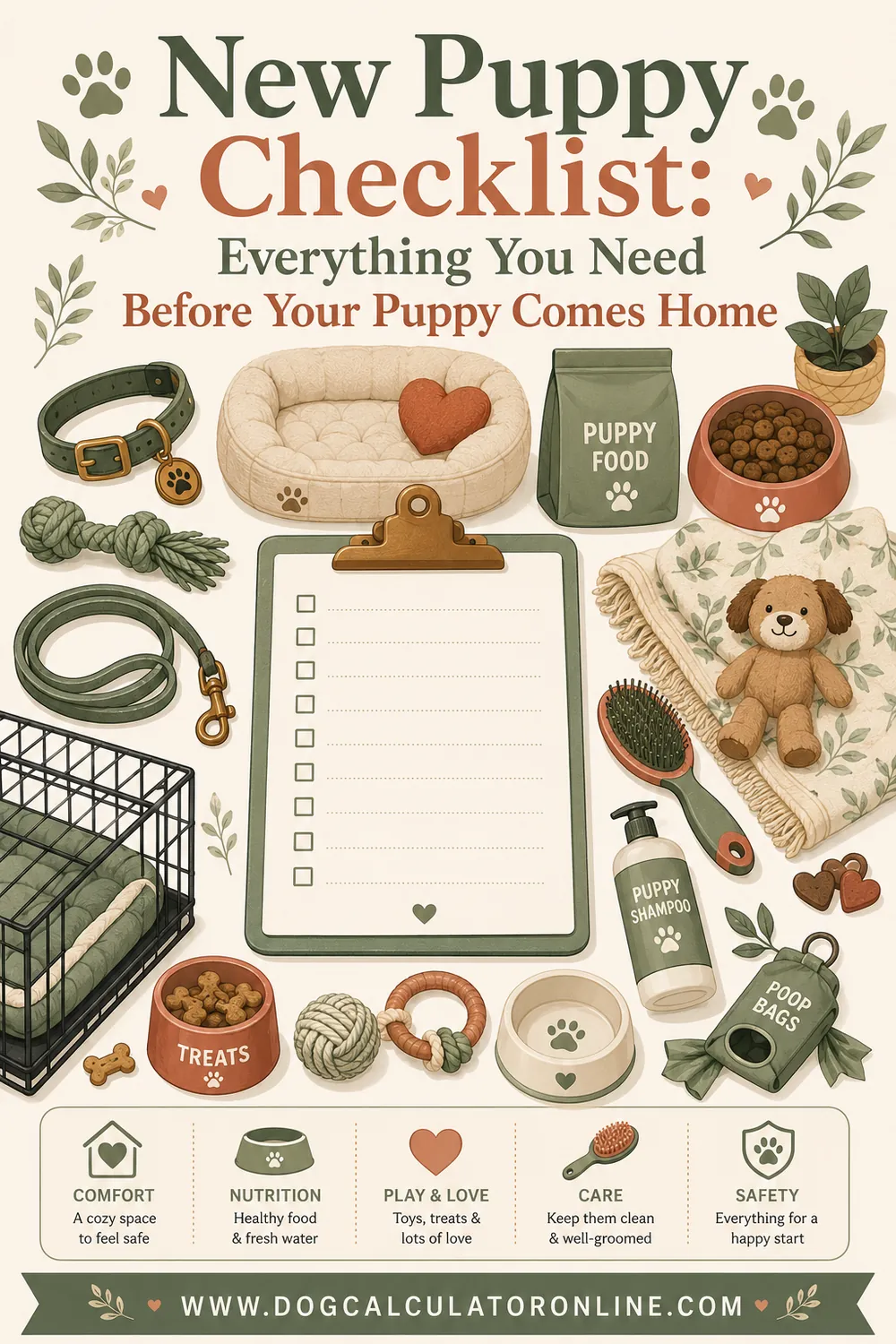
Management beats correction every time. Puppy-proof the rooms your puppy uses, keep shoes and cords out of reach, and use a crate or playpen when you can't supervise. For furniture legs and baseboards that can't be moved, a bitter anti-chew spray adds a useful layer — it works on most puppies (a determined few just develop a taste for it), and it needs reapplying every day or two to keep its punch. The crate-and-playpen setup is the same one that drives potty training — it's all on our new puppy checklist. When you catch furniture-chewing in progress, don't punish; just calmly swap in an approved chew and praise the switch. You're teaching "chew this," which is a learnable rule, unlike "don't chew," which isn't.
Mind the mouth manners
Teething overlaps with the mouthy phase of play-biting. The littermate rule works for humans too: if teeth touch skin, the fun stops — stand up, disengage for ten seconds, then resume. Consistent, boring, remarkably effective.
When to Call the Vet
Teething is a normal process that mostly runs itself, but a few things deserve professional eyes:
- Retained baby teeth: if an adult tooth has fully erupted and the baby tooth is still firmly in place beside it (a "double tooth," most common with the canines), it can crowd the adult tooth out of position and trap food. Vets usually remove retained teeth, often during the spay/neuter anesthesia.
- Broken or bleeding teeth beyond the normal light spotting.
- Refusing food for more than a day, drooling excessively, or pawing at the mouth persistently — teething discomfort should be mild, not miserable.
- No adult teeth by 7–8 months, or anything about the bite that looks clearly misaligned.
As always with anything medical: this article is general information, and your vet is the right person to look inside your specific puppy's mouth.
After Teething: Set Up Lifelong Dental Health
The end of teething is the perfect moment to start the habit that saves you hundreds later: tooth brushing. Use a dog toothbrush and dog toothpaste (never human toothpaste — the sweeteners and fluoride aren't safe for dogs), start with a few seconds a day, and build up. Dental disease is one of the most common — and most preventable — health problems in adult dogs, and professional cleanings run $300–$800.
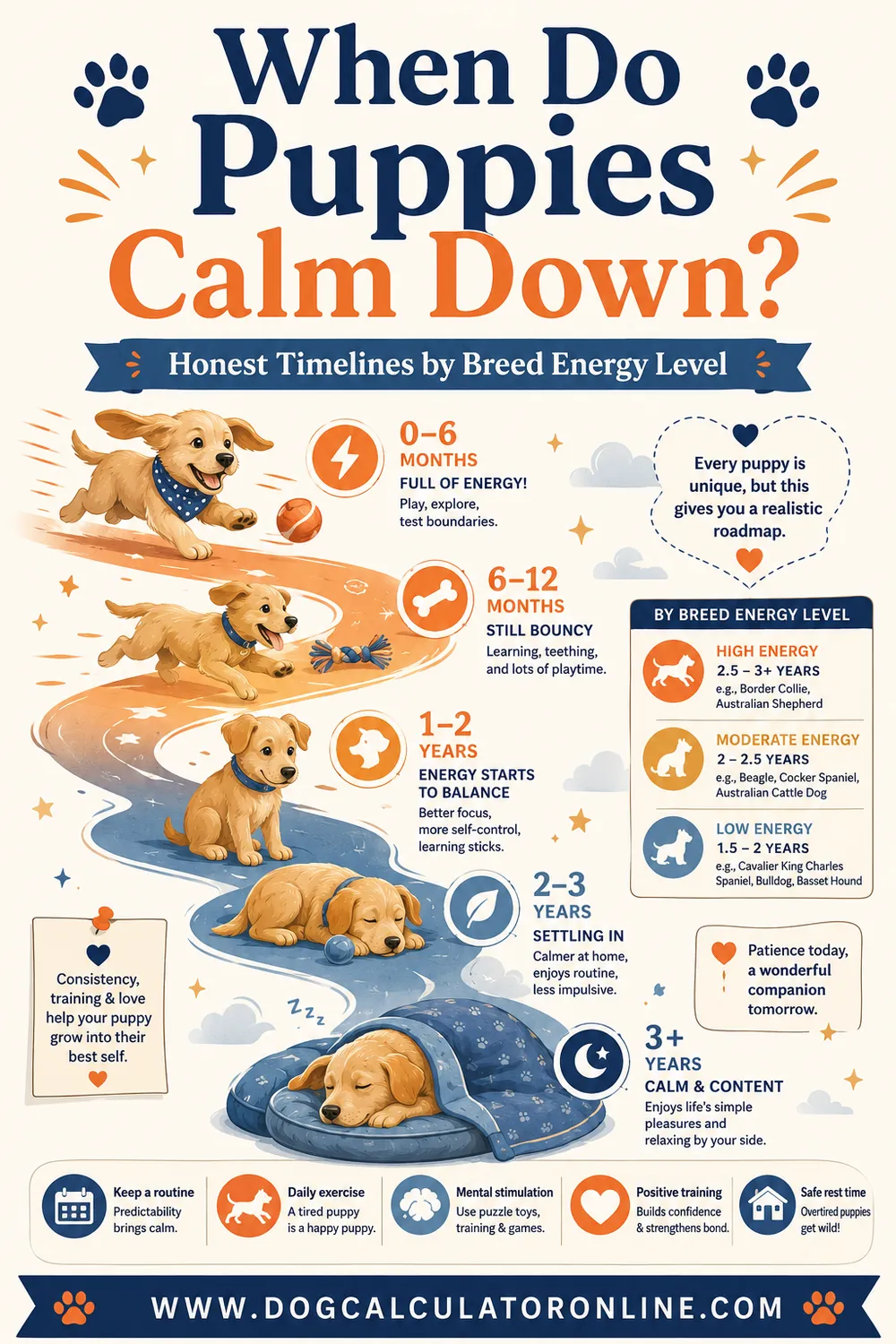
Also worth knowing: teething wraps up right as adolescence begins, so don't expect the chewing urge to vanish at 6 months — it fades gradually and overlaps with the general teenage-dog energy phase. If you're wondering how long that lasts, we've got you: see when do puppies calm down.
How Teething Affects Eating and Training
Teething ripples into the rest of puppy life in ways worth planning for:
Meals. Sore gums can turn an enthusiastic eater picky for a few days at a time. Softening kibble with warm water, serving food at room temperature rather than fridge-cold, and splitting meals smaller all help. Keep tracking weight through this stretch — a day or two of lighter eating is normal, but the overall growth curve should keep climbing. If it stalls, that's a vet check, not a wait-and-see.
Training. A puppy in gum pain has a shorter fuse and a shorter attention span. Keep sessions to three to five minutes, use soft treats (crunchy biscuits can genuinely hurt during the worst weeks), and don't introduce brand-new hard skills during peak teething — polish easy wins instead. Tug games deserve a pause too: yanking on a mouth full of loose teeth is uncomfortable and can make a puppy grabby about hands.
Chewing on YOU. Expect a temporary uptick in mouthiness around 4–5 months even in puppies who'd mostly stopped. Respond the same way as always — fun stops when teeth touch skin, an approved chew appears — and it passes with the teeth. What you don't want is to accidentally teach that gnawing on wrists is a reliable way to get attention during a sore-gum week.
The theme across all three: teething is temporary, but habits formed during it aren't. Manage the six weeks; keep the standards.
FAQ
How long does puppy teething last?
Active teething — baby teeth falling out and adult teeth erupting — runs from about 12 weeks to 6 months of age. The full journey from first baby tooth to complete adult set spans roughly 2 weeks to 7 months.
What age is puppy teething the worst?
Most owners vote for 4 to 5 months, when the adult canines and premolars are pushing through. Gums are at their sorest and the chewing drive peaks.
Do puppies swallow their baby teeth?
Constantly, and it's harmless — the teeth are tiny and pass through without issue. Most owners find only a few of the 28 teeth; the rest are swallowed during meals or play.
How many teeth do puppies and dogs have?
Puppies have 28 baby teeth; adult dogs have 42 teeth. The extra 14 come from molars and additional premolars that only exist in the adult set.
Is it normal for a teething puppy to eat less?
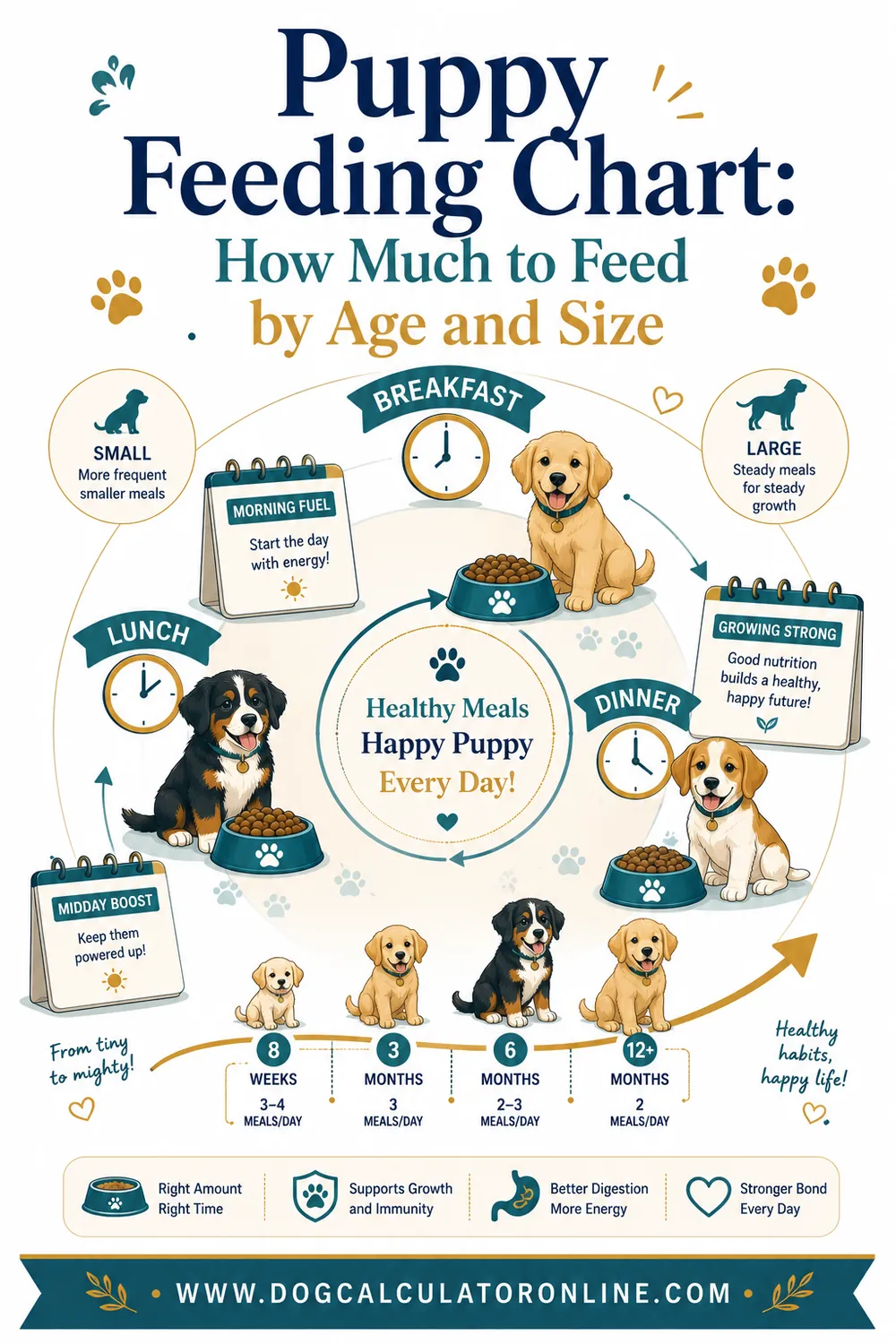
A slightly reduced appetite or a preference for softened food is common when gums are sore. Try moistening kibble with warm water for a few days. Full food refusal beyond a day warrants a vet call. For portion guidance during the growth months, see our puppy feeding chart.
Can I give my puppy ice cubes for teething?
Small ice chips or a frozen washcloth are safer choices than whole hard cubes, which very enthusiastic chewers can crack teeth on. Cold is the relief — it doesn't need to be rock hard to work.
The Finish Line Is Six Months
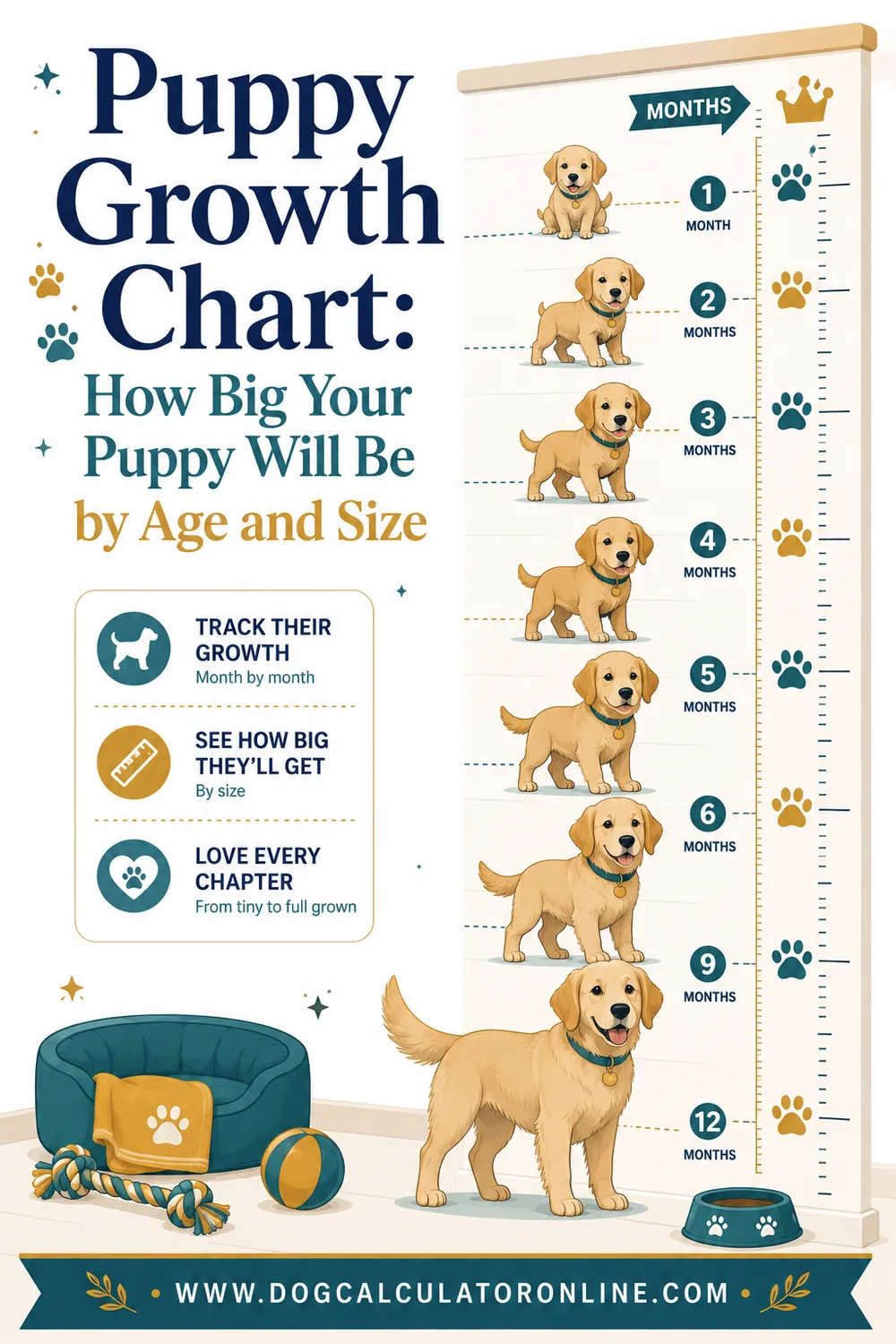
Teething is intense but short: stock the freezer, guard the shoes, reward every good chew choice, and by month six you'll have a dog with 42 shiny adult teeth and (mostly) better judgment. Teething is just one milestone on the growth curve — track the rest, from weight to adult size, with the free dog calculators and our puppy growth chart.