Raw Dog Food Calculator: How Much to Feed
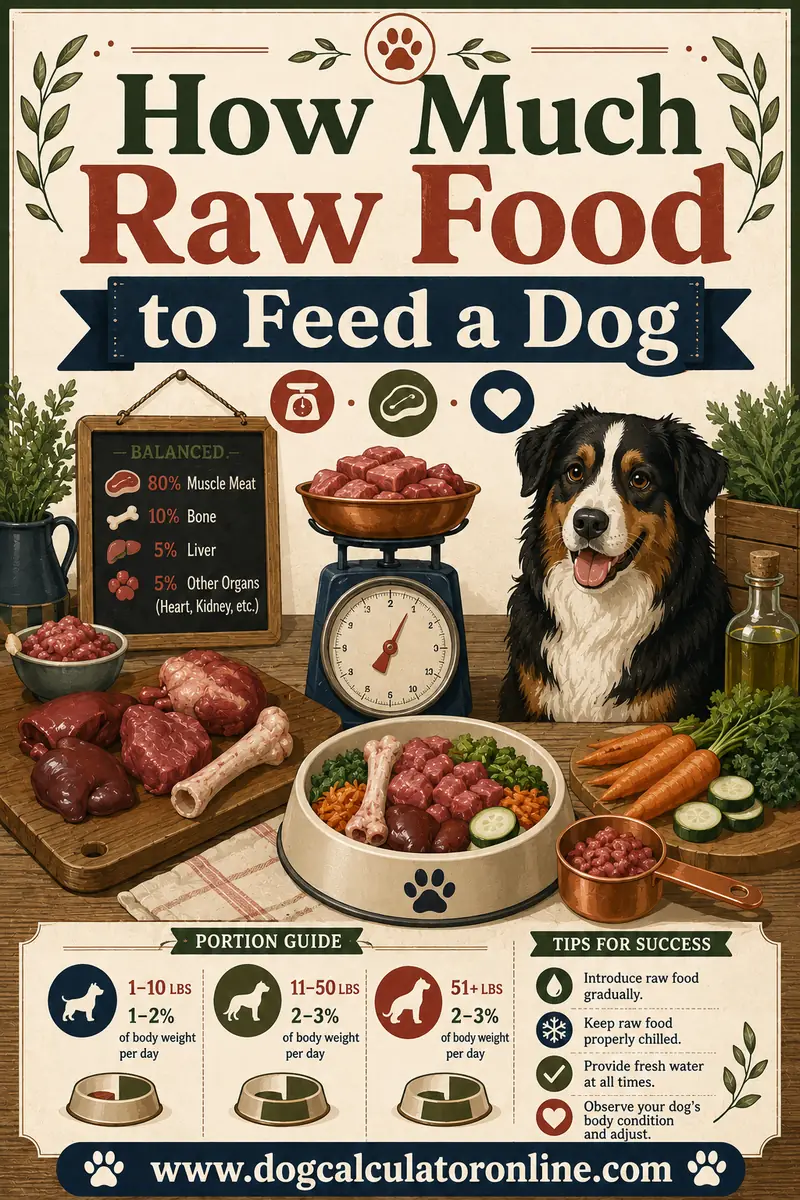
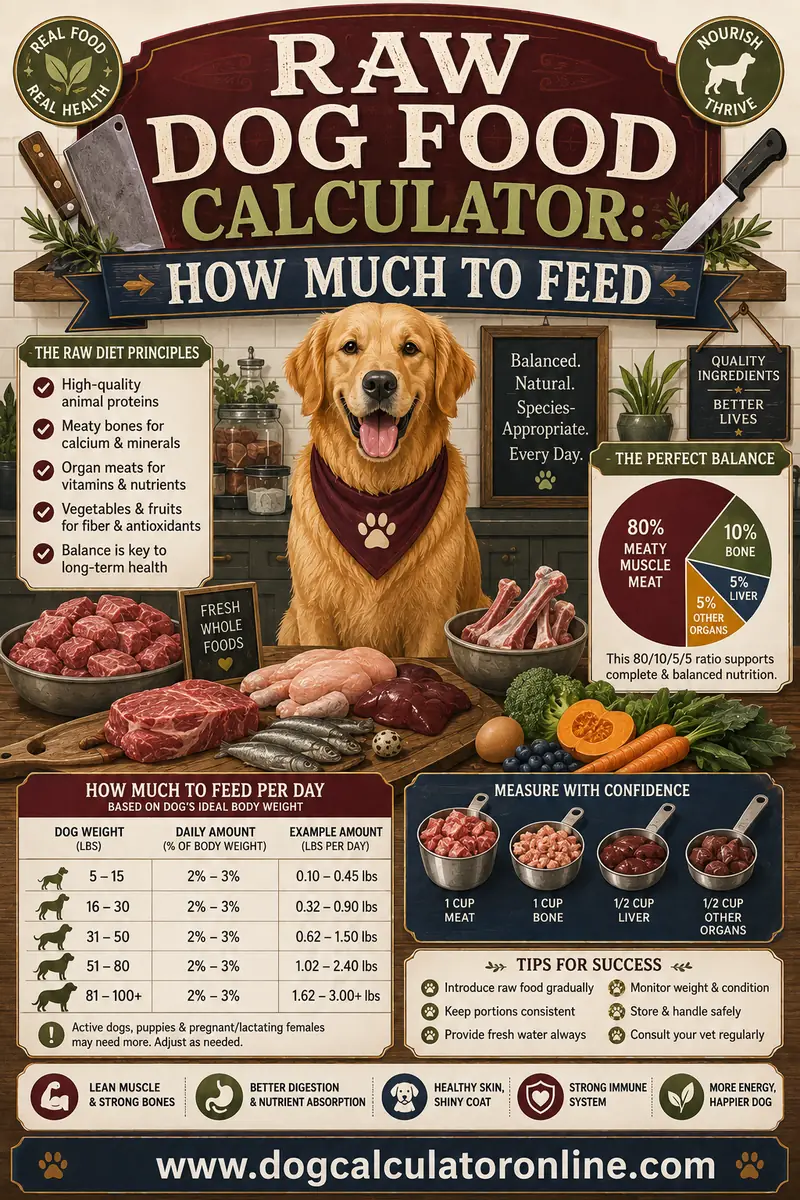
The standard raw feeding guideline is 2–3% of your adult dog's body weight per day. That means a 50-lb dog eats roughly 1 to 1.5 lb of raw food daily — closer to 2% for a low-energy or overweight dog, closer to 3% for an active one. Puppies eat proportionally more, usually figured from their expected adult weight. These are community-standard starting points, not vet prescriptions, so confirm your plan with your veterinarian before switching.
Our free raw dog food calculator turns your dog's weight and activity into a daily raw portion in seconds. Here's the full math, a portion chart by weight, and the safety questions worth settling before the first raw meal hits the bowl.
🥩 Raw portion check (adult dog, ~2.5% of body weight)
Tap your dog’s weight for an estimated daily raw amount:
Tap a weight above for an estimated daily portion.
The 2–3% Rule Explained
Raw feeders portion by percentage of body weight instead of cups, because raw food doesn't come with a kcal-per-cup label the way kibble does. The convention:
- 2% of body weight — seniors, low-activity dogs, and dogs that need to slim down
- 2.5% of body weight — the typical starting point for a healthy adult
- 3% of body weight — active, athletic, or hard-keeping dogs
- 3.5%+ of body weight — working dogs and sport dogs, adjusted by results
So the formula is simply: body weight × percentage = daily raw portion. A 60-lb dog at 2.5% eats 1.5 lb per day. Split that into two meals and you're feeding 12 oz per meal.
One important caveat: percentage rules are a folk standard from the raw feeding community, not a law of nutrition. Calories still decide whether a dog gains or loses weight, and raw recipes vary a lot in fat (and therefore calories). Treat the percentage as your starting point, then adjust to body condition — exactly as you would with kibble.
Raw Feeding Chart by Body Weight
Here's the 2–3% rule worked out, so you don't need to do the multiplication:
| Dog weight | 2% (low activity) | 2.5% (typical) | 3% (active) |
|---|---|---|---|
| 5 lb | 1.6 oz | 2 oz | 2.4 oz |
| 10 lb | 3.2 oz | 4 oz | 4.8 oz |
| 20 lb | 6.4 oz | 8 oz | 9.6 oz |
| 30 lb | 9.6 oz | 12 oz | 14.4 oz |
| 40 lb | 12.8 oz | 1 lb | 19.2 oz |
| 50 lb | 1 lb | 1.25 lb | 1.5 lb |
| 60 lb | 1.2 lb | 1.5 lb | 1.8 lb |
| 75 lb | 1.5 lb | 1.9 lb | 2.25 lb |
| 90 lb | 1.8 lb | 2.25 lb | 2.7 lb |
| 100 lb | 2 lb | 2.5 lb | 3 lb |
Weigh portions on a kitchen scale — raw is dense, and eyeballing runs over fast. The raw dog food calculator gives you the exact number for any weight in between, in ounces or grams.
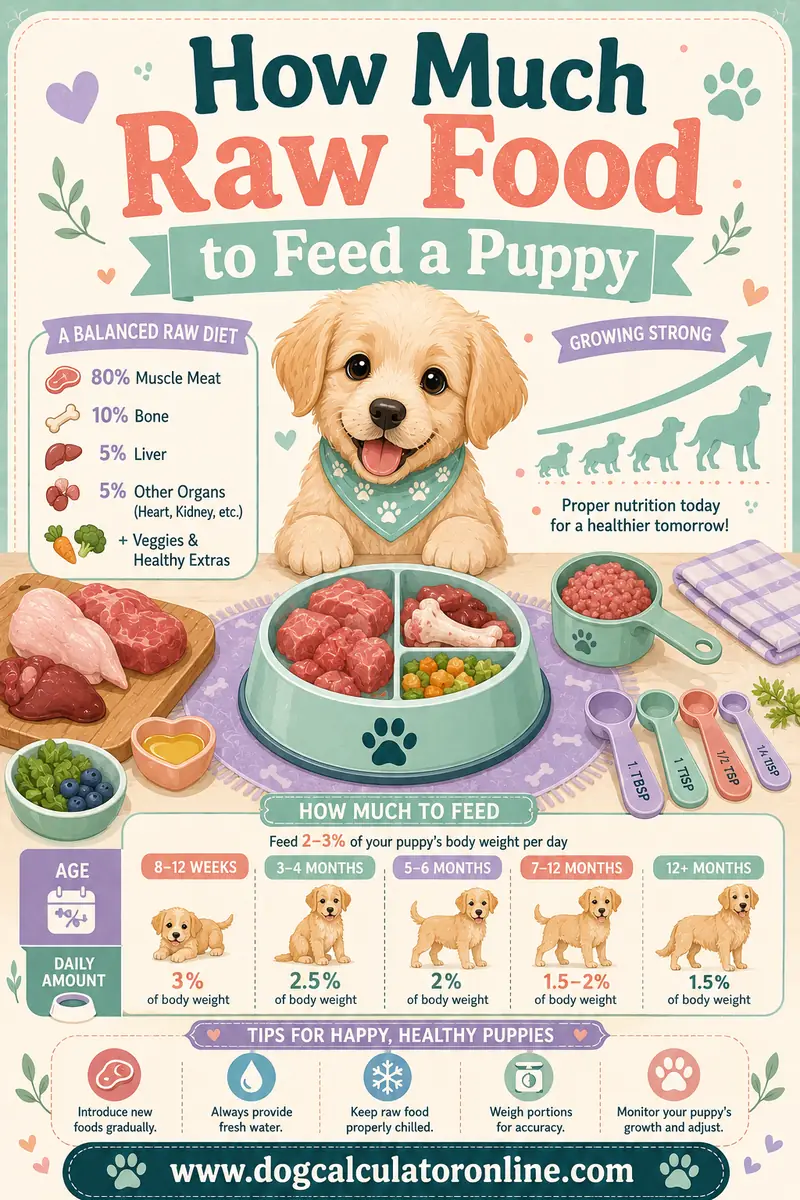
How Much Raw Food for a Puppy?
Puppies grow fast and need proportionally more food than adults. Raw feeders use two methods:
- Percentage of current weight: roughly 5–10% of the puppy's current body weight per day, highest for young puppies and tapering down as they approach adult size. Weigh the puppy weekly and recalculate.
- Percentage of expected adult weight: feed 2–3% of the weight you expect the dog to reach. This avoids weekly math but requires a good adult-weight estimate.
Split a puppy's daily total across 3–4 meals until about six months, then move toward two. Growing dogs — especially large breeds — are the highest-stakes group to get nutrition right for, because calcium and phosphorus imbalances during growth can affect skeletal development. If you feed a puppy raw, a diet formulated to a complete-and-balanced standard (or one designed with a veterinary nutritionist) matters even more than it does for adults. See the full guide to how much raw food to feed a puppy.
Calories Still Run the Show
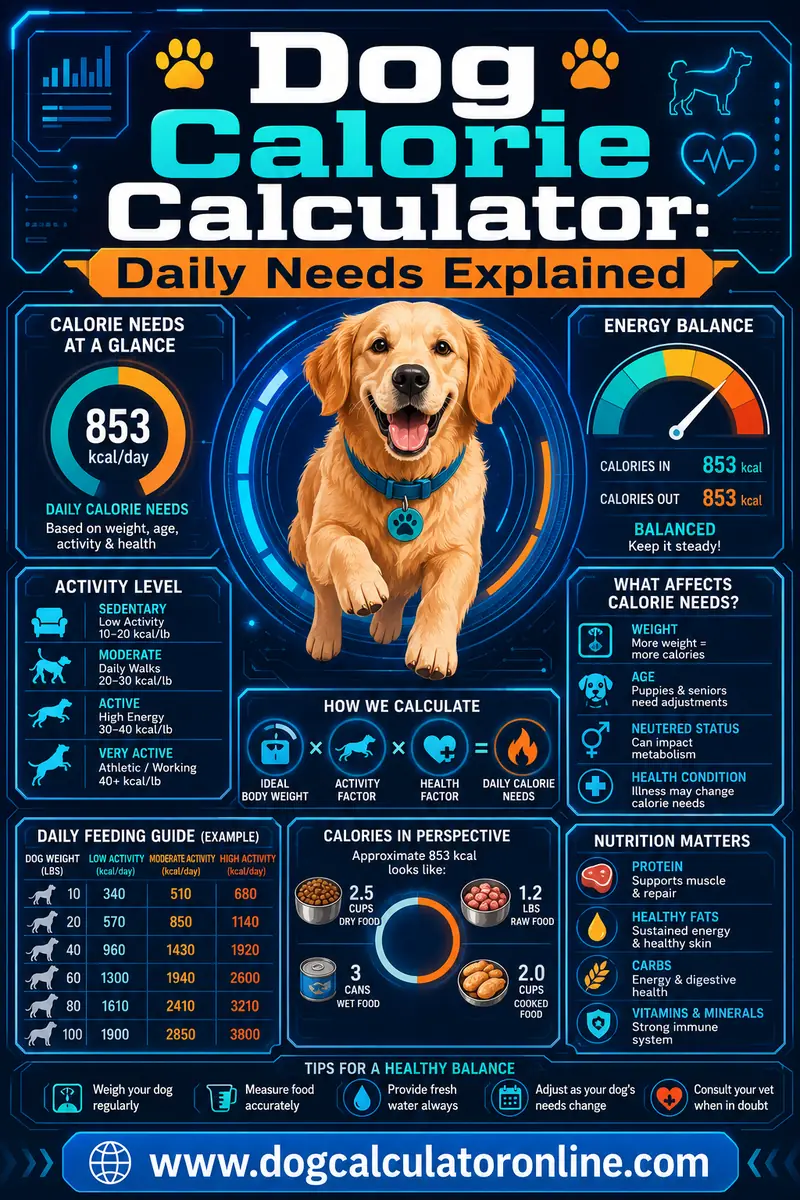
The percentage rule is a shortcut for a calorie calculation, and it's worth understanding the real target underneath. An adult dog's resting energy requirement is 70 × (kg body weight)^0.75, multiplied by roughly 1.4–1.8 for a typical pet. A 25-kg (55-lb) neutered adult lands around 1,250 kcal per day.
Raw diets typically run 35–55 kcal per ounce depending on fat content, which is why the 2–3% band usually gets you in range — but a fatty recipe at 3% can quietly overfeed, and a lean recipe at 2% can underfeed. If you'd rather work from the calorie side directly, our dog calorie calculator gives you the daily kcal target, and you can portion your recipe against it.
Signs the percentage needs adjusting are the same as with any diet: ribs you can't feel mean trim by about 10%; ribs that are sharply visible mean add. Re-check every two weeks.
What Goes Into the Portion: Typical Raw Ratios
Portion size answers "how much." The other half of raw feeding is "of what." Common raw models (often called BARF or prey-model ratios) build the daily portion roughly like this:
| Component | Typical share of the bowl |
|---|---|
| Muscle meat | ~70% |
| Raw edible bone | ~10% |
| Liver | ~5% |
| Other secreting organs | ~5% |
| Vegetables/fruit (BARF-style) | ~10% |
These ratios are a framework raw feeders use, not a guarantee of complete nutrition. Homemade raw diets are where deficiencies most often creep in — calcium, vitamin D, zinc, and others — sometimes taking months to show. Commercial raw foods formulated to AAFCO standards remove some of that risk. Either way, this is exactly the conversation to have with your vet or a board-certified veterinary nutritionist.
The Safety Conversation to Have First
Raw feeding is popular, but the mainstream veterinary position deserves an honest mention. Organizations including the AVMA, FDA, and CDC caution against raw meat diets primarily because of bacterial contamination — Salmonella and Listeria can sicken dogs and, more often, the humans handling the food, with young children, elderly family members, and immunocompromised people at highest risk.
If you do feed raw, the standard food-safety playbook applies:
- Keep raw food frozen until needed; thaw in the fridge, not the counter.
- Wash hands, bowls, prep surfaces, and utensils with hot soapy water after every meal.
- Don't let the bowl sit — pick up uneaten raw food within 20–30 minutes and refrigerate or discard it.
- Skip raw feeding if anyone high-risk lives in the household, or discuss cooked-fresh alternatives with your vet.
- Never feed cooked bones (they splinter); raw edible bone should be size-appropriate.
If your dog swallows a bone fragment that seems stuck, or shows vomiting, lethargy, or bloody stool after any meal, call your vet.
Transitioning a Dog to Raw
Whatever portion the calculator gives you, don't switch overnight. Two common approaches:
- Gradual mix: replace 25% of the old food with raw for a few days, then 50%, then 75%, then fully raw over 7–10 days. Slow down if stools go loose.
- Fast switch with a lean start: some raw feeders fast one meal, then start with a single bland protein at the 2% level for the first week or two before adding variety.
Either way, introduce one protein at a time so you can spot anything that disagrees with your dog, and hold off on rich items like fatty cuts and organs-heavy meals until the basics are settled. Dogs with a history of pancreatitis, kidney disease, or other medical conditions should not switch diets without a vet's sign-off.
Raw vs Kibble Portions: Why They Differ
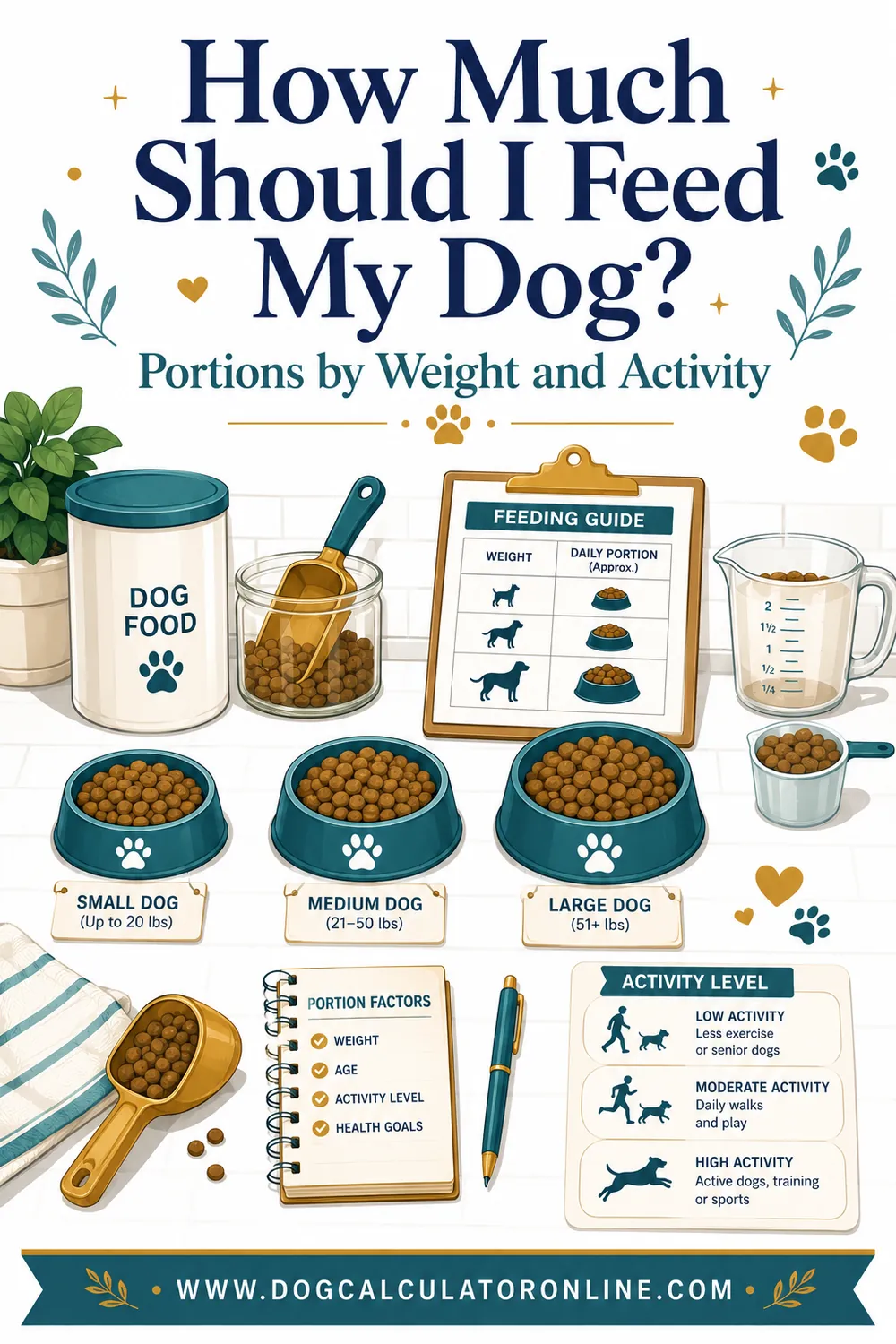
Owners switching from kibble are often surprised the raw portion looks bigger. That's water. Kibble is around 10% moisture; raw food is closer to 65–70%. A 50-lb dog might eat about 2¼ cups of dry kibble (roughly 9 oz by weight) or about 1.25 lb of raw — more than double the weight for a similar calorie load. Don't judge portions across diet types by looks; judge by calories and body condition. Our guide on how much to feed a dog covers the kibble side of the same math.
FAQ
How much raw food should I feed my dog per day?
About 2–3% of adult body weight daily: roughly 8–12 oz for a 25-lb dog, 1–1.5 lb for a 50-lb dog, 2–3 lb for a 100-lb dog. Use 2% for low-activity dogs and 3% for active ones, then adjust to body condition.
How much raw food does a puppy need?
Roughly 5–10% of current body weight per day (tapering with age), or 2–3% of expected adult weight, split into 3–4 meals. Puppy raw feeding has higher nutritional stakes — balance the diet properly and involve your vet.
Is raw feeding safe?
Major veterinary organizations caution against raw diets mainly due to bacterial risks to both dogs and the humans handling the food. If you feed raw, use strict food hygiene, source carefully, and keep high-risk household members in mind. Discuss it with your vet.
Do I feed by current weight or ideal weight?
Ideal weight. An overweight dog fed 2.5% of its current weight stays overweight. Calculate from the target weight and confirm a safe weight-loss pace with your vet.
How many meals a day on raw?
Two meals for adults, 3–4 for puppies — the same as any diet. Raw meals shouldn't sit out, so scheduled meals beat free-feeding by a wide margin.
Why is my dog gaining weight on the 2–3% rule?
Probably a fatty recipe — calories per ounce vary a lot in raw food. Drop toward 2%, choose leaner cuts, and re-check ribs in two weeks. A dog calorie calculator can pin down the actual kcal target.
The Bottom Line
Raw portions start at 2–3% of adult body weight per day — 2% for easy keepers, 3% for athletes — with puppies figured from expected adult weight or a tapering share of current weight. Weigh portions, keep hygiene tight, balance the diet properly, and let ribs and waistline steer your adjustments.
Skip the arithmetic: the free raw dog food calculator turns your dog's weight and activity into a daily portion in ounces or grams. Want more depth? Read how much raw food to feed a dog next.