How Much Does It Cost to Adopt a Dog?
Adoption fees usually run about $50–$500, and the single most misunderstood thing about that number is this: the fee is almost always the cheapest part of getting a dog, and often the best value in the entire process, because it typically includes neutering, a vaccination course, a microchip, parasite treatment and a health check that would cost several times the fee if bought separately. A shelter charging $250 is frequently handing over $600–$1,000 of veterinary work along with the dog. What follows the fee — bedding, food, insurance, training and the first routine vet visit — is where the real spending starts. Below: what the fee buys, how it compares with buying, and what the first month actually costs. Plan the whole picture with the free dog cost calculator.

🐾 What is usually inside an adoption fee
Tap an item:
Tap an item above. Add them up before deciding the fee is expensive.
What an Adoption Fee Costs
Fees vary by organization, by the dog, and by state, but the bands are fairly predictable.
Shelter fees run wider than people expect, roughly $50 to $500. Municipal shelters sit at the very bottom, sometimes with waived-fee events; breed-specific rescues and puppy adoptions sit at the top.
Large regional humane societies cluster in the middle, commonly $150–$300 for an adult dog. They typically do the most pre-adoption veterinary work, which is exactly why their fees look higher than a city pound and are usually the better value.
Puppies almost always cost more than adults, usually $300–$600, because demand is far higher and because the puppy still needs a full vaccination course paid for by the rescue.
Senior dogs are frequently reduced or free. Many charities run schemes that waive the fee for older dogs and sometimes contribute to ongoing veterinary costs for the dog's lifetime.
Fees are not a price tag on the dog. They are a contribution towards the cost of preparing that dog for rehoming, and they typically recover only part of what the charity has already spent.
Treat every figure here as a planning range. Fees are reviewed annually, vary by region, and differ substantially between a small local rescue and a national charity.
What the Fee Includes, and What It Would Cost Separately
This is the comparison that changes how the fee looks.
| Usually included | Separate cost |
|---|---|
| Neutering or spaying | $200–$600 |
| Primary vaccination course or booster | $75–$150 |
| Microchip and registration | $25–$60 |
| Flea and worm treatment | $25–$60 |
| Veterinary health check | $50–$100 |
| 4–6 weeks of insurance | $40–$80 |
| Rough total | $415–$1,050 |
Against a fee of $50–$500, the arithmetic is not close. Adoption is the only route where the pre-purchase veterinary work is largely already done and already paid for.
Neutering is the biggest item on the list, and rescue dogs almost always leave already neutered — a procedure whose timing and considerations are covered in spaying your dog: what to know and neutering your dog: what to know.
Behavioral assessment is included and has no obvious price, but it is arguably the most valuable part. A rescue that has fostered a dog for six weeks can tell you how it is with cats, children, stairs and being left alone.
Larger charities frequently treat existing conditions before homing — dentals, lump removals, skin problems — without adding a penny to the fee.
Ask exactly what is included in writing, because small rescues sometimes home puppies before neutering, with a voucher or a contract requiring it later at your expense.
Post-adoption support is often included too. Behavior advice lines, free follow-up checks and a written return policy are standard at the larger organizations and are worth real money.
Adoption Versus Buying From a Breeder
A straight cost comparison, since it is the decision most people are actually making.
A well-bred puppy from a responsible breeder typically costs $1,500–$4,000, and popular or fashionable breeds routinely exceed that.
That price does not include neutering, and rarely includes a full vaccination course. Expect to add the same $415–$1,050 of veterinary work over the following months.
A responsible breeder does provide things a rescue often cannot: health-tested parents, known lineage, a predictable adult size and temperament range, and a dog whose entire early life you can account for.
Very cheap puppies are the expensive ones. A puppy bought below market price, delivered to a parking lot, or sold without seeing the mother is the classic profile of a poorly bred dog, and the veterinary consequences frequently run into thousands.
Adoption carries its own uncertainty. Some rescue dogs arrive with unknown histories, and separation anxiety, lead reactivity or house-training gaps may need professional help costing $300–$1,200.
Neither route is cheap; adoption is simply cheaper at the start and equally expensive thereafter. Once the dog is home, the annual costs are identical, as set out in how much does a dog cost per year.
Why Fees Vary So Much
Two rescues in the same city can charge very different amounts for similar dogs.
Age is the dominant factor. Puppies subsidise seniors at almost every organization, deliberately.
Size and breed sometimes matter, because a large dog costs more to neuter and to keep in kennels while waiting.
Small independent rescues often charge more than you expect, because they have fostered the dog privately and carried the full veterinary bill without a charity shop network behind them.
Municipal shelters in the US are frequently the cheapest, and periodically run waived-fee or reduced-fee adoption drives to clear capacity.
Overseas rescue dogs carry additional costs — transport, blood tests, rabies vaccination and paperwork — which can push fees to $600–$900 or beyond. These dogs also need a careful health check on arrival for conditions not commonly seen domestically.
Foster-to-adopt arrangements exist at some charities, where you take the dog first and pay the fee on confirmation. Ask about it if you are unsure whether the match will work.
The Application Process
Adoption takes time, and the process itself carries small costs.
Expect an application form, a phone interview and a home visit, in person or by video. None of these should cost anything.
Home preparation may. Secure fencing is the most common requirement, and a rescue can and will decline an application over a low fence or an unsecured gate. Fencing work runs from a few hundred dollars to a few thousand.
Landlord permission in writing is standard for renters, and some charities will not proceed without it.
Travel to meet the dog is a real cost if the right dog is two hours away, and most charities require you to collect in person.
The timeline is usually two to six weeks from application to collection, longer for puppies and for popular small breeds. Use that time to buy equipment and book the first vet appointment.
Rejection is common and is not personal. Working hours, young children, other pets and housing type all narrow the pool of suitable dogs rather than disqualifying you outright.
The First Month After You Bring Them Home
The fee is the small number; this is where the money goes.
Basic equipment runs $200–$550 for a crate, bed, bowls, collar, lead, harness, ID tag, toys, grooming basics and a car restraint — the full list is in new puppy checklist.
Food for the first month is $30–$100 depending on size and food type, and it is worth continuing whatever the rescue was feeding for two weeks before changing anything.
Insurance should start on day one, typically $25–$70 a month for an adult dog. Free cover from a charity usually lasts four to six weeks, which is exactly long enough to forget about it.
A registration visit with your own vet costs $50–$100 and is worth booking within the first two weeks, even if the rescue has already checked the dog.
Training classes are $120–$300 for a six-week course, and for an adult rescue dog with unknown history they are one of the highest-value purchases available.
A council dog license applies in some US jurisdictions, typically $10–$30 a year, and is a legal requirement rather than an option.
Budget $550–$1,100 for the first month all in. That is the honest figure, and it dwarfs the adoption fee.
The Ongoing Costs Nobody Quotes at the Shelter
The fee ends; the dog does not.
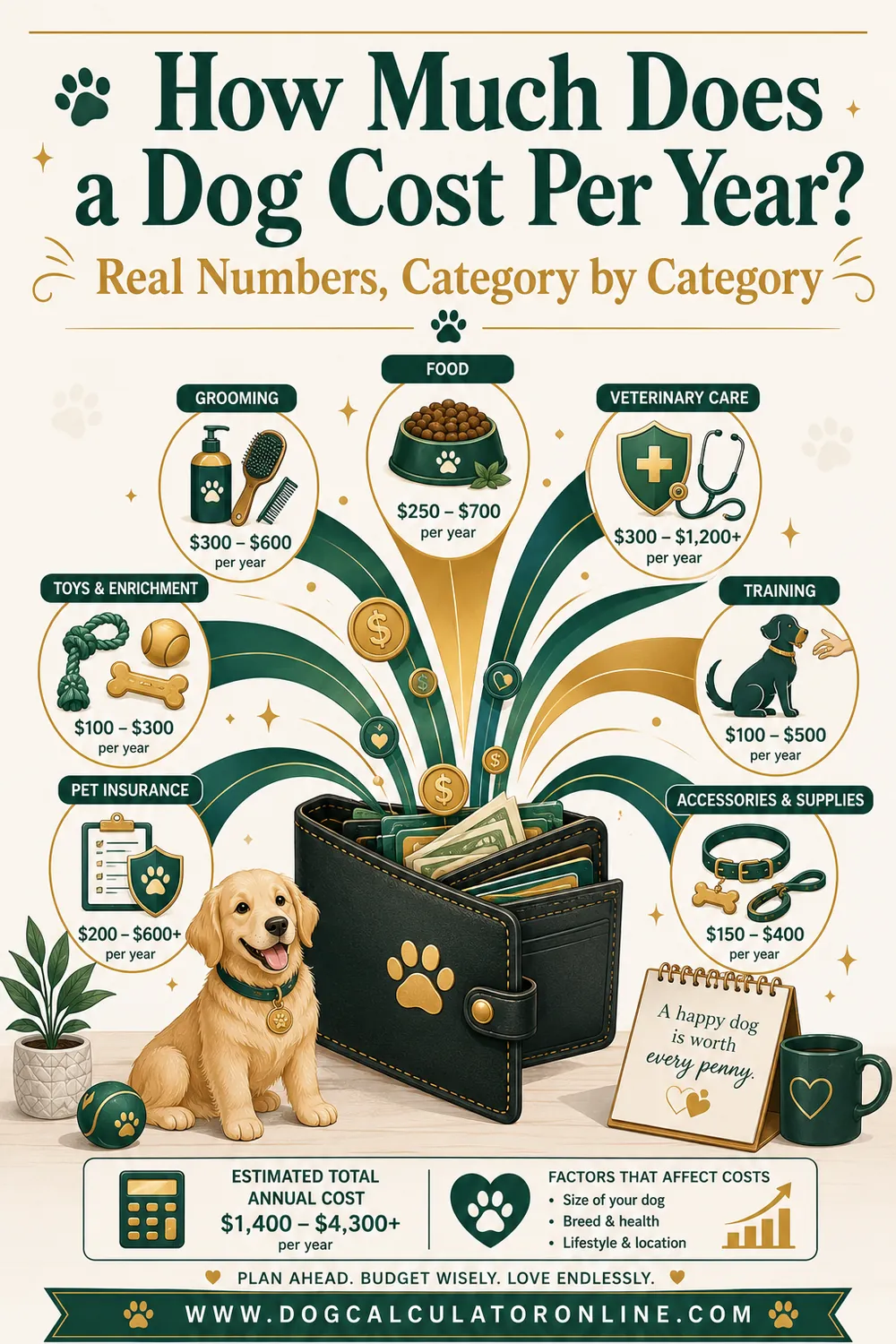
Food, insurance, parasite prevention and routine veterinary care are the four recurring lines, and together they set the floor for what a dog costs each year.
Annual vaccination and health checks run $75–$150, with parasite prevention on top — the routine and unexpected split is laid out in average vet costs for a dog.
Insurance premiums rise with age, often steeply after eight years, which is the argument for starting cover early rather than waiting.
An adult rescue dog may already have a pre-existing condition, and insurers will exclude it. Ask the rescue for the full veterinary history before you buy a policy, and read the exclusions carefully.
Grooming is a real recurring cost for some coat types and near zero for others, which is worth knowing before you fall for a particular dog.
An emergency fund is the item people skip. Whether you insure or save, something needs to stand behind a $3,000 bill, and the reasoning for a puppy is the same as for an adult in is pet insurance worth it for a puppy.
Questions to Ask Before You Commit
Ask these at the meeting, not afterwards.
"What exactly does the fee include, and is neutering already done?" If it is not, add $200–$600 to your figure immediately.
"What is the full veterinary history?" You want dates, treatments and any ongoing medication, in writing, for the insurance application.
"How long has the dog been with you, and in kennels or foster?" A foster home can describe real behavior; a kennel can describe kennel behavior, which is not the same thing.
"How is the dog with being left alone?" Separation problems are the most common reason adoptions fail, and the most expensive to fix.
"What is your return policy?" Reputable charities take a dog back at any point in its life. That commitment tells you a great deal about the organization.
"Is there any post-adoption support?" Behavior helplines and follow-up checks are commonly included and rarely mentioned unless you ask.
"Are there any conditions attached?" Some dogs are homed with restrictions — no young children, only-dog household, no off-lead exercise — and these are contractual rather than advisory.
FAQ
How much does it cost to adopt a dog?
Typically $50–$500, with municipal shelters at the bottom, puppies and breed rescues at the top, and senior dogs often reduced or free. The fee normally includes neutering, vaccination, a microchip, parasite treatment and a health check.
Is adopting cheaper than buying a puppy?
Much cheaper upfront. A breeder puppy commonly costs $1,500–$4,000 and still needs neutering and vaccinations afterwards, while an adopted dog usually arrives with that work already done and paid for.
Why do rescues charge a fee at all?
Because preparing a dog for rehoming costs money — veterinary treatment, neutering, vaccination, food and kennelling. The fee usually recovers only part of that, and it also acts as a modest filter against impulse decisions.
Are adoption fees ever waived?
Yes. Many charities waive or reduce fees for senior dogs, long-stay dogs and dogs with medical conditions, and US municipal shelters periodically run free or reduced-fee adoption events to reduce capacity pressure.
What should I budget for the first month?
Roughly $550–$1,100 including the fee, covering a crate, bed, bowls, lead and harness, food, insurance, a registration vet visit and a training course. Equipment is the largest part of that.
Do I need insurance if the rescue gave me free cover?
Yes. Charity cover typically lasts only four to six weeks. Set up a permanent policy before it expires, declare the full veterinary history, and check which pre-existing conditions the insurer will exclude.
The Fee Is the Small Number
Adoption fees of $50–$500 look like the cost of getting a dog, but they are closer to a discount voucher: the neutering, vaccination course, microchip, parasite treatment and health check bundled inside them would cost $415–$1,050 bought separately, before you count the behavioral assessment and the support that comes with a good charity. The money you actually need is for the month that follows — equipment, insurance, a registration vet visit and a training course — and for the years after that. Ask what the fee includes in writing, get the full veterinary history for your insurer, and price the whole first year rather than the fee with the free dog cost calculator and the itemised breakdown in first-year puppy costs.