First-Year Puppy Costs Breakdown
Year one is, by a distance, the most expensive year of a dog's life — commonly two to three times what the same dog costs in year three — and almost none of that is the purchase price. Excluding what you pay for the puppy itself, a realistic first year runs roughly $1,500–$4,700, because it stacks one-off equipment, a full vaccination course, neutering, training classes and a year of food into twelve months. The useful move is to separate the one-off items from the recurring ones, since only the recurring ones repeat. Below is the full itemised list, what shifts each line up or down, and where an emergency buffer belongs. Build your own figure with the free dog cost calculator.

🐾 Where first-year money actually goes
Tap a category:
Tap a category above. Separate the one-off items from the ones that repeat.
Why the First Year Costs the Most
Three things happen at once, and only one of them ever happens again.
Every piece of equipment is bought from scratch. A crate, bed, bowls, collar, lead, harness and car restraint arrive in a single month and then last for years.
The veterinary work is front-loaded. A primary vaccination course, a first annual booster, neutering and a microchip all fall inside twelve months and then largely disappear from the budget.
Training is concentrated in the first year because that is when it works best, and a course of classes is a genuine expense that most owners pay once.
Food costs more than the steady-state figure for medium and large breeds, because a growing puppy eats a lot relative to its size and puppy formulations cost more per pound.
Damage and replacement is a real, unbudgeted line. Chewed skirting boards, a destroyed bed, a ruined rug and two replaced leads are normal rather than exceptional.
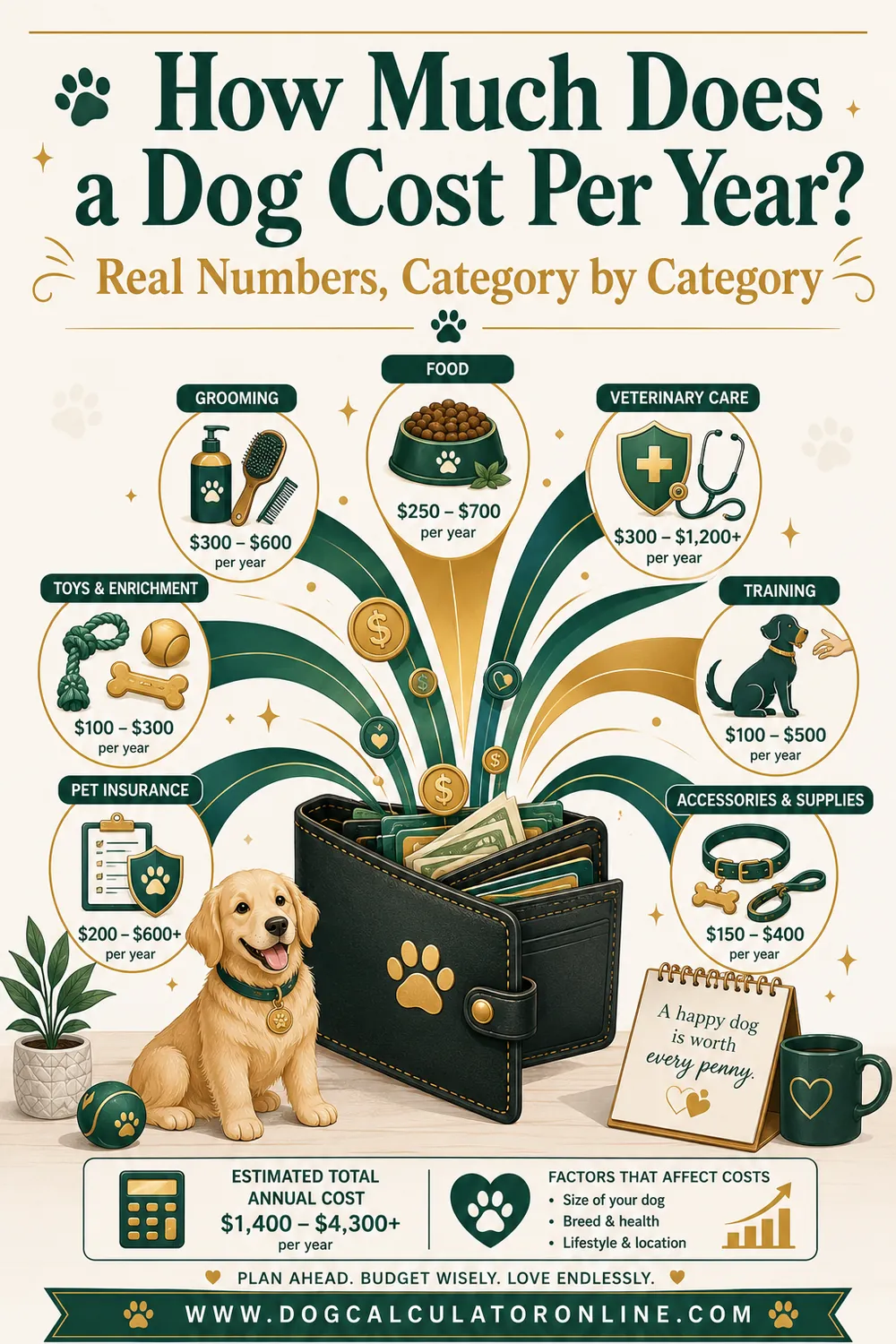
Year two typically drops by half or more, and by year three the dog settles into the steady annual figure described in how much does a dog cost per year.
The Full First-Year Table
Ranges rather than averages, because every line moves with size, region and choice.
| Item | Typical | One-off or recurring |
|---|---|---|
| Purchase or adoption fee | $50–$4,000 | One-off |
| Primary vaccination course | $75–$150 | One-off |
| First annual booster | $75–$120 | Recurring |
| Neutering or spaying | $200–$600 | One-off |
| Microchip and registration | $25–$60 | One-off |
| Worming and flea treatment (year) | $100–$250 | Recurring |
| Food (year) | $350–$1,000 | Recurring |
| Crate | $50–$180 | One-off |
| Bed and bedding | $35–$120 | One-off |
| Bowls | $15–$40 | One-off |
| Collar, lead, harness, ID tag | $40–$120 | One-off |
| Toys and chews | $70–$200 | Recurring |
| Grooming | $0–$600 | Recurring |
| Training classes | $120–$400 | Mostly one-off |
| Insurance | $300–$700 | Recurring |
| Consumables and cleaning | $60–$130 | Recurring |
| Emergency buffer | $750–$1,500 | Set aside |
Excluding the purchase price and the buffer, that totals roughly $1,500–$4,700. The spread is enormous because a small smooth-coated dog and a large woolly one are genuinely different budgets.
These are planning ranges, not quotes. Veterinary and grooming prices in particular vary sharply by region and rise most years, so ring local providers for a real number.
Size drives most of the variance. Food, neutering, medication doses and boarding all scale with body weight, so a Great Dane year one can be double a Jack Russell year one on identical choices.
Getting the Puppy: Purchase or Adoption
The widest line on the table, and the one with the most decision in it.
A well-bred puppy from a responsible breeder typically costs $1,500–$4,000, with fashionable breeds routinely above that.
An adoption fee is usually $50–$500 and normally includes work you would otherwise pay for separately — the full comparison is in how much does it cost to adopt a dog.
A cheap puppy is the most expensive kind. Puppies sold below market price, without the mother present, or handed over in a parking lot are the classic profile of poor breeding, and the veterinary consequences frequently reach four figures.
Health testing is what you are paying a good breeder for. Hip scores, eye tests and breed-specific screening reduce the chance of the conditions that cost the most later.
A deposit is normally required weeks before collection, typically $200–$800, and is usually non-refundable.
Budget for the trip. Collecting a puppy often means a long drive, sometimes two — one to view, one to collect.
The Veterinary Year
The largest predictable block after food, and the one with fixed timings.
The primary vaccination course is usually two or three injections a few weeks apart, typically finishing between 10 and 16 weeks, at around $75–$150 in total. Many breeders and rescues have already paid for the first.
A booster falls at about twelve months, costing roughly $75–$120, and it usually comes bundled with the annual health check.
Microchipping is required by law in a growing number of states and is standard practice everywhere else, at around $25–$60. Keep the registered details updated — the chip is worthless if the database has an old phone number.
Neutering or spaying runs $200–$600, more for a large female than a small male, and more at a city practice than a rural one. The timing question is genuinely nuanced and worth discussing with your vet — the considerations are set out in best age to spay or neuter a dog.
Worming and flea prevention runs $100–$250 across the year. Puppies need worming far more frequently than adults in the early months.
Practice health plans bundle these into a monthly payment, typically $20–$40 a month, usually saving 10–20% against paying item by item. They cover routine care only, never illness — the full split is in average vet costs for a dog.
Book the first check within a few days of collection, whatever the breeder or rescue has already done. It establishes a baseline and it is the visit at which problems get caught early.
Equipment: What to Buy and What to Skip
Bought once, kept for years, and easy to overspend on.
A crate is $50–$180, and buying the adult size with a divider is cheaper than buying twice.
A bed is $35–$120, and buying an expensive one in month one is a well-known mistake. A cheap washable bed survives the chewing stage; the good bed can wait until the dog is a year old.
Bowls, collar, lead, harness and an ID tag together run $55–$160, and the collar and harness will need replacing at least once as the puppy grows.
Toys and chews are $70–$200 across the year, and this is money well spent — appropriate chewing is what protects the skirting boards.
A car restraint or travel crate is a legal and safety requirement, at $35–$150.
Cleaning supplies matter more than they sound. An enzymatic cleaner is the only thing that properly removes the smell that invites a repeat accident.
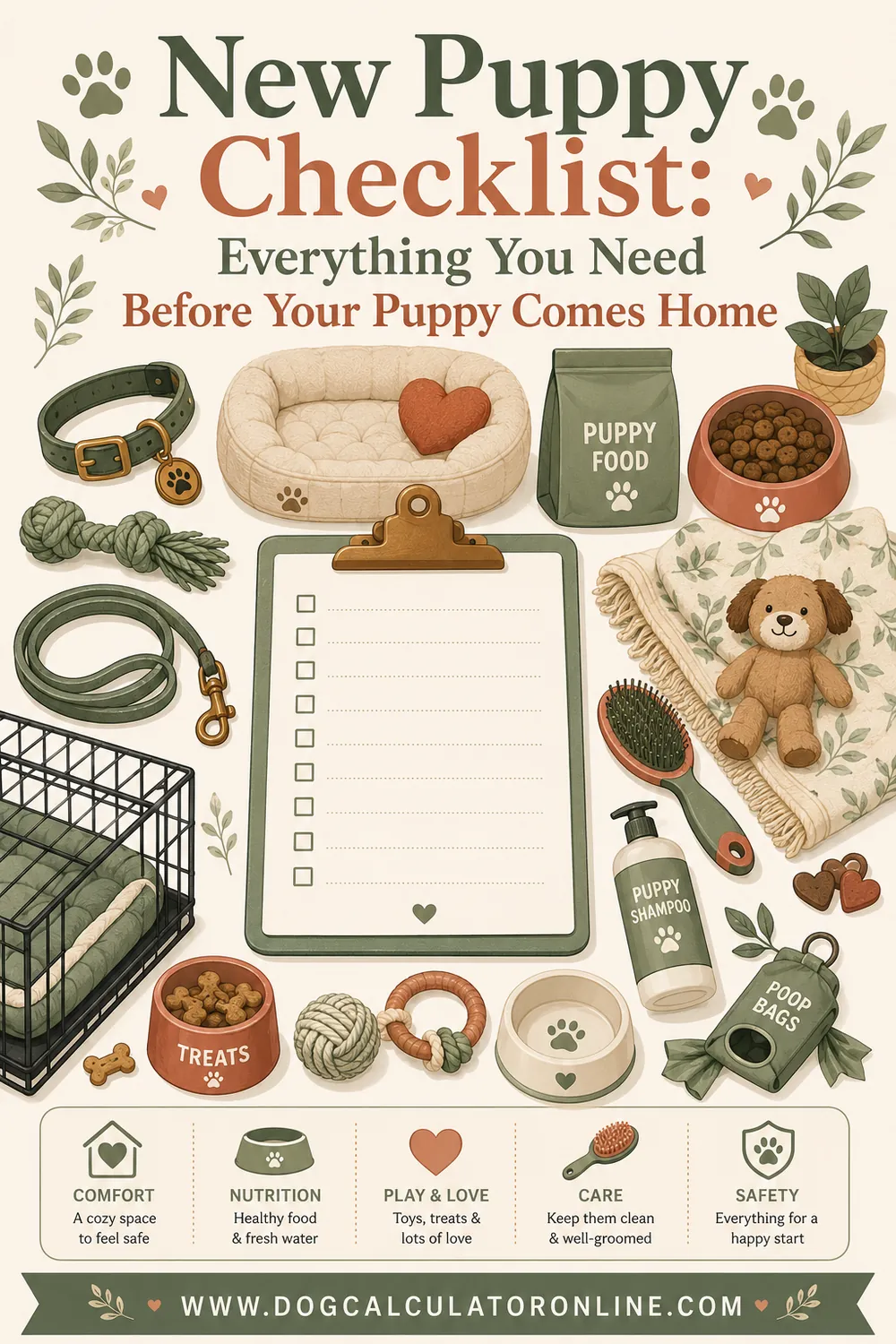
Skip, for now: designer coats, expensive raised feeders, elaborate puzzle sets and a second bed. The complete practical list is in new puppy checklist.
Food in the First Year
The biggest recurring line, and the one most sensitive to size.
Expect $350–$1,000 across the first year on standard commercial food, with small dogs at the bottom and large breeds at the top.
Puppy food costs more per pound than adult food, and a growing puppy eats more relative to body weight than an adult ever will.
Large-breed puppy formulations are worth using for big dogs, because controlled growth rates matter to joint development. This is one place where the cheaper option is a false economy.
Fresh, raw and subscription diets multiply the figure, often two to four times the cost of standard kibble for the same dog.
Treats are a real line, not a rounding error. Training in the first year uses a lot of them, and they should be counted both in the budget and in the daily calorie total.
The switch to adult food happens between about 10 and 24 months depending on size, and usually reduces the monthly cost.
Training, Insurance and Cover While You Work
Three lines that people underestimate in different ways.
A six-week puppy class costs $120–$300, and one-to-one sessions run $75–$150 an hour. Group classes early are the best value in the entire first-year budget.
Behavior problems fixed later cost several times more. A qualified behaviourist for separation anxiety or reactivity is commonly $300–$1,200 and takes months.
Insurance in year one is at its cheapest, typically $25–$55 a month for a puppy, and premiums climb with age. Starting early is what keeps future conditions from becoming pre-existing exclusions — the argument is laid out in is pet insurance worth it for a puppy.
Read what a lifetime policy actually means before choosing on price alone. Annual and time-limited policies stop covering a condition after a year or once the limit is reached.
Daycare, walkers or sitters may be needed if you work away from home, and this can quietly become the largest line of all. Even two days a week adds well over $3,000 a year.
Grooming applies from about six months for some coat types. A dog that needs a professional groom every six to eight weeks is a $600–$1,000 annual commitment for life, as set out in how much does dog grooming cost.
The Emergency Buffer
The line most first-year budgets omit, and the one most likely to be needed.
Puppies swallow things. Socks, stones, corn cobs and toy fragments are the classic first-year emergency, and surgery to remove a foreign body commonly runs $1,500–$5,000.
Insurance rarely pays the vet directly. Most policies reimburse you afterwards, so you need the money available on the day even when you are fully covered.
Excess and co-payment apply on top. A typical excess of $250–$500 comes out of your pocket for every claim, sometimes per condition per year.
Aim for $750–$1,500 accessible in cash by the end of the first month, built up by standing order if necessary.
Waiting periods mean new policies do not cover everything immediately. Illness cover commonly starts after 14 days, so a puppy insured on collection day is not covered for illness in its first two weeks.
Keep the buffer even if you insure. The two are not alternatives; the buffer covers excesses, exclusions and the gap before reimbursement arrives.
FAQ
How much does a puppy cost in the first year?
Excluding the purchase price, roughly $1,500–$4,700, plus an emergency buffer of $750–$1,500. Size is the biggest variable, followed by grooming needs and whether you need daycare or a walker.
Why is the first year so much more expensive?
One-off equipment, a full vaccination course, neutering, a microchip and training classes all fall inside twelve months, and puppy food costs more per pound. Most of that never repeats, so year two typically drops by half or more.
What is the single biggest first-year expense?
After the purchase price, it is usually food or veterinary care for a normal household, but daycare overtakes both if you work away from home. Two days of daycare a week comfortably exceeds every other line combined.
Should I buy insurance straight away?
Starting in the first weeks is generally the cheapest route and avoids future conditions being excluded as pre-existing. Check the waiting periods, since illness cover typically begins around 14 days after the policy starts.
Can I cut first-year costs without cutting corners?
Yes. Buy the adult-size crate once, use a cheap washable bed through the chewing stage, take group classes rather than private sessions, and ask about a practice health plan. Do not economise on vaccination, neutering or large-breed puppy food.
How much should I keep aside for emergencies?
$750–$1,500 in accessible cash, even with insurance, because most policies reimburse after you have paid and every claim carries an excess. Foreign body surgery is the classic first-year bill and it is not cheap.
Budget the One-Offs Separately From the Rest
The most useful thing to understand about first-year puppy costs is that the eye-watering total is mostly temporary. Strip out the crate, bed, bowls, lead, neutering, microchip, vaccination course and training classes, and what remains — food, insurance, parasite prevention, an annual booster and grooming — is the number that repeats every year afterwards. Build the list with real local prices rather than national averages, put $750–$1,500 aside before you need it, and do not skip the group training class, which is the cheapest problem-prevention available. Then check the shape of your steady-state budget with the free dog cost calculator.