Spaying Your Dog: What to Know (Ask Your Vet)
The strongest argument for spaying is not the one usually given. It is not behavior, and it is not mess: it is that around one in four unspayed female dogs develops pyometra, a life-threatening uterine infection, by the age of ten, and spaying removes that risk entirely. Add a substantial reduction in mammary tumour risk when it is done before or shortly after the first seasons, and the health case is genuinely strong — much stronger than the equivalent case for neutering a male dog. It is not free of trade-offs, though. Metabolic rate drops, so food has to come down by roughly a fifth, and in some large breeds early spaying carries downsides worth discussing. Budget the whole cost with the free dog cost calculator.
🐾 Spaying: the key facts
Tap a topic:
Tap an option above. The pyometra argument is the one that carries most weight.
What Spaying Actually Involves
Worth being clear about, because the word covers more than one operation.
Ovariohysterectomy removes both ovaries and the uterus. This is the traditional and still the most common approach in many countries.
Ovariectomy removes the ovaries only, leaving the uterus behind. Long-term studies find no difference in later uterine disease, because pyometra is driven by ovarian hormones. Without ovaries the uterus is effectively inert.
Both are performed under general anaesthesia, usually through a midline abdominal incision, and both are day procedures in a healthy young dog.
Laparoscopic — keyhole — spaying is offered by a growing number of practices. It uses two or three small incisions, causes less post-operative pain and allows a slightly faster return to normal, at a higher price.
The procedure is irreversible. She will not come into season again, and she cannot be bred from afterwards.
Anaesthetic risk in a healthy young dog is low but not zero. Pre-anaesthetic blood tests, intravenous fluids and proper monitoring reduce it, and are worth asking about rather than assuming.
The Health Case: Pyometra and Mammary Tumours
These two conditions carry the argument, and both are genuinely serious.
Pyometra is the big one. The uterus fills with pus in the weeks after a season, usually in middle-aged and older female dogs. Roughly a quarter of unspayed females are affected by ten years old, and some breeds run far higher.
Its treatment is emergency surgery on a sick dog — a spay under much worse conditions, at several times the cost, with a real mortality rate. A planned spay in a healthy young dog is a very different proposition.
Closed pyometra, where the cervix stays shut, gives no discharge to see and can go from off-color to critical in a couple of days. Any unspayed female dog who is drinking heavily, off her food or dull in the weeks after a season needs a same-day veterinary appointment.
Mammary tumours are the second argument. Risk climbs with each season experienced before spaying, and roughly half of canine mammary tumours are malignant.
The protective effect is greatest early and diminishes with each subsequent season, becoming small by the third or fourth. This is the main reason the timing conversation matters at all.
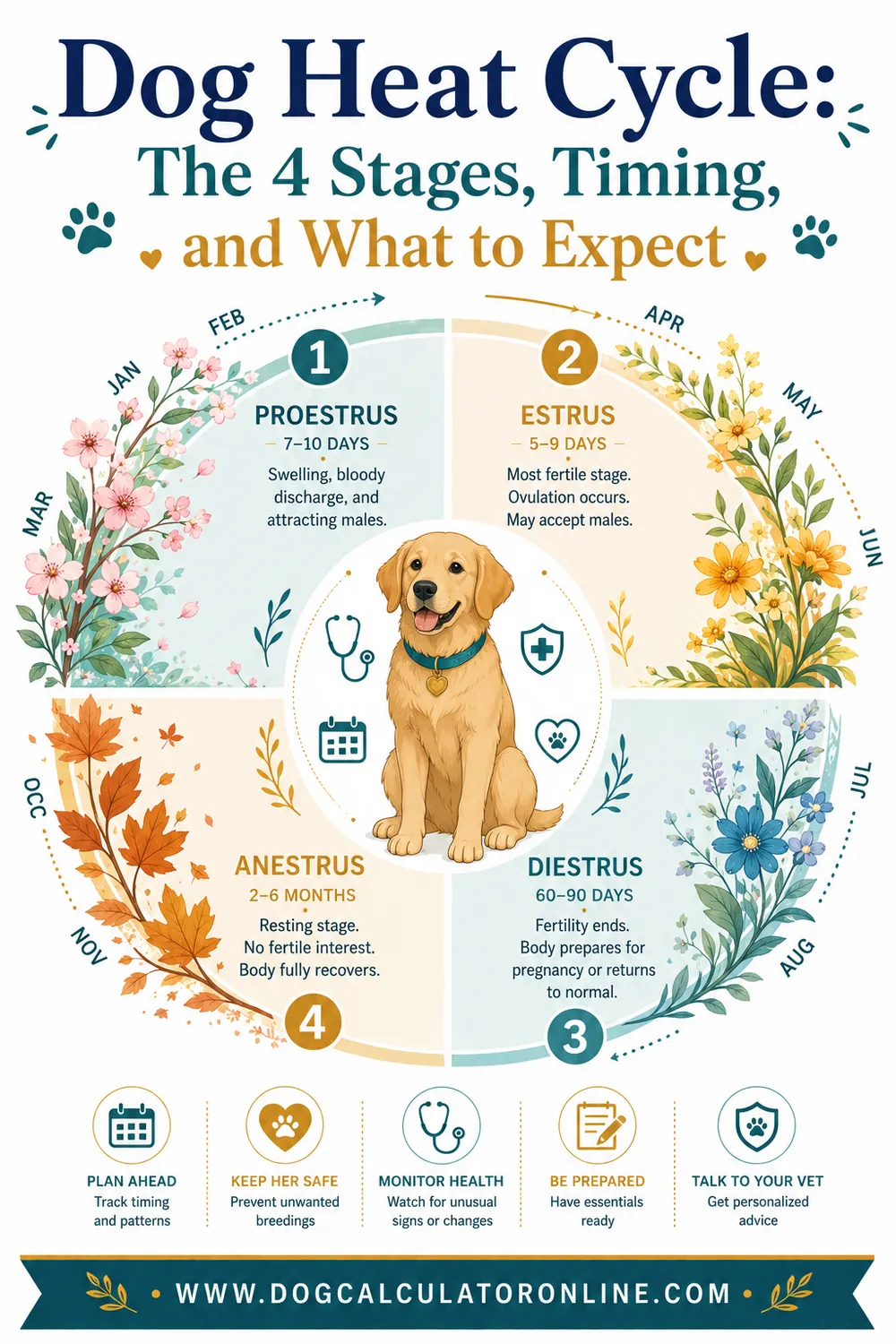
Spaying also ends false pregnancies, unwanted litters and seasons themselves — the practical demands of which are covered in dog heat cycle.
The Trade-Offs, Stated Honestly
A fair account has to include the other side, and plenty of sources leave it out.
Weight gain is the near-universal one. Removing ovarian hormones lowers resting energy requirements and tends to increase appetite. Left on the same food, most spayed female dogs gain.
Urinary incontinence affects a minority, typically appearing months or years later as leaking while asleep. It is more common in larger breeds and in dogs spayed very young, and it usually responds well to medication.
Coat changes occur in some breeds, particularly the long-coated ones — a softer, thicker, sometimes fluffier coat.
In certain large breeds, early spaying is associated with higher rates of some joint disorders and some cancers. The evidence is breed-specific rather than universal, and it has shifted the advice for large and giant dogs in particular.
She will still be the same dog. Spaying does not change temperament, energy or trainability, and it is not a treatment for behavior problems.
Weigh these against her breed, size and household, and treat the timing question as a separate one — set out in best age to spay or neuter a dog.
What the Day Itself Looks Like
Knowing the sequence removes most of the anxiety.
Food is withheld from late the previous evening, typically after about 10pm, with water usually allowed until the morning. Follow the practice's instructions rather than the internet's.
Admission is usually first thing, with a consent form, a weight check and a discussion of optional extras such as pre-anaesthetic bloods and intravenous fluids.
The surgery itself takes around 30 to 90 minutes, depending on her size, whether she is in season or overweight, and the technique used.
She goes home the same day in most cases, groggy, wobbly and possibly nauseous. A quiet evening with small amounts of bland food is normal.
Pain relief goes home with her. Give the full course, even once she seems bright, because a comfortable dog rests and a resting dog heals.
Costs vary widely with size, technique and region. A straightforward spay commonly runs into the low hundreds; keyhole surgery, a large dog, or a dog in season all cost more. Whether any of it is covered is discussed in does pet insurance cover spaying.
Recovery, Day by Day
The main job is restraint — hers and yours.
| Period | What to expect | What to do |
|---|---|---|
| Day 0 | Groggy, unsteady, possibly off food | Quiet, warm, small bland meal, no stairs |
| Days 1–3 | Sore, quieter than usual, some bruising | Pain relief on schedule, lead toilet trips only |
| Days 3–5 | Brightening, appetite back | Keep her calm — this is when dogs overdo it |
| Days 5–7 | Looks normal, wound settling | Still lead-only, no jumping, no rough play |
| Days 7–10 | Wound check with the practice | Continue restriction, keep the suit on |
| Days 10–14 | Sutures out if not dissolvable | Gradual return to normal exercise |
A recovery suit or a collar must stay on the whole time. One determined licking session can open a wound, and a suit is tolerated far better than a plastic cone.
No baths, swimming or wet grass for 10 to 14 days.
Lead-only toilet trips, no stairs, no sofa jumping, no running. The hardest days are five to eight, when she feels fine and the wound is not yet strong.
Call the practice for redness spreading from the wound, swelling, discharge, a gaping incision, vomiting, refusing food beyond the first day, or lethargy that deepens rather than improves.
Feeding After Spaying
The single most useful thing an owner does in the months afterwards.
Cut daily food by roughly 20 to 25% from the day she comes home, and make the change immediately rather than waiting to see whether she gains.
The drop is metabolic, not behavioral. Her resting energy requirement genuinely falls, so the same bowl is now a surplus.
Weigh her monthly for six months. A kitchen scale for small dogs, the practice's scales for large ones — most surgeries let you use them free.
Use body condition rather than the number alone. You should feel her ribs easily under a thin layer, see a waist from above and a tuck from the side.
Treats count. They routinely make up 20% or more of intake, and they are the first thing to cut.
Adjust rather than guess. A weight-based starting point is in how much should I feed my dog, and it is a starting point, not a prescription.
Timing Around Her Seasons
The two questions here are different, and both are worth putting to your vet.
Before the first season or after it is the classic decision. Spaying before the first season gives the greatest mammary tumour protection; waiting allows more physical maturity, which matters more in large breeds.
Never spay during a season. The reproductive tract is engorged and the surgery carries more bleeding risk. Most practices ask you to wait around two to three months after a season ends.
Two to three months after the end of a season is the usual window, once hormones have settled.
Not during a false pregnancy either. Spaying while she is producing milk or nesting can prolong the behavior, so vets generally wait for it to resolve.
If she is already pregnant, spaying is still possible but is a bigger procedure and an ethical conversation with your vet rather than a routine booking.
Seasons stop after spaying. Any bleeding or genuine seasonal behavior afterwards is abnormal and needs investigating — the reasons are covered in do spayed dogs go into heat.
What Spaying Does Not Do
Several confident claims about spaying are simply wrong.
It does not calm her down. Female sex hormones do not drive general excitability, and a bouncy nine-month-old will be a bouncy nine-month-old afterwards.
It does not fix reactivity, anxiety or aggression. Some hormone-linked behaviors around seasons settle, but behavior problems remain training and behavior problems.
It does not make her fat by itself. Overfeeding after the metabolic change does that, and it is preventable.
She does not need a litter first. There is no health or behavioral benefit to breeding once, and each season before spaying raises mammary tumour risk.
It does not stop marking or humping in every case, since both are often learned rather than hormonal.
And it does not shorten her life. Spayed and neutered dogs live longer on average than intact ones, largely through avoided disease and avoided accidents — the equivalent picture for males is in neutering your dog: what to know.
FAQ
What are the main benefits of spaying a dog?
It removes the risk of pyometra, a life-threatening uterine infection affecting around a quarter of unspayed female dogs by age ten. It also substantially reduces mammary tumour risk when done early, ends seasons, and prevents unplanned litters.
How long does it take a dog to recover from spaying?
Most dogs are bright within three to five days but need restricted exercise for 10 to 14 days, with a wound check partway through. Lead-only toilet trips, no baths and a recovery suit throughout are what actually protect the wound.
Will my dog get fat after being spayed?
Only if her food is not adjusted. Metabolic rate drops, so reduce daily intake by roughly 20 to 25% from the day she comes home, count treats within that, and weigh her monthly for the first six months.
Can you spay a dog while she is in season?
Most vets prefer not to. The reproductive tract is engorged and bleeding risk is higher, so practices usually ask you to wait two to three months after a season ends. Discuss the timing with your own vet.
Is keyhole spaying better than traditional surgery?
Laparoscopic spaying uses smaller incisions, causes less post-operative pain and allows a slightly quicker return to normal activity, at a higher cost. Both are effective. Availability varies, so ask your practice what they offer.
Does spaying calm a dog down?
No. Spaying does not change temperament, energy or trainability. Some behaviors tied to seasons and false pregnancies stop, but general excitability, reactivity and anxiety are training and behavior matters rather than hormonal ones.
A Strong Case, With Conditions Attached
Spaying has the clearest health argument of any elective procedure in dogs: pyometra risk goes to zero, mammary tumour risk falls sharply when it is done early, and unplanned litters stop being possible. That is a genuinely different picture from neutering a male, where the health benefits are far more modest. The conditions attached are manageable rather than trivial — cut her food by a fifth to a quarter straight away, keep her on the lead and in a recovery suit for the full two weeks, and treat any spreading redness, discharge or worsening lethargy as a reason to ring the practice. The timing question, especially for a large or giant breed, is the part that genuinely deserves a conversation with your own vet. Work the costs into your yearly budget with the free dog cost calculator.