Dog Heat Cycle: The 4 Stages, Timing, and What to Expect
Most female dogs go into heat about twice a year, and a full cycle has four stages: proestrus, estrus, diestrus, and anestrus. The visible "in heat" part — bleeding and swelling — lasts roughly 2 to 4 weeks, with the fertile window falling in the middle. First heat usually arrives around 6 months of age, though it can range from 6 to 15 months and comes later in giant breeds.
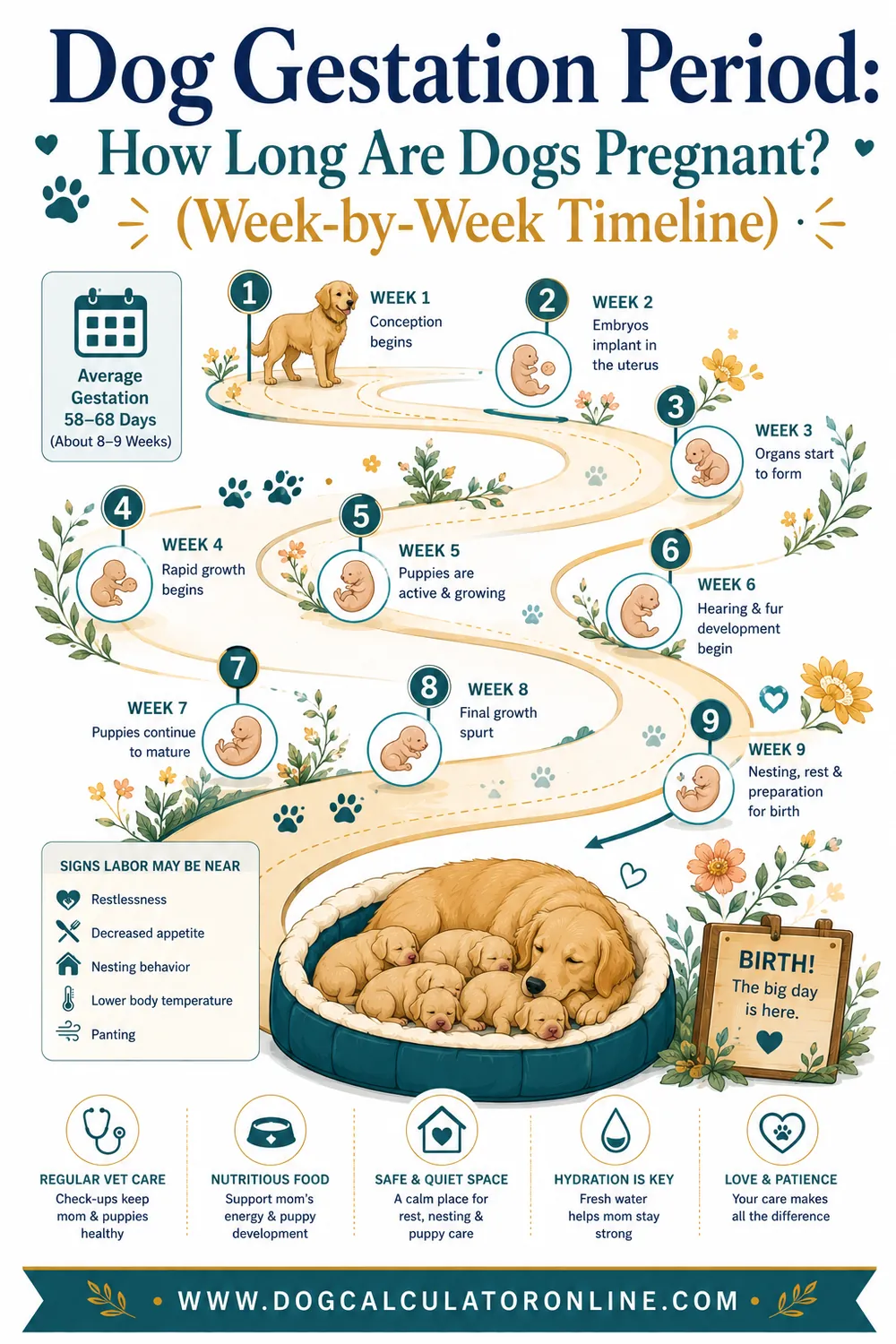
Our free suite of dog calculators helps with the follow-on questions too — like a due date if a pregnancy results (gestation is about 63 days). Below, here's each stage, the timing, and what you'll actually see.
🐕 Dog heat cycle — tap a stage
See what happens in each stage of the cycle:
Tap a stage above to see what happens.
How Often Do Dogs Go Into Heat?
Most dogs cycle about twice a year — roughly every six months — but this varies:
- Small breeds may cycle a bit more often (every 4–6 months).
- Large and giant breeds often cycle less often (every 8–12 months).
- Basenjis and some primitive breeds cycle only once a year.
Cycles can be irregular for the first year or two after the very first heat, then usually settle into a predictable rhythm. Keeping a simple calendar of start dates helps you anticipate the next one.
When Does the First Heat Happen?
The first heat typically arrives around 6 months of age, but the normal range is wide — anywhere from 6 to 15 months. As a general rule:
- Small breeds tend to start earlier (as young as 4–6 months).
- Large and giant breeds start later (sometimes not until 12–18 months).
If your dog is well past a year with no sign of heat, or if cycles seem very irregular, it's worth a chat with your vet to rule out underlying issues.
The 4 Stages of the Heat Cycle
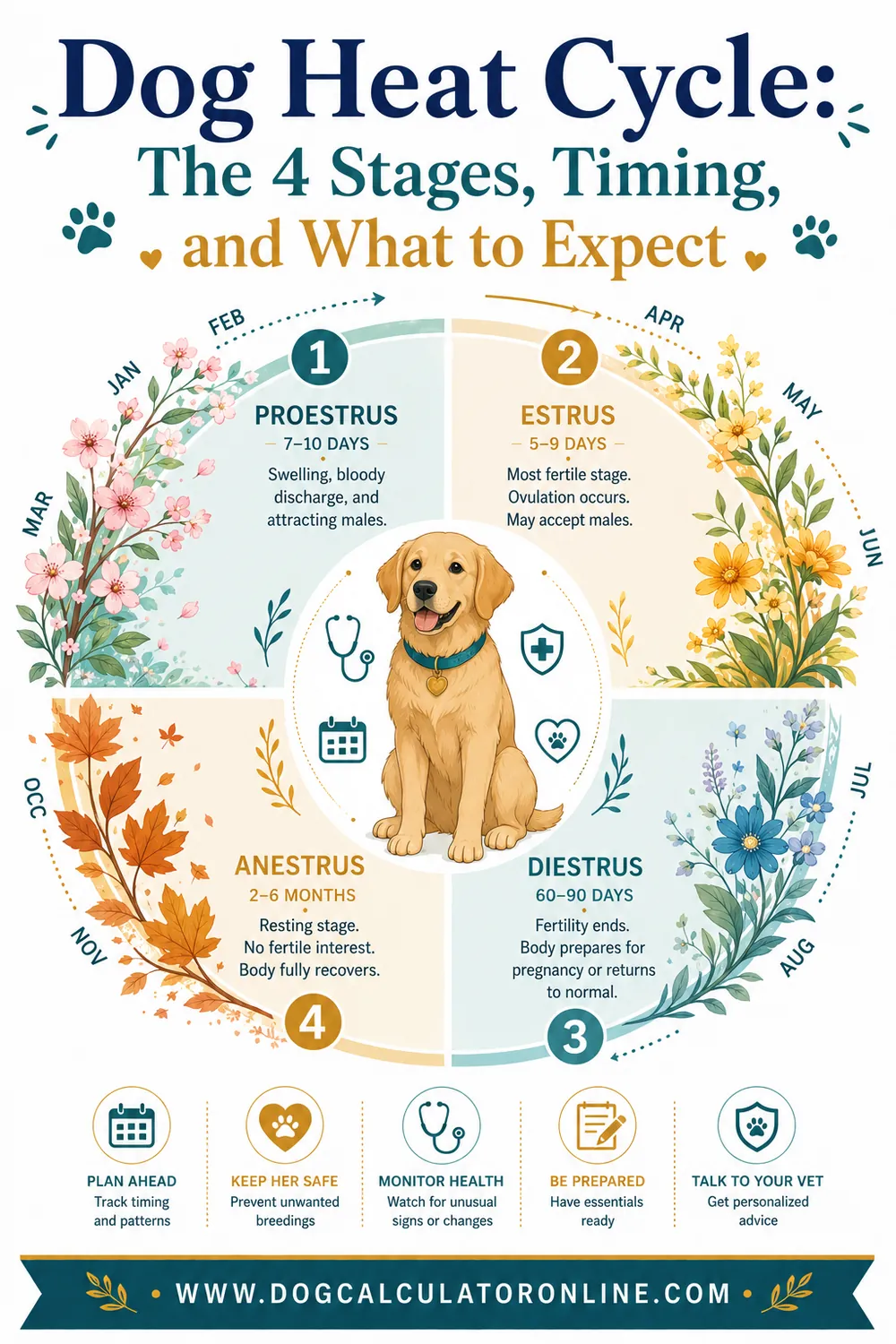
A complete cycle runs through four stages. The two you'll notice most are proestrus and estrus — together, the "in heat" period.
1. Proestrus (about 9 days)
This is the start of the visible heat. You'll see:
- Bloody or straw-colored discharge
- Swelling of the vulva
- Increased licking of the area
- Behavior changes — she may be clingy, moody, or attract male dogs
Importantly, she is not yet receptive to mating during proestrus. Males will be very interested, but she'll typically turn them away. Length varies from about 3 to 17 days, averaging 9.
2. Estrus (about 9 days)
This is the fertile window. Key signs:
- Discharge often lightens to pinkish or tan
- She becomes receptive to males (may "flag," moving her tail aside)
- Ovulation occurs during this stage
Estrus also averages around 9 days but ranges from 3 to 21. Because sperm can survive several days and eggs remain viable for a stretch, the practical fertile period is why unplanned litters happen so easily. If you are not breeding, this is the critical time to keep an intact female securely away from intact males.
3. Diestrus (about 60–90 days)
After the fertile window closes, the body enters diestrus whether or not she's pregnant. Discharge tapers and she stops accepting males. If she conceived, pregnancy runs through this stage — about 63 days of gestation. If not, her hormones still shift as though she might be, which is why some dogs show signs of a false pregnancy (nesting, mothering toys). Our dog gestation period guide covers the week-by-week if a pregnancy is underway.
4. Anestrus (about 4 months)
The resting phase. No visible activity and no fertility. The reproductive system recharges before the whole cycle begins again. Anestrus typically lasts several months and sets the roughly-twice-a-year rhythm.
Heat Cycle Timeline at a Glance
| Stage | Typical length | What's happening | Fertile? |
|---|---|---|---|
| Proestrus | ~9 days (3–17) | Bleeding, swelling begins | No |
| Estrus | ~9 days (3–21) | Ovulation, receptive to males | Yes |
| Diestrus | ~60–90 days | Pregnancy or wind-down | No |
| Anestrus | ~4 months | Resting phase | No |
The "in heat" window most owners track (proestrus + estrus) lasts about 2 to 4 weeks total.
Signs Your Dog Is in Heat
Watch for this cluster of changes:
- Swollen vulva and bloody-to-pink discharge
- More frequent licking of the genital area
- Increased urination or marking
- Restlessness, clinginess, or mood swings
- Male dogs showing sudden strong interest
- "Flagging" (tail held to the side) in the fertile stage
Every dog is a little different — some bleed heavily, others so lightly you barely notice. Keeping notes on your dog's normal pattern makes changes easier to spot.
Caring for a Dog in Heat
Practical, non-medical steps that help:
- Supervise outdoors, always on leash. Intact males can detect a female in heat from a distance. Never leave her unattended in an unfenced area.
- Use washable dog diapers or belly bands for the discharge, and keep bedding clean.
- Offer extra comfort. Some dogs feel off — a quiet space and normal routine help.
- Keep exercise up but avoid dog parks and group settings during this window.
- Track the dates so you know when the fertile period and next cycle are due.
If you're not planning to breed, talk to your vet about spaying, which ends heat cycles entirely and carries health benefits. Timing is a conversation to have with your vet based on your dog's breed and size.
How to Track Your Dog's Cycle
Because cycles come roughly twice a year and the fertile window is easy to miss, a simple record pays off:
- Mark the first day you notice bleeding or swelling — that's the start of proestrus.
- Note when discharge lightens and behavior shifts; that transition points to the fertile estrus stage.
- Log the end of visible signs, usually 2–4 weeks after the start.
- Count forward about six months (adjust for your breed) to anticipate the next cycle.
After a couple of cycles you'll know your dog's personal pattern — how long she bleeds, how heavily, and how her mood shifts. That baseline makes it far easier to spot anything unusual, and it's invaluable information if you ever consult your vet about breeding or health concerns. A note in your phone calendar is all it takes.
Heat Cycle and Age
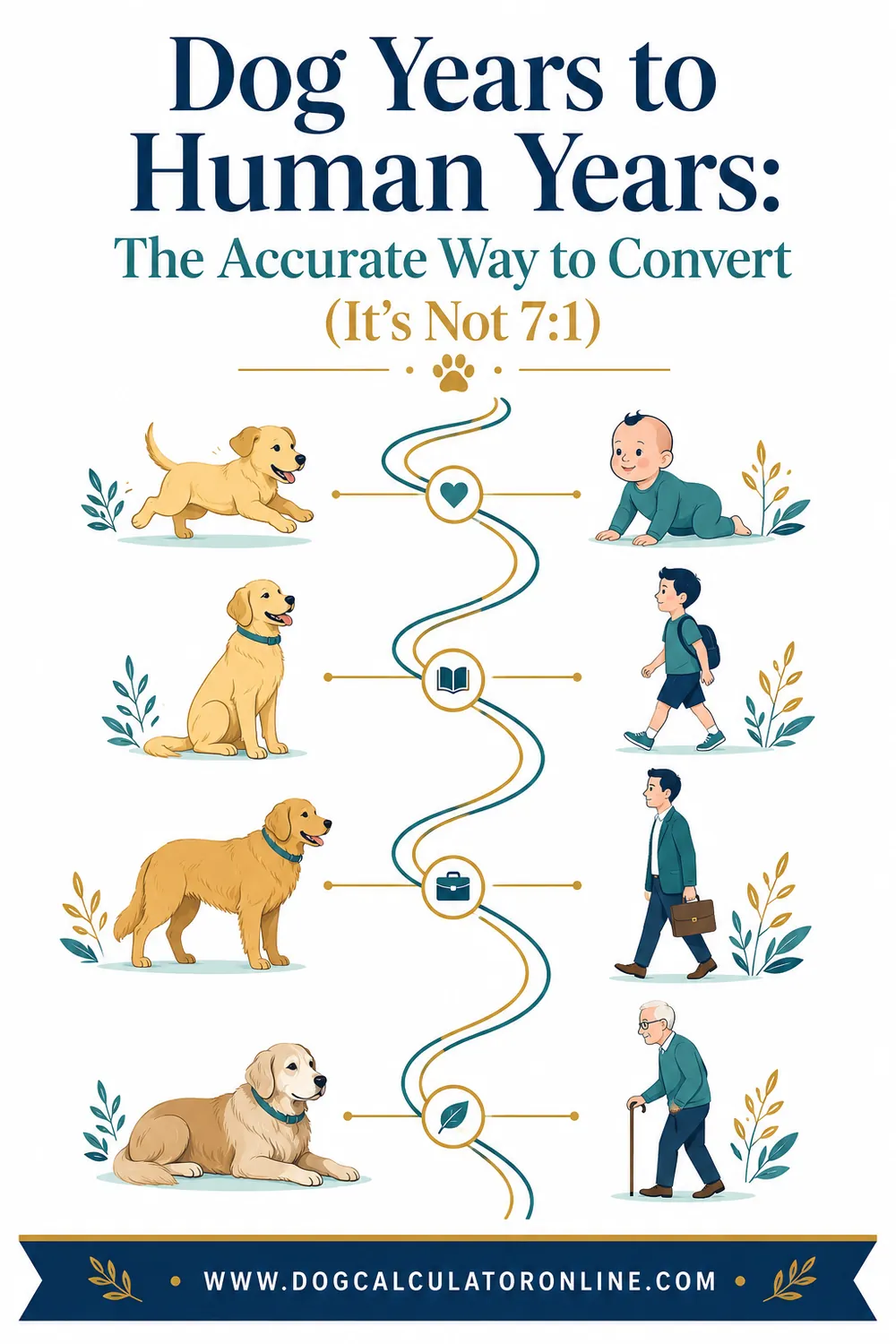
Unlike humans, dogs do not go through menopause. An intact female can cycle her whole life, though cycles space out and fertility declines with age. Breeding older dogs carries higher risks, which is one reason responsible breeding sticks to a dog's prime years. Curious how your dog's age maps to human years? Our dog age calculator puts it in perspective.
Common Myths About the Heat Cycle
A lot of misinformation circulates, so let's clear up the frequent ones:
- "A dog should have one litter before being spayed." There's no health requirement for this. It's a myth.
- "You can't tell when she's fertile." The fertile window is fairly predictable — the second visible stage (estrus), typically around 9–14 days after bleeding starts. A vet can pinpoint it with tests if breeding is planned.
- "Heat lasts just a few days." The visible heat runs about 2–4 weeks, not a weekend.
- "Spaying makes dogs fat." Spaying lowers calorie needs somewhat, but weight gain comes from feeding too much, not from the surgery itself. Adjust portions and it's a non-issue.
- "Small dogs and big dogs cycle the same." They often don't — small breeds may cycle more frequently and big breeds less often.
Spay or Breed? A Practical Look
If you're deciding what to do with an intact female, the two common paths are spaying or planned breeding:
- Spaying ends heat cycles entirely, eliminates the risk of unplanned litters, prevents a serious uterine infection called pyometra, and reduces the risk of certain cancers. Timing (how early or late) is a discussion to have with your vet based on your dog's breed and size, since recommendations vary.
- Planned breeding is a serious commitment involving health testing, knowledge of the breed, and readiness to care for a pregnant dog and puppies. Accidental litters are common precisely because the fertile window is easy to underestimate.
There's no single right answer for every dog, but the vast majority of pet owners who aren't experienced breeders are best served by spaying. Your vet is the right partner for that decision.
When to Call the Vet
Most heat cycles pass without trouble, but contact your vet if you notice:
- Discharge that is foul-smelling, pus-like, or persists long after heat should have ended — this can signal infection.
- Excessive or prolonged bleeding, or bleeding that seems far heavier than your dog's normal.
- Signs of illness during or after heat: lethargy, loss of appetite, excessive drinking, or a swollen, painful abdomen (possible pyometra — a medical emergency).
- No heat at all by 15–18 months, or wildly irregular cycles once she's mature.
When in doubt, call. Tracking your dog's normal pattern makes it much easier to know when something is off.
FAQ
How long does a dog stay in heat?
The visible heat (proestrus plus estrus) lasts about 2 to 4 weeks. The fertile window is roughly the middle 9 days or so.
How often do dogs go into heat?
Most dogs cycle about twice a year. Small breeds may cycle more often; large and giant breeds and some primitive breeds cycle less often, sometimes once a year.
At what age does a dog have her first heat?
Usually around 6 months, but anywhere from 6 to 15 months is normal. Small breeds start earlier; large and giant breeds start later.
When is a dog most fertile during heat?
During estrus — the second visible stage — when ovulation occurs and she becomes receptive to males. This is typically about 9 to 14 days after bleeding starts, but it varies.
Do dogs go through menopause?
No. Intact females can cycle throughout life, though cycles become less frequent and fertility declines with age.
Can I walk my dog while she's in heat?
Yes, but keep her leashed and away from other dogs, especially intact males. Avoid dog parks and off-leash areas during this time.
The Bottom Line
The dog heat cycle has four stages — proestrus, estrus, diestrus, and anestrus — and the visible "in heat" window lasts about 2 to 4 weeks, with the fertile period in the middle. Most dogs cycle twice a year, starting around 6 months of age. Track the dates, supervise closely during the fertile window, and talk to your vet about spaying if you're not breeding.
If a pregnancy results, gestation is about 63 days — our dog gestation period guide walks through it week by week, and the free dog calculators can help with due dates and more. Bringing home puppies? Start with our new puppy checklist.