Cheapest Dog Breeds to Own
Almost every list of cheap dog breeds ranks them by purchase price, which is the least important number in the whole calculation. What you pay for the dog is typically 3–5% of what the dog costs you; the other 95% is decided by adult weight, coat type, lifespan and the conditions the breed is prone to. A $400 puppy that needs $5,000 of airway surgery at three is not a cheap dog. A $1,200 whippet that eats modestly, never sees a groomer and stays healthy for thirteen years is. This guide ranks by running cost, not by sticker price, and names the traits that let you predict it for any dog. Price yours with the free dog cost calculator.

🐾 What makes a dog cheap to run?
Tap a factor:
Tap an option above. Running cost beats purchase price every time.
Why "Cheapest Breed" Is Usually the Wrong Question
The framing invites you to optimise the smallest variable in the budget.
A typical purchase or adoption price is $200–$2,000. A typical lifetime cost is $16,000–$45,000. Even a $2,000 difference at the start is under 6% of the total.
Two dogs of the same breed can differ by $20,000 across their lives. One cruciate repair, one lifetime of allergy management or one course of chemotherapy dwarfs any breed-level saving.
Cheap purchase prices often signal expensive dogs. Bargain puppies from unscreened parents, no health testing and no vet checks are exactly the puppies that arrive with parasites, poor socialization and inherited disease.
Adoption genuinely is cheaper at the start. A shelter fee of $50–$500 usually includes vaccination, microchipping and neutering — work that costs $400–$900 privately. How much does it cost to adopt a dog itemises what the fee covers.
Ask instead: which traits keep the running cost low? That question has a reliable answer, and it applies to crossbreeds as much as to pedigrees.
The Five Traits That Make a Dog Cheap
If a dog has all five, it will be inexpensive whatever it is called.
Moderate adult weight — 20 to 45 lb (9 to 20 kg). Big enough to be robust, small enough that food, drug doses and boarding stay modest. The scaling arithmetic is set out in cost of owning a dog by size.
A short, flat, single or low-maintenance coat. This eliminates the groomer, which is a $400–$900 annual line for clipped breeds.
A normal muzzle, normal-length back and normal-sized eyes. Every exaggeration of shape has a surgical bill attached to it.
A breed or mix without a strong predisposition to hip dysplasia, cruciate rupture, spinal disease or heart disease. These four account for a large share of the biggest bills owners ever face.
Moderate energy that you can meet yourself. A dog that needs professional exercise costs $200–$400 a month; a dog satisfied by an hour of your own time costs nothing extra.
Breeds That Are Genuinely Cheap to Run
These are chosen for low running cost across a full life, not low purchase price.
| Breed | Adult weight | Why it is cheap | Watch out for |
|---|---|---|---|
| Mixed-breed, medium | 30–50 lb (14–23 kg) | Low inherited disease rates, low adoption fee, short coats common | Unknown history and adult size in puppies |
| Whippet | 25–40 lb (11–18 kg) | Very healthy, short coat, eats less than its size suggests | Thin skin, needs a coat in cold weather |
| Retired greyhound | 55–75 lb (25–34 kg) | Low adoption fee, calm, short coat, surprisingly modest appetite | Dental disease; anaesthetic sensitivity |
| Jack Russell / Parson Russell | 13–18 lb (6–8 kg) | Hardy, long-lived, tiny food bill, no grooming | High exercise and enrichment needs |
| Border Terrier | 12–16 lb (5–7 kg) | Robust, hand-stripped rather than clipped, few breed conditions | Weight gain if underexercised |
| Beagle | 20–30 lb (9–14 kg) | Short coat, hardy, few costly structural problems | Strong tendency to obesity; needs secure fencing |
| Rat Terrier | 12–25 lb (5–11 kg) | Small, healthy, long-lived, no grooming costs | Terrier energy and prey drive |
These are tendencies, not guarantees. Any individual dog can develop an expensive condition, and a well-bred example of a "costly" breed can sail through life cheaply.
Notice what the list has in common. Moderate size, plain coats, normal faces, working ancestry. That combination, not the name, is what keeps the bills down.
Greyhounds are the counterintuitive entry. They are large but eat far less than a labrador of similar weight, and retired racers are usually rehomed already neutered and vaccinated.
Sighthounds need a dedicated anaesthetic protocol. Tell any new practice; it is a safety point rather than a cost one, but worth saying at the first appointment.
Terriers are cheap on paper and demanding in practice. The food and grooming bills are tiny, but an under-exercised terrier finds expensive ways to occupy itself, so the saving depends on your time rather than your wallet.
Beagles need the obesity warning taken seriously. They are among the breeds most prone to weight gain, and an overweight dog costs more in arthritis management, anaesthetic risk and shortened life than any food saving recovers.
Purchase Price: The Number Everyone Over-Weights
It is worth seeing the proportion written down.
A $200 rescue dog and a $2,500 pedigree puppy differ by $2,300 once. Over thirteen years that is $177 a year — less than a month of food for a large dog.
Where purchase price does matter is what it buys. Hip and elbow scores, eye testing, DNA panels and a health-tested pedigree genuinely lower the odds of a five-figure orthopedic or ophthalmic bill.
Free dogs are frequently the most expensive. An unvaccinated, unneutered, unsocialized puppy from a private advert costs $600–$1,200 in catch-up veterinary work before you have bought a bowl.
Shelter fees are heavily subsidised. Many include a first course of parasite treatment and a short free insurance period as well as neutering.
Do not read low breed prices as low demand for care. Popularity crashes drive down puppy prices without changing a breed's health profile at all.
Coat: The Easiest Line to Eliminate
Grooming is the largest cost difference between two otherwise identical dogs.
A clipped coat needs a full groom every six to eight weeks at $50–$120. That is $400–$900 a year, every year, for the dog's whole life.
Across thirteen years that is $5,000–$11,000. It is one of the largest single lines in a lifetime budget, and it is entirely avoidable by choice of coat.
Short flat coats need a brush and an occasional bath. Total annual cost: the price of a brush and some shampoo.
Double coats shed heavily but need no clipping. A labrador or a beagle costs nothing at the groomer even though it sheds constantly; a de-shed treatment two or three times a year at $30–$60 is optional.
Skipping appointments on a clipped coat is not a saving. Matting leads to a clip-off, sometimes under sedation, at a higher price than the groom you avoided; how much does dog grooming cost sets out the coat-by-coat figures.
Health Predisposition Beats Every Other Factor
This is where a "cheap" dog becomes an expensive one, usually somewhere between three and seven years old.
Cruciate ligament rupture costs $3,000–$6,000 per knee, and around half of affected dogs go on to rupture the other side.
Intervertebral disc disease in long-backed breeds costs $4,000–$10,000 for surgical management, and the risk in a dachshund is an order of magnitude above a normally proportioned dog.
Brachycephalic airway surgery runs $2,000–$5,500, and flat-faced breeds also carry higher rates of corneal ulceration, skin fold infection and cesarean delivery.
Chronic conditions cost more than one-off surgeries. Atopic dermatitis at $800–$2,000 a year for a decade outspends most single operations.
Insurers price all of this and their quotes are a useful signal. If a breed's premium is double the average, that is an actuarial statement about likely claims, not marketing. The expensive end of the scale is covered in most expensive dog breeds to own.
The Cheapest Dog Is Usually a Rescue Crossbreed
Every factor that lowers cost tends to land in the same animal.
Mixed-breed dogs show lower rates of most inherited disorders. Large veterinary datasets consistently find lower prevalence for a majority of the conditions tested, though a handful appear at similar rates in both groups — do mixed breed dogs live longer covers the evidence.
Adoption fees are a fraction of breeder prices and include work you would otherwise pay for. The saving in year one alone is often $500–$900.
An adult rescue removes the puppy premium entirely. No vaccination course, no neutering, no teething destruction, no puppy classes: a first year that costs $2,500–$4,000 for a puppy costs $900–$1,600 for an adult dog.
You can see what you are getting with an adult. Adult size, coat, temperament and often the health history are known rather than predicted.
Older rescues are cheaper again at the start and dearer at the end. A seven-year-old dog skips the expensive first year but reaches the expensive senior years sooner, so budget the buffer from day one.
Keeping Any Dog Cheap
Ownership habits move the lifetime figure more than breed selection does.
Keep the dog lean. Overweight dogs cost measurably more in arthritis management, diabetes, anaesthetic risk and shortened lifespan. This is the highest-value free intervention available.
Brush the teeth. Regular home dental care genuinely pushes back the interval between $400–$900 scale-and-polish procedures.
Never lapse on parasite prevention. A year of prevention costs less than treating one household flea infestation.
Decide on insurance before there is anything to declare. Pre-existing conditions are excluded everywhere, so the cheapest moment to insure is the day the dog arrives healthy.
Buy food on cost per day, not per bag. Divide the bag price by the number of days it genuinely lasts your dog. Larger bags of a mid-range complete food usually beat small bags of a premium one on both price and consistency.
Learn the two grooming jobs worth doing yourself. Nail trimming and regular brushing take ten minutes a week, prevent painful overgrowth and matting, and remove the most common reason for an unscheduled groomer visit.
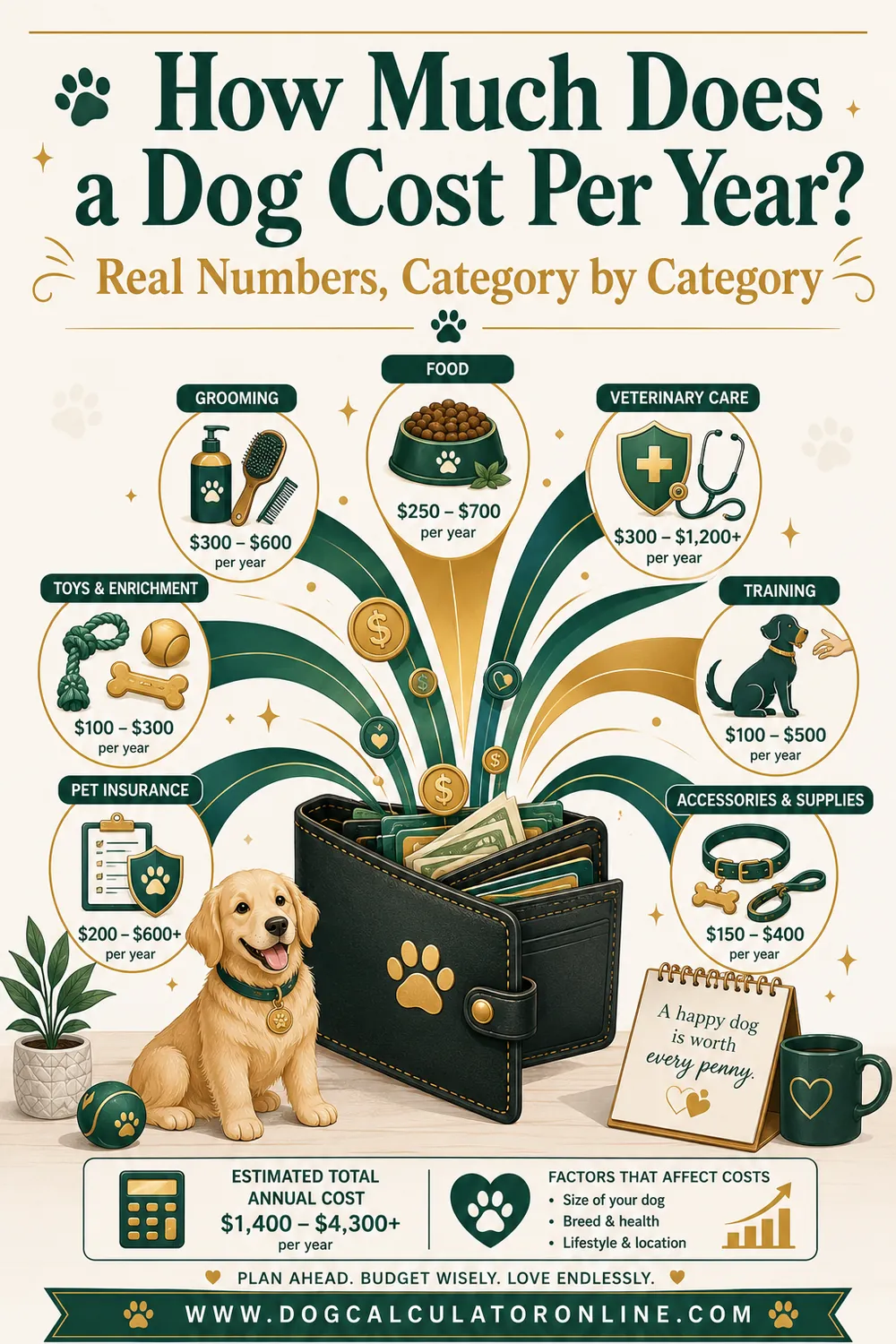
Budget the ordinary year and the spike separately. Most owners who describe a dog as unaffordable are describing a single unbudgeted event; how much does a dog cost per year sets out the ordinary-year baseline.
FAQ
What is the cheapest dog breed to own?
Judged on running cost rather than purchase price, a medium mixed-breed rescue with a short coat is usually cheapest, at roughly $1,000–$1,800 a year. Among pedigrees, whippets, Jack Russells, border terriers, beagles and retired greyhounds run lowest because they combine moderate size, plain coats and few structural problems.
Are small dogs always cheaper than big ones?
Per year, usually. Over a lifetime, much less so. Small breeds eat less and take smaller drug doses, but they live 14–16 years, need more frequent dental work, and are prone to patella, tracheal and heart conditions. The lifetime totals for small and large dogs overlap heavily.
Is a rescue dog cheaper than a puppy from a breeder?
Almost always, and by more than the fee difference suggests. Adoption fees of $50–$500 typically include vaccination, microchipping and neutering worth $400–$900. Adopting an adult also skips the puppy year, which costs two to three times an ordinary year.
Which breeds should I avoid on cost grounds?
Flat-faced breeds, long-backed breeds, giant breeds and heavily clipped coats each carry a predictable extra cost. That does not make them bad dogs — it makes them dogs you should insure early and budget for honestly rather than buy on a low headline price.
Does pet insurance make an expensive breed affordable?
It smooths the cost rather than removing it. Insurers load premiums for breeds that claim more, so a high-risk breed costs more every month as well as more at the vet. Insurance protects your cashflow; it does not make a costly breed a cheap one.
How much can I realistically save by choosing carefully?
Choosing a moderate-sized, short-coated dog without an expensive health profile can save $700–$1,500 a year against a large, clipped, high-risk breed — roughly $10,000–$18,000 across a life. Keeping any dog lean and dentally healthy saves several thousand more on top.
Judge the Running Cost, Not the Sticker
The cheapest dog to own is not the one with the lowest price on the advert. It is the one with a moderate adult weight, a coat that needs no clipping, a normal muzzle and back, and no strong family history of cruciate, hip, spinal or heart disease — and that description fits a great many rescue crossbreeds as well as whippets, terriers, beagles and retired greyhounds. Purchase price is 3–5% of the total, so spend your attention on the other 95%. Get a real figure for the dog you are actually considering with the free dog cost calculator.