Do Mixed-Breed Dogs Live Longer?
On average, yes — but modestly. Large veterinary studies have found mixed-breed dogs live roughly a year longer than size-matched purebreds. The likely reason is genetic diversity, which reduces the risk of inherited diseases concentrated in some purebred lines. But the effect is small next to the single biggest factor in any dog's lifespan: size.
Whatever your dog's ancestry, our free dog age calculator converts their age to human years using the size-adjusted method — because a mixed-breed's size, not its mix, is what most shapes how it ages.

🐾 Lifespan by size (mixed or purebred)
Tap your dog’s size: size predicts lifespan far more than breed mix does.
Tap a size class above.
What the Research Actually Says
The idea that mixed-breed dogs are healthier is popular, and the data broadly supports a small advantage — with important nuance.
Large studies drawing on veterinary records and lifespan databases have generally found that mixed-breed dogs live modestly longer than purebreds of the same size — often on the order of about a year. When you compare a random mix to a random purebred without adjusting for size, the gap can look bigger, but that's partly because the purebred pool includes many short-lived giant breeds. Match for size, and the advantage shrinks to that modest, consistent edge.
So the honest answer isn't "mixed-breeds live way longer." It's "mixed-breeds have a small, real longevity edge, mostly explained by health, and size still dominates the picture."
Why Mixed-Breeds Might Have an Edge: Hybrid Vigor
The leading explanation is hybrid vigor (heterosis) — the genetic principle that offspring of diverse parents tend to be healthier than offspring of closely related ones.
Purebred dogs come from relatively closed gene pools. Breeding within a limited population to preserve a "look" or standard can unintentionally concentrate the genes for certain inherited diseases. Some breeds carry well-known predispositions — particular heart conditions, hip problems, eye diseases, or elevated cancer risk — precisely because the responsible genes became common in that line.
A mixed-breed dog draws from a wider genetic deck. That doesn't make them immune to inherited disease — a mix can inherit any condition its ancestors carried — but it lowers the odds that two copies of the same problematic gene line up. Fewer concentrated genetic risks, on average, means fewer early disease deaths, which nudges the average lifespan up.
Why Size Matters More Than the Mix
Here's the fact that reframes the whole question: size predicts lifespan far more powerfully than purebred-versus-mixed status.
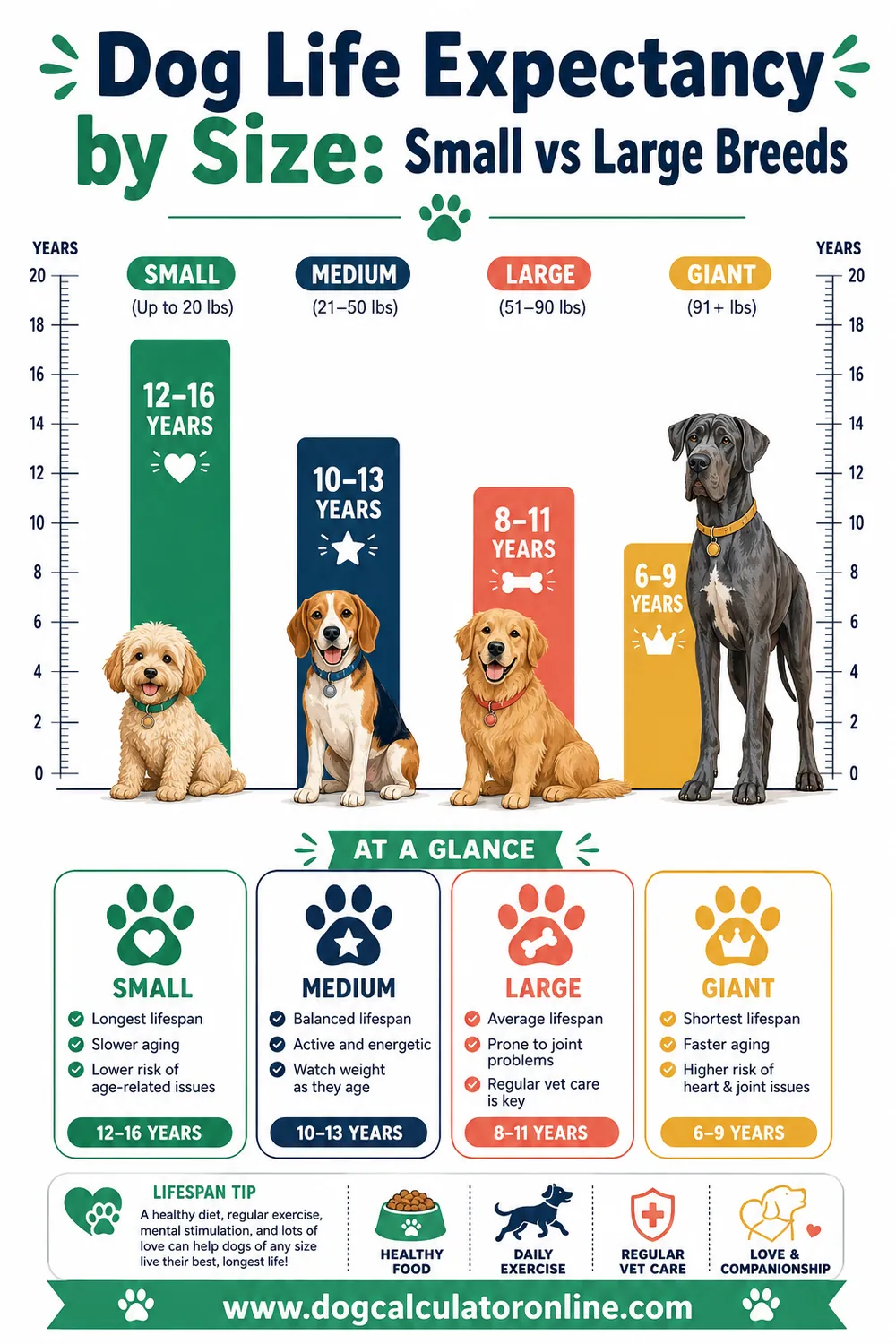
| Size class | Typical lifespan | Mix vs purebred difference |
|---|---|---|
| Small (under 20 lb) | 12–16 years | ~1 year (small) |
| Medium (21–50 lb) | 10–14 years | ~1 year (small) |
| Large (51–90 lb) | 9–12 years | ~1 year (small) |
| Giant (over 90 lb) | 7–10 years | ~1 year (small) |
A small mixed-breed and a small purebred both far outlive a giant of either type. The roughly one-year mixed-breed edge is real, but it's dwarfed by the near-decade spread between a Chihuahua and a Great Dane. If you want to predict how long a dog will live, ask its adult weight first and its ancestry second.
This is exactly why our dog age calculator asks for weight, not breed papers: a 30-pound mystery mix ages on the same size-adjusted curve as a 30-pound purebred.
The Catch: "Mixed-Breed" Doesn't Mean "Risk-Free"
A few important caveats keep the hybrid-vigor story honest:
- Mixes inherit their parents' risks. A dog that's half of a breed prone to a heart condition can absolutely inherit that condition. Hybrid vigor lowers average risk across a population; it doesn't shield an individual dog.
- Designer crosses aren't magic. Crossing two purebreds (say, two breeds that both carry hip dysplasia) doesn't cancel shared risks — it can pass them along. First-generation crosses of unrelated breeds get more hybrid-vigor benefit than crosses of two similar, similarly-afflicted breeds.
- Some purebreds are very long-lived. Plenty of well-bred purebreds reach the top of their size range. Responsible breeders screen breeding stock for heritable diseases specifically to reduce these risks — a well-bred purebred from health-tested parents can easily outlive an unlucky mix.
- Care outweighs pedigree. How a dog is fed, exercised, and cared for moves lifespan more reliably than the purebred/mixed distinction does.
What This Means If You Have a Mixed-Breed
Your dog's modest genetic edge is a nice bonus — not a reason to relax. To make the most of it:
- Estimate the size class. Adult weight tells you the expected lifespan range and, just as usefully, when senior care should begin (around 7 for small/medium, 6–7 for large, 5–6 for giant).
- Consider a DNA test if you're curious. Ancestry panels can flag breed-linked health risks worth watching for, and some now estimate biological age. Treat health results as "things to discuss with your vet," not diagnoses.
- Apply the same longevity basics as any dog: keep them lean, care for their teeth, exercise daily, feed a balanced diet, and keep up regular vet visits. These move the needle far more than genetics.
- Don't assume immunity. A mixed-breed still needs the full preventive-care routine and prompt attention to any warning signs.
The Studies Behind the Claim
It's worth knowing where the "mixes live longer" idea comes from, because the evidence is more measured than internet lore suggests. Researchers have looked at large pools of veterinary records and lifespan data, comparing mixed-breed dogs against purebreds. The recurring finding: mixes outlive purebreds by a modest margin — commonly cited around a year — once you account for size.
That last part is the catch most headlines drop. Compare all mixes to all purebreds and the gap can look dramatic, but a big chunk of that is composition: the purebred group contains many short-lived giant breeds, which drags the purebred average down. Level the playing field by comparing similar sizes, and the advantage narrows to that consistent, modest edge.
Researchers also note the story isn't uniform across every condition. Mixed-breeds show lower rates of some inherited disorders but aren't protected from all of them, and a few conditions appear at similar rates in both groups. In other words, the data supports "a small, real edge on average," not "mixes are bulletproof." It's a reason to feel good about a rescue mutt, not a reason to skip preventive care.
Purebred vs Mixed: How to Actually Choose
If you're deciding between a purebred and a mixed-breed and longevity is on your mind, the modest mixed-breed edge shouldn't be the deciding factor — several bigger levers matter more:
- Pick the size that fits your life. A small dog of either type will likely outlive a large dog of either type by years. Size is the biggest lifespan choice you'll make.
- If purebred, favor health-tested parents. Responsible breeders screen breeding stock for the heritable diseases common in that breed. A well-bred purebred from screened lines sidesteps much of the risk that gives some purebreds a shorter average.
- If adopting a mix, you get the genetic-diversity bonus for free — plus, often, an adult dog whose size and temperament you can already see rather than predict.
- Either way, commit to the care basics. Lean weight, dental care, exercise, and regular checkups move lifespan more than the purebred/mixed distinction does.
In short: there's no wrong answer here. A loved, lean, well-cared-for dog of the right size for your household is set up for a long life whether its parents share a breed or not. The mixed-breed longevity edge is a nice tiebreaker, not a reason to rule out a purebred you'd otherwise adore.
What If You Don't Know the Mix?
Most rescue owners never learn their dog's exact ancestry — and it barely matters for planning. You can estimate age from teeth, eyes, coat, and body condition (or your vet can), and estimate lifespan from adult size. Feed that age and weight into the free dog age calculator and you'll have everything you need to set the right care schedule, papers or no papers.
If you are curious, a DNA test can satisfy that itch and occasionally surface a health tip worth knowing. But a happy, lean, well-exercised mystery mutt with regular vet care is set up for a long life regardless of what the test would say.
Related Guides
If this helped, these go deeper on the same question:
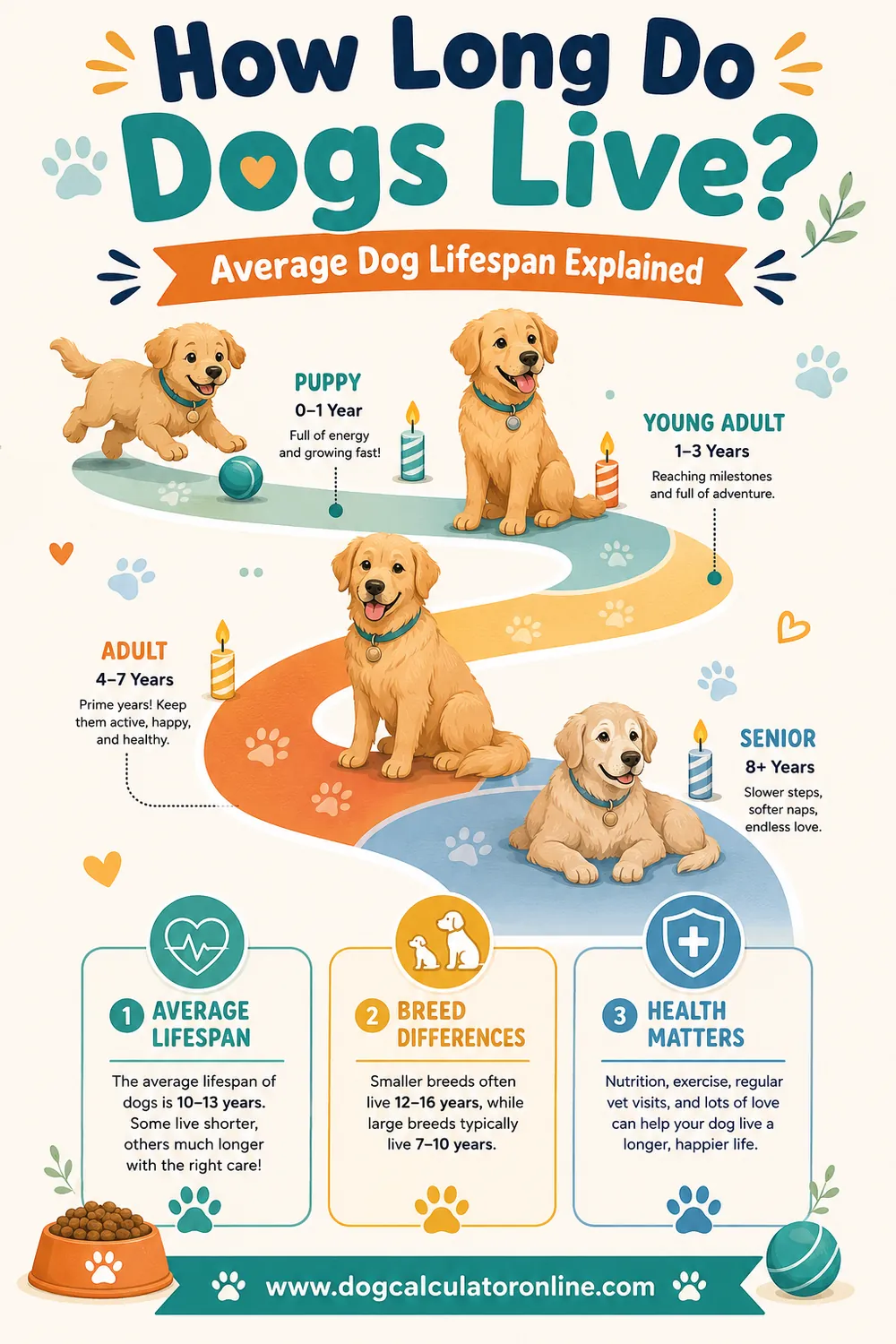
- How Long Do Dogs Live? Average Dog Lifespan Explained
- Dog Life Expectancy by Size: Small vs Large Breeds
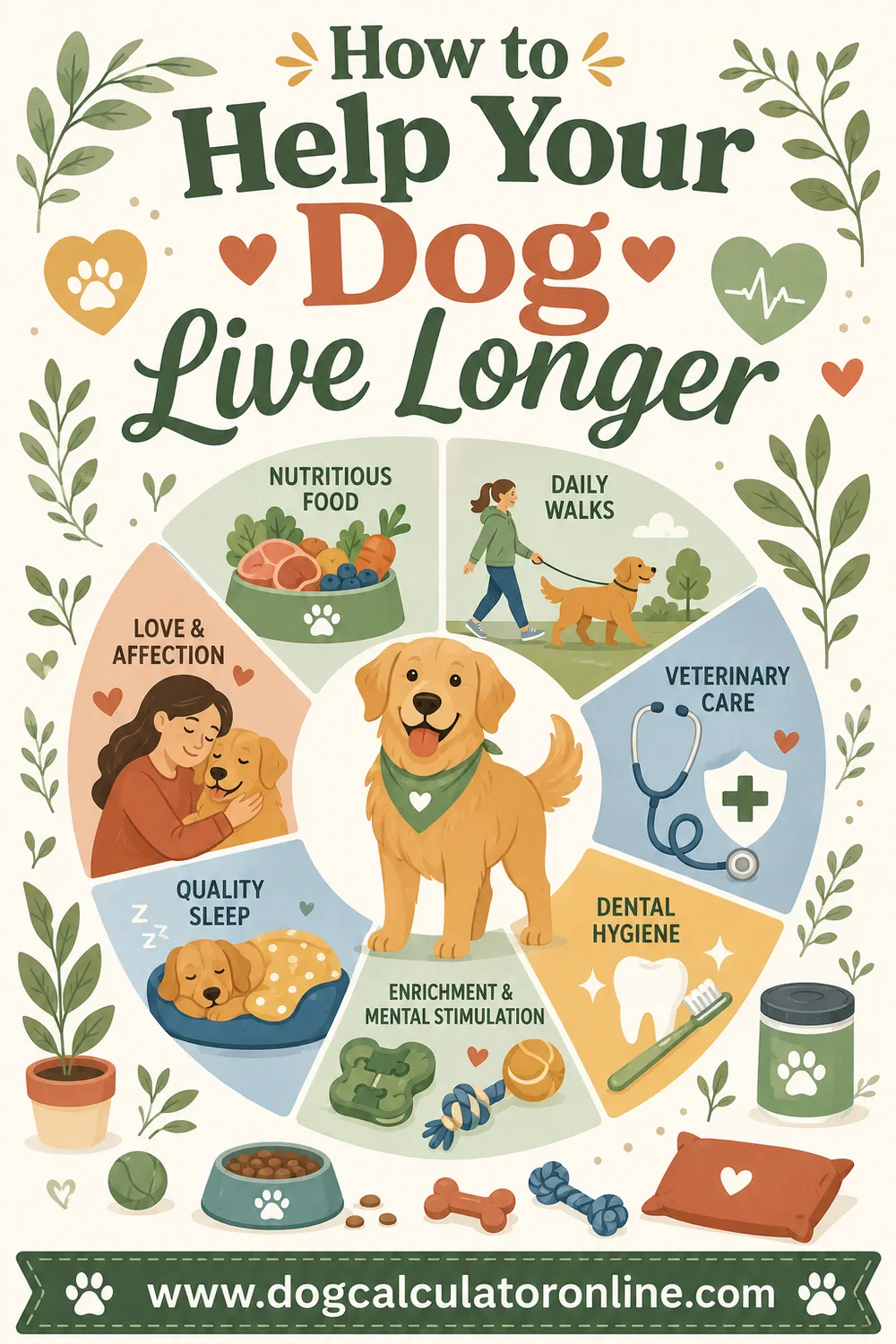
- How to Help Your Dog Live Longer
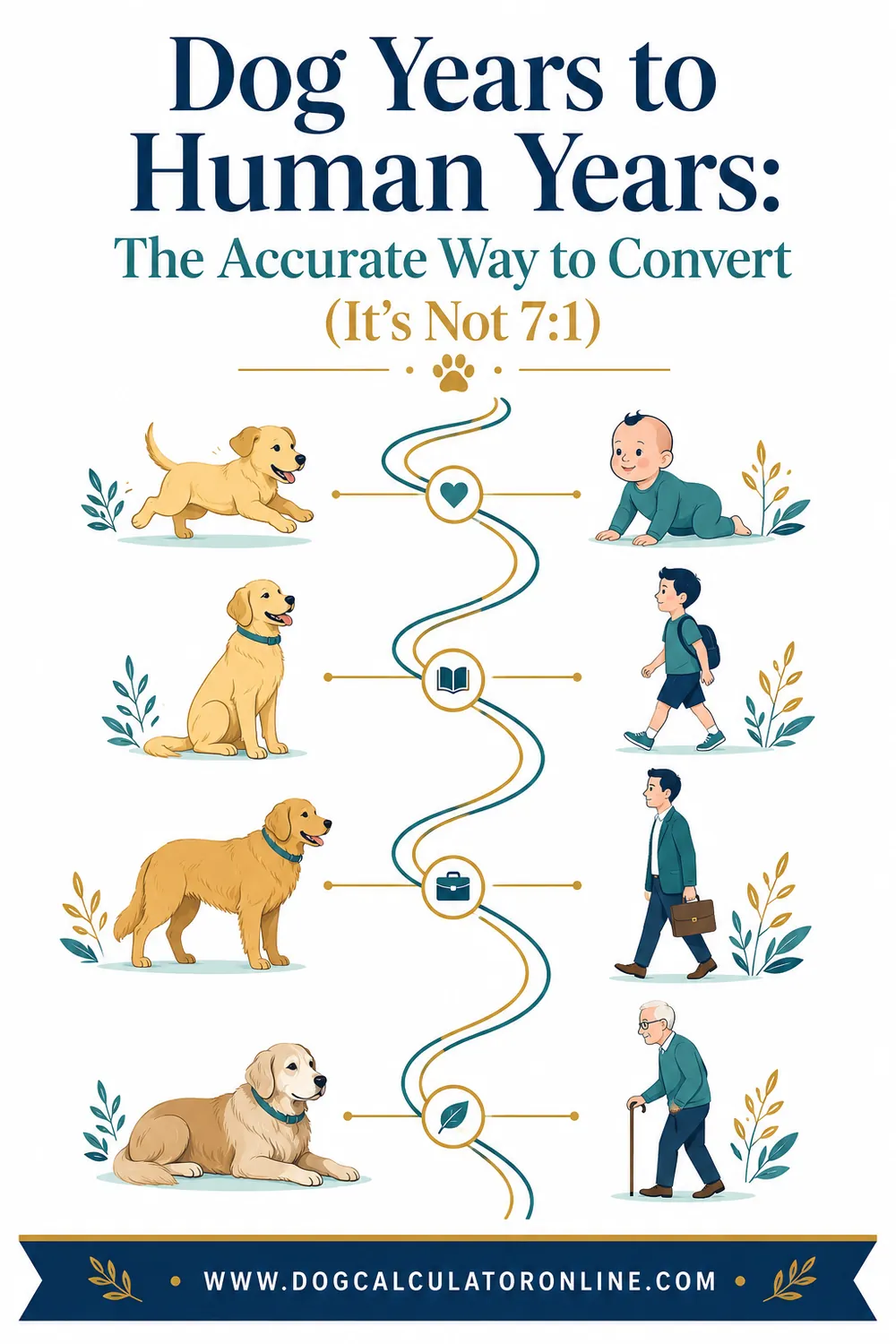
- Dog Years to Human Years: The Accurate Way to Convert (It's Not 7:1)
And if you just want your own dog's number, the free dog age calculator does it in one tap.
FAQ
Do mixed-breed dogs really live longer than purebreds?
On average, modestly — large studies suggest roughly a year longer than size-matched purebreds. The likely reason is greater genetic diversity, which lowers the odds of inherited diseases concentrated in some purebred lines.
Why would mixed-breeds be healthier?
Hybrid vigor: offspring of genetically diverse parents tend to have fewer concentrated inherited-disease risks than offspring from closed gene pools. It lowers average risk, though not for every individual dog.
Does that mean purebreds are unhealthy?
No. Many purebreds live long, healthy lives, and responsible breeders health-test breeding stock to reduce heritable risks. A well-bred purebred can easily outlive a mixed-breed — care and size matter more than pedigree.
What predicts a dog's lifespan the most?
Size, by a wide margin. Small dogs average 12–16 years and giants 7–10, regardless of mixed or purebred status. The mixed-breed edge is small next to that.
Are designer crossbreeds healthier than purebreds?
Not automatically. Crossing two breeds that share the same risk (like hip dysplasia) can pass it along. The hybrid-vigor benefit is largest when the two parent breeds are genetically dissimilar.
How do I figure out my mixed-breed's age in human years?
Estimate their age and adult weight, then use the size-adjusted method (15 for year one, +9 for year two, then +4 to +7 by size). The free dog age calculator does it instantly.
Should I get a DNA test for my mixed-breed?
It's optional. A DNA test can reveal ancestry, flag breed-linked health risks worth watching for, and satisfy curiosity — but it won't change the core care plan, which follows your dog's size. Treat any health findings as topics for your vet, not diagnoses.
Do mixed-breeds still need the same preventive care?
Absolutely. A modest genetic edge isn't immunity. Mixed-breed dogs need the full routine — vaccinations, parasite prevention, dental care, lean weight, and regular checkups — just like any purebred. Care matters far more than pedigree for how long they live.
The Bottom Line
Mixed-breed dogs do tend to live a little longer than size-matched purebreds — a modest, real edge that hybrid vigor helps explain. But it's a footnote next to size, which decides most of a dog's lifespan, and next to care, which you control. A lean, well-exercised, regularly-checked dog of any ancestry is set up to reach the top of its range.
Whatever's in your dog's family tree, start with what actually drives their aging: enter their age and weight into the free dog age calculator for the size-adjusted human-year answer.