When Is It Too Hot to Walk a Dog?
For a healthy, fit, average-coated adult dog, walking is comfortable below about 68°F (20°C), needs care from 70–77°F (21–25°C), becomes genuinely risky above about 82°F (28°C) and is dangerous above 90°F (32°C). But the number on the thermometer is only half the answer — humidity is the other half, because a dog cools itself by panting, and panting only works if moisture can evaporate into the air. On a muggy 78°F (26°C) afternoon, a dog can be in more trouble than on a dry 88°F (31°C) morning. Your dog's build, age and face shape shift every one of those numbers too, and our dog ideal weight calculator is a good first check on one of the biggest risk factors.
🐾 Is it too hot for a walk?
Tap the temperature outside:
Tap a band above. Humidity moves every one of these numbers downward.
Why Humidity Changes the Answer So Much
Because dogs do not really sweat.
A dog's cooling system is its breath. There are sweat glands in the paw pads, but they contribute almost nothing. Nearly all heat loss happens as air moves over the wet surfaces of the tongue, mouth and upper airway, and water evaporates off them. Evaporation carries heat away.
Evaporation needs somewhere for the moisture to go. When the air is already close to saturated, that moisture has nowhere to move to. The panting continues, the dog works harder, and the cooling barely happens.
Which is why muggy days catch people out. A dry 88°F (31°C) day with a breeze is often easier on a dog than a still, sticky 78°F (26°C) one. The thermometer says the opposite.
A rough rule some vets use is to add the temperature in Fahrenheit to the relative humidity as a percentage. Once that total climbs past about 150, treat it as a caution day even if the temperature alone looks mild. This is a rule of thumb, not a validated formula — but it makes you check the humidity, which is the point.
Shade and moving air help genuinely, not just psychologically. A breeze replaces the saturated air sitting right at the dog's tongue with drier air, and that restarts evaporation.
Temperature Bands for Walking a Dog
These are for a healthy adult dog of average build and coat, at moderate humidity. Read them as starting points, not permissions.
| Air temperature | Healthy average dog | High-risk dog | What to change |
|---|---|---|---|
| Below 68°F (20°C) | Comfortable | Comfortable, watch on humid days | Nothing |
| 70–77°F (21–25°C) | Fine, mild caution | Caution — shorten and shade | Avoid midday, carry water |
| 78–82°F (26–28°C) | Caution | Risky — toilet trips only | Early morning or after sunset only |
| 83–89°F (28–32°C) | Risky | Dangerous — stay in | Short, shaded, grass, no running |
| 90°F (32°C) and above | Dangerous | Dangerous | Toilet breaks only, minutes not miles |
Notice how narrow the gap is between "fine" and "risky". There is only about 12°F between an ordinary summer walk and a genuinely hazardous one, which is why a heatwave feels like it arrives overnight.
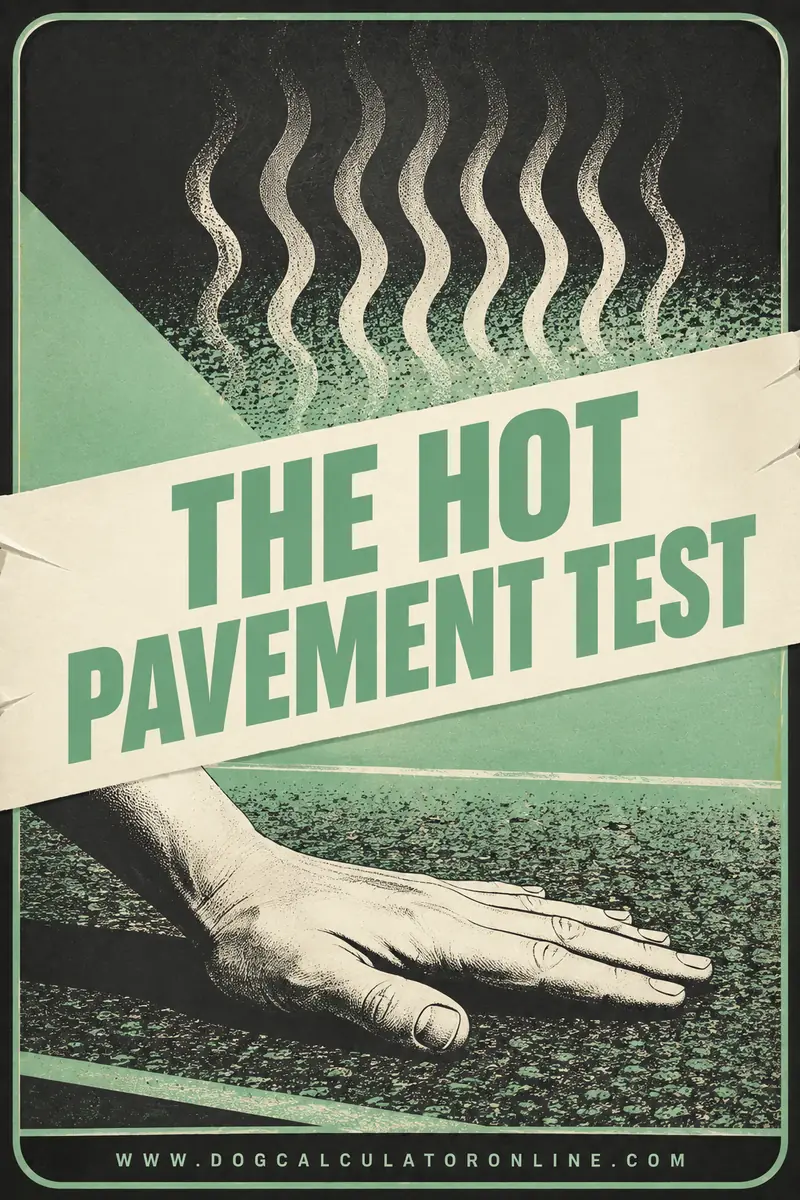
The ground is hotter than the air, often by a lot, and that is a separate limit that can rule out a walk while the air temperature still looks acceptable. The seven-second pavement test is the check that matters there.
Time of day beats temperature. The same 84°F (29°C) afternoon reading means something very different at 6am, when the ground has had all night to cool, than at 4pm, when it has been baking since ten.
Which Dogs Overheat at Much Lower Temperatures
For some dogs, every number above should drop by 10°F (6°C) or more.
Flat-faced (brachycephalic) breeds. Bulldogs, French Bulldogs, Pugs, Boxers, Boston Terriers, Shih Tzus and Pekingese have narrowed nostrils, a longer soft palate and a compressed airway. They move far less air per breath, so the cooling machinery is running at a fraction of capacity — and the hard breathing itself generates heat and swells the airway tissues, which narrows things further. Many of these dogs are unsafe walking at temperatures other dogs enjoy.
Overweight dogs. Fat insulates, so heat struggles to get out, and every step costs more effort, which produces more heat. This is the single risk factor you can actually change. If you are not sure where your dog sits, how to tell if your dog is overweight walks through the rib and waist check.
Dark-coated dogs. A black coat absorbs radiant heat from the sun rather than reflecting it. In direct sunlight the coat surface of a black Labrador can be markedly hotter than a cream-colored dog's on the same walk.
Very young and very old dogs. Puppies regulate their temperature poorly, and older dogs often have less efficient hearts, stiffer airways and less body awareness about when to stop.
Dogs with heart or airway disease, and dogs on some medications, have less reserve for the extra work panting demands. Ask your vet where your own dog's line sits.
Thick double coats in a hot, humid climate — northern breeds like Huskies and Malamutes cope well with dry heat and badly with muggy heat.
How Should You Time a Summer Walk?
The clock does more for your dog than any gadget.
Early morning is the best window in the day. The air is at its coolest and, more importantly, tarmac, paving and artificial turf have had the whole night to release yesterday's heat.
Late evening is second best but not equal. Air temperature drops after sunset while hard surfaces lag behind, sometimes by hours. Check the ground even when the air feels pleasant.
Avoid 11am to 5pm on any hot day. That is when both the air temperature and the solar load on dark surfaces peak.
Split the exercise. Two short outings at either end of the day beat one long one, and they suit dogs who need a routine.
Let the walk be shorter and slower. Sniffing is genuinely tiring for a dog in a good way; a twenty-minute sniffing walk in the shade satisfies more than a brisk mile in the sun. If your dog is used to more, indoor and low-heat ways to meet a dog's exercise needs fill the gap.
Skip the run, the bike and the ball. Sustained running is what turns a warm day into a heat emergency, because the dog will keep chasing long past the point where it should stop.
What to Change About the Walk Itself
Small adjustments buy a surprising amount of margin.
Walk on grass wherever there is a choice. Grass releases moisture and sits dramatically cooler than the path beside it — often 30°F or more cooler in full sun.
Stay in the shade, even if it makes the route odd. Walking the shaded side of a street is worth more than any cooling accessory.
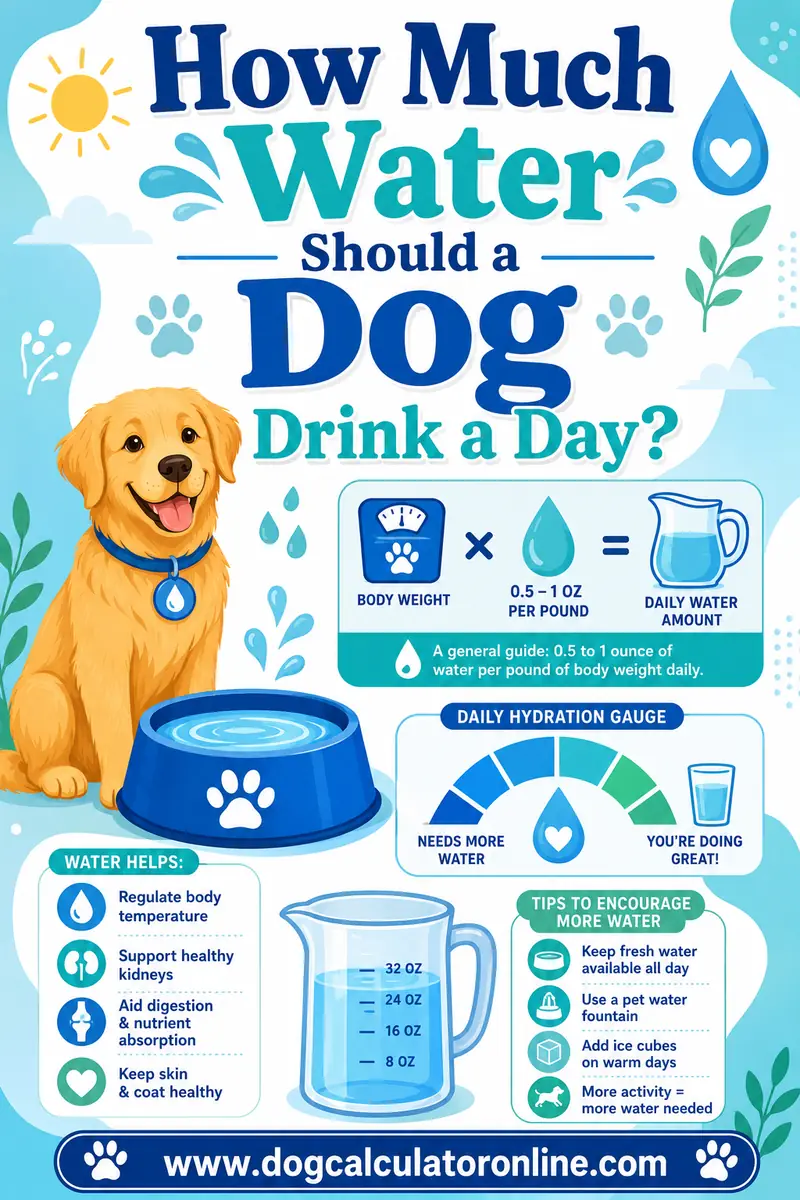
Carry water and offer it every ten minutes, even if your dog refuses. A dog that has been panting hard has lost a lot of fluid through evaporation. Our guide to how much water a dog should drink in a day covers what normal intake looks like and when thirst becomes a concern.
Wet the dog before you go, particularly the belly, armpits, groin and paws, where blood vessels sit close to the surface. A damp dog cools as the water evaporates.
Use a harness rather than a tight collar on a dog that is panting hard, so nothing presses on the throat.
Turn back sooner than you think you need to. Remember that the way home is the second half of the effort — a dog that seems fine at the halfway point still has to make the return trip.
What Overheating Looks Like — And When to Stop
This is the part to know by heart, because heat trouble builds faster than people expect.
Early signs: stop the walk. Heavy, fast panting that does not settle. Slowing down or lagging behind. Seeking shade, lying down, refusing to move. Bright red gums and tongue. Thick, ropey drool. Any of these means the walk is over now — head for shade, offer water, and cool the dog.
Serious signs: this is an emergency. Wobbling, stumbling or weakness. Vomiting or diarrhea. Confusion, glazed eyes, or a dog that stops responding to you. Gums that are very pale, gray or bluish. Collapse or seizure. Call your vet immediately and tell them you are on the way with a suspected heat stroke.
While you get to the vet, move the dog into shade, wet it thoroughly with cool — not iced — water, especially the belly and legs, and keep air moving over it. Do not force water into the mouth of a dog that is not fully alert. Your vet will tell you what to do next; heat stroke needs veterinary treatment even if the dog seems to perk up.
A normal dog's temperature is 101–102.5°F (38.3–39.2°C). Above about 104°F (40°C) is a genuine emergency. If you own a rectal thermometer and the dog is calm enough, the number helps the vet; if not, do not delay the drive to find out.
Do not wait to see if it passes. Heat stroke can cause organ damage that shows up hours later, which is why vets want to see these dogs even when the panting settles.
Common Myths About Hot-Weather Walking
A few of these are worth clearing up plainly.
"Shaving a double coat keeps a dog cool." Mostly false, and often counterproductive. That undercoat traps a layer of air that insulates against heat as well as cold, and removing it exposes skin to sunburn. Brushing out the dead undercoat is the useful version. Single-coated breeds are a different case — ask a groomer who knows the breed.
"Dogs know when to stop." Many do not. Retrievers, collies and terriers in particular will keep working through the early warning signs, which is exactly why they are over-represented in exercise-related heat cases.
"If the dog is drinking, it is fine." Drinking replaces fluid but does not cool the body much. A dog can drink well and still be overheating.
"A cooling coat or vest makes hot walks safe." They help, and only while damp. As the water evaporates the effect stops, and in high humidity it barely starts. Treat them as an extra margin, not a license to walk in the heat.
"Wet grass and paddling pools are enough." They genuinely help at home, and keeping a dog cool through a hot spell covers the setups that work. But no amount of cooling at home changes what a midday sidewalk does to paws.
"Cold water causes bloat or shock." There is no good evidence that offering a hot dog cool water is harmful. Very large volumes gulped fast are worth avoiding in deep-chested breeds, so offer small amounts often.
Hot Weather Versus Cold Weather Limits
The two ends of the year need opposite instincts, and it helps to know which way each dog leans.
Heat is the more dangerous end. A dog can shiver its way through cold for a long time. Overheating damages organs within minutes to an hour, and it is far harder to reverse.
The dogs at risk are often different. A Husky is superb in cold and vulnerable in humid heat. A whippet is the reverse: happy in warm weather and genuinely cold at temperatures that feel mild to you.
Coat type explains most of the difference. A dense double coat insulates in both directions. A single, thin coat over little body fat does neither job well.
Small dogs lose heat quickly and gain it quickly, because they have a lot of surface area for their volume. That cuts both ways across the year.
Acclimatisation is real. A dog that has spent a mild spring indoors will handle the first hot week worse than the same dog in August. Build up gradually rather than treating the first warm weekend as normal.
The cold end has its own thresholds, and when it is too cold to walk a dog sets those out alongside the same risk groups.
FAQ
Is 75°F too hot to walk a dog?
For a healthy adult dog of average build, 75°F (24°C) is usually fine with shade, water and a shorter route. For a flat-faced, overweight, elderly or very young dog, or on a humid day, 75°F is already caution territory — walk early morning instead and keep it brief.
At what temperature should dogs not go outside at all?
Above about 90°F (32°C), outdoor time should be limited to toilet breaks of a couple of minutes on grass in the shade for any dog. Flat-faced and overweight dogs reach that point closer to 80°F (27°C). Exercise indoors and wait for the evening.
How long can a dog walk in hot weather?
At 78–82°F (26–28°C), keep walks to roughly 15–20 minutes at an easy pace, in shade, with water offered. Above 83°F (28°C), limit outings to a few minutes. Halve those times for flat-faced, overweight, senior or very young dogs.
Does humidity really make heat worse for dogs?
Yes, substantially. Dogs shed heat by evaporating moisture from the tongue and airway when they pant. Humid air is already close to saturated, so that evaporation slows and cooling largely stops. A humid 78°F (26°C) day can stress a dog more than a dry 88°F (31°C) one.
What are the first signs a dog is too hot on a walk?
Fast, heavy panting that does not settle, lagging behind or refusing to walk, seeking shade, lying down, bright red gums and thick ropey drool. Stop the walk at that point, get into shade, offer water and cool the dog with cool water.
Is it safe to walk a dog in the evening after a hot day?
Usually yes for the air temperature, but pavement holds heat for hours after sunset. Test the ground with the back of your hand for seven seconds before you set off, and choose grass routes if the surface is still warm.
Walking Your Dog Through a Hot Spell
The practical version is short. Below 68°F (20°C), walk as normal. Between 70°F and 82°F (21–28°C), move the walk to early morning or after sunset, take shade and water, and shorten it. Above 83°F (28°C), treat outdoor time as toilet breaks and meet the exercise need indoors. Drop every band by around 10°F (6°C) for a flat-faced, overweight, black-coated, elderly or very young dog, and drop it again when the air is humid. Test the ground before you go, turn back early, and learn the stop-and-act signs. If your dog carries extra weight, the dog ideal weight calculator shows how much margin you could win back before next summer.