The Hot Pavement Test: When Asphalt Burns Paws
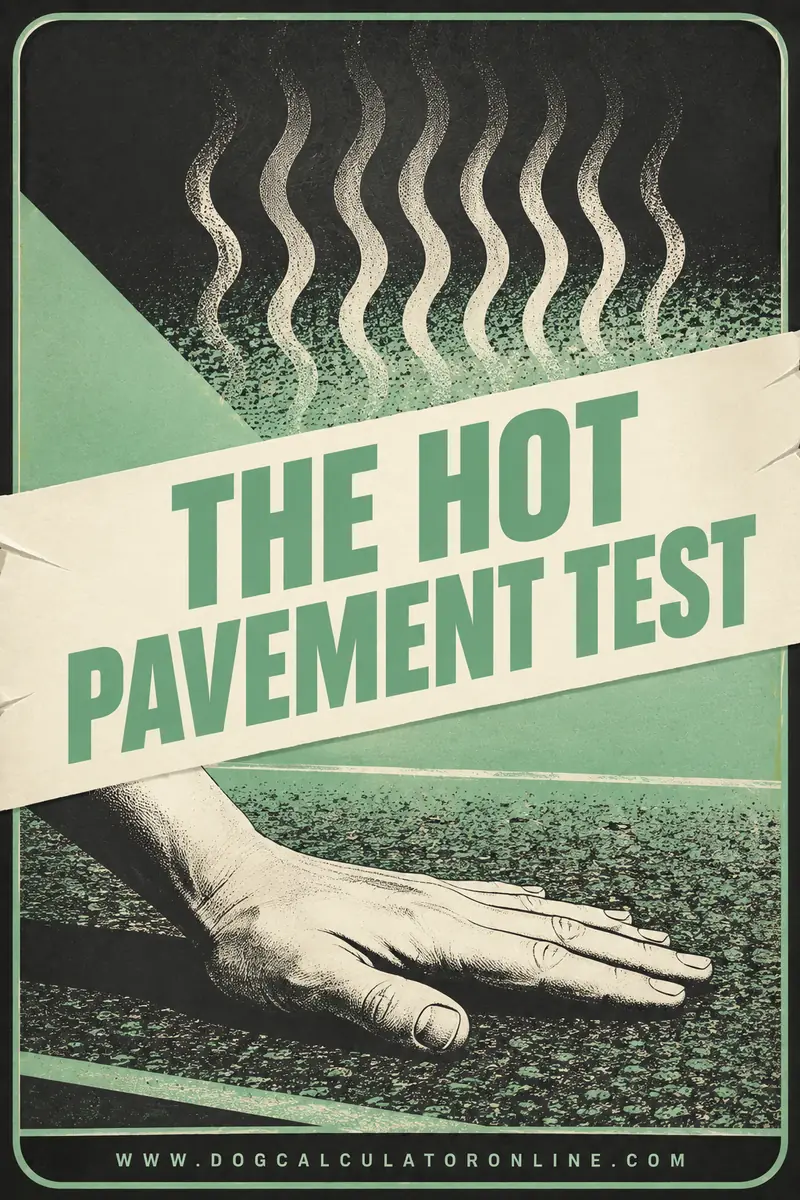
Press the back of your hand flat against the pavement and hold it there for seven seconds. If you have to pull away, your dog should not be walking on it. That test is memorable because the number behind it is startling: in direct sun, asphalt typically sits 40–60°F (22–33°C) above the air temperature, so a pleasant 77°F (25°C) afternoon can mean tarmac at 125°F (52°C) — hot enough to damage a paw pad in about a minute of contact. The grass two feet away might be 85°F (29°C). Timing and route choice fix almost all of this, and the dog boot size guide covers the backup plan.
🐾 Which surface is your dog walking on?
Tap the surface, on a 77F sunny day:
Tap a surface above. Test with the back of your hand for seven seconds.
How Hot Does Pavement Actually Get?
Far hotter than the weather forecast suggests, and it stays hot long after the air has cooled.
Dark surfaces absorb sunlight instead of reflecting it. Asphalt is close to black, so most of the solar energy hitting it turns into heat rather than bouncing away. It is also dense, which means it stores that heat rather than shedding it.
The usual figures put asphalt 40–60°F (22–33°C) above air temperature in full sun, with the gap widening on still, cloudless days and narrowing when it is breezy or overcast.
So the arithmetic is unforgiving. A 77°F (25°C) day gives roughly 125°F (52°C) tarmac. An 87°F (31°C) day gives roughly 135–145°F (57–63°C). Neither of those days feels dangerous to a person in shoes.
Around 125°F (52°C) is the number usually cited for skin damage on contact within about 60 seconds. At 150°F (66°C), damage happens in seconds. A dog crossing a parking lot is on that surface for longer than you think.
Heat lags behind the sun by hours. Tarmac keeps releasing stored heat into the evening, which is why a 9pm walk on a road can still be too hot even though the air feels lovely. It also means the shaded half of a street is genuinely cooler, not just visually cooler.
Cloud cover changes everything. The same 82°F (28°C) day under thick cloud may leave the pavement only a few degrees above air temperature, because there is little direct radiation to absorb.
How to Run the Seven-Second Test Properly
It takes longer to explain than to do.
Use the back of your hand, not your palm or fingertips. The skin there is thinner and far more sensitive, and your palms are toughened in a way a dog's pads are not.
Press it flat, not lightly. A fingertip tap reads too low. You want full contact, the way a paw makes contact.
Hold for seven seconds and count them out. If you flinch, pull away or start bargaining with yourself, the surface is too hot for paws.
Test the surface you will actually walk on, not the shady bit by your front door. Roads, parking lots and the sunny side of a street are all different.
Test again on the way back, because a route that was fine at 7.30am can be unrecognizable by 9am.
Some people use a five-second version. Five seconds is the more cautious threshold and worth using for puppies, seniors and any dog with soft pads. The exact count matters less than the habit of checking.
Surface Temperatures Compared
Approximate surface readings on a sunny, still day. Treat them as illustrative rather than precise — color, age, shade and breeze all shift them.
| Surface | At 77°F (25°C) air | At 87°F (31°C) air | Risk to paws |
|---|---|---|---|
| Grass in sun | ~85°F (29°C) | ~95°F (35°C) | Low |
| Shaded pavement | ~85–90°F (29–32°C) | ~95–100°F (35–38°C) | Low |
| Concrete or pale paving | ~100–110°F (38–43°C) | ~115–125°F (46–52°C) | Moderate |
| Asphalt in sun | ~125°F (52°C) | ~135–145°F (57–63°C) | High |
| Artificial turf | ~130°F+ (54°C+) | ~150°F+ (66°C+) | High |
| Metal (drain, truck bed) | Painful on contact | Burns on contact | Severe |
The grass column is the useful one. It is the reason "walk on the verge" is better advice than any product you can buy — grass reflects more light and cools itself by releasing moisture, so it can sit 40°F (22°C) below the path running alongside it.
Artificial turf surprises everyone. It is dark, plastic and has no moisture to release, so it often outdoes tarmac. Garden lawns of fake grass and dog daycare play areas both deserve the hand test.
Sand and gravel vary hugely with color and depth. Pale beach sand is cooler underneath but the top layer bakes; dark gravel behaves like tarmac.
Why Paw Pads Burn Even Though They Look Tough
Pads look like armor. They are not.
A pad is thick, fatty tissue under a keratin layer, and it is well supplied with blood vessels and nerves. It is built for abrasion and pressure, not for heat.
Conditioning helps a little, not a lot. A farm dog running daily on rough tracks develops tougher pads than a carpet-and-lawn dog, so it copes better with grit and gravel. Heat is a different injury, and no amount of conditioning makes a pad heatproof.
The dog may not stop. This is the part that catches owners out. A dog on a leash beside the person it loves will keep walking across a scorching parking lot because you are walking, and the damage is done before there is any limping. If you want a sense of how far is reasonable in normal conditions, how far a dog can comfortably walk sets that out.
Weight concentrates the contact. A heavier dog presses more of the pad into more contact with the surface, and larger dogs cannot be picked up and carried out of trouble.
Long nails change how the paw meets the ground, tipping weight backwards onto the pads. Keeping nails trimmed to the right length is worth doing for grip and comfort year-round.
Damage often shows up hours later, once the pad has had time to swell or blister. A dog that seemed fine at the car can be limping by evening.
What Burnt Paw Pads Look Like — And When to Call the vet
Know what you are looking at before you need to.
Early signs during or just after a walk: limping, hopping, sitting down and refusing to move, lifting one paw, or licking and chewing at the feet.
On inspection, look for pads that are darker or redder than usual, unusually smooth or shiny patches where the rough texture has been scorched away, missing chunks of pad surface, blisters, or a pad that feels hot to the touch compared with the others.
What to do straight away. Get the dog off the hot surface — carry a small dog if you can. Cool the paws with cool running water or a wet flannel for several minutes. Keep the dog off hard ground and stop it licking.
Call the vet the same day if you see blisters, raw or bleeding pads, missing pad surface, or a dog that will not put weight on a foot. Burnt pads are painful, they get infected easily, and they need proper cleaning and pain relief.
Treat it as urgent if the dog is also panting hard, drooling thickly, wobbly or vomiting — that is a possible heat emergency on top of the paw injury, and the temperature thresholds for walking explain what to watch for.
Do not apply human burn creams or antiseptics, and do not bandage tightly. Your vet will tell you what is safe on a pad; most human products get licked off and some are harmful.
How to Avoid Hot Ground in the First Place
Prevention here is almost entirely free.
Walk before 8am and after sunset. In a heatwave, before 7am. This is the single change that solves the problem.
Reroute onto grass, woodland trails and dirt paths. Even a strip of verge beside the path makes a difference, and dogs generally prefer it anyway.
Walk the shaded side of the street and plan around parks rather than parking lots and high streets.
Carry a small dog across the hot bits. Not a fudge — parking lots, forecourts and crossings are short and easy to skip.
Check the ground at the destination too. Beach sand, harbor walls, boat decks, patios and the metal floor of a boot or van all get hotter than the route you walked to reach them.
Cut the walk short and make up for it at home. Sniffing games, scatter feeding and training in a cool room tire a dog properly, and the practical ways to keep a dog cool through a hot spell covers the rest of the day.
Do Dog Boots Solve the Problem?
They help. They are the backup, not the first answer.
Boots do insulate the pad from a hot surface, and for working dogs, service dogs and city dogs who genuinely cannot avoid tarmac, they are a sensible bit of kit.
But they trap heat too. A dog cannot lose much heat through its paws, but boots hold moisture and warmth against the skin, and on a very hot day that is one more thing making the dog uncomfortable.
They only work if they fit and stay on. Boots are sized on paw width measured while the dog is standing on the paw, not on the dog's weight — the dog boot size guide explains the tracing method and why front and back paws often need different sizes.
Dogs need to be taught to wear them. Expect a week of high-stepping and comedy walking. Introduce them indoors, a few minutes at a time, with treats.
Paw wax and balm do not protect against burns. They are useful for winter salt and for cracked pads, and they are worth having — but a thin layer of wax will not stop 130°F tarmac. Anyone selling it as heat protection is overselling it.
The honest hierarchy is: change the time, then change the route, then use boots. In that order.
Myths About Paws and Hot Surfaces
Some of these come up every summer.
"Pads are tough enough to handle it." They handle abrasion, not heat. Toughness and heat tolerance are different properties.
"If the dog was hurting, it would stop." Often not, especially working breeds and any dog focused on you, the ball or another dog.
"It is only hot in the middle of summer." Late spring catches more owners out than August, because a 75°F (24°C) day in May feels mild and the tarmac still hits 120°F (49°C).
"Wetting the pavement fixes it." Momentarily. The water evaporates within minutes and the surface returns to where it was.
"Boots are cruel." Badly fitted boots are uncomfortable. Well-fitted boots that the dog has been taught to accept are fine, and in winter they are useful against grit and de-icing salt too — winter paw care covers that side of the year.
"Sunset means it is safe." Air temperature drops fast after sunset; tarmac does not. The hand test still applies at 9pm.
FAQ
How hot is too hot for a dog's paws?
Around 125°F (52°C) is where surface contact can damage a paw pad within about a minute, and asphalt reaches that on a 77°F (25°C) sunny day. In practice, use the seven-second back-of-the-hand test rather than a thermometer — if you cannot hold your hand there, neither can your dog.
How do you do the seven-second pavement test?
Press the back of your hand flat against the surface you plan to walk on and hold it for seven seconds. If you have to lift it early, the ground is too hot for paws. Use the back of the hand because the skin is thinner and more sensitive than your palm.
Can dogs walk on grass when pavement is too hot?
Yes. Grass in full sun typically sits around 40°F (22°C) cooler than adjacent asphalt, because it reflects more light and releases moisture. Walking on the verge, in a park or on a dirt trail solves most hot-surface problems without changing anything else about the walk.
Do dog boots protect against hot pavement?
Yes, well-fitted boots insulate pads from hot surfaces, which is useful for dogs who cannot avoid tarmac. They also trap heat and moisture, so they are a backup rather than a first choice. Boots are sized on weight-bearing paw width, not the dog's body weight.
What time of day is safe to walk a dog in summer?
Before 8am is the safest window because hard surfaces have had all night to release heat, and before 7am during a heatwave. After sunset is second best, but asphalt holds heat for hours, so test the ground with your hand even when the air feels cool.
What do burnt paw pads look like on a dog?
Look for limping or refusal to walk, licking at the feet, pads that are redder or darker than usual, smooth shiny patches where the rough texture has gone, blisters, or missing pad surface. Call your vet the same day if you see blisters, bleeding or non-weight-bearing lameness.
Getting Through Summer Without a Single Burnt Pad
The whole thing comes down to a habit that takes seven seconds. Before any walk on a sunny day, put the back of your hand on the ground and count. If it is too hot for your hand, it is too hot for paws — no matter how mild the air feels, and no matter how late in the evening it is. Then stack the odds in your favor: walk early, walk on grass, take the shaded side, carry a small dog across parking lots, and keep boots for the routes you genuinely cannot avoid. If the heat has your dog moving less than usual this month, the dog food calculator will show you what a quieter routine means for portion sizes.