How to Keep a Dog Cool in Summer
The most useful thing to know is where to put the water. Wetting a dog's belly, armpits, groin and paws cools it far faster than wetting its back, because the fur on the back sheds water while those areas have thin skin and large blood vessels sitting close to the surface. That is also why a fan alone does much less for a dog than it does for you — a dog has almost no sweat glands over its body, so moving air has nothing to evaporate unless you add the moisture yourself. Damp dog plus moving air is the whole trick. Overweight dogs struggle most in the heat, so the dog ideal weight calculator is a sensible place to start before next summer.
🐾 What actually cools a dog down?
Tap a method:
Tap a method above. Damp dog plus moving air beats every gadget.
Water Comes First, and Most People Under-Do It
Boring, free, and more important than anything you can buy.
A panting dog is losing water constantly. Every bit of cooling it achieves comes from evaporating moisture out of its mouth and airway, so a hot day quietly drains a dog even if it never exercises.
Put out more bowls than you think you need, in different rooms and in the shaded parts of the garden. Dogs drink more when water is easy to reach, and a dog that has to walk into a hot conservatory to drink will simply not bother.
Cool water is fine, and so are ice cubes. The idea that ice cubes cause bloat is a myth with no good evidence behind it. What is worth avoiding is a very hot dog gulping a huge volume in one go, especially in deep-chested breeds — so offer smaller amounts often.
Refresh the outdoor bowl through the day. Water sitting in the sun reaches an unappealing temperature by lunchtime, and dogs drink less of it.
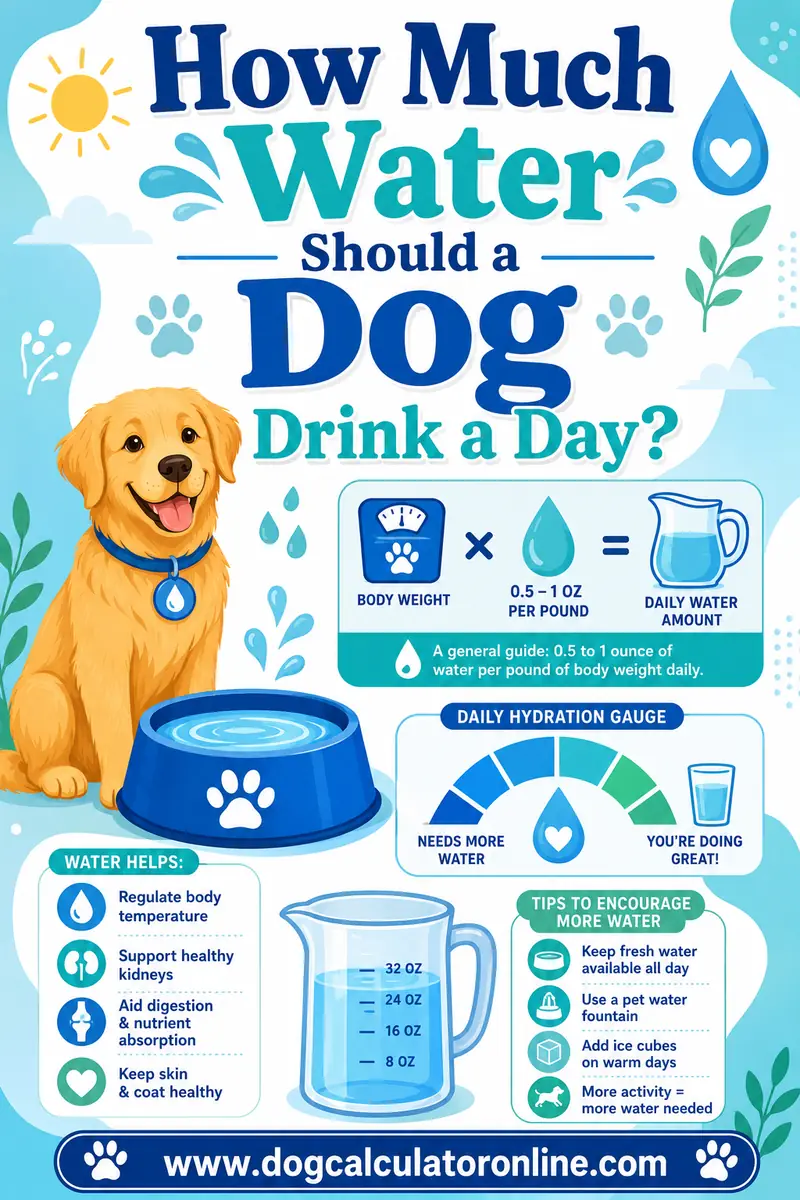
Watch what normal looks like for your dog. Roughly 1 fl oz per pound of body weight per day (about 50–60 mL per kg) is a common baseline, and how much water a dog should drink covers what counts as too much or too little.
Add water to the food or drop a splash of low-salt broth into the bowl if your dog is a reluctant drinker. Wet food carries a lot of moisture in it.
Shade and Airflow — What Actually Works
Shade beats cooling gadgets, and shade moves.
The shady corner at 10am is the sun trap at 3pm. Walk your garden at the hottest hour and check that the dog's favorite spot is still shaded then. This catches out a surprising number of people.
Solid shade beats dappled shade. A parasol, an open-sided gazebo or the shaded side of the house blocks radiant heat in a way a thin tree does not.
Airflow needs somewhere to come from. Cross-ventilation — two openings on different sides of a room — moves far more air than one open window and a fan.
A fan is worth much more when the dog is damp. Aim it low, at dog height, past a wet towel or a damp dog, and it does real work. Aimed at a dry dog, it mostly makes you feel better.
Tiled and stone floors are a dog's own cooling system. Give access to the coolest hard-floored room in the house, usually a hallway, bathroom or kitchen on the north side.
Raised mesh beds help more than they look like they should, because they let air move underneath the dog instead of trapping heat between the dog and a padded bed.
Cooling Methods Compared
What each approach actually does, and how much it is worth.
| Method | How it works | How much it helps | Watch out for |
|---|---|---|---|
| Wetting belly, groin, paws | Evaporation from thin skin near big vessels | Very high | Use cool, not iced, water |
| Paddling pool | Direct conduction plus wetting the underside | Very high | Shade it, refresh warm water |
| Damp towel to lie on | Conducts heat away from the body | High | Never drape it over the dog |
| Fan on a damp dog | Speeds up evaporation | High | Little use on a dry dog |
| Cooling gel mat | Conducts heat out of the body | Moderate | Some dogs will not use them |
| Frozen food toy | Keeps the dog still and shaded | Moderate | Counts toward daily calories |
| Cooling coat or vest | Evaporation from a damp fabric layer | Moderate, briefly | Stops working once dry |
| Ice cubes in water | Keeps the bowl cool and interesting | Low but harmless | Not a bloat risk |
| Air conditioning | Lowers air temperature and humidity | Very high | Avoid blasting cold air at the dog |
A damp towel goes under the dog, never over it. Draped on top, it traps warm air against the coat and works against you.
Cooling coats only work while they are damp, and in humid weather they barely start. Treat them as a small extra margin rather than protection.
Air conditioning helps twice over, because it removes humidity as well as heat, and lower humidity is what makes panting effective again.
How to Cool a Dog Down Quickly
Worth practicing before you need it.
Get the dog out of the sun first. Indoors, or deep shade with moving air.
Wet the underside. Belly, armpits, groin, inner thighs and paws — soak them properly with cool tap water rather than a light spray.
Use cool water, not ice water. Very cold water on a very hot dog causes the surface blood vessels to constrict, which slows the heat leaving the body. Cool and continuous beats freezing and brief.
Add moving air. A fan, an open car door, or simply walking the dog into a through-draft.
Offer small drinks of cool water, but never pour water into the mouth of a dog that is not fully alert.
Keep going until the panting eases, then stop and let the dog rest somewhere cool. Do not wrap the dog in wet towels and leave it — the towels warm up and stop working.
Frozen Food and Hot-Afternoon Enrichment
The realistic answer to a dog that cannot be walked.
Frozen food toys buy you an hour. Pack a rubber toy with wet food, plain yoghurt, mashed banana or soaked kibble and freeze it overnight. Licking is calming, and the dog does it lying down in the shade.
Lick mats do the same job in less time and suit dogs that get frustrated with harder puzzles.
Freeze broth into cubes. Low-salt, onion-free stock in an ice cube tray makes a treat most dogs love. Plain water cubes are fine too.
Frozen carrot batons, cucumber slices and green beans are low-calorie and good for teething puppies as well.
Count it as food, not extra. Frozen enrichment can quietly add a couple of hundred calories a day. If your dog is walking less in the heat and eating the same, the weight creeps on — how to tell if your dog is overweight is the check.
Move the exercise indoors and into the evening. Sniffing games, scatter feeding, short training sessions and a cool hallway to chase toys down all tire a dog properly, and there is a longer list of indoor exercise ideas for the weeks when the daytime is written off.
Cars, Conservatories and Other Heat Traps
The places that turn a warm day into an emergency.
A parked car is the classic one, and the numbers are worse than people expect. On a 70°F (21°C) day, the inside of a car can pass 100°F (38°C) within about 20 minutes and keep climbing. Cracking the windows barely slows it.
"Just five minutes" is where most cases start. Not one parked-car death was planned. If the dog cannot come in with you, leave the dog at home.
Conservatories, greenhouses and sunrooms behave the same way. Shut the door on days like this — a dog that has always napped in there will do it again on the wrong afternoon.
Caravans, campervans, sheds and garden offices heat fast and hold it. So do van cabs and the boot of an estate car, even with the tailgate open.
Check the car before you travel too. Sun shades on the windows, air conditioning that reaches the back, and water offered at every stop. There is a full road trip with a dog checklist if you are covering distance.
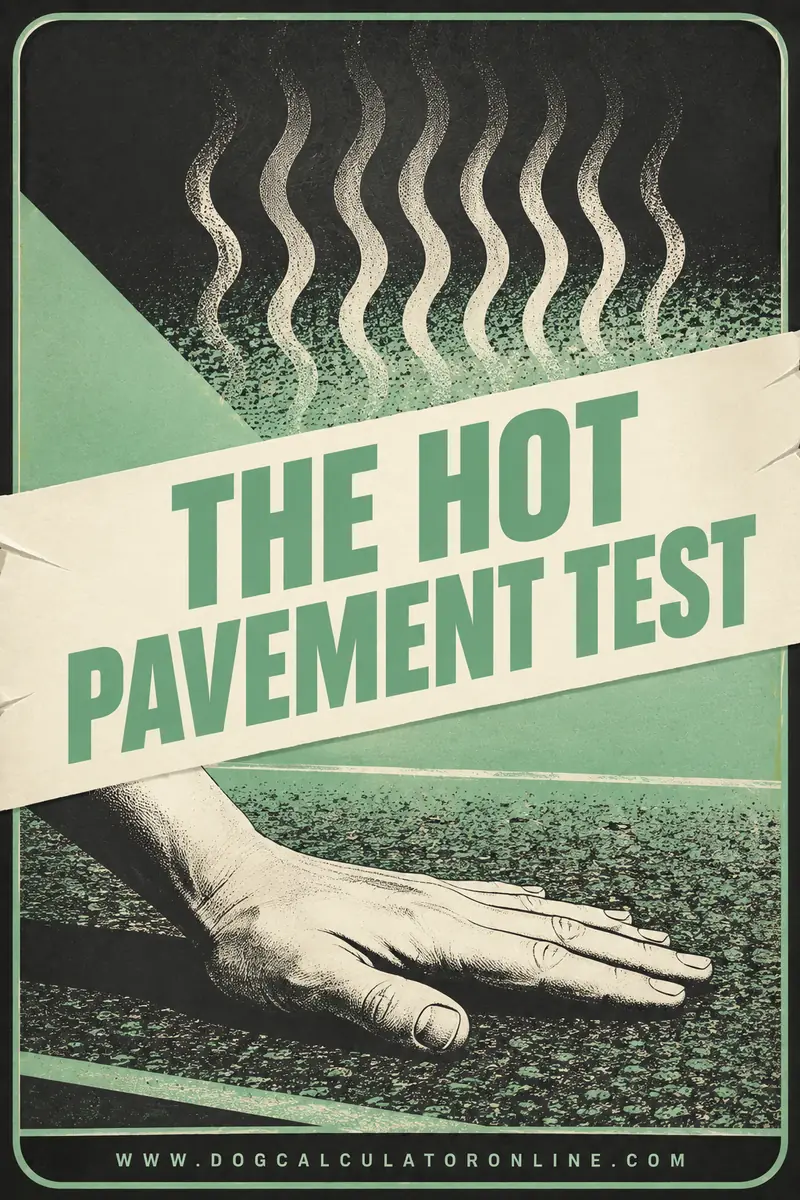
Balconies and concrete yards hold radiant heat from every direction. So do the artificial-turf areas some daycares use — those get hotter than tarmac, as the hot pavement test explains.
Grooming, Shaving and Sunburn
Summer coat care is where good intentions go wrong.
Do not shave a double-coated dog. Huskies, Malamutes, German Shepherds, Golden Retrievers, Bernese Mountain Dogs, Samoyeds and Collies all have an undercoat that traps a layer of air, and that layer insulates against heat as well as cold. Remove it and you expose skin to direct sun and take away the buffer.
Brush the dead undercoat out instead. A thorough de-shedding session removes the clogged, matted underlayer that genuinely does trap heat, and it makes a real difference. A groomer can do this properly in an hour.
Single-coated breeds are a different case. Poodles, Bichons and some terriers can be clipped shorter for summer without the same problem — ask a groomer who knows the breed.
Matted coats trap heat and moisture against the skin and stop air circulating. A matted dog is worse off in summer than a clean, brushed one of any coat length.
Sunburn is real, especially on pale or pink noses, ear tips, eyelids, and thin-coated bellies on dogs that sunbathe on their backs. Use a sunscreen made for dogs — several human ones contain zinc oxide, which is harmful if licked off.
White-coated and hairless breeds burn easily, and repeated sunburn matters long-term. Shade is the better answer than cream.
Warning Signs and When to Call the vet
The line between a hot dog and a heat emergency is thinner than most people think.
A hot but coping dog pants steadily, seeks out cool floors, drinks, settles, and calms down when you cool it.
Stop and cool immediately if the panting is frantic and does not settle, the drool turns thick and ropey, the gums are bright red, or the dog seems restless and cannot get comfortable.
Call the vet now if you see wobbling or weakness, vomiting or diarrhea, confusion or unresponsiveness, gums that are pale, gray or bluish, or collapse. Say you suspect heat stroke and that you are on your way.
Cool the dog on the way. Shade, cool water over the body — especially the underside — and moving air. Do not force water into the mouth of a dog that is not fully alert.
Go even if the dog seems to recover. Heat stroke can cause internal damage that shows up hours later, so vets want to see these dogs regardless.
Some dogs need help long before others. Flat-faced breeds, overweight dogs, black-coated dogs, puppies, seniors and dogs with heart or airway disease all reach trouble at temperatures other dogs shrug off — the temperature thresholds for walking a dog set out where those lines sit.
FAQ
What is the fastest way to cool a dog down?
Get the dog into shade, then wet the belly, armpits, groin and paws thoroughly with cool — not iced — water and add moving air from a fan or a draft. Those areas have thin skin and large blood vessels near the surface, so heat leaves the body fastest there.
Do cooling mats actually work for dogs?
Yes, moderately. Pressure-activated gel mats conduct heat away from the dog's body, which helps on a warm day, though the effect fades as the mat warms. Place one somewhere shaded that your dog already chooses to lie, and never force a dog onto it.
Should I shave my dog in summer?
Not if the dog is double-coated. The undercoat traps a layer of air that insulates against heat as well as cold, and shaving exposes skin to sunburn. Brush out the dead undercoat instead. Single-coated breeds such as Poodles can be clipped shorter safely.
Are ice cubes bad for dogs?
No. The claim that ice cubes cause bloat is a myth with no good evidence behind it. Ice in the water bowl is fine and often encourages drinking. What is worth avoiding is a very hot dog gulping a large volume of water at once, so offer smaller amounts more often.
How hot is too hot inside a house for a dog?
Above about 80°F (27°C) indoors, most dogs need active help: a cool hard floor, cross-ventilation, damp towels and water within easy reach. Above 85°F (29°C), flat-faced, overweight, elderly and very young dogs need a genuinely cooled room rather than a fan.
How long does it take a parked car to get dangerous?
On a 70°F (21°C) day, the inside of a parked car can exceed 100°F (38°C) within about 20 minutes and keeps rising. Opening the windows a crack makes little difference. There is no safe duration — if the dog cannot come with you, leave it at home.
Getting Your Dog Through a Heatwave
None of this needs to be expensive. Water in more places than you think, refreshed through the day. Shade that is still shade at 3pm, with air moving through it. A paddling pool, or a hose over the belly and paws when the dog gets hot. Damp towels under the dog rather than over. Frozen food toys to fill the afternoons, exercise moved to the cool ends of the day, and the car and conservatory shut off entirely. Brush the coat rather than shaving it, and learn the difference between a dog that is hot and a dog in trouble. Since extra weight is the biggest risk factor you can actually change, the dog ideal weight calculator is worth five minutes before the next hot spell.