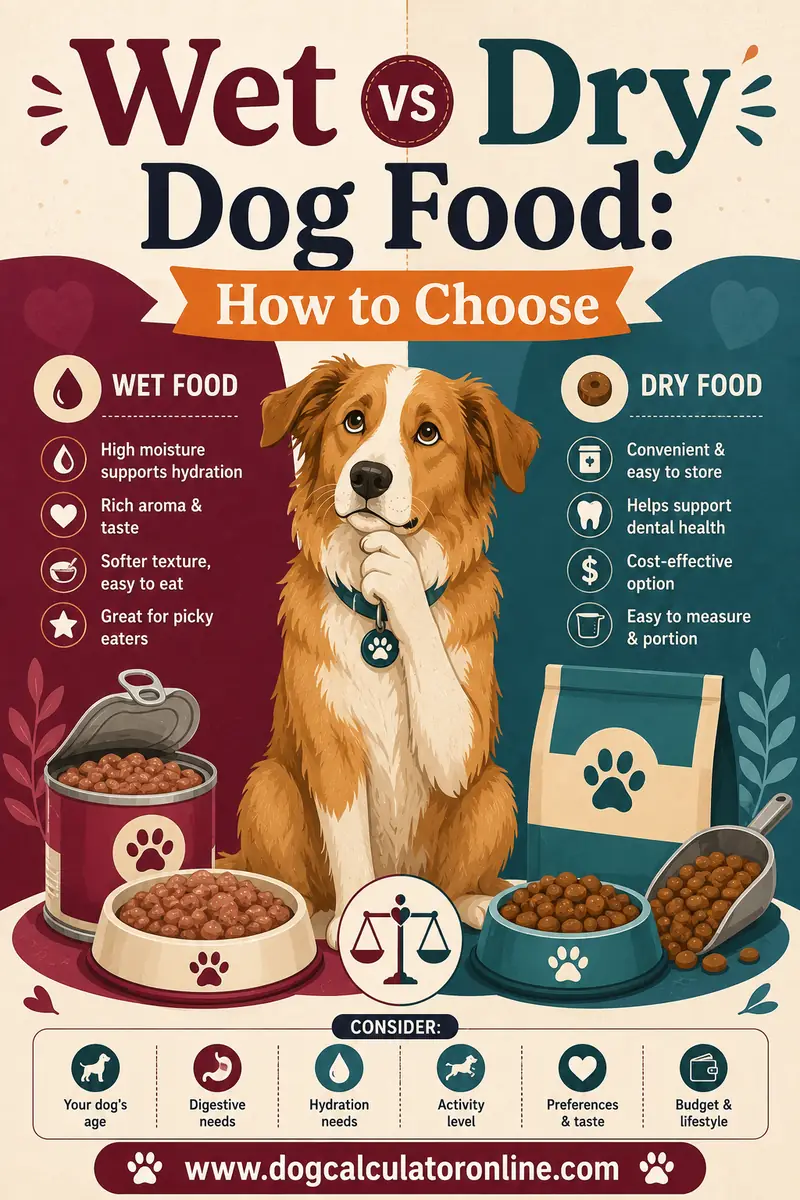
Wet vs Dry Dog Food: How to Choose
Neither wet nor dry dog food is nutritionally "better" — a complete-and-balanced food of either type meets the same nutrient standards. The real differences are practical: dry food costs less, stores easily, and is simpler to portion; wet food delivers far more moisture (~75% vs ~10%), is more aromatic and palatable, and helps dogs who need hydration or have a weak appetite. Many owners land on a mix of both.
The choice that actually affects your dog's health most isn't wet versus dry — it's feeding the right amount of whichever you choose, because the two are portioned completely differently. The free dog food calculator converts your dog's weight into daily calories and then into cups or cans for your specific food. Here's the full comparison, when each format wins, and how to mix them without overfeeding.
🥫 Wet vs dry: what matters most to you?
Tap a priority to see which format usually wins:
Tap an option above. Either format works if the portion is right.
Wet vs Dry at a Glance
| Factor | Dry (kibble) | Wet (canned) |
|---|---|---|
| Moisture | ~10% | ~75% |
| Calories | Dense — ~300–500 kcal/cup | Dilute — a typical 13-oz can ~350–450 kcal |
| Cost per calorie | Low | High — often 2–4× kibble |
| Palatability | Good | Excellent — stronger aroma |
| Storage | Easy; bag lasts weeks | Refrigerate after opening; use within days |
| Portioning | Simple (cups/grams) | Simple per can, messier per fraction |
| Dental effect | Slight mechanical benefit at best | None; no worse either if teeth are brushed |
| Best for | Most healthy adults, budget, convenience | Picky eaters, low drinkers, some seniors, small dogs |
The headline: both formats can fully nourish a dog. Look for a nutritional adequacy statement (AAFCO in the US) confirming the food is complete and balanced for your dog's life stage — that line matters far more than the aisle it came from.
Where Dry Food Wins
- Cost. Per calorie, kibble is dramatically cheaper — and the gap widens with dog size. Feeding a 70-lb dog on canned food alone can cost several times more than kibble for the same calories.
- Convenience. No refrigeration, no half-used cans, no smell in the fridge. Scoop, level, pour.
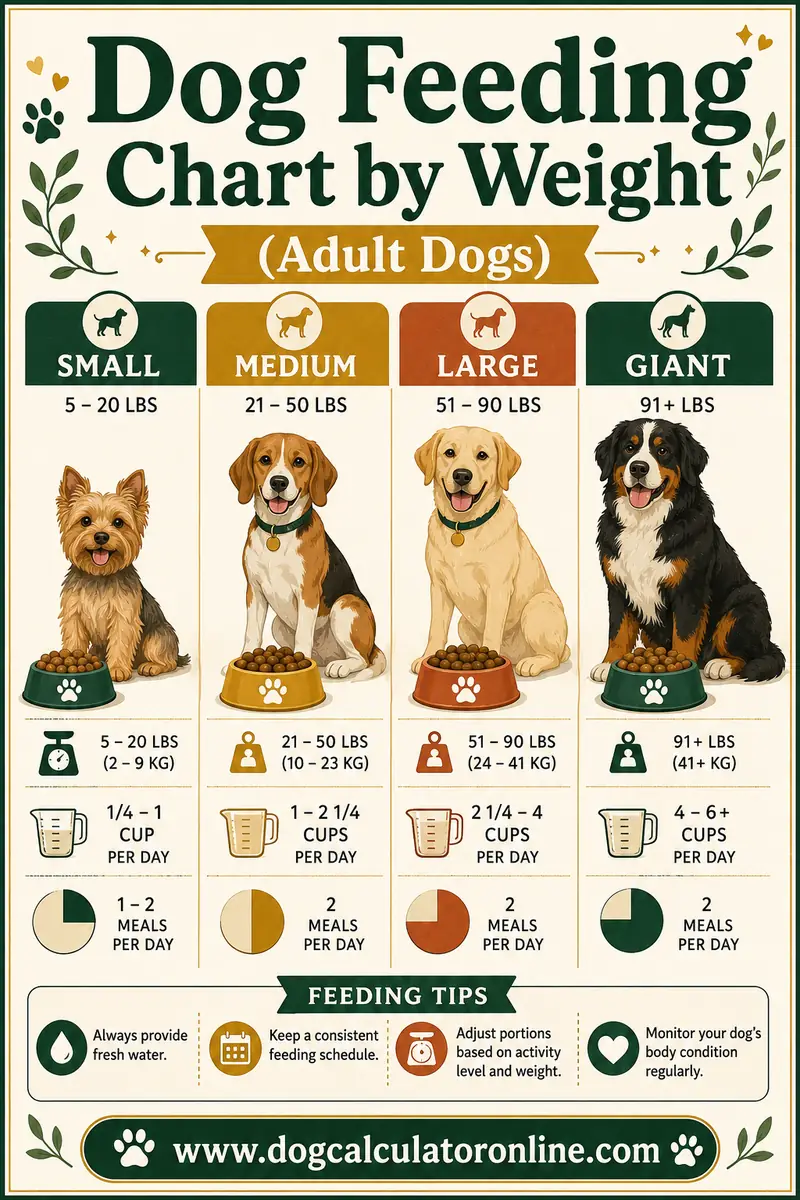
- Precise portioning. Calories per cup are printed on the bag, and a measuring cup (or better, a kitchen scale) makes portions repeatable — the single biggest lever in weight control. Our dog feeding chart by weight is built around this.
- Enrichment compatibility. Kibble works in puzzle feeders, snuffle mats, and training pouches. Wet food mostly doesn't.
- It keeps. A bowl of kibble left an hour is fine. Wet food left out grows unappetizing (then unsafe) within a couple of hours, especially in warm weather.
One myth to retire gently: kibble is not a substitute for dental care. The crunching provides at best a modest mechanical effect; daily tooth brushing and vet dental care do the real work regardless of diet.
Where Wet Food Wins
- Palatability. The aroma and texture of wet food win over picky eaters, stressed new rescues, and dogs recovering from illness. Warming it slightly (never hot) amplifies the effect.
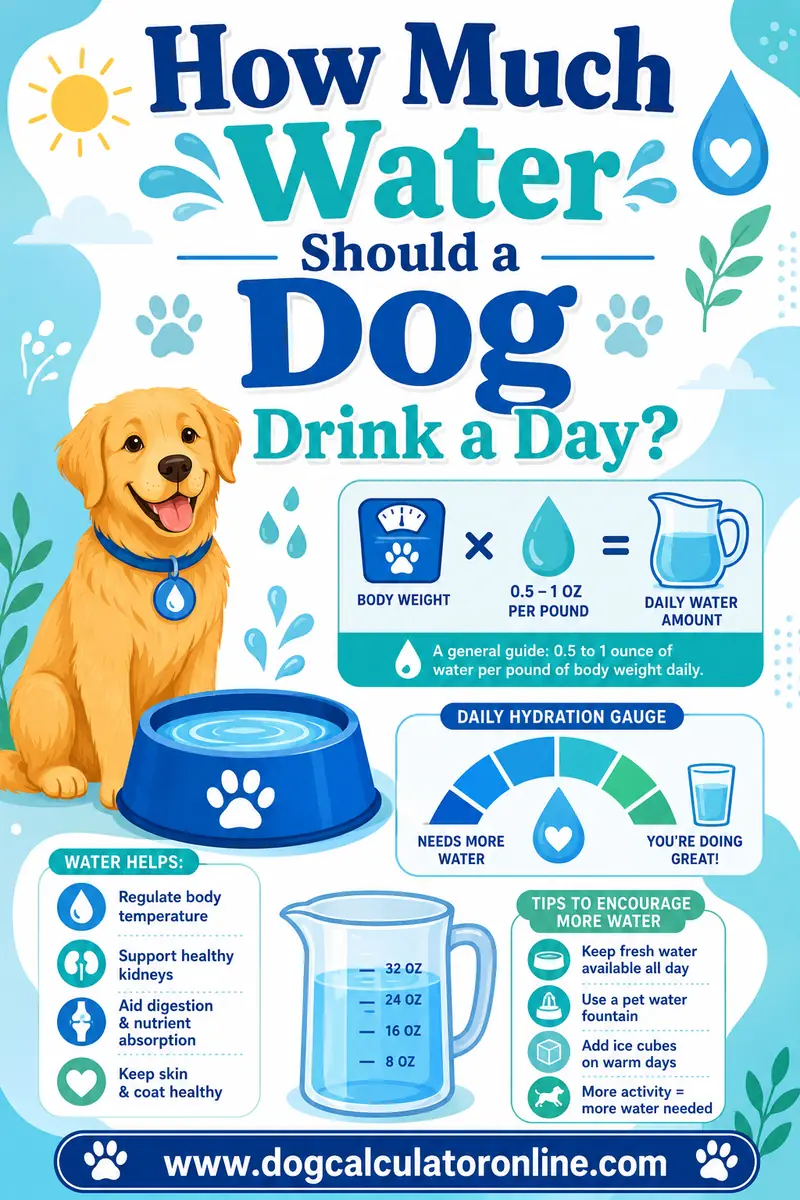
- Hydration. At ~75% moisture, wet food waters your dog with every meal. That's genuinely useful for dogs who barely touch the bowl and for dogs whose vets want more fluid intake — see how much water a dog should drink for the drinking-side math.
- Easier chewing. Seniors with dental pain, dogs missing teeth, and tiny breeds with tiny jaws often eat wet food more comfortably.
- Calorie dilution. Because water takes up most of the can, wet food delivers fewer calories per stomach-filling volume. For dieting dogs, that can mean feeling fuller on fewer calories.
- Smaller-dog economics. The cost penalty of wet food shrinks when the dog eats 300 kcal a day. For a 6-lb Chihuahua, feeding mostly wet is affordable in a way it isn't for a Great Dane.
The Mixed-Feeding Middle Ground
Plenty of households settle on kibble as the base with a spoonful of wet food as a topper — the economics of dry with the enthusiasm of wet. It works well, with one non-negotiable rule: both parts count toward the day's calories.
A practical way to run it:
- Get your dog's daily calorie target (the dog food calculator gives you this from weight, age, and activity).
- Decide the split — say 75% kibble, 25% wet.
- Convert each part using its own label: kcal per cup for the bag, kcal per can for the wet.
- Watch body condition for a month and adjust the total, not the ratio.
The classic mixed-feeding mistake is treating the wet portion as a garnish that "doesn't count." A quarter of a typical can adds roughly 100 kcal — enough to pudge a small dog within months if it's stacked on top of full kibble portions.
Portioning: The Part Everyone Gets Wrong
Whatever format you pick, the portion math is identical in shape: daily calories first, then convert to physical amounts using your food's label.
- A 25-lb neutered adult needs roughly 550–700 kcal/day. That's about 1½–2 cups of average kibble, or roughly 1½ typical 13-oz cans, or a 75/25 mix of both.
- A 50-lb dog needs roughly 900–1,150 kcal/day — about 2½–3¼ cups of kibble, or an impractical (and pricey) 2½–3 cans.
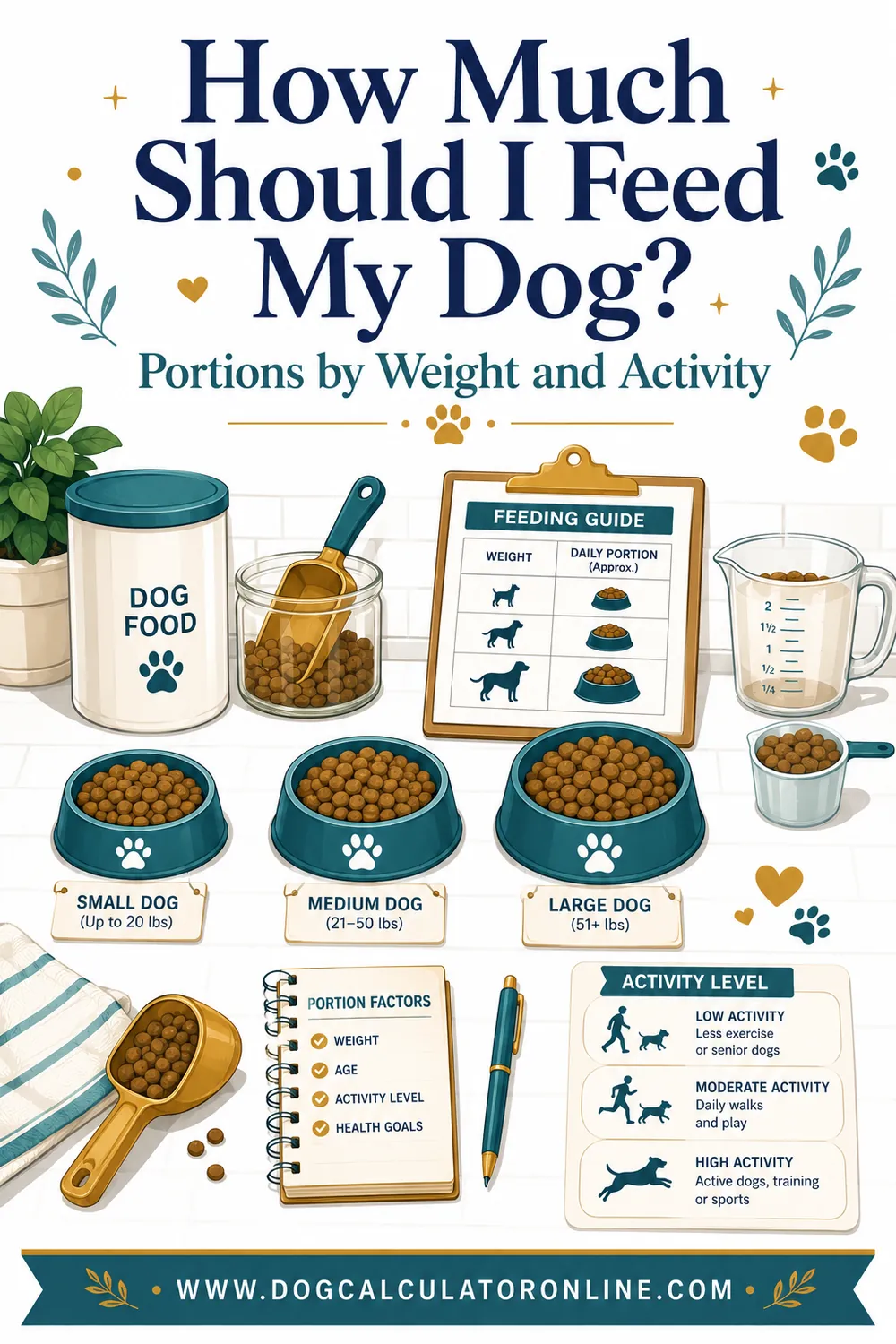
Two label quirks to watch. Kibble calories are listed per cup and per kilogram — use the per-cup number with an actual leveled measuring cup. Wet food calories are listed per can, but can sizes vary (3 oz, 5.5 oz, 12.5 oz, 13.2 oz…), so check the size before comparing brands. When in doubt, run your specific food through the calculator and confirm with the full walkthrough in how much should I feed my dog.
Switching Between Wet and Dry
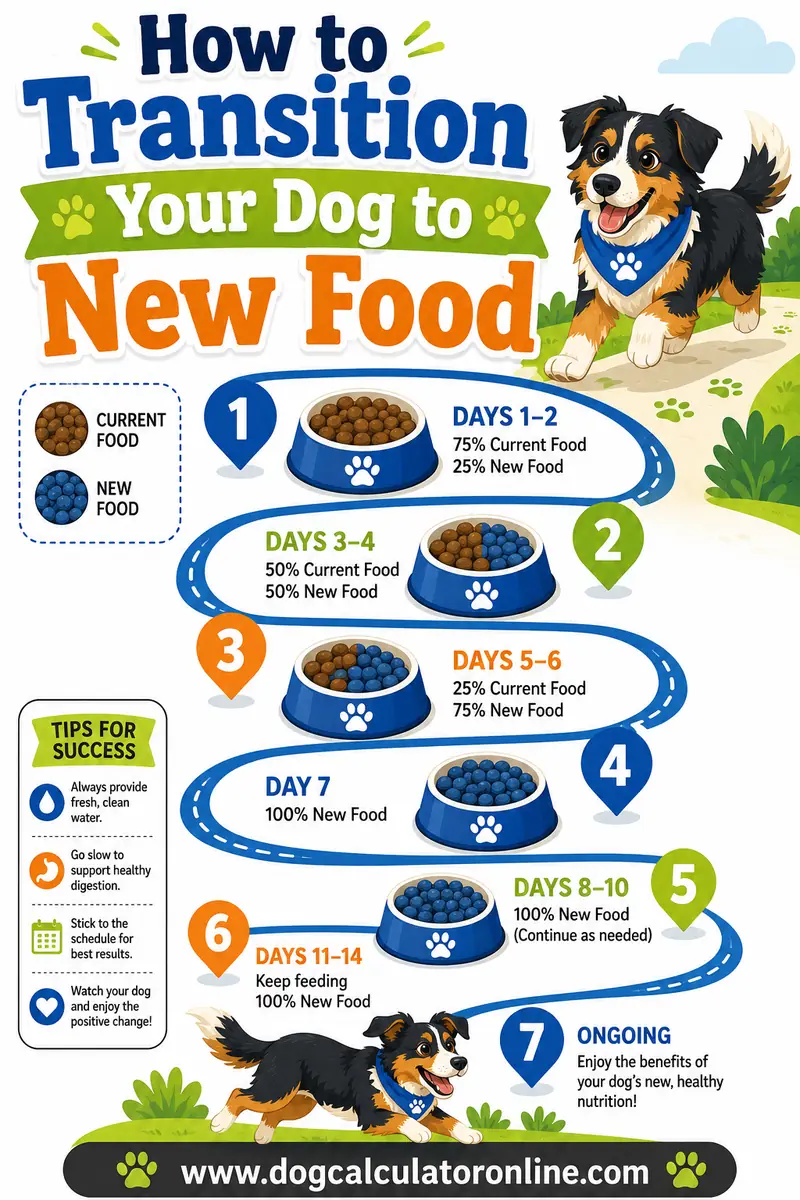
Format changes are diet changes, and dog stomachs like ramps, not cliffs. Move gradually over about a week — 25% new food for a couple of days, then 50%, then 75%, then fully switched — and slow down if stools go soft. The full day-by-day plan is in how to transition your dog to new food.
A few switch-specific notes:
- Dry → wet: expect your dog to drink visibly less from the bowl. That's the moisture doing its job, not a problem.
- Wet → dry: expect more bowl-drinking, and make sure water is always available.
- Texture holdouts: a dog who resists kibble after wet food will often accept it moistened with warm water at first, dried out gradually.
Storage and Food Safety, Format by Format
The two formats fail in different ways, and both failures are preventable:
- Kibble's enemy is air and time. Fat in kibble oxidizes once the bag is open — stale food loses palatability and nutritional quality. Keep kibble in its original bag (the liner protects the fats), rolled shut, inside an airtight bin, and aim to finish a bag within about 4–6 weeks of opening. Buying the giant bag for a small dog is false economy if the last third goes rancid.
- Wet food's enemy is temperature. An opened can needs a lid or wrap and the fridge, and should be used within roughly 2–3 days. In the bowl, wet food is good for an hour or two at room temperature — less on a hot day — then it should go.
- Both formats: wash bowls daily (biofilm builds fast, especially with wet food), wash your hands after handling, and check the date on the bag or can before it goes in the cart. A food your dog suddenly refuses is worth sniffing — dogs detect rancid fat before we do.
When the Choice Isn't Really Yours
Some situations tilt the decision strongly, and your vet's advice trumps any general comparison:
- Medical conditions. Urinary issues, kidney disease, and some other conditions often come with a vet recommendation for increased dietary moisture — wet food is a common part of that plan.
- Dental extremes. A dog with significant dental disease may need soft food while the mouth is treated; ask your vet rather than assuming.
- Prescription diets. If your dog is on a therapeutic food, stay within the prescribed line and format unless your vet approves a change.
- Weight management. Both formats can work for weight loss, but the plan — target weight, calorie ceiling, re-check schedule — should come from your vet.
FAQ
Is wet or dry food better for dogs?
Neither is inherently better. Both can be complete and balanced; the differences are moisture, cost, palatability, and convenience. The right portion of either matters more than the format.
Is it OK to mix wet and dry dog food?
Yes — it's one of the most popular ways to feed. The only rule is to count both toward the day's calorie total using each product's label, rather than treating the wet food as a free topping.
Do dogs on wet food need less water?
They drink less because canned food is about 75% moisture — much of their fluid arrives at mealtimes. Keep fresh water available regardless; healthy dogs balance the rest themselves.
Is dry food better for dogs' teeth?
Only marginally, if at all. Kibble's crunch offers a small mechanical effect, but it doesn't replace tooth brushing or veterinary dental care. Dogs on wet food with brushed teeth beat dogs on kibble with neglected teeth.
Is wet food more fattening than dry?
No — calories are calories. Per stomach-filling volume, wet food is actually less calorie-dense because of its water content. Dogs gain weight on either format when portions exceed needs.
How long can wet food sit in the bowl?
Roughly 1–2 hours at room temperature, less in warm weather. Refrigerate opened cans (covered) and use within about 2–3 days.
The Bottom Line
Pick the format that fits your dog and your life: dry for economy and ease, wet for picky eaters and moisture, a mix for the best of both. Then nail the part that actually determines your dog's waistline — the daily calorie total. Run your dog's weight, age, and food through the free dog food calculator and you'll have the right portion for wet, dry, or any split between them.