How to Transition Your Dog to New Food
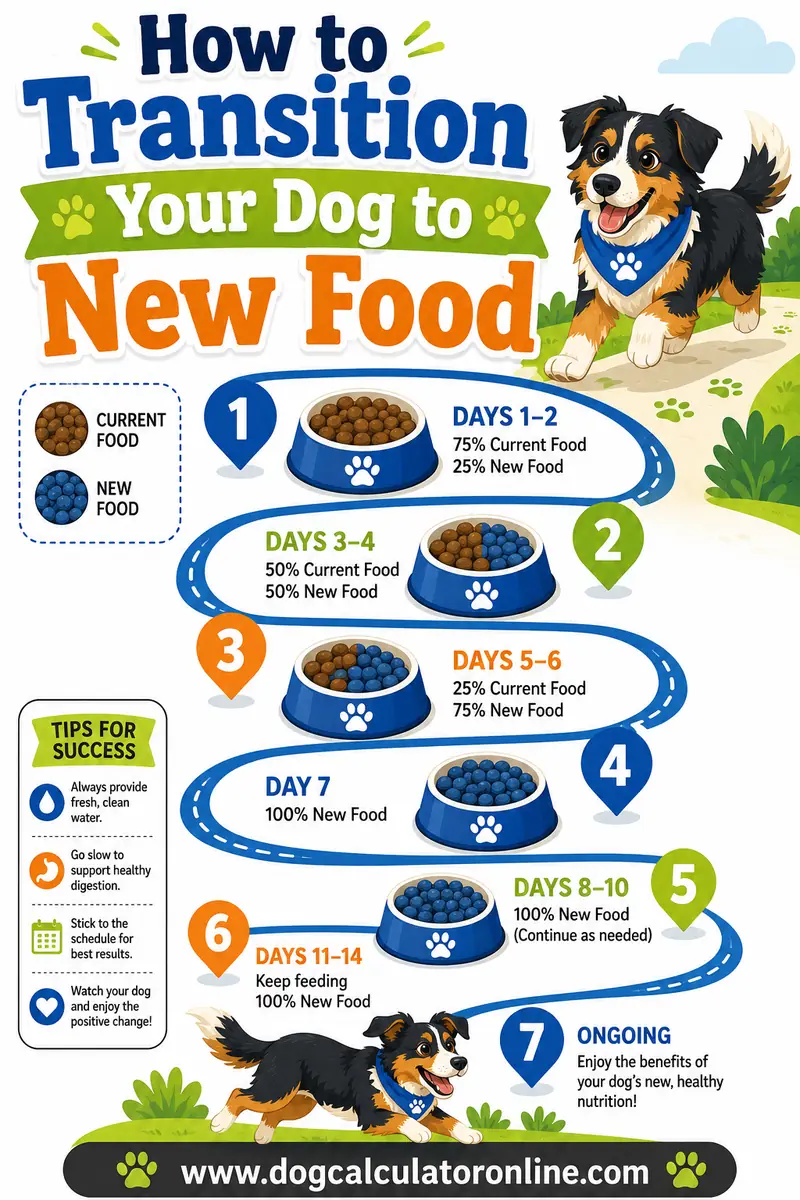
Switch dog foods gradually over 7–10 days: feed 25% new food for days 1–2, 50% for days 3–4, 75% for days 5–6, and 100% new food from day 7 — stretching any stage that produces soft stool. A dog's gut bacteria adapt to what they're fed, and an overnight swap routinely causes diarrhea, vomiting, or refusal to eat, which then gets blamed on a food that never had a fair trial.
One step matters before the first mixed bowl: the two foods almost certainly have different calories per cup, so "one cup of old" and "one cup of new" aren't equal trades. The free dog food calculator gives you the right daily amount of the new food from your dog's weight and the new label. Below: the day-by-day plan, troubleshooting for sensitive stomachs, the special cases, and how to judge the new food fairly once you're through.
🔄 Transition day checker
Tap where you are in the switch to see the day’s mix:
Tap a stage above. Sensitive dogs can take the whole plan at half speed.
The 7-Day Transition Plan
The vet-standard mixing schedule:
| Days | Old food | New food |
|---|---|---|
| 1–2 | 75% | 25% |
| 3–4 | 50% | 50% |
| 5–6 | 25% | 75% |
| 7+ | 0% | 100% |
Run it well with these details:
- Mix, don't layer. Stir the two foods together so a selective eater can't excavate the old favorites and leave the new.
- Keep total volume constant. The transition changes the ratio, not the amount. Work out the new food's correct daily portion first (its kcal-per-cup will differ from the old bag — see below) and scale both parts to land on the right total.
- Check outputs every morning. Formed stool = advance on schedule. Slightly soft = hold at the current ratio an extra day or two. Watery, or any vomiting = drop back a stage (details in the troubleshooting section).
- Change nothing else this week. New treats, table scraps, or a new chew mid-transition make troubleshooting impossible. One variable at a time.
Ten days instead of seven — spending two to three days at each stage — is the better default for seniors, small breeds, and any dog with a history of stomach drama.
Why You Can't Just Swap the Bowls
The case for gradualism is biological, not fussiness. A dog's digestion is tuned to its current diet in two ways: the gut microbiome — the bacterial population doing much of the digestive work — is composed around the current food's protein, fat, and fiber profile, and digestive enzymes are produced in proportions matching it. Change the inputs overnight and the existing system handles the new food badly until it re-tools: the common results are diarrhea, gas, vomiting, or a dog who simply refuses the strange new bowl.
A week of mixing gives the microbiome time to shift populations gradually — the dietary equivalent of walking into cold water instead of diving. Dogs vary in how much this matters: some iron-gutted retrievers can eat anything on no notice, while one bad swap can put a sensitive dog off food for days. Since you can't know which you have until it goes wrong, the ramp is cheap insurance either way.
Recalculate the Portion — The Step Everyone Skips
Two foods can look identical in the scoop and differ by 100+ kcal per cup. Feeding the old food's cup-count of a denser new food is the classic way a food switch quietly becomes weight gain (or, in the other direction, unexplained hunger and weight loss).
The fix takes one minute, once:
- Find the kcal-per-cup on the new food's label.
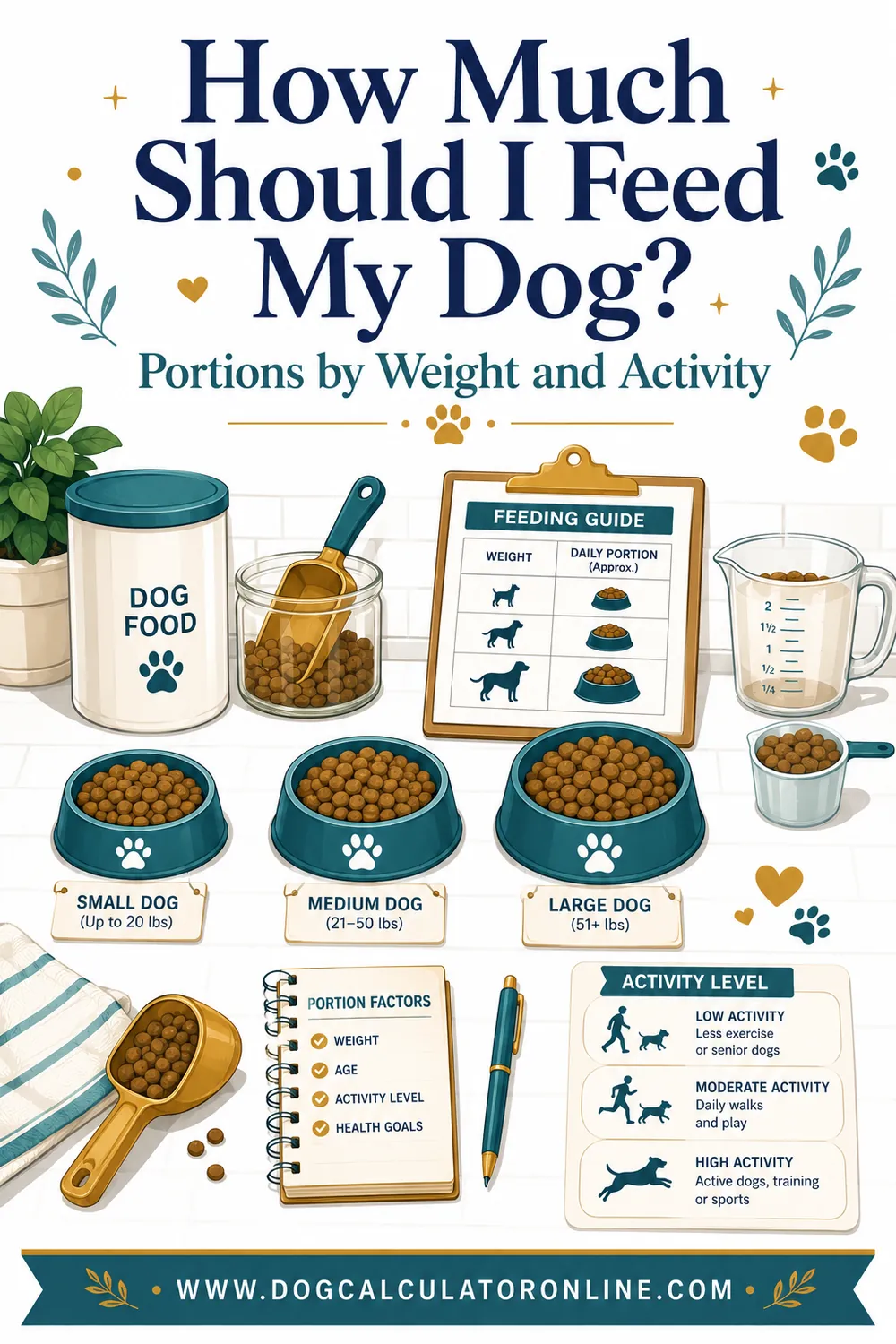
- Divide your dog's daily calorie target by it to get the new daily cups. (Weight, age, and activity in — calories out — via the dog food calculator, or the tables in how much should I feed my dog.)
- Use that new total from day 1 of the transition, splitting it into the ratio of the day.
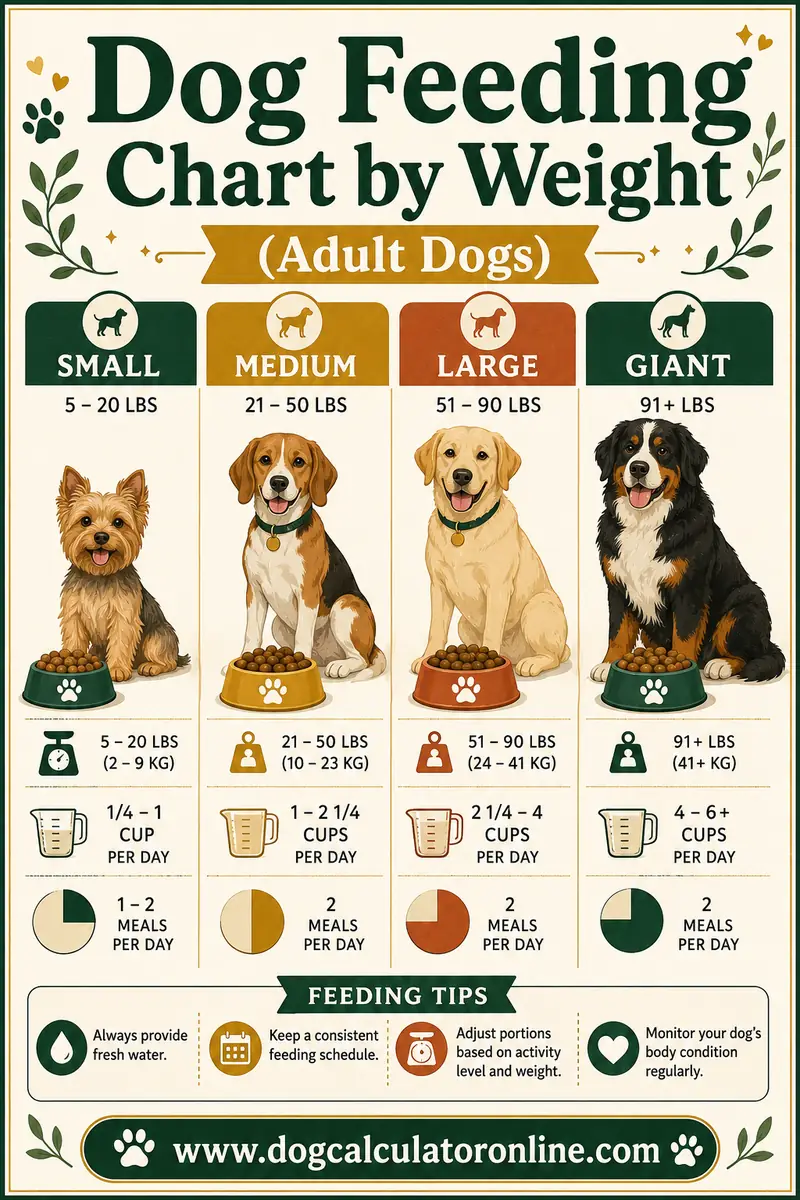
Example: a 50-lb dog eating 3 cups of a 380-kcal/cup food (~1,140 kcal) switches to a 450-kcal/cup formula. The new correct amount is about 2½ cups — feed 3 cups out of habit and the dog gains steadily on the "better" food. Re-check body condition a month after any switch; the feeding chart by weight gives you the reference points.
Troubleshooting: Soft Stools, Strikes, and Sorters
Soft stool or mild diarrhea. The most common speed bump. Drop back to the previous ratio for 2–3 days until stools firm up, then advance at half speed. Persistent diarrhea beyond a couple of days, watery diarrhea, blood, or diarrhea with lethargy or vomiting = stop and call your vet.
Vomiting. One episode with an otherwise bright dog: pause, offer the old ratio at the next meal, and slow the plan. Repeated vomiting = vet call, same day.
The hunger strike. Some dogs eye the new mixture with suspicion. Try warming the meal slightly, adding a spoon of warm water to release aroma, or hand-feeding the first few pieces. Don't garnish the bowl with ever-fancier toppings — that trains professional holdouts. A healthy adult skipping one meal is fine; a dog refusing food beyond about 24 hours (sooner for small breeds, puppies, or seniors) needs a vet conversation.
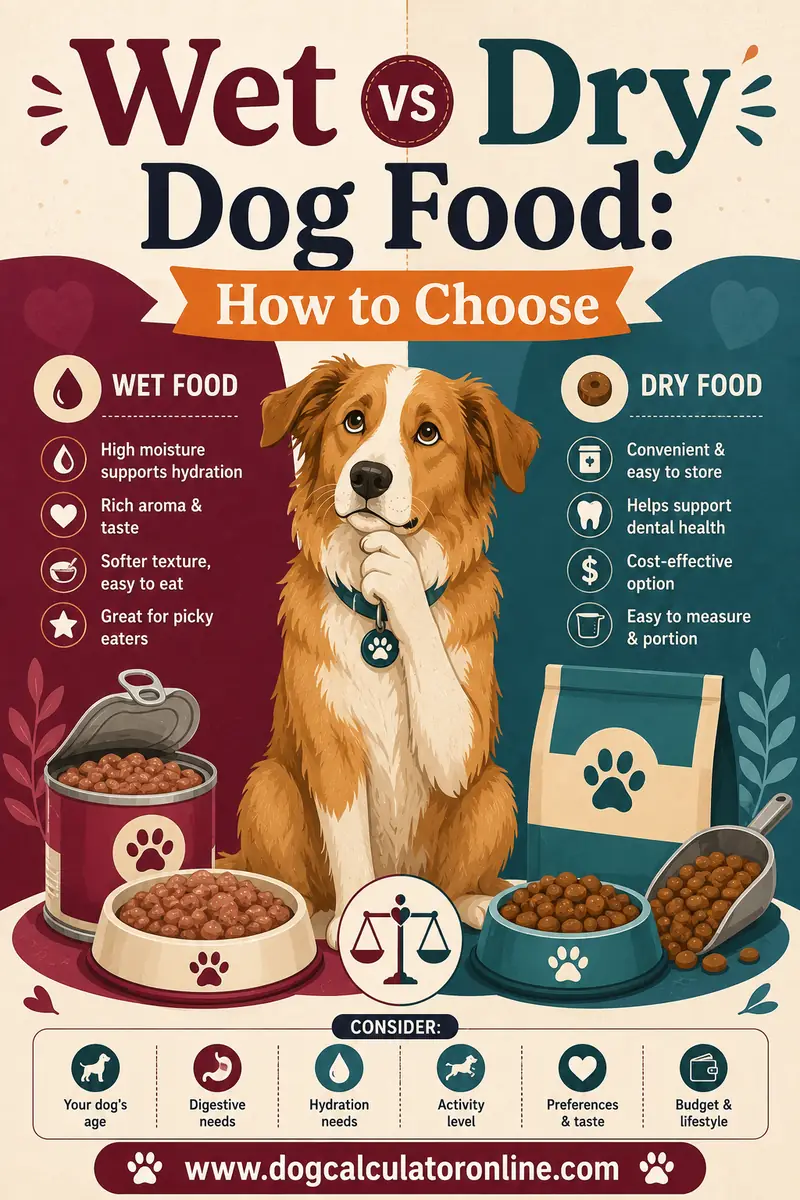
The sorter. Kibble archaeologists who excavate the old food and abandon the new defeat layered bowls — mix thoroughly, moisten slightly so pieces cling, or grind a little of the two together. Wet-to-dry and dry-to-wet switches have their own texture politics; see wet vs dry dog food for making that particular jump.
When to abandon a switch. If two honest, slowed-down attempts at a food both produce GI trouble, the food may simply not suit your dog. That's information, not failure — take it (and the symptom history) to your vet before the next candidate.
Special Cases
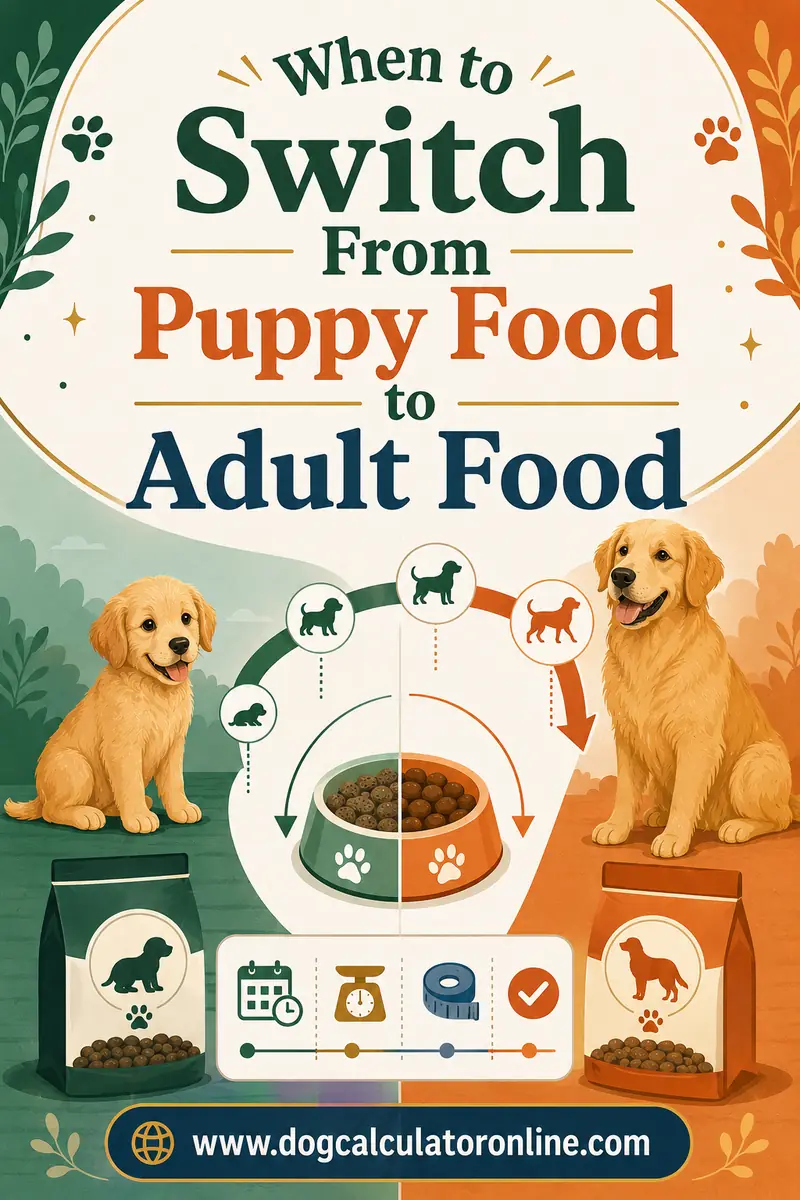
- Puppy to adult food: same mixing method, timed to your pup's growth finishing — roughly 12 months for most breeds, later for large ones. Full timing guide: when to switch puppy food to adult food.
- Prescription and therapeutic diets: transition timing and even whether to transition at all belong to your vet — some conditions call for faster or slower moves than the standard plan.
- Food-allergy investigations: elimination-diet trials have strict rules (single protein, zero extras, weeks of patience) that override this article — run them exactly as your vet prescribes.
- Emergency swaps (recall, discontinued formula, empty shelf): if you can't taper, choose a new food close to the old one's protein and style, feed slightly smaller meals for the first days, and consider asking your vet about a probiotic to smooth the landing. It's the same reason a small "transition reserve" — two weeks of the old bag — is worth keeping when you know a change is coming.
- New home, new food? For a just-adopted dog, keep the shelter/breeder food for the first week or two if you can. Moving house is stress enough; change the diet after the dog settles.
How Often Should You Switch Foods at All?
Since transitions carry friction, it's fair to ask how often they should happen. There's no rule that dogs need rotating menus — a dog thriving on a complete, balanced food can eat it for years, and "he's been on the same food forever" is not by itself a problem to fix.
The good reasons to switch: a life-stage change (puppy to adult, adult to a senior formula when your vet suggests one), a medical recommendation, a genuine quality upgrade, persistent issues on the current food (dull coat, chronic soft stool, itching — with your vet ruling out other causes first), a formula discontinuation, or a budget reality. The weak reasons: novelty, marketing, and the nagging feeling your dog is "bored" — most dogs are not, and appetite theater is usually about the treats, not the kibble.
Some owners do practice deliberate rotation feeding for variety; if that's you, rotate within foods your dog has already proven tolerant of, and keep each changeover gradual all the same.
Judging the New Food Fairly
Give a completed switch 4–8 weeks before rendering a verdict, then grade on observable evidence: stool quality (formed and consistent), coat and skin (gloss up, flaking and itching down — coat changes lag diet by several weeks), energy appropriate to age, enthusiasm at the bowl, and body condition holding steady on the recalculated portion. Persistent itching, ear trouble, or GI wobbles that never settle are worth a vet conversation — sometimes it's the food, sometimes it's coincidence, and your vet can help separate the two.
A Day-by-Day Example, Start to Finish
Here's the whole plan run for a real case: Maya, a 40-lb spayed mixed breed, moving from a 360-kcal/cup kibble (2¾ cups/day ≈ 990 kcal) to a 430-kcal/cup formula.
- Before day 1: new daily amount = 990 ÷ 430 ≈ 2⅓ cups of the new food. All ratios below apply to that corrected total, split into two meals.
- Days 1–2: each meal ≈ ¾ cup old + ⅓ cup new, stirred together. Stools normal.
- Days 3–4: half and half — about ½ cup old + ½ cup new per meal (in each food's own calorie-corrected amounts). Day 4 stool slightly soft; hold this ratio one extra day.
- Day 5 (repeat of 50%): stool firm again. Advance.
- Days 6–7: 75% new. All quiet.
- Day 8: fully switched. Note left on the fridge: new food = 2⅓ cups/day, not 2¾.
- Week 6: rib check and a look at the monthly weight log — holding steady at 40 lb, coat starting to gloss. Verdict: keeper.
Total cost of doing it right: one minute of math and eight days of stirring — versus the alternative, which is often a week of diarrhea cleanup and a food judged guilty on bad evidence.
FAQ
How do I switch my dog to a new food?
Mix increasing amounts of the new food over 7–10 days: 25% for days 1–2, 50% for days 3–4, 75% for days 5–6, then 100%. Hold longer at any stage that softens stools.
What happens if I switch dog food too fast?
Commonly diarrhea, gas, vomiting, or refusal to eat — the gut microbiome can't retool overnight. If it's already happened, feed the old food (or a vet-advised bland diet) until things settle, then restart gradually.
How long does it take a dog to adjust to new food?
Digestion usually settles within the 7–10 day transition; full-body verdicts like coat and skin changes take 4–8 weeks. Judge the new food after a month or two, not a week.
Can I switch dog food without mixing?
It's a gamble — some dogs shrug it off, many get GI upset. If a cold switch is forced (recall, empty shelf), pick a similar formula, feed slightly smaller meals at first, and watch stools closely.
Should I feed the same amount of the new food?
Almost never exactly — calories per cup differ between foods. Recalculate the daily portion from the new label before day 1, or run your dog through the free dog food calculator.
When should I call the vet during a food switch?
Diarrhea lasting more than a couple of days, watery or bloody stool, repeated vomiting, lethargy, or refusal to eat beyond about 24 hours — sooner for puppies, small breeds, and seniors.
The Bottom Line
Change dog food like you'd wade into cold water: 25%, 50%, 75%, done — a week for easy stomachs, ten days for delicate ones, with stools as your daily gauge and the portion recalculated for the new label from day one. That last step is the one everyone skips and the easiest to fix: put your dog's weight and the new food's numbers into the free dog food calculator, and start the transition already knowing the right bowl.