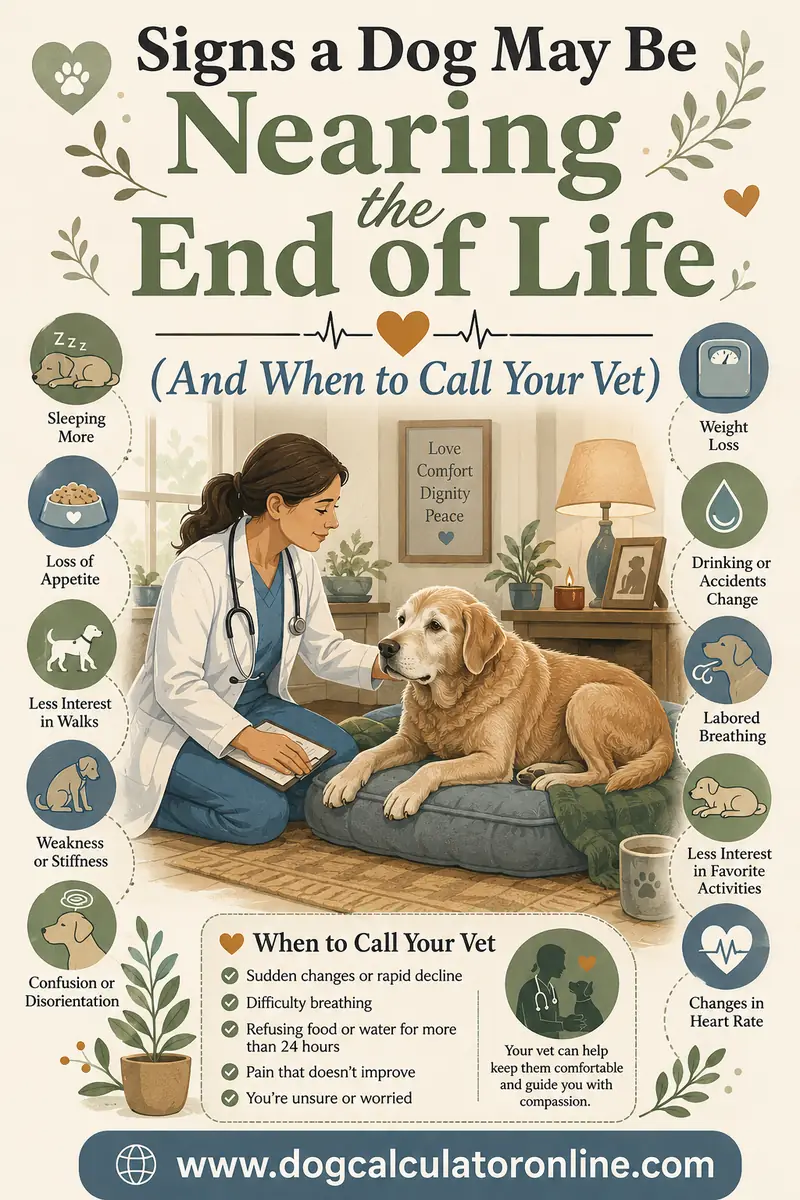
Signs a Dog May Be Nearing the End of Life (And When to Call Your Vet)
The most common signs that a dog may be nearing the end of life are a lasting loss of appetite and thirst, deep fatigue and withdrawal, loss of mobility, incontinence, labored breathing, and a general disengagement from things they used to love. But — and this matters — every one of these signs can also point to treatable conditions. The only way to know the difference is a veterinary exam, so the first response to any of them is a call to your vet, not a conclusion.
This is a hard page to need. We've kept it factual, gentle, and practical: what the signs are, what else they can mean, how vets think about quality of life, and how to prepare — plus how your dog's age in human terms (our free dog age calculator can tell you) helps set honest expectations.
🐾 What a sign can mean — tap to see
Each of these has both serious and treatable explanations. Tap one:
Tap a sign above. When in doubt, call your vet — today.
First: These Signs Are Prompts, Not Verdicts
Veterinarians see it constantly: a dog "clearly at the end" turns out to have a raging dental infection, untreated arthritis pain, or a thyroid problem — and comes back to life with treatment. Old age itself is not a disease, and dogs are famously stoic, hiding problems until they can't.
So read everything below with one rule in mind: any of these signs, especially appearing suddenly or stacking together, means a vet visit — either to find something fixable or, if the news is harder, to get real guidance for what comes next. Both outcomes are better than guessing.
The Common Signs, One by One
1. Lasting loss of appetite and thirst
Skipping a meal happens. What's significant is a sustained pattern: refusing food for more than a day or two, turning down former favorites, or losing interest in water. Near the end of life, the body begins conserving energy and appetite fades. But dental pain, nausea, kidney trouble, and many infections do the same thing — and those are treatable. Declining water intake is always urgent; dehydration compounds everything. Call your vet promptly.
2. Profound fatigue and withdrawal
Dogs nearing the end often sleep most of the day, seek out quiet corners, and stop greeting people at the door. Some withdraw to be alone; others become uncharacteristically clingy. Either shift, when it's a departure from your dog's normal, is meaningful. Distinguish it from ordinary senior sleepiness by engagement: an old-but-well dog perks up for meals and loved ones; a declining dog often doesn't.
3. Loss of mobility and coordination
Weakness in the hind legs, difficulty standing, wobbling, or an unwillingness to rise at all. This is one of the areas where treatable conditions hide most often — arthritis pain, in particular, is dramatically manageable with veterinary help. A dog who has stopped walking deserves a diagnosis, not an assumption.
4. Incontinence
A dog who has been reliably house-trained for a decade doesn't have accidents casually. Near the end of life, muscle control weakens and dogs may soil where they lie. Urinary tract infections, kidney disease, and cognitive decline also cause accidents — more treatable territory. Never scold; always investigate.
5. Changes in breathing
Breathing that becomes labored, unusually shallow, irregular, or noticeably effortful is a serious sign at any age, and common in a dog's final days. Difficulty breathing is an emergency — this one isn't a wait-and-see; contact a vet immediately.
6. Disengagement from joy
Perhaps the clearest sign, because you know your dog best: the ball ignored, the leash met with a flat look, the treat sniffed and left. When the things that always lit your dog up stop registering — persistently, not just on an off day — the body is telling you something important.
7. Temperature and comfort changes
Dogs near the end may seek unusual places — cold floors when they've always loved beds, or hiding spots away from the family. Gums that look pale or grayish rather than healthy pink reflect circulation changes and warrant an immediate vet call.
Quality of Life: How Vets Frame the Question
When decline is real, veterinarians often shift the conversation from "how long?" to "how good?" A widely used framework is the HHHHHMM scale, developed by veterinary oncologist Dr. Alice Villalobos. It scores seven factors, each 0–10:
| Factor | The question it asks |
|---|---|
| Hurt | Is pain controlled? Can the dog breathe comfortably? |
| Hunger | Is the dog eating enough, with help if needed? |
| Hydration | Is the dog drinking enough? |
| Hygiene | Can the dog stay clean and comfortable? |
| Happiness | Does the dog show interest and joy? |
| Mobility | Can the dog get up and move, with assistance if needed? |
| More good days than bad | Which kind of day is winning? |
Your vet can walk you through scoring honestly. Many owners also keep a simple daily journal — ate, drank, walked, wagged — because trends are clearer than memories, especially on emotional days. The last line of the scale is the one most vets emphasize: when bad days consistently outnumber good ones, it's time for a serious conversation with your vet.
Age Context: What "Old" Means for Your Dog
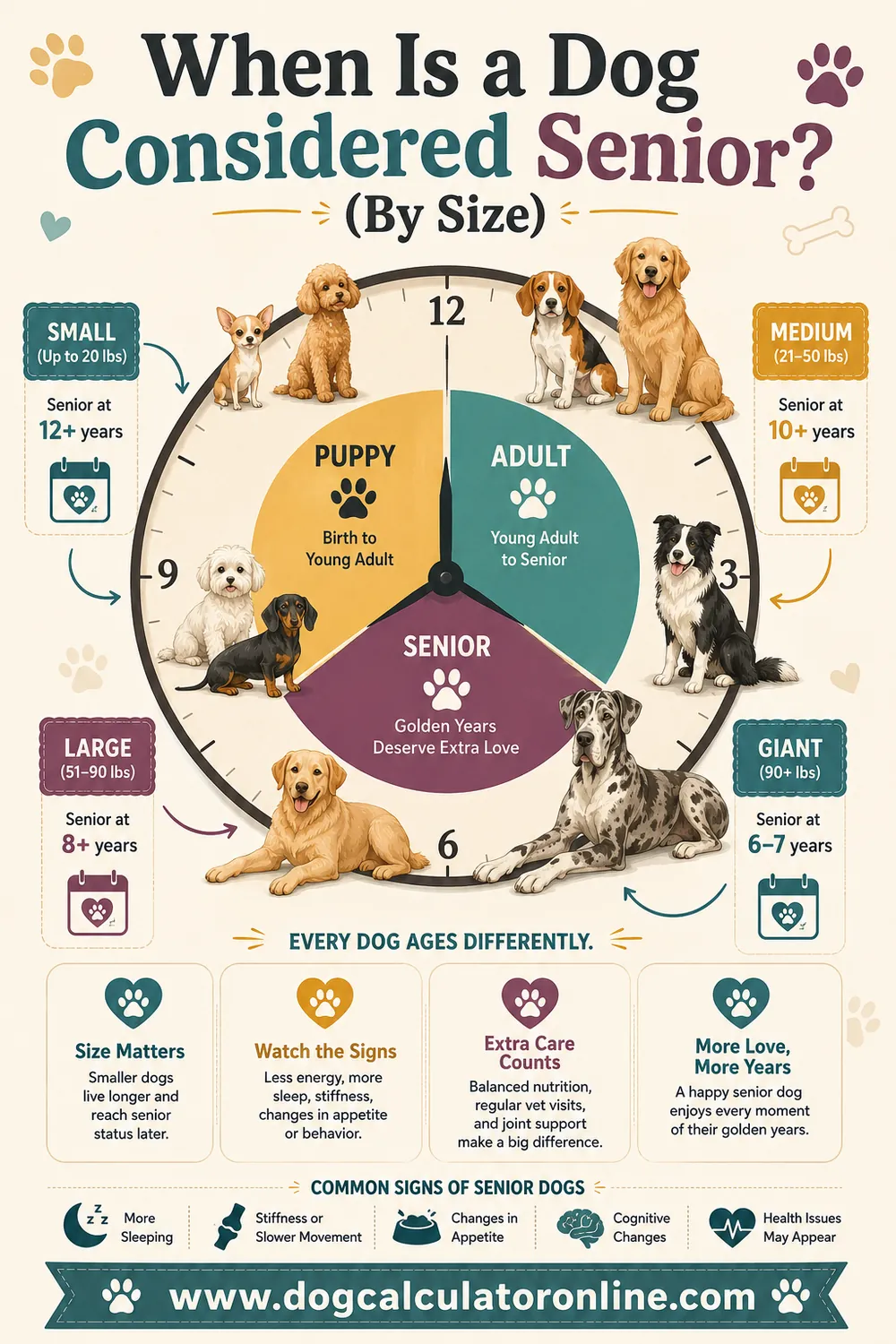
Life expectancy differs enormously by size — small breeds often live 14–16 years, medium 10–14, large 8–12, giant 8–10. A 10-year-old Chihuahua showing one mild sign is a different situation from a 10-year-old Great Dane showing three.
Converting your dog's age to human years helps set honest context: by the vet-backed size-adjusted method, a 10-year-old small dog is like a 56-year-old human, while a 10-year-old giant breed is like an 80-year-old. Our free dog age calculator gives you the exact equivalent for your dog's age and weight — useful grounding when you're weighing what's normal aging and what's decline.
How to Comfort a Dog in Decline
While you work with your vet, home comfort matters enormously:
- Keep them warm, padded, and dry. A supportive bed in a quiet spot near the family — most dogs want proximity without commotion.
- Make everything reachable. Water within a few steps, meals brought to them, no stairs required for anything essential.
- Offer food gently, without pressure. Warmed food is often more tempting. Your vet can advise on appetite support.
- Maintain calm routines. Familiar rhythms are soothing. Keep visits low-key; let your dog set the pace of interaction.
- Be present. Quiet company — a hand resting on their side, your voice — is the thing dogs seem to want most. They spent a lifetime reading you; they know you're there.
When to Call the Vet — A Simple Rubric
- Same day / emergency: labored breathing, collapse, seizures, refusal to drink, pale or gray gums, signs of severe pain (panting, trembling, crying).
- Within a day or two: not eating for 24–48 hours, new incontinence, sudden weakness or disorientation, any rapid change.
- This week: gradual withdrawal, declining interest in favorite things, mounting stiffness, weight loss — anything that has you quietly worried.
- Anytime: a quality-of-life conversation. Vets have these talks every week and want to have them with you sooner rather than later. Many offer telehealth or home visits for exactly this.
Questions Worth Asking Your Vet
Walking into a difficult appointment with questions written down helps more than almost anything. Consider bringing these:
- Is there a treatable condition that could explain these signs?
- How would we know treatment is working — and how quickly?
- What does pain look like in my dog, and is it controlled right now?
- How do you assess quality of life, and where do you honestly see us today?
- What changes should trigger my next call — and which ones are emergencies?
- What are all the options from here, including comfort-focused (palliative) care?
There are no wrong questions at this stage, and good vets welcome all of them. If it helps, bring your daily notes — appetite, mobility, mood — since patterns over weeks tell a clearer story than a single stressful exam-room visit ever can.
Related Guides
If this helped, these go deeper on the same question:
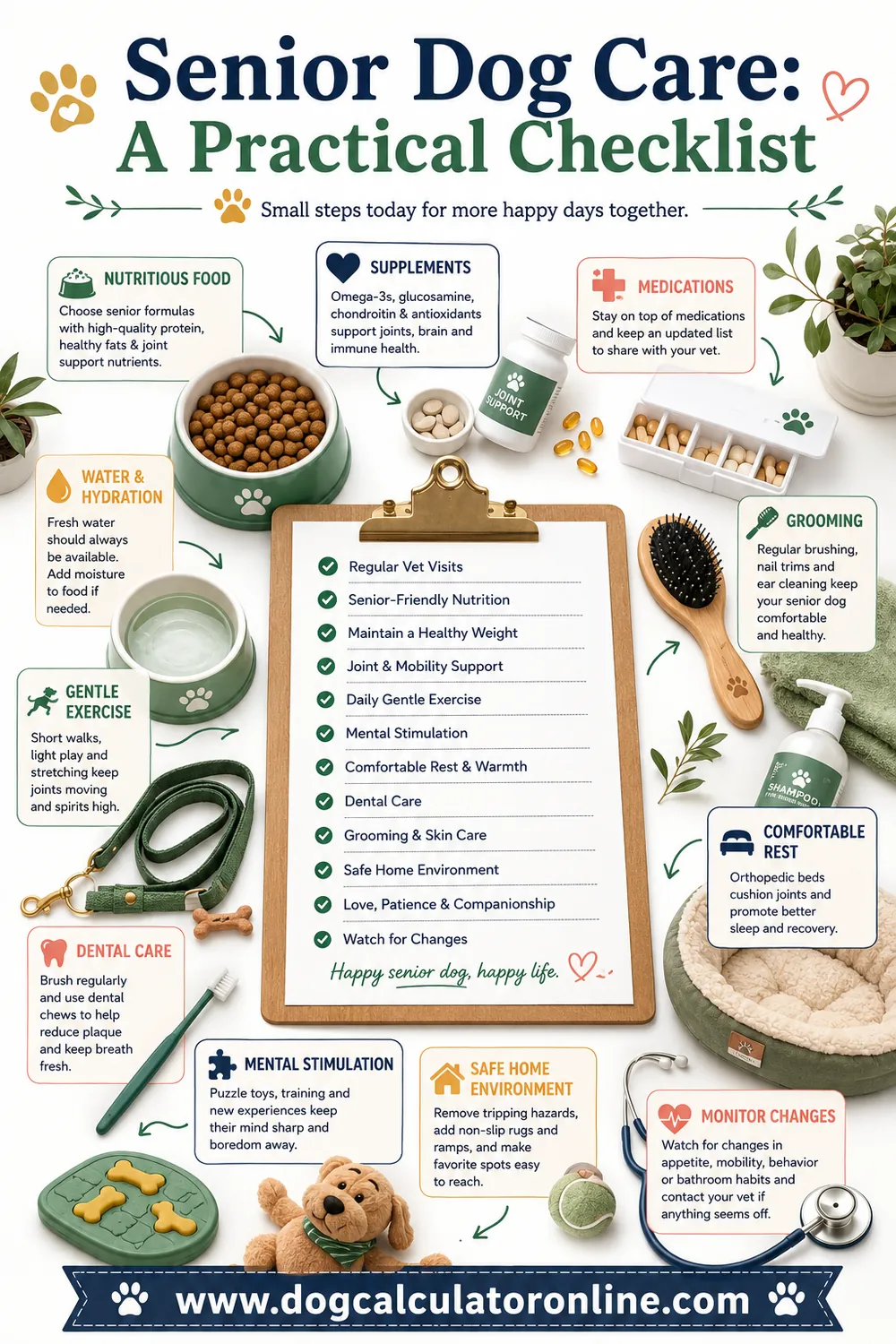
- Senior Dog Care: A Practical Checklist
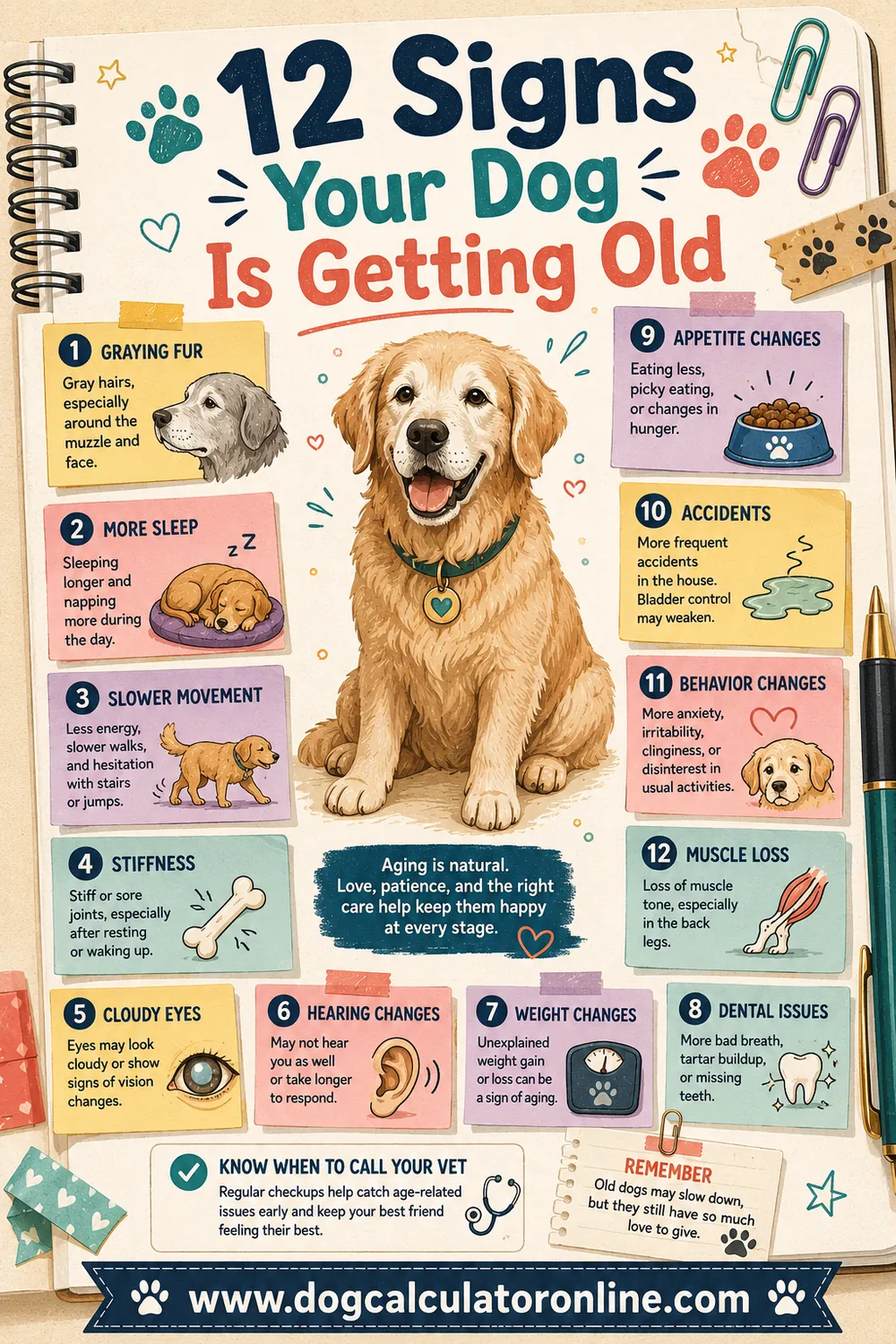
- 12 Signs Your Dog Is Getting Old
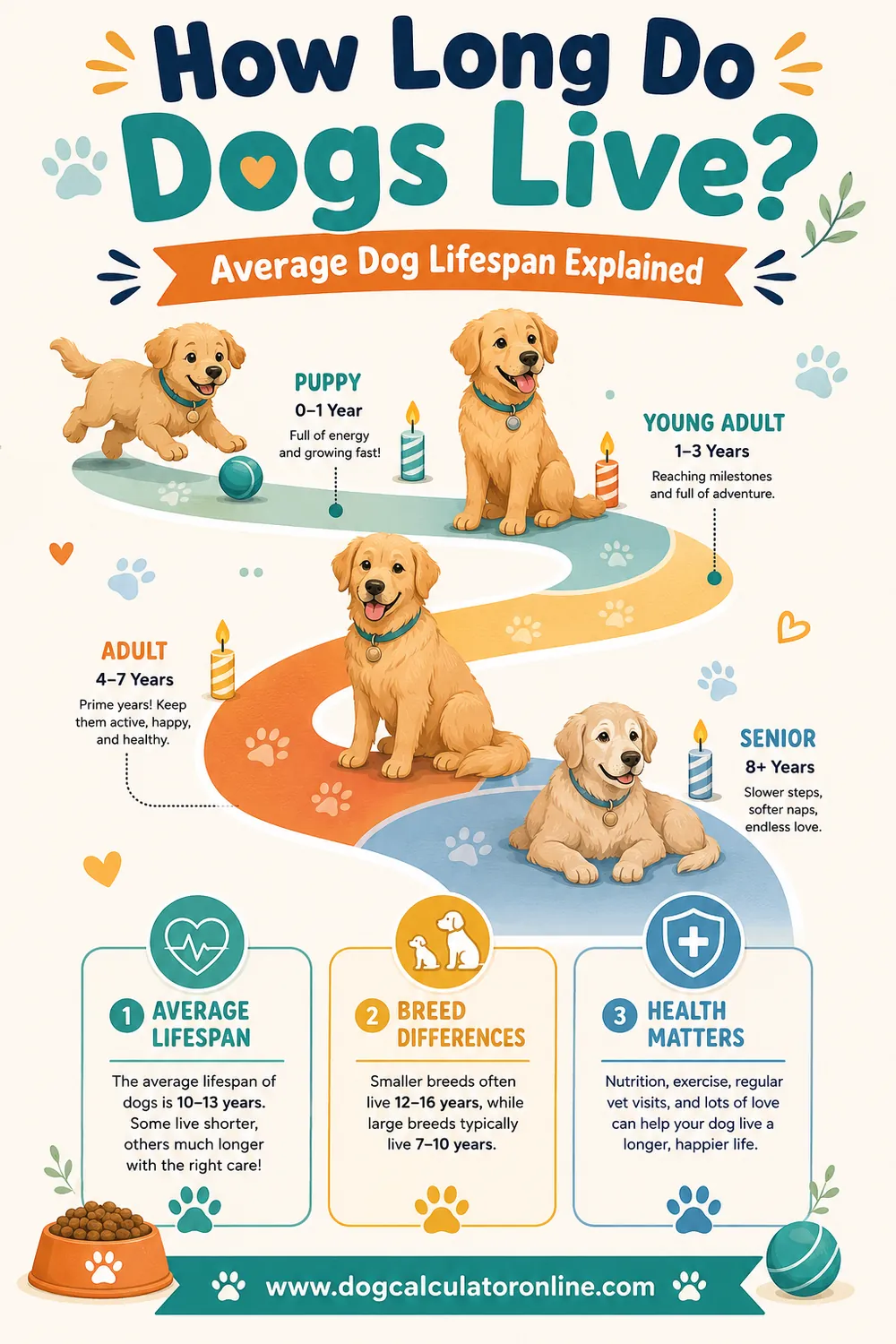
- How Long Do Dogs Live? Average Dog Lifespan Explained
- When Is a Dog Considered Senior? (By Size)
And if you just want your own dog’s number, the free dog age calculator does it in one tap.
FAQ
What are the most common signs a dog is nearing the end of life?
Sustained loss of appetite and thirst, deep fatigue and withdrawal, loss of mobility, incontinence, breathing changes, and disinterest in things they loved. Each can also indicate treatable illness — a vet exam is the essential next step.
How do I know if it's dying or just old age?
You often can't tell from home — that's the honest answer. Stoic dogs hide treatable pain and illness that mimics decline. A veterinary exam distinguishes fixable problems from true end-of-life changes.
How long do the final stages last?
It varies widely — days to weeks or longer, depending on the cause. Your vet, who can examine your dog, is the only reliable source for expectations in your specific case.
Do dogs know when the end is near?
No one knows for certain. Many dogs seek extra closeness or unusual solitude in their final days. What's well documented is that calm routine and your presence reduce stress.
What is the HHHHHMM quality-of-life scale?
A veterinary framework scoring Hurt, Hunger, Hydration, Hygiene, Happiness, Mobility, and More-good-days-than-bad from 0–10 to help owners and vets assess quality of life objectively. Your vet can guide you through it.
Should I call my vet even if I'm not sure?
Yes — always. The best-case outcome of "calling too soon" is discovering a treatable problem early. Vets would far rather hear from you a month early than a week late.
The Bottom Line
The signs of a dog nearing the end of life — fading appetite, deep fatigue, failing mobility, disengagement — are real and worth knowing. But they're prompts for a vet conversation, never a home diagnosis: too many "end-of-life" signs turn out to be treatable pain or illness. Watch for patterns, keep simple notes, focus on comfort, and let your vet help you see clearly.
And whatever chapter your dog is in, knowing their age in human terms helps you meet them there — the free dog age calculator gives you that number in seconds.