Shih Tzu Years to Human Years: A Small-Breed Age Chart

Shih Tzus follow the small-breed aging curve, which is the slowest of the dog size classes: roughly 15 human years in year one, 24 by year two, then about 4 per year after that. At typically 9 to 16 pounds, the breed sits firmly in the small category, and they're among the longer-lived dogs as a result — commonly 10 to 16 years, with plenty reaching further.
The Chart
| Shih Tzu age | Human equivalent | Life stage |
|---|---|---|
| 6 months | ~10 years | Puppy |
| 1 year | 15 years | Adolescent |
| 2 years | 24 years | Young adult |
| 3 years | 28 years | Adult |
| 4 years | 32 years | Adult |
| 5 years | 36 years | Adult |
| 6 years | 40 years | Adult |
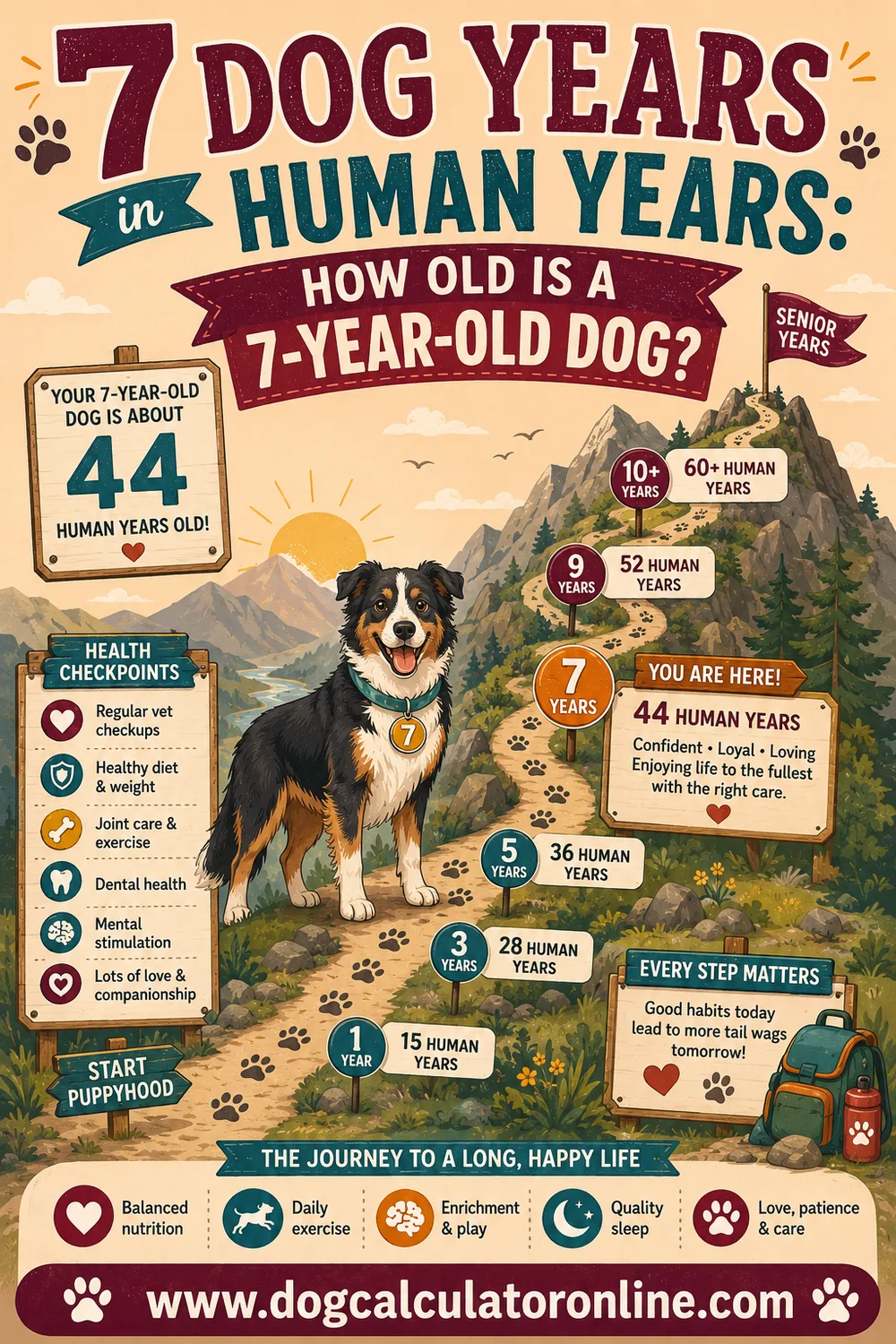
| 7 years | 44 years | Adult |
| 8 years | 48 years | Mature |
| 9 years | 52 years | Mature |
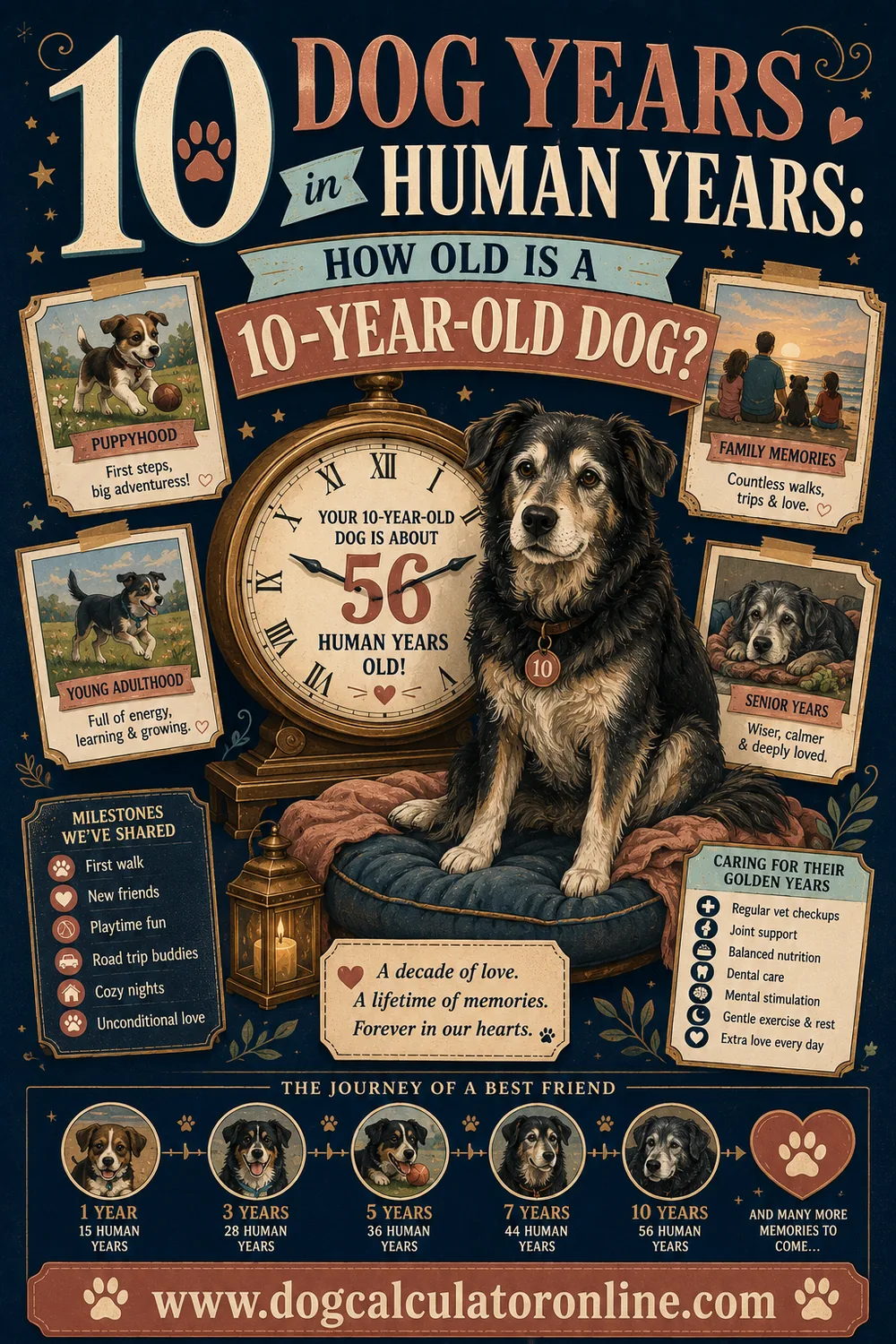
| 10 years | 56 years | Senior |
| 11 years | 60 years | Senior |
| 12 years | 64 years | Senior |
| 13 years | 68 years | Senior |
| 14 years | 72 years | Geriatric |
| 15 years | 76 years | Geriatric |
| 16 years | 80 years | Geriatric |
A dog age calculator applies the size-adjusted formula automatically if you want an exact figure for a specific age.
Why Small Breeds Age Slower
This is genuinely counterintuitive — in most of the animal kingdom, larger species live longer. Within dogs, the opposite holds.
The leading explanation is growth rate. A large breed goes from a couple of pounds to over a hundred within eighteen months; a Shih Tzu goes from a few ounces to around twelve. Far less cell division over the growth period is associated with lower lifetime cancer risk and later onset of age-related conditions.
The practical result: a Shih Tzu at 8 is mature but comfortably healthy, while a Great Dane at 8 is well into old age. Full comparison in dog years versus people years.
Life Stages, Practically
Puppy (0-12 months). Rapid growth, teething through about 6-7 months, socialization window in the early part. Shih Tzus complete most physical growth by around 10 months, earlier than large breeds.
Adolescent (1-2 years). Full size, sexual maturity reached, and the most behaviorally testing period — impulse control lags well behind physical development.
Adult (3-7 years). Prime of life. Stable weight, established routine, lowest health-risk window.
Mature (8-9 years). Metabolism slows. This is where weight gain typically starts if food hasn't been adjusted, and where annual bloodwork becomes worthwhile even in a healthy dog.
Senior (10-13 years). Reduced activity, more sleep, possible joint stiffness. Twice-yearly vet visits become the common recommendation from around 10-11.
Geriatric (14+). Many Shih Tzus reach this comfortably. Care shifts toward comfort, mobility support and closer monitoring.
Breed-Specific Things to Watch
Age conversion is only useful if it prompts the right attention, and Shih Tzus have some specific considerations:
Brachycephalic airway issues. The flat face means breathing is less efficient than in a long-muzzled breed. Heat and exertion tolerance are genuinely lower, and this matters more as the dog ages.
Eye problems. Prominent eyes are more exposed and more prone to injury, dryness and corneal issues. Worth checking regularly throughout life, not just in old age.
Dental disease. Small breeds have crowded mouths and are disproportionately affected. Dental disease is one of the most common health issues in small dogs and is genuinely linked to broader health outcomes — this is probably the single highest-value thing to stay on top of.
Patellar luxation and joint issues. Common in small breeds, and more noticeable as the dog ages.
Weight. A pound or two of excess weight on a 12-pound dog is proportionally enormous. Small-breed obesity is easy to miss and meaningfully shortens lifespan.
What the Number Is For
The conversion isn't trivia — it's a prompt to change care at the right time.
From around 8 (48 human): annual bloodwork, even if the dog seems fine. Baseline values make later changes interpretable.
From around 10-11 (56-60 human): twice-yearly vet visits, closer attention to weight, mobility and dental health.
Any age: changes in drinking, appetite, breathing effort or activity level warrant a call regardless of what the chart says.
Owners of small breeds often under-estimate their dog's life stage because the dog still looks and behaves youthfully at 9 or 10. The chart is a useful corrective.
Health Checkpoints by Age
The conversion only earns its keep if it prompts the right care at the right time.
Puppy (0-12 months). Vaccination course, parasite control, neutering discussion, and early dental habits. Starting toothbrushing as a puppy is considerably easier than starting at six, and dental disease is the single most common health issue in small breeds.
Young adult (1-3 years). Annual checks, weight monitoring as growth stops and metabolism settles, and establishing a baseline for what normal looks like for this individual dog.
Adult (4-7 years). Annual checks continue. Around six or seven, a first senior bloodwork panel is worth doing even in an apparently healthy dog — the value is having a baseline to compare against later.
Mature (8-9 years). Annual bloodwork becomes genuinely useful. Watch for weight gain as activity decreases, and for the early dental changes that are near-universal in the breed.
Senior (10-13 years). Twice-yearly veterinary visits become the standard recommendation. Monitor mobility, vision, hearing, and any change in drinking or urination.
Geriatric (14+). Comfort-focused care. Joint support, softer bedding, easier access to favorite spots, and closer monitoring of appetite and weight.
Breed-Specific Considerations
Shih Tzus carry a few characteristic issues worth knowing, because they interact with aging.
Brachycephalic airway. The flat facial structure means breathing is less efficient than in a long-muzzled breed. Heat tolerance and exercise tolerance are genuinely lower, and both decline further with age. Hot weather is a real risk rather than a mild inconvenience.
Eye problems. Prominent, relatively exposed eyes are prone to injury, dryness and corneal ulceration. Worth checking regularly throughout life, and increasingly in old age.
Dental disease. Small mouths with crowded teeth make this near-inevitable without intervention. It's the single highest-value thing to stay on top of, and it's genuinely linked to broader health outcomes.
Patellar luxation. Common across small breeds and more noticeable as the dog ages.
Intervertebral disc issues. The long-backed body type carries some risk. Discouraging jumping from height helps.
Weight. A pound or two on a twelve-pound dog is proportionally enormous. Small-breed obesity is easy to overlook under a long coat and meaningfully shortens lifespan.
Why Owners Underestimate Small-Breed Age
A practical observation worth stating.
Small dogs frequently look and behave youthfully well into their senior years. A ten-year-old Shih Tzu with a well-kept coat can appear much as she did at five, which leads owners to treat her as middle-aged when she's already in the senior life stage.
The consequence is usually delayed screening. Bloodwork that would have caught an early kidney or thyroid change gets postponed because the dog seems fine — and by the time visible signs appear, the condition is further along.
The chart is a useful corrective precisely because it doesn't care how young she looks. At ten she is around fifty-six in human terms, and that's the number that should drive the veterinary schedule.
Comparing With Other Small Breeds
Shih Tzus sit comfortably within the small-breed group, and the surrounding context is useful.
| Breed | Typical adult weight | Typical lifespan |
|---|---|---|
| Chihuahua | 4-6 lb | 14-16 years |
| Yorkshire Terrier | 4-7 lb | 13-16 |
| Shih Tzu | 9-16 lb | 10-16 |
| Pug | 14-18 lb | 12-15 |
| French Bulldog | 16-28 lb | 10-12 |
| Beagle | 20-30 lb | 12-15 |
Two patterns worth noting. Smaller generally means longer-lived within this group, continuing the trend across dog sizes generally. And brachycephalic breeds trend slightly shorter than their size alone would predict — the Pug and French Bulldog both sit below what their weight would suggest, largely because of respiratory and related complications.
Shih Tzus are brachycephalic but less extremely so than a Pug or Frenchie, which is part of why their typical range extends further.
Making the Most of a Long-Lived Breed
A Shih Tzu may well be with you for fifteen years or more, which changes how the early decisions pay off.
Dental care from puppyhood. The single highest-return habit. Daily brushing sounds excessive and is genuinely achievable if started young, and it substantially delays the periodontal disease that otherwise affects nearly every small dog.
Weight discipline throughout. Easier to maintain than to correct, and it affects joints, breathing and lifespan simultaneously.
Heat management as a permanent rule. Not just in summer. A brachycephalic dog in a warm car or a heated room is at risk in conditions a long-muzzled breed handles easily.
Coat maintenance. Regular grooming isn't cosmetic — matted coat causes skin problems, and a poorly kept coat hides weight change, which is one of the earliest signals of illness.
Baseline bloodwork around six or seven. Not because anything is expected, but because comparison values are far more useful than a single reading taken when something is already wrong.
Twice-yearly checks from ten. The years where early detection makes the most difference.
Quick Reference
The small-breed formula: 15 at year one, 24 at year two, then approximately +4 per year.
| Shih Tzu age | Human equivalent |
|---|---|
| 1 | 15 |
| 2 | 24 |
| 5 | 36 |
| 8 | 48 |
| 10 | 56 |
| 12 | 64 |
| 15 | 76 |
Senior from: around 10 years. Typical lifespan: 10-16 years. Highest-value interventions: dental care, weight control, heat management.
Common Questions Owners Get Wrong
"She's ten but she acts like a puppy, so she isn't really senior." Behavior is a poor guide. Small breeds retain youthful energy well into their senior years, which is exactly why owners delay screening past the point where it would have been most useful.
"Small dogs don't need senior bloodwork as early." They need it at the same human-equivalent age — which for a Shih Tzu falls around eight to ten calendar years.
"Dental cleaning is cosmetic." Periodontal disease in small breeds is genuinely linked to broader health outcomes. It's among the most consequential preventable conditions in the breed.
"She's fine in the heat, she just pants a bit." Panting is the primary cooling mechanism, and it works considerably less well in a brachycephalic dog. Heat intolerance in this breed is a real risk rather than a preference.
A Final Note
The chart's real value isn't the number — it's the prompt. A Shih Tzu at ten looks and often behaves much as she did at six, which is precisely why owners of small breeds tend to delay senior screening. Knowing she's around fifty-six in human terms is what makes the twice-yearly checkup feel reasonable rather than excessive.
Can a Dog Live 20 Years? What the Records Actually Show
Owners of small breeds ask this more than anyone else, and the honest answer is: rarely, but it happens.
Can a dog live 20 years? Yes. Twenty is well past the typical Shih Tzu range of 10 to 16 years, and past the 12 to 18 that the longest-lived small breeds average, but documented cases exist and they are almost always small dogs — the same size advantage that makes a Shih Tzu's aging curve gentle also raises the ceiling. What those dogs tend to share is unremarkable: healthy weight for life, good dental care, indoor living, and no untreated chronic disease.
Can a dog live 30 years is a different question, and the answer is no on the current evidence. The oldest reliably verified dog remains Bluey, an Australian cattle dog who died in 1939 at 29 years and 5 months. A more recent 31-year claim was widely reported in 2023, but Guinness World Records reviewed the evidence and withdrew the title in 2024. No dog has a verified 30th birthday.
For planning purposes, treat 16 as a realistic hope for a well-cared-for Shih Tzu, 18 as a genuine outlier, and anything past 20 as a story you would be lucky to tell.
Frequently Asked Questions
How long do Shih Tzus live? Commonly 10 to 16 years, which is long even for a small breed. Weight management and dental care are the two factors most within an owner's control that affect where in that range a dog lands.
How old is a 10-year-old Shih Tzu in human years? About 56, using the small-breed formula. That places her at the start of the senior stage, where twice-yearly veterinary checks are typically recommended.
Do Shih Tzus age slower than bigger dogs? Yes. Small breeds age more slowly through adulthood than large breeds — the leading explanation being their far slower and smaller total growth, which is associated with lower lifetime cancer risk and later onset of age-related conditions.
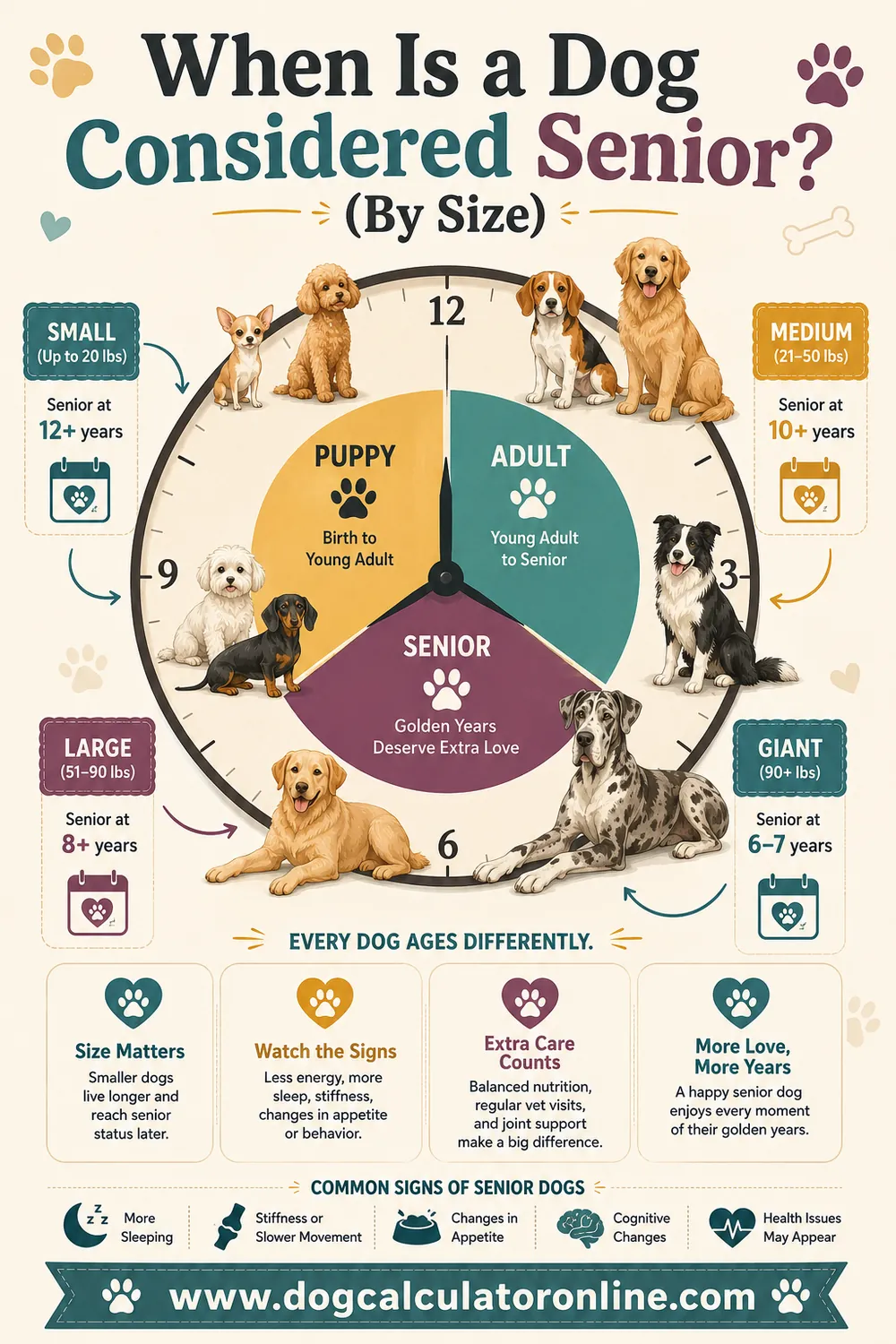
When is a Shih Tzu considered senior? Around 10 years old, though many remain active and youthful-seeming well past that. The life stage matters for veterinary screening schedules more than for day-to-day behavior.