7 Dog Years in Human Years: How Old Is a 7-Year-Old Dog?
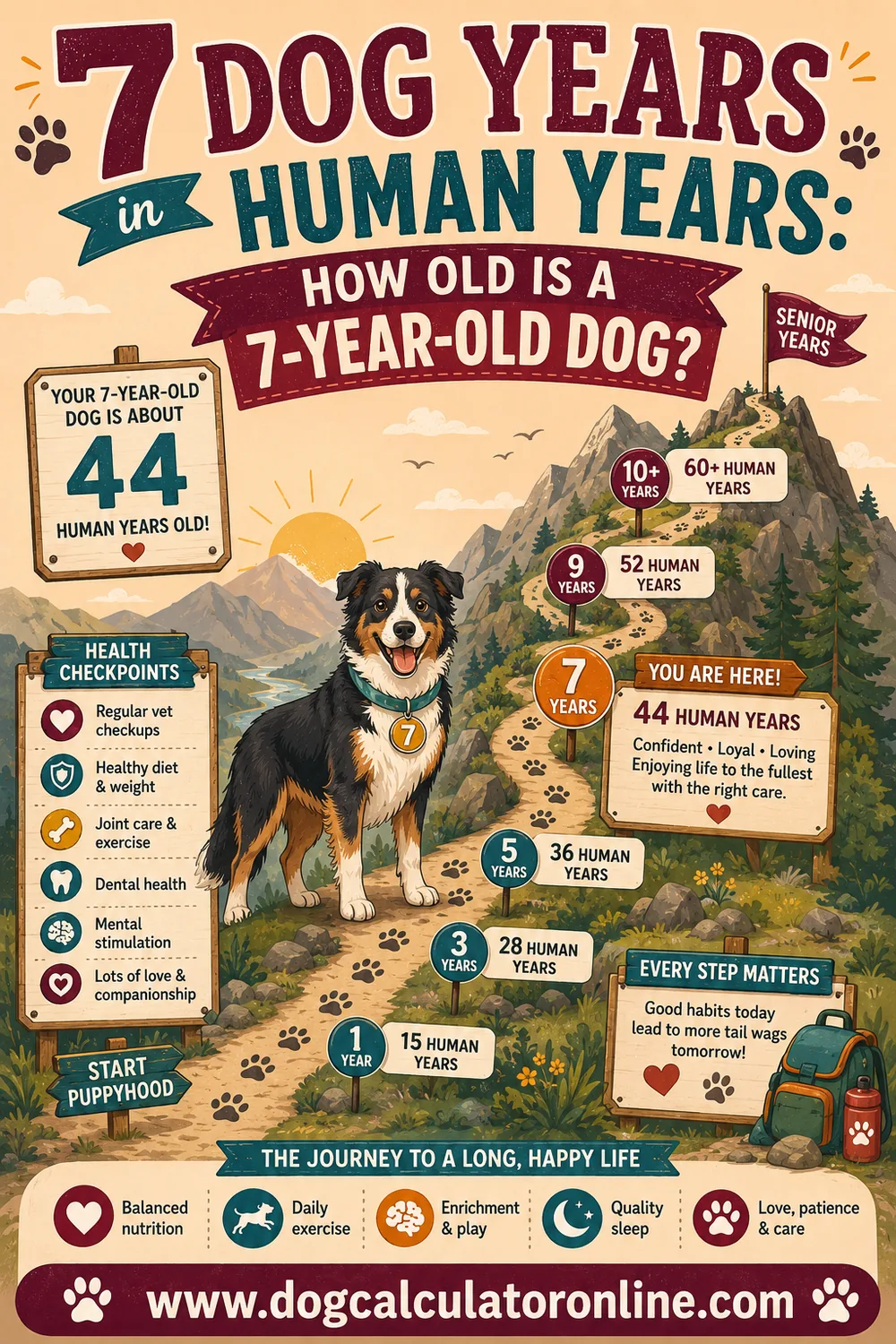
A 7-year-old dog is about 44 to 59 in human years, depending on size: roughly 44 for a small dog, 49 for a medium, 54 for a large, and 59 for a giant breed. Funny coincidence: for a medium dog, the correct answer (49) matches the old "7 × 7" myth — but for every other size, the myth misses by 5 to 10 years.
Want your dog's exact number? The free dog age calculator applies the right size adjustment and adds the 2019 DNA-study figure in one tap. Here's the full picture of age 7 — the birthday where the word "senior" first enters the conversation.
🐾 Quick check: how old is a 7-year-old dog?
Tap your dog’s size class to see the human-year equivalent at age 7:
Tap a size above to see the answer.
The Short Answer: 7 Dog Years ≈ 44–59 Human Years
Using the size-adjusted guideline veterinary organizations rely on — 15 human years for year one, 9 for year two, then 4–7 per year by size — a 7-year-old works out to 24 plus five size-adjusted years:
| Size class | Adult weight | Math | 7 dog years in human years |
|---|---|---|---|
| Small | Under 20 lb | 24 + (5 × 4) | ≈ 44 |
| Medium | 21–50 lb | 24 + (5 × 5) | ≈ 49 |
| Large | 51–90 lb | 24 + (5 × 6) | ≈ 54 |
| Giant | Over 90 lb | 24 + (5 × 7) | ≈ 59 |
Age 7 is the one point where the old myth accidentally gets a partial pass: 7 × 7 = 49, exactly the medium-dog answer. But that's luck, not accuracy. The myth calls a 7-year-old Chihuahua and a 7-year-old Great Dane the same age, when in reality they're 15 human years apart — one in the mid-forties, the other pushing 60.
Is a 7-Year-Old Dog a Senior?
Seven is the age most often quoted as the "senior" threshold, and it's half right. The honest answer depends on size:
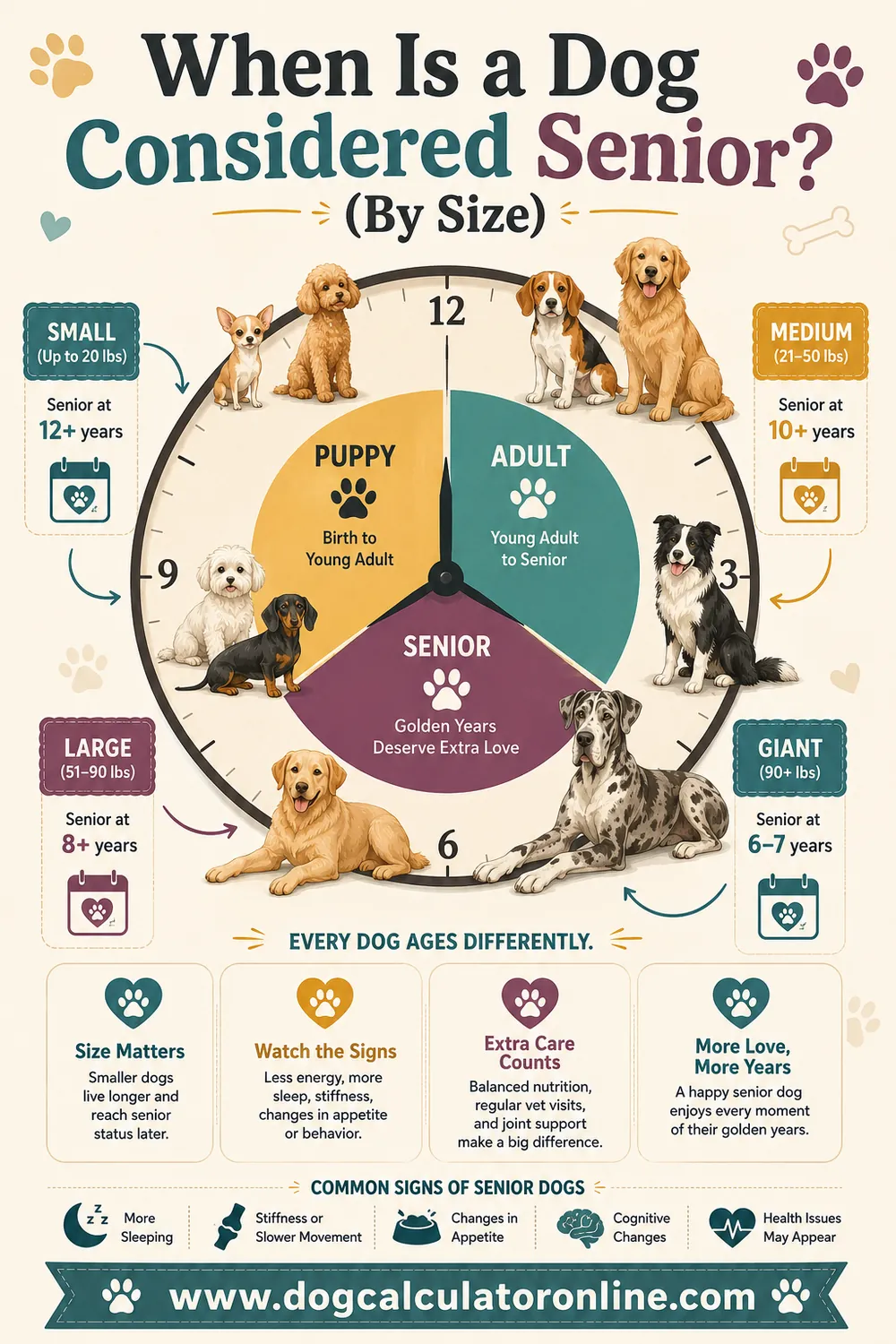
- Small breeds (under 20 lb): Not yet. At ≈44 human years and with lifespans often reaching 14–16, a 7-year-old small dog is solidly middle-aged. Senior status typically arrives around 9–10.
- Medium breeds (21–50 lb): Approaching. At ≈49, a medium dog is late-middle-aged; many vets start senior-style conversations around 7–8.
- Large breeds (51–90 lb): Yes, or nearly. At ≈54 with typical lifespans of 8–12 years, a 7-year-old large dog has entered the senior zone, and many vets recommend twice-yearly exams from here.
- Giant breeds (over 90 lb): Firmly senior. At ≈59 against an 8–10 year lifespan, a 7-year-old giant is an elder statesman deserving full senior care.
"Senior" isn't a diagnosis — plenty of 7-year-olds still play like maniacs. It's a monitoring schedule: catching age-related changes early, when they're most manageable. Your vet can tell you where your individual dog sits.
The DNA Study Says 62 — Here's Why
The 2019 UC San Diego epigenetic study produced a formula from DNA methylation patterns in about a hundred Labrador Retrievers:
Human age = 16 × ln(dog age) + 31
For a 7-year-old: 16 × ln(7) + 31 ≈ 62 human years.
Interestingly, this is one of the ages where the DNA formula and the size-adjusted guideline nearly agree — at least for big dogs. The guideline puts a 7-year-old giant breed at 59; the DNA clock says 62. For a small dog (guideline: 44), the gap is wider.
That pattern makes sense once you know how the epigenetic curve works: it sprints early (a 1-year-old dog measures ≈31) and then flattens, adding only a few human-equivalent years across each later stretch of dog life. By midlife, the flattening DNA curve and the steadily climbing guideline start to converge — especially for the fast-aging large breeds the Labrador-based formula best represents.
As always: the DNA number is molecular trivia, not a care plan. The free dog age calculator gives you both figures so you can compare.
What Changes Around Age 7
In human terms your dog is somewhere between 44 and 59 — an age where humans start getting reading glasses and complaining about their knees. Dogs show parallel shifts:
- Recovery slows. The weekend hike still happens; the Monday nap gets longer.
- Joints may stiffen. Watch for hesitation at stairs, slower rising after sleep, or reluctance to jump into the car — worth mentioning to your vet rather than writing off as "just age."
- Weight matters more than ever. Metabolism keeps slowing, and extra pounds now sit on middle-aged joints. Lean 7-year-olds move like younger dogs.
- Eyes and ears begin to age. A slight bluish haze in the eyes (lenticular sclerosis) is common and usually harmless, but your vet should confirm what's normal.
- Gray muzzles bloom. Purely cosmetic, undeniably distinguished.
None of this is cause for alarm. It's cause for attention — the difference between a good senior decade and a rough one is often the stuff caught at 7 rather than 10.
For in-between ages, pro-rate the yearly step: a large dog at 7 and a half is 54 + (0.5 × 6) = 57 human years, and a small dog at 7 years 3 months is 44 + (0.25 × 4) = 45. A year matters more now than it did at 3 — which is exactly why vets compress the exam schedule at this age.
The Senior-Prep Checklist for Age 7
A practical list to run through around this birthday — with your vet's guidance on the specifics:
- Ask about exam frequency. Many vets move large and giant breeds to twice-yearly visits at 7 (small breeds usually a couple of years later). Dogs age too fast for once-a-year to catch everything in the second half of life.
- Get baseline senior bloodwork. Kidney, liver, and thyroid values that are normal-for-your-dog at 7 make an 8- or 9-year-old's subtle changes far easier to spot.
- Recheck the food. Some dogs benefit from a senior formula around now; others do better staying on adult food with adjusted portions. There's no universal switch age — ask your vet, and measure portions either way.
- Keep moving, gently. Daily moderate exercise preserves muscle that aging joints depend on. Swimming and steady leash walks are kind to a middle-aged body.
- Mind the mouth. Seven-year-old teeth have seen things. Dental health affects comfort, appetite, and overall health more than most owners realize.
What "Senior" Actually Changes at the Vet
The senior label isn't a mood — it's a different monitoring protocol. When your vet starts treating your 7-year-old as a senior, expect the visit to expand:
- Twice-yearly exams instead of annual. In size-adjusted time, a large-breed dog ages about 6 human-equivalent years between annual visits. Splitting that in half catches changes while they're small.
- Senior bloodwork and urinalysis. Kidney values, liver enzymes, thyroid levels, blood sugar. The first senior panel is mostly about establishing your dog's personal baseline; later panels look for drift.
- Weight and muscle tracking. Vets watch body condition more closely now — both gain (joint load) and unexplained loss (always investigated).
- A closer look at teeth, eyes, and joints. The exam gets slower and more thorough, because this is the age when quiet problems start.
None of this means your dog is sick. It means the price of catching things early has dropped, and the cost of missing them has gone up. If your 7-year-old hasn't had a senior-style workup, that's the agenda item for the next visit.
Keeping a 7-Year-Old Young: What Actually Works
The good news about 44–59 in human years: it's exactly the age range where lifestyle pays best. The evidence-backed short list —
- Lean body condition, above all. The landmark lifelong Labrador study found lean-fed dogs lived significantly longer — and developed age-related conditions later — than heavier littermates. At 7, a visible waist is worth more than any supplement.
- Consistent moderate exercise. Daily movement preserves the muscle that protects aging joints. The dogs who stay mobile at 12 are usually the ones who kept walking at 7.
- Dental maintenance. Chronic oral infection taxes the whole body. If a cleaning is overdue, midlife is the time.
- Mental work. Sniff walks, food puzzles, new tricks. Brains age better busy — and a 49-in-human-years dog is nowhere near done learning.
Skip anything marketed as anti-aging that your vet wouldn't endorse. The unglamorous fundamentals above are the whole documented playbook — and they're mostly free.
Related Guides
If this helped, these go deeper on the same question:
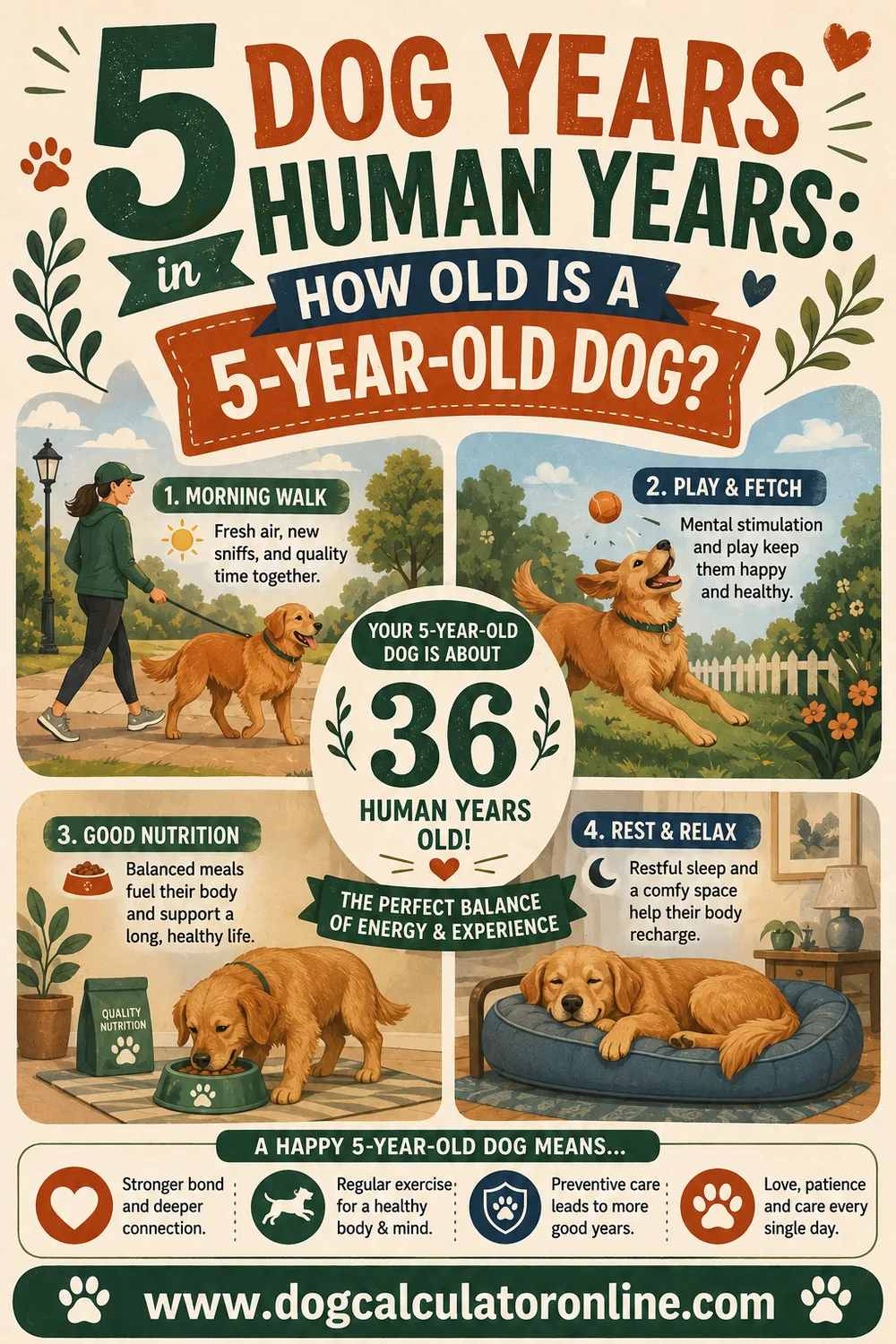
- 5 Dog Years in Human Years: How Old Is a 5-Year-Old Dog?
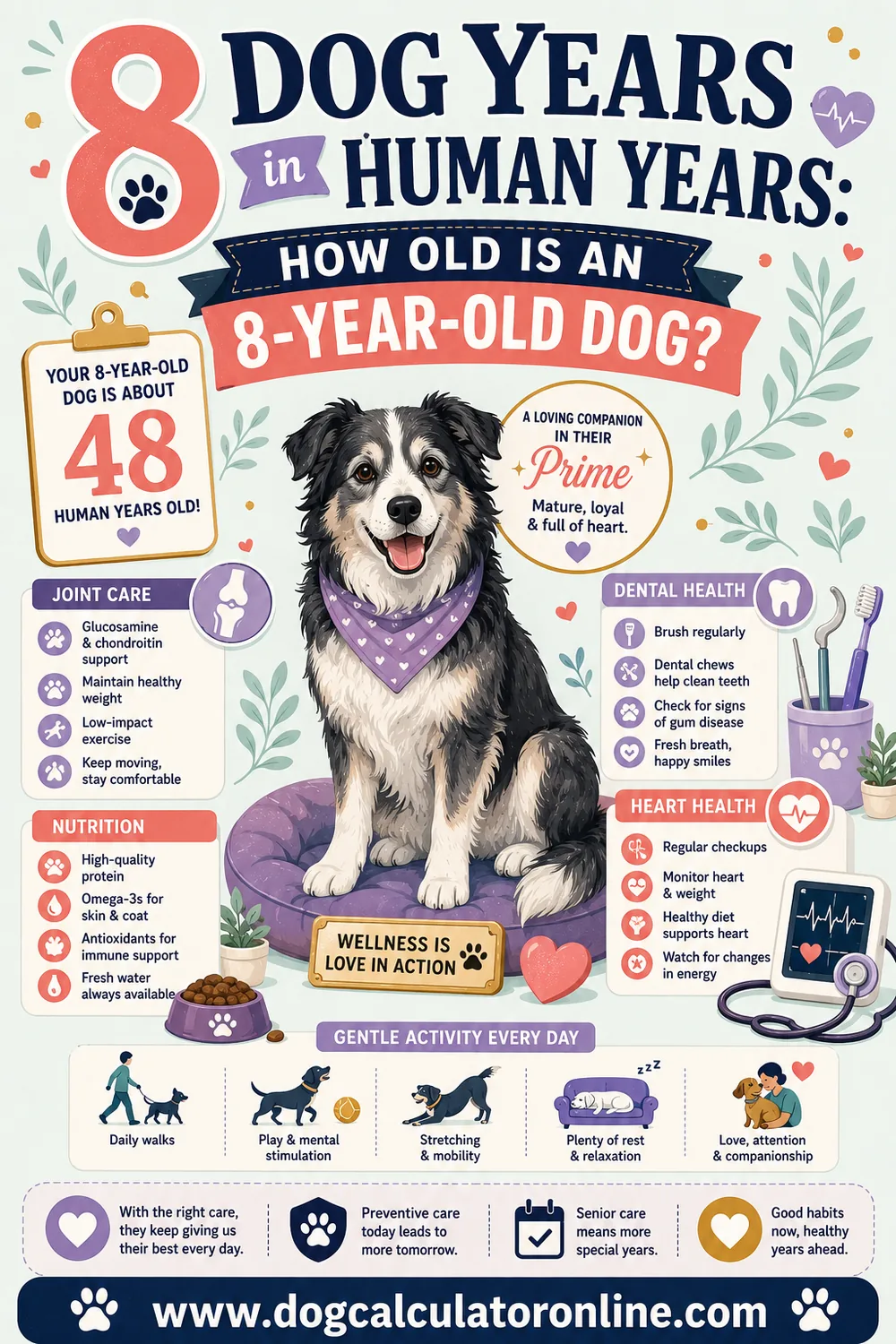
- 8 Dog Years in Human Years: How Old Is an 8-Year-Old Dog?
- When Is a Dog Considered Senior? (By Size)
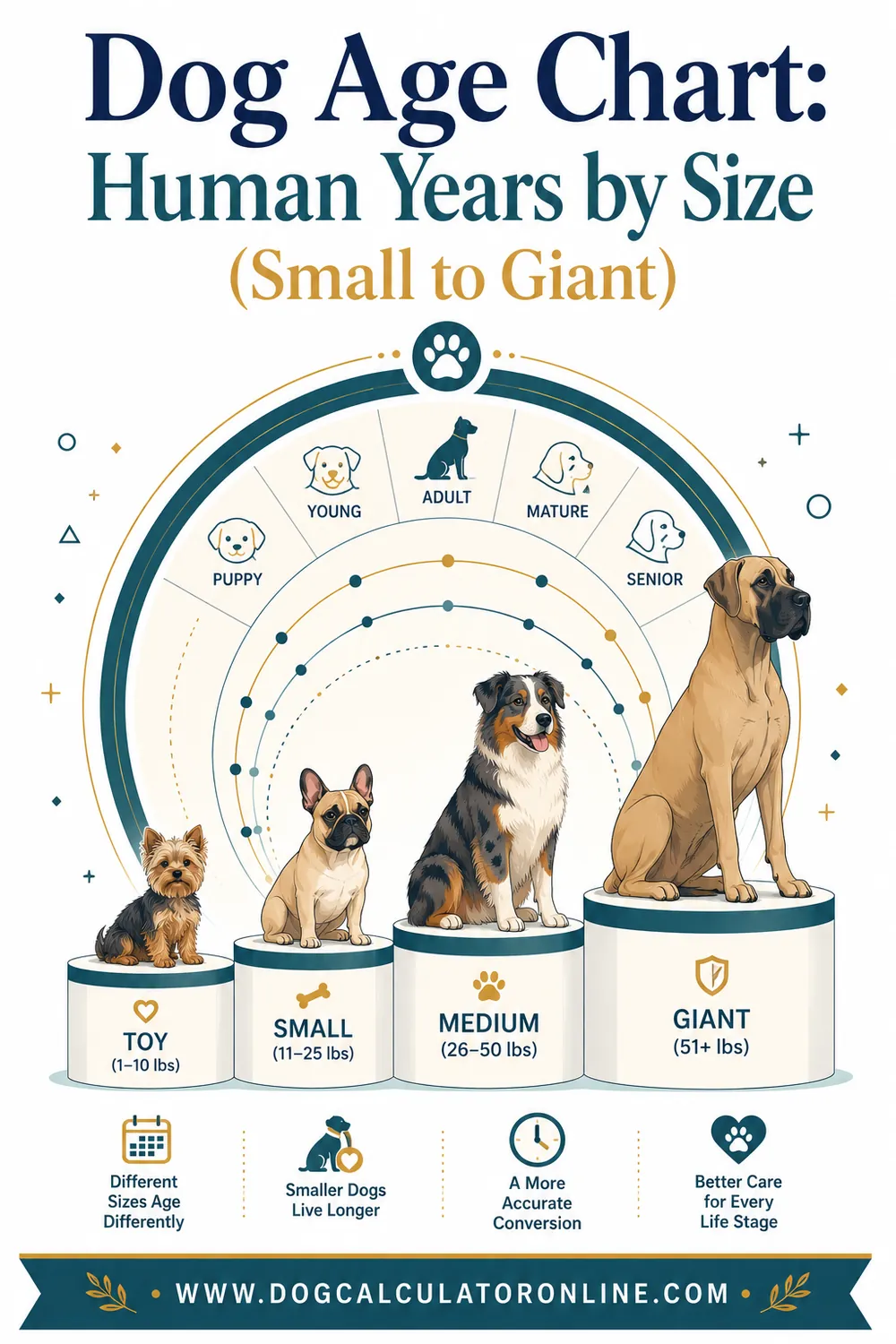
- Dog Age Chart: Human Years by Size (Small to Giant)
And if you just want your own dog's number, the free dog age calculator does it in one tap.
FAQ
How old is a 7-year-old dog in human years?
About 44–59 depending on size: 44 for small dogs, 49 for medium, 54 for large, and 59 for giant breeds, per the vet-backed size-adjusted method.
Is 7 × 7 = 49 actually right for a 7-year-old dog?
Only for medium breeds (21–50 lb), and only by coincidence. Small dogs are about 44, large dogs 54, and giants 59 — the flat 7:1 rule can't handle size differences.
Is a dog a senior at 7?
Large and giant breeds: yes, roughly. Medium breeds: getting close. Small breeds: usually not until 9–10. Senior status tracks size because bigger dogs age faster after year two.
What does the DNA study say about a 7-year-old dog?
The 2019 UCSD formula gives about 62 human years — close to the guideline for big dogs, higher than the guideline for small ones. It measures molecular aging rather than life stage.
How much life does a 7-year-old dog have left?
On typical lifespans, a small breed at 7 may have 7–9 years ahead; a medium 4–7; a large 2–5; a giant 1–3. Individual health, weight, and genetics move these ranges a lot.
How do I convert my dog's exact age?
Add 15 + 9 for the first two years, then 4–7 per additional year by size — or use the free dog age calculator and get both the vet-backed and DNA-study answers instantly.
The Bottom Line
Seven dog years equal about 44–59 human years — middle age for small dogs, the senior threshold for big ones. It's the birthday to tighten up the basics: leaner portions, closer vet attention, gentler-but-consistent exercise, and honest note-taking about what "normal" looks like.
Get your dog's exact human age — size-adjusted, plus the DNA-study number — free at the dog age calculator.