8 Dog Years in Human Years: How Old Is an 8-Year-Old Dog?
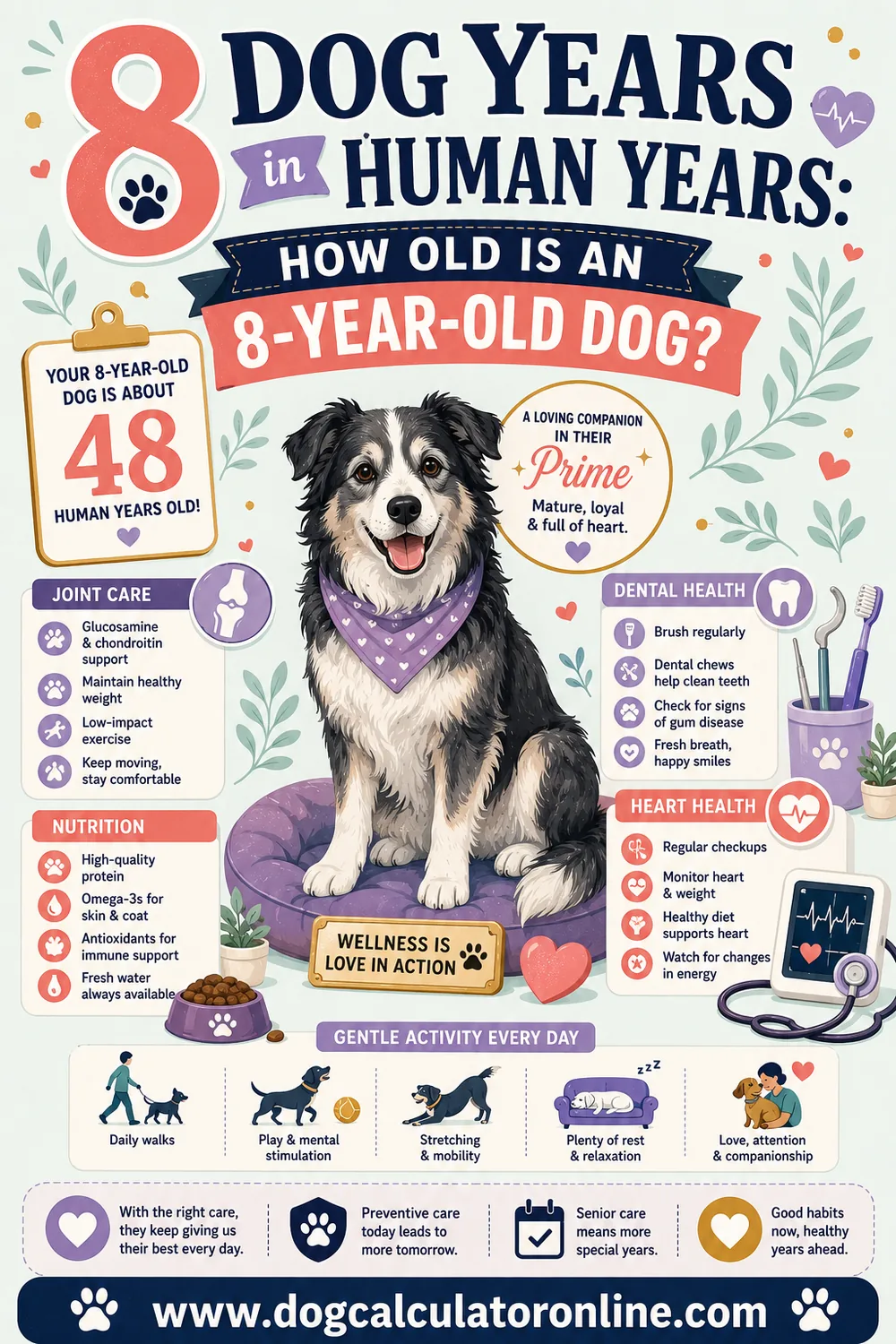
An 8-year-old dog is about 48 to 66 in human years, depending on size: roughly 48 for a small dog, 54 for a medium, 60 for a large, and 66 for a giant breed. The spread is now wide enough that "how old is my 8-year-old dog?" has four genuinely different answers — from prime middle age to full retirement age.
For your dog's exact figure, the free dog age calculator does the size-adjusted math plus the 2019 DNA-study formula in seconds. Here's what the numbers mean and what an 8-year-old dog actually needs.
🐾 Quick check: how old is an 8-year-old dog?
Tap your dog’s size class to see the human-year equivalent at age 8:
Tap a size above to see the answer.
The Short Answer: 8 Dog Years ≈ 48–66 Human Years
The size-adjusted method endorsed by veterinary organizations counts a dog's first year as about 15 human years, the second as 9 more, and each year after that as 4–7 depending on adult weight. For an 8-year-old, that's 24 plus six size-adjusted years:
| Size class | Adult weight | Math | 8 dog years in human years |
|---|---|---|---|
| Small | Under 20 lb | 24 + (6 × 4) | ≈ 48 |
| Medium | 21–50 lb | 24 + (6 × 5) | ≈ 54 |
| Large | 51–90 lb | 24 + (6 × 6) | ≈ 60 |
| Giant | Over 90 lb | 24 + (6 × 7) | ≈ 66 |
The old 7:1 rule says every 8-year-old dog is 56. That overstates a small dog's age by 8 years and understates a giant's by 10. At this stage of life, those errors change real decisions — a 48-year-old and a 66-year-old don't need the same checkup schedule, in dogs or in people.
Where an 8-Year-Old Dog Sits in Life
Eight is the age where the size classes have fully fanned out into different life stages:
- Small breeds (≈48): Late middle age. Against a 14–16 year lifespan, an 8-year-old Yorkie or Shih Tzu is barely past halfway. Expect plenty of energy, with the first subtle slowing.
- Medium breeds (≈54): Early senior territory approaches. Many vets begin senior screening between 7 and 9 for this group.
- Large breeds (≈60): Seniors. An 8-year-old Lab or German Shepherd is retirement age — often still enthusiastic, but with a body that benefits from senior-level care.
- Giant breeds (≈66): Elderly. Great Danes and Mastiffs at 8 have outlived some of their peers; these are precious bonus years that deserve gentle handling and close vet attention.
The same birthday cake, four different parties. It's the clearest illustration of why any dog-age conversion has to start with "how big is your dog?" — which is exactly what the free dog age calculator asks.
The DNA Study's Answer: About 64
The 2019 UC San Diego study measured DNA methylation — age-related chemical marks on DNA — in about a hundred Labrador Retrievers and mapped them against human patterns. The resulting formula:
Human age = 16 × ln(dog age) + 31
For age 8: 16 × ln(8) + 31 ≈ 64 human years.
Here's the interesting part: at age 8, the DNA formula (64) and the size-adjusted guideline for large dogs (60) and giants (66) are nearly on top of each other. That's not an accident — the formula was built on Labradors, a large breed, and by mid-to-late life the fast-early/flat-late epigenetic curve intersects the guideline's steady climb.
For small dogs, the DNA number runs well ahead of the guideline's 48. Take it as a reminder that the formula wasn't built for Pomeranians: the researchers noted breed differences remain to be mapped. Practical care decisions should follow the size-adjusted number and your vet's read on your actual dog.
What to Watch For at This Age
An 8-year-old dog — whatever its size — is old enough that changes are worth noticing rather than dismissing. Common age-related shifts include:
- Slower rising, stiffer mornings. Joint wear is the most common complaint of aging dogs. If stiffness lasts past warm-up or your dog avoids stairs and jumps, tell your vet — comfort at this age is very manageable when addressed early.
- Cloudy-looking eyes. A gray-blue haze (lenticular sclerosis) is a normal aging change that barely affects vision. But because it looks similar to cataracts, let your vet make the call.
- Weight drift in either direction. Gaining is common as activity dips; losing without trying is never "just age" and warrants a vet visit.
- Softer hearing. Sleeping through the doorbell, startling when touched — gradual hearing loss often starts in the senior years.
- Lumps and bumps. Many are harmless fatty lipomas, common in middle-aged and older dogs, but every new lump deserves a vet check. No exceptions.
A useful habit: jot down monthly notes on appetite, water intake, energy, and mobility. Trends are far easier to act on than vague impressions — and vets love owners who bring data.
Making the Senior Years Great
Whether your 8-year-old is a middle-aged terrier or an elderly Dane, the playbook is similar — scaled to your dog and confirmed with your vet:
- Twice-yearly vet exams for large and giant breeds (and increasingly recommended for mediums at this age). Six months is a long time in accelerated dog-years.
- Senior bloodwork. Routine labs catch kidney, liver, and thyroid changes long before symptoms show. Early beats obvious, every time.
- Keep weight lean. It bears repeating because it works: lean body condition is the best-documented owner-controlled factor in dog longevity and joint comfort.
- Exercise consistently, not heroically. Two moderate walks daily beat a weekend mountain hike. Muscle preserves mobility; overexertion at 8 costs more than it did at 4.
- Feed the brain. Sniff walks, food puzzles, and short training refreshers help keep older minds engaged — mental exercise matters as much now as physical.
- Upgrade comfort cheaply. A supportive bed, traction mats on slippery floors, maybe a ramp to the car. Small changes, big daily-life difference.
The Math Behind the Numbers (And Partial Ages)
If you like seeing the gears turn, here's the full calculation for age 8, plus how to handle the months in between birthdays:
- First two years: 15 + 9 = 24 human years (same for all sizes)
- Years 3 through 8: six additional years × your dog's size rate
- Small: 6 × 4 = 24 → 48 total
- Medium: 6 × 5 = 30 → 54 total
- Large: 6 × 6 = 36 → 60 total
- Giant: 6 × 7 = 42 → 66 total
For in-between ages, pro-rate the final year. An 8-and-a-half-year-old Labrador (large): 60 + (0.5 × 6) = 63 human years. A medium dog at 8 years 3 months: 54 + (0.25 × 5) ≈ 55. The free dog age calculator does this fraction handling automatically when you enter years and months.
And a note on classification: use your dog's healthy adult weight to pick the size class. An overweight 52-lb Beagle is still a medium-class ager — the aging rate tracks frame size, not the current number on the scale.
Eight Is the Sweet Spot for Building Senior Habits
There's a practical reason this birthday matters more than most: 8 is typically the last age where every size class is still fully mobile, mentally sharp, and adaptable — which makes it the ideal moment to install the routines the senior years will run on.
- Teach ramp and stairs alternatives now, while they're optional. A dog who learns the car ramp at 8 uses it happily at 11; a dog introduced to it mid-arthritis often refuses.
- Normalize handling and inspection. Weekly 60-second nose-to-tail checks (teeth, lumps, paws, weight feel) are easy to start at 8 and priceless at 12.
- Lock in the walk schedule. Consistent moderate exercise is easier to maintain than to restart. The muscle your dog banks this year is the mobility reserve they'll spend later.
- Get the baseline numbers. Weight, bloodwork, dental status. Every future vet conversation is sharper when "normal for this dog" is on file.
Think of it as retirement planning, dog edition: the contributions made at 48-to-66 human years determine how comfortable 70-to-90 turns out to be.
Related Guides
If this helped, these go deeper on the same question:
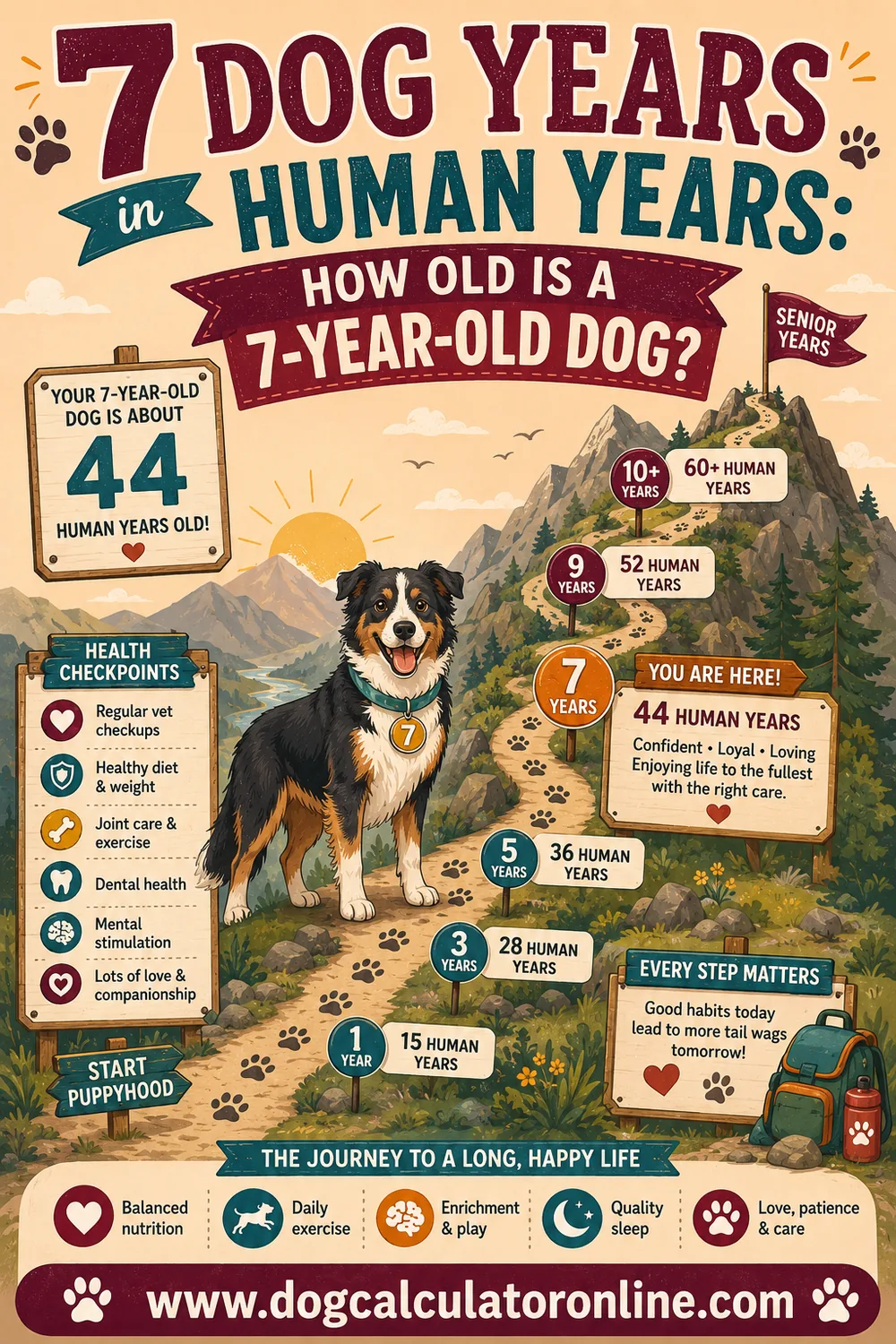
- 7 Dog Years in Human Years: How Old Is a 7-Year-Old Dog?
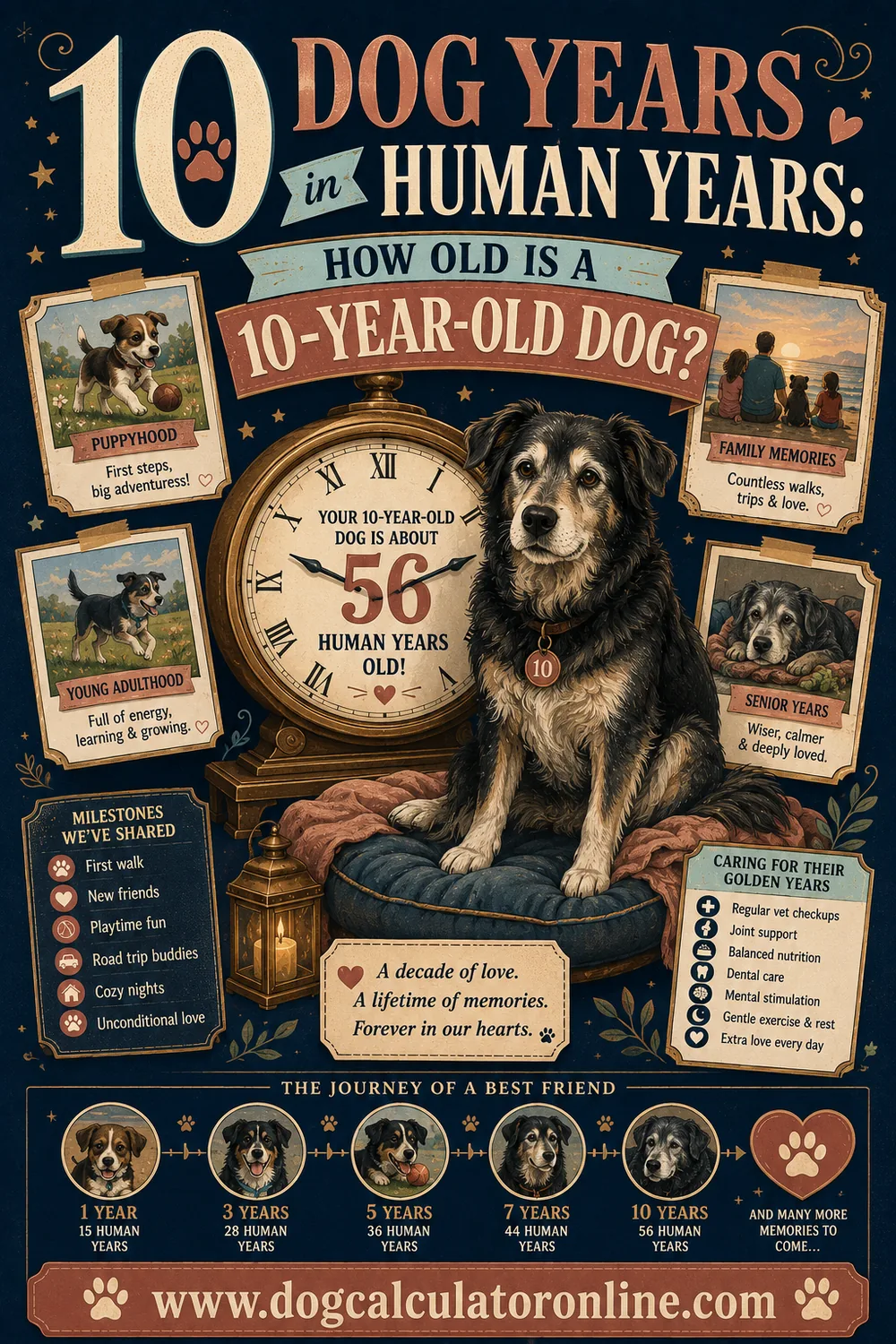
- 10 Dog Years in Human Years: How Old Is a 10-Year-Old Dog?
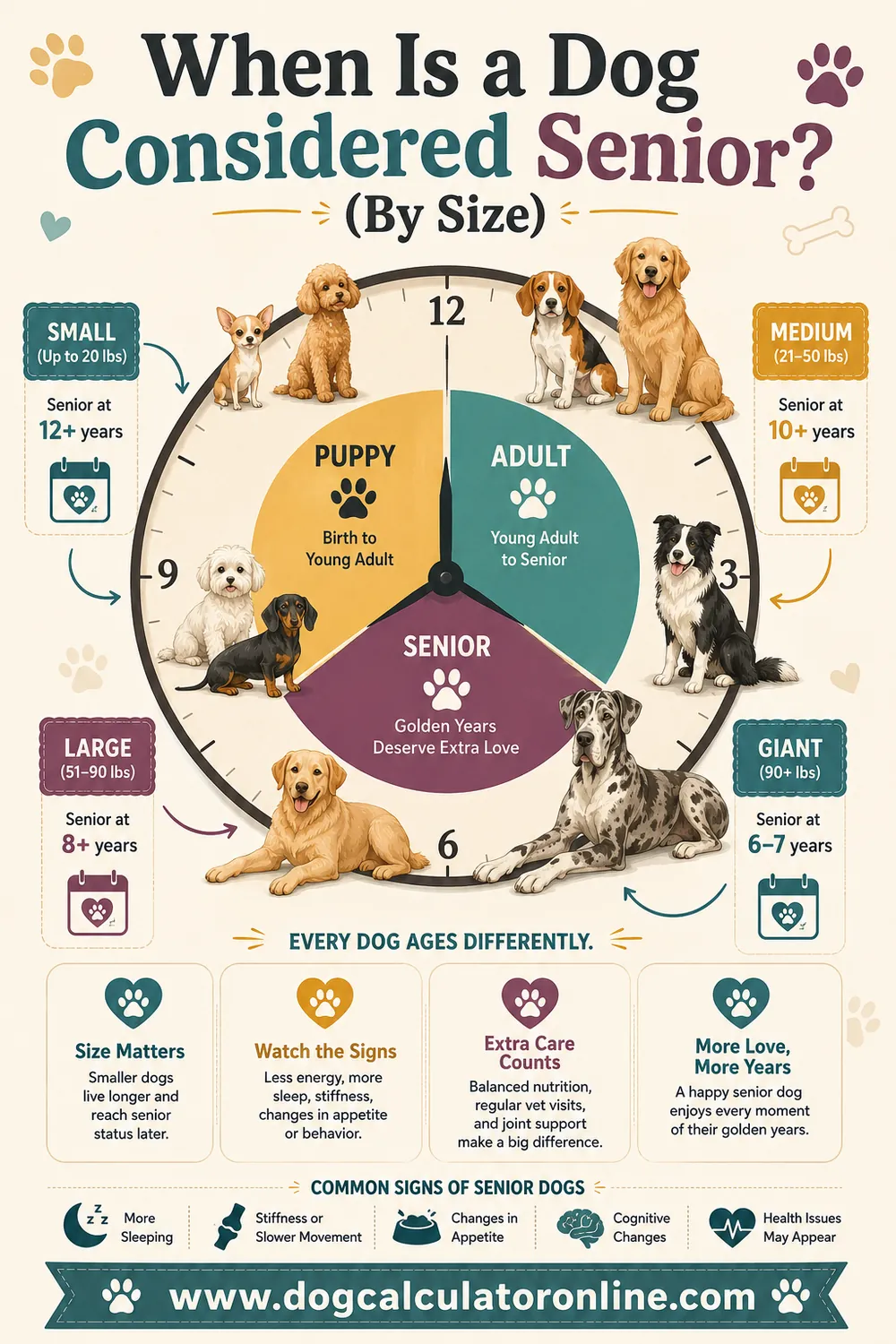
- When Is a Dog Considered Senior? (By Size)
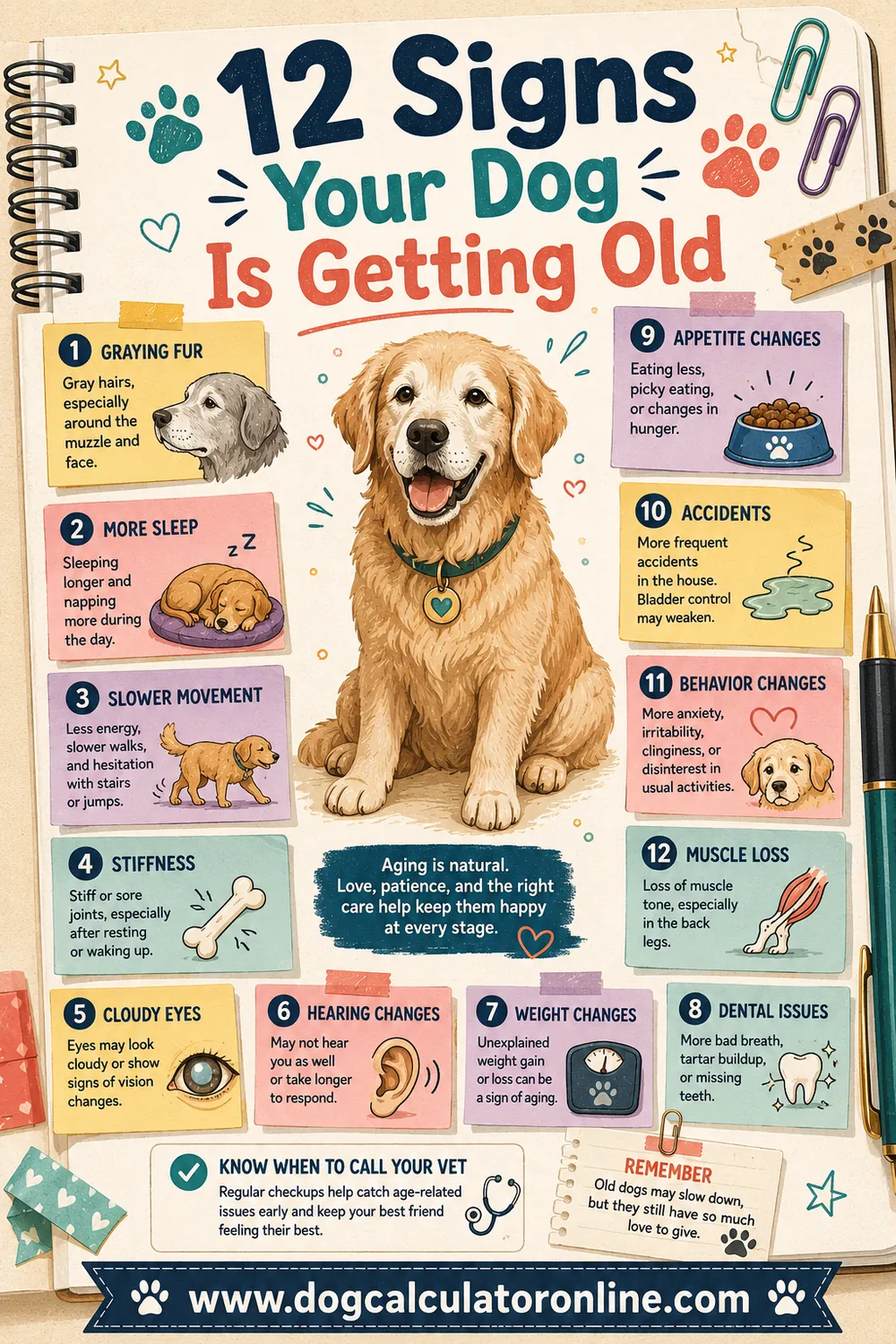
- 12 Signs Your Dog Is Getting Old
And if you just want your own dog's number, the free dog age calculator does it in one tap.
FAQ
How old is an 8-year-old dog in human years?
About 48–66 depending on size: 48 for small dogs, 54 for medium, 60 for large, and 66 for giant breeds, using the vet-backed size-adjusted method.
Is an 8-year-old dog a senior?
Large and giant breeds, yes — clearly. Medium breeds are on the threshold. Small breeds at 8 are late-middle-aged and usually reach senior status around 9–10.
Is an 8-year-old dog 56 in human years?
That's the old 7:1 myth. The real answer runs from 48 (small) to 66 (giant) — the flat multiplier misses by up to 10 years at this age.
What does the DNA study say for age 8?
About 64 human years, from the 2019 UCSD formula (16 × ln(age) + 31). For large breeds it closely matches the size-adjusted guideline; for small breeds it overshoots life stage.
How much longer will my 8-year-old dog live?
Typical lifespans suggest small breeds may have 6–8 more years, mediums 3–6, large 1–4, giants 0–2 — but weight, genetics, and healthcare shift these ranges substantially. Your vet can give a read on your individual dog.
Should my 8-year-old switch to senior food?
Maybe — there's no universal age. Senior formulas adjust calories and sometimes joint support, but the right choice depends on your dog's weight, kidneys, and condition. Ask your vet at the next exam.
Is 8 too old to adopt a dog?
Not at all — especially a small or medium breed, where 8 can mean 4–8 good years ahead. Senior adoptees arrive calm, housetrained, and fully themselves; what you see is what you get, minus the puppy demolition phase.
How much exercise does an 8-year-old dog need?
Most still need 30–60 minutes daily, split into gentler sessions. Consistency beats intensity: two moderate walks a day preserve muscle and joints better than weekend adventure binges. Adjust for your dog's size and your vet's advice.
The Bottom Line
Eight dog years equal about 48–66 human years — a range so wide that size, not the calendar, defines this stage. Small dogs are cruising through middle age; giants have earned their gray muzzles and gentler schedules. Either way, age 8 rewards attentive owners: twice-yearly checkups for the big dogs, lean portions, steady exercise, and a note-taking habit.
Get your dog's exact size-adjusted human age — plus the DNA-study figure — free at the dog age calculator.