5 Dog Years in Human Years: How Old Is a 5-Year-Old Dog?
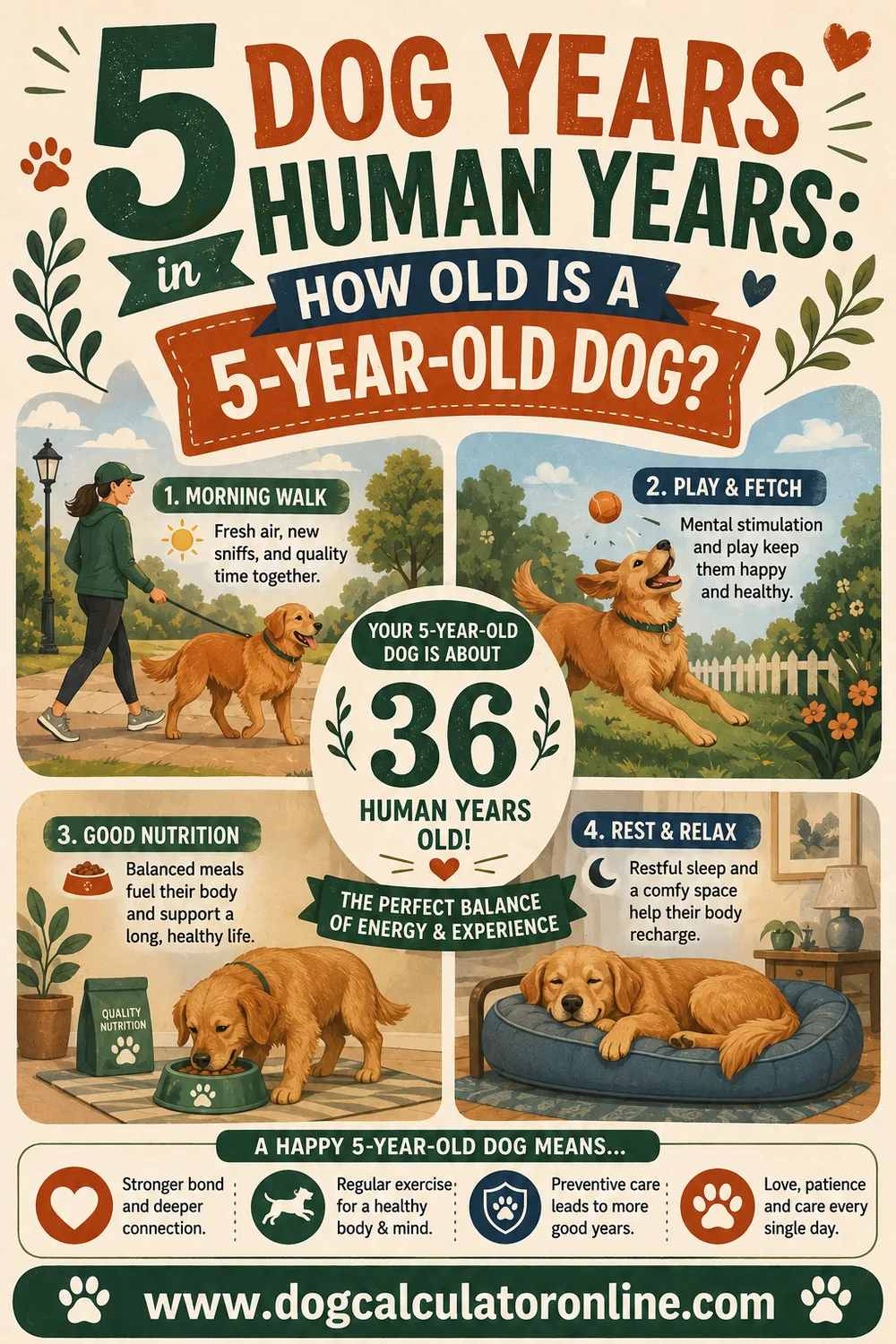
A 5-year-old dog is about 36 to 45 in human years, depending on size: roughly 36 for a small dog, 39 for a medium, 42 for a large, and 45 for a giant breed. In other words, your dog has hit true midlife — late thirties to mid-forties — and size now matters a lot.
To get the exact figure for your dog's age and weight, try the free dog age calculator — it runs the vet-backed math plus the 2019 DNA-study formula instantly. Below: how the numbers work, and why age 5 is a genuinely important birthday.
🐾 Quick check: how old is a 5-year-old dog?
Tap your dog’s size class to see the human-year equivalent at age 5:
Tap a size above to see the answer.
The Short Answer: 5 Dog Years ≈ 36–45 Human Years
The size-adjusted guideline veterinary organizations use runs like this: about 15 human years for year one, 9 more for year two, then 4–7 per year based on adult weight. For a 5-year-old, that's 24 plus three size-adjusted years:
| Size class | Adult weight | Math | 5 dog years in human years |
|---|---|---|---|
| Small | Under 20 lb | 24 + (3 × 4) | ≈ 36 |
| Medium | 21–50 lb | 24 + (3 × 5) | ≈ 39 |
| Large | 51–90 lb | 24 + (3 × 6) | ≈ 42 |
| Giant | Over 90 lb | 24 + (3 × 7) | ≈ 45 |
The old "multiply by 7" myth says a 5-year-old dog is 35. That's not far off for a small breed — but it's a full decade short for a Great Dane. The myth's single multiplier can't handle the fact that a Chihuahua and a Mastiff age at genuinely different speeds.
What Midlife Looks Like in a Dog
Human 36-to-45 is an apt comparison for a 5-year-old dog, and not just numerically:
- Still fit, slightly less bouncy. A healthy 5-year-old can hike, fetch, and play hard — but many owners notice a touch more sleep, a slower warm-up on cold mornings, and less interest in 6 a.m. zoomies.
- Metabolism keeps easing down. The portions that maintained perfect weight at 3 may quietly add pounds by 6. Midlife weight creep is as real in dogs as in people.
- Personality is fully set. By 5, you know exactly who your dog is — quirks, preferences, opinions about the vacuum cleaner.
- First gray hairs. Some dogs start showing white around the muzzle by 5–6, especially dark-coated breeds. It's cosmetic, not a health signal.
For small breeds, 5 is barely past the prime. For giant breeds, it's something else: at ≈45 human years and with typical lifespans of 8–10 years, a 5-year-old Great Dane or Mastiff is entering the later half of life, and some vets begin senior-style monitoring around now.
The DNA-Study Number: About 57
The 2019 study from UC San Diego approached dog aging through DNA methylation — chemical marks that accumulate on DNA at predictable rates in both species. From roughly a hundred Labrador Retrievers, the researchers derived:
Human age = 16 × ln(dog age) + 31
For age 5: 16 × ln(5) + 31 ≈ 57 human years.
Why so much higher than the guideline's 36–45? Because the epigenetic clock runs fastest early in a dog's life and then flattens. By the formula, a dog "spends" its molecular thirties and forties before age 5, then ages only a few human-equivalent years per decade of dog life afterward.
| Method | 5-year-old dog | Best for |
|---|---|---|
| Size-adjusted guideline | 36–45 | Life stage, care decisions |
| UCSD epigenetic formula | ≈ 57 | Molecular-aging curiosity |
| 7:1 myth | 35 | Nothing — retire it |
Two caveats the researchers themselves flagged: the formula is Labrador-based (other breeds may differ), and molecular age is a population pattern, not a health verdict for your individual dog. For practical purposes, use the size-adjusted number; enjoy the DNA one as trivia. The free dog age calculator shows both.
Small vs Giant: Why the Gap Widens Every Year
At age 2, all dogs sit at about 24 human years. By age 5, the spread is 9 years. By age 10 it will be 24. Here's the trajectory:
| Dog's age | Small | Medium | Large | Giant |
|---|---|---|---|---|
| 2 | 24 | 24 | 24 | 24 |
| 5 | 36 | 39 | 42 | 45 |
| 7 | 44 | 49 | 54 | 59 |
| 10 | 56 | 64 | 72 | 80 |
Inside the dog species, bigger means faster aging — the reverse of the pattern across the animal kingdom. The leading explanations: giant breeds grow at extraordinary speed (a 100-fold weight increase in a year for some), and rapid growth appears to carry long-term costs; larger dogs also tend to run higher levels of the growth factor IGF-1, which correlates with shorter lifespans across many species.
The practical consequence at age 5: a Yorkie owner is thinking "young adult," while a Newfoundland owner should be thinking "approaching senior." Same birthday, different plans.
Age 5 Care: Small Changes, Big Payoff
Midlife is where prevention earns the most. Worth doing — and worth discussing with your vet:
- Reassess portions honestly. Weight gained between 5 and 8 is the silent kind. Body-condition check: you should feel ribs easily under light pressure and see a waist from above. The classic Labrador lifespan study made this concrete — lean-fed dogs lived significantly longer than overweight littermates.
- Keep dental care going (or start). By midlife, untreated plaque has had years to do damage. Brushing plus a professional cleaning when your vet recommends one protects more than teeth — chronic oral infection is hard on the whole body.
- Consider midlife bloodwork. Many vets suggest baseline labs around 5–7. Values that are normal-for-your-dog now make subtle changes at 8 or 9 much easier to catch.
- Adjust exercise style, not amount. Five-year-olds still need daily activity. If your dog is slower to recover after intense weekend exercise, spread the effort across the week instead.
- For large and giant breeds: ask about senior timing. Vets often shift big dogs to twice-yearly exams and senior screening around 5–6. Earlier monitoring fits their faster clock.
Midlife Changes Owners Often Misread
A handful of age-5 shifts get misinterpreted in both directions — worried owners seeing illness in normal aging, and relaxed owners seeing "just age" in things worth a vet call:
- "She's gotten lazy." A midlife dog choosing to nap through the afternoon is normal. A dog who can't finish a normal walk, pants heavily at rest, or stops greeting you at the door is not — those are check-it-out changes.
- "He's just slowing down." Reluctance on stairs or stiffness after rest at age 5 is early enough that vets can often do a lot about it. Don't gift-wrap possible joint pain as maturity.
- "She's gotten picky about food." Appetite changes at midlife are worth attention. Dental discomfort is a common quiet cause — and very fixable.
- "He's calmer with other dogs now." Usually true and fine. Genuine new irritability or snapping, though, can be a pain signal rather than a personality shift.
The rule of thumb: gradual, mild, and consistent with energy conservation — probably normal midlife. Sudden, limiting, or out of character — vet visit. At the human-equivalent of 36–45, your dog is exactly the age where humans start getting things checked out too.
The Second Half Starts Now: A 5-Year Planning Snapshot
Five is a natural moment to look at the road ahead, because what's coming differs sharply by size:
| Your dog | Human age now | Senior threshold arrives | Typical lifespan |
|---|---|---|---|
| Small (under 20 lb) | ≈ 36 | Around age 9–10 | 14–16 years |
| Medium (21–50 lb) | ≈ 39 | Around age 8–9 | 10–14 years |
| Large (51–90 lb) | ≈ 42 | Around age 6–7 | 8–12 years |
| Giant (over 90 lb) | ≈ 45 | Around age 5–6 | 8–10 years |
For a small dog, age 5 means the senior years are still half a lifetime away. For a giant, they start roughly now. Planning isn't morbid — it's practical: it tells you when to budget for twice-yearly vet visits, when to start baseline labs, and how many prime hiking summers are realistically left to enjoy hard. Run your own dog's numbers on the free dog age calculator and see the whole trajectory at once.
Related Guides
If this helped, these go deeper on the same question:
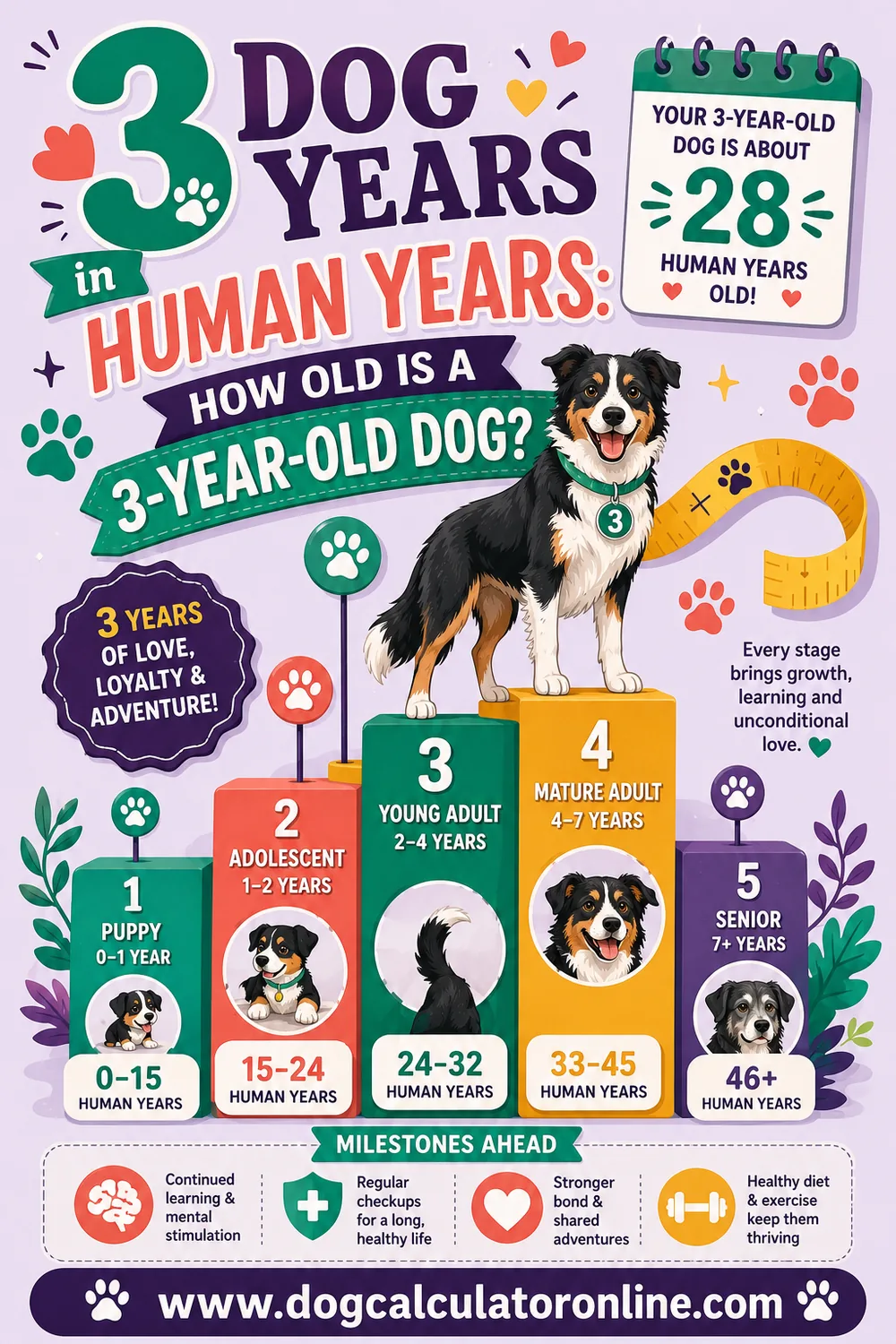
- 3 Dog Years in Human Years: How Old Is a 3-Year-Old Dog?
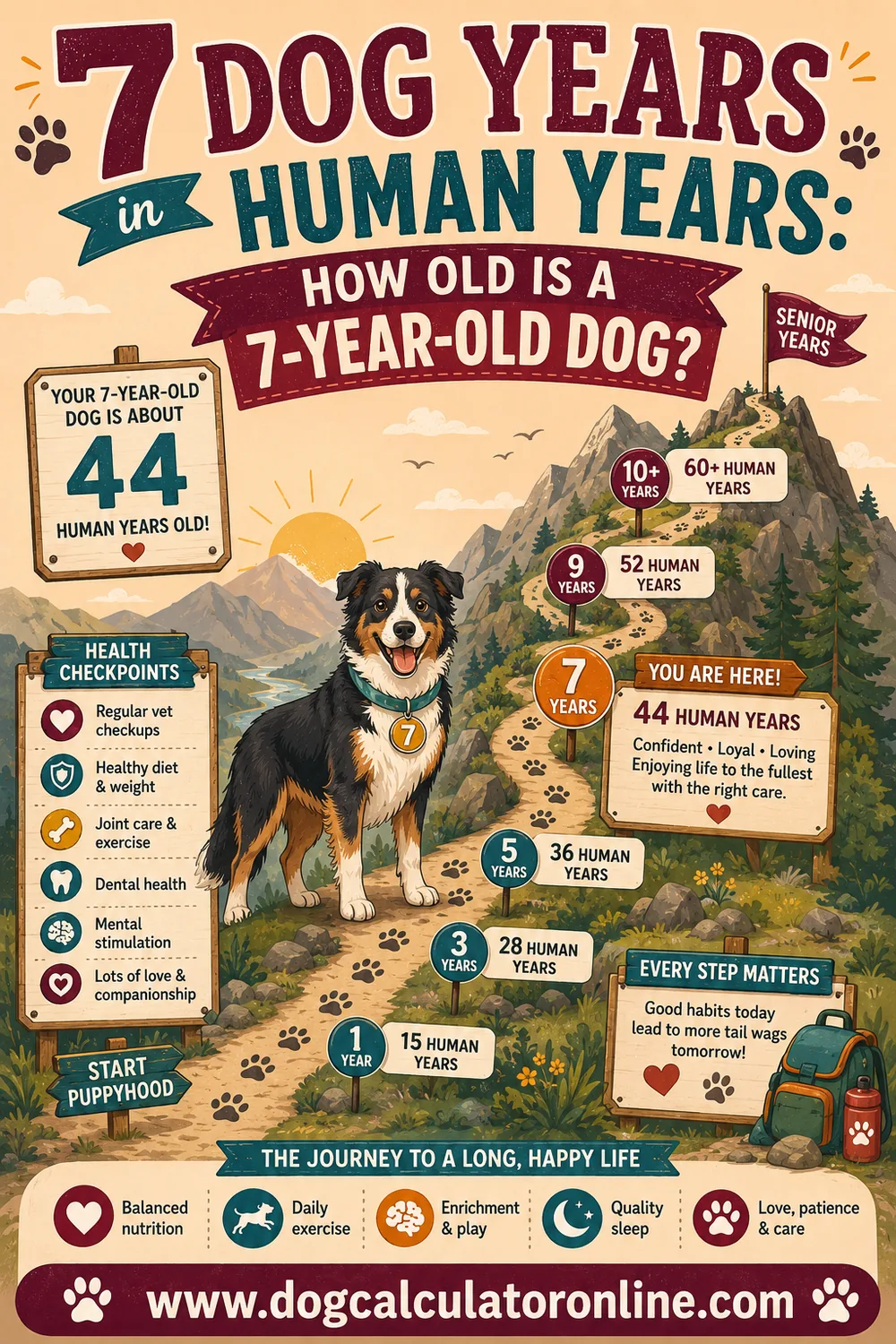
- 7 Dog Years in Human Years: How Old Is a 7-Year-Old Dog?
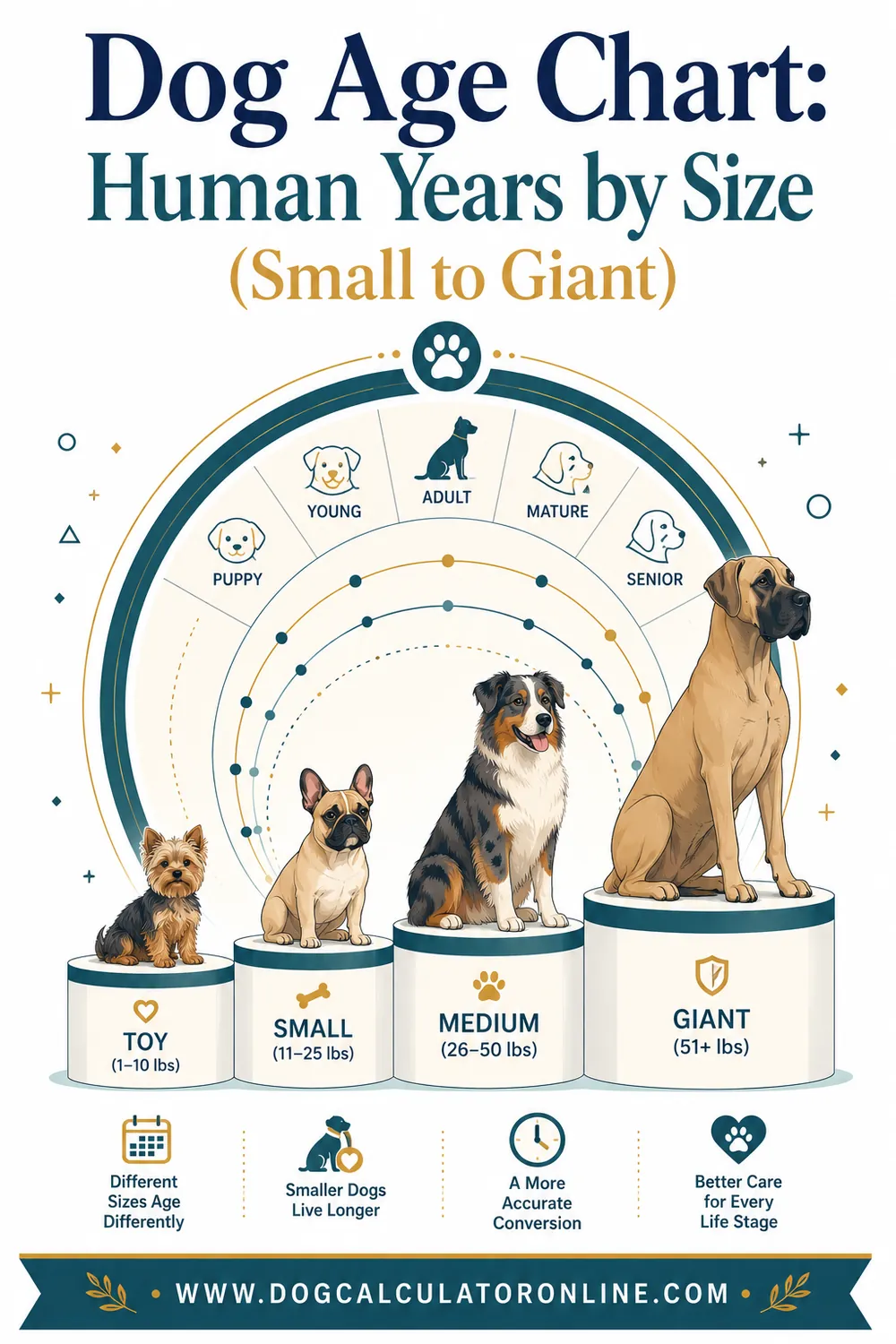
- Dog Age Chart: Human Years by Size (Small to Giant)
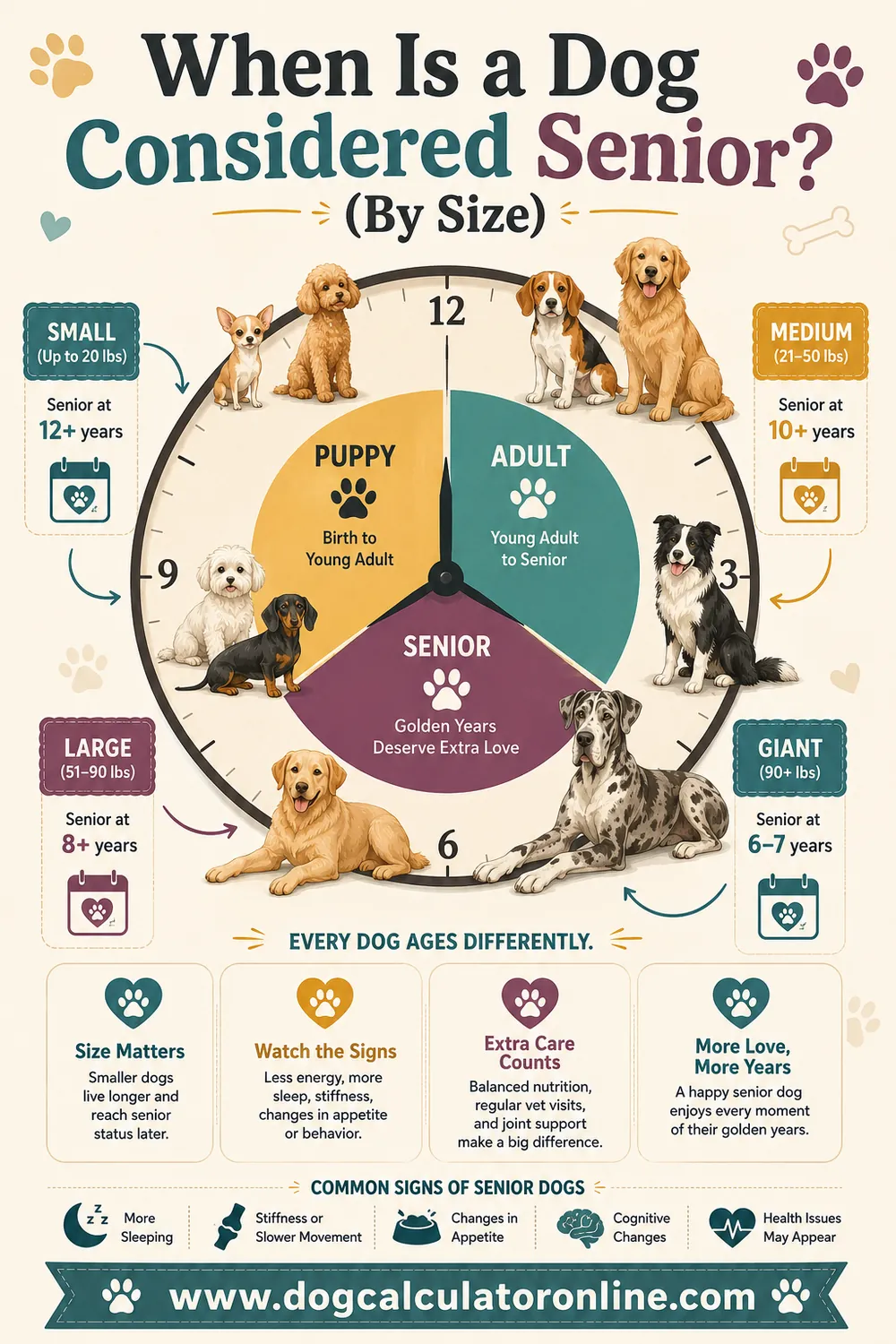
- When Is a Dog Considered Senior? (By Size)
And if you just want your own dog's number, the free dog age calculator does it in one tap.
FAQ
How old is a 5-year-old dog in human years?
About 36–45 depending on size: 36 for small dogs, 39 for medium, 42 for large, and 45 for giant breeds, using the vet-backed size-adjusted method.
Is a 5-year-old dog 35 in human years?
Only by the outdated 7:1 rule, and only coincidentally close for small breeds. The size-adjusted method gives 36 (small) up to 45 (giant).
Is 5 considered old for a dog?
Not for most dogs. Small and medium breeds at 5 are solid mid-adults. For giant breeds with 8–10 year lifespans, though, 5 marks the beginning of the senior approach, and many vets step up monitoring.
What does the DNA study say a 5-year-old dog is?
About 57 human years, by the 2019 UCSD formula (16 × ln(age) + 31). That reflects fast early molecular aging — for everyday life-stage decisions, 36–45 is the more useful range.
Is my dog middle-aged at 5?
Broadly yes. Against typical lifespans — small breeds 14–16 years, medium 10–14, large 8–12, giant 8–10 — age 5 sits near the middle for most dogs and past it for giants.
How do I get the exact number for my dog?
Enter age and weight into the free dog age calculator — it applies the correct size multiplier and shows the DNA-study figure too.
Should a 5-year-old dog eat senior food?
Usually not yet — senior formulas are typically discussed around 7 for small and medium dogs, and around 5–6 for large and giant breeds. What matters more at 5 is portion control on a good adult food. Ask your vet before switching anything.
The Bottom Line
Five dog years equal roughly 36–45 human years: late thirties for the little ones, mid-forties for the giants. Your dog is officially midlife — still strong, still playful, and at exactly the age where lean weight, dental care, and a good vet relationship pay their biggest dividends.
For your dog's precise human age today (and at every birthday to come), the free dog age calculator has the size-adjusted answer in two seconds.