Puppy-Proofing Your Home Checklist
The hazards that actually send puppies to emergency vets are boring: socks, corn cobs, cooked bones, batteries, ibuprofen and bin raids — not the dramatic ones people picture. Foreign-body surgery for a swallowed sock or toy costs $2,000 to $5,000 in the US and is one of the commonest puppy emergencies there is. Puppy-proofing is therefore less about buying gadgets and more about deciding which rooms a puppy is allowed in and what is at nose height in them. A young puppy explores entirely with its mouth, and it will find the one thing you missed. Work out your containment first with the crate size calculator, then work through the list below.
🐾 Puppy-proofing priority check
Tap a room:
Tap a room above. Do the kitchen and the bins first — that is where most emergencies start.
What Puppy-Proofing Is Actually For
Two goals, and they are different from each other.
Goal one: stop the puppy dying. A short list of things genuinely kill puppies — antifreeze, button batteries, human painkillers, xylitol, corn cobs, blind cords. These have to be genuinely inaccessible, not just tidied.
Goal two: stop the puppy learning bad habits. A puppy that raids a bin once will check that bin for the rest of its life. A puppy that chews a skirting board and is not interrupted will keep chewing it. Prevention here is training, not just safety.
Restrict space rather than removing every object. Trying to make an entire house safe is hopeless. Making two rooms safe and gating the rest is achievable in an afternoon and works better.
Get down to nose height. Kneel in each room and look along the floor. You will see cables, plug sockets, shoe laces, plant pots and the gap behind the sofa that you cannot see standing up.
Assume the puppy can reach 30% higher than you think, and much more once it starts jumping at four to five months. Coffee tables and low shelves are in range from about twelve weeks.
The Room-by-Room Checklist
| Room | Remove or secure | Add |
|---|---|---|
| Kitchen | Bin, cooked bones, corn cobs, chocolate, xylitol gum, cleaning products | Lockable bin, cabinet catches, gate |
| Living room | Cables, chargers, remote controls, coins, batteries, houseplants | Cable covers, cord tidies, pen or crate |
| Bathroom | All medication, razors, toilet cleaner tablets, bin | Cabinet lock, door kept shut |
| Bedroom | Socks, underwear, hair ties, jewelry, shoes | Closed closet, laundry basket with a lid |
| Hallway | Shoes, post through the letterbox, keys | Gate, letterbox cage |
| Stairs | Free access | Solid gate top and bottom |
| Garden | Slug pellets, antifreeze, sago palm, bulbs, tools, gaps in fencing | Fence check at nose height, shaded spot |
| Garage | Antifreeze, rodent bait, paint, screws, oil | Door kept closed at all times |
Hair ties, dental floss and string are underrated. Linear foreign bodies — anything long and thin — do more internal damage than a solid object, because the gut bunches up along them. They are a surgical emergency.
Cooked bones splinter; raw ones do not in the same way, though they carry their own risks. Never give a puppy a cooked bone from a plate, and empty the bin the same evening you roast anything.
Corn cobs are the classic summer emergency. They do not break down, they lodge perfectly in a puppy's small intestine, and they are the reason barbecues are a bad week for vets.
Toxic Foods, Plants and Chemicals
Know the short list properly rather than half-remembering a long one.
Xylitol, also sold as birch sugar, is the most dangerous common household substance for dogs. It is in sugar-free gum, mints, peanut butter, protein bars and some medicines. A very small amount causes a collapse in blood sugar within 30 minutes, and liver failure at higher doses. Treat any suspected ingestion as an immediate emergency.
Chocolate risk scales with darkness. Baking chocolate and cocoa powder are many times worse than milk chocolate. Keep advent calendars, Easter eggs and cooking cabinets out of reach year-round.
Grapes, raisins, golden raisins and currants cause kidney failure in some dogs and not others, and nobody has established a safe dose. Treat any amount as a vet call.
Onions, garlic, leeks and chives damage red blood cells, cooked or raw, including inside gravy and stock.
Common toxic plants: sago palm (the seeds are lethal even in tiny amounts), lilies, azalea, oleander, foxglove, daffodil and tulip bulbs, and yew. Bulbs in autumn are a specific risk because puppies dig them up.
Chemicals that kill: ethylene glycol antifreeze — sweet-tasting, and a few teaspoons can be fatal for a small puppy — plus rodent bait, slug pellets and concentrated cleaners.
Human medicines: ibuprofen, acetaminophen, antidepressants and ADHD medication are all serious. A dropped tablet is the usual route. The wider food list is in foods dogs should never eat.
Save your vet's number and an out-of-hours number in your phone before the puppy arrives, and take the packaging with you if something is eaten.
Cords, Chargers and Choking Hazards
Electrical and swallowing risks share a cause: everything goes in the mouth.
Electrical cables cause mouth burns and, occasionally, fatal cardiac events or pulmonary edema. Run cables inside split-tube cable covers or behind furniture, and unplug phone chargers rather than leaving a live cable dangling.
Blind and curtain cords are a strangulation risk. Tie them up out of reach and cleat them properly, exactly as you would for a toddler.
Button batteries — from remote controls, scales, key fobs and children's toys — cause chemical burns through the esophagus within hours. This is an immediate emergency and never a wait-and-see.
The toilet-roll-tube test for toys: if it fits through the tube, a medium-sized puppy can swallow it. Discard toys once they are chewed small enough to pass.
Rawhide, squeakers and stuffing are the three parts of toys most often swallowed. Supervise, and remove anything that has started to come apart.
Children's toys are a bigger problem than dog toys, because they are small, plentiful and left on the floor. A gated playroom solves both directions of that problem.
Stairs, Floors and Furniture
The structural hazards are less obvious and matter for joints as well as accidents.
Gate the top and bottom of the stairs until at least twelve weeks, and longer for large breeds. Falls are common and puppies have no sense of edges.
Use solid gates, not accordion-style ones. The concertina type can trap heads and limbs.
Slippery floors matter more than people think. Laminate, tile and polished wood cause splayed legs and repeated small slips, and they are worth taking seriously in large-breed puppies whose hips are still forming. Lay runners and washable rugs along the routes the puppy uses most.
Discourage jumping off sofas and beds. Repeated landings on a hard floor are a genuine joint load for a growing puppy, and a ramp or a step is cheaper than an orthopedic consultation.
Recliner chairs and rocking chairs are a real crushing risk for small puppies. Check underneath before moving either.
Balconies and open windows need mesh. Puppies fit through railings that look far too narrow, and cats are not the only animals that fall.
Check the gaps behind and under furniture, which is where puppies get stuck and where lost hazards accumulate.
The Garden and Outdoor Spaces
Outside is where the containment problem lives.
Walk the fence line at puppy height looking for gaps, loose panels and spaces under gates. A eight-week-old fits through a gap of a few inches, and the gap you dismiss now is the one you will chase them through in week three.
Check the gate latch closes on its own, and tell anyone who uses it.
Ponds, pools and water butts need covers. Puppies fall in and cannot climb out of vertical sides.
Remove slug pellets and rodent bait entirely. Metaldehyde poisoning is fast and often fatal, and there is no version of a bait station that a determined puppy will not investigate.
Store tools, fuel, screws and paint behind a shut garage door rather than at the side of the house.
Compost heaps grow molds that cause tremors and seizures. Fence the heap or skip it while the puppy is young.
Provide shade and water in any area the puppy will use in summer, and keep them off pavement hotter than about 85°F (29°C).
Building the Safe Zone
The single most useful piece of puppy-proofing is a space you never have to worry about.
A pen or gated area with a bed, water, a couple of safe chews and a toilet area is where a puppy goes when you cannot watch it. That is different from a crate, which is for sleeping and short periods.
Size it properly. A crate should let the puppy stand, turn and lie stretched out — no larger, or it will sleep at one end and toilet at the other. The sizing rules are in what size crate for a puppy.
Introduce it as a good place, with food, before you ever shut the door. The method matters and is set out in how to crate train a puppy.
Position it in a used room, not a back utility space. Puppies settle better near people and become anxious when isolated.
A tether or a leash attached to your belt is an underrated tool for the first two weeks. A puppy that cannot leave your side cannot chew a skirting board or toilet behind a chair.
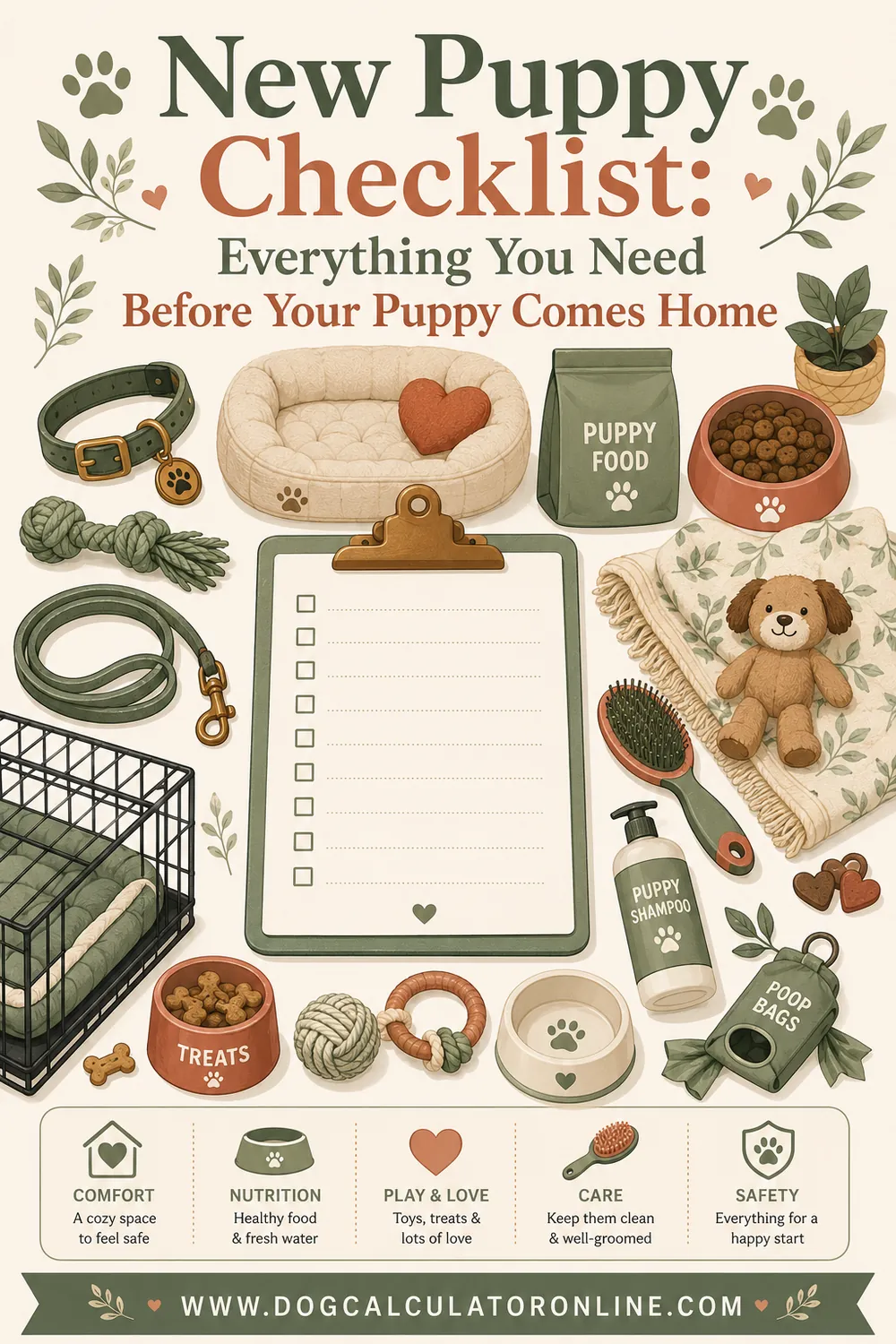
Everything else you need to buy before the puppy arrives is listed in new puppy checklist, and the week-one routine that runs alongside all this is in new puppy first week guide.
What to Re-check as the Puppy Grows
Puppy-proofing is not a one-off afternoon. Each stage opens up new hazards.
8 to 12 weeks: floor level only. Cables, small objects, bins, stairs.
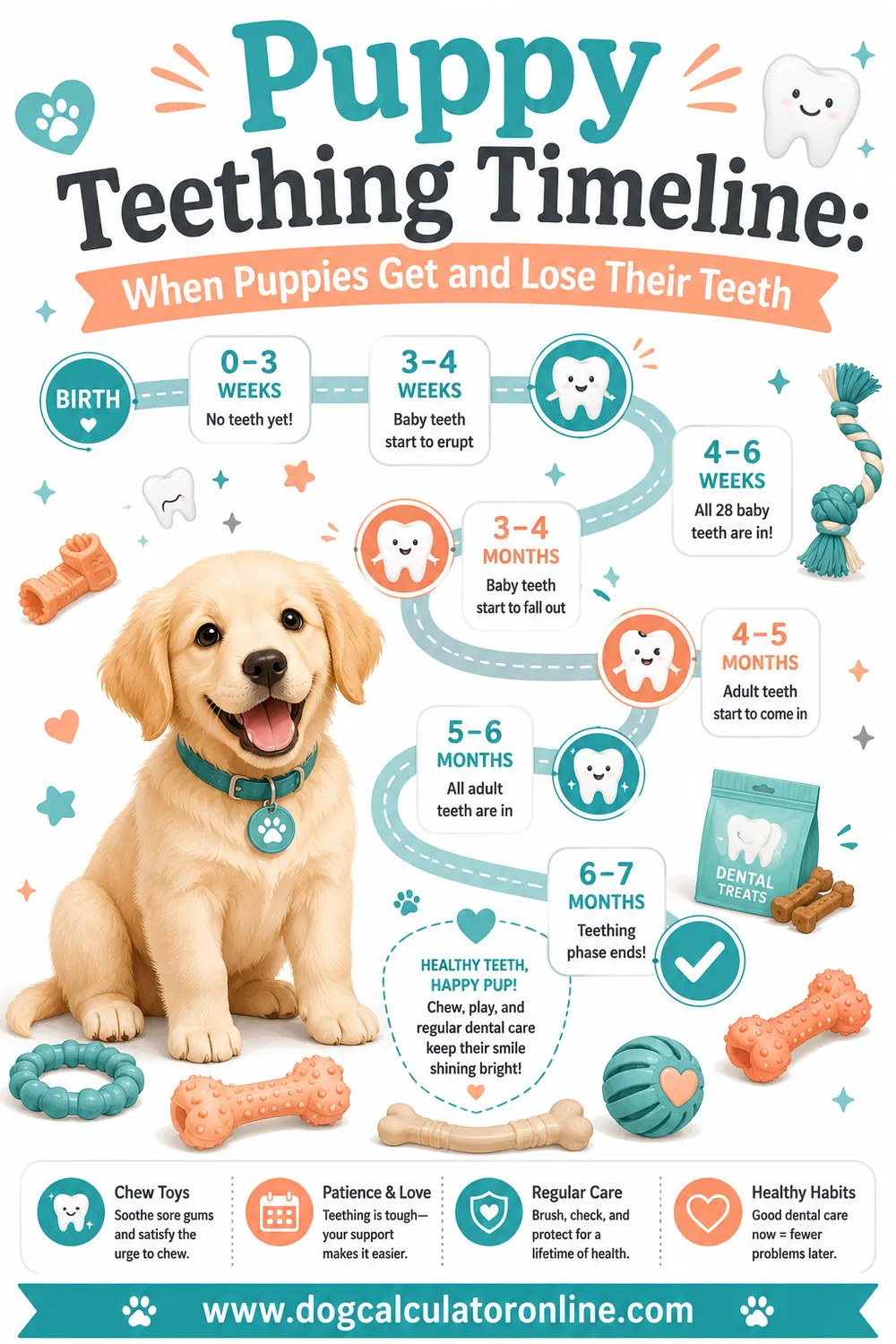
3 to 5 months: teething peaks. Chewing becomes destructive and indiscriminate — skirting boards, table legs, shoes. Increase safe chew options rather than only restricting; the timeline is in puppy teething timeline.
5 to 7 months: counter height is reached. Move food off worktops, secure the stovetop knobs, and expect the bin to be tested again.
7 to 12 months: jumping and climbing. Check fence heights, garden furniture used as a launch pad, and anything reachable from a sofa back.
Adolescence brings a second destructive phase around eight to twelve months that surprises owners who thought they were through it. Restrict space again for a few weeks rather than assuming the training failed.
Re-walk the fence line every spring, after storms, and after any garden work.
FAQ
What is the most dangerous thing in a house for a puppy?
By frequency of emergencies: swallowed fabric, especially socks. By severity: xylitol, antifreeze, button batteries and human painkillers. All four of those need genuinely locked storage rather than a high shelf, because puppies climb sooner than owners expect.
How much of the house should a puppy have access to?
One or two rooms for the first few weeks, gated. A puppy given the run of a whole house finds a quiet corner to toilet in and chews things you never see. Expand the space gradually as house training and chewing habits become reliable.
Do I need baby gates for a puppy?
Usually yes, at the stairs and at the boundary of the safe area. Choose solid gates rather than accordion-style, which can trap a head or a leg. Pressure-fit gates are fine except at the top of stairs, where a screw-fitted gate is safer.
Are slippery floors really a problem for puppies?
They are worth addressing, particularly for large breeds. Repeated slipping and splaying puts uneven load on hips that are still forming, and it also makes puppies nervous about moving. Runners and washable rugs along the main routes are an easy fix.
When can I stop puppy-proofing?
Most owners can relax gradually from about twelve months, and later for large breeds and habitual chewers. The toxic-substance rules never relax. Expect a second destructive phase during adolescence at eight to twelve months, and restrict space again if it appears.
What should I do if my puppy eats something toxic?
Phone your vet or an out-of-hours service immediately with the packaging in hand, and do not try to make the puppy vomit without being told to. Some substances cause more damage coming back up, and timing matters far more than distance to the clinic.
Making the House Safe Without Emptying It
Puppy-proofing works best when it is done as containment first and tidying second. Pick two rooms, gate the rest, and get on your knees in each of them to find what sits at nose height. Lock away xylitol, chocolate, painkillers, antifreeze and batteries properly, fit a bin the puppy cannot open, cover the cables and tie up the blind cords. Gate the stairs, put runners on slippery floors, and walk the fence line looking for gaps a small puppy could push through. Then re-check the whole lot at three months, five months and again during adolescence, because the reachable height keeps changing. Set the safe zone up first with the crate size calculator.