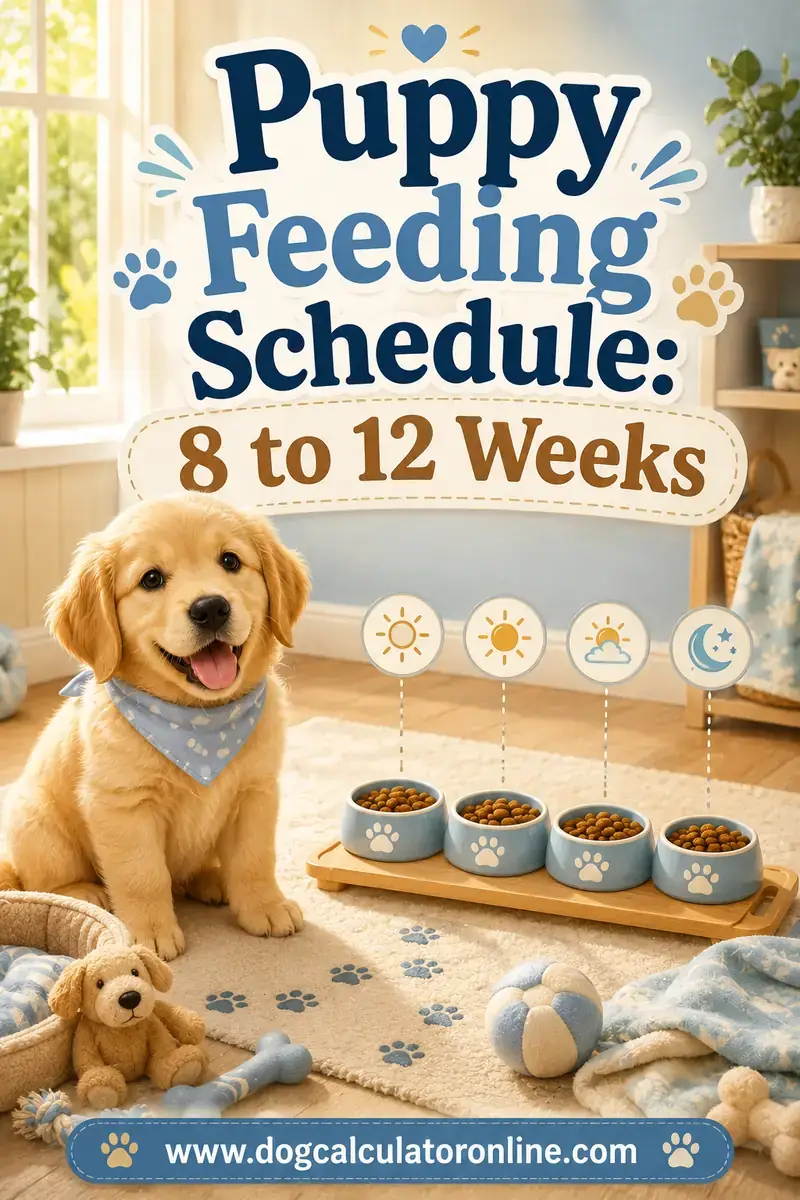
Puppy Feeding Schedule: 8 to 12 Weeks
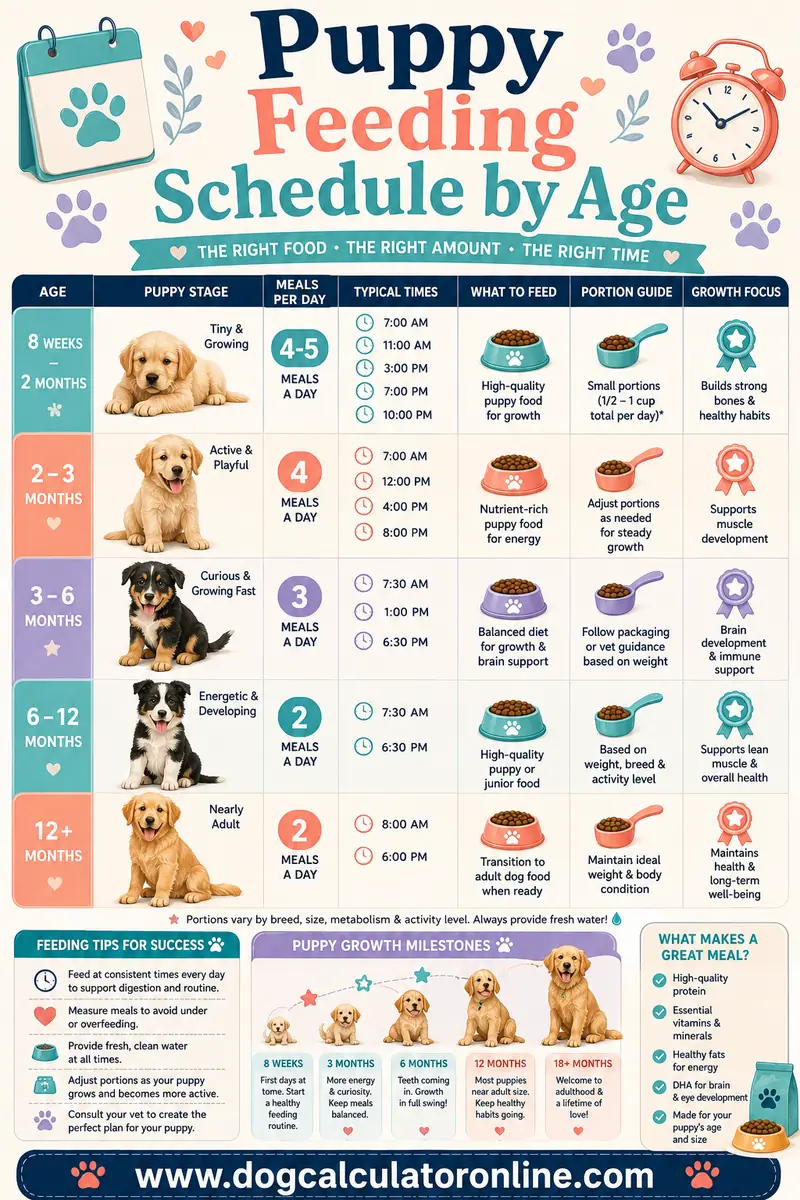
An 8-to-12-week-old puppy does best on four evenly spaced meals a day of a complete puppy food — for example 7 am, 11 am, 3 pm, and 7 pm — with the daily amount set by the food label's guidance for age and expected adult weight. At this age puppies have tiny stomachs, fast metabolisms, and (in toy breeds) a real risk of low blood sugar if meals are spaced too far apart, which is why several small meals beat two big ones. Around 12 weeks, most puppies are ready to step down to three meals.
The right daily amount depends on the puppy's expected adult size, and that's a number worth pinning down early — the free puppy weight calculator estimates adult weight from current age and weight, and the dog food calculator turns that into daily calories. Below: a sample schedule you can copy, portions by size class, week-by-week changes from 8 to 12 weeks, and the mistakes that cause most new-puppy stomach trouble.
🐶 Week-by-week check
Tap your puppy’s age to see the schedule that fits:
Tap an age above. General guidance — your food’s label and your vet set the exact amounts.
The Sample Schedule (Copy This)
Four meals, spaced roughly four hours apart across the waking day, with the last one early enough that dinner is digested before bedtime — which pays off directly in overnight potty trips:
| Time | What happens |
|---|---|
| 7:00 am | Meal 1 — right after the morning potty trip |
| 7:15 am | Potty again (meals wake up the gut fast at this age) |
| 11:00 am | Meal 2, then potty |
| 3:00 pm | Meal 3, then potty |
| 7:00 pm | Meal 4 (last food of the day), then potty |
| 8:00 pm onward | Water access winds down ~1–2 hours before bed |
| Bedtime | Final potty trip |
The exact clock times don't matter; the pattern does — even spacing, a consistent rhythm the puppy's gut and bladder can learn, and food-then-potty every single time. Puppies typically need to go within about 5–30 minutes of eating, which makes mealtimes your most predictable potty-training wins of the day.
Two schedule rules worth underlining. No free-feeding: leaving food down all day makes potty timing random, hides appetite loss (your earliest sick-puppy warning sign), and builds picky eaters. Down for 15–20 minutes, then up, is the standard approach. Water is different: fresh water stays available all day — you're scheduling food, not drink — with only that gentle pre-bed wind-down.
How Much to Feed: Portions by Expected Adult Size
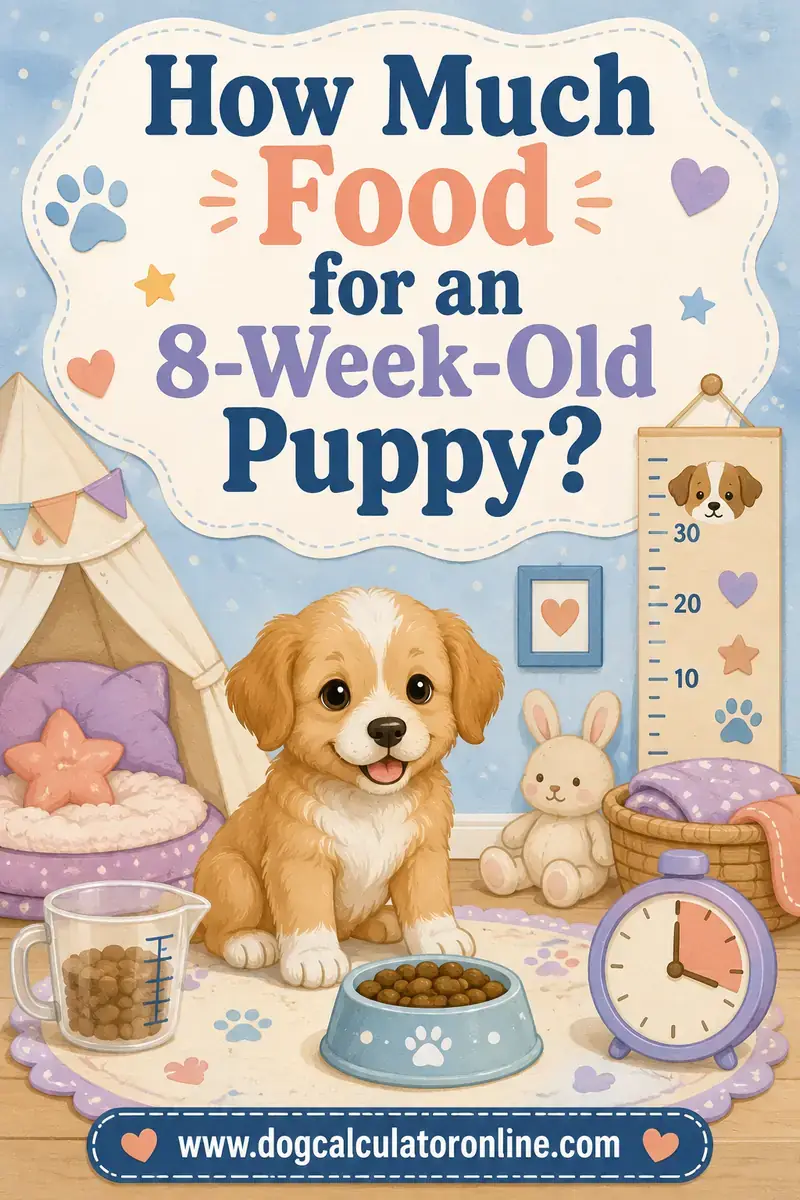
Daily amounts at this age are driven less by current weight than by expected adult size — a 10-week Great Dane and a 10-week Yorkie are on completely different curves. Your puppy food's bag carries a feeding table built for that food's calorie density; use it as the baseline and treat these as typical ranges for 8–12 week puppies on dry puppy food:
| Expected adult size | Typical daily total (est.) | Per meal (4 meals) |
|---|---|---|
| Toy (under 12 lb adult) | ~1/2–1 cup | ~2–4 tbsp |
| Small (13–25 lb adult) | ~3/4–1.5 cups | ~3–6 tbsp |
| Medium (26–50 lb adult) | ~1.5–2.5 cups | ~1/3–2/3 cup |
| Large (51–90 lb adult) | ~2.5–3.5 cups | ~2/3–1 cup |
| Giant (91+ lb adult) | ~3–4+ cups | ~3/4–1+ cup |
These are estimates — your bag's numbers outrank them, and your vet outranks the bag. Not sure what "expected adult size" even is for your mixed-breed mystery? That's exactly what the puppy weight calculator estimates from age and current weight, and it's worth running before you pick a feeding row. Re-weigh weekly: puppies this age grow fast, and portions that fit at 8 weeks are usually short by 11.
One non-negotiable: it must be puppy food (or all-life-stages food) — growth diets carry the calcium, phosphorus, protein, and calorie density growing bodies need. Large and giant breed puppies should specifically get a large-breed puppy formula, which controls calcium and calories so the skeleton grows at a safe pace; your vet can confirm the right pick.
Week by Week: 8 to 12
Week 8 — arrival week. Keep feeding whatever the breeder, rescue, or shelter fed, even if you plan to change. New home, new people, no littermates: the stomach doesn't need a new menu on top. Slightly soft stool and a skipped half-meal in the first day or two can be settling-in nerves — but a puppy this small that refuses several meals, or shows vomiting or diarrhea, needs a vet call promptly, not a wait-and-see. Some 8-week-olds, especially small breeds, still do better with kibble softened in a little warm water.
Weeks 9–10 — transition and rhythm. If you're switching foods, do it gradually over about 7 days: 25% new for a couple of days, then 50%, then 75%, then full. Appetite will climb noticeably — growth spurts at this age are steep, so recheck the label amount against the new weight each week rather than locking in a portion. Keep training treats tiny (pea-sized, or use pieces of the meal kibble itself) so they don't crowd out balanced food.
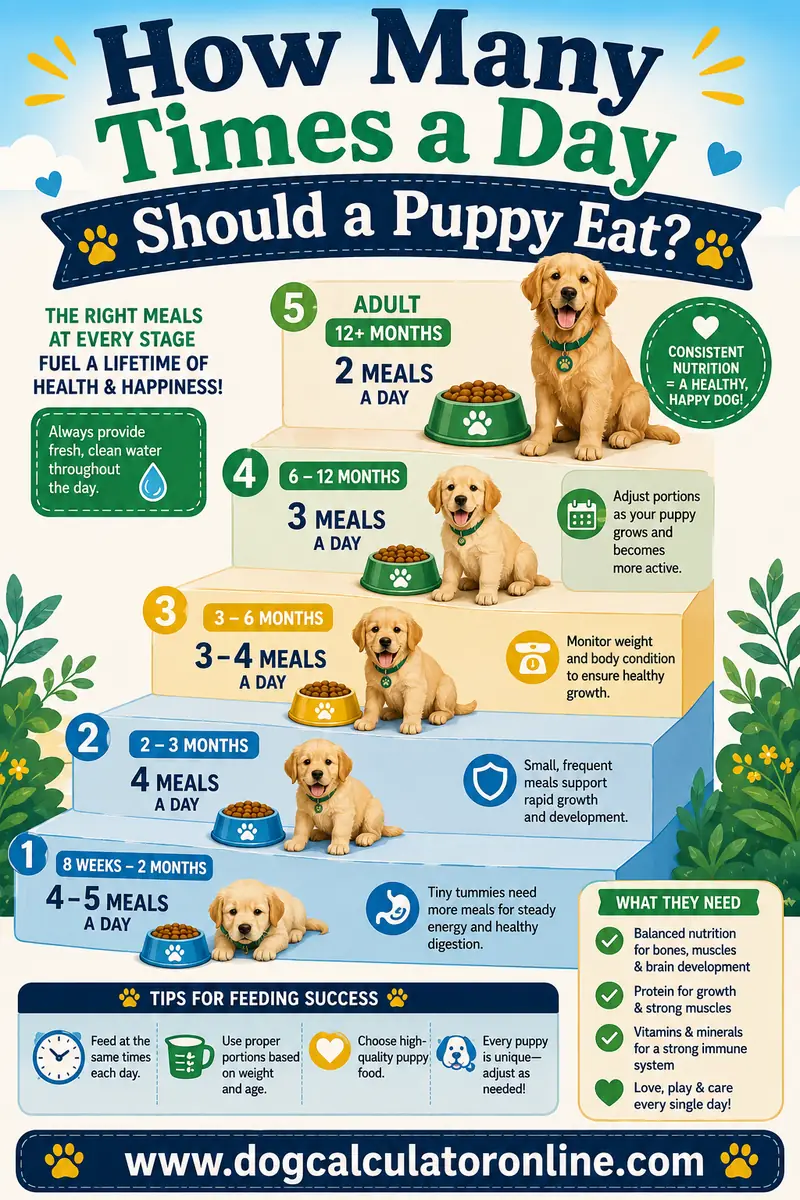
Weeks 11–12 — stepping down to three meals. By 12 weeks most puppies can drop the mid-afternoon meal, folding its calories into the remaining three. Make the change when it suits your schedule and the puppy is thriving — there's no prize for rushing, and toy breeds should stay on four meals longer, since their tiny reserves make long gaps a genuine hypoglycemia risk (weakness, wobbliness, and worse — an urgent vet situation if you ever see it). The full progression from three meals down to an adult's two lives in our puppy feeding schedule by age guide.
Weigh Weekly: The Habit That Catches Everything
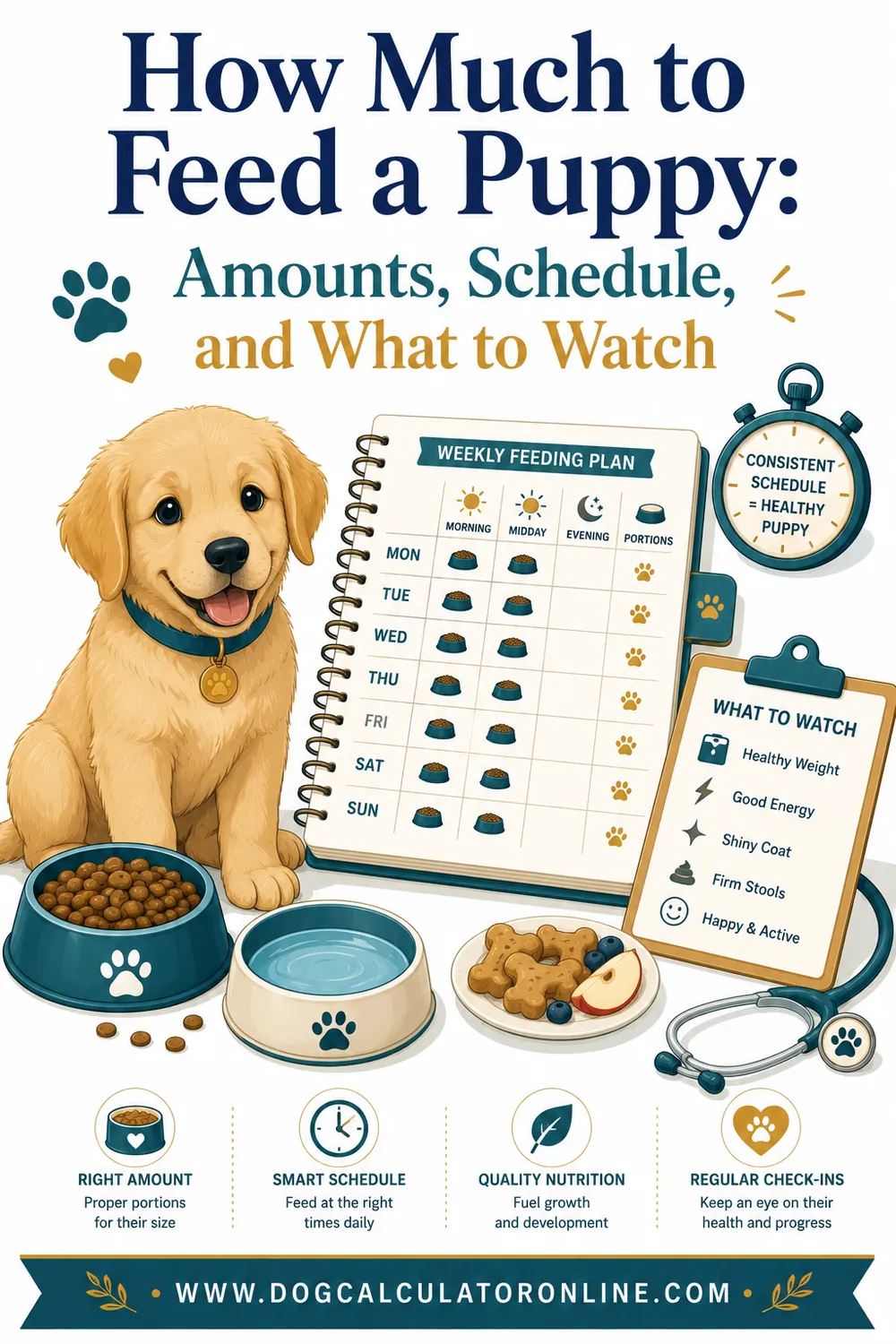
At 8–12 weeks, weight is the single most useful number you can track, and it's free. Small and medium puppies can gain multiple ounces a day; large breeds can add several pounds between vet visits. A weekly weigh-in — bathroom scale for you-plus-puppy minus you-alone, or a kitchen scale for the truly tiny — does three jobs at once:
- It keeps portions honest. Feeding tables are organized by weight and age; a puppy that jumped a weight band needs the next row up. Weekly weighing means you catch the jump within days instead of wondering why a growing puppy seems hungry.
- It flags trouble early. Steady gain is the healthiest signal a young puppy gives. A flat or falling week at this age is worth a vet call even if the puppy seems bright — parasites are a common, very treatable cause of poor gain in new puppies, and your vet will likely be scheduling routine deworming in these weeks anyway.
- It builds the growth curve. A simple weekly log (date, weight, food, daily amount) becomes genuinely useful data: your vet can read trajectory at a glance, and the puppy weight calculator gets more accurate as entries accumulate — two or three real weights predict adult size far better than one.
While you're at it, run the soft-touch body check that vets use: you should feel ribs easily under a thin, springy cover, but not see them sharply. Puppies are meant to be lean — roly-poly looks adorable and photographs well, but excess weight during growth does no favors, particularly for large breeds where controlled, steady growth is a joint-health issue. If the rib check and the feeding table disagree, believe the puppy and adjust — and ask your vet at the next visit, which at this age is never far away.
Mistakes That Cause Most 8–12 Week Problems
- Switching food cold-turkey on day one. The classic cause of week-one diarrhea. Transition over a week, always.
- Feeding adult food. It shortchanges growth nutrition. Puppy formula until roughly adult height, longer for large breeds — see how much to feed a puppy for the life-stage detail.
- Cow's milk. Puppies this age are weaned; milk mostly delivers diarrhea. Water only.
- Guessing portions. Use the bag table for expected adult weight, measure level scoops (or better, grams on a scale), and adjust weekly with growth.
- Treat inflation. Training is constant at this age, and calories sneak in fast. Use the meal ration as training currency where you can.
- Ignoring appetite loss. A young puppy that skips multiple meals is telling you something. Small puppies dehydrate and crash quickly — call the vet early.
Related Guides
If this helped, these go deeper on the same question:
And for your own dog’s numbers, the free dog age calculator does the math in one tap.
FAQ
How often should an 8-week-old puppy eat?
Four times a day, at evenly spaced meals — for example 7 am, 11 am, 3 pm, and 7 pm. Small, frequent meals suit tiny stomachs and keep blood sugar steady, which matters especially for toy breeds.
How much food should an 8-week-old puppy have?
It depends on expected adult size and your food's calorie density — typically somewhere between half a cup a day for toy breeds and 3+ cups for giant breeds, split into four meals. Follow your puppy food bag's table for age and expected adult weight, and recheck weekly as your puppy grows.
When can a puppy go from 4 meals to 3?
Around 12 weeks for most puppies. Drop the mid-afternoon meal and redistribute its portion across the remaining three. Toy breeds benefit from staying on four meals longer because of their higher risk of low blood sugar between meals.
Should I leave food out all day for my puppy?
No. Scheduled meals make potty training predictable, let you spot appetite loss early (a key illness signal), and prevent picky eating. Put food down for 15–20 minutes, then pick it up. Fresh water, on the other hand, stays available throughout the day.
What should an 8-week-old puppy drink?
Water only. Weaned puppies don't need milk, and cow's milk commonly causes diarrhea. Keep a clean bowl topped up all day, tapering an hour or two before bed to help overnight potty training.
Can I give treats to an 8-to-12-week-old puppy?
Yes, in tiny amounts — training starts now, and rewards are the engine. Keep treats pea-sized, choose soft puppy-appropriate options or simply use pieces of the meal ration as currency, and keep total extras under about 10% of daily calories so the balanced puppy food stays the overwhelming majority of the diet.
My 8-week-old puppy won't eat — what do I do?
A slightly nervous appetite in the first day or two home can be normal. But a puppy this young skipping multiple meals, or showing vomiting, diarrhea, or lethargy, needs a vet promptly — small puppies run out of reserves fast. Trying softened kibble and a quiet feeding spot is fine while you make the call.
Set the Rhythm Now, Reap It for Months
Four meals, even spacing, puppy food, potty after every bowl — that's the whole 8-to-12-week system, and it quietly does double duty as the backbone of potty training. The piece that personalizes it is expected adult size: run your puppy's age and weight through the free puppy weight calculator to see where they're headed, then let the dog food calculator translate that into daily portions that grow as fast as your puppy does.