How Much Food for an 8-Week-Old Puppy?
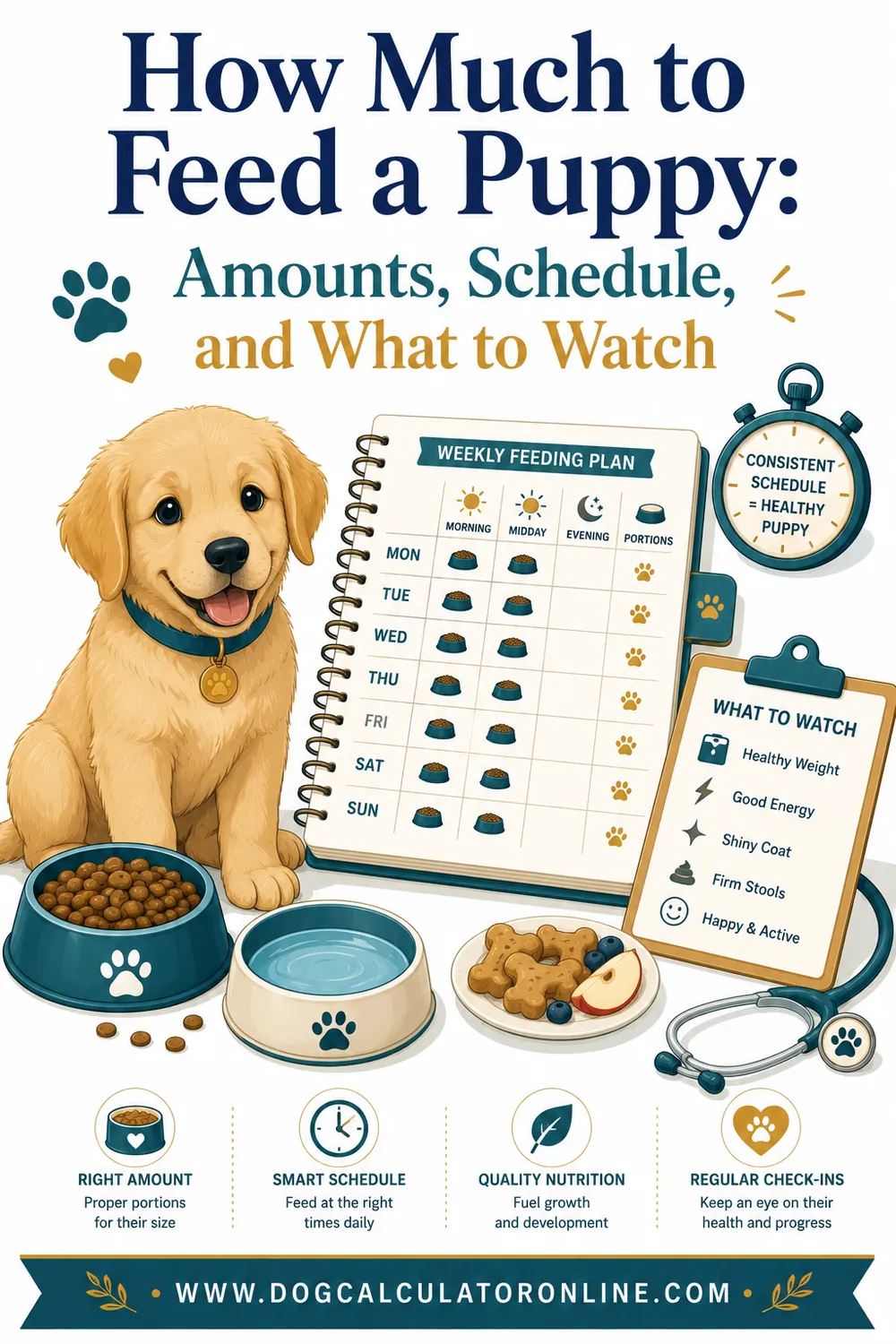
An 8-week-old puppy needs roughly ½ cup of puppy food a day for a toy breed, ¾–1 cup for a small breed, 1½–2 cups for a medium breed, 2–2½ cups for a large breed, and up to 3 cups for a giant breed — split into four small meals. The spread is huge because 8-week-old puppies range from under 2 lb to over 20 lb depending on breed.
Eight weeks is exactly when most puppies come home, so this is usually the first feeding decision a new owner makes. The free dog food calculator turns your specific puppy's weight into a daily portion in seconds. Here's the full breakdown by breed size, plus the first-week rules that prevent the classic new-puppy stomach upsets.
🐾 8-week-old daily portion, by breed size
Tap your puppy’s breed size class:
Tap a size class above for a daily estimate.
Daily Amounts at 8 Weeks, by Breed Size
Cup estimates assume typical dry puppy food around 400 kcal per cup, lightly moistened (more on that below). Your bag's chart — calibrated to its exact formula — always takes precedence.
| Breed size class | Typical weight at 8 wks | kcal/day | Cups/day | Per meal (4 meals) |
|---|---|---|---|---|
| Toy (Chihuahua, Yorkie) | 1–3 lb | ~130–200 | ~⅓–½ | ~2 tbsp |
| Small (Shih Tzu, Mini Dachshund) | 3–5 lb | ~265–390 | ~⅔–1 | ~¼ cup |
| Medium (Beagle, Border Collie) | 8–12 lb | ~550–740 | ~1⅓–1¾ | ~⅓–½ cup |
| Large (Labrador, German Shepherd) | 12–18 lb | ~740–1,000 | ~1¾–2½ | ~½–⅔ cup |
| Giant (Great Dane, Mastiff) | 18–25 lb | ~1,000–1,280 | ~2½–3¼ | ~¾ cup |
The math behind these figures: an 8-week-old runs at roughly 3 × resting energy requirement — per pound, about double what an adult dog needs. The dog food calculator applies the same formula to your puppy's exact weight, which beats picking a column when your pup sits between size classes.
Individual variation is real. A puppy 20% above or below the table who is bright, growing, and producing firm stools is fine. The table is the starting point; the puppy is the answer key.
The First-Week Rules (More Important Than the Amount)
At exactly 8 weeks, how you feed matters as much as how much:
Keep the breeder's food — for now. Coming home is the biggest stress of a puppy's young life, and stress plus a sudden diet change is the classic recipe for diarrhea. Feed whatever the breeder or shelter was feeding for at least the first one to two weeks. If you plan to switch, transition gradually over 7–10 days once your puppy has settled.
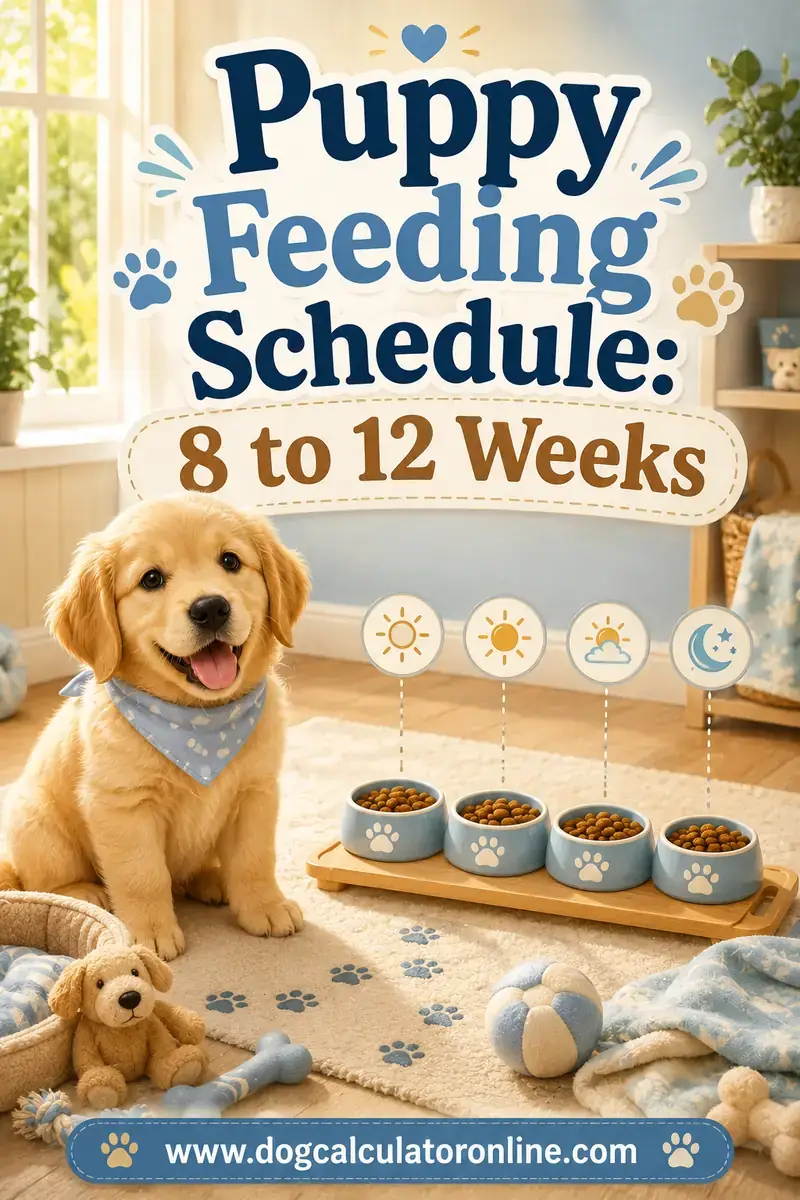
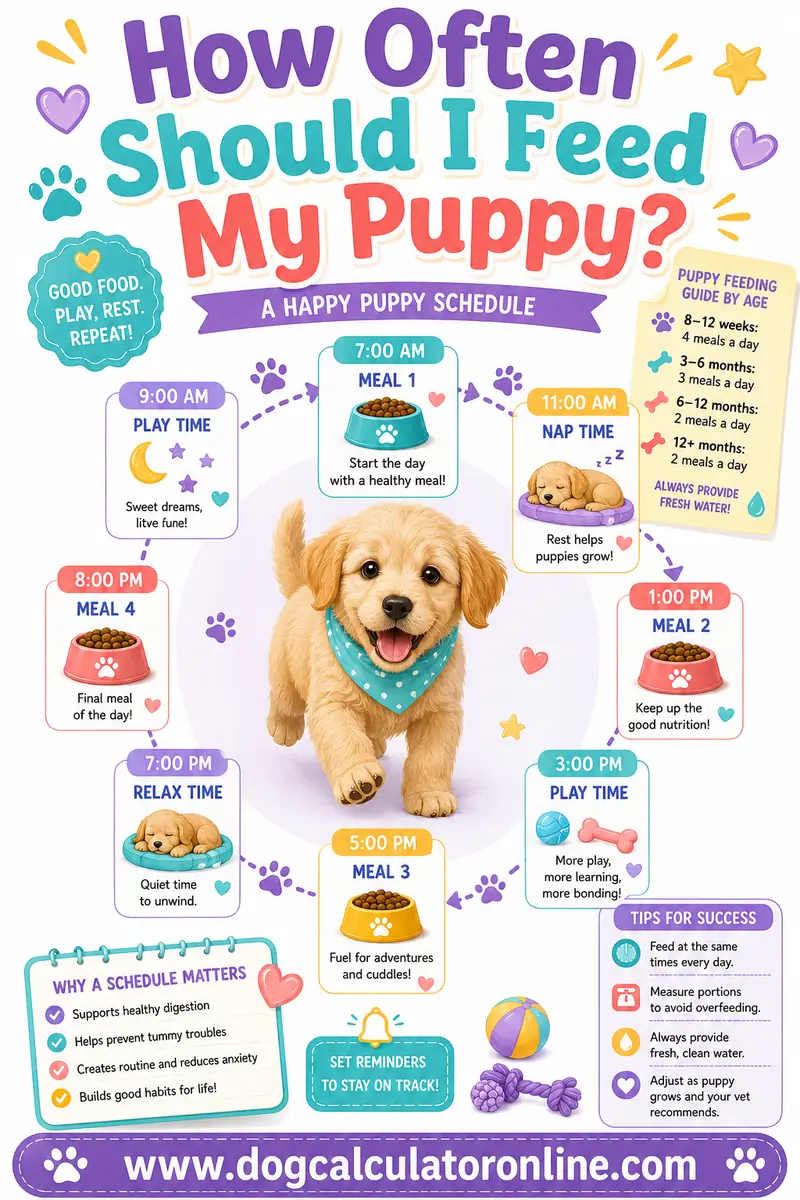
Four small meals. An 8-week-old's stomach is tiny and its energy needs are enormous — four evenly spaced meals (say 7 am, 11 am, 3 pm, 7 pm) square that circle. Three can work for large and giant breeds eating bigger volumes. The full day-plan for this age is in the 8-to-12-week feeding schedule.
Moisten the kibble. Many 8-week-olds are barely two weeks past weaning and handle dry kibble better softened with a little warm water — easier on baby teeth, easier to smell (appetite helps), easier to digest. Taper the water over the coming weeks.
Fifteen minutes, then up. Offer each meal for 15–20 minutes and lift what's left. Grazing hides appetite changes and makes potty timing unpredictable — and at this age, appetite is your most sensitive health signal.
Fresh water always available during the day.
Toy-Breed Warning: Small Puppies, Small Fuel Tanks
Toy and very small breed puppies at 8 weeks deserve their own paragraph, because they carry a real risk the bigger classes largely don't: hypoglycemia (low blood sugar).
A 2-lb puppy has almost no energy reserve. Meals spaced too far apart — or a day of poor eating — can drop blood sugar enough to cause weakness, wobbly walking, glassy-eyed staring, or collapse. This is an emergency: call your vet immediately if you see those signs.
Prevention is simple and boring: four (sometimes five) small meals a day, never skipping, and taking even one refused meal seriously in a tiny puppy. Where a Labrador puppy that skips lunch is a note-it situation, a Yorkie puppy that skips lunch is a call-the-vet-today situation.
What Food Should Be in the Bowl?
Amount is only half the question at 8 weeks. The checklist for the food itself:
- A puppy (growth) formula — look for an AAFCO statement saying the food is formulated for "growth" or "all life stages." Puppies need more protein, fat, calcium, and specific nutrients than adult food provides.
- Large-breed puppy formula for large and giant breeds. These control calcium and calories to keep fast-growing skeletons growing at a safe rate — it's the single most important label detail for a future 80-pounder.
- Small-kibble versions for tiny mouths help toy and small breeds eat comfortably.
- No supplements unless your vet says so. A complete puppy food already carries the right calcium-phosphorus balance; adding more (especially calcium, in large breeds) can do harm.
Wet food is fine too — check the label's kcal per can and feed to the same daily calorie target. It just makes portion math slightly less intuitive than scooping kibble.
How to Tell You're Feeding the Right Amount
At this age you're aiming for steady, not maximal, growth:
- Body feel: ribs easy to feel under a thin cushion; a soft waist visible from above. Round is adorable and not the goal — especially for large breeds, where overfeeding and too-fast growth are linked to joint problems later.
- Weekly weigh-ins: an 8-week-old should gain steadily every week. Use the bathroom-scale method (hold puppy, subtract you) and adjust portions upward as weight climbs — at this growth rate, portions change every week or two, so keep re-running the dog food calculator.
- Stools: firm and regular. Chronic soft stool with normal energy often means too much food per sitting; watery diarrhea, blood, or diarrhea plus lethargy is a vet call — small puppies dehydrate fast.
- Behavior: a well-fed 8-week-old alternates between rocket mode and deep sleep. Persistent lethargy or a puppy that refuses more than one meal needs a same-day vet conversation.
A pot-bellied look on a skinny frame — round tummy, visible ribs and spine — is a classic sign of intestinal parasites, which are extremely common at this age. That's a stool sample and dewormer conversation with your vet, not a bigger scoop.
A Sample First Day: Homecoming Meals, Hour by Hour
The day your puppy comes home rarely goes by the book — travel, new smells, new people, and a first-ever night without littermates all land at once. Here's a realistic arrival-day template for a puppy picked up mid-morning:
- Before pickup: ask the breeder to skip or lighten the meal right before travel — a mostly empty stomach makes car sickness much less likely.
- Arrival (late morning): water and a potty trip first, then a small meal — half the normal portion is plenty. A stressed puppy that only picks at it is normal today.
- Mid-afternoon: a second small meal after a nap. Keep the room calm; big greeting parties can wait a day.
- Early evening: a normal-size meal, followed by the usual potty trip.
- 2–3 hours before bed: the last small meal of the day, then a final unhurried potty trip.
Total food on day one can land noticeably under the chart amount, and that's fine. What matters is that eating trends toward normal within a day or two. A puppy still refusing most meals by the second full day — or any tiny toy-breed puppy skipping meals at all — is a call-the-vet situation, not a wait-and-see one.
Six Classic 8-Week Feeding Mistakes
Most early feeding problems trace back to the same short list:
- Switching foods on day one. New home plus new food is the reliable diarrhea recipe. Keep the breeder's food for a week or two, then transition slowly if you're changing.
- Free-feeding "so he's never hungry." All-day food wrecks potty predictability and hides the most important health signal you have — a skipped meal.
- Giving milk. An 8-week-old is weaned and doesn't need it; cow's milk in particular commonly causes diarrhea in puppies. Water is the only drink required.
- Feeding for maximum roundness. A plump puppy looks thriving but grows too fast — a real concern for future big dogs. Steady and lean beats round and rapid.
- Sharing table scraps early. Beyond the begging habit it creates, rich human food is hard on an immature gut, and several everyday foods are outright toxic to dogs. Keep the menu boring for now.
- Guessing portions by eye. At this size, "a bit extra" per meal compounds into serious overfeeding across four meals. Measure every scoop — the habit takes ten seconds and lasts a lifetime.
FAQ
How much should an 8-week-old puppy eat a day?
Roughly ½ cup for toy breeds, ¾–1 cup for small, 1½–2 cups for medium, 2–2½ cups for large, and up to 3 cups for giant breeds — split into about four meals. Use your bag's chart and the dog food calculator for your puppy's exact weight.
How often should an 8-week-old puppy eat?
Four times a day, spaced across waking hours — for example 7 am, 11 am, 3 pm, and 7 pm. Large-breed puppies eating bigger portions can do three.
Should I soften food for an 8-week-old puppy?
Yes, usually — warm water over the kibble for the first few weeks helps baby teeth and digestion. Taper the moisture off gradually as your puppy grows.
Can an 8-week-old puppy eat adult dog food?
No — puppies need a growth formula with more protein, fat, and correctly balanced minerals. Large-breed puppies specifically need large-breed puppy food with controlled calcium.
My 8-week-old puppy won't finish meals — is that normal?
A slightly nervous appetite in the first day or two home is common. Past that, in a puppy this young, poor eating is worth a same-day vet call — especially in toy breeds, where skipped meals can drop blood sugar dangerously.
Can I give my 8-week-old puppy milk or wet food toppers?
Skip the milk — a weaned puppy doesn't need it, and cow's milk commonly causes diarrhea. A spoonful of wet puppy food stirred into moistened kibble is fine and can tempt a hesitant eater; just count it toward the day's total rather than adding it on top, and keep the overall menu consistent while your puppy settles in.
When do I increase my puppy's food?
Practically every week or two at this age. Weigh weekly, re-run the numbers, and nudge the portion up as the scale climbs — an 8-week portion is outgrown within weeks.
The Bottom Line
At 8 weeks, feed a growth-formula food in four small meals a day — from about ½ cup daily for a toy breed to around 3 cups for a giant — keep the breeder's food through the settling-in period, moisten the kibble, and weigh weekly, because the portion you start with expires fast.
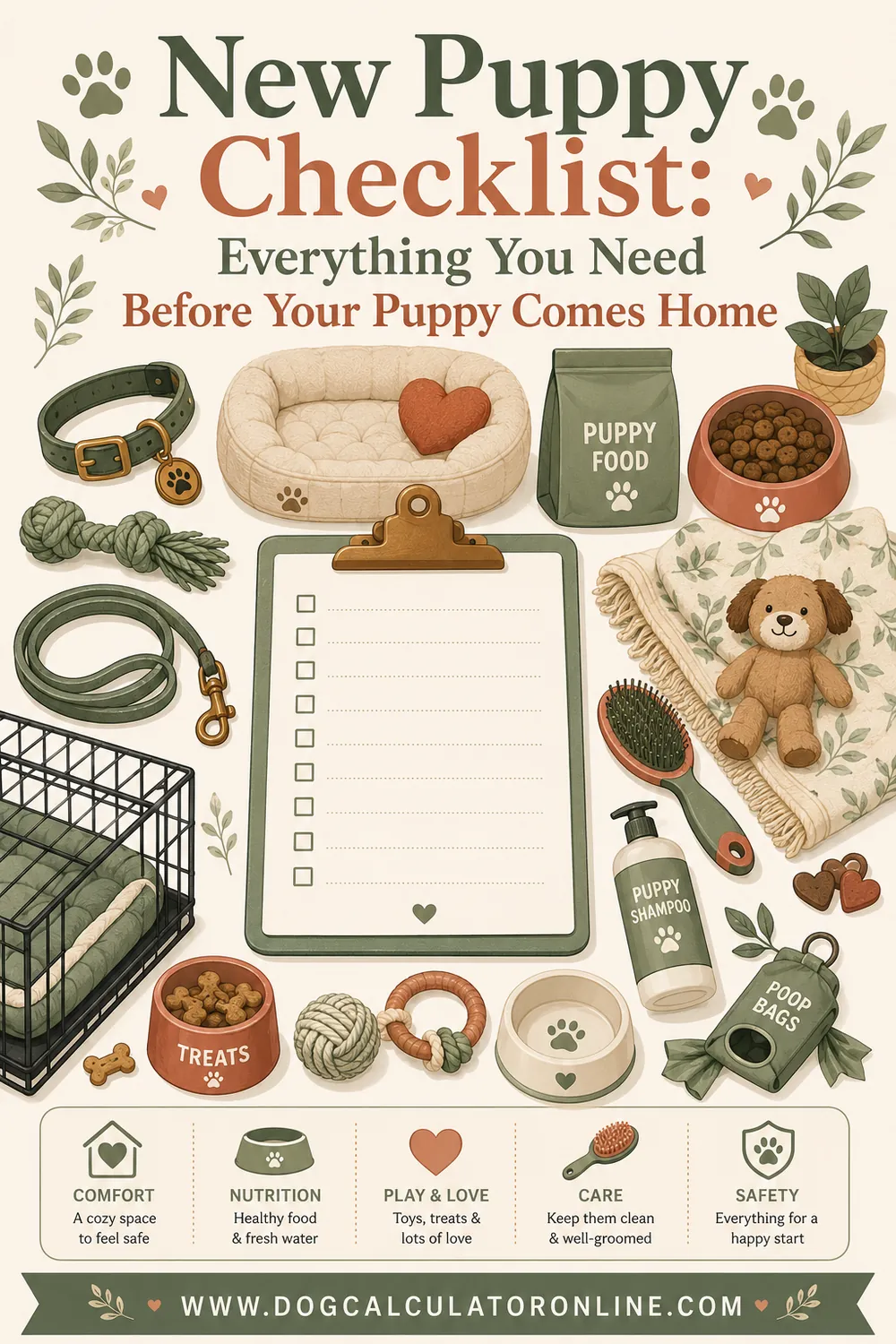
Get the exact daily amount for your puppy's weight with the free dog food calculator, then build the day around it with the 8-to-12-week feeding schedule. Bringing your puppy home this week? The new puppy checklist covers everything beyond the bowl.