Why Pet Insurance Costs More for French Bulldogs
French Bulldogs are consistently among the most expensive dogs to insure in the US: while a typical dog's accident-and-illness plan runs $40–$70 per month, Frenchie quotes commonly land at $60–$120+ per month, with big-city seniors pushing well past that. The reason isn't insurer prejudice — it's claims math. The breed's flat-faced anatomy and compact spine generate some of the most frequent and expensive vet bills in dogdom, and premiums track claims. This guide explains exactly where the price comes from and how to manage it, with no carrier pitches. To see the full cost of Frenchie ownership beyond the premium, run the free dog cost calculator.

What French Bulldog Insurance Typically Costs
Framed as typical ranges rather than promises:
| Profile | Typical monthly premium |
|---|---|
| Frenchie puppy (under 1 yr) | $45–$80 |
| Adult Frenchie (1–6 yrs) | $60–$120 |
| Senior Frenchie (7+) | $100–$200+ |
| Typical dog (all breeds), adult | $40–$70 |
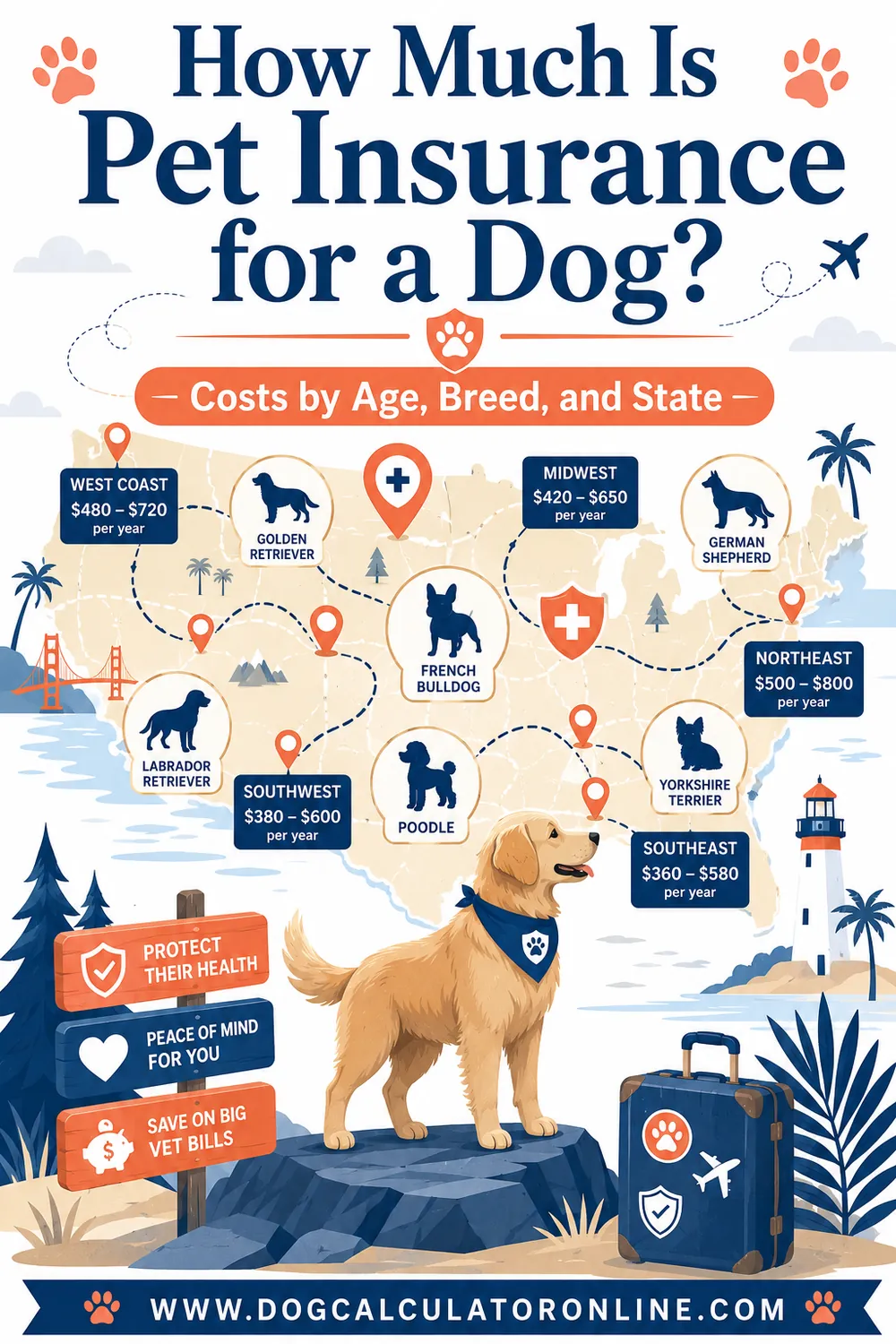
Location moves these numbers substantially — a Frenchie in Manhattan or San Francisco can quote double a Frenchie in a small Midwestern town, because premiums track local vet prices. Plan settings (deductible, reimbursement rate, annual limit) swing the same dog's quote by 30–50%. For how all five pricing factors interact, see our full guide to what dog insurance costs.
The Health Profile Behind the Premium
Insurers don't guess — they price the claims French Bulldogs actually file. Five clusters dominate:
1. Brachycephalic airway syndrome (BOAS)
The flat face that defines the breed narrows nostrils, elongates the soft palate, and constricts the airway. Consequences range from loud snoring and exercise intolerance to collapse episodes, and corrective airway surgery commonly runs $1,500–$4,000+. Because the anatomy is universal in the breed, insurers treat airway claims as a when-not-if pricing input.
2. Spinal disease (IVDD and congenital malformations)
French Bulldogs carry elevated risk of intervertebral disc disease and vertebral malformations (like hemivertebrae). A serious disc episode means MRI imaging ($1,500–$3,500) and possibly surgery ($3,000–$8,000+), plus rehab. This is the breed's five-figure tail risk — and a major reason comprehensive coverage with a high annual limit matters more for Frenchies than for most dogs.
3. Chronic skin and ear disease
Allergic dermatitis, skin-fold infections, and recurring ear infections are everyday Frenchie claims. Individually small ($150–$600 a visit), they're chronic — the same conditions returning for life. Chronicity is expensive for insurers, and it's also the category most likely to become permanently excluded if it appears before you enroll — the trap explained in our pre-existing conditions guide.
4. Eye problems
Prominent eyes plus short muzzles equal corneal ulcers, cherry eye (often surgical, $300–$1,500 per eye), and entropion. Frequent, moderately priced, and highly breed-linked.
5. Heat, anesthesia, and emergency risk
Compromised airways make Frenchies dangerously heat-intolerant and higher-risk under sedation. Practically, that means more ER visits (heat stress, breathing crises) and higher procedure costs — clinics take extra anesthetic precautions with brachycephalic breeds, and those precautions appear on invoices.
Add the breed's high rates of C-section birth (relevant to breeders, excluded for pet policies anyway) and you have one of the most claim-dense profiles in the industry. The premium is the mirror of that list.
Is Insurance Still Worth It for a Frenchie?
Here's the counterintuitive part: the same health profile that inflates the premium also strengthens the case for coverage. Worth-it math compares premiums against the probability-weighted bills — and for Frenchies, both sides of the ledger are large.
- The odds of major claims are genuinely elevated. A five-figure IVDD episode or airway surgery isn't a lightning strike for this breed; it's a known hazard.
- $1,000–$1,500 a year in premiums vs a realistic $5,000–$12,000 lifetime of breed-typical interventions is a defensible trade for most owners — provided coverage starts before symptoms.
- Timing is everything with this breed. Snoring noted in the chart can shadow future airway claims; a single skin-infection entry can haunt dermatitis coverage. A Frenchie insured at 9 weeks with a clean chart has the strongest policy the breed can get — the reasoning laid out in is pet insurance worth it for a puppy applies double here.
The honest counterargument: if premiums for your ZIP and plan run very high, a disciplined savings strategy can work — but recognize you're self-insuring a breed with above-average odds of needing the money early. The general framework in is pet insurance worth it still governs; the breed just shifts the probabilities.
How to Keep a Frenchie Premium Manageable
- Enroll at puppyhood, before the first chart note. For this breed, early enrollment isn't just cheaper — it's the difference between covered and excluded for the signature conditions.
- Check the bilateral and orthopedic language. Knee and hip clauses, orthopedic waiting periods, and any breed-specific exclusions deserve a careful read. A few policies handle brachycephalic or disc conditions with special terms — know before you buy.
- Prioritize a high (or unlimited) annual limit. The Frenchie tail risk is the $8,000+ year. A $5,000 cap defeats the purpose; spend your premium budget on the limit before the low deductible.
- Raise the deductible instead of cutting the reimbursement rate. You can absorb a $750 deductible once; absorbing 30% of a $9,000 spine surgery hurts far more.
- Compare several insurers on identical settings. Breed-risk weighting differs between companies, so Frenchie quotes spread wider than average — the same dog can see $30+/month differences. Line them up using the method in our monthly cost guide.
- Reduce the risks you control. Weight management (extra pounds worsen airways and spines), harness instead of collar, ramps instead of stairs-jumping, and strict heat caution won't change your quote directly — but they reduce the uncovered 10–20% share of every claim you'll still pay, and more importantly, the claims themselves.
How Frenchies Compare With Other Breeds
Breed pricing follows claims risk, and the pattern across breed classes is consistent enough to sketch (relative to the $40–$70 typical adult band):
| Breed class | Typical premium position | Why |
|---|---|---|
| Flat-faced breeds (French Bulldog, English Bulldog, Pug) | Highest — often 50–100% above typical | Airways, spines, skin, eyes: frequent and expensive claims |
| Giant breeds (Great Dane, Mastiff, Bernese) | High | Bloat risk, joint disease, everything costs more at 120 lbs |
| Large sporting breeds (Labrador, Golden, GSD) | Moderately high | Cruciate tears, hips, elbows, cancer prevalence |
| Small purebreds (Dachshund, Cavalier) | Mixed — some high | Breed-specific risks (discs, hearts) offset small-dog cheapness |
| Small and medium mixed breeds | Lowest | Diluted hereditary risk, small bodies, fewer claims |
Frenchies sit at or near the top of most insurers' pricing tables — usually alongside English Bulldogs. If you're still choosing a dog and the premium spread matters to your budget, this table is worth seeing before the puppy deposit: the gap between a Frenchie and a similar-sized mixed breed can exceed $500 a year, every year, for 10+ years.
Three Frenchie Owner Profiles, Three Setups
- The planner (puppy on the way): enroll at pickup, comprehensive plan, unlimited annual limit, $500–$750 deductible, 80–90% reimbursement, orthopedic waiver exam booked in week one. This is the textbook version — maximum lifetime coverage at the breed's minimum lifetime price.
- The mid-life adopter (healthy-on-paper 4-year-old rescue): request full records first; if the chart is clean of airway/skin/spine notes, insure immediately with the same setup as the planner. If snoring or dermatitis is already documented, insure for what remains — spine, eyes, accidents, cancer — and budget the excluded categories as known costs.
- The tight-budget owner: rather than accident-only (a bad match for this breed), take the highest deductible offered with 70–80% reimbursement and protect the unlimited annual limit. The premium falls toward the ordinary-dog band, and the policy still exists for the $8,000 spine year — which is the year that ruins uninsured Frenchie owners.
Whichever profile fits, apply the universal Frenchie rule: the value of coverage decays with every symptom that reaches the chart, and this breed writes chart entries faster than most. Decide early.
A few logistics that trip up Frenchie owners specifically: get the breeder's or rescue's veterinary records before enrolling, so you know exactly what an underwriter will see; ask the insurer in writing how they treat snoring noted at a wellness visit (answers vary, and this breed snores); and if you have two pets, ask about multi-pet discounts — typically 5–10%, which matters more when one premium is Frenchie-sized. None of these change the fundamentals, but each one closes a gap that this particular breed is unusually good at finding.
Finally, be realistic about the premium's trajectory. A Frenchie quoted $70/month at age one will likely see triple digits by middle age — budgeting the average of the curve (rather than the year-one teaser) is what keeps the policy affordable in year eight, when it matters most. If you know the ramp is coming, you can meet it with deductible adjustments instead of a cancellation that would strand every accumulated condition. The owners who get burned are rarely the ones who paid attention at the start; they're the ones who priced year one and planned for nothing else.
Budgeting for a Frenchie Beyond the Premium
Insurance is one line in an expensive breed's budget. Frenchie owners should also expect above-average spending on routine care (skin and ear maintenance, nail and fold care), climate management in hot regions, and possibly higher grooming and food-sensitivity costs. Add the premium to those lines and the true annual number often surprises first-time owners. The free dog cost calculator builds that complete picture — premium, food, routine vet care, gear — in about a minute, and the dog age calculator shows how your Frenchie's age (typical lifespan 10–12 years) maps onto the premium curve ahead.
FAQ
How much is pet insurance for a French Bulldog?
Typically $60–$120 per month for accident-and-illness coverage on an adult, versus $40–$70 for the average dog — with puppies quoting lower and seniors, high-cost cities, and rich plan settings pushing quotes past $150.
Why is French Bulldog insurance so expensive?
Because the breed files frequent, expensive claims: brachycephalic airway syndrome, spinal disc disease, chronic skin and ear conditions, and eye problems. Premiums are priced from breed-level claims data, and Frenchies sit near the top of it.
Does pet insurance cover BOAS surgery for French Bulldogs?
Generally yes on comprehensive plans — if the dog showed no airway symptoms before enrollment and waiting periods passed. Documented snoring, exercise intolerance, or vet notes about the airway before coverage can render it pre-existing. Enrolling before any symptoms is the whole game.
Does insurance cover IVDD in French Bulldogs?
Covered on standard accident-and-illness policies when it first arises during coverage, subject to any orthopedic waiting period. Given $5,000–$10,000 treatment costs, Frenchie owners should favor high or unlimited annual limits specifically for this risk.
Is accident-only insurance enough for a Frenchie?
It's a poor fit. The breed's signature costs — airways, spine, skin, eyes — are illnesses and conditions, not accidents. Accident-only coverage leaves the most probable Frenchie bills uncovered; it's a last resort, not a strategy, for this breed.
When should I insure my French Bulldog?
As early as possible — ideally at 8–10 weeks, before any chart entry mentions snoring, skin, or ears. Every symptom documented before enrollment is a potential lifetime exclusion in the exact categories where Frenchies claim most.
The Bottom Line
French Bulldogs cost more to insure because they cost more to treat — the flat face and fragile spine that make the breed distinctive also make its claims history one of the priciest in dogdom. That same math makes early, comprehensive, high-limit coverage unusually valuable: insure before symptoms, protect the annual limit, and manage the premium with the deductible. Then zoom out and budget the whole dog, not just the policy — the free dog cost calculator gives you the complete annual number in one place.