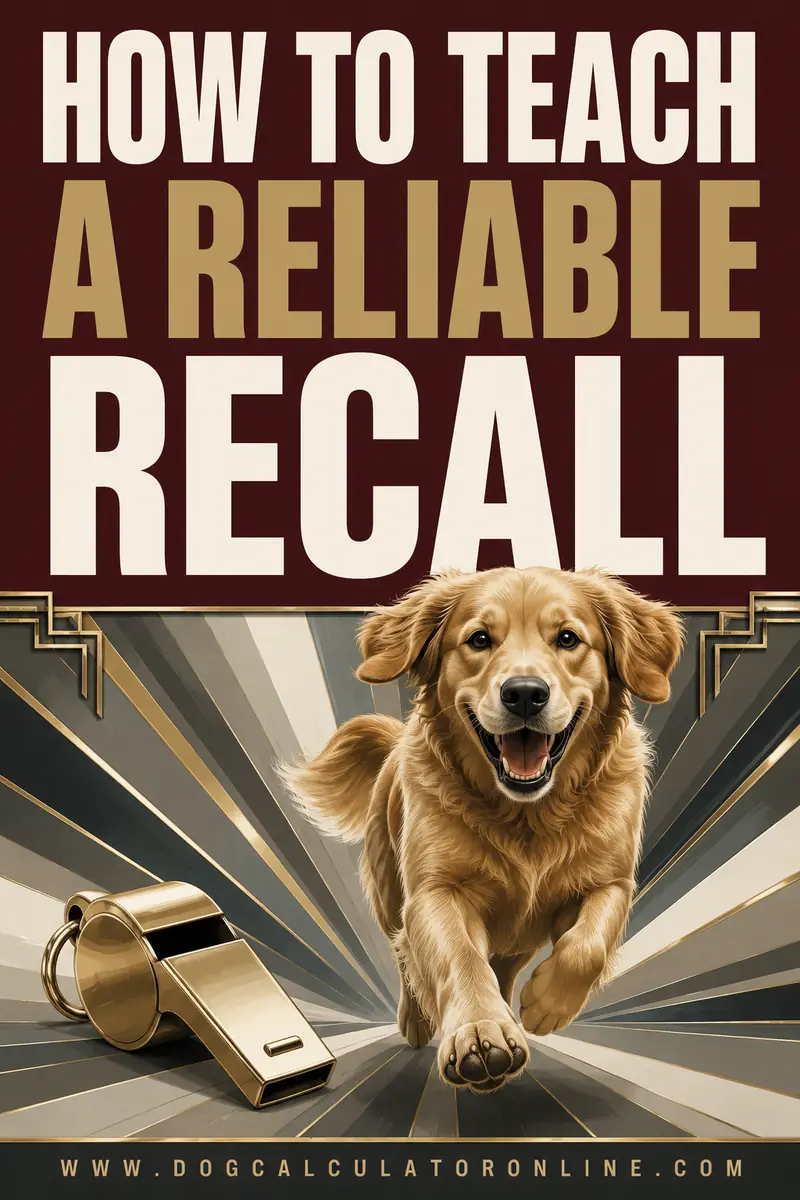
How to Teach a Reliable Recall
If you remember one thing from this page, make it this: never call your dog for something he dislikes. Not for the bath, not for nail clipping, not to end the walk, not to be told off. Every time the cue predicts something unwelcome, it gets a little less reliable, and after enough of those he will pause and calculate before he turns round. That pause is what "he only comes when he feels like it" actually is. Everything else — the long line, the treats, the games — is technique. That one rule is the foundation. Recall training also eats a surprising amount of food, so check his daily total with the dog food calculator first.
🐾 What happens when you call?
Tap what your dog usually does:
Tap an option above. Recall is built, not commanded.
The Rule That Protects the Cue
Everything else is built on top of this, so it comes first.
Your recall word is a promise. It means: come here and something good happens, always. The moment it sometimes means the leash goes on and the fun stops, the promise is broken and the dog starts weighing it up.
Count the ways it gets broken. Called to be bathed. Called to have mud wiped off. Called at the gate to go home. Called and then shouted at for what he was doing. Each one is a small withdrawal from the same account.
So use a different word for unwelcome things. "This way" for the end of the walk, or just walk over and clip the leash on without calling him at all. Save the recall cue for occasions you can pay.
Call him during the walk far more often than at the end. Ten recalls per walk, each one paid, each one followed by "off you go". Now the cue predicts food and freedom rather than the end of everything.
If the old word is already spoiled, get a new one. Trying to rehabilitate "come" after two years of disappointment is slower than teaching "here" from scratch. Pick something you can say clearly and cheerfully, and never use it for anything else.
Never call twice. If he does not respond, the cue is being trained to mean "maybe later". Go and get him, then make the next attempt easier.
Choosing and Charging Your Cue
Two days of dull groundwork that saves months.
Pick one word and one whistle if you want a backup. A whistle carries further, sounds identical no matter how frustrated you are, and works when the wind is against you. Many people teach both.
Charge it before you use it. In the kitchen, with the dog two feet away: say the word, then immediately produce something excellent. Repeat thirty times across two sessions. He does not have to do anything at all yet.
You are building a reflex, not a decision. After enough repetitions the word produces a head snap before he thinks. That is exactly what you want under distraction, because thinking is what loses you the recall.
Say it once, brightly, and only once. Long drawn-out shouting is a different sound from your training word and the dog may genuinely not recognize it.
Add the movement next. Say the word, then run backwards a few steps. Dogs chase movement, so running away from him is far more effective than standing still and repeating yourself.
For a rescue dog, do this in week two, not week one. Let him decompress first; the wider approach is in the guide to training an adult rescue dog.
The Long Line Does the Heavy Lifting
If you buy one piece of kit for this, buy this.
A 30 ft (9 m) long line lets you practice recall in a real environment without ever letting the cue fail. That is its entire purpose, and it is worth more than any drill.
Attach it to a harness, never a flat collar. A dog hitting the end of 30 ft at speed on a collar can hurt his neck badly. If he wears a collar for his ID tag, get the fit right using the dog collar size guide and clip the line elsewhere.
Wear gloves and let it trail. You are not holding it taut like a leash. It lies on the ground, you stand on it if you need to, and it exists purely to stop him leaving.
Never use it to reel him in. Dragging him toward you teaches nothing except that the line is unpleasant. If he ignores you, walk down the line toward him, get his attention, and make it easier next time.
Use it for weeks, not days. Most owners take it off far too early, get two failed recalls in a park, and undo a two weeks of work.
Do not use one in dense woodland or among other dogs' legs. Tangling is a real risk. Open fields are its natural home.
A 15 ft (4.5 m) line is a useful halfway house for sidewalks and smaller greens, where 30 ft is simply too much rope to manage safely near traffic.
Check it after every muddy walk. Long lines fray where they drag over gravel, and the one that snaps is always the one you had stopped inspecting.
Paying a Recall Properly
The commonest mistake is being stingy with something worth a great deal.
Recall is the most expensive behavior you will ever ask for. He is giving up a rabbit, a friend or a fascinating smell. A single dry biscuit does not cover it.
Use the best food you have and keep it exclusively for recall. Roast chicken, cheese, sausage, tripe stick. If it is also his everyday treat, it is not special.
Jackpot the big ones. A recall away from another dog earns ten pieces fed one after another, not one. The size of the reward tells him what that behavior was worth.
Feed for long enough to matter. Twenty seconds of feeding and fussing beats one treat and a pat. The whole event should feel like a party.
Then release him back to what he left. "Off you go" is often the single most powerful reward available, and it teaches him that coming back does not end anything.
Mind the calories. Recall training can add several hundred kilocalories a day, so take it off his meals; the daily treat allowance explains how much is sensible.
Building Distraction, One Step at a Time
Progress in small increments and you will rarely fail. Skip steps and you will fail constantly.
| Stage | Where | Distraction level | Move on when |
|---|---|---|---|
| 1 | Indoors, one room | None | 10 out of 10 instant responses |
| 2 | Indoors, between rooms and out of sight | Low | He arrives at speed, twice a day for 3 days |
| 3 | Garden | Low, familiar smells | 10 out of 10 with the line trailing |
| 4 | Quiet field, long line on | Moderate | 9 out of 10 across a week |
| 5 | Same field with a dog 100 ft (30 m) away | High | 9 out of 10 across a week |
| 6 | Busier park, line still on | High | 9 out of 10 over two weeks |
| 7 | Off-lead in a safe enclosed space | Real | Consistent, then repeat elsewhere |
Nine out of ten is the threshold, not seven. If you are getting seven, the step is too hard and you should go back one.
Add one variable at a time. New place, new distraction and new distance all at once is how a good recall falls apart in an afternoon.
Never Punish a Dog Who Comes Back
This deserves its own section because the instinct runs so strongly the other way.
However long he took, he came back. If you scold him on arrival, the thing you have punished is arriving. Dogs connect consequences to the last thing they did, not to the ten minutes of ignoring you beforehand.
Owners who get this wrong create the worst recalls. The dog starts hovering just out of reach, coming to within 10 ft (3 m) and no closer. That is a dog who has learned that arrival is risky.
Be a good actor. Even when you are furious and it is raining and you are late, say the word cheerfully and pay him. The alternative costs you far more.
Do not grab at his collar as he arrives. Feed first, then take hold calmly. A dog who is snatched at learns to swerve.
Practice the catch separately. Call, feed, touch the collar, feed again, release. Repeated often, this makes being caught a good thing rather than the end of freedom.
If he is genuinely running off repeatedly, it is a management problem. Put the long line back on for a month. Nobody trains a recall by losing more of them, a point that applies just as much to leash pulling.
Emergency Recall Versus Everyday Recall
Two different cues, used two very different ways.
The everyday recall is what you use ten times a walk. It is worth ordinary good food and it can occasionally fail without disaster.
The emergency recall is for the car, the cliff and the sheep. It is a separate sound — a whistle pattern, or a word you would never say otherwise — and it is trained to be automatic.
Charge it with something extraordinary. Half a roast chicken, in the house, twenty times over a two weeks, with no expectation at all. The sound arrives and a ridiculous amount of food follows.
Use it perhaps twice a year. Every unrewarded or casual use weakens it. Some sneakers rehearse it once a month at home, always with the full jackpot, and never in an ordinary walk.
Do not test it for fun. It is an insurance policy, and insurance policies do not survive being spent on nothing.
Teach everyone in the house the same sound. An emergency cue only one person can produce is half an insurance policy, and the person holding the leash when it matters is rarely the one who trained it.
Pair it with a stop cue if you can. For a dog heading toward a road, "stop where you are" is often safer than "run back to me across the tarmac", and it is trained the same way: sound, then a jackpot, hundreds of times, before it ever gets used.
Where Recall Is Genuinely Harder
Being honest about this saves a lot of self-blame.
Adolescents between roughly 6 and 18 months lose recall almost universally. It comes back with management and rebuilding rather than escalation, as set out in the adolescent dog guide.
Sighthounds, scent hounds and terriers are working against their own wiring. A Beagle on a fresh scent or a Whippet in sight of a hare is not being disobedient; the chase system is far more powerful than any treat you own. Long line management for life is a perfectly respectable answer.
Deaf and elderly dogs need a different signal. A vibration collar used purely as a "look at me" cue, or a flashlight flash at dusk, works well. Neither is a shock collar.
Under-exercised dogs have worse recall, because everything outdoors is more thrilling when your life is dull. Check what your breed actually needs in the guide to how much exercise a dog needs.
Rescue dogs need weeks before they have any reason to come back to you. No bond, no recall. Keep them on a line for the first month at minimum.
Ask your vet if recall drops off suddenly in an older dog. Hearing loss, failing sight and cognitive decline all look like disobedience, and all are worth checking rather than training through.
FAQ
How do I teach a dog to come when called?
Charge a new cue by saying the word and immediately giving excellent food, thirty times indoors with no expectation. Then practice on a 30 ft (9 m) long line in gradually harder places, paying generously every time and releasing him back to what he was doing.
Why does my dog ignore me when I call him?
Usually because the cue has stopped predicting anything good, or because it has been repeated so often while he ignores it that it now means nothing. It may also predict the end of the walk. Pick a new word, charge it properly, and never call twice.
How long does it take to train a reliable recall?
Most dogs respond well indoors within a week and in a quiet field on a long line within three to four weeks. A recall that holds up around other dogs and wildlife usually takes three to six months, and some high-prey-drive breeds never become fully reliable off-lead.
Should I punish my dog for not coming back?
Never. Whatever he did beforehand, the behavior you would be punishing is arriving, because dogs link consequences to the last thing they did. Scolding a late return is the fastest way to create a dog who hovers just out of reach permanently.
What is a long line and why do I need one?
A long line is a 30 ft (9 m) lead clipped to a harness and allowed to trail on the ground. It lets you practice recall in real environments without the cue ever failing, which is what protects it. It is not for reeling the dog in.
Can you train recall in an older dog?
Yes. Older dogs concentrate better than puppies and often learn recall faster. Keep sessions short for stiff joints, and if a previously reliable dog suddenly stops responding, ask your vet to check hearing, eyesight and cognitive function before assuming it is training.
The Recall You Can Actually Trust
A reliable recall is not a trick you install in a weekend; it is an account you pay into for months and then draw on for years. Guard the cue by never calling him for something he dislikes. Charge it properly, keep the long line on far longer than feels necessary, pay ludicrously well, release him back to his fun, and never once tell him off for coming back. Accept that some dogs, some breeds and some seasons need a line and always will, and that this is a sensible decision rather than a failure. Keep the treat budget honest and balance it against his meals with the dog food calculator.